ORGANISATIONAL LEARNING
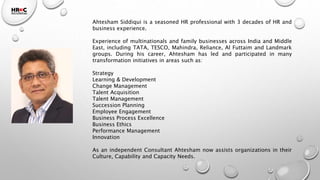
Ahtesham Siddiqui is a seasoned HR professional with 3 decades of HR and
business experience.
Experience of multinationals and family businesses across India and Middle
East, including TATA, TESCO, Mahindra, Reliance, Al Futtaim and Landmark
groups. During his career, Ahtesham has led and participated in many
transformation initiatives in areas such as:
Strategy
Learning & Development
Change Management
Talent Acquisition
Talent Management
Succession Planning
Employee Engagement
Business Process Excellence
Business Ethics
Performance Management
Innovation
As an independent Consultant Ahtesham now assists organizations in their
Culture, Capability and Capacity Needs.
Why Organizational Learning?
Even for the most successful organizations, future does not
guarantee success. Therefore the options are to continue to Learn,
Change and Grow or to become outdated and irrelevant over time. It
is not only for individuals to continue learning but also for the teams
and the organization.
Benefits of a learning culture
o Efficiency and Productivity gains
o Decreased employee turnover with enhanced employee satisfaction
o Raising the bar by creating a continuous improvement mindset
o Developing leaders at all levels that helps with succession planning
o Creating a culture of inquiry and knowledge sharing (vs. knowledge
hoarding)
o Enhanced ability for individuals and teams to embrace and adapt to
change.
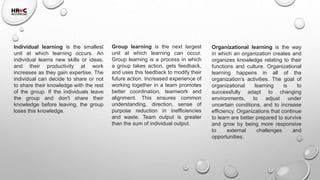
Individual learning is the smallest
unit at which learning occurs. An
individual learns new skills or ideas,
and their productivity at work
increases as they gain expertise. The
individual can decide to share or not
to share their knowledge with the rest
of the group. If the individuals leave
the group and don't share their
knowledge before leaving, the group
loses this knowledge.
Group learning is the next largest
unit at which learning can occur.
Group learning is a process in which
a group takes action, gets feedback,
and uses this feedback to modify their
future action. Increased experience of
working together in a team promotes
better coordination, teamwork and
alignment. This ensures common
understanding, direction, sense of
purpose reduction in inefficiencies
and waste. Team output is greater
than the sum of individual output.
Organizational learning is the way
in which an organization creates and
organizes knowledge relating to their
functions and culture. Organizational
learning happens in all of the
organization's activities. The goal of
organizational learning is to
successfully adapt to changing
environments, to adjust under
uncertain conditions, and to increase
efficiency. Organizations that continue
to learn are better prepared to survive
and grow by being more responsive
to external challenges and
opportunities.
Our Offering
We partner with you to understand your needs and offer customized
solutions in all areas or learning, including:
o Diagnostic surveys and insights
o Senior Leadership Workshop for Action Planning
o Creating Learning Models, Processes and Content
o Facilitating Learning through Coaching, Learning Workshops and Large Scale
Interactive Process
o Training and Developing Champions
o Any other customized and innovative approach that may be necessary
Thank
you
Contact us
ahtesham.hr3c@outlook.co
m
+ 91 97427 00000

Organisational learning

  • 1.
  • 2.
    Ahtesham Siddiqui isa seasoned HR professional with 3 decades of HR and business experience. Experience of multinationals and family businesses across India and Middle East, including TATA, TESCO, Mahindra, Reliance, Al Futtaim and Landmark groups. During his career, Ahtesham has led and participated in many transformation initiatives in areas such as: Strategy Learning & Development Change Management Talent Acquisition Talent Management Succession Planning Employee Engagement Business Process Excellence Business Ethics Performance Management Innovation As an independent Consultant Ahtesham now assists organizations in their Culture, Capability and Capacity Needs.
  • 3.
    Why Organizational Learning? Evenfor the most successful organizations, future does not guarantee success. Therefore the options are to continue to Learn, Change and Grow or to become outdated and irrelevant over time. It is not only for individuals to continue learning but also for the teams and the organization.
  • 4.
    Benefits of alearning culture o Efficiency and Productivity gains o Decreased employee turnover with enhanced employee satisfaction o Raising the bar by creating a continuous improvement mindset o Developing leaders at all levels that helps with succession planning o Creating a culture of inquiry and knowledge sharing (vs. knowledge hoarding) o Enhanced ability for individuals and teams to embrace and adapt to change.
  • 5.
    Individual learning isthe smallest unit at which learning occurs. An individual learns new skills or ideas, and their productivity at work increases as they gain expertise. The individual can decide to share or not to share their knowledge with the rest of the group. If the individuals leave the group and don't share their knowledge before leaving, the group loses this knowledge. Group learning is the next largest unit at which learning can occur. Group learning is a process in which a group takes action, gets feedback, and uses this feedback to modify their future action. Increased experience of working together in a team promotes better coordination, teamwork and alignment. This ensures common understanding, direction, sense of purpose reduction in inefficiencies and waste. Team output is greater than the sum of individual output. Organizational learning is the way in which an organization creates and organizes knowledge relating to their functions and culture. Organizational learning happens in all of the organization's activities. The goal of organizational learning is to successfully adapt to changing environments, to adjust under uncertain conditions, and to increase efficiency. Organizations that continue to learn are better prepared to survive and grow by being more responsive to external challenges and opportunities.
  • 6.
    Our Offering We partnerwith you to understand your needs and offer customized solutions in all areas or learning, including: o Diagnostic surveys and insights o Senior Leadership Workshop for Action Planning o Creating Learning Models, Processes and Content o Facilitating Learning through Coaching, Learning Workshops and Large Scale Interactive Process o Training and Developing Champions o Any other customized and innovative approach that may be necessary
  • 7.