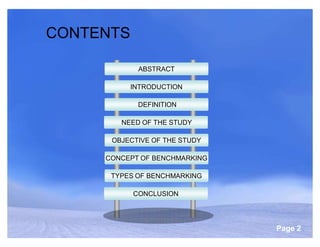
CONTENTS

            ABSTRACT

           INTRODUCTION

            DEFINITION

        NEED OF THE STUDY

      OBJECTIVE OF THE STUDY

     CONCEPT OF BENCHMARKING

      TYPES OF BENCHMARKING

           CONCLUSION


        Powerpoint Templates
                               Page 2
LOGO


  ABSTRACT:


         The introduction part deals with the concept of Benchmarking.
 This paper well aware types of Benchmarking and study deals
 Need/Purpose, Scope, Objective, Methodology, Presentation, Limitations,
 Core Concept and finally Conclusion for benchmarking.
Company name


       INTRODUCTION


          Benchmarking is a process that allows organizations to improve upon
 existing ideas. In order to eliminate myths and misconceptions about benchmarking
 it is important to know exactly what benchmarking is, the different types of
 benchmarking.
DEFINITION OF BENCHMARKING


           ³Benchmarking is simply the process of measuring the performance of
  one's company against the best in the same or another industry´(Stevenson,
  1996).
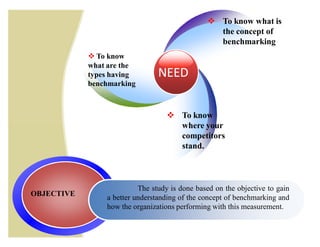
To know what is
                                                 the concept of
                                                 benchmarking
             To know
            what are the
            types having        NEED
            benchmarking


                                    To know
                                     where your
                                     competitors
                                     stand.


                          The study is done based on the objective to gain
OBJECTIVE
                a better understanding of the concept of benchmarking and
                how the organizations performing with this measurement.
CONCEPT OF BENCHMARKING


         Benchmarking is not a complex concept but it should not be taken too lightly.
Benchmarking is basically learning from others. It is using the knowledge and the
experience of others to improve the organization. It is analyzing the performance and
noting the strengths and weaknesses of the organization and assessing what must be
done to improve.
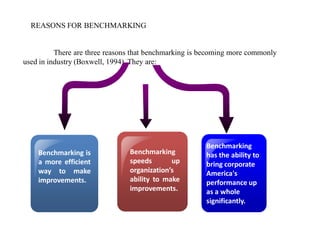
REASONS FOR BENCHMARKING


          There are three reasons that benchmarking is becoming more commonly
used in industry (Boxwell, 1994). They are:


                                                       Benchmarking
    Benchmarking is             Benchmarking           has the ability to
    a more efficient            speeds       up        bring corporate
    way to make                 organization͛s         America's
    improvements.               ability to make        performance up
                                improvements.          as a whole
                                                       significantly.
Benchmarking Process


           Benchmarking is not just making changes and improvements for the
  sake of making changes, benchmarking are about adding value. When using
  benchmarking techniques, an organization must look at how processes in the
  value chain are performed (Stevenson, 1996):
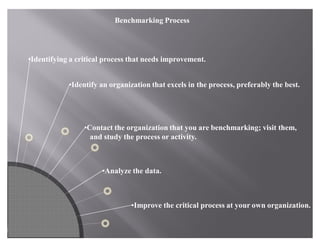
Benchmarking Process


‡Identifying a critical process that needs improvement.


            ‡Identify an organization that excels in the process, preferably the best.


                 ‡Contact the organization that you are benchmarking; visit them,
                   and study the process or activity.


                      ‡Analyze the data.


                                ‡Improve the critical process at your own organization.
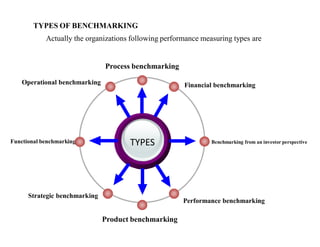
TYPES OF BENCHMARKING
            Actually the organizations following performance measuring types are


                               Process benchmarking

    Operational benchmarking
                     1                                 Financial benchmarking

                      2


Functional benchmarking               TYPES                     Benchmarking from an investor perspective


      Strategic benchmarking
                                                       Performance benchmarking

                               Product benchmarking
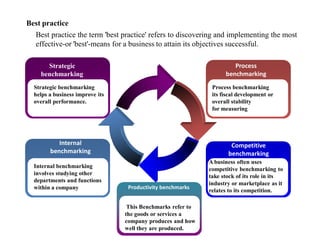
Best practice
  Best practice the term 'best practice' refers to discovering and implementing the most
  effective-or 'best'-means for a business to attain its objectives successful.

      Strategic                                                       Process
    benchmarking                                                   benchmarking

 aStrategic benchmarking                                      Process benchmarking
  helps a business improve its                                its fiscal development or
  overall performance.                                        overall stability
                                                              for measuring


           Internal                                                  Competitive
        benchmarking                                                benchmarking
                                                             A business often uses
  Internal benchmarking
                                                             competitive benchmarking to
  involves studying other                                    take stock of its role in its
  departments and functions
                                                             industry or marketplace as it
  within a company                Productivity benchmarks
                                                             relates to its competition.

                                  This Benchmarks refer to
                                 the goods or services a
                                 company produces and how
                                 well they are produced.
Benchmarking can be as complex as re-engineering or as
              simple as thumbing through the quarterly reports of organizations
              and making comparisons. Although organizations must use
Conclusion:
              benchmarking with some caution, it can be informative and foster a
              spirit of openness and cooperation from indirect competitors
Benchmarking

Benchmarking

  • 2.
    CONTENTS ABSTRACT INTRODUCTION DEFINITION NEED OF THE STUDY OBJECTIVE OF THE STUDY CONCEPT OF BENCHMARKING TYPES OF BENCHMARKING CONCLUSION Powerpoint Templates Page 2
  • 3.
    LOGO ABSTRACT: The introduction part deals with the concept of Benchmarking. This paper well aware types of Benchmarking and study deals Need/Purpose, Scope, Objective, Methodology, Presentation, Limitations, Core Concept and finally Conclusion for benchmarking.
  • 4.
    Company name INTRODUCTION Benchmarking is a process that allows organizations to improve upon existing ideas. In order to eliminate myths and misconceptions about benchmarking it is important to know exactly what benchmarking is, the different types of benchmarking.
  • 5.
    DEFINITION OF BENCHMARKING ³Benchmarking is simply the process of measuring the performance of one's company against the best in the same or another industry´(Stevenson, 1996).
  • 6.
    To know whatis the concept of benchmarking To know what are the types having NEED benchmarking To know where your competitors stand. The study is done based on the objective to gain OBJECTIVE a better understanding of the concept of benchmarking and how the organizations performing with this measurement.
  • 7.
    CONCEPT OF BENCHMARKING Benchmarking is not a complex concept but it should not be taken too lightly. Benchmarking is basically learning from others. It is using the knowledge and the experience of others to improve the organization. It is analyzing the performance and noting the strengths and weaknesses of the organization and assessing what must be done to improve.
  • 8.
    REASONS FOR BENCHMARKING There are three reasons that benchmarking is becoming more commonly used in industry (Boxwell, 1994). They are: Benchmarking Benchmarking is Benchmarking has the ability to a more efficient speeds up bring corporate way to make organization͛s America's improvements. ability to make performance up improvements. as a whole significantly.
  • 9.
    Benchmarking Process Benchmarking is not just making changes and improvements for the sake of making changes, benchmarking are about adding value. When using benchmarking techniques, an organization must look at how processes in the value chain are performed (Stevenson, 1996):
  • 10.
    Benchmarking Process ‡Identifying acritical process that needs improvement. ‡Identify an organization that excels in the process, preferably the best. ‡Contact the organization that you are benchmarking; visit them, and study the process or activity. ‡Analyze the data. ‡Improve the critical process at your own organization.
  • 11.
    TYPES OF BENCHMARKING Actually the organizations following performance measuring types are Process benchmarking Operational benchmarking 1 Financial benchmarking 2 Functional benchmarking TYPES Benchmarking from an investor perspective Strategic benchmarking Performance benchmarking Product benchmarking
  • 12.
    Best practice Best practice the term 'best practice' refers to discovering and implementing the most effective-or 'best'-means for a business to attain its objectives successful. Strategic Process benchmarking benchmarking aStrategic benchmarking Process benchmarking helps a business improve its its fiscal development or overall performance. overall stability for measuring Internal Competitive benchmarking benchmarking A business often uses Internal benchmarking competitive benchmarking to involves studying other take stock of its role in its departments and functions industry or marketplace as it within a company Productivity benchmarks relates to its competition. This Benchmarks refer to the goods or services a company produces and how well they are produced.
  • 13.
    Benchmarking can beas complex as re-engineering or as simple as thumbing through the quarterly reports of organizations and making comparisons. Although organizations must use Conclusion: benchmarking with some caution, it can be informative and foster a spirit of openness and cooperation from indirect competitors