GROUP DYNAMICS
SHANTANU ARORA
BC2018058
GROUP DYNAMICS
-
-
-The social process by which people
interact face-to-face in groups is called
group dynamics.
Group dynamics involves the influence
of personality, power, and behaviour on
the group process.
It helps groups to work effectively.
Types of Groups
Formal groups- structured to pursue a
specific task.
Informal groups- who emerge naturally in
response to organizational or member
interests.
Group Size
Small groups
Large groups
Advantages of small groups
– Interact more with each other and easier
to coordinate their efforts
– More motivated, satisfied, and committed
– Easier to share information
Disadvantages of small groups
- Less effective
- Less no. of ideas
Advantages of large groups
– More resources at their disposal to achieve
group goals.
– Enables managers to obtain division of labor
advantages .
Disadvantages of large groups
– Problem of communication and coordination
– Conflict
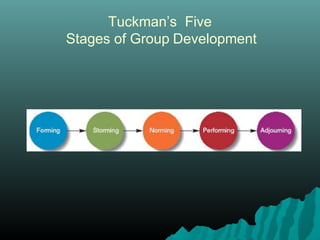
Tuckman’s Five
Stages of Group Development
Forming
– Group members get to know each other and
reach common goals.
Storming
– Group members disagree on direction and
leadership.
Norming
– Close ties and consensus begin to develop
between group members.
Stages of Group Development
Performing
– The group begins to do its realwork.
Adjourning
- These may include parties or ceremonies
that exhibit emotional support or celebration of
their success.
Group Norms
– Shared guidelines or rules for behavior that
most group members follow.
Group Cohesiveness
- The degree to which members are attracted to
their group.
Managing Groups and Teams
for High Performance
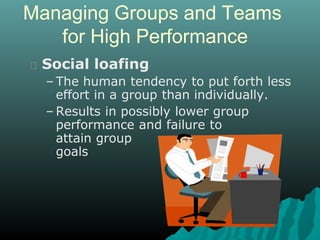
Social loafing
– The human tendency to put forth less
effort in a group than individually.
– Results in possibly lower group
performance and failure to
attain group
goals
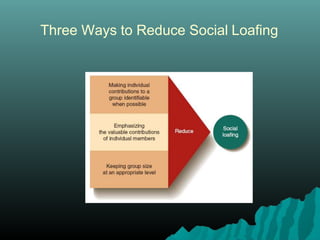
Three Ways to Reduce Social Loafing
Thank You

Group dynamics ppt by shantanu arora

  • 1.
  • 2.
    GROUP DYNAMICS - - -The socialprocess by which people interact face-to-face in groups is called group dynamics. Group dynamics involves the influence of personality, power, and behaviour on the group process. It helps groups to work effectively.
  • 3.
    Types of Groups Formalgroups- structured to pursue a specific task. Informal groups- who emerge naturally in response to organizational or member interests.
  • 4.
  • 5.
    Advantages of smallgroups – Interact more with each other and easier to coordinate their efforts – More motivated, satisfied, and committed – Easier to share information Disadvantages of small groups - Less effective - Less no. of ideas
  • 6.
    Advantages of largegroups – More resources at their disposal to achieve group goals. – Enables managers to obtain division of labor advantages . Disadvantages of large groups – Problem of communication and coordination – Conflict
  • 7.
    Tuckman’s Five Stages ofGroup Development
  • 8.
    Stages of GroupDevelopment Forming – Group members get to know each other and reach common goals. Storming – Group members disagree on direction and leadership. Norming – Close ties and consensus begin to develop between group members.
  • 9.
    Stages of GroupDevelopment Performing – The group begins to do its realwork. Adjourning - These may include parties or ceremonies that exhibit emotional support or celebration of their success.
  • 10.
    Group Norms – Sharedguidelines or rules for behavior that most group members follow. Group Cohesiveness - The degree to which members are attracted to their group.
  • 11.
    Managing Groups andTeams for High Performance Social loafing – The human tendency to put forth less effort in a group than individually. – Results in possibly lower group performance and failure to attain group goals
  • 12.
    Three Ways toReduce Social Loafing
  • 13.