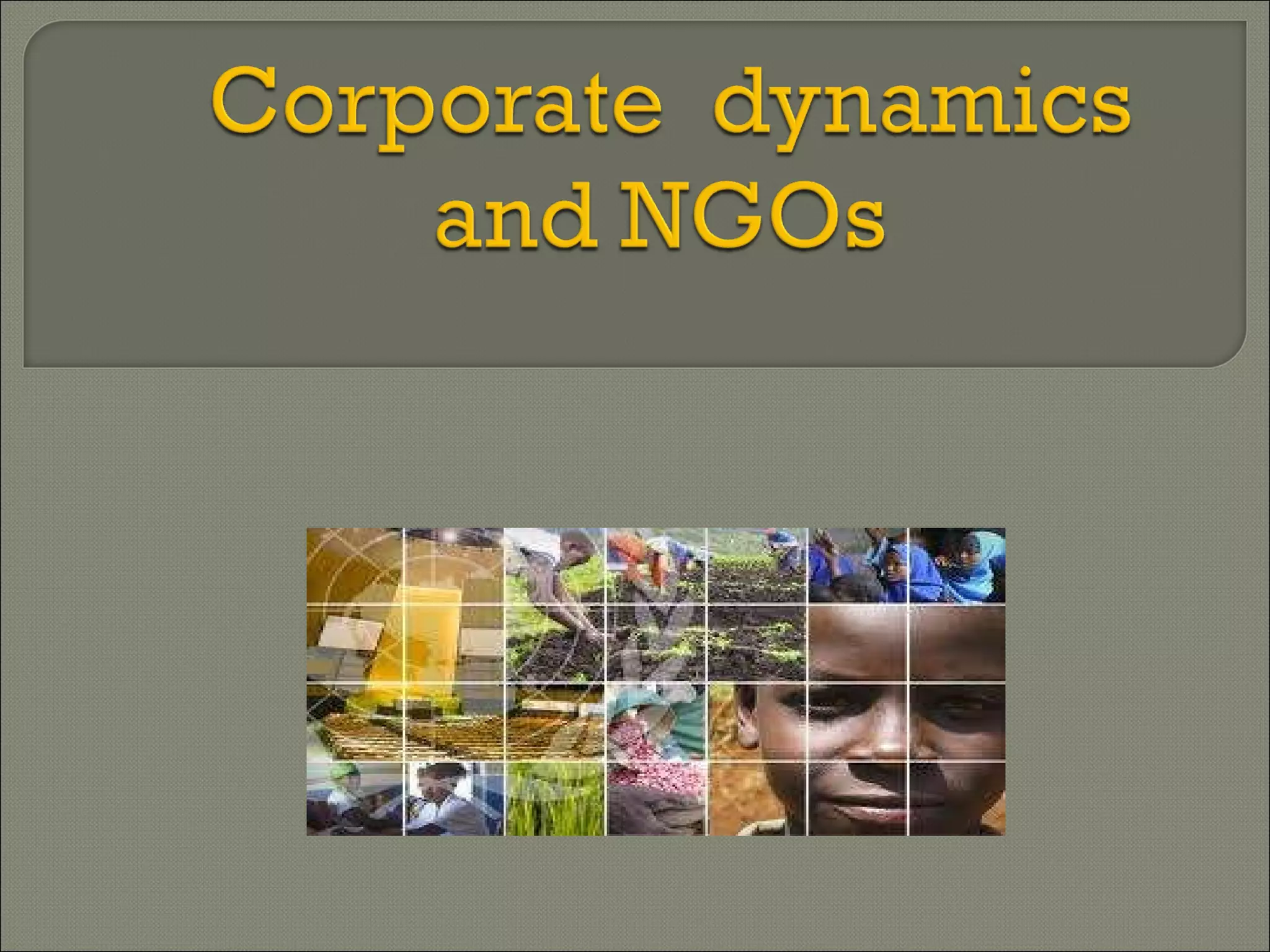
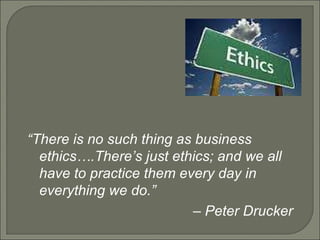
“ There is no such thing as business ethics….There’s just ethics; and we all have to practice them every day in everything we do.”  –  Peter Drucker
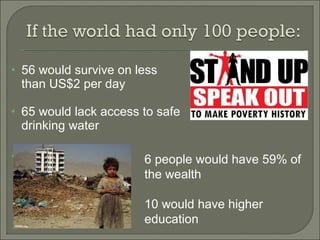
56 would survive on less than US$2 per day 65 would lack access to safe drinking water 6 people would have 59% of the wealth 10 would have higher education
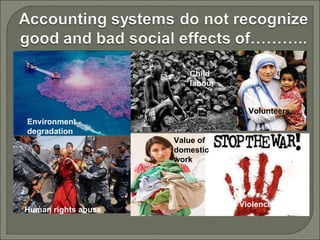
Environment degradation Child labour Human rights abuse Value of domestic work Volunteers Violence
 
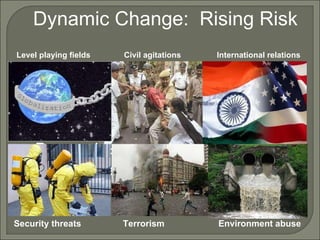
Dynamic Change:  Rising Risk Technology obsolescence Globalization vs regionalization  Stronger civil society Personal Greed Unprecedented scrutiny Terrorism Security threats  Terrorism  Environment abuse Level playing fields  Civil agitations  International relations
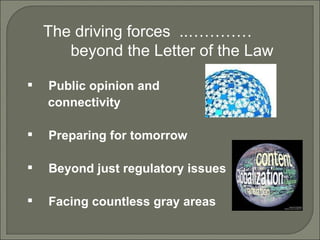
The driving forces  ..…………  beyond the Letter of the Law Public opinion and  connectivity Preparing for tomorrow Beyond just regulatory issues Facing countless gray areas
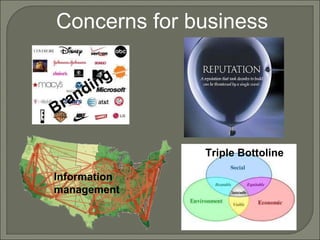
Concerns for business Branding Information management Triple Bottoline
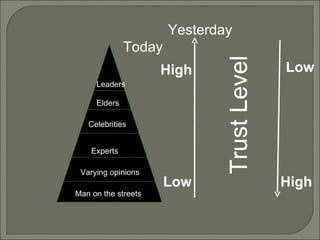
Leaders Experts Man on the streets Varying opinions Celebrities Elders Yesterday  Today Trust Level High Low High Low
 
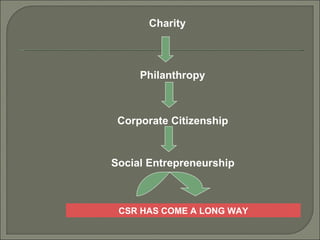
Charity Philanthropy Corporate Citizenship Social Entrepreneurship  CSR HAS COME A LONG WAY
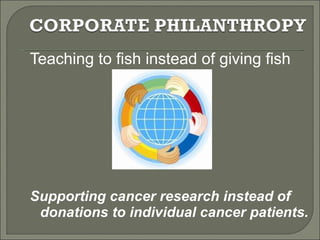
Teaching to fish instead of giving fish Supporting cancer research instead of donations to individual cancer patients.
Wider concept than philanthropy Putting something back into the community Result of considered decision of board, and part of corporate policy and action.  Direct involvement in development of communities human development.  CORPORATE CITIZENSHIP
Charity takes care of today’s problems Philanthropy aims at preventing problems for tomorrow Corporate citizenship institutionalizes the process of sustained development
 
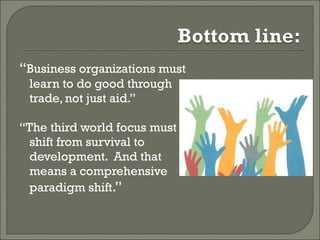
“ Business organizations must learn to do good through trade, not just aid.” “ The third world focus must shift from survival to development.  And that means a comprehensive paradigm shift .”
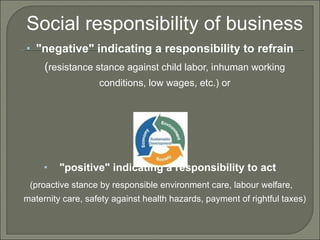
Social responsibility of business "negative" indicating a responsibility to refrain  ( resistance stance against child labor, inhuman working conditions, low wages, etc.) or "positive" indicating a responsibility to act (proactive stance by responsible environment care, labour welfare, maternity care, safety against health hazards, payment of rightful taxes)
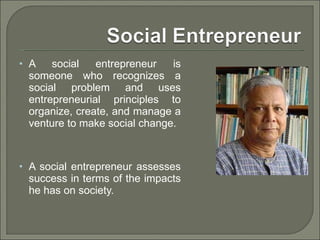
A social entrepreneur is someone who recognizes a social problem and uses entrepreneurial principles to organize, create, and manage a venture to make social change. A social entrepreneur assesses success in terms of the impacts he has on society.
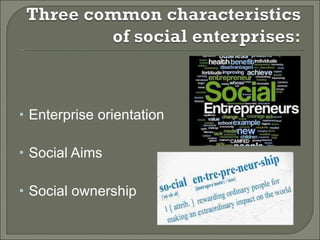
Enterprise orientation  Social Aims  Social ownership
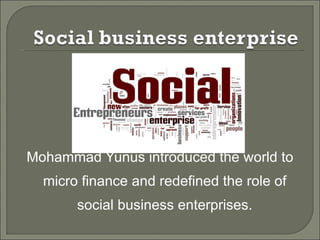
Mohammad Yunus introduced the world to micro finance and redefined the role of social business enterprises.
It  is  an increasingly common approach to engaging youth voice in solving social problems. Youth organizations and programs promote these efforts through a variety of incentives to young people.
 
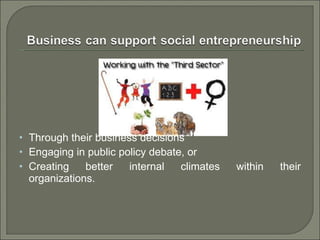
Through their business decisions  Engaging in public policy debate, or  Creating better internal climates within their organizations.
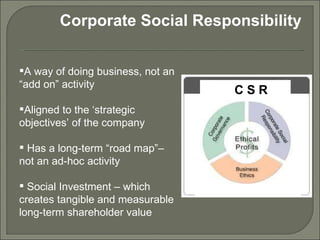
Corporate Social Responsibility A way of doing business, not an “add on” activity Aligned to the ‘strategic objectives’ of the company Has a long-term “road map”– not an ad-hoc activity Social Investment – which creates tangible and measurable long-term shareholder value C S R
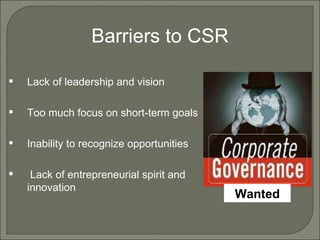
Barriers to CSR Lack of leadership and vision Too much focus on short-term goals Inability to recognize opportunities Lack of entrepreneurial spirit and innovation Wanted
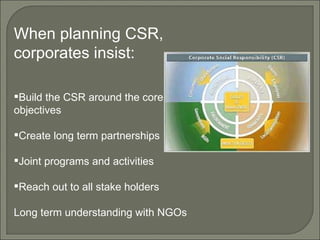
When planning CSR, corporates insist: Build the CSR around the core objectives Create long term partnerships Joint programs and activities Reach out to all stake holders Long term understanding with NGOs
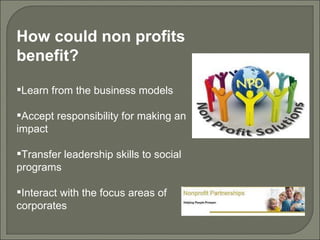
How could non profits benefit? Learn from the business models Accept responsibility for making an impact Transfer leadership skills to social programs Interact with the focus areas of corporates
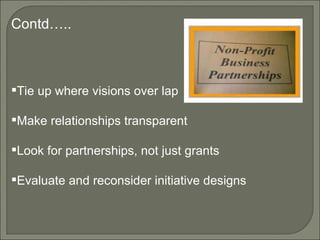
Contd….. Tie up where visions over lap Make relationships transparent Look for partnerships, not just grants Evaluate and reconsider initiative designs
Have we personally …............ Employed any physically challenged Empowered women Provided for employees’ children’s education Abstained from child labour (at homes or in offices or factories)
Ensured hygienic conditions at workers’ homes Offered employees sufficient leave Established a retirement plan for our employees Insured those who work for us May be, we could start with the  basics.

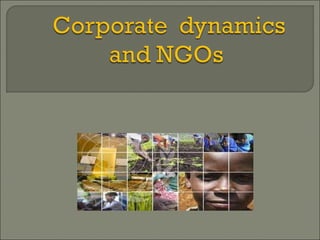
Corporate dynamics and NGOs

  • 1.
  • 2.
    “ There isno such thing as business ethics….There’s just ethics; and we all have to practice them every day in everything we do.” – Peter Drucker
  • 3.
    56 would surviveon less than US$2 per day 65 would lack access to safe drinking water 6 people would have 59% of the wealth 10 would have higher education
  • 4.
    Environment degradation Childlabour Human rights abuse Value of domestic work Volunteers Violence
  • 5.
  • 6.
    Dynamic Change: Rising Risk Technology obsolescence Globalization vs regionalization Stronger civil society Personal Greed Unprecedented scrutiny Terrorism Security threats Terrorism Environment abuse Level playing fields Civil agitations International relations
  • 7.
    The driving forces ..………… beyond the Letter of the Law Public opinion and connectivity Preparing for tomorrow Beyond just regulatory issues Facing countless gray areas
  • 8.
    Concerns for businessBranding Information management Triple Bottoline
  • 9.
    Leaders Experts Manon the streets Varying opinions Celebrities Elders Yesterday Today Trust Level High Low High Low
  • 10.
  • 11.
    Charity Philanthropy CorporateCitizenship Social Entrepreneurship CSR HAS COME A LONG WAY
  • 12.
    Teaching to fishinstead of giving fish Supporting cancer research instead of donations to individual cancer patients.
  • 13.
    Wider concept thanphilanthropy Putting something back into the community Result of considered decision of board, and part of corporate policy and action. Direct involvement in development of communities human development. CORPORATE CITIZENSHIP
  • 14.
    Charity takes careof today’s problems Philanthropy aims at preventing problems for tomorrow Corporate citizenship institutionalizes the process of sustained development
  • 15.
  • 16.
    “ Business organizationsmust learn to do good through trade, not just aid.” “ The third world focus must shift from survival to development. And that means a comprehensive paradigm shift .”
  • 17.
    Social responsibility ofbusiness "negative" indicating a responsibility to refrain ( resistance stance against child labor, inhuman working conditions, low wages, etc.) or "positive" indicating a responsibility to act (proactive stance by responsible environment care, labour welfare, maternity care, safety against health hazards, payment of rightful taxes)
  • 18.
    A social entrepreneuris someone who recognizes a social problem and uses entrepreneurial principles to organize, create, and manage a venture to make social change. A social entrepreneur assesses success in terms of the impacts he has on society.
  • 19.
    Enterprise orientation Social Aims Social ownership
  • 20.
    Mohammad Yunus introducedthe world to micro finance and redefined the role of social business enterprises.
  • 21.
    It is an increasingly common approach to engaging youth voice in solving social problems. Youth organizations and programs promote these efforts through a variety of incentives to young people.
  • 22.
  • 23.
    Through their businessdecisions Engaging in public policy debate, or Creating better internal climates within their organizations.
  • 24.
    Corporate Social ResponsibilityA way of doing business, not an “add on” activity Aligned to the ‘strategic objectives’ of the company Has a long-term “road map”– not an ad-hoc activity Social Investment – which creates tangible and measurable long-term shareholder value C S R
  • 25.
    Barriers to CSRLack of leadership and vision Too much focus on short-term goals Inability to recognize opportunities Lack of entrepreneurial spirit and innovation Wanted
  • 26.
    When planning CSR,corporates insist: Build the CSR around the core objectives Create long term partnerships Joint programs and activities Reach out to all stake holders Long term understanding with NGOs
  • 27.
    How could nonprofits benefit? Learn from the business models Accept responsibility for making an impact Transfer leadership skills to social programs Interact with the focus areas of corporates
  • 28.
    Contd….. Tie upwhere visions over lap Make relationships transparent Look for partnerships, not just grants Evaluate and reconsider initiative designs
  • 29.
    Have we personally…............ Employed any physically challenged Empowered women Provided for employees’ children’s education Abstained from child labour (at homes or in offices or factories)
  • 30.
    Ensured hygienic conditionsat workers’ homes Offered employees sufficient leave Established a retirement plan for our employees Insured those who work for us May be, we could start with the basics.