1


    1. Organic molecules
         Chemistry
          Grade 12


Everything Science www.everythingscience.co.za
2


Introduction
Organic chemistry is the branch of chemistry
that deals with organic molecules.

An organic molecule is one that contains
carbon.

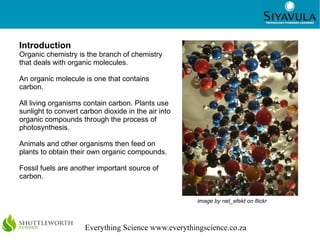
All living organisms contain carbon. Plants use
sunlight to convert carbon dioxide in the air into
organic compounds through the process of
photosynthesis.

Animals and other organisms then feed on
plants to obtain their own organic compounds.

Fossil fuels are another important source of
carbon.


                                                     image by net_efekt on flickr


                     Everything Science www.everythingscience.co.za
3


Carbon
It is the unique properties of the carbon atom that give organic compounds certain
properties.

The carbon atom has four valence electrons, so it can bond with many other atoms,
often resulting in long chain structures. It also forms mostly covalent bonds with the
atoms that it bonds to, meaning that most organic molecules are non-polar.


                      Everything Science www.everythingscience.co.za
4


Representing organic compounds
An organic compound can be represented in different ways:
molecular formula                        condensed structural formula.


structural formula


                     Everything Science www.everythingscience.co.za
5


Isomers
If two compounds are isomers, it means that they have the same molecular formulae but
different structural formulae.


                      Everything Science www.everythingscience.co.za
6


Functional groups
A functional group is a
particular group of
atoms within a molecule,
which give it certain
reaction characteristics.
Organic compounds can         alkane                      alkene
be grouped according to
their functional group.


                            alkyne

                                                      alcohol


halo-alkane                  amine                        carboxylic acid


                       Everything Science www.everythingscience.co.za
7


Hydrocarbons
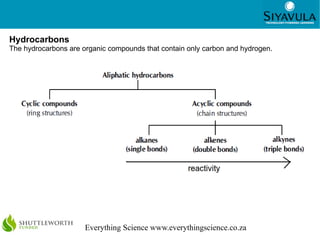
The hydrocarbons are organic compounds that contain only carbon and hydrogen.


                      Everything Science www.everythingscience.co.za
8


Saturated hydrocarbons
A hydrocarbon is said to be saturated if it contains the maximum possible number of
hydrogen atoms for that molecule. The alkanes are all saturated compounds.


A hydrocarbon is unsaturated if it does not contain the maximum number of hydrogen
atoms for that molecule. The alkenes and alkynes are examples of unsaturated
molecules. If a double or triple bond is broken, more hydrogen atoms can be added to the
molecule.


                      Everything Science www.everythingscience.co.za
9


Naming organic compounds
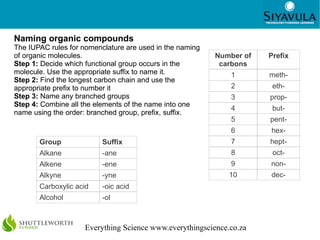
The IUPAC rules for nomenclature are used in the naming
of organic molecules.                                     Number of   Prefix
Step 1: Decide which functional group occurs in the        carbons
molecule. Use the appropriate suffix to name it.              1       meth-
Step 2: Find the longest carbon chain and use the
appropriate prefix to number it                               2        eth-
Step 3: Name any branched groups                              3       prop-
Step 4: Combine all the elements of the name into one
                                                              4        but-
name using the order: branched group, prefix, suffix.
                                                              5       pent-
                                                              6       hex-
       Group              Suffix                              7       hept-
       Alkane             -ane                                8        oct-
       Alkene             -ene                                9       non-
       Alkyne             -yne                               10       dec-
       Carboxylic acid    -oic acid
       Alcohol            -ol


                    Everything Science www.everythingscience.co.za
10


Reactions
There are three types of reactions that occur in the alkanes: substitution, elimination
and oxidation reactions.


                         Everything Science www.everythingscience.co.za
11


Reactions continued
The alkenes undergo addition reactions because they are unsaturated.


                     Everything Science www.everythingscience.co.za
12


Properties of hydrocarbons
Many of the properties of the hydrocarbons are determined by their molecular structure,
the bonds between atoms and molecules, and their surface area.

The melting point and boiling point of the hydrocarbons increases as their number of
carbon atoms increases.

The molecular mass of the hydrocarbons determines whether they will be in the gaseous,
liquid or solid phase at certain temperatures.


                      Everything Science www.everythingscience.co.za
13


Alcohols
An alcohol is an organic compound that contains a hydroxyl group (-OH).
The alcohols have a number of different uses including their use as a solvent, for medicinal
purposes and in alcoholic drinks.
The alcohols share a number of properties because of the hydroxyl group. The hydroxyl
group affects the solubility of the alcohols. Those with shorter carbon chains are generally
more soluble, and those with longer chains are less soluble.
The strong hydrogen bond between the hydrogen and oxygen atoms in the hydroxyl group
gives alcohols a higher melting point and boiling point than other organic compounds. The
hydroxyl group also gives the alcohols both acidic and basic properties.


                       Everything Science www.everythingscience.co.za
14


Carboxylic acids
The carboxylic acids are organic acids that contain a carboxyl group with the
formula -COOH. In a carboxyl group, an oxygen atom is double-bonded to a
carbon atom, which is also bonded to a hydroxyl group.
The carboxylic acids have weak acidic properties because the hydrogen atom is
able to dissociate from the carboxyl group.


                     Everything Science www.everythingscience.co.za
15


Carboxylic acid derivatives
An ester is formed when an alcohol reacts with a carboxylic acid.
The amines are organic compounds that contain an amino functional group, which has the
formula -NH2. Some amines belong to the amino acid group, which are the building blocks of
proteins.
A carbonyl group consists of an oxygen atom that is double-bonded to a carbon atom. In a
ketone, the carbonyl group is in the middle of the carbon chain. In an aldehyde the carbonyl
group is at the end of the chain.


                       Everything Science www.everythingscience.co.za
16


For more practice or to ask an expert for help on this
section see:
www.everythingscience.co.za
ESCA


             Everything Science www.everythingscience.co.za

Organic molecules

  • 1.
    1 1. Organic molecules Chemistry Grade 12 Everything Science www.everythingscience.co.za
  • 2.
    2 Introduction Organic chemistry isthe branch of chemistry that deals with organic molecules. An organic molecule is one that contains carbon. All living organisms contain carbon. Plants use sunlight to convert carbon dioxide in the air into organic compounds through the process of photosynthesis. Animals and other organisms then feed on plants to obtain their own organic compounds. Fossil fuels are another important source of carbon. image by net_efekt on flickr Everything Science www.everythingscience.co.za
  • 3.
    3 Carbon It is theunique properties of the carbon atom that give organic compounds certain properties. The carbon atom has four valence electrons, so it can bond with many other atoms, often resulting in long chain structures. It also forms mostly covalent bonds with the atoms that it bonds to, meaning that most organic molecules are non-polar. Everything Science www.everythingscience.co.za
  • 4.
    4 Representing organic compounds Anorganic compound can be represented in different ways: molecular formula condensed structural formula. structural formula Everything Science www.everythingscience.co.za
  • 5.
    5 Isomers If two compoundsare isomers, it means that they have the same molecular formulae but different structural formulae. Everything Science www.everythingscience.co.za
  • 6.
    6 Functional groups A functionalgroup is a particular group of atoms within a molecule, which give it certain reaction characteristics. Organic compounds can alkane alkene be grouped according to their functional group. alkyne alcohol halo-alkane amine carboxylic acid Everything Science www.everythingscience.co.za
  • 7.
    7 Hydrocarbons The hydrocarbons areorganic compounds that contain only carbon and hydrogen. Everything Science www.everythingscience.co.za
  • 8.
    8 Saturated hydrocarbons A hydrocarbonis said to be saturated if it contains the maximum possible number of hydrogen atoms for that molecule. The alkanes are all saturated compounds. A hydrocarbon is unsaturated if it does not contain the maximum number of hydrogen atoms for that molecule. The alkenes and alkynes are examples of unsaturated molecules. If a double or triple bond is broken, more hydrogen atoms can be added to the molecule. Everything Science www.everythingscience.co.za
  • 9.
    9 Naming organic compounds TheIUPAC rules for nomenclature are used in the naming of organic molecules. Number of Prefix Step 1: Decide which functional group occurs in the carbons molecule. Use the appropriate suffix to name it. 1 meth- Step 2: Find the longest carbon chain and use the appropriate prefix to number it 2 eth- Step 3: Name any branched groups 3 prop- Step 4: Combine all the elements of the name into one 4 but- name using the order: branched group, prefix, suffix. 5 pent- 6 hex- Group Suffix 7 hept- Alkane -ane 8 oct- Alkene -ene 9 non- Alkyne -yne 10 dec- Carboxylic acid -oic acid Alcohol -ol Everything Science www.everythingscience.co.za
  • 10.
    10 Reactions There are threetypes of reactions that occur in the alkanes: substitution, elimination and oxidation reactions. Everything Science www.everythingscience.co.za
  • 11.
    11 Reactions continued The alkenesundergo addition reactions because they are unsaturated. Everything Science www.everythingscience.co.za
  • 12.
    12 Properties of hydrocarbons Manyof the properties of the hydrocarbons are determined by their molecular structure, the bonds between atoms and molecules, and their surface area. The melting point and boiling point of the hydrocarbons increases as their number of carbon atoms increases. The molecular mass of the hydrocarbons determines whether they will be in the gaseous, liquid or solid phase at certain temperatures. Everything Science www.everythingscience.co.za
  • 13.
    13 Alcohols An alcohol isan organic compound that contains a hydroxyl group (-OH). The alcohols have a number of different uses including their use as a solvent, for medicinal purposes and in alcoholic drinks. The alcohols share a number of properties because of the hydroxyl group. The hydroxyl group affects the solubility of the alcohols. Those with shorter carbon chains are generally more soluble, and those with longer chains are less soluble. The strong hydrogen bond between the hydrogen and oxygen atoms in the hydroxyl group gives alcohols a higher melting point and boiling point than other organic compounds. The hydroxyl group also gives the alcohols both acidic and basic properties. Everything Science www.everythingscience.co.za
  • 14.
    14 Carboxylic acids The carboxylicacids are organic acids that contain a carboxyl group with the formula -COOH. In a carboxyl group, an oxygen atom is double-bonded to a carbon atom, which is also bonded to a hydroxyl group. The carboxylic acids have weak acidic properties because the hydrogen atom is able to dissociate from the carboxyl group. Everything Science www.everythingscience.co.za
  • 15.
    15 Carboxylic acid derivatives Anester is formed when an alcohol reacts with a carboxylic acid. The amines are organic compounds that contain an amino functional group, which has the formula -NH2. Some amines belong to the amino acid group, which are the building blocks of proteins. A carbonyl group consists of an oxygen atom that is double-bonded to a carbon atom. In a ketone, the carbonyl group is in the middle of the carbon chain. In an aldehyde the carbonyl group is at the end of the chain. Everything Science www.everythingscience.co.za
  • 16.
    16 For more practiceor to ask an expert for help on this section see: www.everythingscience.co.za ESCA Everything Science www.everythingscience.co.za