HEAD AND NECK IMAGING
EHAB ABOU ELFOTOUH. MD.
Optic Nerve Enlargement D.D:
 Neoplasms:
 Optic nerve glioma.
 Meningioma.
 Hemangioblastoa.
 Schwannoma.
 Ganglioglioma.
 Medulloepitheliomas.
 Metastasis.
 Leukemia.
 Nonneoplastic:
 Increased intracranial
pressure.
 Optic neuritis.
 Graves disease.
 Orbital pseudotumor.
 Toxoplasmosis.
 Tuberculosis.
 Sarcoidosis.
 Central retinal vein
occlusion.
 Traumatic hematoma of
the optic nerve.
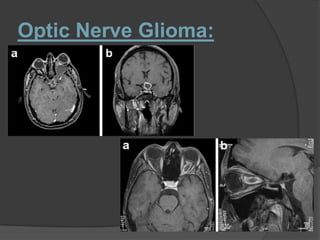
Optic Nerve Glioma:
 Optic nerve gliomas are histologically juvenile pilocytic
astrocytomas, WHO grade I.
 May involve any portion of the optic pathways as well
as the hypothalamus.
 Representing 4% of orbital tumors.
 Usually manifested in the first decade of life.
 The most common intraconal tumor of childhood.
 More than half of patients have neurofibromatosis type
1 (NF1).
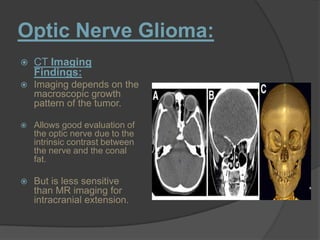
Optic Nerve Glioma:
 CT Imaging
Findings:
 Imaging depends on the
macroscopic growth
pattern of the tumor.
 Allows good evaluation of
the optic nerve due to the
intrinsic contrast between
the nerve and the conal
fat.
 But is less sensitive
than MR imaging for
intracranial extension.
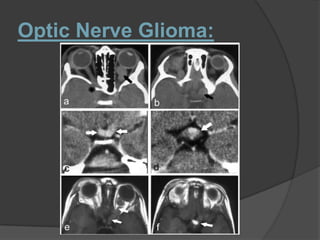
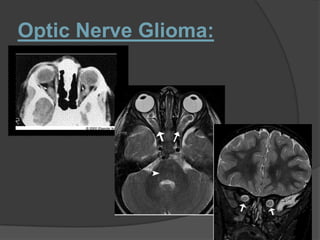
Optic Nerve Glioma:
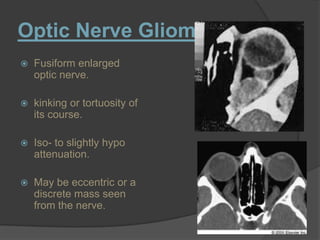
 Fusiform enlarged
optic nerve.
 kinking or tortuosity of
its course.
 Iso- to slightly hypo
attenuation.
 May be eccentric or a
discrete mass seen
from the nerve.
Optic Nerve Glioma:
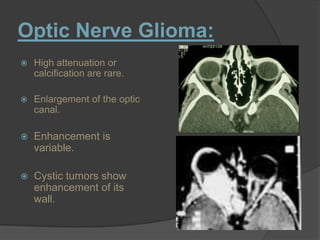
 High attenuation or
calcification are rare.
 Enlargement of the optic
canal.
 Enhancement is
variable.
 Cystic tumors show
enhancement of its
wall.
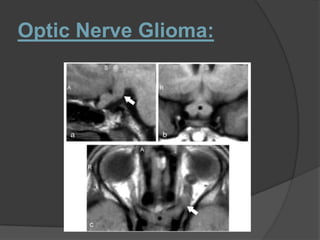
Optic Nerve Glioma:
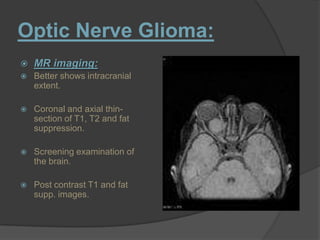
 MR imaging:
 Better shows intracranial
extent.
 Coronal and axial thin-
section of T1, T2 and fat
suppression.
 Screening examination of
the brain.
 Post contrast T1 and fat
supp. images.
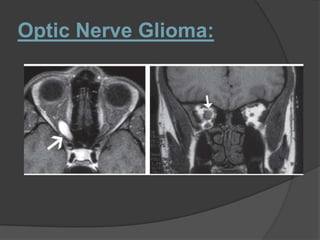
Optic Nerve Glioma:
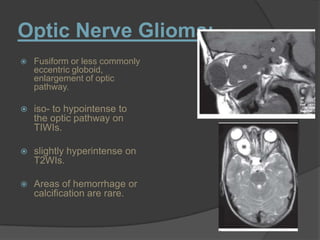
 Fusiform or less commonly
eccentric globoid,
enlargement of optic
pathway.
 iso- to hypointense to
the optic pathway on
TIWIs.
 slightly hyperintense on
T2WIs.
 Areas of hemorrhage or
calcification are rare.
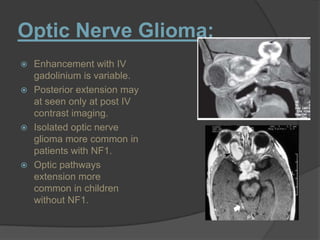
Optic Nerve Glioma:
 Enhancement with IV
gadolinium is variable.
 Posterior extension may
at seen only at post IV
contrast imaging.
 Isolated optic nerve
glioma more common in
patients with NF1.
 Optic pathways
extension more
common in children
without NF1.
Optic Nerve Glioma:
Optic Nerve Glioma:
Optic Nerve Glioma:
Optic Nerve Glioma:
Optic Nerve Glioma:
Optic Nerve Sheath
Meningioma:
 Meningiomas primarily in the optic nerve sheath are
even rarer than glioma.
 Mostly often in middleaged women.
 Bilateral optic nerve sheath meningiomas are rarely
and association with neurofibromatosis.
 Predominant early feature is visual loss.
 Proptosis occurs later.
 Physical examination reveals an abnormal optic
disk, which may be swollen or atrophic.
 Visual field revealed usually a central scotoma.
 Restriction of eye movement.
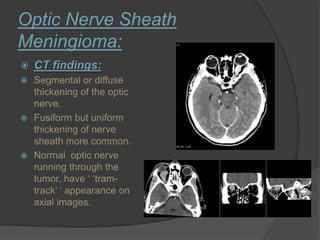
Optic Nerve Sheath
Meningioma:
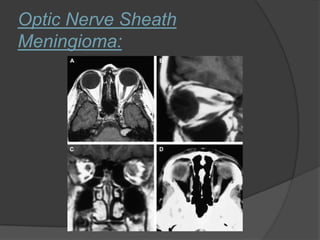
 CT findings:
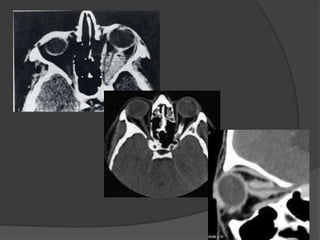
 Segmental or diffuse
thickening of the optic
nerve.
 Fusiform but uniform
thickening of nerve
sheath more common.
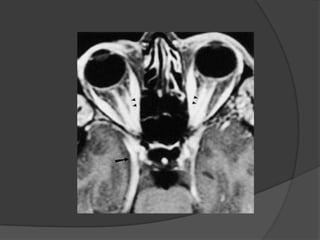
 Normal optic nerve
running through the
tumor, have „ „tram-
track‟ „ appearance on
axial images.
Optic Nerve Sheath
Meningioma:
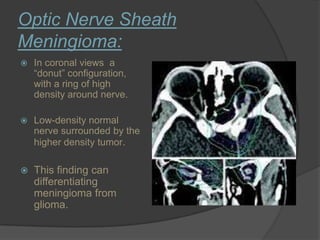
 In coronal views a
“donut” configuration,
with a ring of high
density around nerve.
 Low-density normal
nerve surrounded by the
higher density tumor.
 This finding can
differentiating
meningioma from
glioma.
Optic Nerve Sheath
Meningioma:
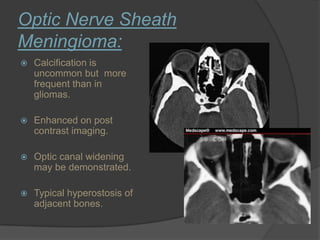
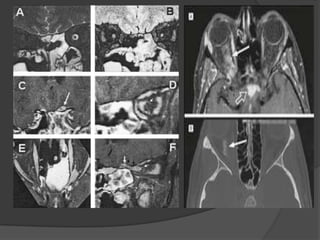
 Calcification is
uncommon but more
frequent than in
gliomas.
 Enhanced on post
contrast imaging.
 Optic canal widening
may be demonstrated.
 Typical hyperostosis of
adjacent bones.
Optic Nerve Sheath
Meningioma:
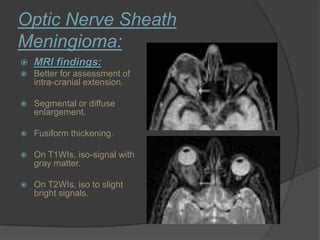
 MRI findings:
 Better for assessment of
intra-cranial extension.
 Segmental or diffuse
enlargement.
 Fusiform thickening.
 On T1WIs, iso-signal with
gray matter.
 On T2WIs, iso to slight
bright signals.
Optic Nerve Sheath
Meningioma:
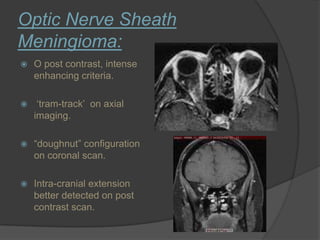
 O post contrast, intense
enhancing criteria.
 „tram-track‟ on axial
imaging.
 “doughnut” configuration
on coronal scan.
 Intra-cranial extension
better detected on post
contrast scan.
Optic Nerve Sheath
Meningioma:
Thank you

Orbital imaging v

  • 1.
    HEAD AND NECKIMAGING EHAB ABOU ELFOTOUH. MD.
  • 2.
    Optic Nerve EnlargementD.D:  Neoplasms:  Optic nerve glioma.  Meningioma.  Hemangioblastoa.  Schwannoma.  Ganglioglioma.  Medulloepitheliomas.  Metastasis.  Leukemia.  Nonneoplastic:  Increased intracranial pressure.  Optic neuritis.  Graves disease.  Orbital pseudotumor.  Toxoplasmosis.  Tuberculosis.  Sarcoidosis.  Central retinal vein occlusion.  Traumatic hematoma of the optic nerve.
  • 3.
    Optic Nerve Glioma: Optic nerve gliomas are histologically juvenile pilocytic astrocytomas, WHO grade I.  May involve any portion of the optic pathways as well as the hypothalamus.  Representing 4% of orbital tumors.  Usually manifested in the first decade of life.  The most common intraconal tumor of childhood.  More than half of patients have neurofibromatosis type 1 (NF1).
  • 4.
    Optic Nerve Glioma: CT Imaging Findings:  Imaging depends on the macroscopic growth pattern of the tumor.  Allows good evaluation of the optic nerve due to the intrinsic contrast between the nerve and the conal fat.  But is less sensitive than MR imaging for intracranial extension.
  • 5.
    Optic Nerve Glioma: Fusiform enlarged optic nerve.  kinking or tortuosity of its course.  Iso- to slightly hypo attenuation.  May be eccentric or a discrete mass seen from the nerve.
  • 6.
    Optic Nerve Glioma: High attenuation or calcification are rare.  Enlargement of the optic canal.  Enhancement is variable.  Cystic tumors show enhancement of its wall.
  • 7.
    Optic Nerve Glioma: MR imaging:  Better shows intracranial extent.  Coronal and axial thin- section of T1, T2 and fat suppression.  Screening examination of the brain.  Post contrast T1 and fat supp. images.
  • 8.
    Optic Nerve Glioma: Fusiform or less commonly eccentric globoid, enlargement of optic pathway.  iso- to hypointense to the optic pathway on TIWIs.  slightly hyperintense on T2WIs.  Areas of hemorrhage or calcification are rare.
  • 9.
    Optic Nerve Glioma: Enhancement with IV gadolinium is variable.  Posterior extension may at seen only at post IV contrast imaging.  Isolated optic nerve glioma more common in patients with NF1.  Optic pathways extension more common in children without NF1.
  • 10.
  • 11.
  • 12.
  • 13.
  • 14.
  • 15.
    Optic Nerve Sheath Meningioma: Meningiomas primarily in the optic nerve sheath are even rarer than glioma.  Mostly often in middleaged women.  Bilateral optic nerve sheath meningiomas are rarely and association with neurofibromatosis.  Predominant early feature is visual loss.  Proptosis occurs later.  Physical examination reveals an abnormal optic disk, which may be swollen or atrophic.  Visual field revealed usually a central scotoma.  Restriction of eye movement.
  • 16.
    Optic Nerve Sheath Meningioma: CT findings:  Segmental or diffuse thickening of the optic nerve.  Fusiform but uniform thickening of nerve sheath more common.  Normal optic nerve running through the tumor, have „ „tram- track‟ „ appearance on axial images.
  • 17.
    Optic Nerve Sheath Meningioma: In coronal views a “donut” configuration, with a ring of high density around nerve.  Low-density normal nerve surrounded by the higher density tumor.  This finding can differentiating meningioma from glioma.
  • 18.
    Optic Nerve Sheath Meningioma: Calcification is uncommon but more frequent than in gliomas.  Enhanced on post contrast imaging.  Optic canal widening may be demonstrated.  Typical hyperostosis of adjacent bones.
  • 20.
    Optic Nerve Sheath Meningioma: MRI findings:  Better for assessment of intra-cranial extension.  Segmental or diffuse enlargement.  Fusiform thickening.  On T1WIs, iso-signal with gray matter.  On T2WIs, iso to slight bright signals.
  • 21.
    Optic Nerve Sheath Meningioma: O post contrast, intense enhancing criteria.  „tram-track‟ on axial imaging.  “doughnut” configuration on coronal scan.  Intra-cranial extension better detected on post contrast scan.
  • 22.
  • 25.