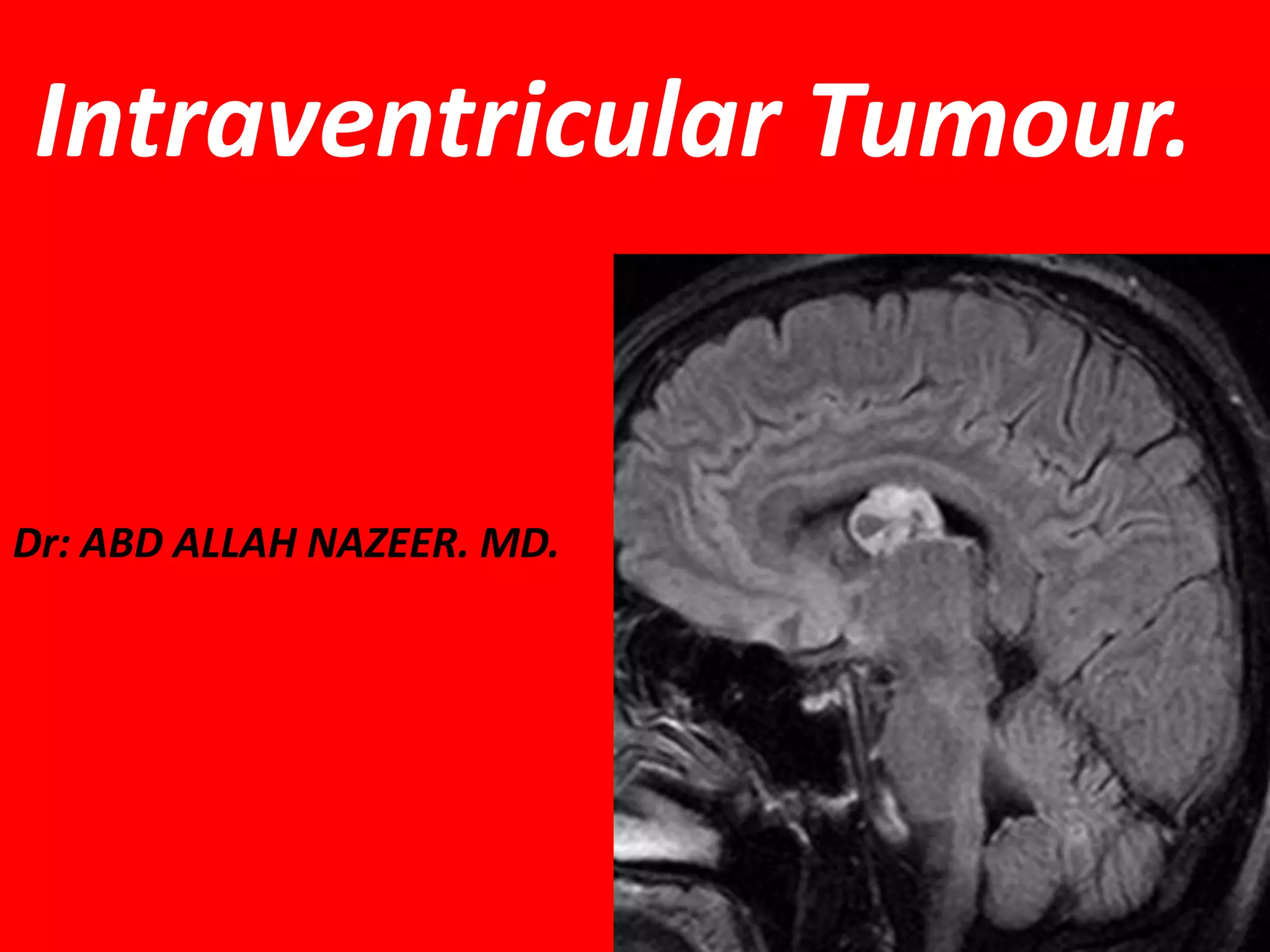
Intraventricular Tumour.

Dr: ABD ALLAH NAZEER. MD.
Intraventricular neoplasms are rare
and arise from periventricular
structures such as the walls of the
ventricular system, the septum
pellucidum and the choroid
plexus. Many tumour types arise
from, or can bulge into the ventricular
system, although there are certain
lesions that are relatively restricted to
ventricles.
Neoplasms of the ventri-cular wall
and septum pellucidum.
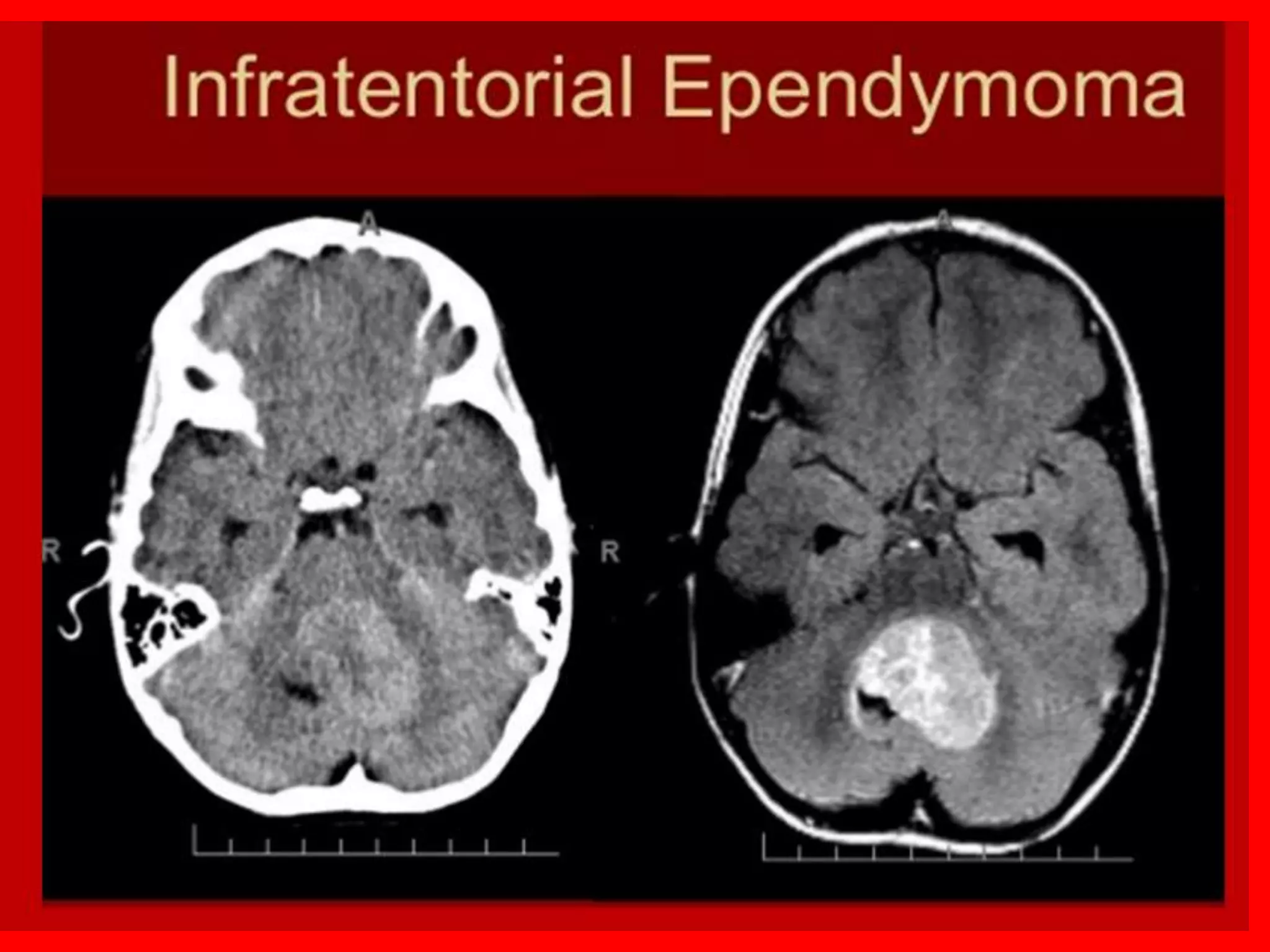
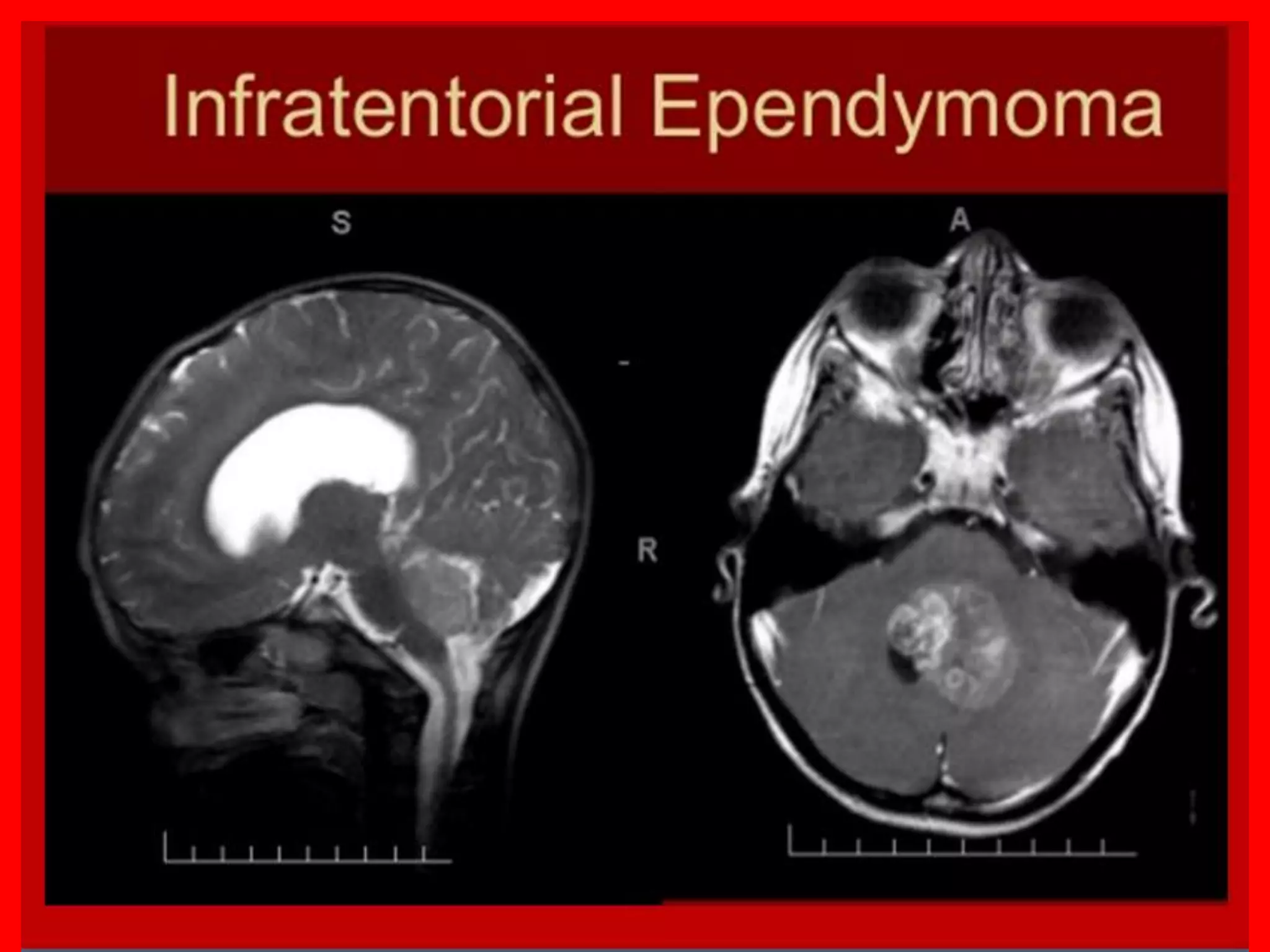
ependymoma
subependymoma
central neurocytoma
subependymal giant cell astrocytoma
Neoplasms of the choroid plexus
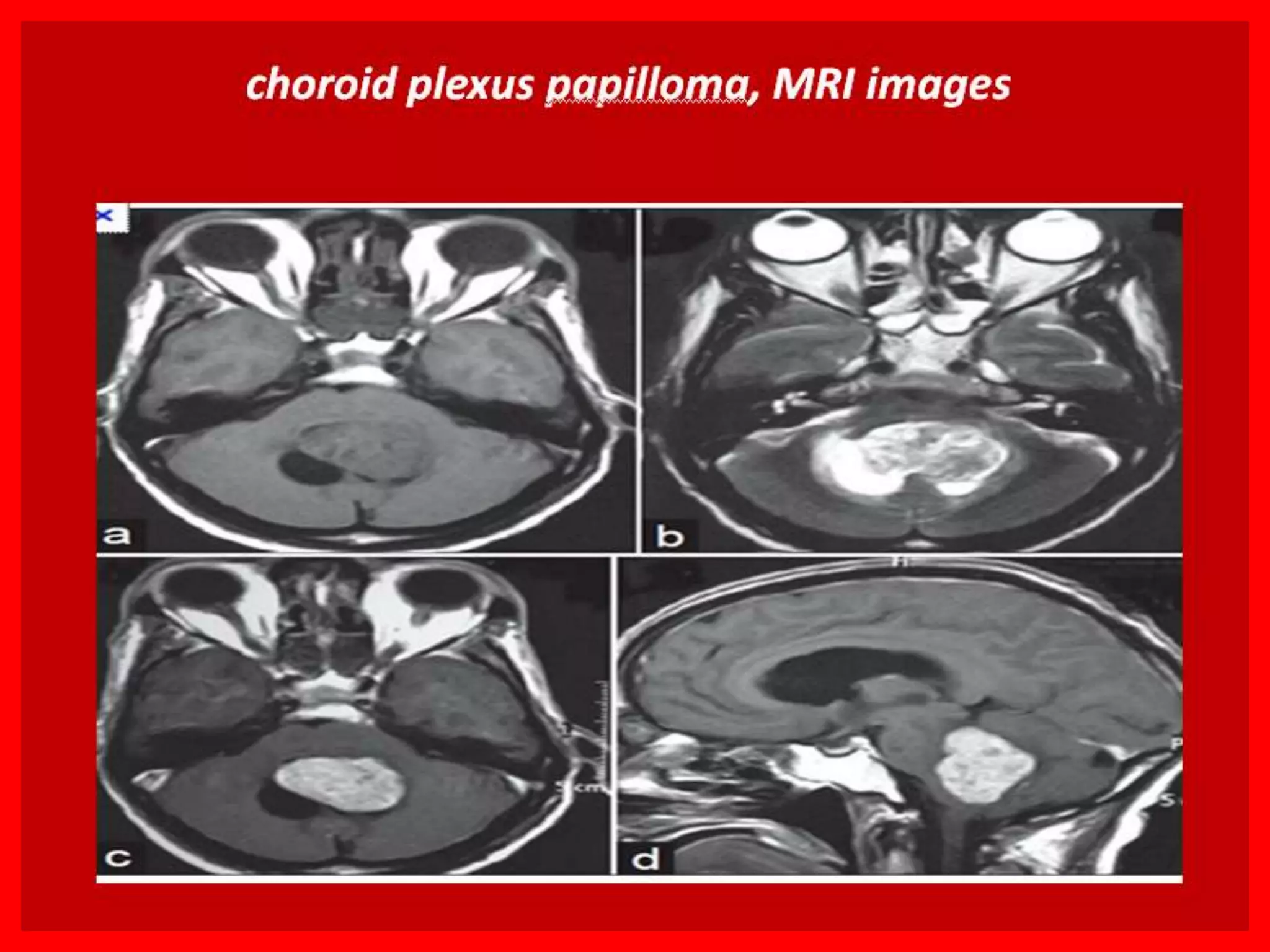
choroid plexus papilloma
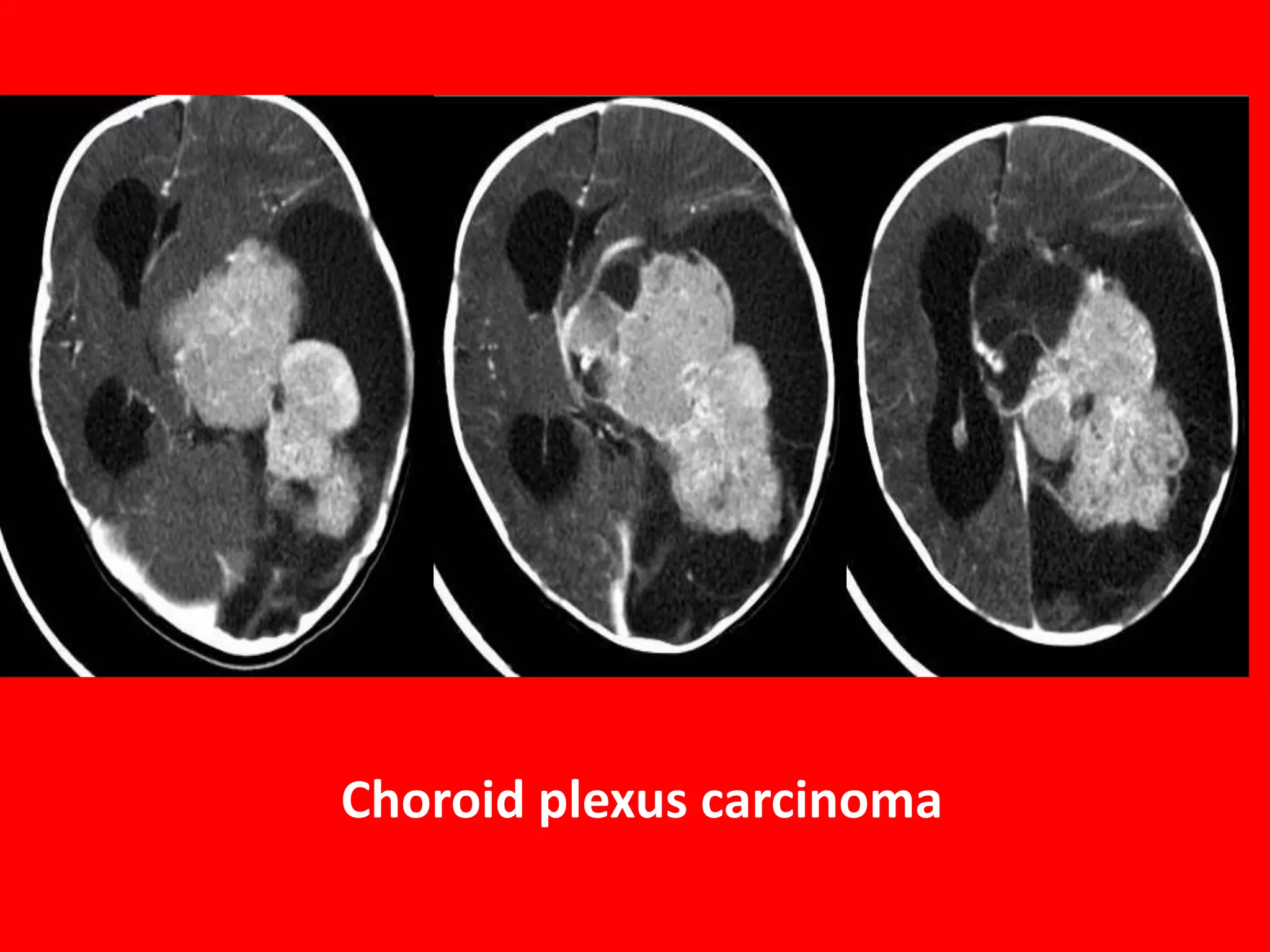
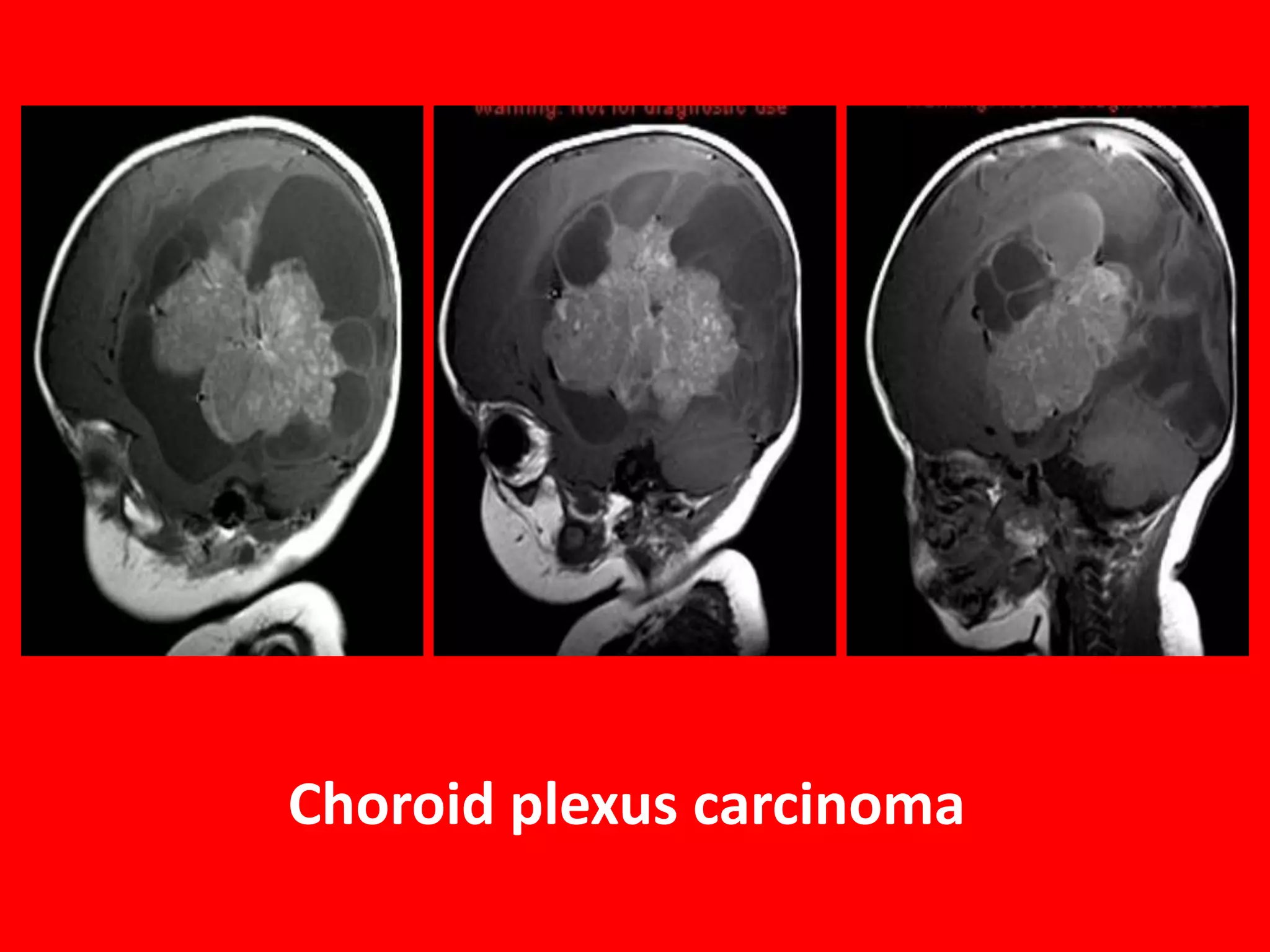
choroid plexus carcinoma
Others
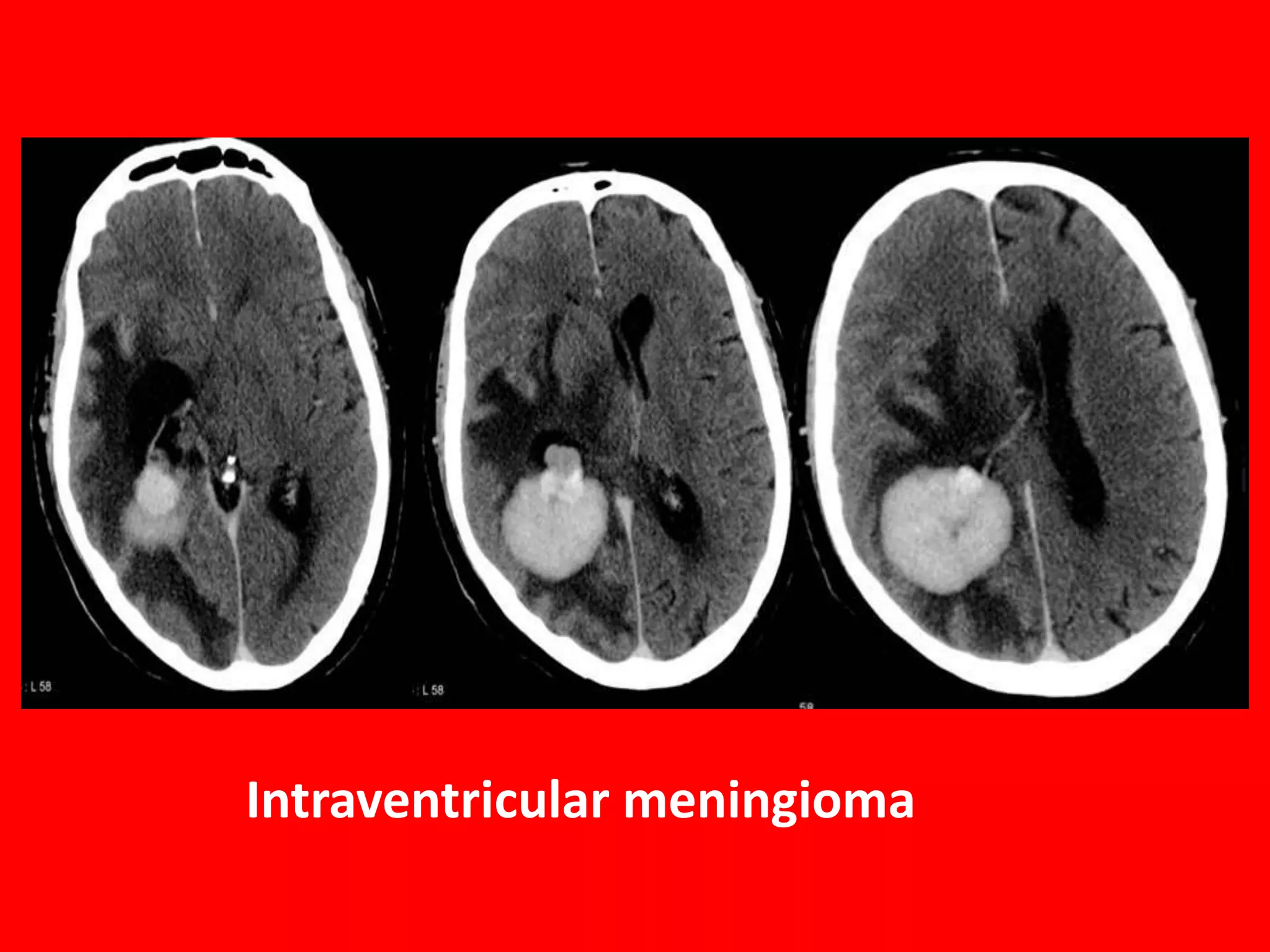
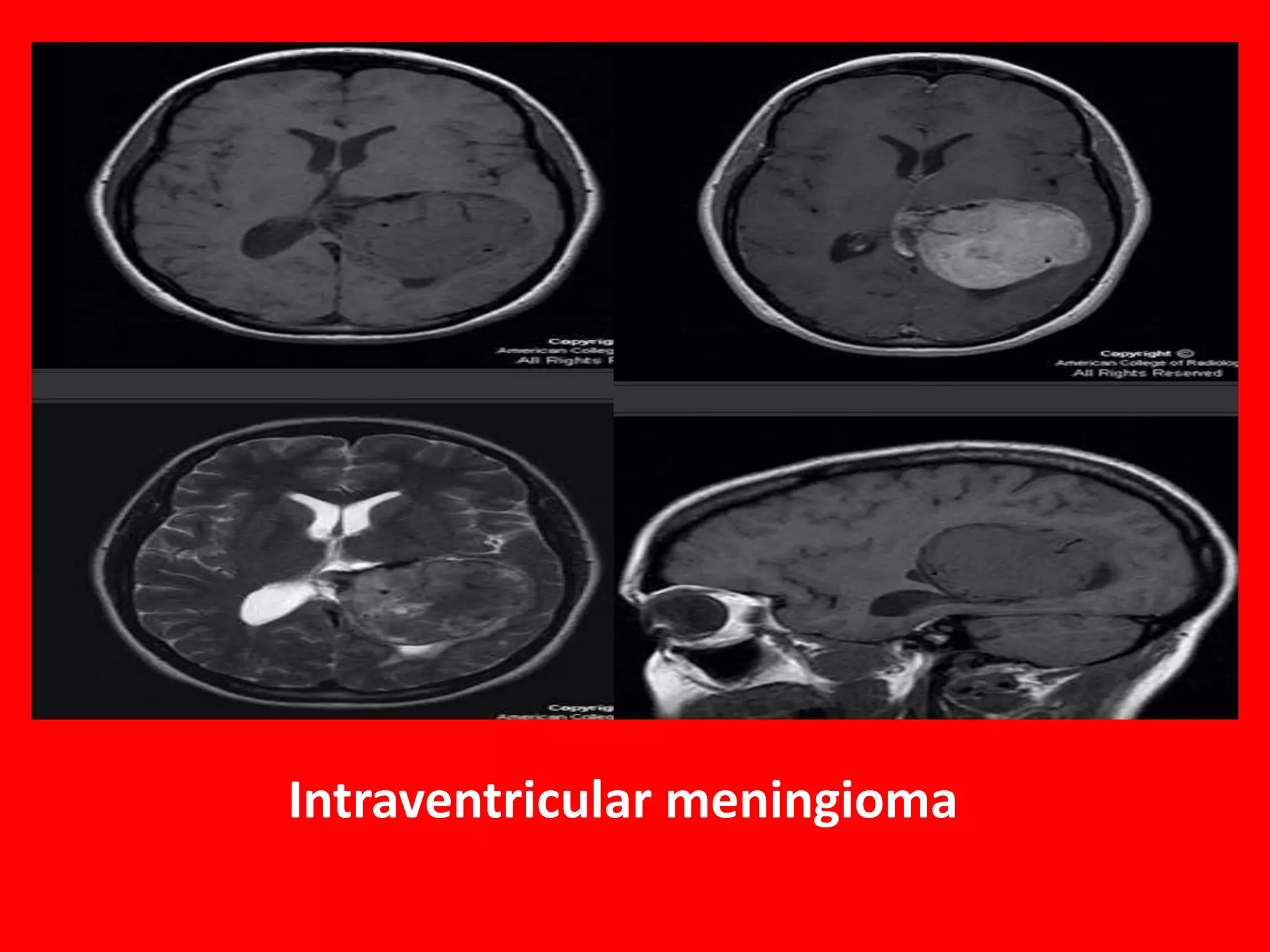
intraventricular meningioma
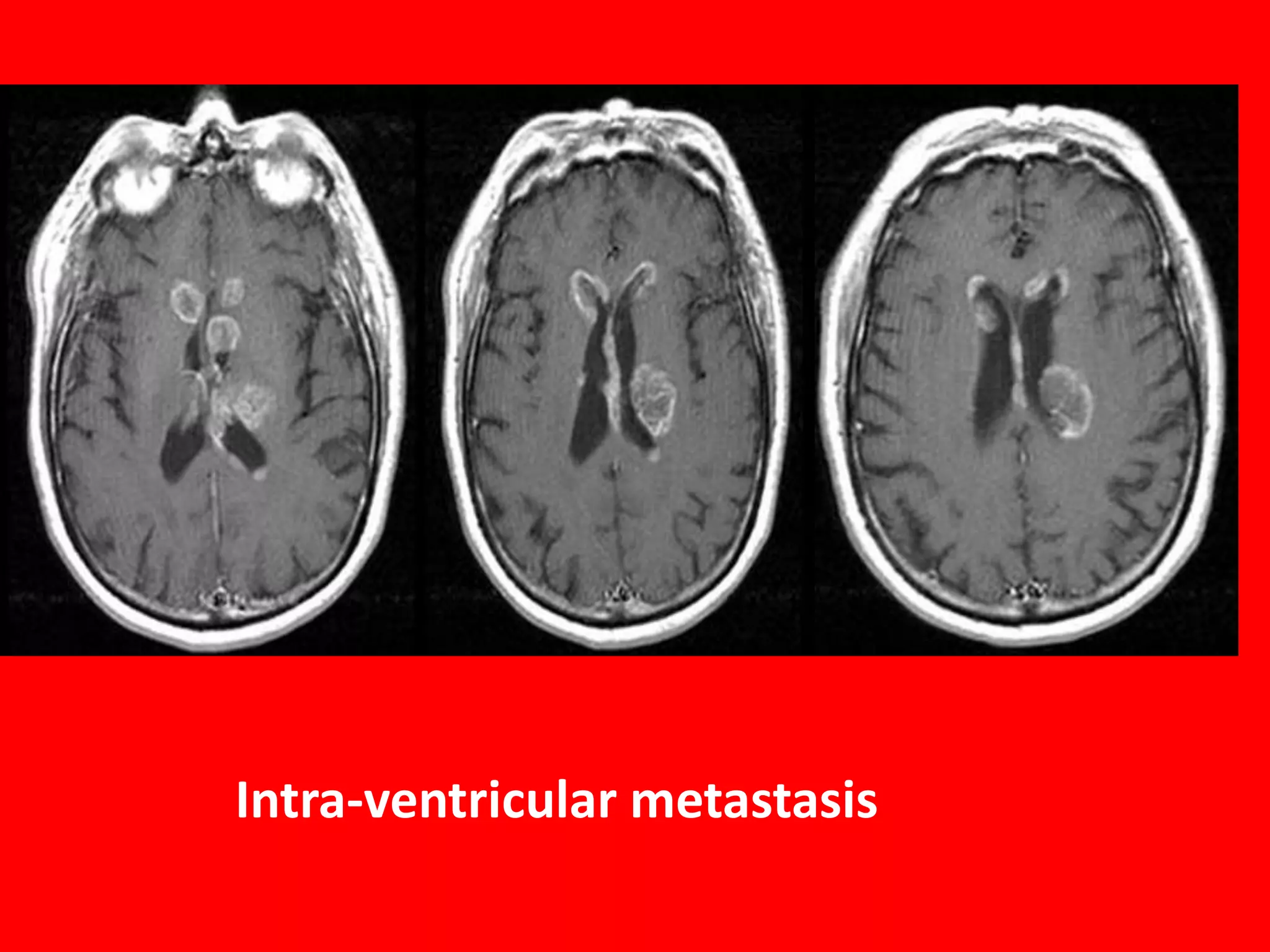
intraventricular metastasis
oligodendroglioma
pilocytic astrocytoma
glioblastoma multiforme
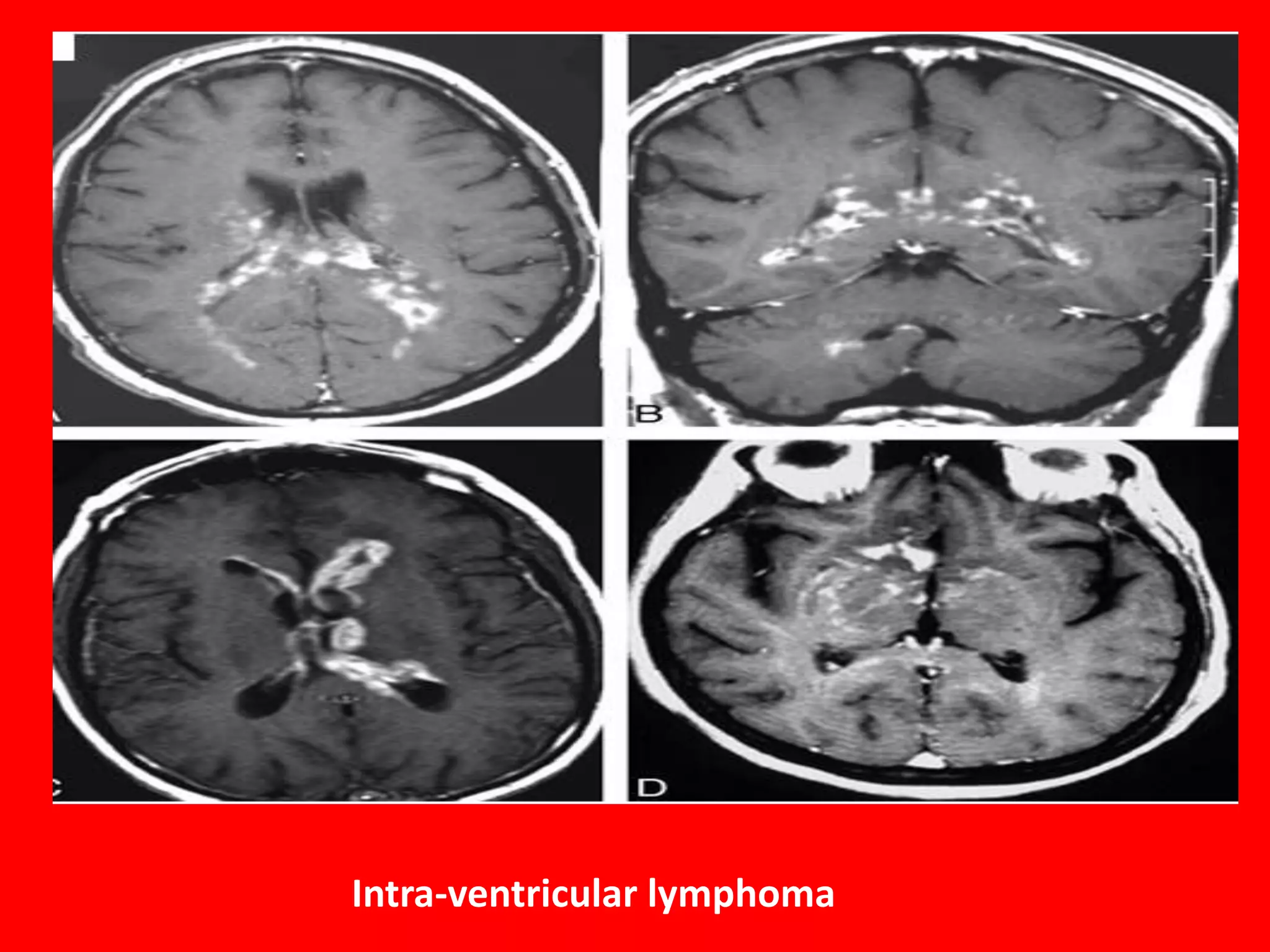
intraventricular CNS lymphoma
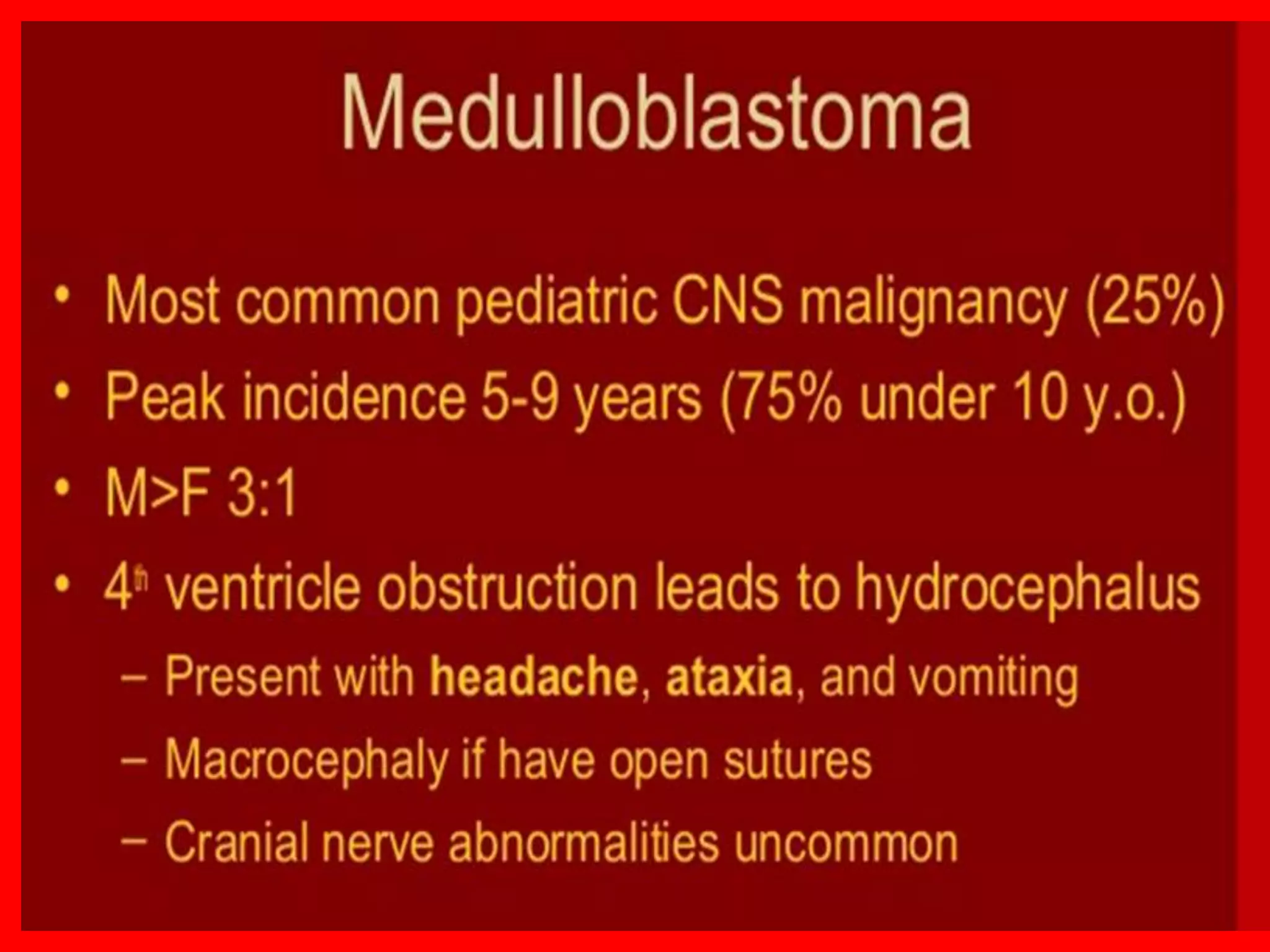
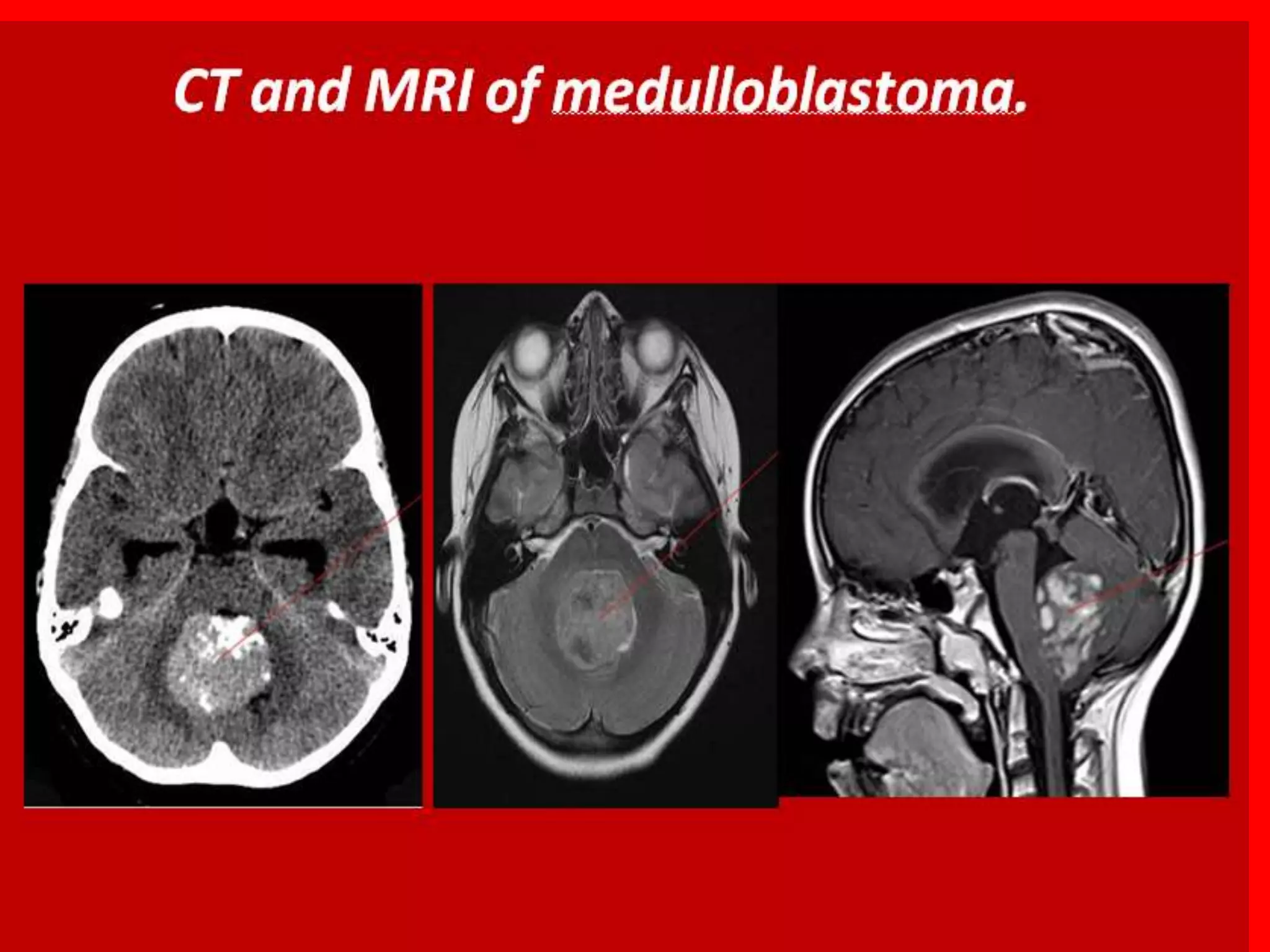
medulloblastoma
primitive neuroectodermal tumour
sarcoma
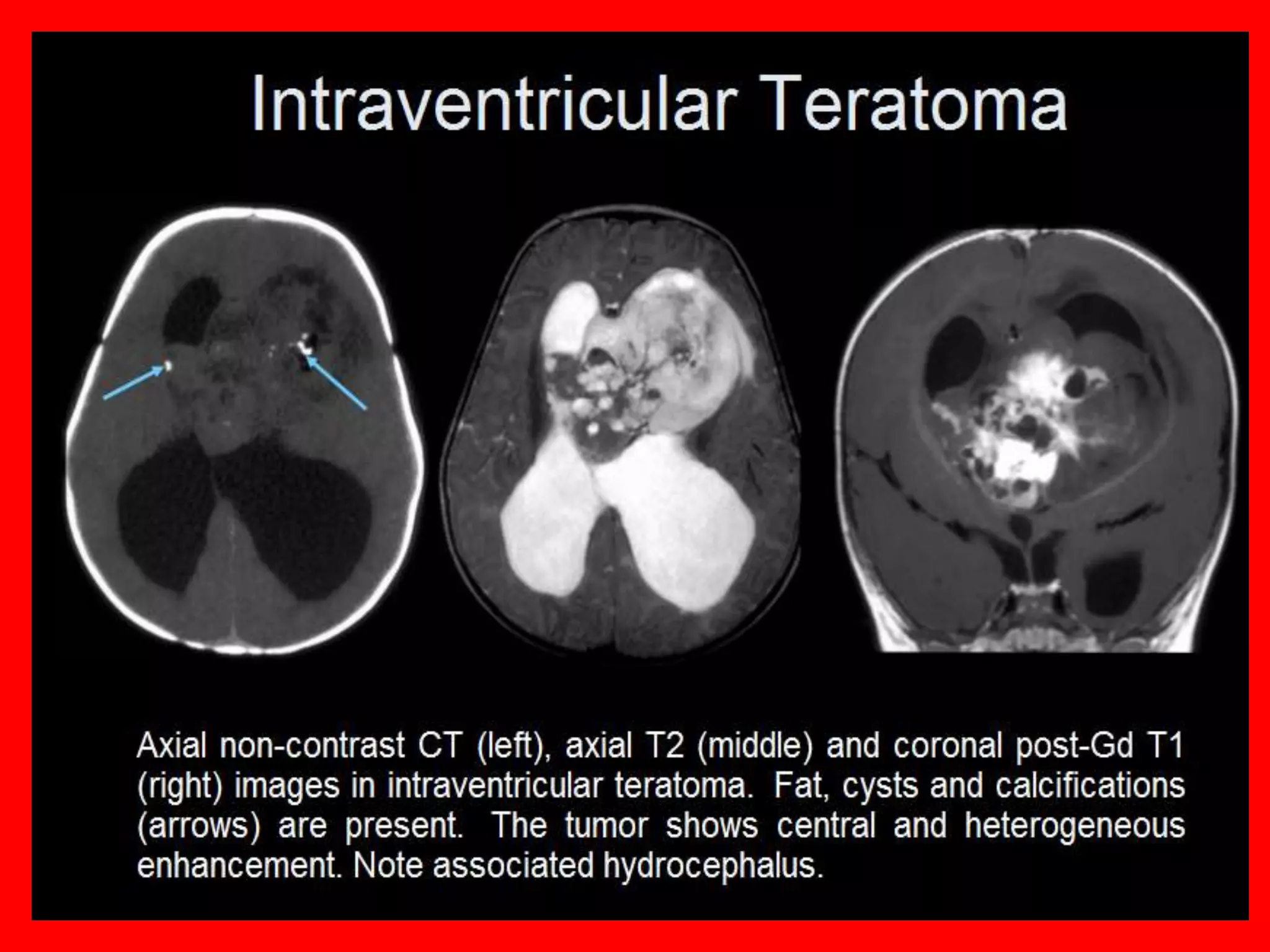
intraventricular teratoma
Non-neoplastic lesions
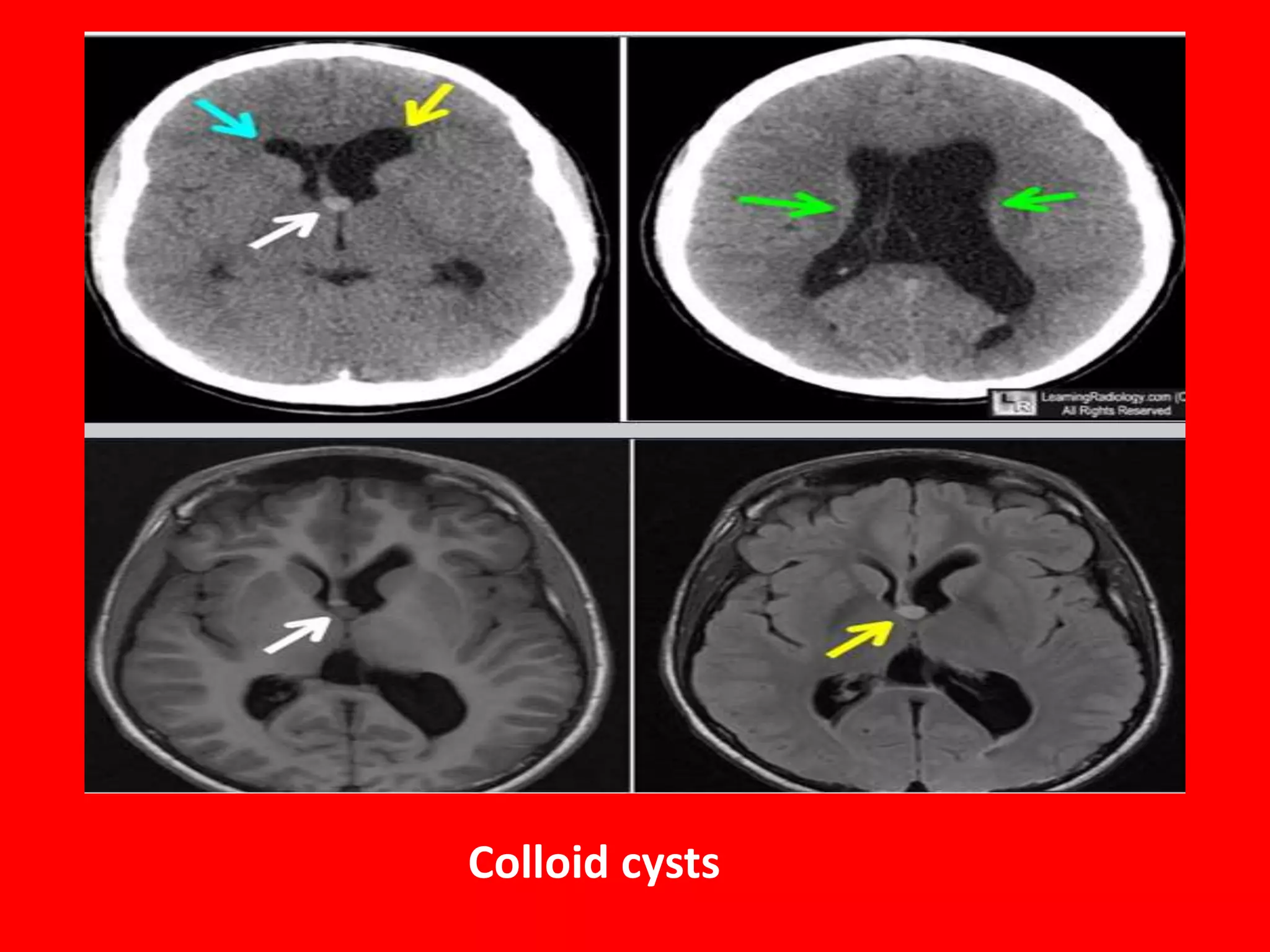
colloid cysts
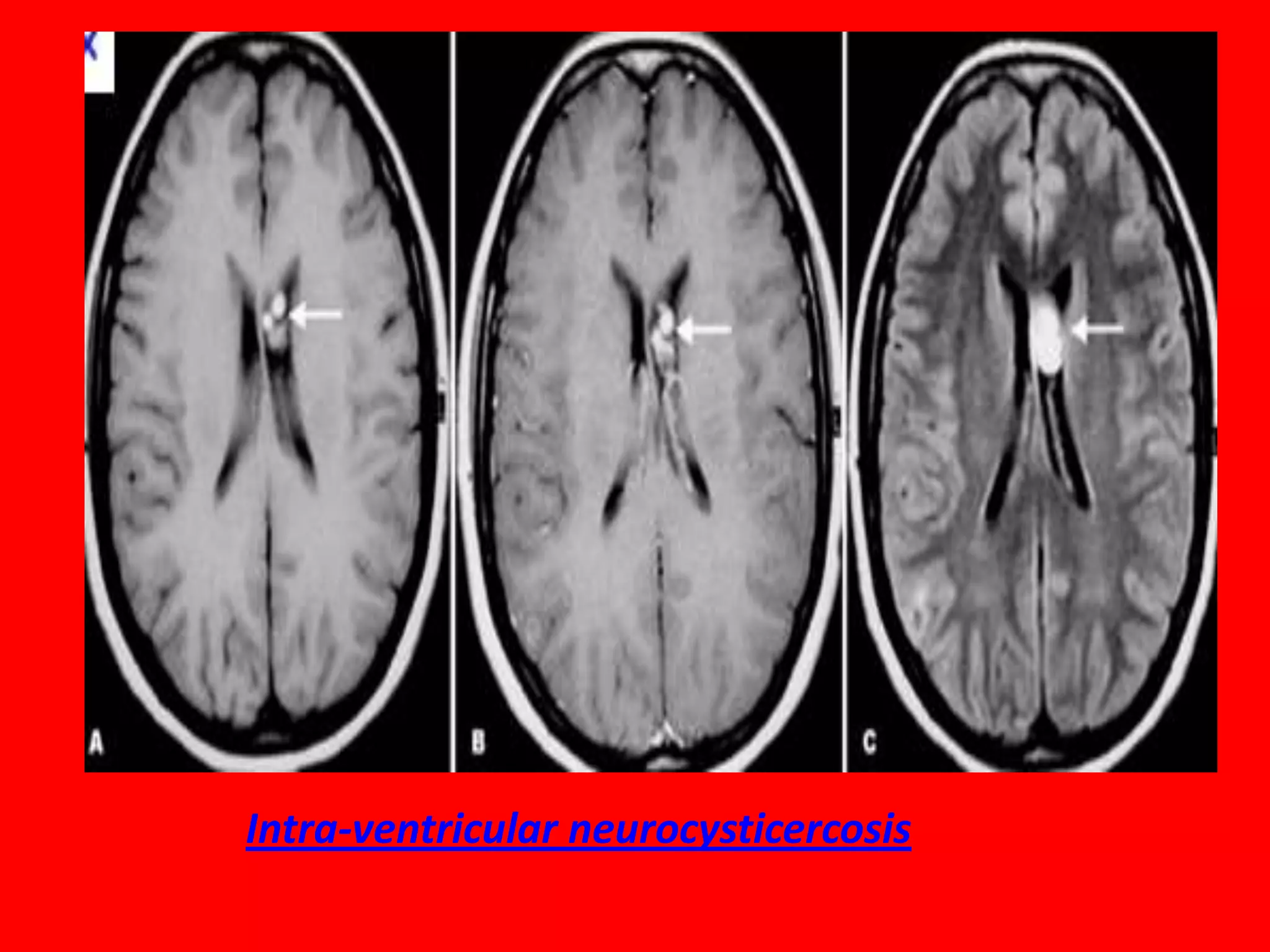
neurocysticercosis
intracranial hydatid cyst
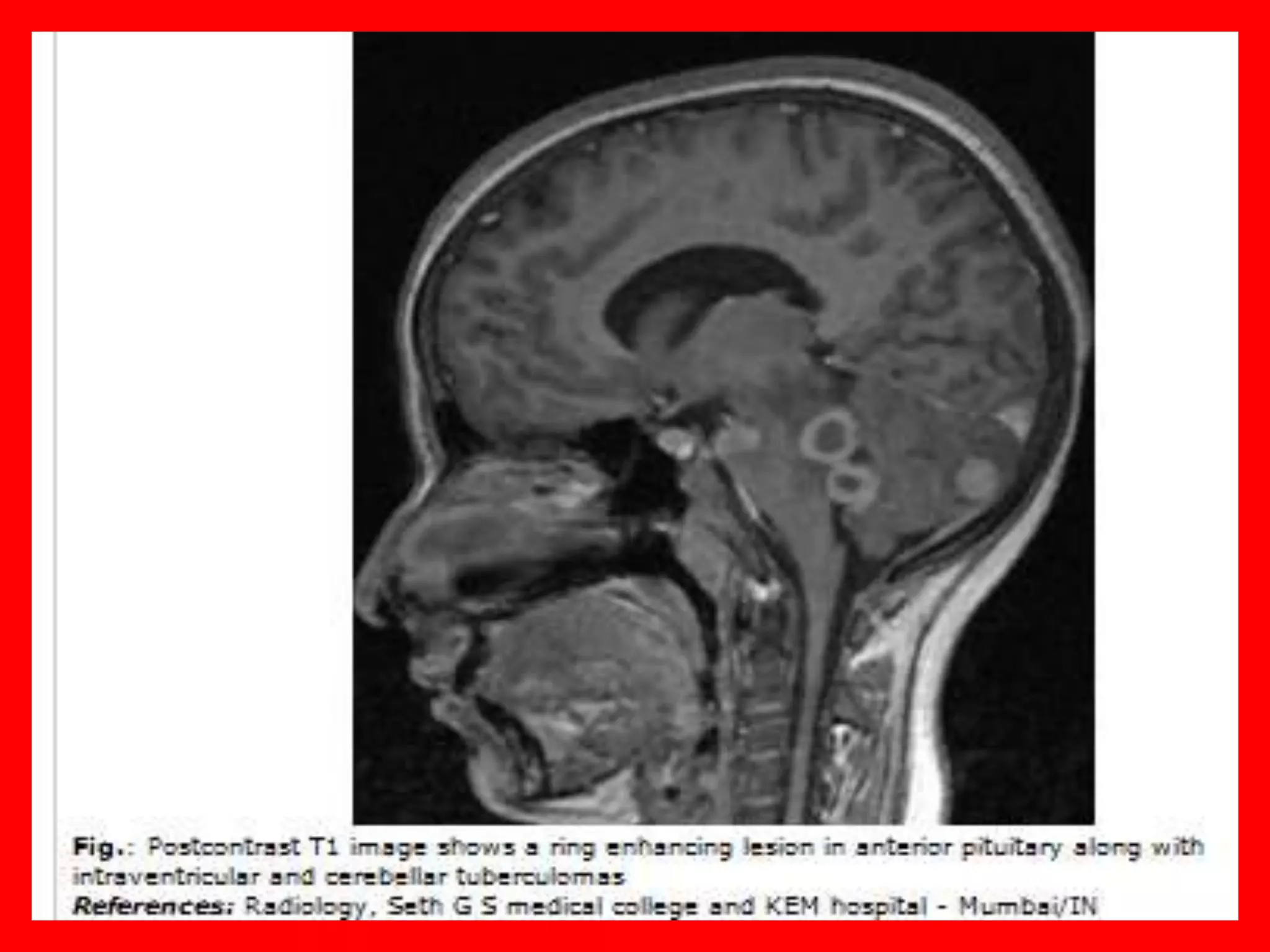
intracranial tuberculoma
Subependymomas are uncommon, benign
(WHO grade I) tumours which are slow
growing and non-invasive.
These tumours were previously also known
as subependymal astrocytomas, not to be
confused with subependymal giant cell
astrocytomas seen with tuberous
sclerosis. They are also considered by
some to be variants of ependymomas, with
which they may co-exist .
Sites:
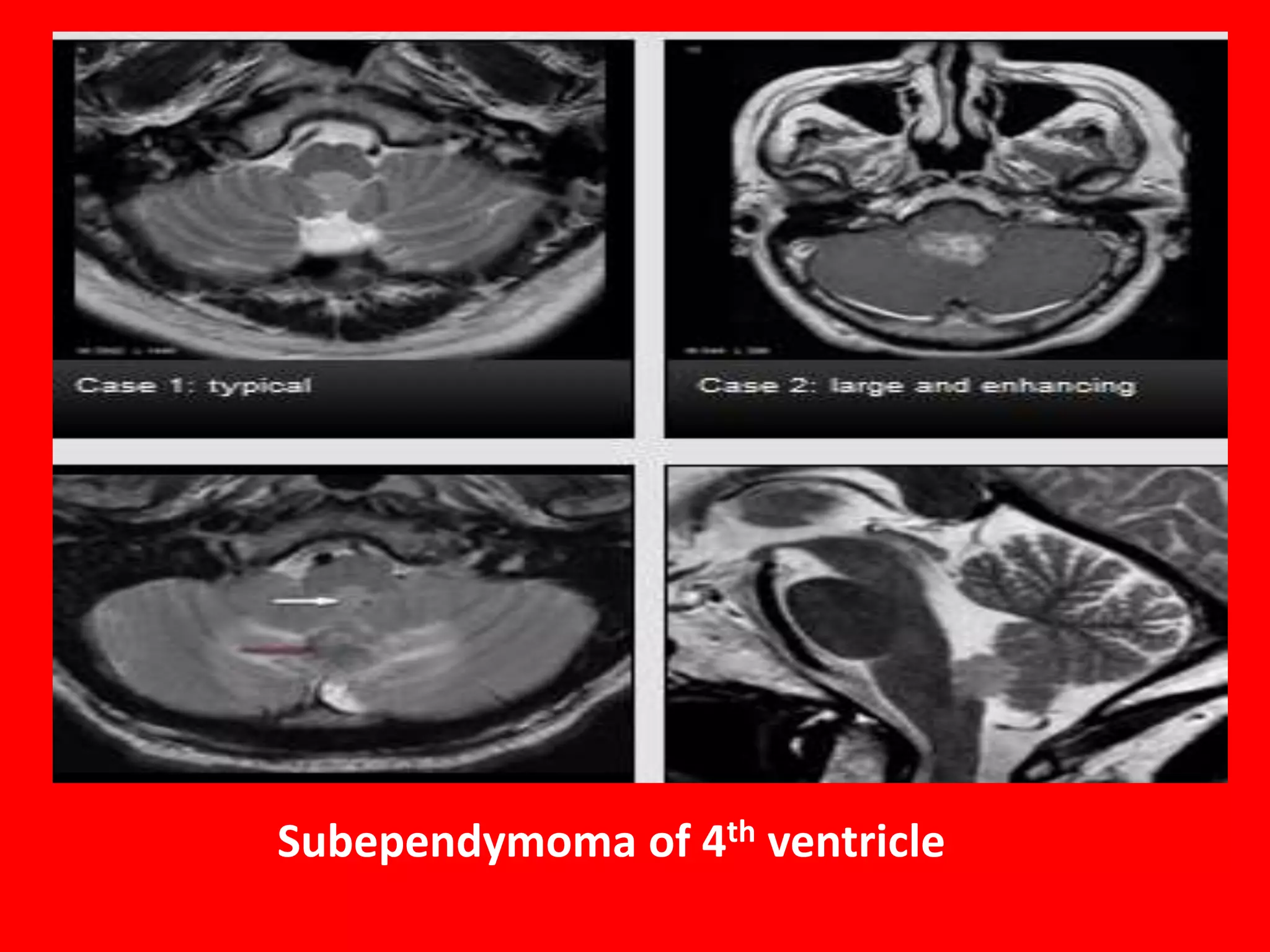
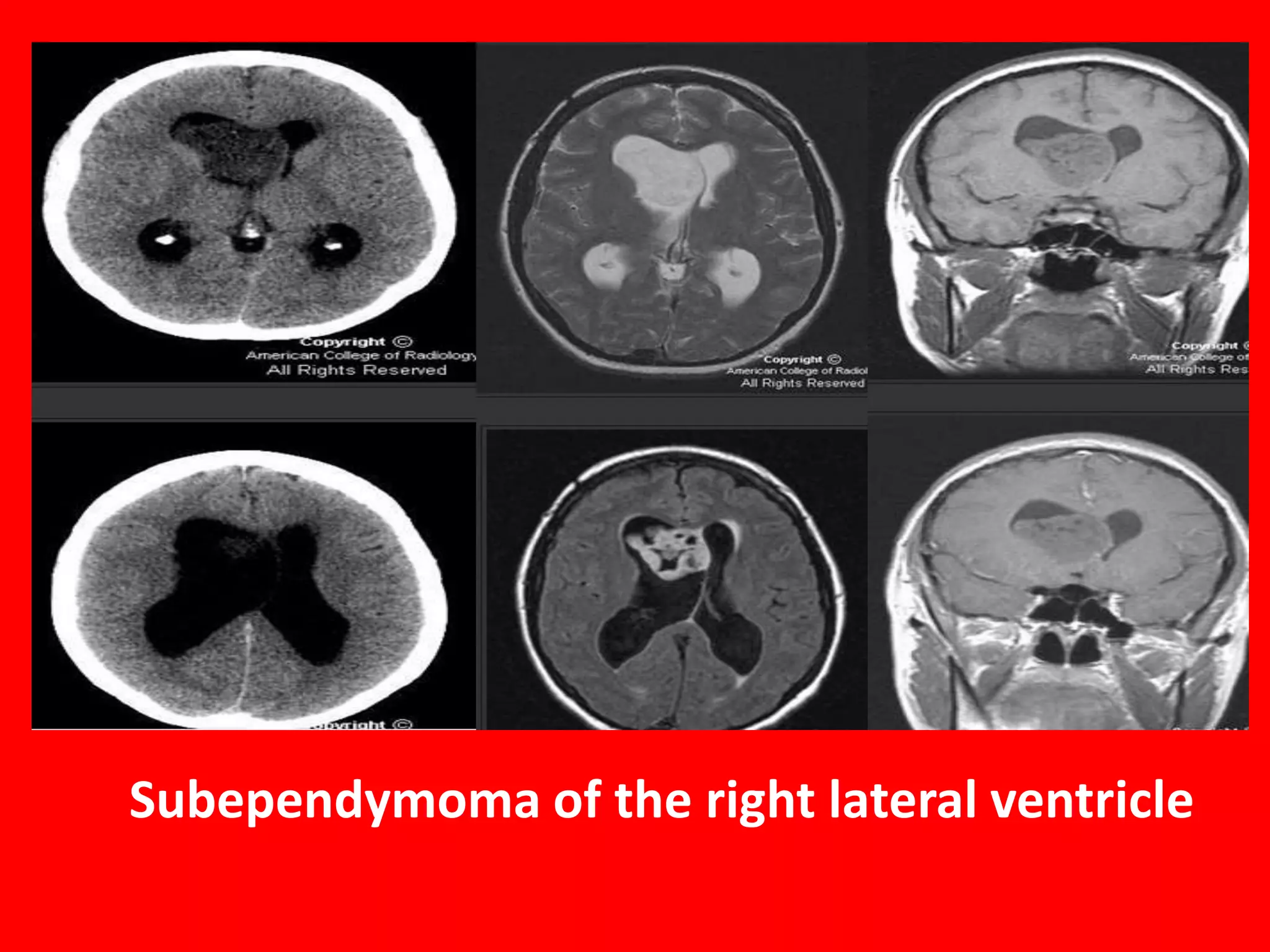
fourth ventricle: 50-60%, lateral ventricles: 30-40%, third ventricle: rare
central canal of the spinal cord: rare
They are usually small, typically less than 2cm in size 6.
CT
Isodense to somewhat hypodense intraventricular mass compared to
adjacent brain, which does not usually enhance. If large, it may have cystic
or even calcific (up to half of cases 3) components. Surrounding vasogenic
oedema is usually absent.
MRI: T1WI.
iso - hypointense to white matter
usually homogenous but may be heterogenous in larger lesions
T2 WI: hyper intense to adjacent white and grey matter
again, heterogeneity my be seen in larger lesions, with suceptibility
related signal drop out due to calcifications occasionally seen
no adjacent parenchymal oedema (as no brain invasion is present) 6
T1 C+ (Gd)
usually no enhancement, although at times may demonstrate mild
enhancement
Subependymoma of 4th ventricle
Subependymoma of the right lateral ventricle
The central neurocytoma: is rare intra-ventricular tumour that is
typically attached to the septum pellucidum.
The vast majority of central neurocytomas are located entirely
within the ventricles. Typical locations include.
lateral ventricles around foramen of Monro (most common): 50%
Both lateral and 3rd ventricles: 15%
Bilateral: 15%
3rd ventricle in isolation: 5%
CT Scan, Usually hyperdense and punctate calcification seen in 50%.
MRI: T1
iso intense to grey matter
heterogenous
T1 C+
mild-moderate heterogeneous enhancement
T2 / FLAIR
typically iso to somewhat hyper intense compared to brain
Central neurocytoma
Subependymal Giant Cell Astrocytoma
Overview
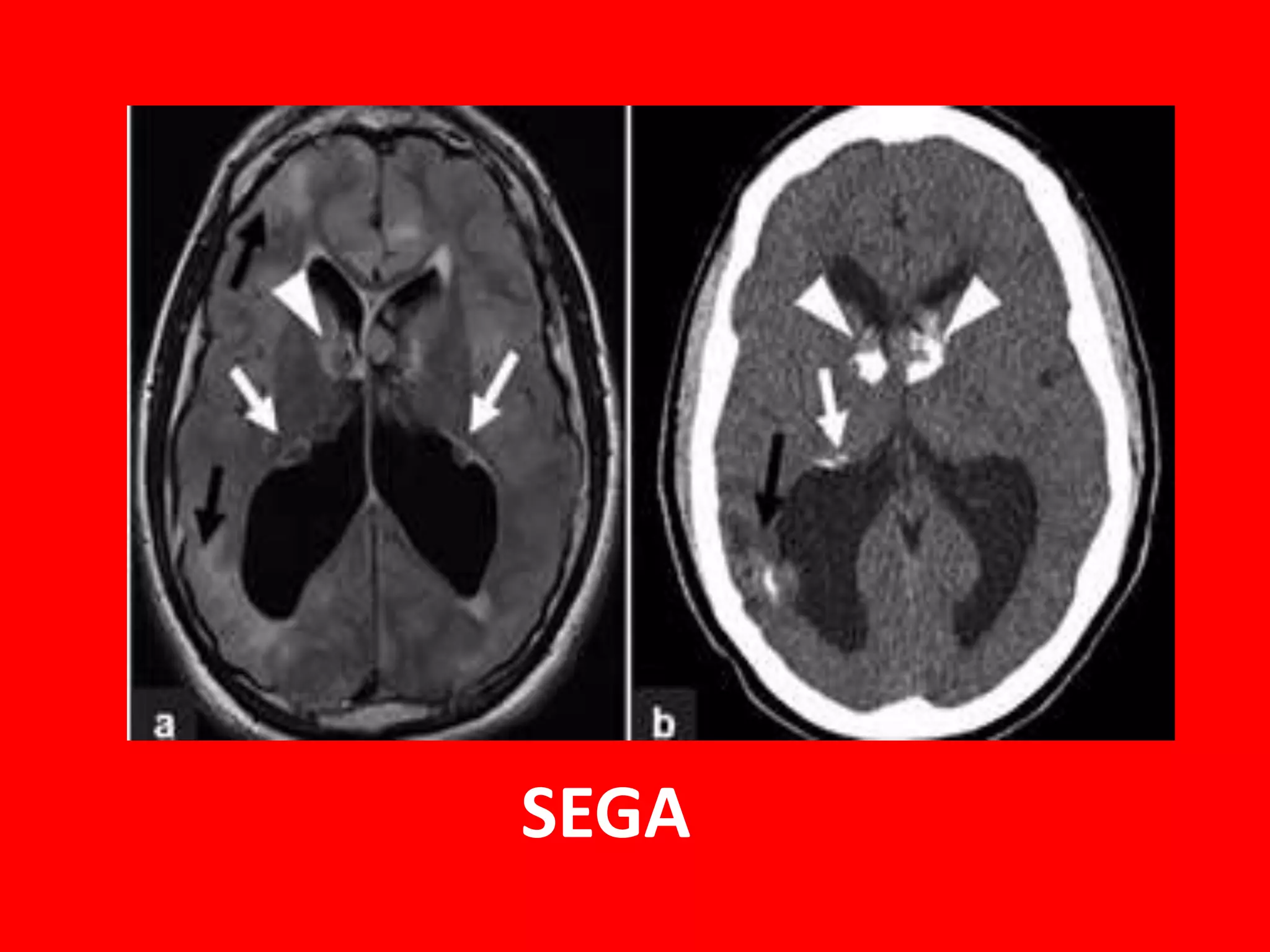
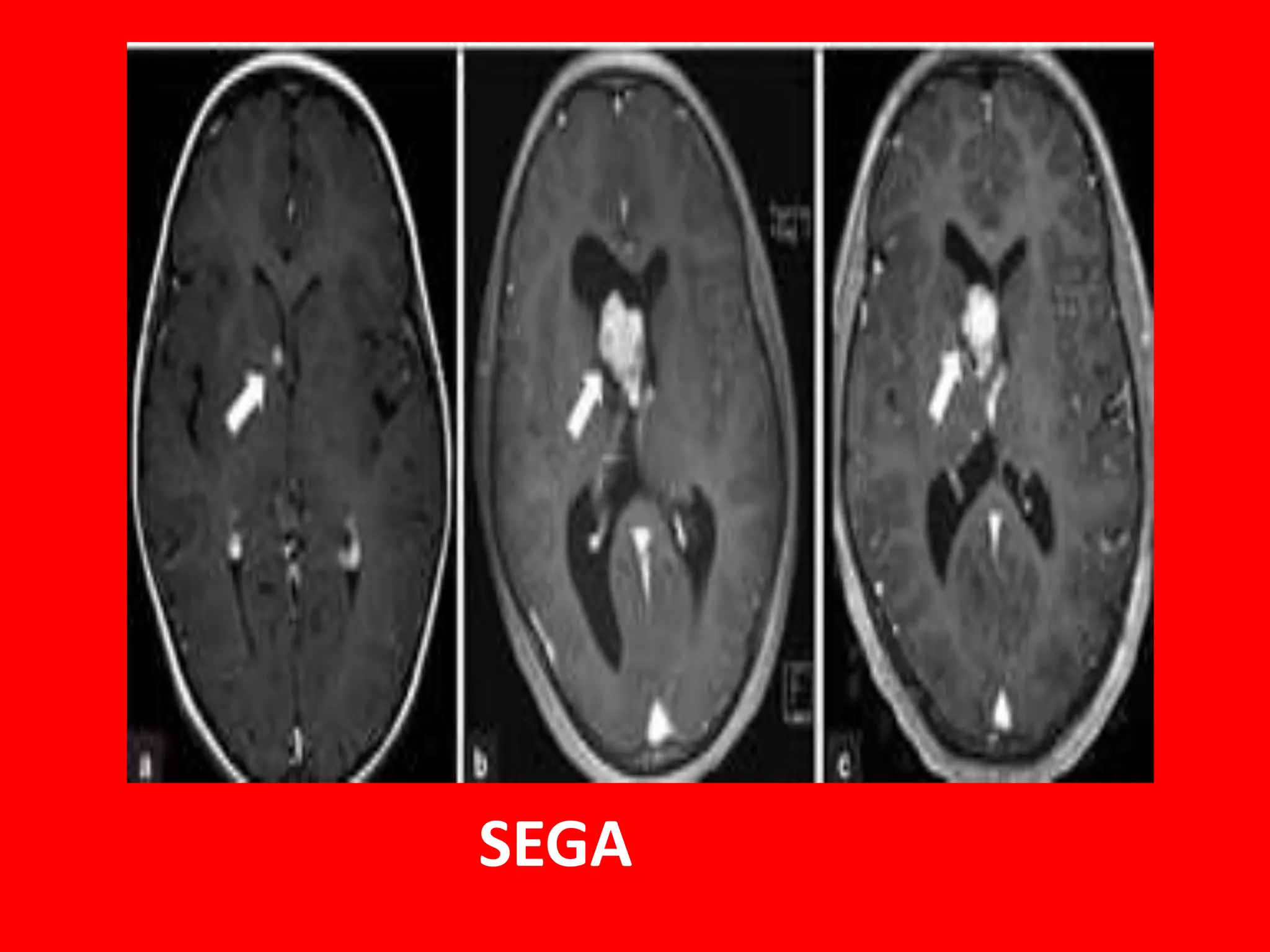
Subependymal giant cell astrocytoma (SEGA)
is a tumor that arises in the ventricular
system of people with tuberous sclerosis, a
rare genetic disease that causes benign
tumor growth throughout the body.
Because these tumors are found in the
ventricles, the fluid-filled spaces within the
brain, they can obstruct spinal fluid flow and
cause neurologic symptoms
SEGA
SEGA
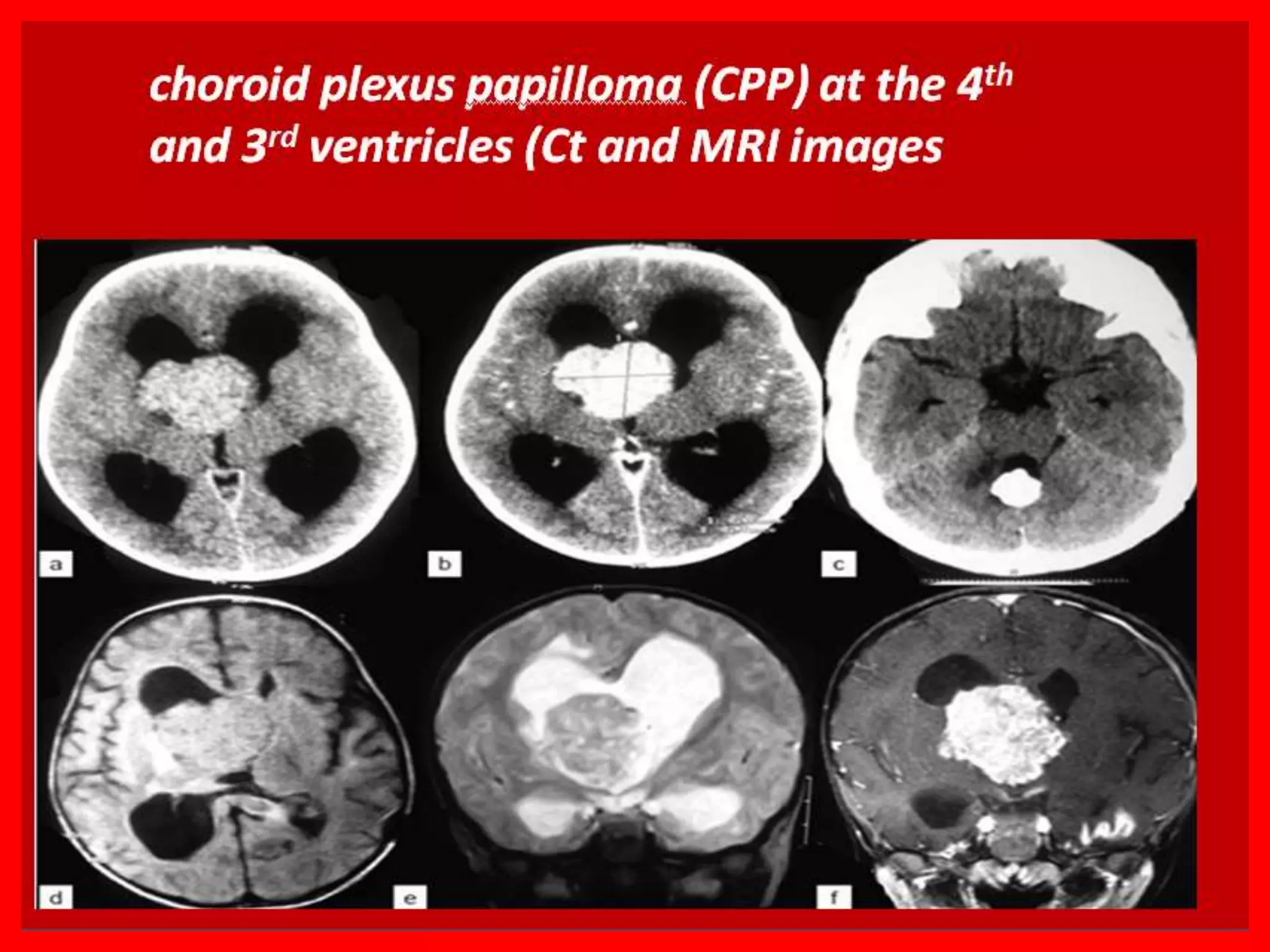
Choroid plexus carcinoma
Intraventricular meningiomas are rare
intracranial tumours that represent an
uncommon subtype of the more-classical
extra-axial meningioma and represent
between 0.5 and 2% of all
meningiomas. Despite its rarity, they
represent one of the commonest adult
intraventricular neoplasms 4.
80% trigone of lateral ventricle
15% third ventricle
5% fourth ventricle
Intraventricular meningioma
Intra-ventricular metastasis
Intra-ventricular lymphoma
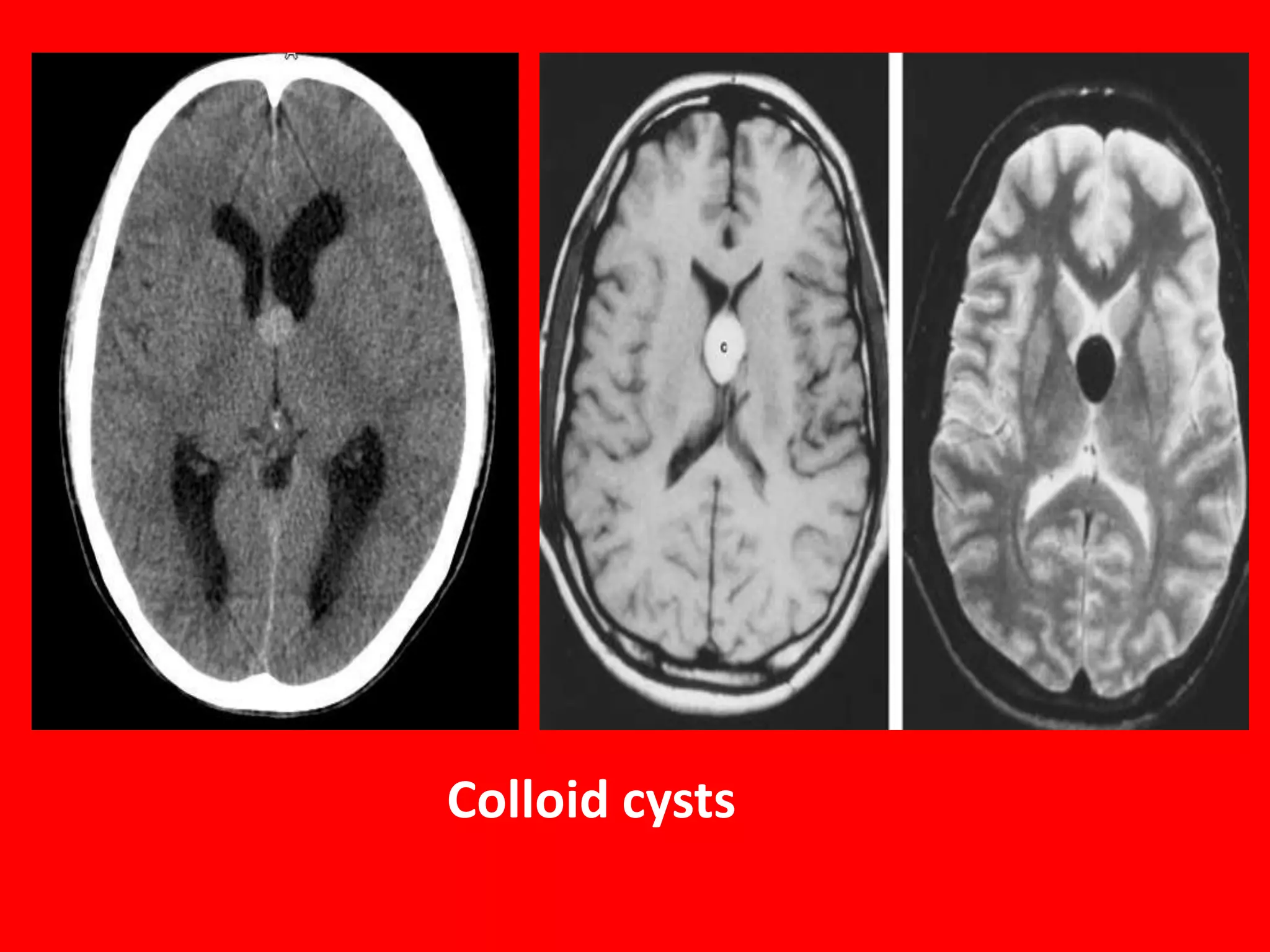
A colloid cyst of the third ventricle is a benign
epithelial lined cyst with characteristic imaging
features. Although usually asymptomatic, they can
present with acute and profound hydrocephalus
CT: Typically seen as a well defined, rounded lesion at the
roof of the 3rd ventilcle unilocular typically hyperdense
isodense and hypodense cysts are uncommon
calcification is uncommon 2
MRI: MR signal characteristics include
T1 - typically high T1 signal (short T1) - can be variable
T1 C+ (Gd) - only rarely demonstrates thin rim
enhancement, but usually this represents enhancement of
the adjacent and stretched septal veins 3
T2 - typically low T2/T2* signal (short T2) - can be variable
Colloid cysts
Colloid cysts
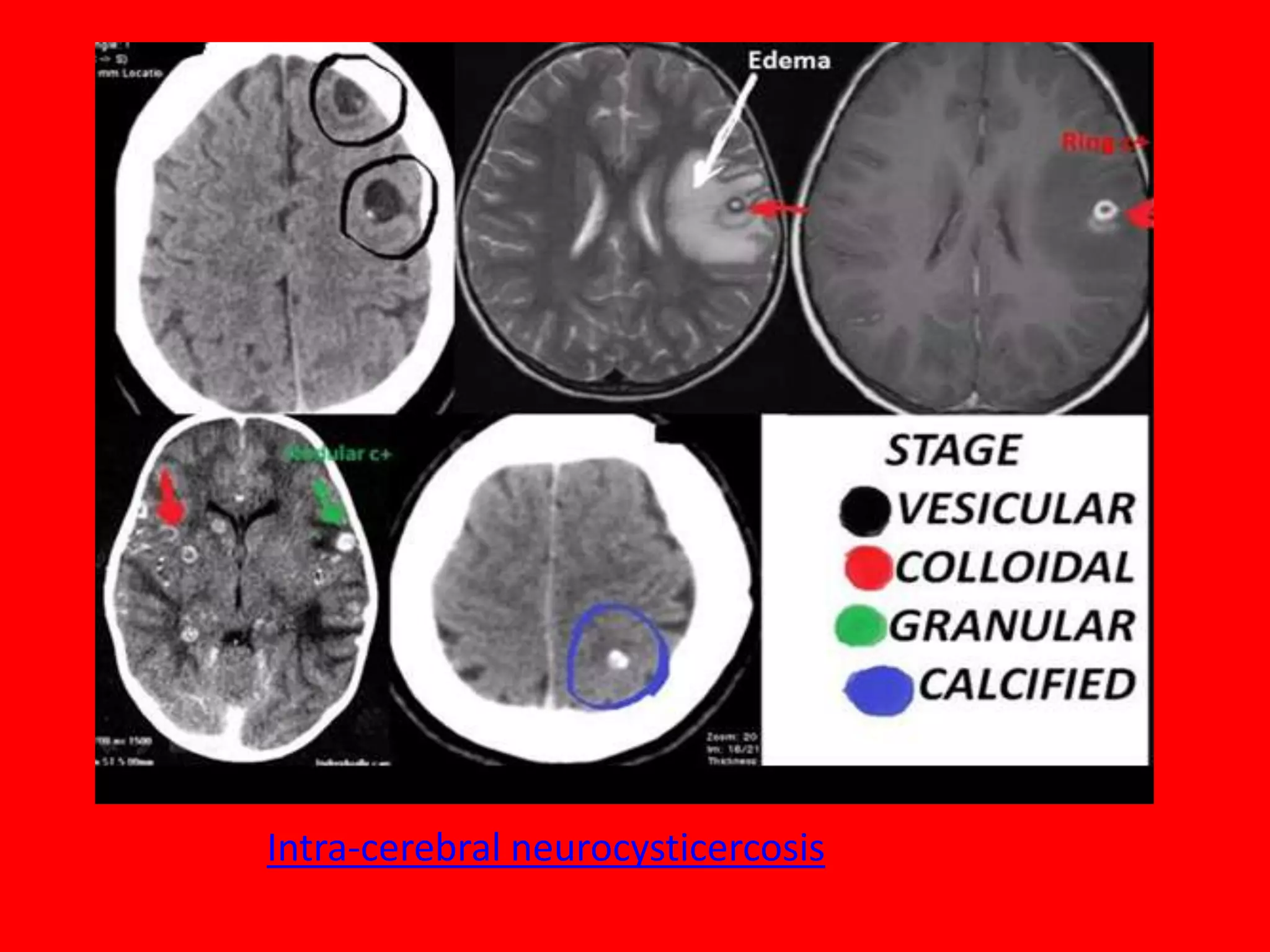
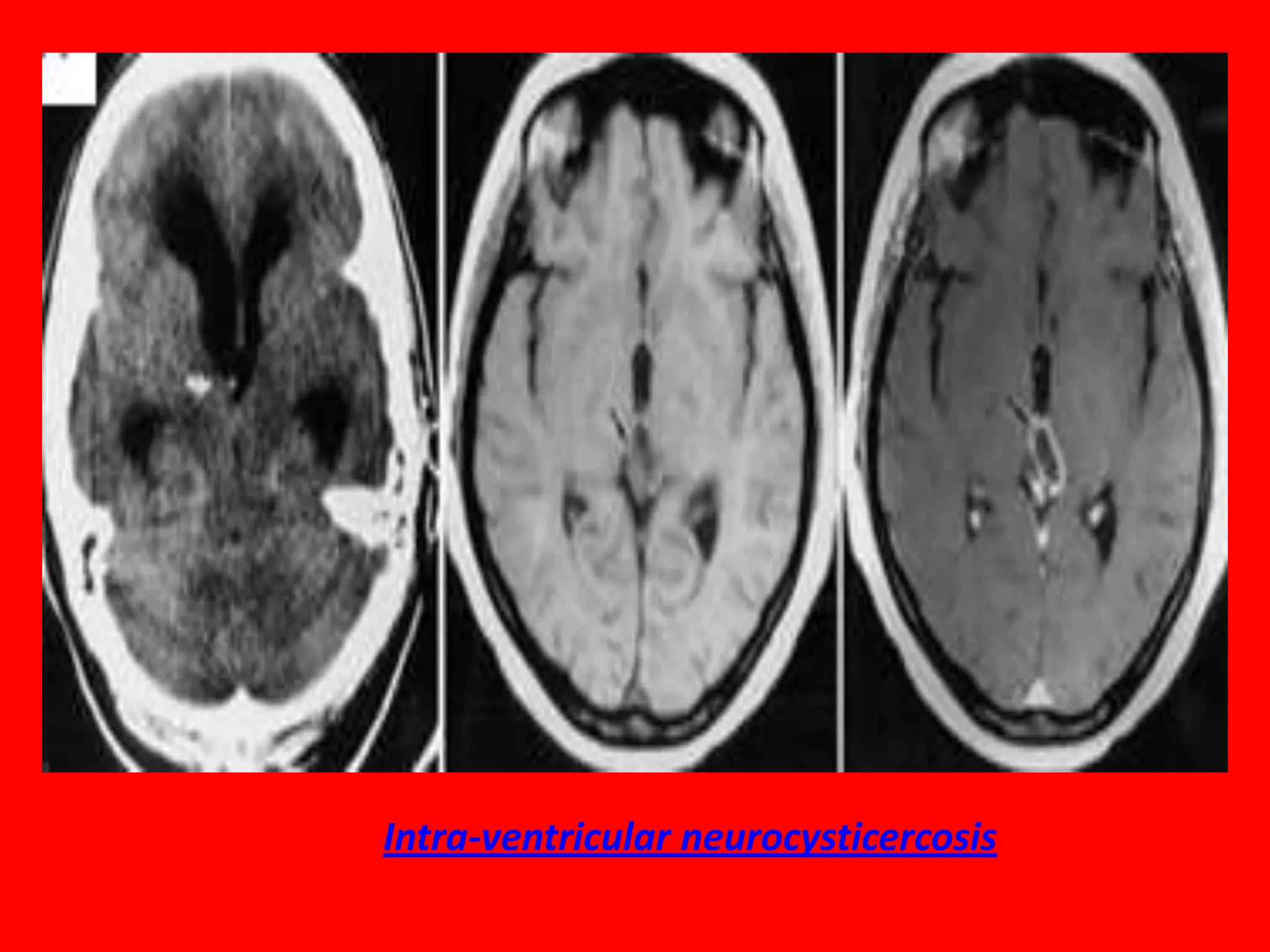
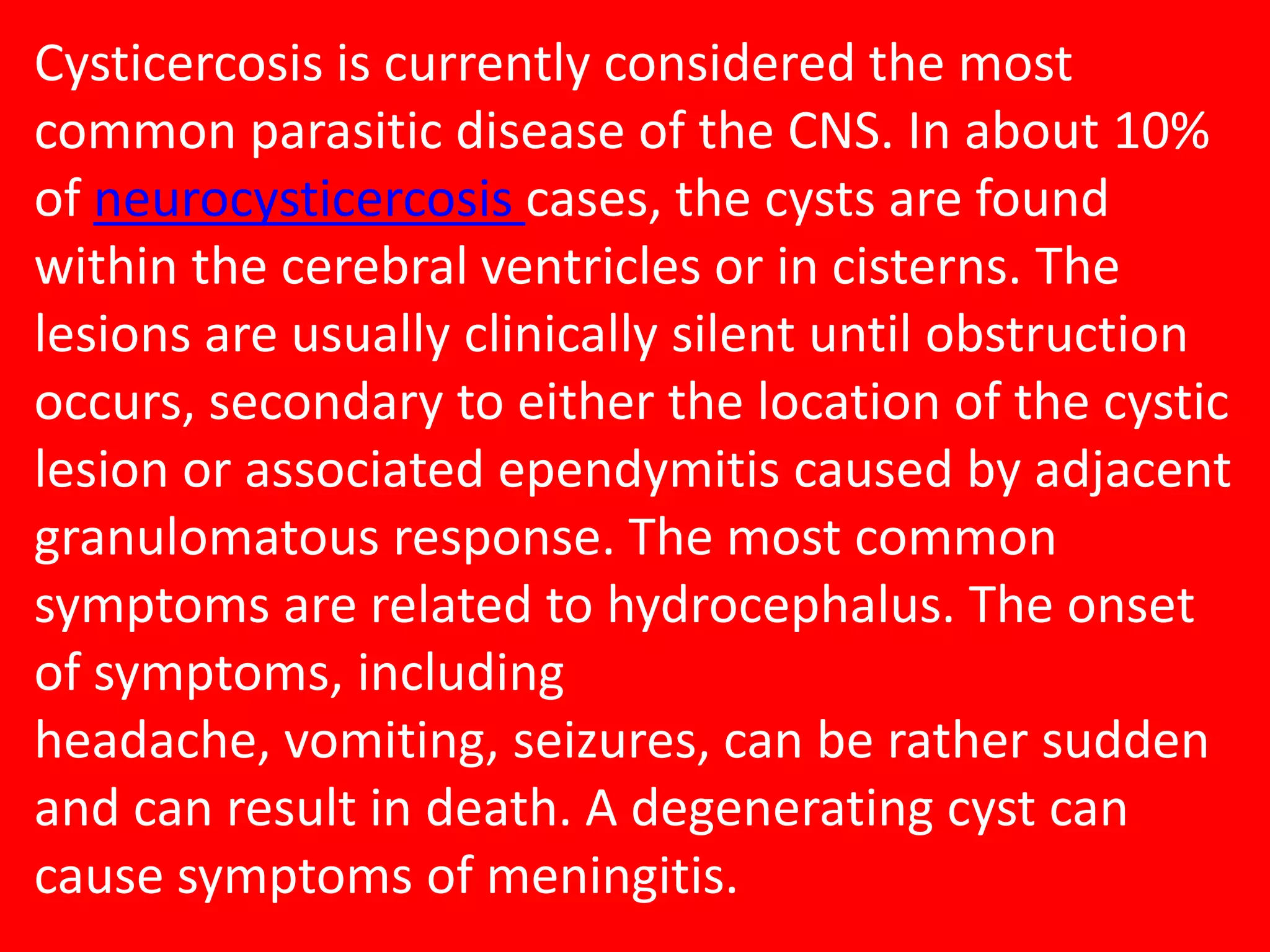
Cysticercosis is currently considered the most
common parasitic disease of the CNS. In about 10%
of neurocysticercosis cases, the cysts are found
within the cerebral ventricles or in cisterns. The
lesions are usually clinically silent until obstruction
occurs, secondary to either the location of the cystic
lesion or associated ependymitis caused by adjacent
granulomatous response. The most common
symptoms are related to hydrocephalus. The onset
of symptoms, including
headache, vomiting, seizures, can be rather sudden
and can result in death. A degenerating cyst can
cause symptoms of meningitis.
Intra-cerebral neurocysticercosis
Intra-ventricular neurocysticercosis
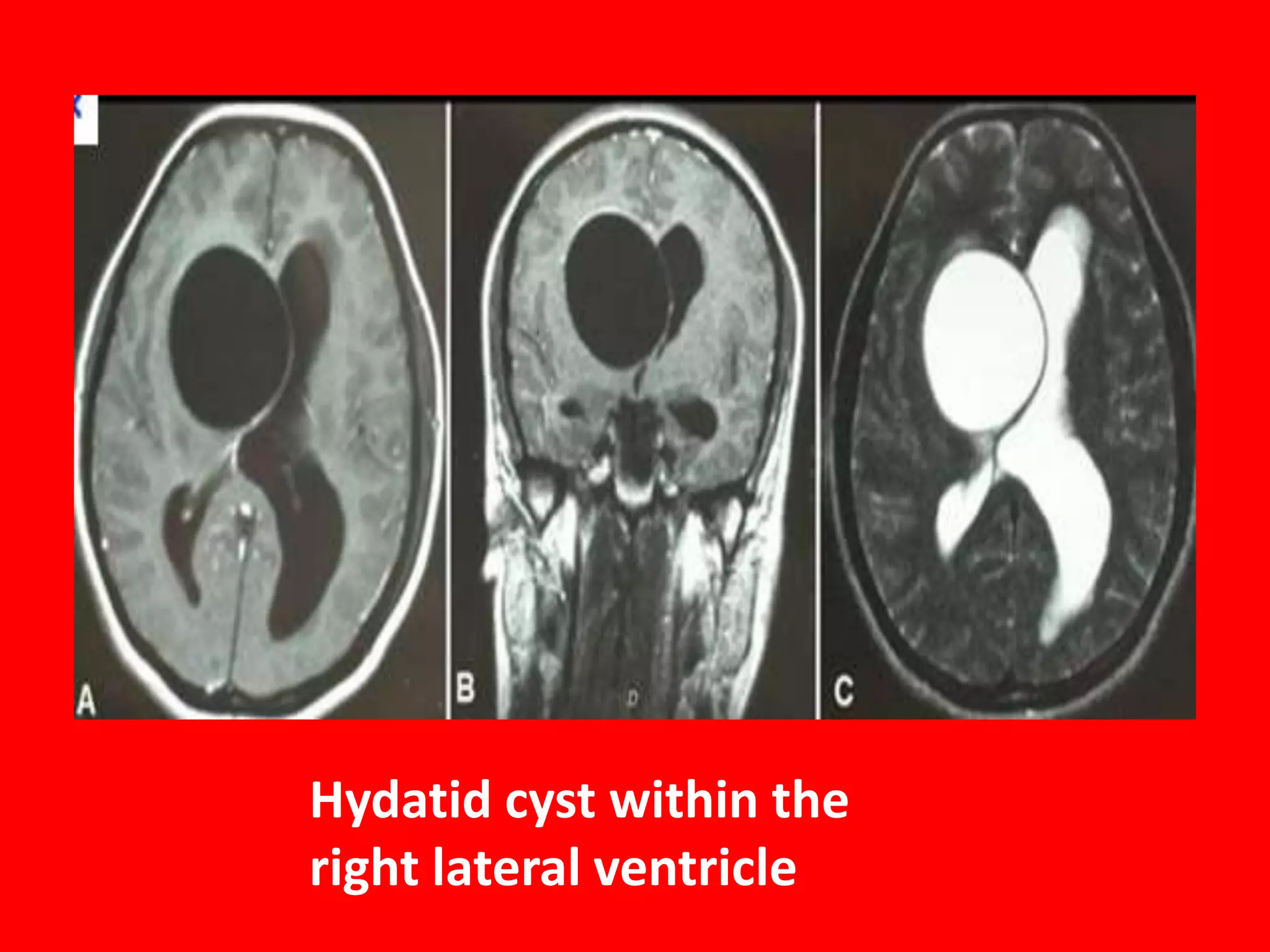
Hydatid disease is caused by the
Echinococcus granulosus of the
canine tapeworm. The normal cycle
is: dog as worm carrier and definitive
host and sheep as echinococcus
carrier and intermediate host. Man is
an accidental echinococcus carrier .
Hydatid cyst within the
right lateral ventricle
Presentation2.pptx , intra ventricular tumour and intra-cranial cyst

Presentation2.pptx , intra ventricular tumour and intra-cranial cyst

  • 1.
  • 2.
    Intraventricular neoplasms arerare and arise from periventricular structures such as the walls of the ventricular system, the septum pellucidum and the choroid plexus. Many tumour types arise from, or can bulge into the ventricular system, although there are certain lesions that are relatively restricted to ventricles.
  • 3.
    Neoplasms of theventri-cular wall and septum pellucidum. ependymoma subependymoma central neurocytoma subependymal giant cell astrocytoma Neoplasms of the choroid plexus choroid plexus papilloma choroid plexus carcinoma
  • 4.
    Others intraventricular meningioma intraventricular metastasis oligodendroglioma pilocyticastrocytoma glioblastoma multiforme intraventricular CNS lymphoma medulloblastoma primitive neuroectodermal tumour sarcoma intraventricular teratoma Non-neoplastic lesions colloid cysts neurocysticercosis intracranial hydatid cyst intracranial tuberculoma
  • 9.
    Subependymomas are uncommon,benign (WHO grade I) tumours which are slow growing and non-invasive. These tumours were previously also known as subependymal astrocytomas, not to be confused with subependymal giant cell astrocytomas seen with tuberous sclerosis. They are also considered by some to be variants of ependymomas, with which they may co-exist .
  • 10.
    Sites: fourth ventricle: 50-60%,lateral ventricles: 30-40%, third ventricle: rare central canal of the spinal cord: rare They are usually small, typically less than 2cm in size 6. CT Isodense to somewhat hypodense intraventricular mass compared to adjacent brain, which does not usually enhance. If large, it may have cystic or even calcific (up to half of cases 3) components. Surrounding vasogenic oedema is usually absent. MRI: T1WI. iso - hypointense to white matter usually homogenous but may be heterogenous in larger lesions T2 WI: hyper intense to adjacent white and grey matter again, heterogeneity my be seen in larger lesions, with suceptibility related signal drop out due to calcifications occasionally seen no adjacent parenchymal oedema (as no brain invasion is present) 6 T1 C+ (Gd) usually no enhancement, although at times may demonstrate mild enhancement
  • 11.
  • 12.
    Subependymoma of theright lateral ventricle
  • 13.
    The central neurocytoma:is rare intra-ventricular tumour that is typically attached to the septum pellucidum. The vast majority of central neurocytomas are located entirely within the ventricles. Typical locations include. lateral ventricles around foramen of Monro (most common): 50% Both lateral and 3rd ventricles: 15% Bilateral: 15% 3rd ventricle in isolation: 5% CT Scan, Usually hyperdense and punctate calcification seen in 50%. MRI: T1 iso intense to grey matter heterogenous T1 C+ mild-moderate heterogeneous enhancement T2 / FLAIR typically iso to somewhat hyper intense compared to brain
  • 15.
  • 16.
    Subependymal Giant CellAstrocytoma Overview Subependymal giant cell astrocytoma (SEGA) is a tumor that arises in the ventricular system of people with tuberous sclerosis, a rare genetic disease that causes benign tumor growth throughout the body. Because these tumors are found in the ventricles, the fluid-filled spaces within the brain, they can obstruct spinal fluid flow and cause neurologic symptoms
  • 17.
  • 18.
  • 22.
  • 23.
  • 24.
    Intraventricular meningiomas arerare intracranial tumours that represent an uncommon subtype of the more-classical extra-axial meningioma and represent between 0.5 and 2% of all meningiomas. Despite its rarity, they represent one of the commonest adult intraventricular neoplasms 4. 80% trigone of lateral ventricle 15% third ventricle 5% fourth ventricle
  • 25.
  • 26.
  • 27.
  • 31.
  • 32.
    A colloid cystof the third ventricle is a benign epithelial lined cyst with characteristic imaging features. Although usually asymptomatic, they can present with acute and profound hydrocephalus CT: Typically seen as a well defined, rounded lesion at the roof of the 3rd ventilcle unilocular typically hyperdense isodense and hypodense cysts are uncommon calcification is uncommon 2 MRI: MR signal characteristics include T1 - typically high T1 signal (short T1) - can be variable T1 C+ (Gd) - only rarely demonstrates thin rim enhancement, but usually this represents enhancement of the adjacent and stretched septal veins 3 T2 - typically low T2/T2* signal (short T2) - can be variable
  • 33.
  • 34.
  • 35.
    Cysticercosis is currentlyconsidered the most common parasitic disease of the CNS. In about 10% of neurocysticercosis cases, the cysts are found within the cerebral ventricles or in cisterns. The lesions are usually clinically silent until obstruction occurs, secondary to either the location of the cystic lesion or associated ependymitis caused by adjacent granulomatous response. The most common symptoms are related to hydrocephalus. The onset of symptoms, including headache, vomiting, seizures, can be rather sudden and can result in death. A degenerating cyst can cause symptoms of meningitis.
  • 36.
  • 37.
  • 38.
  • 39.
    Hydatid disease iscaused by the Echinococcus granulosus of the canine tapeworm. The normal cycle is: dog as worm carrier and definitive host and sheep as echinococcus carrier and intermediate host. Man is an accidental echinococcus carrier .
  • 40.
    Hydatid cyst withinthe right lateral ventricle