Optical Distortion Inc (A)


             SUBMITTED BY
             Section D - Group 10
             Arpit Jain (12P189)
             Girish Chandra Joshi
               (12P199)
             Kumar Abhinav (12P209)
             Varun Chopra (12P219)
             Santosh Garbham
               (12P229)
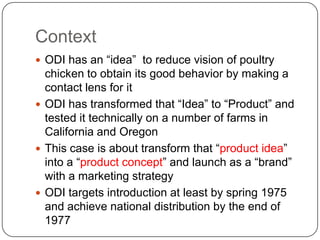
Context
 ODI has an “idea” to reduce vision of poultry
  chicken to obtain its good behavior by making a
  contact lens for it
 ODI has transformed that “Idea” to “Product” and
  tested it technically on a number of farms in
  California and Oregon
 This case is about transform that “product idea”
  into a “product concept” and launch as a “brand”
  with a marketing strategy
 ODI targets introduction at least by spring 1975
  and achieve national distribution by the end of
  1977
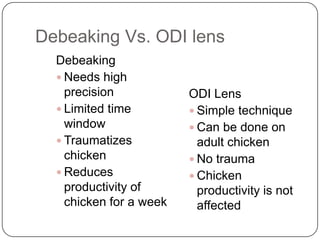
Debeaking Vs. ODI lens
  Debeaking
   Needs high
    precision            ODI Lens
   Limited time          Simple technique
    window                Can be done on
   Traumatizes            adult chicken
    chicken               No trauma
   Reduces               Chicken
    productivity of        productivity is not
    chicken for a week     affected
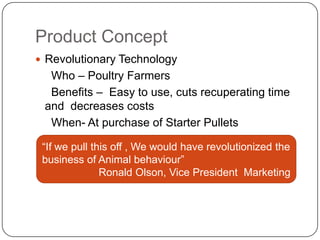
Product Concept
 Revolutionary Technology
  Who – Poultry Farmers
  Benefits – Easy to use, cuts recuperating time
 and decreases costs
  When- At purchase of Starter Pullets

 “If we pull this off , We would have revolutionized the
 business of Animal behaviour”
               Ronald Olson, Vice President Marketing
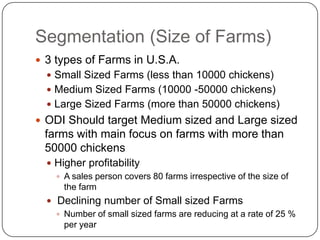
Segmentation (Size of Farms)
 3 types of Farms in U.S.A.
   Small Sized Farms (less than 10000 chickens)
   Medium Sized Farms (10000 -50000 chickens)
   Large Sized Farms (more than 50000 chickens)
 ODI Should target Medium sized and Large sized
 farms with main focus on farms with more than
 50000 chickens
   Higher profitability
     A sales person covers 80 farms irrespective of the size of
      the farm
   Declining number of Small sized Farms
     Number of small sized farms are reducing at a rate of 25 %
      per year
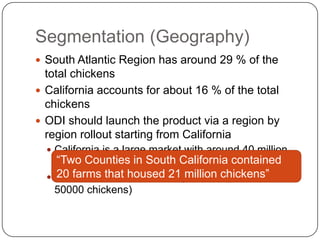
Segmentation (Geography)
 South Atlantic Region has around 29 % of the
  total chickens
 California accounts for about 16 % of the total
  chickens
 ODI should launch the product via a region by
  region rollout starting from California
   California is a large market with around 40 million
    “Two Counties in South California contained
    chickens
   Southern California has 21 million chickens”
    20 farms that housed large farms (more than
    50000 chickens)
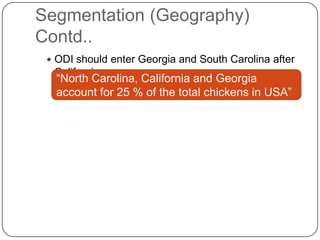
Segmentation (Geography)
Contd..
  ODI should enter Georgia and South Carolina after
  California
   “North Carolina, California and Georgia
   account for 25 % of the total chickens in USA”
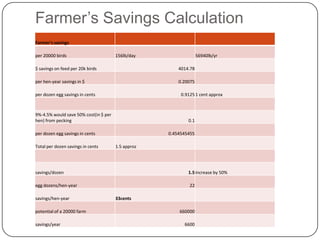
Farmer’s Savings Calculation
Farmer's savings

per 20000 birds                        156lb/day                  56940lb/yr

$ savings on feed per 20k birds                         4014.78

per hen-year savings in $                               0.20075

per dozen egg savings in cents                           0.9125 1 cent approx


9%-4.5% would save 50% cost(in $ per
hen) from pecking                                           0.1

per dozen egg savings in cents                      0.454545455

Total per dozen savings in cents       1.5 approz


savings/dozen                                               1.5 increase by 50%

egg dozens/hen-year                                          22

savings/hen-year                       33cents

potential of a 20000 farm                               660000

savings/year                                              6600
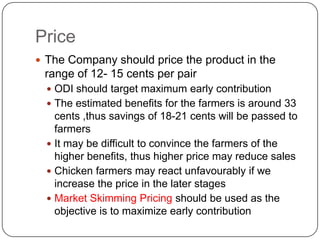
Price
 The Company should price the product in the
 range of 12- 15 cents per pair
   ODI should target maximum early contribution
   The estimated benefits for the farmers is around 33
    cents ,thus savings of 18-21 cents will be passed to
    farmers
   It may be difficult to convince the farmers of the
    higher benefits, thus higher price may reduce sales
   Chicken farmers may react unfavourably if we
    increase the price in the later stages
   Market Skimming Pricing should be used as the
    objective is to maximize early contribution
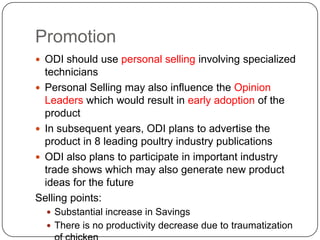
Promotion
 ODI should use personal selling involving specialized
  technicians
 Personal Selling may also influence the Opinion
  Leaders which would result in early adoption of the
  product
 In subsequent years, ODI plans to advertise the
  product in 8 leading poultry industry publications
 ODI also plans to participate in important industry
  trade shows which may also generate new product
  ideas for the future
Selling points:
   Substantial increase in Savings
   There is no productivity decrease due to traumatization
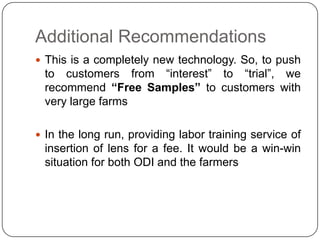
Additional Recommendations
 This is a completely new technology. So, to push
 to customers from “interest” to “trial”, we
 recommend “Free Samples” to customers with
 very large farms

 In the long run, providing labor training service of
 insertion of lens for a fee. It would be a win-win
 situation for both ODI and the farmers
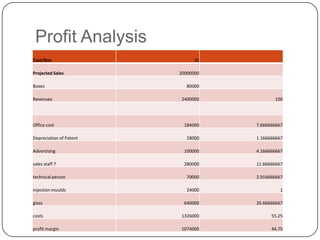
Profit Analysis
Cost/Box                       30

Projected Sales          20000000

Boxes                       80000

Revenues                  2400000          100


Office cost                184000   7.666666667

Depreciation of Patent      28000   1.166666667

Advertising                100000   4.166666667

sales staff 7              280000   11.66666667

technical person            70000   2.916666667

injection moulds            24000            1

glass                      640000   26.66666667

costs                     1326000         55.25

profit margin             1074000         44.75
THANK YOU

Optical distortion

  • 1.
    Optical Distortion Inc(A) SUBMITTED BY Section D - Group 10 Arpit Jain (12P189) Girish Chandra Joshi (12P199) Kumar Abhinav (12P209) Varun Chopra (12P219) Santosh Garbham (12P229)
  • 2.
    Context  ODI hasan “idea” to reduce vision of poultry chicken to obtain its good behavior by making a contact lens for it  ODI has transformed that “Idea” to “Product” and tested it technically on a number of farms in California and Oregon  This case is about transform that “product idea” into a “product concept” and launch as a “brand” with a marketing strategy  ODI targets introduction at least by spring 1975 and achieve national distribution by the end of 1977
  • 3.
    Debeaking Vs. ODIlens Debeaking  Needs high precision ODI Lens  Limited time  Simple technique window  Can be done on  Traumatizes adult chicken chicken  No trauma  Reduces  Chicken productivity of productivity is not chicken for a week affected
  • 4.
    Product Concept  RevolutionaryTechnology Who – Poultry Farmers Benefits – Easy to use, cuts recuperating time and decreases costs When- At purchase of Starter Pullets “If we pull this off , We would have revolutionized the business of Animal behaviour” Ronald Olson, Vice President Marketing
  • 5.
    Segmentation (Size ofFarms)  3 types of Farms in U.S.A.  Small Sized Farms (less than 10000 chickens)  Medium Sized Farms (10000 -50000 chickens)  Large Sized Farms (more than 50000 chickens)  ODI Should target Medium sized and Large sized farms with main focus on farms with more than 50000 chickens  Higher profitability  A sales person covers 80 farms irrespective of the size of the farm  Declining number of Small sized Farms  Number of small sized farms are reducing at a rate of 25 % per year
  • 6.
    Segmentation (Geography)  SouthAtlantic Region has around 29 % of the total chickens  California accounts for about 16 % of the total chickens  ODI should launch the product via a region by region rollout starting from California  California is a large market with around 40 million “Two Counties in South California contained chickens  Southern California has 21 million chickens” 20 farms that housed large farms (more than 50000 chickens)
  • 7.
    Segmentation (Geography) Contd.. ODI should enter Georgia and South Carolina after California “North Carolina, California and Georgia account for 25 % of the total chickens in USA”
  • 8.
    Farmer’s Savings Calculation Farmer'ssavings per 20000 birds 156lb/day 56940lb/yr $ savings on feed per 20k birds 4014.78 per hen-year savings in $ 0.20075 per dozen egg savings in cents 0.9125 1 cent approx 9%-4.5% would save 50% cost(in $ per hen) from pecking 0.1 per dozen egg savings in cents 0.454545455 Total per dozen savings in cents 1.5 approz savings/dozen 1.5 increase by 50% egg dozens/hen-year 22 savings/hen-year 33cents potential of a 20000 farm 660000 savings/year 6600
  • 9.
    Price  The Companyshould price the product in the range of 12- 15 cents per pair  ODI should target maximum early contribution  The estimated benefits for the farmers is around 33 cents ,thus savings of 18-21 cents will be passed to farmers  It may be difficult to convince the farmers of the higher benefits, thus higher price may reduce sales  Chicken farmers may react unfavourably if we increase the price in the later stages  Market Skimming Pricing should be used as the objective is to maximize early contribution
  • 10.
    Promotion  ODI shoulduse personal selling involving specialized technicians  Personal Selling may also influence the Opinion Leaders which would result in early adoption of the product  In subsequent years, ODI plans to advertise the product in 8 leading poultry industry publications  ODI also plans to participate in important industry trade shows which may also generate new product ideas for the future Selling points:  Substantial increase in Savings  There is no productivity decrease due to traumatization
  • 11.
    Additional Recommendations  Thisis a completely new technology. So, to push to customers from “interest” to “trial”, we recommend “Free Samples” to customers with very large farms  In the long run, providing labor training service of insertion of lens for a fee. It would be a win-win situation for both ODI and the farmers
  • 12.
    Profit Analysis Cost/Box 30 Projected Sales 20000000 Boxes 80000 Revenues 2400000 100 Office cost 184000 7.666666667 Depreciation of Patent 28000 1.166666667 Advertising 100000 4.166666667 sales staff 7 280000 11.66666667 technical person 70000 2.916666667 injection moulds 24000 1 glass 640000 26.66666667 costs 1326000 55.25 profit margin 1074000 44.75
  • 13.