Integrating MOOCs into
University Practice: education
and research
@lisaharris & @nic_fair
University of Southampton Web Science Institute
Find out more about us at our Innovation In HE blog
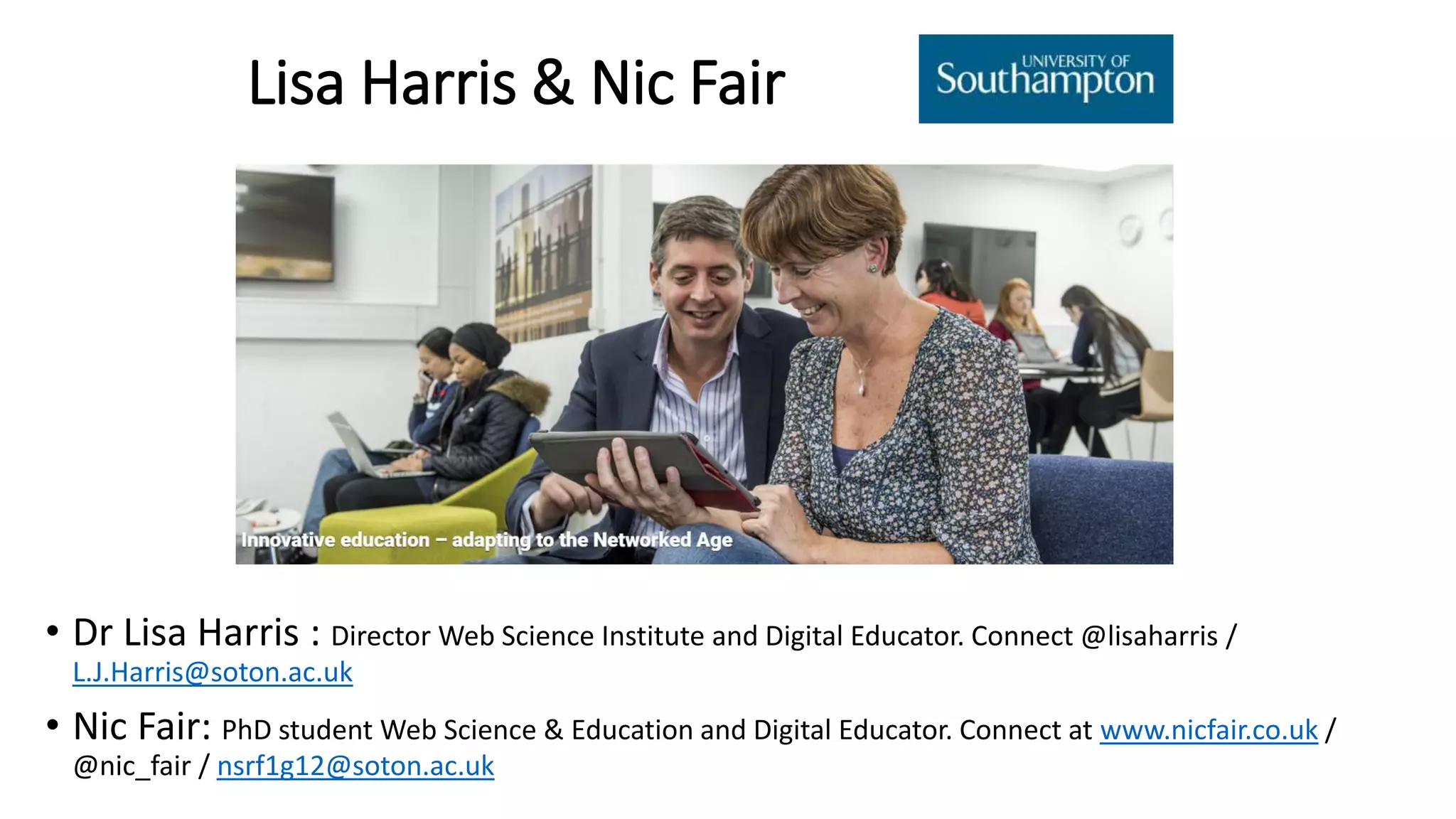
Lisa Harris & Nic Fair
• Dr Lisa Harris : Director Web Science Institute and Digital Educator. Connect @lisaharris /
L.J.Harris@soton.ac.uk
• Nic Fair: PhD student Web Science & Education and Digital Educator. Connect at www.nicfair.co.uk /
@nic_fair / nsrf1g12@soton.ac.uk
ECAR Study of [UK] Undergraduate Students
and IT, 2014
• Technology is embedded into students’ lives, and students are
generally inclined to use and to have favourable attitudes toward
technology.
• More students than ever have experienced a digital learning
environment. The majority say they learn best with a blend of online
and face-to-face work.
• MOOCs can provide that blended learning effectively.
The Web Science Series of mini-MOOCs
• Web Science: how the web is changing the world
• Digital Marketing
• Power of Social Media
• Linked Data and the Semantic Web
• Learning in the Networked Age
• Southampton’s Futurelearn MOOC page
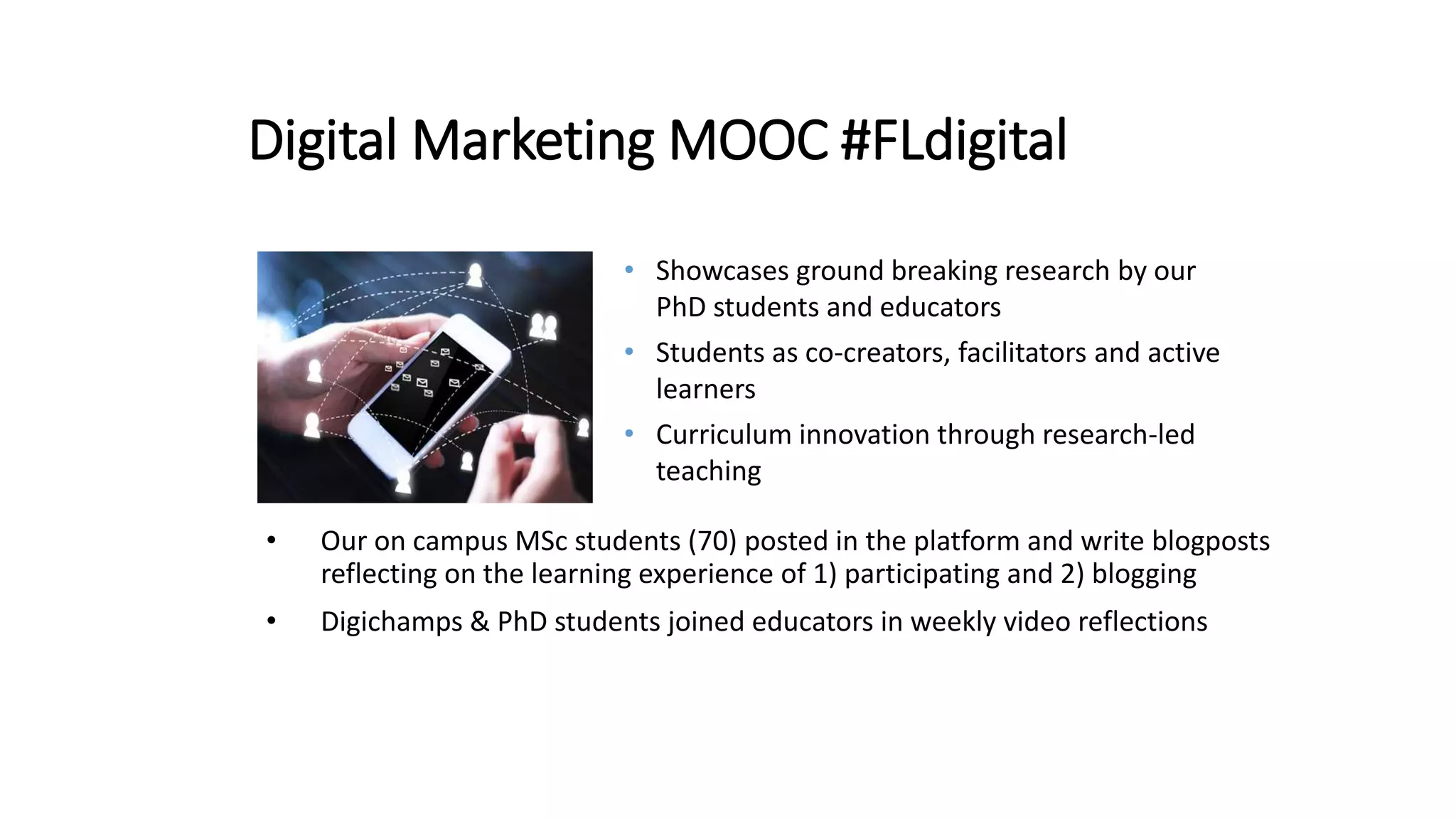
Digital Marketing MOOC #FLdigital
• Our on campus MSc students (70) posted in the platform and write blogposts
reflecting on the learning experience of 1) participating and 2) blogging
• Digichamps & PhD students joined educators in weekly video reflections
• Showcases ground breaking research by our
PhD students and educators
• Students as co-creators, facilitators and active
learners
• Curriculum innovation through research-led
teaching
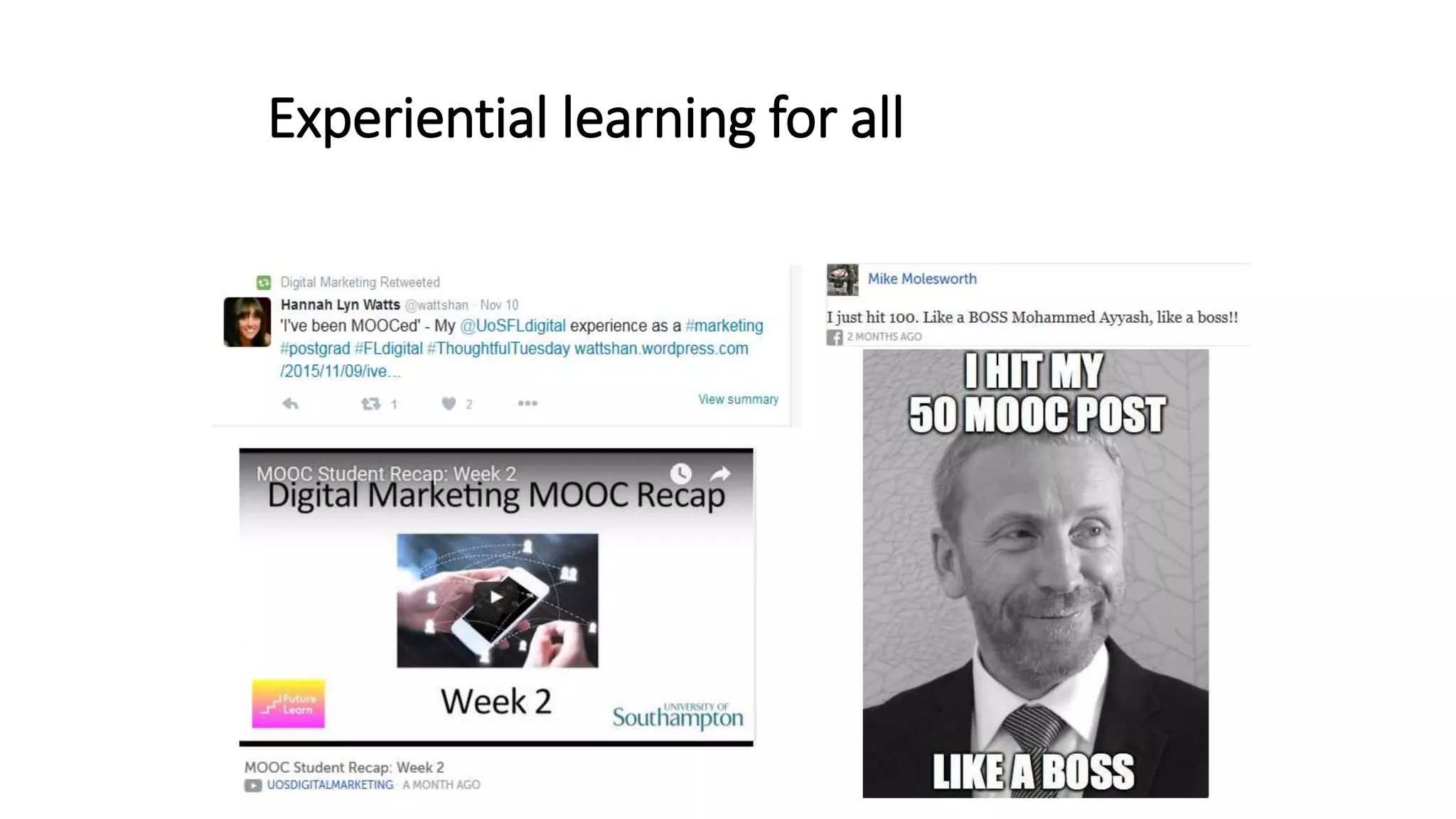
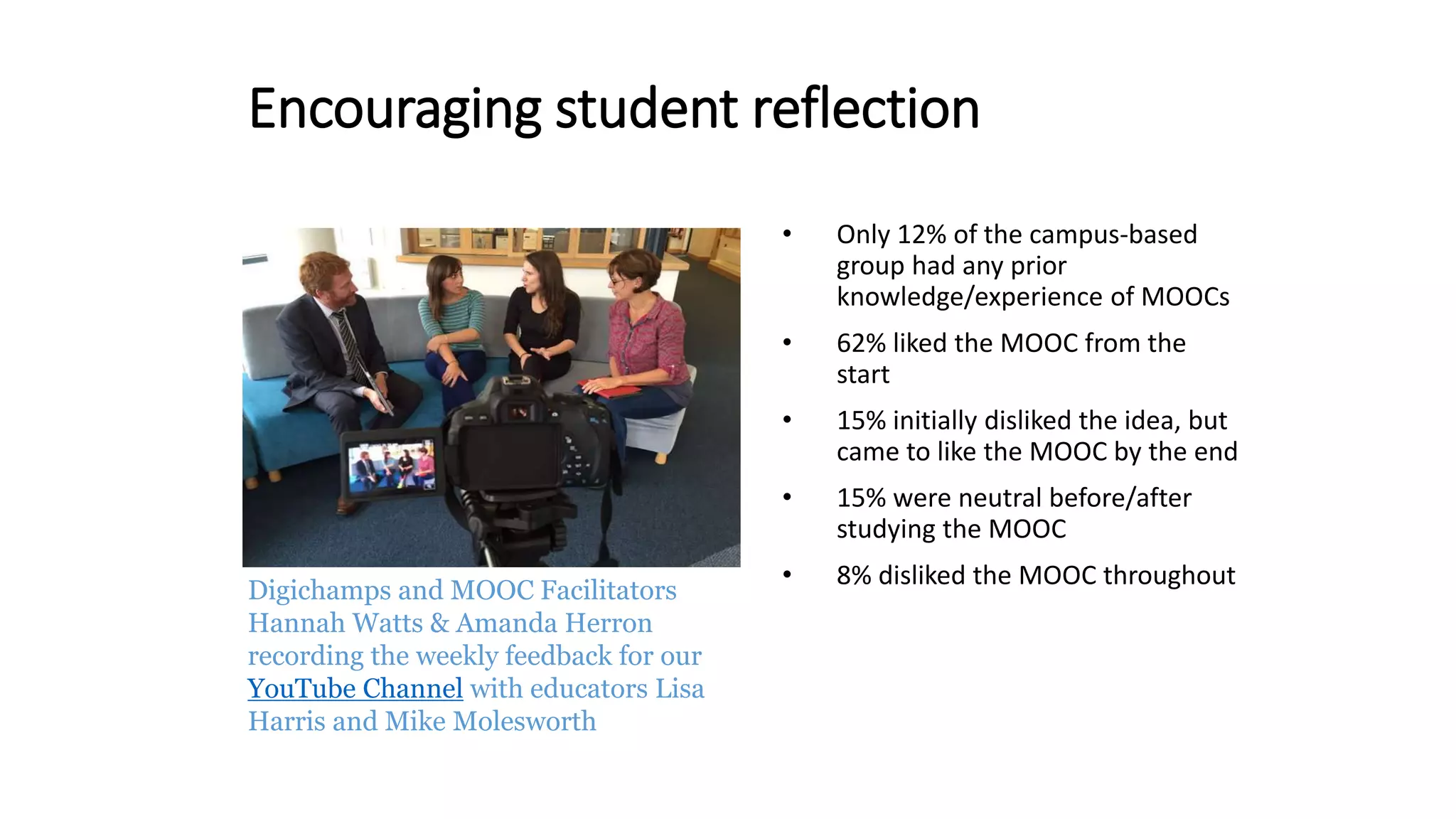
Experiential learning for all
Encouraging student reflection
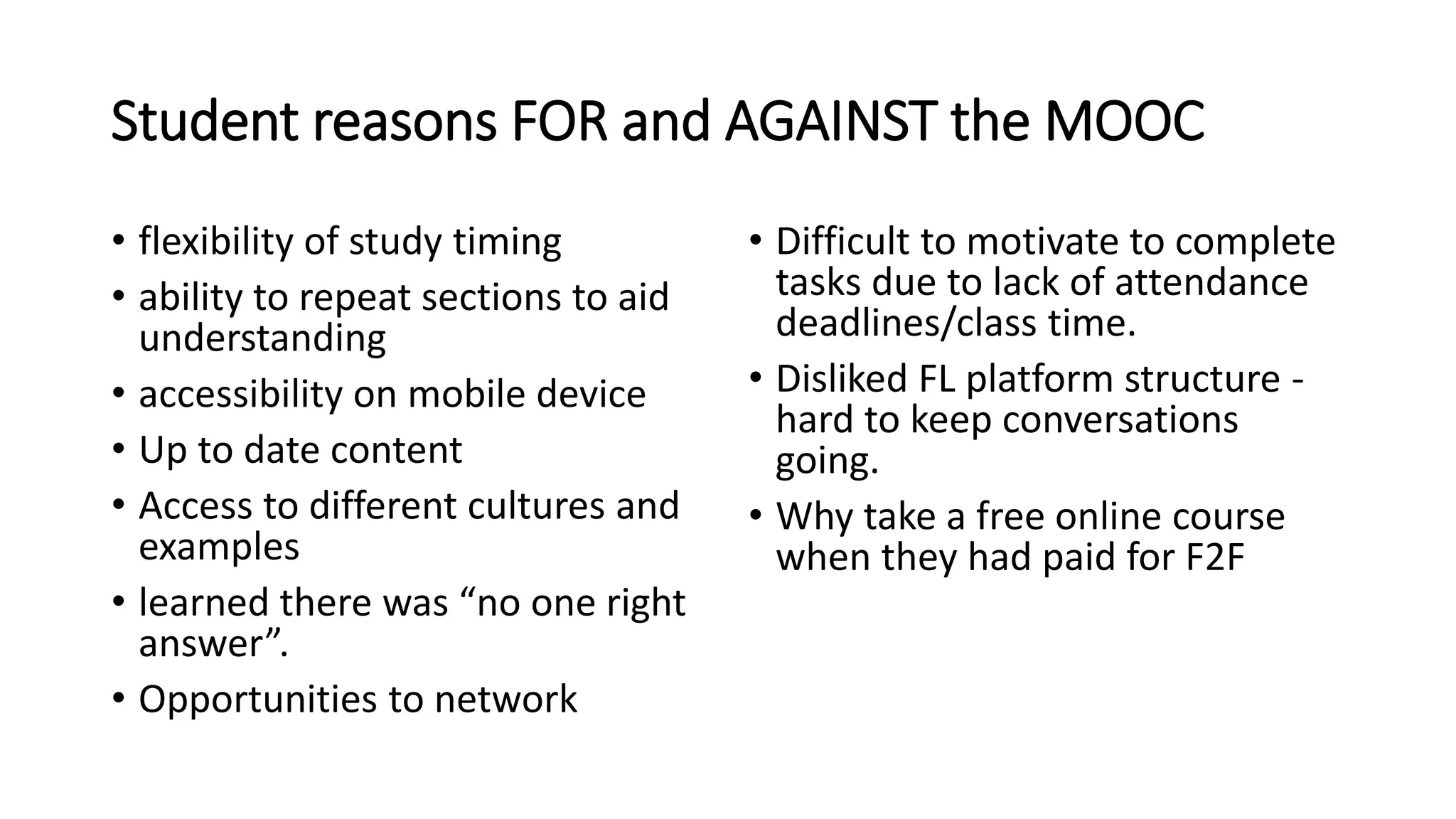
Digichamps and MOOC Facilitators
Hannah Watts & Amanda Herron
recording the weekly feedback for our
YouTube Channel with educators Lisa
Harris and Mike Molesworth
• Only 12% of the campus-based
group had any prior
knowledge/experience of MOOCs
• 62% liked the MOOC from the
start
• 15% initially disliked the idea, but
came to like the MOOC by the end
• 15% were neutral before/after
studying the MOOC
• 8% disliked the MOOC throughout
Student reasons FOR and AGAINST the MOOC
• flexibility of study timing
• ability to repeat sections to aid
understanding
• accessibility on mobile device
• Up to date content
• Access to different cultures and
examples
• learned there was “no one right
answer”.
• Opportunities to network
• Difficult to motivate to complete
tasks due to lack of attendance
deadlines/class time.
• Disliked FL platform structure -
hard to keep conversations
going.
• Why take a free online course
when they had paid for F2F
The Power of Social Media MOOC
#FLsocialmedia
• Integrated with an existing on-campus ‘Curriculum
Innovation’ module in May 2016 (and upcoming in
May 2017) to encourage interaction and aid exam
revision
• Students posted their group videos on YouTube and
shared with MOOC learners for feedback/discussion
• Students wrote a short reflection on the additional
learning achieved from their MOOC interactions
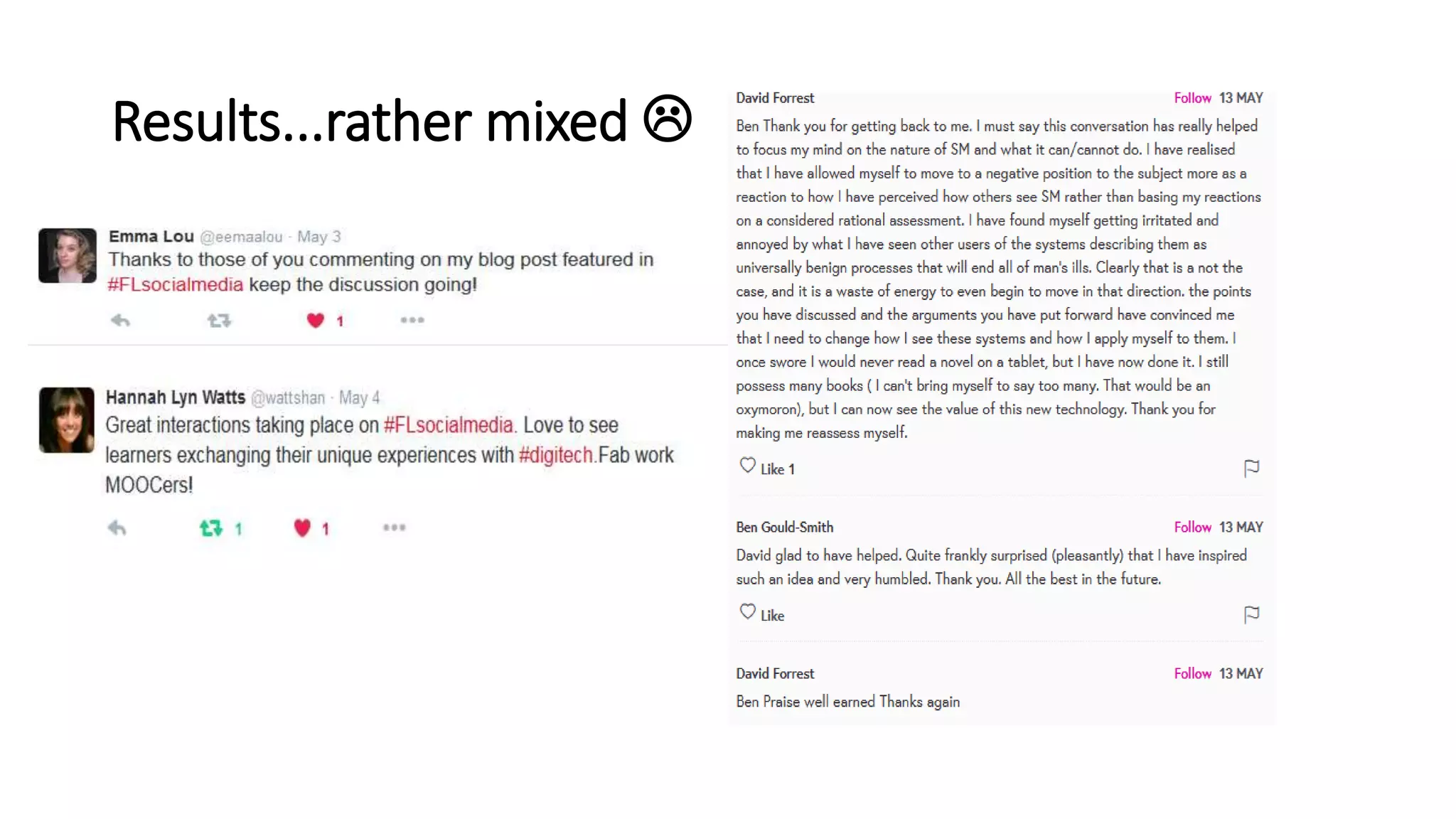
Results...rather mixed 
My reflections and changes for next time…
• Some useful interactions but many students struggled 
• Assume no prior knowledge of MOOCs – provide very specific
instructions
• Assume no prior knowledge of how to engage with other learners –
provide specific examples
• “I blame the system!” – students are too used to essay formats and
traditional tasks. MOOC puts them outside that comfort zone.
• This year student preparation and their digital literacy skills will be
improved via the new Learning in the Networked Age MOOC in the
previous two weeks
MOOCs as Research Methodology
“What if your next research dissemination exercise could
also help you gather unique data for your next research
project, while at the same time providing your students with
unique learning opportunities?” (Moon, D, 2016)
“MOOCs have the potential to benefit learners, educators,
and researchers through the crowdsourcing of data.”
(Ferguson et al, 2016)
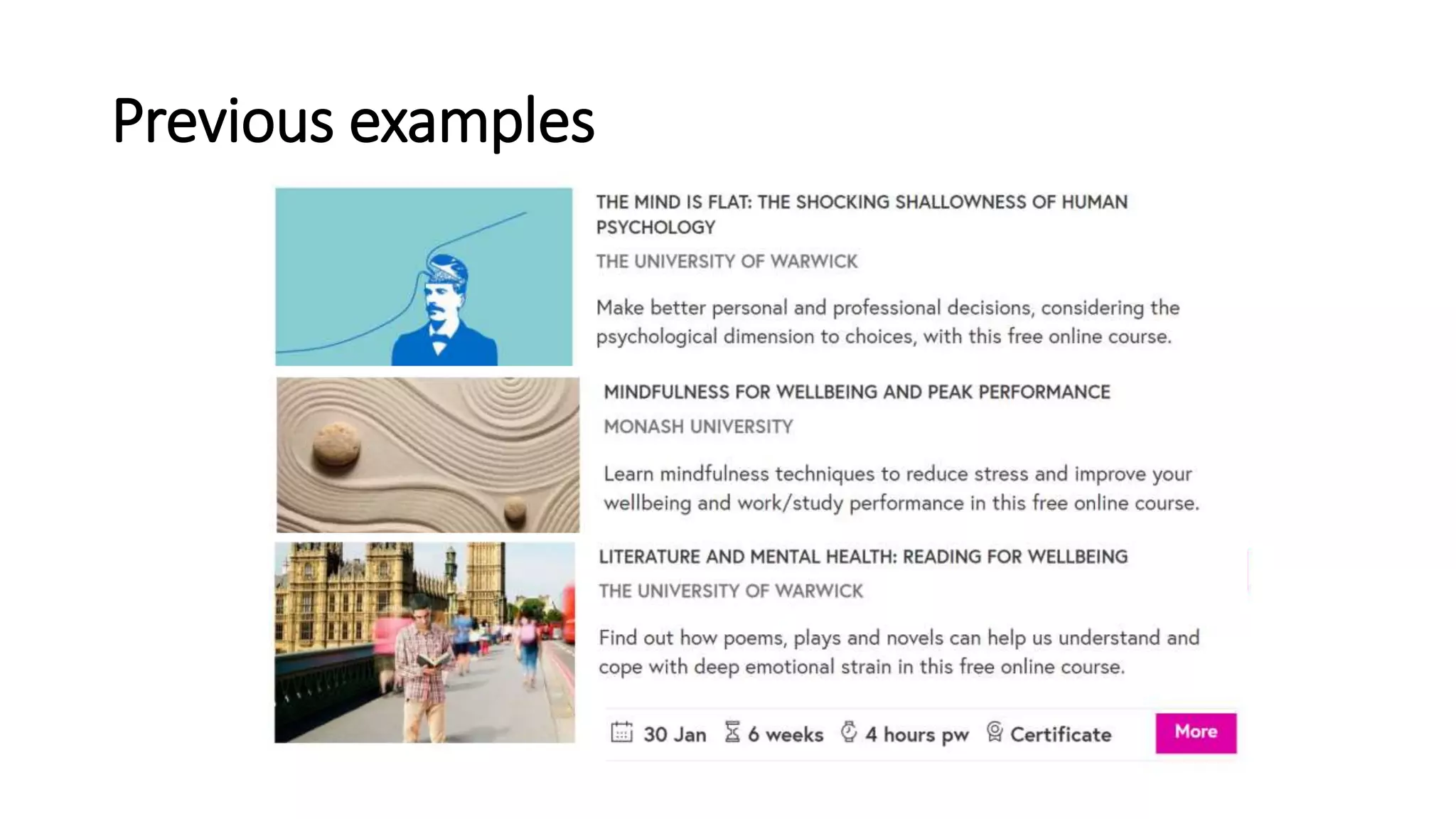
Previous examples
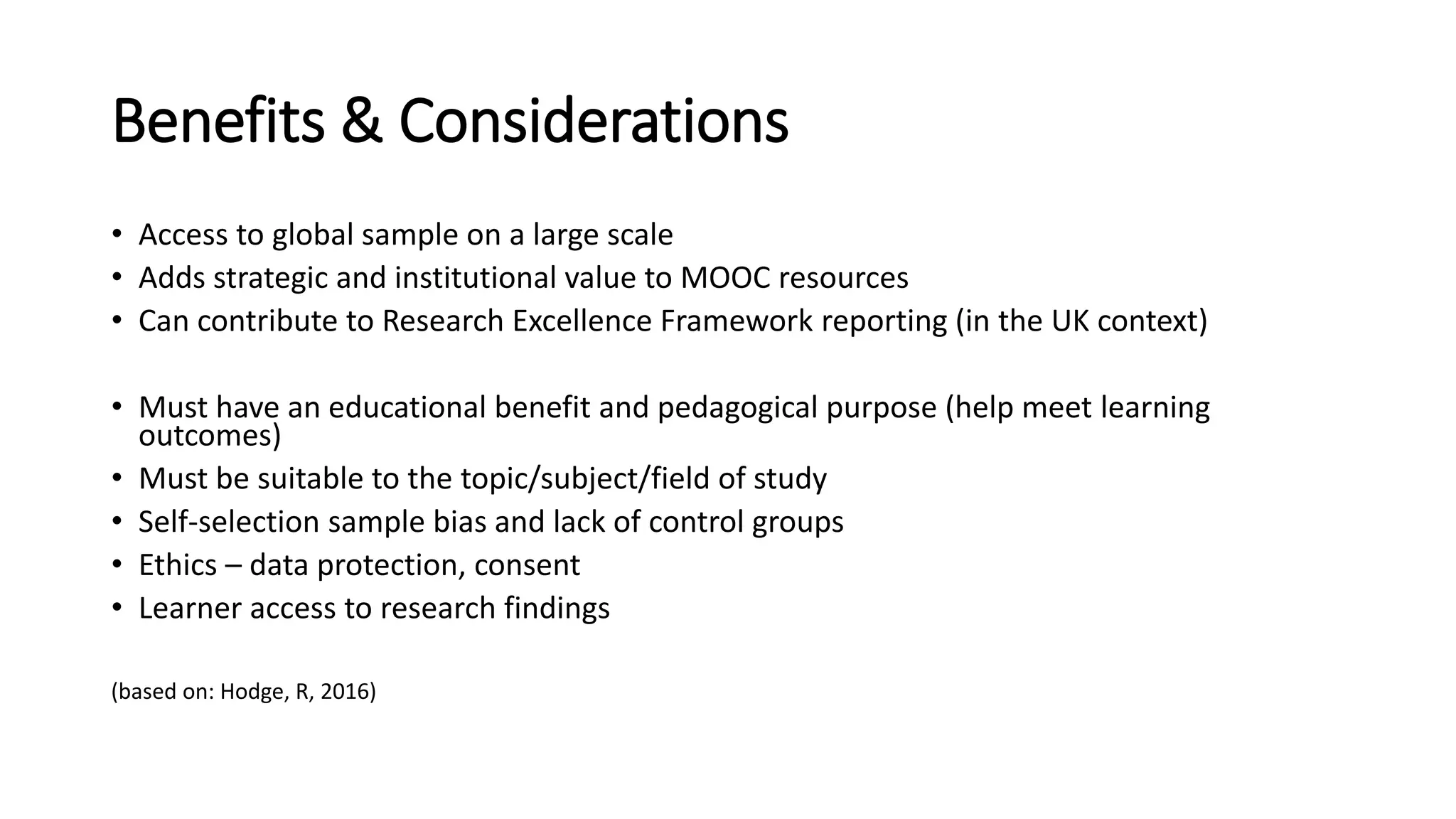
Benefits & Considerations
• Access to global sample on a large scale
• Adds strategic and institutional value to MOOC resources
• Can contribute to Research Excellence Framework reporting (in the UK context)
• Must have an educational benefit and pedagogical purpose (help meet learning
outcomes)
• Must be suitable to the topic/subject/field of study
• Self-selection sample bias and lack of control groups
• Ethics – data protection, consent
• Learner access to research findings
(based on: Hodge, R, 2016)
Learning in the Network Age
“Universities should prioritize [MOOC] courses that will
be designed from the outset to address fundamental
questions about teaching and learning.” (Reich, 2015)
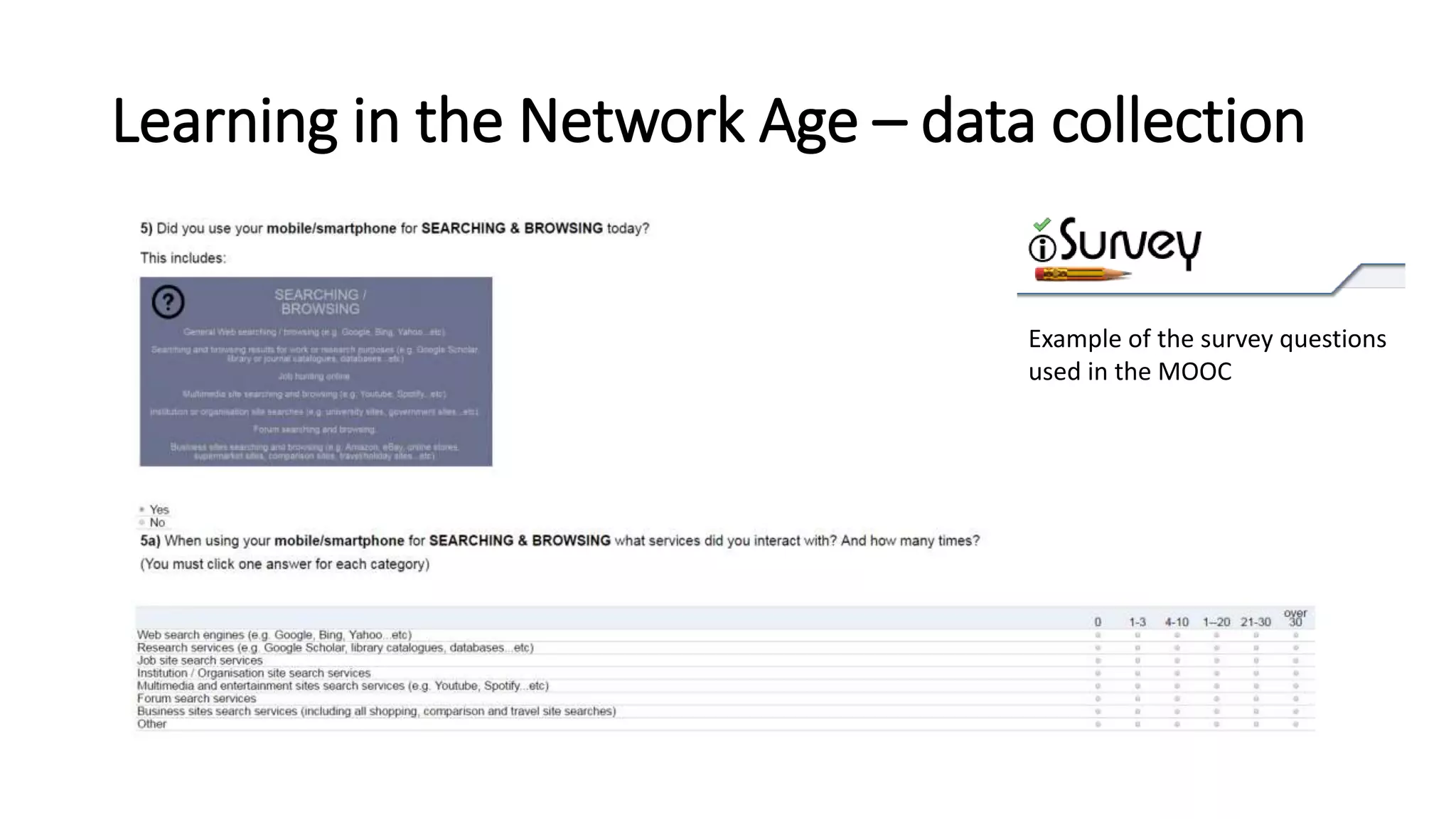
Learning in the Network Age – data collection
Example of the survey questions
used in the MOOC
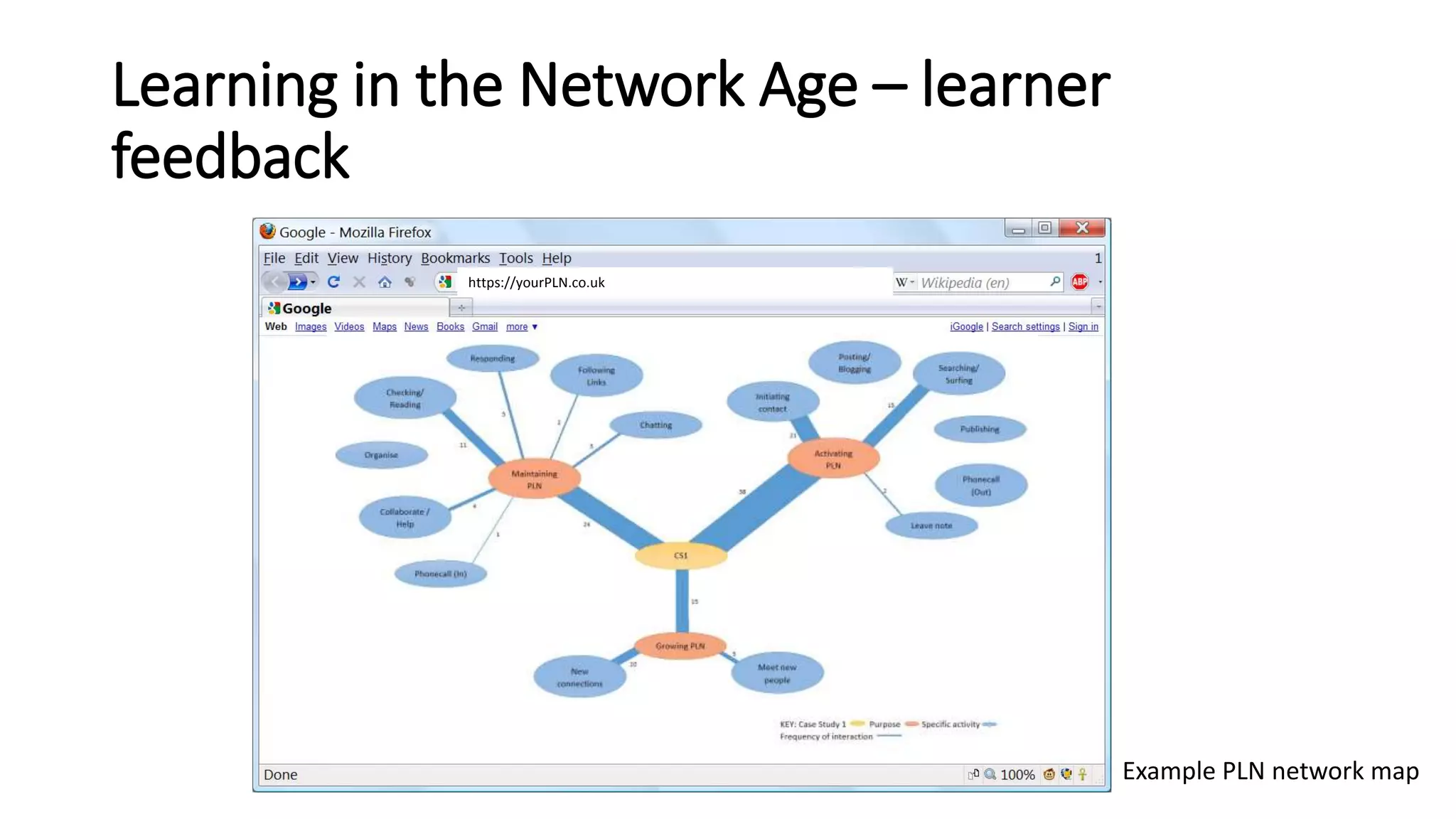
Learning in the Network Age – learner
feedback
https://yourPLN.co.uk
Example PLN network map
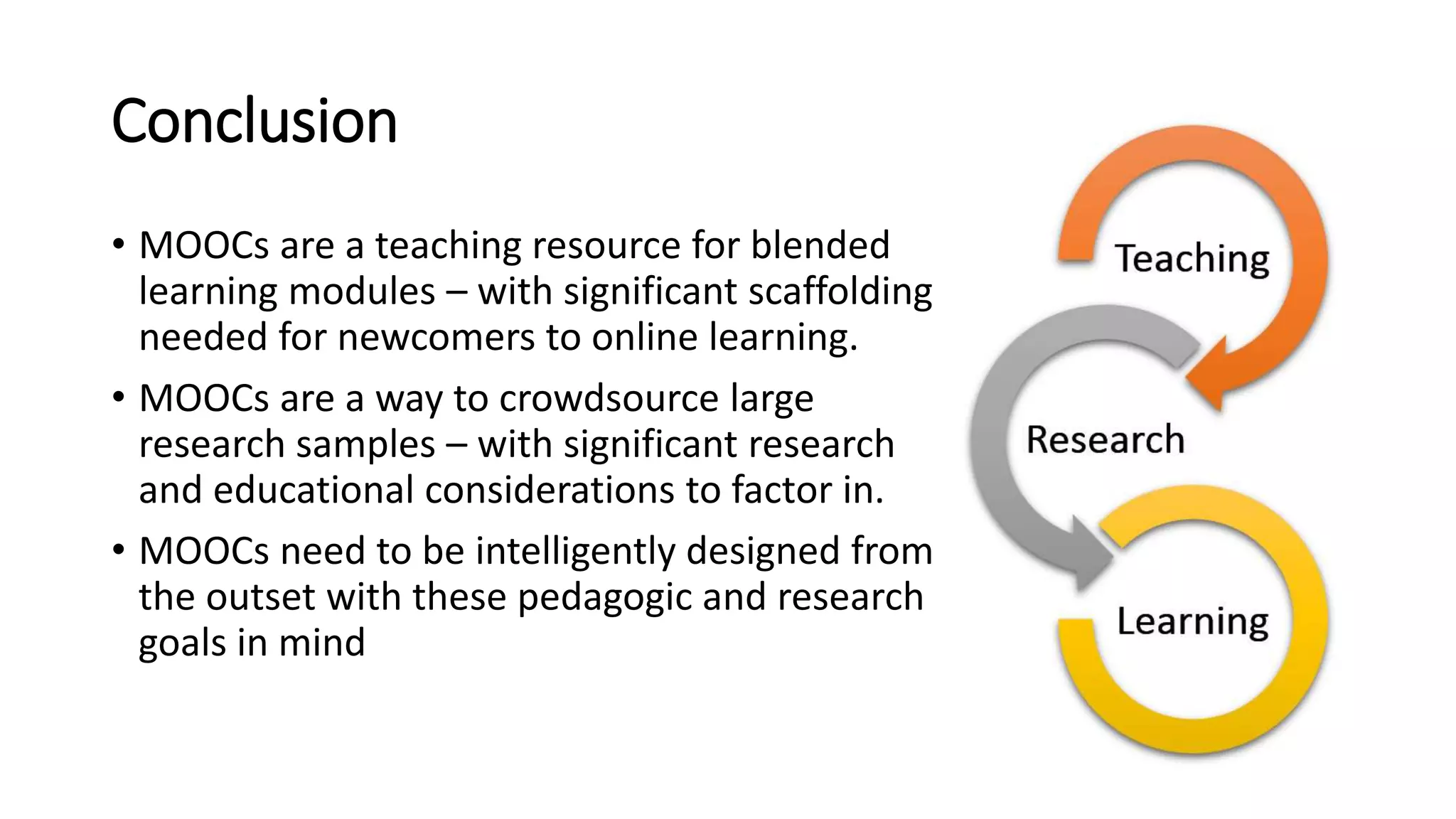
Conclusion
• MOOCs are a teaching resource for blended
learning modules – with significant scaffolding
needed for newcomers to online learning.
• MOOCs are a way to crowdsource large
research samples – with significant research
and educational considerations to factor in.
• MOOCs need to be intelligently designed from
the outset with these pedagogic and research
goals in mind
References
• ECAR, 2014. ECAR Study of Undergraduate Students and Information
Technology.
• Ferguson, R, Scanlon, E & Harris, L, 2016. Developing a Strategic Approach
to MOOCs
• Hodge, R, 2016. Adapting a MOOC for Research: Lessons Learned from the
First Presentation of Literature and Mental Health: Reading for Wellbeing
• Moon, D, 2016. Crowdsourcing for social sciences researchers: data
gathering, teaching, learning and research dissemination from a single
project
• Reich, J, 2015. Rebooting MOOC Research

Integrating MOOCs into university practice: education and research

  • 1.
    Integrating MOOCs into UniversityPractice: education and research @lisaharris & @nic_fair University of Southampton Web Science Institute Find out more about us at our Innovation In HE blog
  • 2.
    Lisa Harris &Nic Fair • Dr Lisa Harris : Director Web Science Institute and Digital Educator. Connect @lisaharris / L.J.Harris@soton.ac.uk • Nic Fair: PhD student Web Science & Education and Digital Educator. Connect at www.nicfair.co.uk / @nic_fair / nsrf1g12@soton.ac.uk
  • 3.
    ECAR Study of[UK] Undergraduate Students and IT, 2014 • Technology is embedded into students’ lives, and students are generally inclined to use and to have favourable attitudes toward technology. • More students than ever have experienced a digital learning environment. The majority say they learn best with a blend of online and face-to-face work. • MOOCs can provide that blended learning effectively.
  • 4.
    The Web ScienceSeries of mini-MOOCs • Web Science: how the web is changing the world • Digital Marketing • Power of Social Media • Linked Data and the Semantic Web • Learning in the Networked Age • Southampton’s Futurelearn MOOC page
  • 5.
    Digital Marketing MOOC#FLdigital • Our on campus MSc students (70) posted in the platform and write blogposts reflecting on the learning experience of 1) participating and 2) blogging • Digichamps & PhD students joined educators in weekly video reflections • Showcases ground breaking research by our PhD students and educators • Students as co-creators, facilitators and active learners • Curriculum innovation through research-led teaching
  • 6.
  • 7.
    Encouraging student reflection Digichampsand MOOC Facilitators Hannah Watts & Amanda Herron recording the weekly feedback for our YouTube Channel with educators Lisa Harris and Mike Molesworth • Only 12% of the campus-based group had any prior knowledge/experience of MOOCs • 62% liked the MOOC from the start • 15% initially disliked the idea, but came to like the MOOC by the end • 15% were neutral before/after studying the MOOC • 8% disliked the MOOC throughout
  • 8.
    Student reasons FORand AGAINST the MOOC • flexibility of study timing • ability to repeat sections to aid understanding • accessibility on mobile device • Up to date content • Access to different cultures and examples • learned there was “no one right answer”. • Opportunities to network • Difficult to motivate to complete tasks due to lack of attendance deadlines/class time. • Disliked FL platform structure - hard to keep conversations going. • Why take a free online course when they had paid for F2F
  • 9.
    The Power ofSocial Media MOOC #FLsocialmedia • Integrated with an existing on-campus ‘Curriculum Innovation’ module in May 2016 (and upcoming in May 2017) to encourage interaction and aid exam revision • Students posted their group videos on YouTube and shared with MOOC learners for feedback/discussion • Students wrote a short reflection on the additional learning achieved from their MOOC interactions
  • 10.
  • 11.
    My reflections andchanges for next time… • Some useful interactions but many students struggled  • Assume no prior knowledge of MOOCs – provide very specific instructions • Assume no prior knowledge of how to engage with other learners – provide specific examples • “I blame the system!” – students are too used to essay formats and traditional tasks. MOOC puts them outside that comfort zone. • This year student preparation and their digital literacy skills will be improved via the new Learning in the Networked Age MOOC in the previous two weeks
  • 12.
    MOOCs as ResearchMethodology “What if your next research dissemination exercise could also help you gather unique data for your next research project, while at the same time providing your students with unique learning opportunities?” (Moon, D, 2016) “MOOCs have the potential to benefit learners, educators, and researchers through the crowdsourcing of data.” (Ferguson et al, 2016)
  • 13.
  • 14.
    Benefits & Considerations •Access to global sample on a large scale • Adds strategic and institutional value to MOOC resources • Can contribute to Research Excellence Framework reporting (in the UK context) • Must have an educational benefit and pedagogical purpose (help meet learning outcomes) • Must be suitable to the topic/subject/field of study • Self-selection sample bias and lack of control groups • Ethics – data protection, consent • Learner access to research findings (based on: Hodge, R, 2016)
  • 15.
    Learning in theNetwork Age “Universities should prioritize [MOOC] courses that will be designed from the outset to address fundamental questions about teaching and learning.” (Reich, 2015)
  • 16.
    Learning in theNetwork Age – data collection Example of the survey questions used in the MOOC
  • 17.
    Learning in theNetwork Age – learner feedback https://yourPLN.co.uk Example PLN network map
  • 18.
    Conclusion • MOOCs area teaching resource for blended learning modules – with significant scaffolding needed for newcomers to online learning. • MOOCs are a way to crowdsource large research samples – with significant research and educational considerations to factor in. • MOOCs need to be intelligently designed from the outset with these pedagogic and research goals in mind
  • 19.
    References • ECAR, 2014.ECAR Study of Undergraduate Students and Information Technology. • Ferguson, R, Scanlon, E & Harris, L, 2016. Developing a Strategic Approach to MOOCs • Hodge, R, 2016. Adapting a MOOC for Research: Lessons Learned from the First Presentation of Literature and Mental Health: Reading for Wellbeing • Moon, D, 2016. Crowdsourcing for social sciences researchers: data gathering, teaching, learning and research dissemination from a single project • Reich, J, 2015. Rebooting MOOC Research

Editor's Notes

  • #13 As well as being used as a blended learning resource, MOOCs can also provide an innovative research opportunity. Research data collected via MOOCs (not about MOOCs)
  • #14 1. Learners took part in psychological experiments related to course content but results of which useable for research. 2. Monash – pre- and post-survey on stress levels to assess the impact of the course on stress levels 3. 7 research activities (inc. a follow up survey) spaced throughout the course – 4 surveys and 3 activities
  • #15 (+) - not just a teaching resource but also a research tool
  • #16 This course aims to equip you with the learning literacies and network skills vital for educational success in the networked age. It begins by considering the nature of digital inequalities such as access, openness, ownership and inclusion and how these issues might be effectively addressed in an educational context. Then you will explore your own Personal Learning Network – what it looks like and how you use it – before discovering strategies to grow, manage and activate your network to maximum effect in this environment.
  • #17 Learners complete iSurvey
  • #18 Instant feedback in the form of a network map on a web page. Learning task – to identify interaction patterns and compare with aggregate map. Clear pedagogical / learning benefit as well as providing research data for PhD thesis.