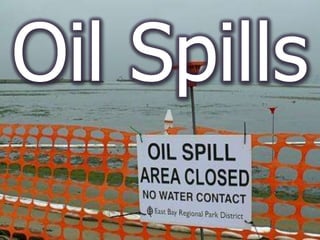
Oil Spills
pollutant in the oceans.
 More than 3 million metric tons
of oil contaminate the sea every
year.
 The majority of oil pollution in
the oceans comes from land.
 Run off and waste from cities,
industry, and rivers carries oil
into the ocean.
 Ships cause about a third of the
oil pollution in the oceans when
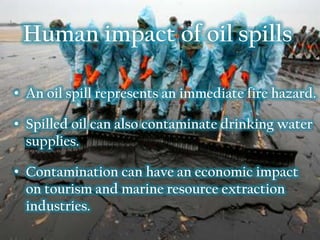
Human impact of oil spills
• An oil spill represents an immediate fire hazard.
• Spilled oil can also contaminate drinking water
supplies.
• Contamination can have an economic impact
on tourism and marine resource extraction
industries.
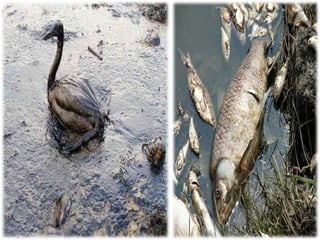
Effects on Marine Life
• Algae and other local plants have been reported to
be eradicated. Animals that come in touch with high
concentrations of oil die of oil poisoning.
• Worms, microorganisms and young sea creatures are
more sensitive. Humans and other animals living near
the sea are also threatened.
• Among these compounds, aromatic hydrocarbons
that low boiling point are more dangerous, such as
benzene, toluene and xylene. Naphthalene and
Phenanthrene are more poisonous for fishes.
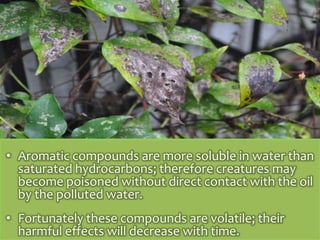
• Aromatic compounds are more soluble in water than
saturated hydrocarbons; therefore creatures may
become poisoned without direct contact with the oil
by the polluted water.
• Fortunately these compounds are volatile; their
harmful effects will decrease with time.
Chemical
Methods
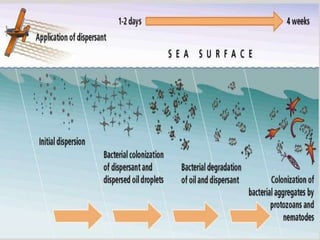
Dispersants
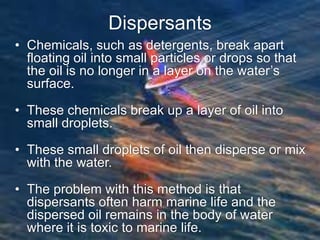
• Chemicals, such as detergents, break apart
floating oil into small particles or drops so that
the oil is no longer in a layer on the water’s
surface.
• These chemicals break up a layer of oil into
small droplets.
• These small droplets of oil then disperse or mix
with the water.

• The problem with this method is that
dispersants often harm marine life and the
dispersed oil remains in the body of water
where it is toxic to marine life.
Physical
Methods
Burning
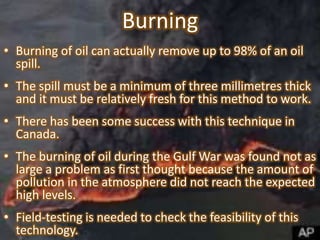
• Burning of oil can actually remove up to 98% of an oil
spill.

• The spill must be a minimum of three millimetres thick
and it must be relatively fresh for this method to work.
• There has been some success with this technique in
Canada.
• The burning of oil during the Gulf War was found not as
large a problem as first thought because the amount of
pollution in the atmosphere did not reach the expected
high levels.
• Field-testing is needed to check the feasibility of this
technology.
Bioremediation
• There are bacteria and fungi that naturally
break down oil.
• This process is usually very slow- it would
take years for oil to be removed by
microorganisms.
• Adding either fertilizer or microorganisms to
the water where the spill is located can speed
up the breakdown process.
• The fertilizer gives the bacteria and fungi
the nutrients they need to grow and
reproduce quicker.
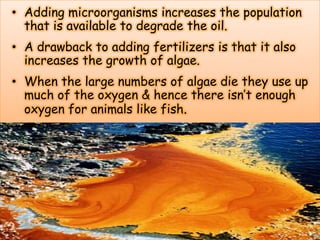
• Adding microorganisms increases the population
that is available to degrade the oil.
• A drawback to adding fertilizers is that it also
increases the growth of algae.

• When the large numbers of algae die they use up
much of the oxygen & hence there isn’t enough
oxygen for animals like fish.
Mechanical
Methods
Booms
• It’s easier to clean-up oil if it’s all in one spot, so equipment called
containment booms act like a fence to keep the oil from spreading
or floating away.
• Booms float on the surface and have three parts:
i.

A ‘freeboard’ or part that rises above the water surface and
contains the oil and prevents it from splashing over the top.

ii. A ‘skirt’ that rides below the surface and prevents the oil
from being pushed under the booms and escaping.
iii. A cable or chain that connects, strengthens, and stabilizes the
boom.
iv. Connected sections of boom are placed around the oil spill
until it is totally surrounded and contained.
• One problem with using this method is that once
the material is coated with oil, it may then be
heavier than water.
• Then you have the problem of the oil-coated
material sinking to the bottom where it could harm
animals living there.
• Absorbent materials, very much like paper towels,
are used to soak up oil from the water’s surface or
even from rocks and animal life on shore that
becomes coated with oil.
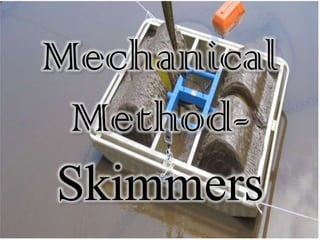
Mechanical
MethodSkimmers
• Skimmers are machines that suck
the oil up like a vacuum cleaner,
blot the oil from the surface with
oil-attracting materials, or
physically separate the oil from
the water so that it spills over a
dam into a tank.
• Much of the spilled oil can be
recovered with skimmers
• The recovered oil has to be stored
somewhere though, so storage
tanks or barges have to be
brought to the spill to hold the
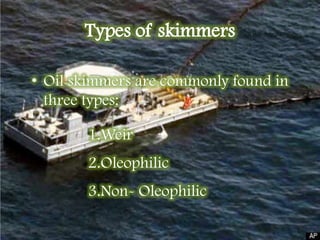
• Oil skimmers are commonly found in
three types:
1.Weir
2.Oleophilic
3.Non- Oleophilic
• Weir skimmers function by
allowing the oil floating on the
surface of the water to flow over
a weir.
• The height of the weir may be
adjustable.
• These devices will collect water
when oil is no longer present.
• Weir skimmers are also available
in floating, self-adjusting
variations.
Weir Skimmer
• Oleophilic skimmers function by
using a rotating element such as a
drum, to which the oil adheres.
• The oil is wiped from the surface
of the drum and collected.
• They are very efficient and do not
pick up any appreciable amounts of
water even when oil is not present.
• Oleophilic skimmers are
distinguished not by their operation
but by the component used to
collect the oil.

Oleophilic skimmers
• Non-oleophilic skimmers are
distinguished by the component used
to collect the oil.
• A metal disc, belt or drum is used in
applications where an oleophilic
material is inappropriate, such as in a
hot alkaline aqueous parts washer.
• The skimmer is generally turned off
whenever there is no oil to skim thus
minimizing the amount of water
collected.
• Metal skimming elements are nearly as
Thank-You
Project By:

Shagun Ramola
Class: XI-A
K.V. No.1, Harni road,
Vadodara.

Oil spills & Cleaning

  • 1.
  • 2.
    pollutant in theoceans.  More than 3 million metric tons of oil contaminate the sea every year.  The majority of oil pollution in the oceans comes from land.  Run off and waste from cities, industry, and rivers carries oil into the ocean.  Ships cause about a third of the oil pollution in the oceans when
  • 4.
    Human impact ofoil spills • An oil spill represents an immediate fire hazard. • Spilled oil can also contaminate drinking water supplies. • Contamination can have an economic impact on tourism and marine resource extraction industries.
  • 9.
    Effects on MarineLife • Algae and other local plants have been reported to be eradicated. Animals that come in touch with high concentrations of oil die of oil poisoning. • Worms, microorganisms and young sea creatures are more sensitive. Humans and other animals living near the sea are also threatened. • Among these compounds, aromatic hydrocarbons that low boiling point are more dangerous, such as benzene, toluene and xylene. Naphthalene and Phenanthrene are more poisonous for fishes.
  • 11.
    • Aromatic compoundsare more soluble in water than saturated hydrocarbons; therefore creatures may become poisoned without direct contact with the oil by the polluted water. • Fortunately these compounds are volatile; their harmful effects will decrease with time.
  • 14.
  • 15.
    Dispersants • Chemicals, suchas detergents, break apart floating oil into small particles or drops so that the oil is no longer in a layer on the water’s surface. • These chemicals break up a layer of oil into small droplets. • These small droplets of oil then disperse or mix with the water. • The problem with this method is that dispersants often harm marine life and the dispersed oil remains in the body of water where it is toxic to marine life.
  • 17.
  • 18.
    Burning • Burning ofoil can actually remove up to 98% of an oil spill. • The spill must be a minimum of three millimetres thick and it must be relatively fresh for this method to work. • There has been some success with this technique in Canada. • The burning of oil during the Gulf War was found not as large a problem as first thought because the amount of pollution in the atmosphere did not reach the expected high levels. • Field-testing is needed to check the feasibility of this technology.
  • 21.
    Bioremediation • There arebacteria and fungi that naturally break down oil. • This process is usually very slow- it would take years for oil to be removed by microorganisms. • Adding either fertilizer or microorganisms to the water where the spill is located can speed up the breakdown process. • The fertilizer gives the bacteria and fungi the nutrients they need to grow and reproduce quicker.
  • 23.
    • Adding microorganismsincreases the population that is available to degrade the oil. • A drawback to adding fertilizers is that it also increases the growth of algae. • When the large numbers of algae die they use up much of the oxygen & hence there isn’t enough oxygen for animals like fish.
  • 24.
  • 25.
    Booms • It’s easierto clean-up oil if it’s all in one spot, so equipment called containment booms act like a fence to keep the oil from spreading or floating away. • Booms float on the surface and have three parts: i. A ‘freeboard’ or part that rises above the water surface and contains the oil and prevents it from splashing over the top. ii. A ‘skirt’ that rides below the surface and prevents the oil from being pushed under the booms and escaping. iii. A cable or chain that connects, strengthens, and stabilizes the boom. iv. Connected sections of boom are placed around the oil spill until it is totally surrounded and contained.
  • 28.
    • One problemwith using this method is that once the material is coated with oil, it may then be heavier than water. • Then you have the problem of the oil-coated material sinking to the bottom where it could harm animals living there. • Absorbent materials, very much like paper towels, are used to soak up oil from the water’s surface or even from rocks and animal life on shore that becomes coated with oil.
  • 29.
  • 30.
    • Skimmers aremachines that suck the oil up like a vacuum cleaner, blot the oil from the surface with oil-attracting materials, or physically separate the oil from the water so that it spills over a dam into a tank. • Much of the spilled oil can be recovered with skimmers • The recovered oil has to be stored somewhere though, so storage tanks or barges have to be brought to the spill to hold the
  • 31.
    • Oil skimmersare commonly found in three types: 1.Weir 2.Oleophilic 3.Non- Oleophilic
  • 32.
    • Weir skimmersfunction by allowing the oil floating on the surface of the water to flow over a weir. • The height of the weir may be adjustable. • These devices will collect water when oil is no longer present. • Weir skimmers are also available in floating, self-adjusting variations.
  • 33.
  • 34.
    • Oleophilic skimmersfunction by using a rotating element such as a drum, to which the oil adheres. • The oil is wiped from the surface of the drum and collected. • They are very efficient and do not pick up any appreciable amounts of water even when oil is not present. • Oleophilic skimmers are distinguished not by their operation but by the component used to collect the oil. Oleophilic skimmers
  • 36.
    • Non-oleophilic skimmersare distinguished by the component used to collect the oil. • A metal disc, belt or drum is used in applications where an oleophilic material is inappropriate, such as in a hot alkaline aqueous parts washer. • The skimmer is generally turned off whenever there is no oil to skim thus minimizing the amount of water collected. • Metal skimming elements are nearly as
  • 38.
    Thank-You Project By: Shagun Ramola Class:XI-A K.V. No.1, Harni road, Vadodara.