
OH&S PROCEDURES 
IN THE DESIGN 
STUDIO. 
CUF30107 – Cer ti ficate I I I Media 
Industry Practice | OH&S 
Assessment Task 2 | Role play | Induction Powerpoint 
Joanne Thomson
Who to see about OH&S 
• Your manager 
• Your team leader 
• Safety committee 
• Human resources 
• Organizational department 
• Your safety rep (Jon Snow – 0400 123 456)
Induction process for new employees 
• Introduction to direct manager / team leader 
• Introduction to team members 
• Facilities tour 
• First Aid location 
• Location of studio equipment and procedures 
• Office layout 
• Security issues and office access 
• Introduction to other employees 
• Office house keeping 
• Team roles and responsibilities 
• Safety / OH&S procedures
Safety procedures 
• Inform Safety Representative of the emergency 
• Evacuate the building in the event of a fire or other potential threats 
• Keep clear of any hazards and follow instructions 
• Notify a first aid officer of any injuries 
• Call an ambulance on ‘000’ in case of a medical emergency 
• Call a fire brigade on ‘000’ in case of explosion or fire 
• Do not collect personal belongings 
• Do not re-enter the building 
• Remain calm
Reporting hazards 
It is critical to report any issues or incidences that are a safety risk. 
Problems can include: 
• Equipment problems 
• Hazards that require attention 
• Environmental risks 
• Suggestions for safety improvement 
• Training issues 
• Injuries / illnesses 
• Fill in an incident report
Studio equipment & safety 
• Any computer maintenance / faults need to be reported to your manager 
• An electrician will maintain and check all the electricals 
• The safety manager checks all equipment a few times a year to be sure its safe to use 
• First Aid kits are in date 
• Fire extinguishes are in date
Existing / potential hazards 
• RSI (Repetitive strain injury) 
• Vision problems from computer screens 
• Insufficient studio / office lighting 
• Neck / shoulders / back injury from any heavy lifting 
• Hazards such as falling objects or objects you can trip over 
• Not switching off equipment at the end of the day 
• Excessive noise in the studio from equipment 
• Awkward seating position 
• Getting hair / clothing / fingers caught 
• Open cabinet / desk drawers 
• Slippery floors 
• Stairs
Risk control 
• RSI (Repetitive strain injury) - Take a ten minute break every 30 minutes 
• Vision problems – Ensure employees know how to adjust screen glare 
• Insufficient lighting – Ensure sufficient lighting, ensure lighting repairs 
• Heavy lifting strain – Ensure correct lifting procedures 
• Falling / tripping risks – Report any hazards or action them immediately 
• Switch off all electrical appliances at the end of the working day 
• Excessive noise – Loud equipment needs to be moved to appropriate area 
• Awkward seating – Ensure correct posture in sitting position, straight back 
• Hair / clothing – Have long hair tied back and no loose clothing 
• Open drawers / doors – Always be aware of what’s around you 
• Slippery floors / stairs – Ensure awareness and walk calmly / steadily
OH&S meetings 
• Jon Snow, the Safety Rep makes the decisions regarding Safety under the OH&S act 
• Committee members are required to be actively involved 
• Unsafe conditions are to be reported during these meetings 
• Recommendations are made to reduce hazards 
• Development of a general health and safety policy for the workplace 
• Investigations of causes for unacceptable high risks
Employer responsibilities 
• Employers are required to provide safe work systems and environments 
• Employers will provide WHS instructions, training and information 
• You will be shown how to perform your job in a safe manner 
• The manager / team leader will provide you with OH&S information 
• Employers will provide and maintain safe equipment & handling of equipment 
• Your employer will provide regular meetings to discuss concerns with OH&S. 
• Employers will have up-to-date knowledge of OH&S and undertake training. 
• Your employer will take action to reduce OH&S risks.
Employee responsibilities 
• Employees are primarily responsible for their own health and safety 
• Employees are responsible for the safety of others 
• Employees must never interfere with safety measures provided for health 
• Employees should attempt to assist / give aid to a person at work who is at risk 
• Employees should also not disrupt the workplace by creating safety fears
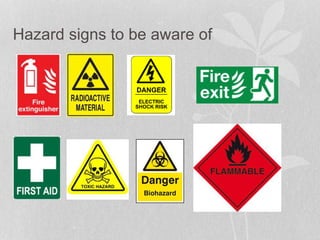
Hazard signs to be aware of
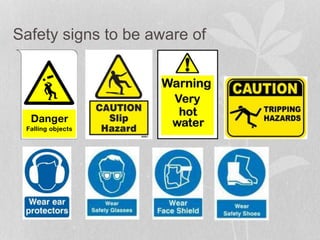
Safety signs to be aware of
OH&S resources 
• Safe work Australia (http://www.safeworkaustralia.gov.au/sites/SWA) 
• Safety Culture (http://www.safetyculture.com.au/) 
• WST (http://worksafe.tas.gov.au/home) 
• Safe at work (http://www.safeatwork.org.au/) 
• ASSA (OHS.net) 
• Health & Safety handbook (http://www.healthandsafetyhandbook.com.au/) 
• Com Care (http://www.comcare.gov.au/) 
• Workplace | OHS (http://workplaceohs.com.au/) 
• Talking Safety (http://www.talkingsafety.org/)

OH&S procedures in the design studio

  • 1.
    OH&S PROCEDURES INTHE DESIGN STUDIO. CUF30107 – Cer ti ficate I I I Media Industry Practice | OH&S Assessment Task 2 | Role play | Induction Powerpoint Joanne Thomson
  • 2.
    Who to seeabout OH&S • Your manager • Your team leader • Safety committee • Human resources • Organizational department • Your safety rep (Jon Snow – 0400 123 456)
  • 3.
    Induction process fornew employees • Introduction to direct manager / team leader • Introduction to team members • Facilities tour • First Aid location • Location of studio equipment and procedures • Office layout • Security issues and office access • Introduction to other employees • Office house keeping • Team roles and responsibilities • Safety / OH&S procedures
  • 4.
    Safety procedures •Inform Safety Representative of the emergency • Evacuate the building in the event of a fire or other potential threats • Keep clear of any hazards and follow instructions • Notify a first aid officer of any injuries • Call an ambulance on ‘000’ in case of a medical emergency • Call a fire brigade on ‘000’ in case of explosion or fire • Do not collect personal belongings • Do not re-enter the building • Remain calm
  • 5.
    Reporting hazards Itis critical to report any issues or incidences that are a safety risk. Problems can include: • Equipment problems • Hazards that require attention • Environmental risks • Suggestions for safety improvement • Training issues • Injuries / illnesses • Fill in an incident report
  • 6.
    Studio equipment &safety • Any computer maintenance / faults need to be reported to your manager • An electrician will maintain and check all the electricals • The safety manager checks all equipment a few times a year to be sure its safe to use • First Aid kits are in date • Fire extinguishes are in date
  • 7.
    Existing / potentialhazards • RSI (Repetitive strain injury) • Vision problems from computer screens • Insufficient studio / office lighting • Neck / shoulders / back injury from any heavy lifting • Hazards such as falling objects or objects you can trip over • Not switching off equipment at the end of the day • Excessive noise in the studio from equipment • Awkward seating position • Getting hair / clothing / fingers caught • Open cabinet / desk drawers • Slippery floors • Stairs
  • 8.
    Risk control •RSI (Repetitive strain injury) - Take a ten minute break every 30 minutes • Vision problems – Ensure employees know how to adjust screen glare • Insufficient lighting – Ensure sufficient lighting, ensure lighting repairs • Heavy lifting strain – Ensure correct lifting procedures • Falling / tripping risks – Report any hazards or action them immediately • Switch off all electrical appliances at the end of the working day • Excessive noise – Loud equipment needs to be moved to appropriate area • Awkward seating – Ensure correct posture in sitting position, straight back • Hair / clothing – Have long hair tied back and no loose clothing • Open drawers / doors – Always be aware of what’s around you • Slippery floors / stairs – Ensure awareness and walk calmly / steadily
  • 9.
    OH&S meetings •Jon Snow, the Safety Rep makes the decisions regarding Safety under the OH&S act • Committee members are required to be actively involved • Unsafe conditions are to be reported during these meetings • Recommendations are made to reduce hazards • Development of a general health and safety policy for the workplace • Investigations of causes for unacceptable high risks
  • 10.
    Employer responsibilities •Employers are required to provide safe work systems and environments • Employers will provide WHS instructions, training and information • You will be shown how to perform your job in a safe manner • The manager / team leader will provide you with OH&S information • Employers will provide and maintain safe equipment & handling of equipment • Your employer will provide regular meetings to discuss concerns with OH&S. • Employers will have up-to-date knowledge of OH&S and undertake training. • Your employer will take action to reduce OH&S risks.
  • 11.
    Employee responsibilities •Employees are primarily responsible for their own health and safety • Employees are responsible for the safety of others • Employees must never interfere with safety measures provided for health • Employees should attempt to assist / give aid to a person at work who is at risk • Employees should also not disrupt the workplace by creating safety fears
  • 12.
    Hazard signs tobe aware of
  • 13.
    Safety signs tobe aware of
  • 14.
    OH&S resources •Safe work Australia (http://www.safeworkaustralia.gov.au/sites/SWA) • Safety Culture (http://www.safetyculture.com.au/) • WST (http://worksafe.tas.gov.au/home) • Safe at work (http://www.safeatwork.org.au/) • ASSA (OHS.net) • Health & Safety handbook (http://www.healthandsafetyhandbook.com.au/) • Com Care (http://www.comcare.gov.au/) • Workplace | OHS (http://workplaceohs.com.au/) • Talking Safety (http://www.talkingsafety.org/)