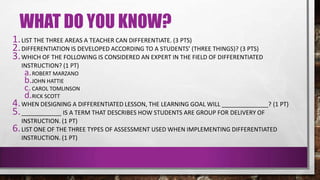
WHAT DO YOU KNOW?
1.LIST THE THREE AREAS A TEACHER CAN DIFFERENTIATE. (3 PTS)
2.DIFFERENTIATION IS DEVELOPED ACCORDING TO A STUDENTS’ (THREE THINGS)? (3 PTS)
3.WHICH OF THE FOLLOWING IS CONSIDERED AN EXPERT IN THE FIELD OF DIFFERENTIATED
INSTRUCTION? (1 PT)
a.ROBERT MARZANO
b.JOHN HATTIE
c.CAROL TOMLINSON
d.RICK SCOTT
4.WHEN DESIGNING A DIFFERENTIATED LESSON, THE LEARNING GOAL WILL ______________? (1 PT)
5.____________ IS A TERM THAT DESCRIBES HOW STUDENTS ARE GROUP FOR DELIVERY OF
INSTRUCTION. (1 PT)
6.LIST ONE OF THE THREE TYPES OF ASSESSMENT USED WHEN IMPLEMENTING DIFFERENTIATED
INSTRUCTION. (1 PT)
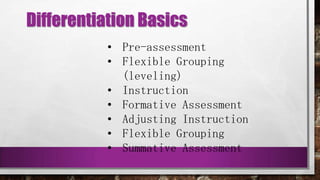
Differentiation Basics
• Pre-assessment
• Flexible Grouping
(leveling)
• Instruction
• Formative Assessment
• Adjusting Instruction
• Flexible Grouping
• Summative Assessment
Assessments
 Pre-assessment
 Flexible Grouping
(leveling)
 Instruction
 Formative Assessment
 Adjusting Instruction
 Flexible Grouping
 Summative Assessment
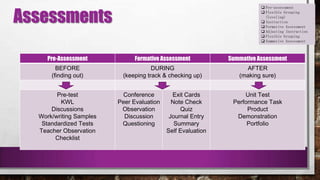
Pre-Assessment Formative Assessment Summative Assessment
BEFORE
(finding out)
DURING
(keeping track & checking up)
AFTER
(making sure)
Pre-test
KWL
Discussions
Work/writing Samples
Standardized Tests
Teacher Observation
Checklist
Conference
Peer Evaluation
Observation
Discussion
Questioning
Exit Cards
Note Check
Quiz
Journal Entry
Summary
Self Evaluation
Unit Test
Performance Task
Product
Demonstration
Portfolio
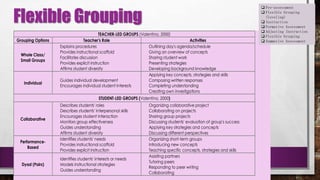
Flexible Grouping
TEACHER-LED GROUPS (Valentino, 2000)
Grouping Options Teacher's Role Activities
Whole Class/
Small Groups
Explains procedures
Provides instructional scaffold
Facilitates discussion
Provides explicit instruction
Affirms student diversity
Outlining day's agenda/schedule
Giving an overview of concepts
Sharing student work
Presenting strategies
Developing background knowledge
Individual
Guides individual development
Encourages individual student interests
Applying key concepts, strategies and skills
Composing written responses
Completing understanding
Creating own investigations
STUDENT-LED GROUPS (Valentino, 2000)
Collaborative
Describes students' roles
Describes students' interpersonal skills
Encourages student interaction
Monitors group effectiveness
Guides understanding
Affirms student diversity
Organizing collaborative project
Collaborating on projects
Sharing group projects
Discussing students' evaluation of group's success
Applying key strategies and concepts
Discussing different perspectives
Performance-
Based
Identifies students' needs
Provides instructional scaffold
Provides explicit instruction
Organizing short-term groups
Introducing new concepts
Teaching specific concepts, strategies and skills
Dyad (Pairs)
Identifies students' interests or needs
Models instructional strategies
Guides understanding
Assisting partners
Tutoring peers
Responding to peer writing
Collaborating
 Pre-assessment
 Flexible Grouping
(leveling)
 Instruction
 Formative Assessment
 Adjusting Instruction
 Flexible Grouping
 Summative Assessment
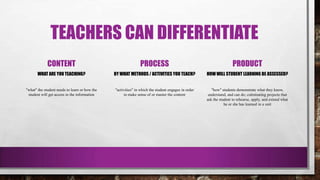
TEACHERS CAN DIFFERENTIATE
CONTENT
WHAT ARE YOU TEACHING?
"what" the student needs to learn or how the
student will get access to the information
PROCESS
BY WHAT METHODS / ACTIVITIES YOU TEACH?
"activities" in which the student engages in order
to make sense of or master the content
PRODUCT
HOW WILL STUDENT LEARNING BE ASSESSED?
"how" students demonstrate what they know,
understand, and can do; culminating projects that
ask the student to rehearse, apply, and extend what
he or she has learned in a unit
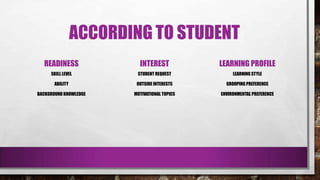
ACCORDING TO STUDENT
READINESS
SKILL LEVEL
ABILITY
BACKGROUND KNOWLEDGE
INTEREST
STUDENT REQUEST
OUTSIDE INTERESTS
MOTIVATIONAL TOPICS
LEARNING PROFILE
LEARNING STYLE
GROUPING PREFERENCE
ENVIRONMENTAL PREFERENCE
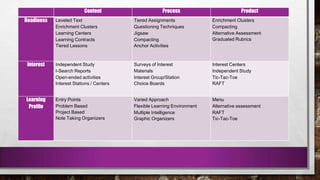
Content Process Product
Readiness Leveled Text
Enrichment Clusters
Learning Centers
Learning Contracts
Tiered Lessons
Tiered Assignments
Questioning Techniques
Jigsaw
Compacting
Anchor Activities
Enrichment Clusters
Compacting
Alternative Assessment
Graduated Rubrics
Interest Independent Study
I-Search Reports
Open-ended activities
Interest Stations / Centers
Surveys of Interest
Materials
Interest Group/Station
Choice Boards
Interest Centers
Independent Study
Tic-Tac-Toe
RAFT
Learning
Profile
Entry Points
Problem Based
Project Based
Note Taking Organizers
Varied Approach
Flexible Learning Environment
Multiple Intelligence
Graphic Organizers
Menu
Alternative assessment
RAFT
Tic-Tac-Toe
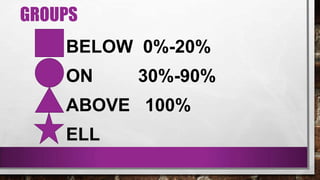
GROUPS
BELOW 0%-20%
ON 30%-90%
ABOVE 100%
ELL
LEARNING CONTRACT
an agreement made between the teacher and the student in
which the student agrees to accomplish certain assignments.
MENU
Provides students Provides students with some choice
Can be tiered by readiness, learning style or interest
TIERED ACTIVITY
beginning where they are, students will work at a level that
builds on their prior knowledge but still provides for individual
growth.
TIC TAC TOE
can be a great motivator for students to participate. It allows for
student choice.

Ohs plc diff inst

  • 2.
    WHAT DO YOUKNOW? 1.LIST THE THREE AREAS A TEACHER CAN DIFFERENTIATE. (3 PTS) 2.DIFFERENTIATION IS DEVELOPED ACCORDING TO A STUDENTS’ (THREE THINGS)? (3 PTS) 3.WHICH OF THE FOLLOWING IS CONSIDERED AN EXPERT IN THE FIELD OF DIFFERENTIATED INSTRUCTION? (1 PT) a.ROBERT MARZANO b.JOHN HATTIE c.CAROL TOMLINSON d.RICK SCOTT 4.WHEN DESIGNING A DIFFERENTIATED LESSON, THE LEARNING GOAL WILL ______________? (1 PT) 5.____________ IS A TERM THAT DESCRIBES HOW STUDENTS ARE GROUP FOR DELIVERY OF INSTRUCTION. (1 PT) 6.LIST ONE OF THE THREE TYPES OF ASSESSMENT USED WHEN IMPLEMENTING DIFFERENTIATED INSTRUCTION. (1 PT)
  • 4.
    Differentiation Basics • Pre-assessment •Flexible Grouping (leveling) • Instruction • Formative Assessment • Adjusting Instruction • Flexible Grouping • Summative Assessment
  • 5.
    Assessments  Pre-assessment  FlexibleGrouping (leveling)  Instruction  Formative Assessment  Adjusting Instruction  Flexible Grouping  Summative Assessment Pre-Assessment Formative Assessment Summative Assessment BEFORE (finding out) DURING (keeping track & checking up) AFTER (making sure) Pre-test KWL Discussions Work/writing Samples Standardized Tests Teacher Observation Checklist Conference Peer Evaluation Observation Discussion Questioning Exit Cards Note Check Quiz Journal Entry Summary Self Evaluation Unit Test Performance Task Product Demonstration Portfolio
  • 6.
    Flexible Grouping TEACHER-LED GROUPS(Valentino, 2000) Grouping Options Teacher's Role Activities Whole Class/ Small Groups Explains procedures Provides instructional scaffold Facilitates discussion Provides explicit instruction Affirms student diversity Outlining day's agenda/schedule Giving an overview of concepts Sharing student work Presenting strategies Developing background knowledge Individual Guides individual development Encourages individual student interests Applying key concepts, strategies and skills Composing written responses Completing understanding Creating own investigations STUDENT-LED GROUPS (Valentino, 2000) Collaborative Describes students' roles Describes students' interpersonal skills Encourages student interaction Monitors group effectiveness Guides understanding Affirms student diversity Organizing collaborative project Collaborating on projects Sharing group projects Discussing students' evaluation of group's success Applying key strategies and concepts Discussing different perspectives Performance- Based Identifies students' needs Provides instructional scaffold Provides explicit instruction Organizing short-term groups Introducing new concepts Teaching specific concepts, strategies and skills Dyad (Pairs) Identifies students' interests or needs Models instructional strategies Guides understanding Assisting partners Tutoring peers Responding to peer writing Collaborating  Pre-assessment  Flexible Grouping (leveling)  Instruction  Formative Assessment  Adjusting Instruction  Flexible Grouping  Summative Assessment
  • 7.
    TEACHERS CAN DIFFERENTIATE CONTENT WHATARE YOU TEACHING? "what" the student needs to learn or how the student will get access to the information PROCESS BY WHAT METHODS / ACTIVITIES YOU TEACH? "activities" in which the student engages in order to make sense of or master the content PRODUCT HOW WILL STUDENT LEARNING BE ASSESSED? "how" students demonstrate what they know, understand, and can do; culminating projects that ask the student to rehearse, apply, and extend what he or she has learned in a unit
  • 8.
    ACCORDING TO STUDENT READINESS SKILLLEVEL ABILITY BACKGROUND KNOWLEDGE INTEREST STUDENT REQUEST OUTSIDE INTERESTS MOTIVATIONAL TOPICS LEARNING PROFILE LEARNING STYLE GROUPING PREFERENCE ENVIRONMENTAL PREFERENCE
  • 9.
    Content Process Product ReadinessLeveled Text Enrichment Clusters Learning Centers Learning Contracts Tiered Lessons Tiered Assignments Questioning Techniques Jigsaw Compacting Anchor Activities Enrichment Clusters Compacting Alternative Assessment Graduated Rubrics Interest Independent Study I-Search Reports Open-ended activities Interest Stations / Centers Surveys of Interest Materials Interest Group/Station Choice Boards Interest Centers Independent Study Tic-Tac-Toe RAFT Learning Profile Entry Points Problem Based Project Based Note Taking Organizers Varied Approach Flexible Learning Environment Multiple Intelligence Graphic Organizers Menu Alternative assessment RAFT Tic-Tac-Toe
  • 10.
  • 11.
    LEARNING CONTRACT an agreementmade between the teacher and the student in which the student agrees to accomplish certain assignments.
  • 12.
    MENU Provides students Providesstudents with some choice Can be tiered by readiness, learning style or interest
  • 13.
    TIERED ACTIVITY beginning wherethey are, students will work at a level that builds on their prior knowledge but still provides for individual growth.
  • 14.
    TIC TAC TOE canbe a great motivator for students to participate. It allows for student choice.

Editor's Notes

  • #2 Differentiation is NOT:individualized instruction - primarily with whole-class and small flexible groups“dumbing down” - learning goals remain the same, the teacher finds myriad ways and means to achieve themjust working in small groups - whole class, in small groups, pairs or individuallyTeacher centered - student-centered, with the teacher basing decisions on how to ensure that each student reaches curriculum goals. She is the coach and coordinator of learning.All student choice – sometimes indulge student preference other times it’s better to ask them to stretchAlways easy - is ongoing and ever-changing. It takes a different kind of planning, preparation and execution of the days’ lessons, but the learning becomes more accessible to more students.
  • #4 Stop looking at class as a group but as individuals. Responsive teaching –doesn’t mean we jettison content. We quit just teaching content – we teach content to humans – individuals.Planning for unpredictability. you already know when you teach this concept – some kids will struggle, some will get ahead, some lack vocab. Plan before I get behind. Don’t know yet who will need each. Be ready before it happensProactive differentiation - most say we differentiate instruction. most of us have a reactive- I teach the same lesson to all then try to help when someone gets off track. I kneel down, I ask them to stay after school… On the spot we try to correct (improvise is better than not realizing) hard to improvise when they can’t read the text. When we improvise content and kid don’t always connect
  • #5 Pre-AssessmentTeacher prepared pre-testKWL Charts / Graphic OrganizersWriting Prompts/SamplesStudent demonstrations and discussionsStudent products and work samplesShow of handsStandardized Test DataTeacher observation/ChecklistFlexible grouping
  • #6 Continuous assessment is imperative. See where kids are and where they need to go.Build community – if they become too competitive, they won’t cooperate as well.
  • #8 Everyone’s work is equally appealing, equally rigorous. Students should be able to tell which is the dumb task.Learning goal is the same for everyone. It’s like peanut butter sandwiches for lunch every day.
  • #10 I don’t care how wonderful your strategies / tools are – if kids feel like a buzzard it is hard to fly like and eagle.