Presentation of
Guidance and Counselling
Presented by Ankit
Topic- Objectives, Principles
and Procedures of
Guidance
Introduction to Guidance
Definition: Guidance is a process
of helping individuals make
important decisions that affect their
lives, such as educational,
vocational, or personal choices.
Goal: To enable individuals to
develop their potential, make
informed choices, and adjust
effectively to life situations.
Importance: Essential in
educational settings, career
planning, and personal
development
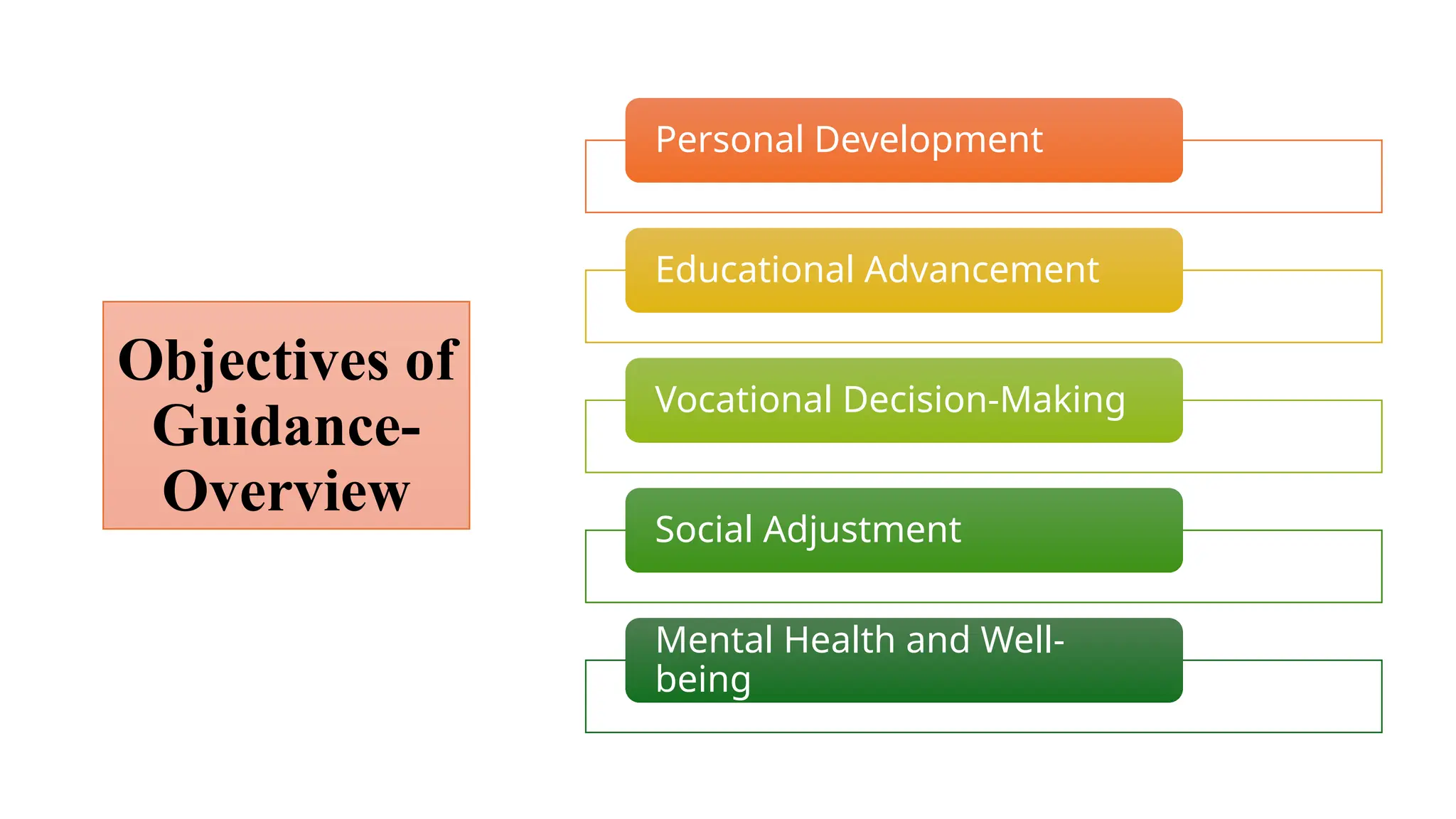
Objectives of
Guidance-
Overview
Personal Development
Educational Advancement
Vocational Decision-Making
Social Adjustment
Mental Health and Well-
being
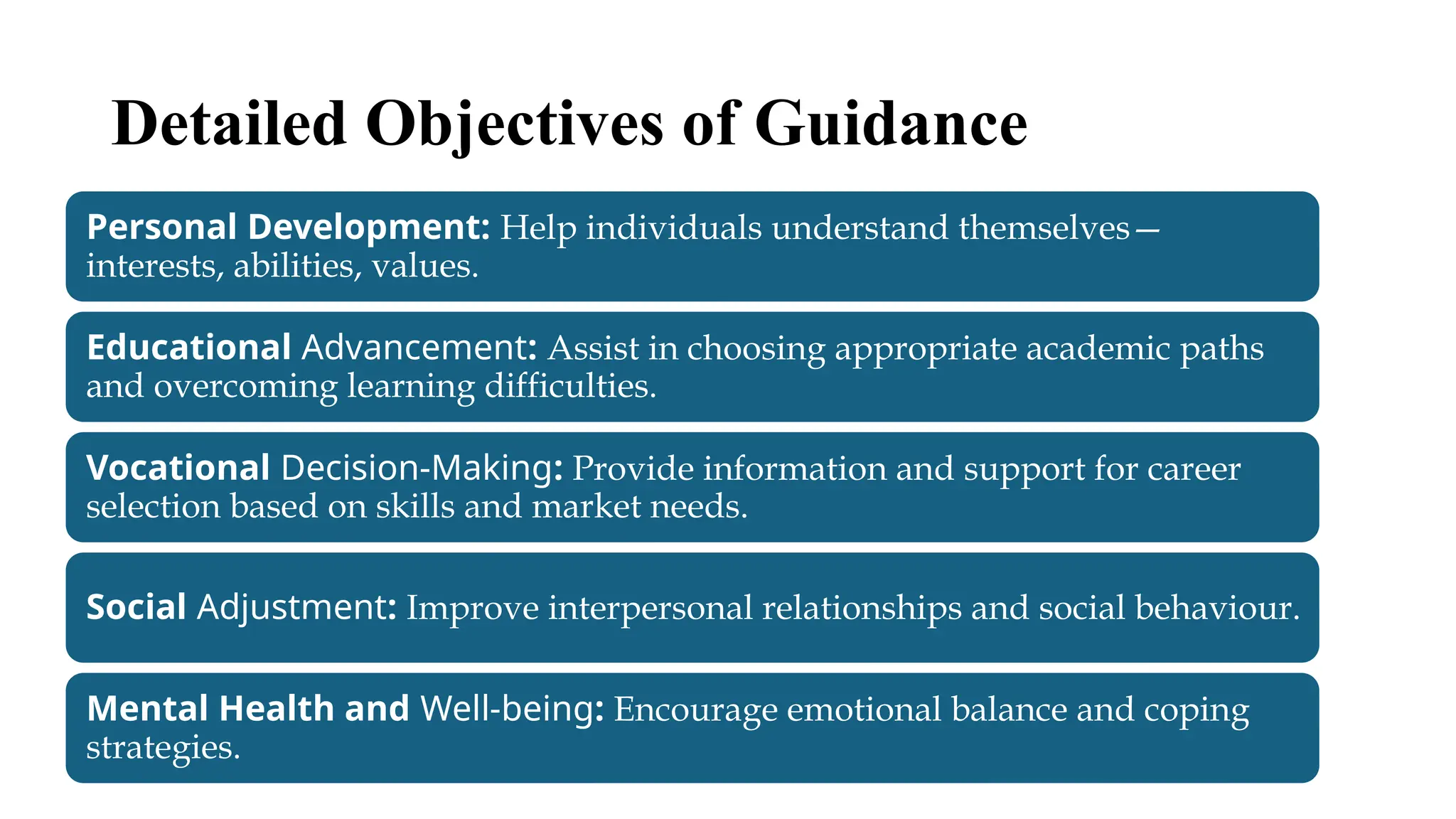
Detailed Objectives of Guidance
Personal Development: Help individuals understand themselves—
interests, abilities, values.
Educational Advancement: Assist in choosing appropriate academic paths
and overcoming learning difficulties.
Vocational Decision-Making: Provide information and support for career
selection based on skills and market needs.
Social Adjustment: Improve interpersonal relationships and social behaviour.
Mental Health and Well-being: Encourage emotional balance and coping
strategies.
Principles of Guidance – Overview
Individual
Differences
Holistic
Development
Continuity of
the Process
Confidentiality
Client-Centred
Approach
Democratic
Outlook
Cooperation Flexibility
Use of
Scientific
Methods
Integration
with
Curriculum
Active
Participation
Skill
Development
Focus
Inclusiveness
and
Accessibility
Explanation of Principles
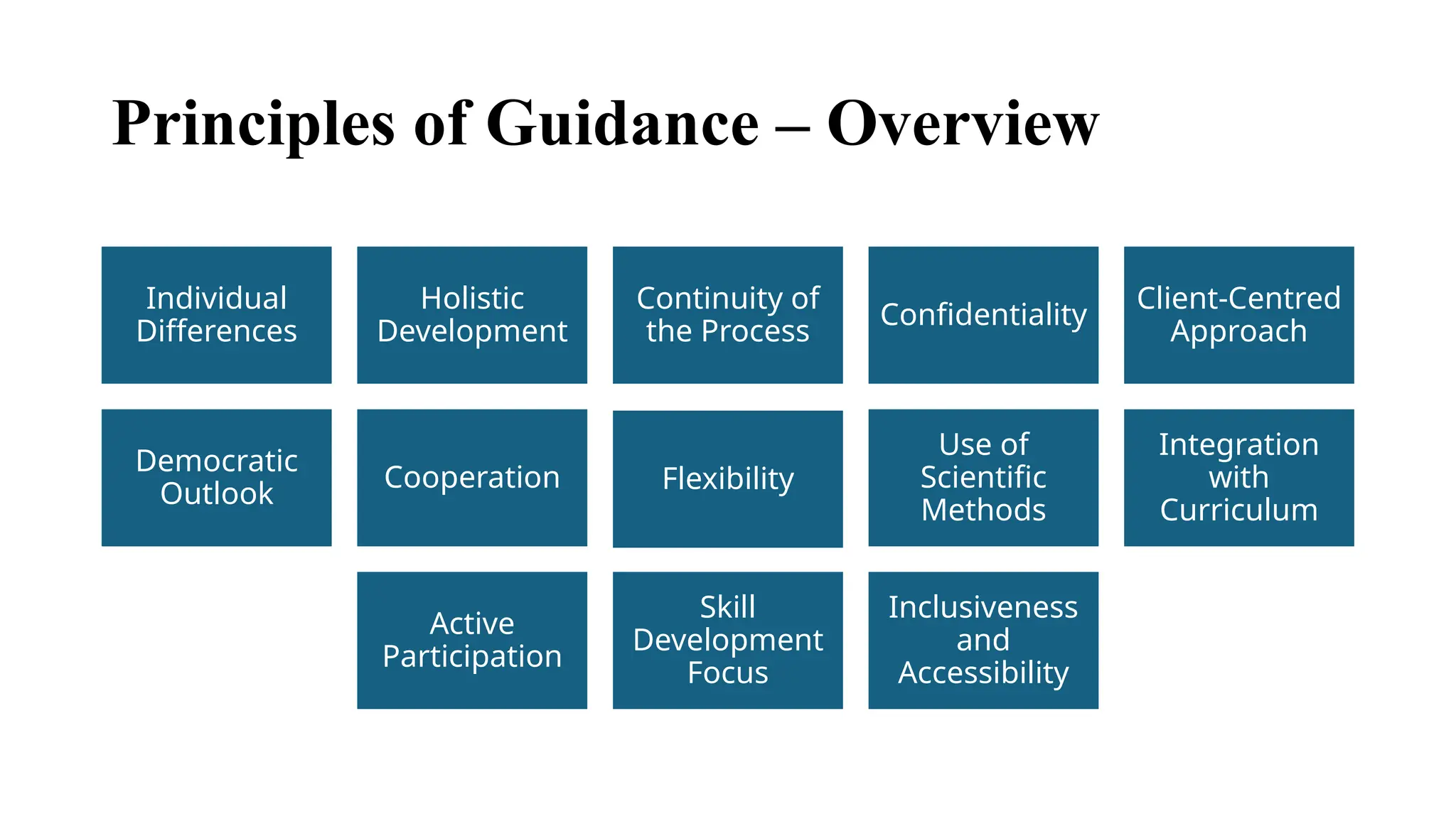
Individual Differences:
Recognises that each person has unique qualities—abilities, interests,
values, and life experiences. Guidance must be personalised to respect
these differences and provide suitable solutions
 Holistic Development:
Effective guidance addresses not just academic needs but also
emotional, social, moral, and physical aspects to foster complete
personality development.
 Continuity:
Guidance should be ongoing, supporting individuals at every stage of
their personal, educational, and career development. It adapts as
circumstances and life goals evolve.
 Confidentiality:
Ensures trust by keeping personal information secure. This principle
builds a safe space where individuals feel comfortable sharing sensitive
issues.
Client-Centred Approach:
Guidance should empower the individual to make their own
decisions. The counsellor’s role is supportive and non-directive,
fostering self-awareness and autonomy.
 Democratic Outlook:
Guidance respects the dignity, freedom, and choices of
individuals. It promotes equal opportunity and avoids
discrimination based on gender, caste, religion, or socioeconomic
status.
Cooperation:
Effective guidance involves collaboration between the counsellor,
the individual, family, and sometimes teachers or employers. It is
a shared responsibility for holistic support.
 Flexibility:
Guidance procedures should be adaptable to different contexts,
individuals, and changing needs. There is no rigid structure; it
should evolve with the person’s circumstances
Use of Scientific Methods:
Guidance should be based on data collection, psychological testing, and
systematic analysis rather than guesswork. This ensures objectivity and
accuracy in decision-making.
Integration with Curriculum:
Guidance should not be a separate activity—it must be integrated with the
educational system and learning process to support students’ academic and
career development effectively.
Active Participation:
Individuals must be actively involved in the guidance process. Passive
advice-giving is less effective than engaging the person in exploring their
goals and solutions.
Skill Development Focus:
Guidance helps individuals acquire life skills such as decision-making,
problem-solving, time management, communication, and coping strategies.
Inclusiveness and Accessibility:
Guidance services should be easily accessible to all, especially marginalised
or disadvantaged groups, ensuring equity in support and opportunity.
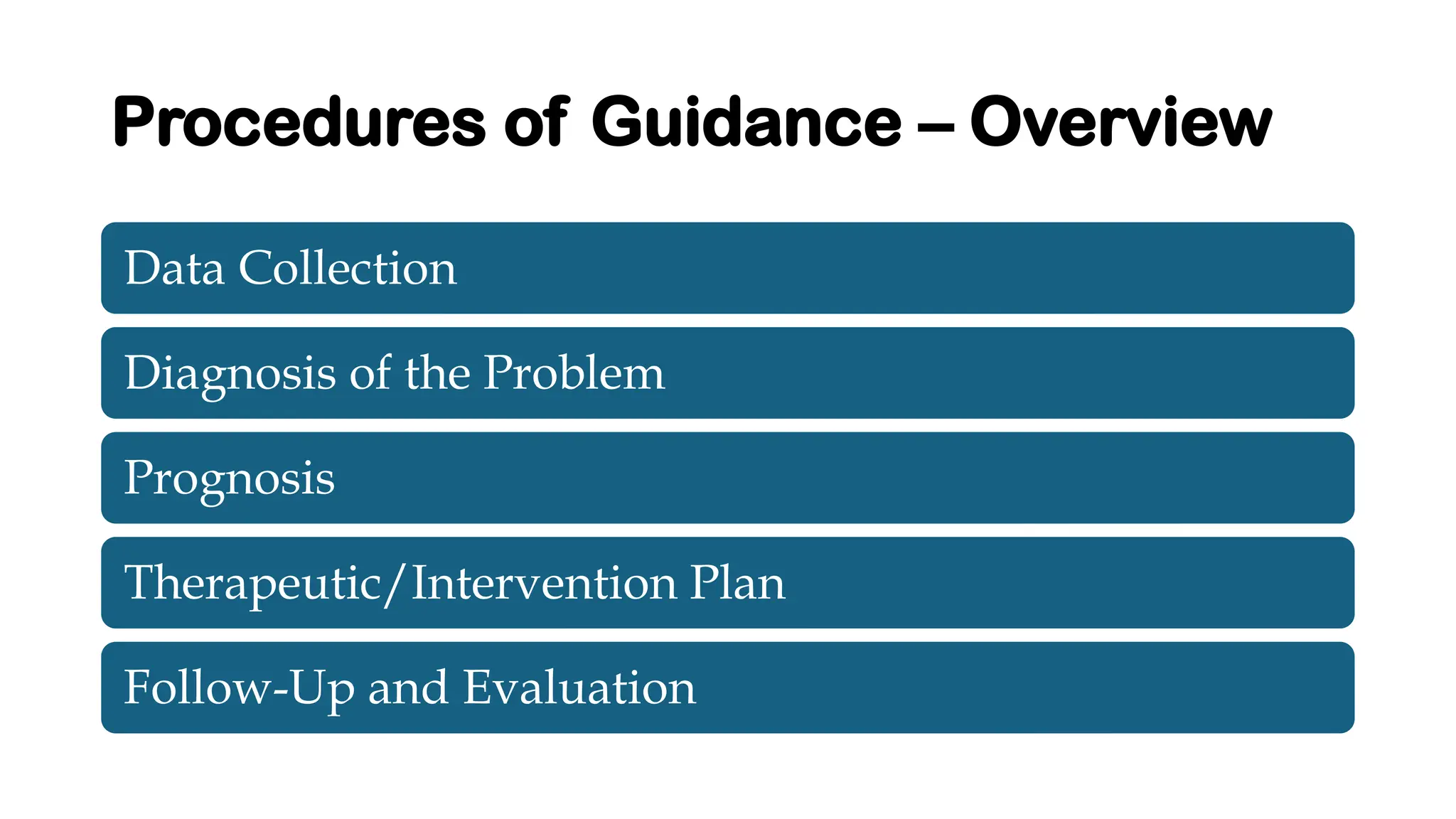
Procedures of Guidance – Overview
Data Collection
Diagnosis of the Problem
Prognosis
Therapeutic/Intervention Plan
Follow-Up and Evaluation
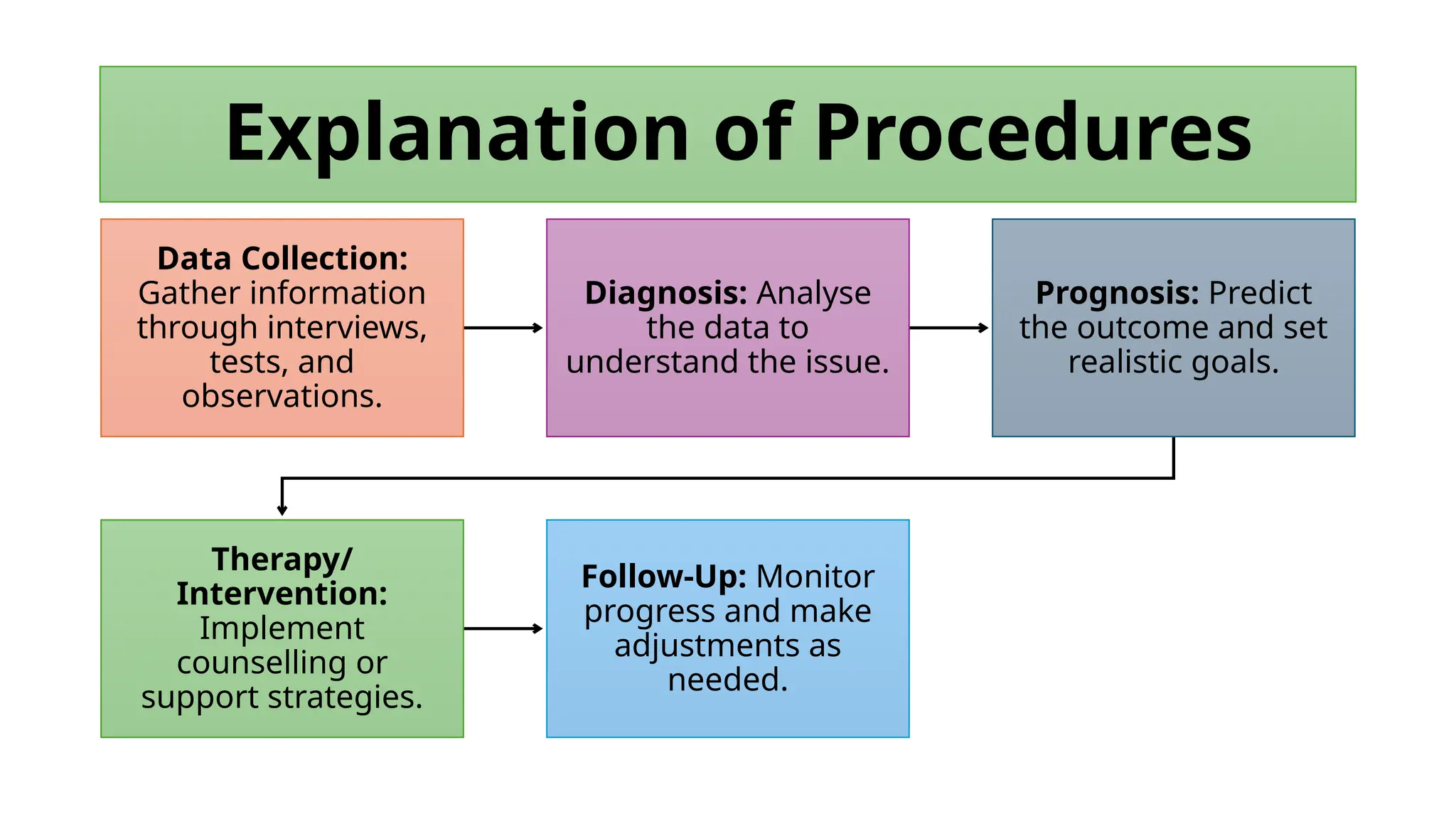
Explanation of Procedures
Data Collection:
Gather information
through interviews,
tests, and
observations.
Diagnosis: Analyse
the data to
understand the issue.
Prognosis: Predict
the outcome and set
realistic goals.
Therapy/
Intervention:
Implement
counselling or
support strategies.
Follow-Up: Monitor
progress and make
adjustments as
needed.
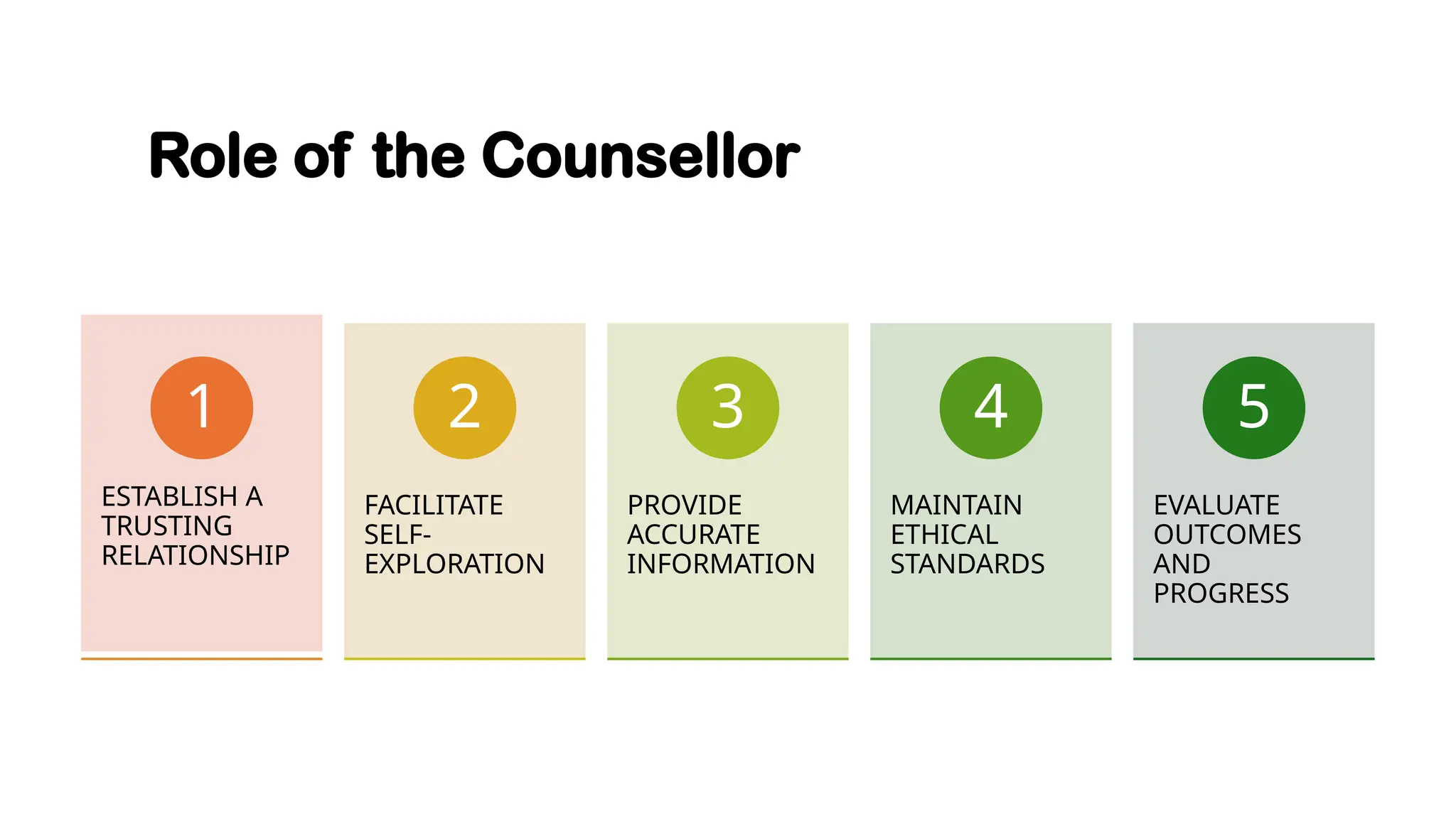
Role of the Counsellor
ESTABLISH A
TRUSTING
RELATIONSHIP
1
FACILITATE
SELF-
EXPLORATION
2
PROVIDE
ACCURATE
INFORMATION
3
MAINTAIN
ETHICAL
STANDARDS
4
EVALUATE
OUTCOMES
AND
PROGRESS
5
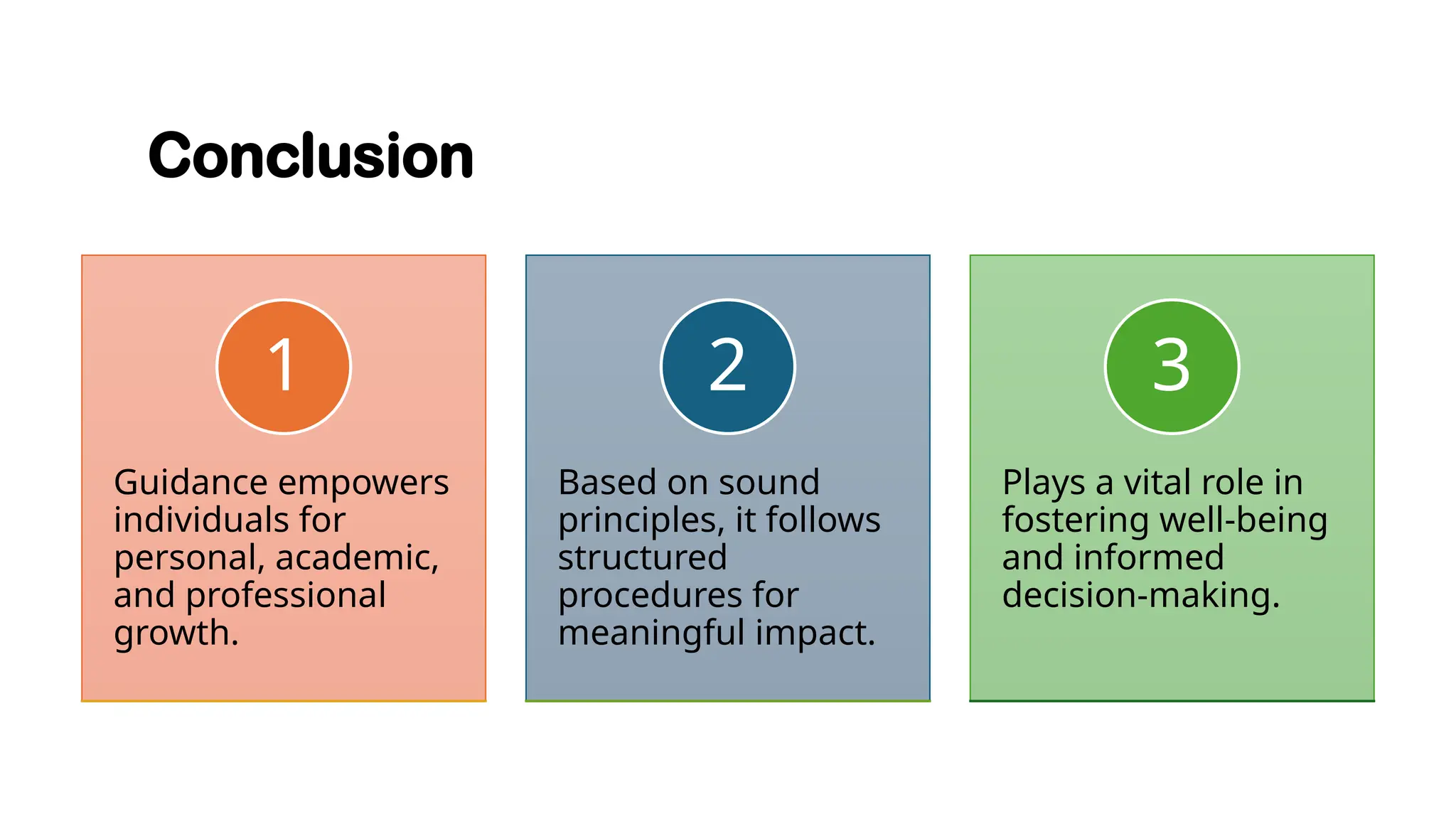
Conclusion
Guidance empowers
individuals for
personal, academic,
and professional
growth.
1
Based on sound
principles, it follows
structured
procedures for
meaningful impact.
2
Plays a vital role in
fostering well-being
and informed
decision-making.
3

Objectives, Principles and Procedures of Guidance

  • 1.
    Presentation of Guidance andCounselling Presented by Ankit Topic- Objectives, Principles and Procedures of Guidance
  • 2.
    Introduction to Guidance Definition:Guidance is a process of helping individuals make important decisions that affect their lives, such as educational, vocational, or personal choices. Goal: To enable individuals to develop their potential, make informed choices, and adjust effectively to life situations. Importance: Essential in educational settings, career planning, and personal development
  • 3.
    Objectives of Guidance- Overview Personal Development EducationalAdvancement Vocational Decision-Making Social Adjustment Mental Health and Well- being
  • 4.
    Detailed Objectives ofGuidance Personal Development: Help individuals understand themselves— interests, abilities, values. Educational Advancement: Assist in choosing appropriate academic paths and overcoming learning difficulties. Vocational Decision-Making: Provide information and support for career selection based on skills and market needs. Social Adjustment: Improve interpersonal relationships and social behaviour. Mental Health and Well-being: Encourage emotional balance and coping strategies.
  • 5.
    Principles of Guidance– Overview Individual Differences Holistic Development Continuity of the Process Confidentiality Client-Centred Approach Democratic Outlook Cooperation Flexibility Use of Scientific Methods Integration with Curriculum Active Participation Skill Development Focus Inclusiveness and Accessibility
  • 6.
    Explanation of Principles IndividualDifferences: Recognises that each person has unique qualities—abilities, interests, values, and life experiences. Guidance must be personalised to respect these differences and provide suitable solutions  Holistic Development: Effective guidance addresses not just academic needs but also emotional, social, moral, and physical aspects to foster complete personality development.  Continuity: Guidance should be ongoing, supporting individuals at every stage of their personal, educational, and career development. It adapts as circumstances and life goals evolve.  Confidentiality: Ensures trust by keeping personal information secure. This principle builds a safe space where individuals feel comfortable sharing sensitive issues.
  • 7.
    Client-Centred Approach: Guidance shouldempower the individual to make their own decisions. The counsellor’s role is supportive and non-directive, fostering self-awareness and autonomy.  Democratic Outlook: Guidance respects the dignity, freedom, and choices of individuals. It promotes equal opportunity and avoids discrimination based on gender, caste, religion, or socioeconomic status. Cooperation: Effective guidance involves collaboration between the counsellor, the individual, family, and sometimes teachers or employers. It is a shared responsibility for holistic support.  Flexibility: Guidance procedures should be adaptable to different contexts, individuals, and changing needs. There is no rigid structure; it should evolve with the person’s circumstances
  • 8.
    Use of ScientificMethods: Guidance should be based on data collection, psychological testing, and systematic analysis rather than guesswork. This ensures objectivity and accuracy in decision-making. Integration with Curriculum: Guidance should not be a separate activity—it must be integrated with the educational system and learning process to support students’ academic and career development effectively. Active Participation: Individuals must be actively involved in the guidance process. Passive advice-giving is less effective than engaging the person in exploring their goals and solutions. Skill Development Focus: Guidance helps individuals acquire life skills such as decision-making, problem-solving, time management, communication, and coping strategies. Inclusiveness and Accessibility: Guidance services should be easily accessible to all, especially marginalised or disadvantaged groups, ensuring equity in support and opportunity.
  • 9.
    Procedures of Guidance– Overview Data Collection Diagnosis of the Problem Prognosis Therapeutic/Intervention Plan Follow-Up and Evaluation
  • 10.
    Explanation of Procedures DataCollection: Gather information through interviews, tests, and observations. Diagnosis: Analyse the data to understand the issue. Prognosis: Predict the outcome and set realistic goals. Therapy/ Intervention: Implement counselling or support strategies. Follow-Up: Monitor progress and make adjustments as needed.
  • 11.
    Role of theCounsellor ESTABLISH A TRUSTING RELATIONSHIP 1 FACILITATE SELF- EXPLORATION 2 PROVIDE ACCURATE INFORMATION 3 MAINTAIN ETHICAL STANDARDS 4 EVALUATE OUTCOMES AND PROGRESS 5
  • 12.
    Conclusion Guidance empowers individuals for personal,academic, and professional growth. 1 Based on sound principles, it follows structured procedures for meaningful impact. 2 Plays a vital role in fostering well-being and informed decision-making. 3