Human Growth
And
Development
Introduction
Teachers, parents and all
community members should have
thorough knowledge of physical
and motor development, cognitive
or intellectual development
,emotional, social, aesthetic, moral,
spiritual and vocational
development of growing children.
Meaning of growth and development :
 Meaning of Development:
 E.B Hurlock’s View (1959) – Development means a progressive series of changes that occur in orderly
predictable pattern as a result of maturation and experience.
 Harold Stevenson’s View(1965) – Stevenson has put the concept of development as “Development
psychology is concerned with the study of changes in behaviour through the life span”.
 So, Development is :
 Wider and comprehensive.
 Continuous.
 Changes in body and behaviour.
 Quantitative as well as Qualitative changes.
 Improvement in behaviour
 integrated process.
 Organizational process.
 Product of heredity and involvement.
 Subject to assessment.
 Related to growth.
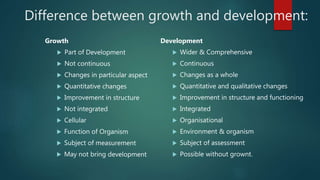
Difference between growth and development:
Development
 Wider & Comprehensive
 Continuous
 Changes as a whole
 Quantitative and qualitative changes
 Improvement in structure and functioning
 Integrated
 Organisational
 Environment & organism
 Subject of assessment
 Possible without grownt.
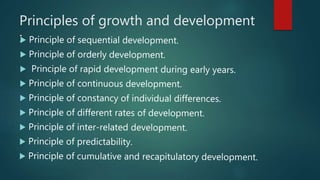
Principles of growth and development
:
Principles of growth and development
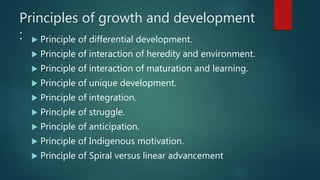
:  Principle of differential development.
 Principle of interaction of heredity and environment.
 Principle of interaction of maturation and learning.
 Principle of unique development.
 Principle of integration.
 Principle of struggle.
 Principle of anticipation.
 Principle of Indigenous motivation.
 Principle of Spiral versus linear advancement
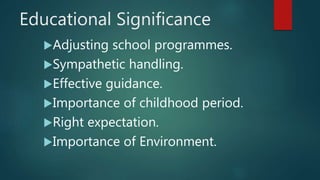
Educational Significance
Adjusting school programmes.
Sympathetic handling.
Effective guidance.
Importance of childhood period.
Right expectation.
Importance of Environment.
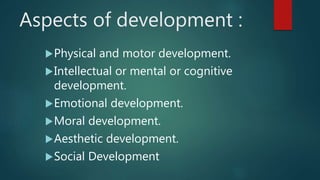
Aspects of development :
Physical and motor development.
Intellectual or mental or cognitive
development.
Emotional development.
Moral development.
Aesthetic development.
Social Development
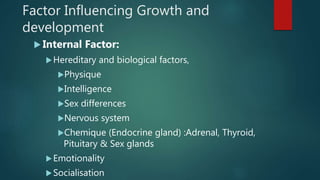
Factor Influencing Growth and
development
 Internal Factor:
Hereditary and biological factors,
Physique
Intelligence
Sex differences
Nervous system
Chemique (Endocrine gland) :Adrenal, Thyroid,
Pituitary & Sex glands
Emotionality
Socialisation
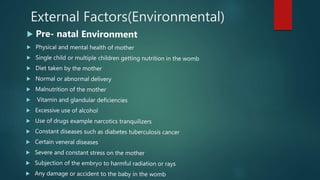
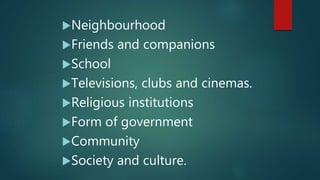
External Factors(Environmental)
Neighbourhood
Friends and companions
School
Televisions, clubs and cinemas.
Religious institutions
Form of government
Community
Society and culture.
Conclusion
With complete knowledge of
principles of growth and development
teachers, parents and community
members can stimulate the
development of child and his
personality.
Reference :
Learner, learning and Cognition
by Dr. J.S.Walia
Thank You !

Human Growth and Development

  • 1.
  • 2.
    Introduction Teachers, parents andall community members should have thorough knowledge of physical and motor development, cognitive or intellectual development ,emotional, social, aesthetic, moral, spiritual and vocational development of growing children.
  • 3.
    Meaning of growthand development :
  • 4.
     Meaning ofDevelopment:  E.B Hurlock’s View (1959) – Development means a progressive series of changes that occur in orderly predictable pattern as a result of maturation and experience.  Harold Stevenson’s View(1965) – Stevenson has put the concept of development as “Development psychology is concerned with the study of changes in behaviour through the life span”.  So, Development is :  Wider and comprehensive.  Continuous.  Changes in body and behaviour.  Quantitative as well as Qualitative changes.  Improvement in behaviour  integrated process.  Organizational process.  Product of heredity and involvement.  Subject to assessment.  Related to growth.
  • 5.
    Difference between growthand development: Development  Wider & Comprehensive  Continuous  Changes as a whole  Quantitative and qualitative changes  Improvement in structure and functioning  Integrated  Organisational  Environment & organism  Subject of assessment  Possible without grownt.
  • 6.
    Principles of growthand development :
  • 7.
    Principles of growthand development :  Principle of differential development.  Principle of interaction of heredity and environment.  Principle of interaction of maturation and learning.  Principle of unique development.  Principle of integration.  Principle of struggle.  Principle of anticipation.  Principle of Indigenous motivation.  Principle of Spiral versus linear advancement
  • 8.
    Educational Significance Adjusting schoolprogrammes. Sympathetic handling. Effective guidance. Importance of childhood period. Right expectation. Importance of Environment.
  • 9.
    Aspects of development: Physical and motor development. Intellectual or mental or cognitive development. Emotional development. Moral development. Aesthetic development. Social Development
  • 10.
    Factor Influencing Growthand development  Internal Factor: Hereditary and biological factors, Physique Intelligence Sex differences Nervous system Chemique (Endocrine gland) :Adrenal, Thyroid, Pituitary & Sex glands Emotionality Socialisation
  • 11.
  • 13.
    Neighbourhood Friends and companions School Televisions,clubs and cinemas. Religious institutions Form of government Community Society and culture.
  • 14.
    Conclusion With complete knowledgeof principles of growth and development teachers, parents and community members can stimulate the development of child and his personality.
  • 15.
    Reference : Learner, learningand Cognition by Dr. J.S.Walia
  • 16.