


Objective Structured Clinical
Examination (OSCE)
Asokan.R,
Asso. Professor, KINS, KIIT (DU)
Bhubaneswar.
1
• Objective – Examiners use a checklist for evaluating the trainees.
• Structured – Trainee sees the same problem and perform the same
tasks in the same time frame.
• Clinical – the task are representative of those faced in real critical
situations.
2
The Objective Structured Clinical Examination (OSCE) is
an assessment method based on a student's performance that
measure their clinical competence.
3
Definition
• OSCE is a form of performance – based testing used to measure
candidate’s clinical competence.
• During OSCE, candidate observed and evaluated as they go through a
series of stations in which they interview, examine and treat
standardized patients who present with some type of medical
problems.
4
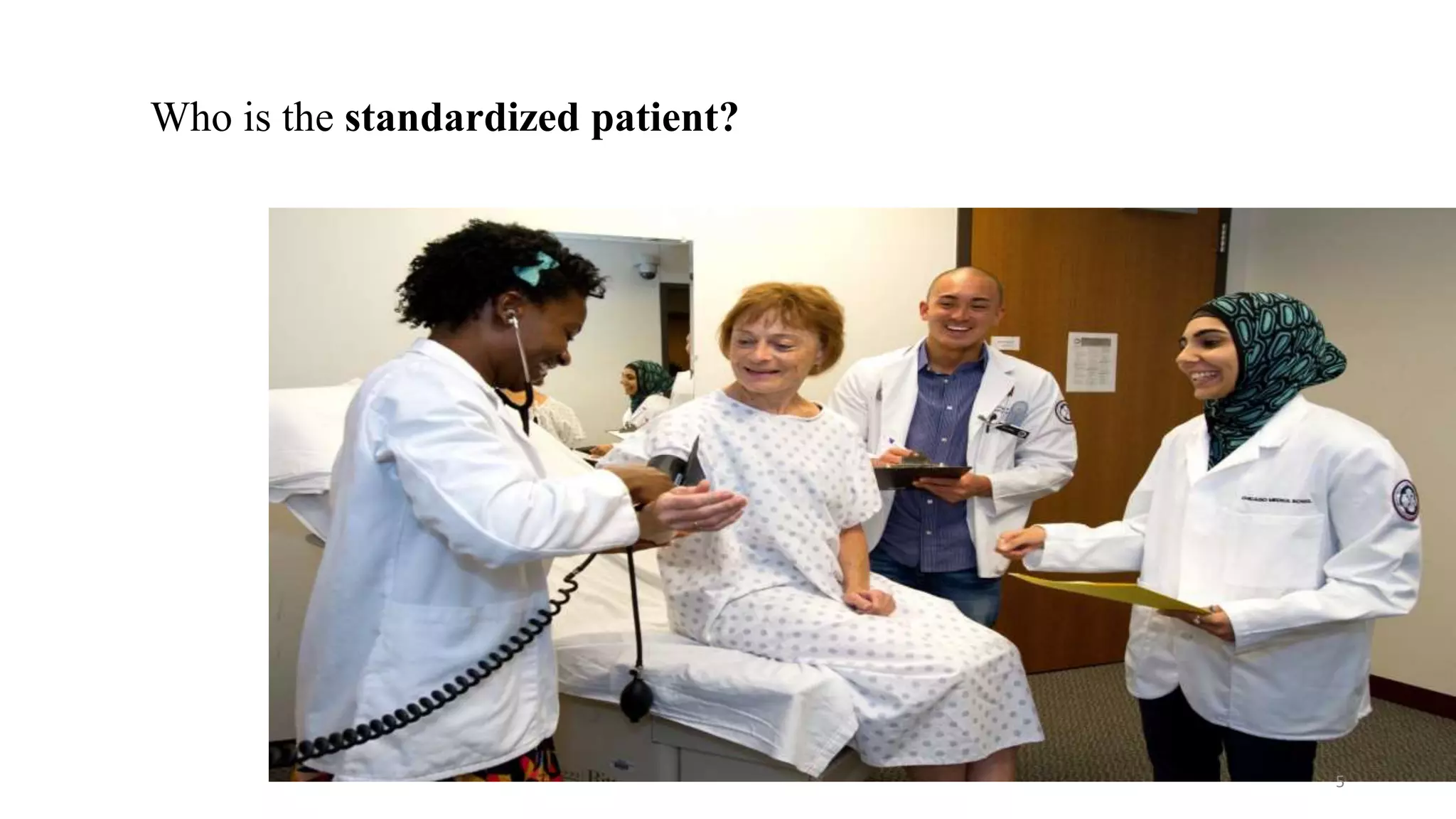
Who is the standardized patient?
5
Standardized patients are individuals who have been trained to
exhibit certain signs and symptoms of specific conditions under certain
testing conditions.
Most OSCEs use "standardized patients (SP)" for accomplishing
clinical history, examination and counselling sessions.
Standardized patients may be professionally trained actors, volunteer
simulators.
6
Introduced in 1963 by Barrows and Abrahamson, the
term SP is “the umbrella term for both a simulated patient (a well
person trained to simulate a patient's illness in a standardized way)
and an actual patient (who is trained to present his or her own illness in
a standardized way)” (Barrows, 1993, p. 443).
7
OSCE is a modern type of examination often used in health
sciences ( medicine, dentistry, nursing, pharmacy and physiotherapy) to
assess clinical skill performance and competence in skill such as
communication, clinical examination, medical and nursing
procedures, exercise, manipulation techniques and interpretation of
results.
8
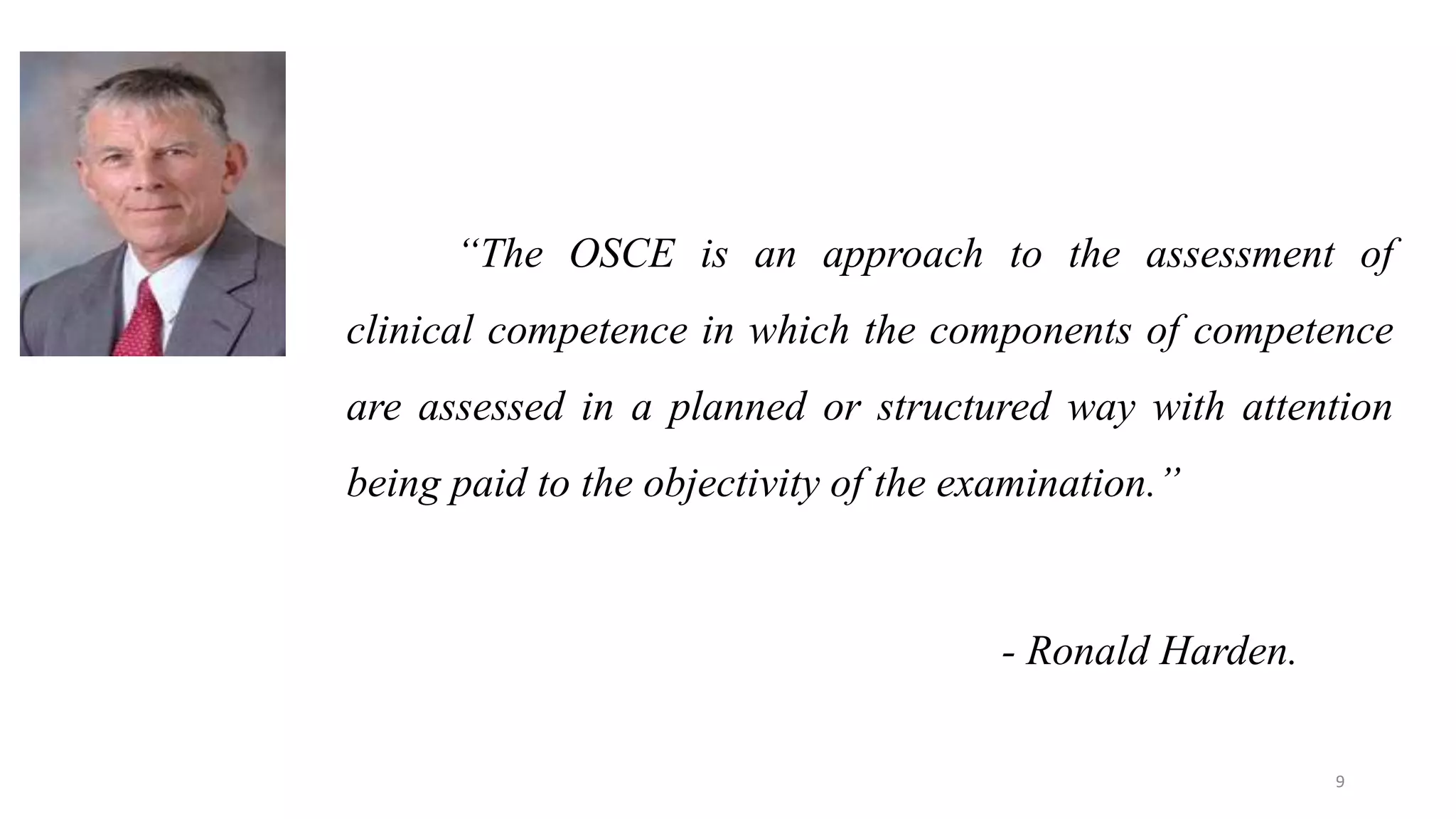
“The OSCE is an approach to the assessment of
clinical competence in which the components of competence
are assessed in a planned or structured way with attention
being paid to the objectivity of the examination.”
- Ronald Harden.
9
History of OSCE
• OSCE was developed in University of Dundee (Scotland) in the early
1975 by Dr.Harden and his colleagues.
• After some modification it was described in detail on 1979.
• This method was the subject of an international conference in OTawa
in 1985 and experience were exchanged about OSCE & OSPE.
• Globally using now.
10
When to conduct the OSCE?
• Entry level
• Formative assessment
• Summative assessment
• Job interview
11
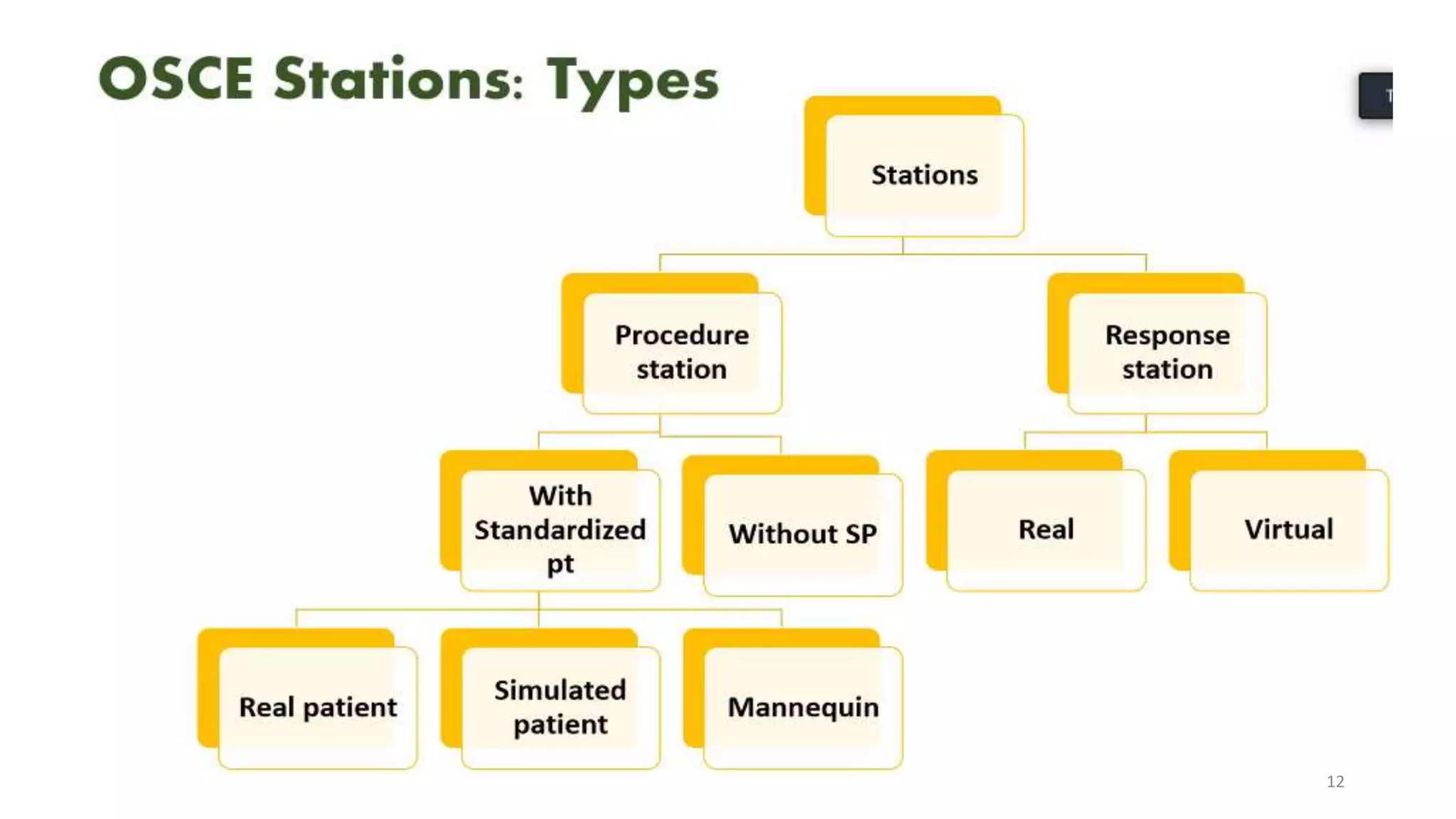
12
Features of the Objective Structured Clinical Examination (OSCEs)
•Stations are short
•Stations are numerous
•Stations are highly focused
•Candidates are given very specific instructions
•A pre-set structured mark scheme is used
•Reduced examiner input and discretion
13
Contd.,
Emphasis on..
•What candidates can do rather than what they know
•The application of knowledge rather than the recall of knowledge
14
Additional options…
•Double or triple length stations
•Linked stations
•Preparatory stations
•“Must pass” stations
•Rest stations
Contd.,
15
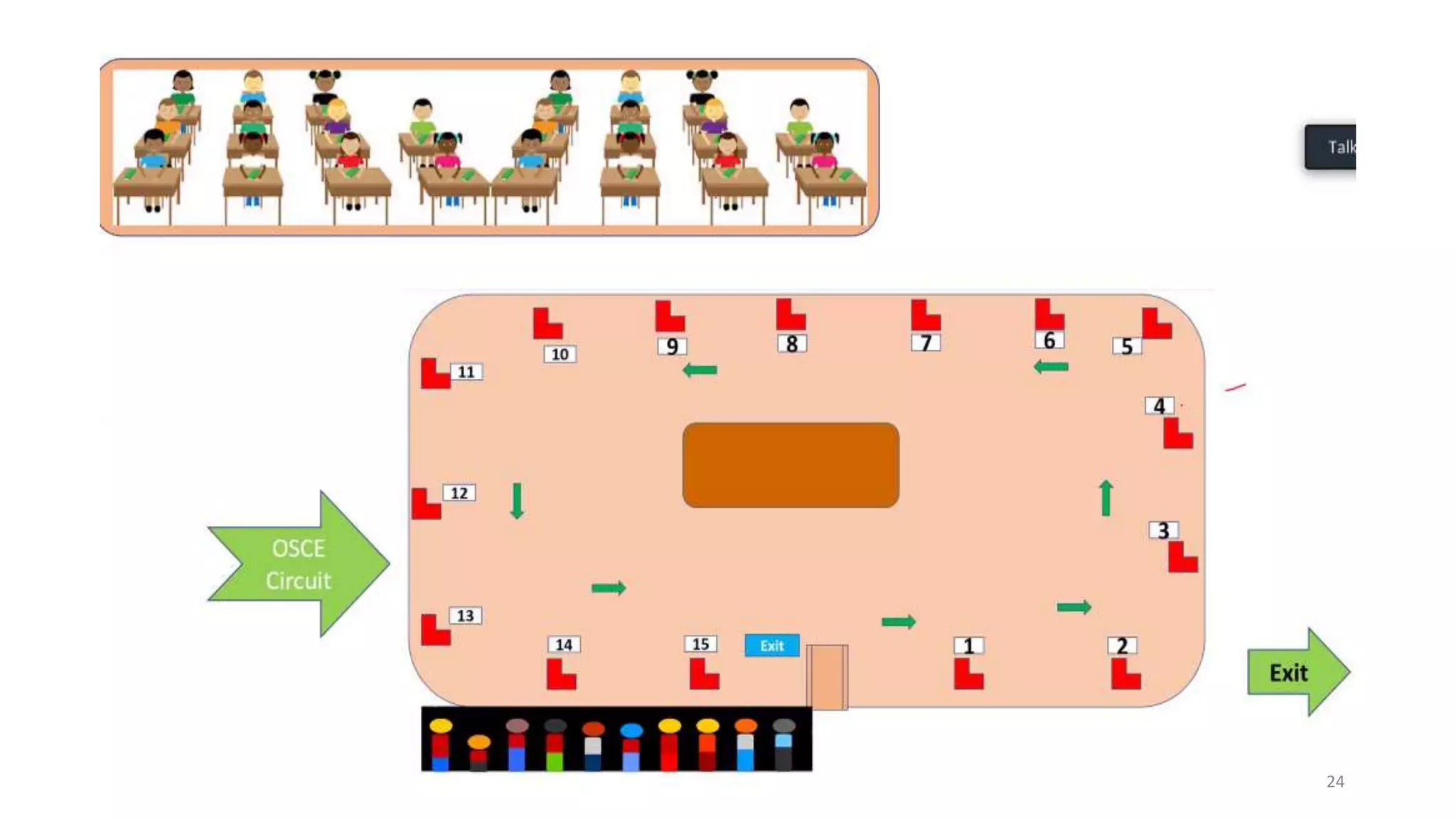
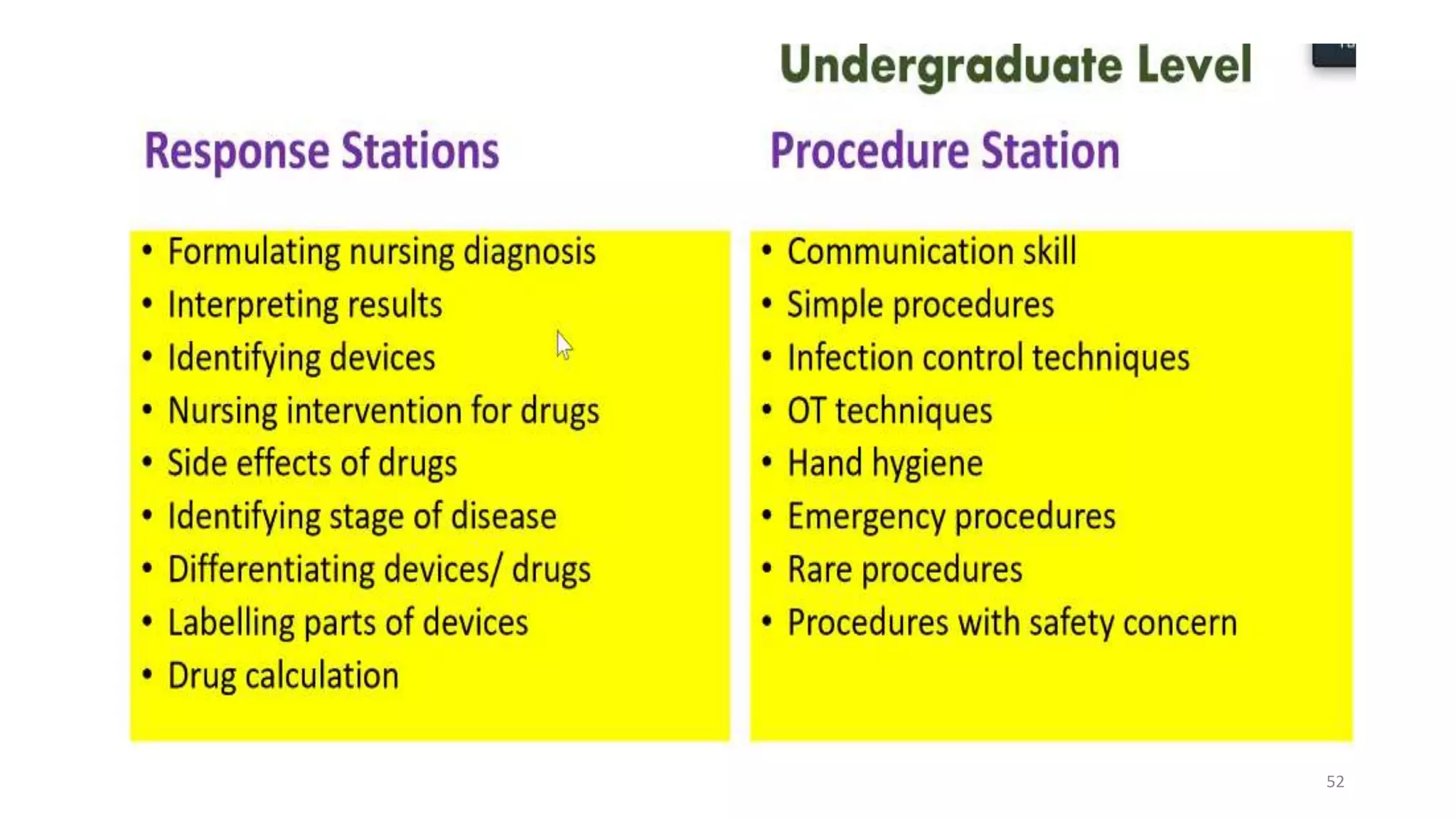
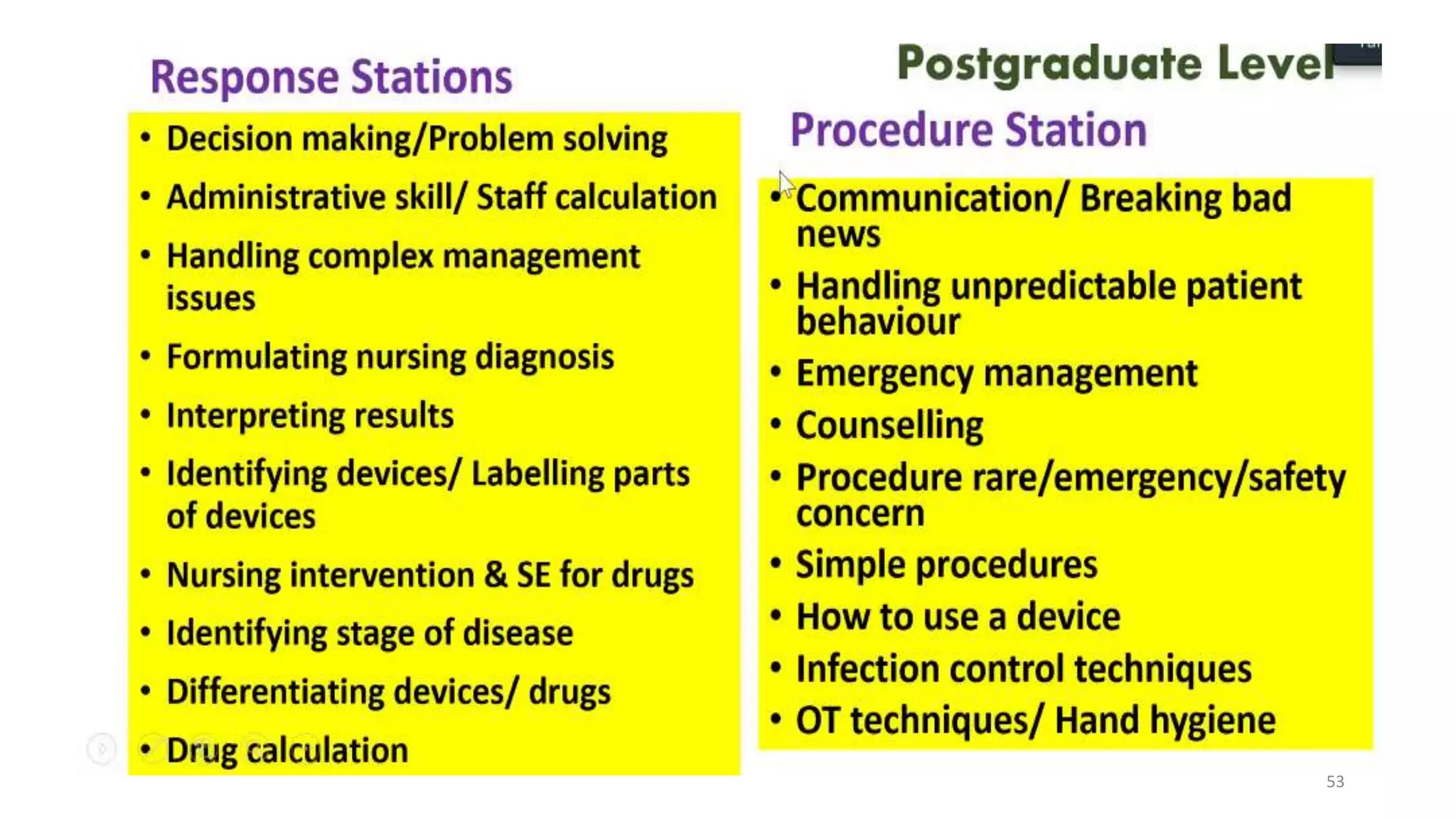
Complex stations for
postgraduate student could test
varying skills including management
problems, administrative skills,
handling unpredictable patient behavior
and data interpretation. These
assessments and many others are
impossible in traditional clinical
examination.
16
OSCE in nursing
The OSCE is designed to assess ability to competently apply
professional nursing or midwifery skills and knowledge. It is set at the
level expected of nurses and midwives as they enter the profession (at
the point of registration).
17
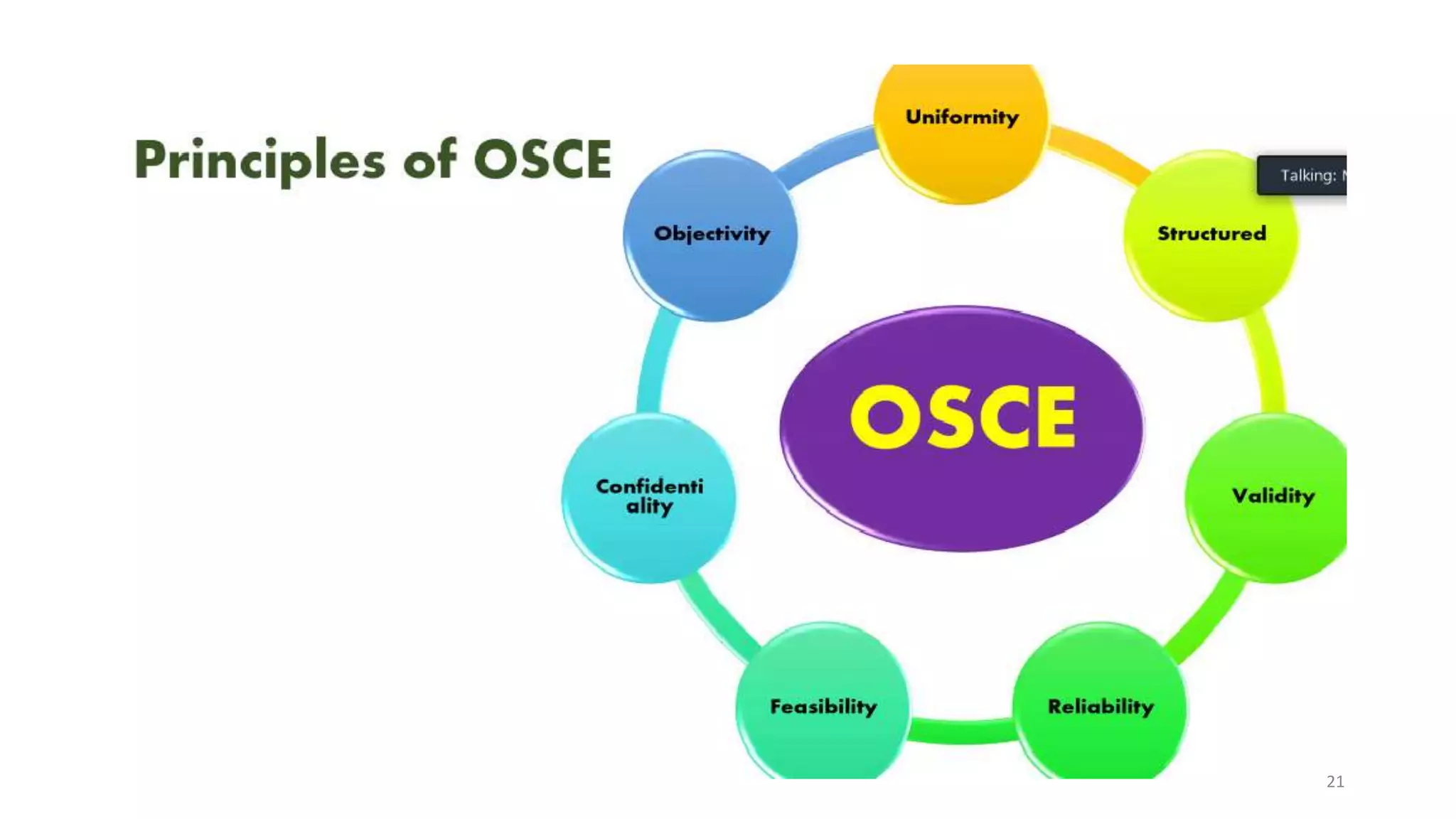
Purpose of the OSCE
Measure clinical skills
Match assessment to intended constructs
Promote structured interaction between student and examiner
Make structured marking scheme possible
Present all candidates with the same test
Promote objectivity.
18
Uses of OSCE
Generally, the following range of practical skills are typically assessed in
nursing using OSCE,
Interpersonal and communication skills
History taking skills
Physical examination of specific body systems
Mental health assessment
Clinical decision making, including the formation of differential diagnosis.
19
Contd.,
• Clinical problem – solving skills
• Interpretation of clinical finding and investigations
• Management of a clinical situation, including treatment and referral
• Patient education
• Health promotion
• Acting safely and appropriately in an urgent clinical situation
• Basic and advanced nursing care procedure practices.
20
21
22
23
24
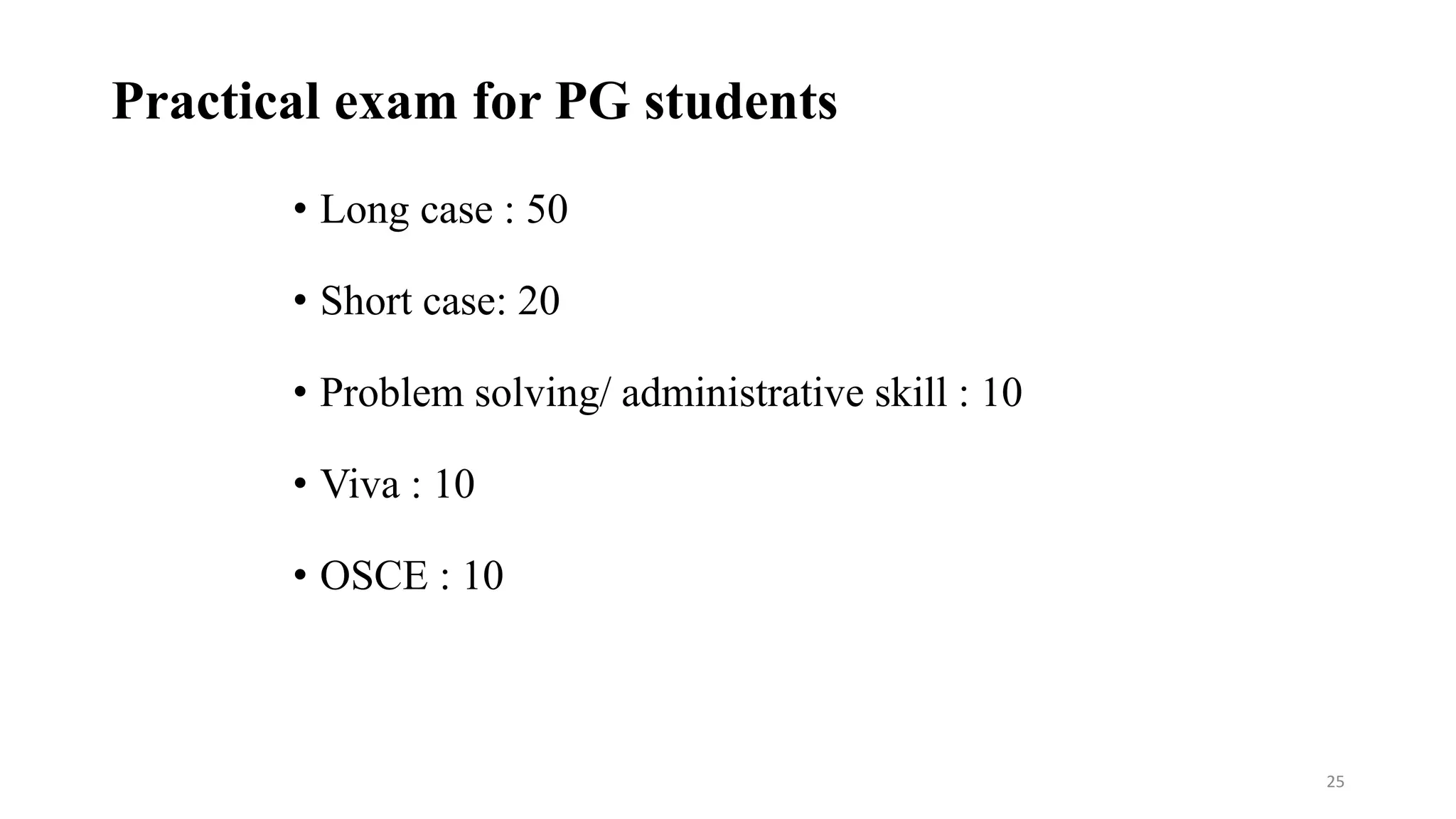
Practical exam for PG students
• Long case : 50
• Short case: 20
• Problem solving/ administrative skill : 10
• Viva : 10
• OSCE : 10
25
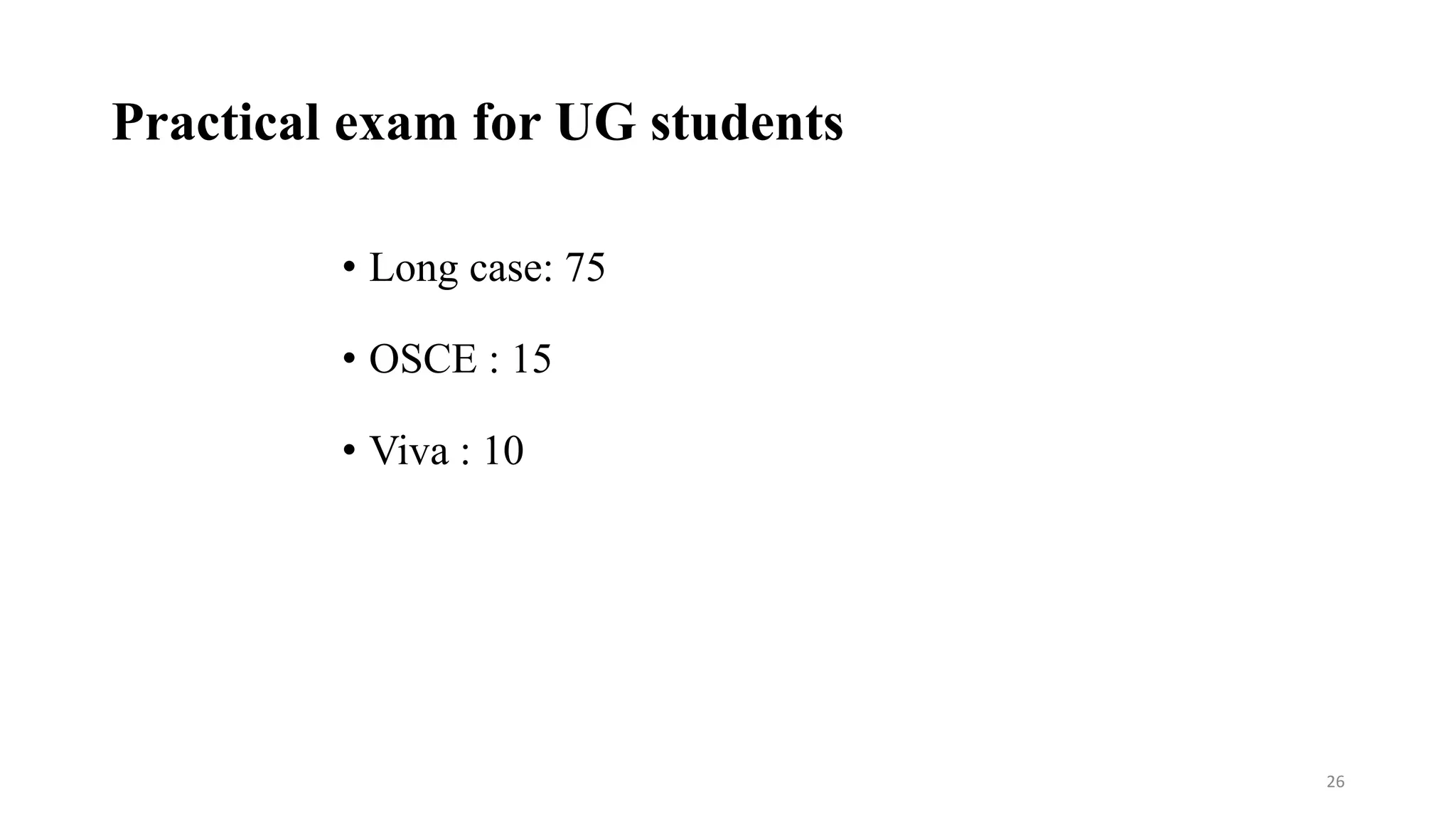
Practical exam for UG students
• Long case: 75
• OSCE : 15
• Viva : 10
26
27
28
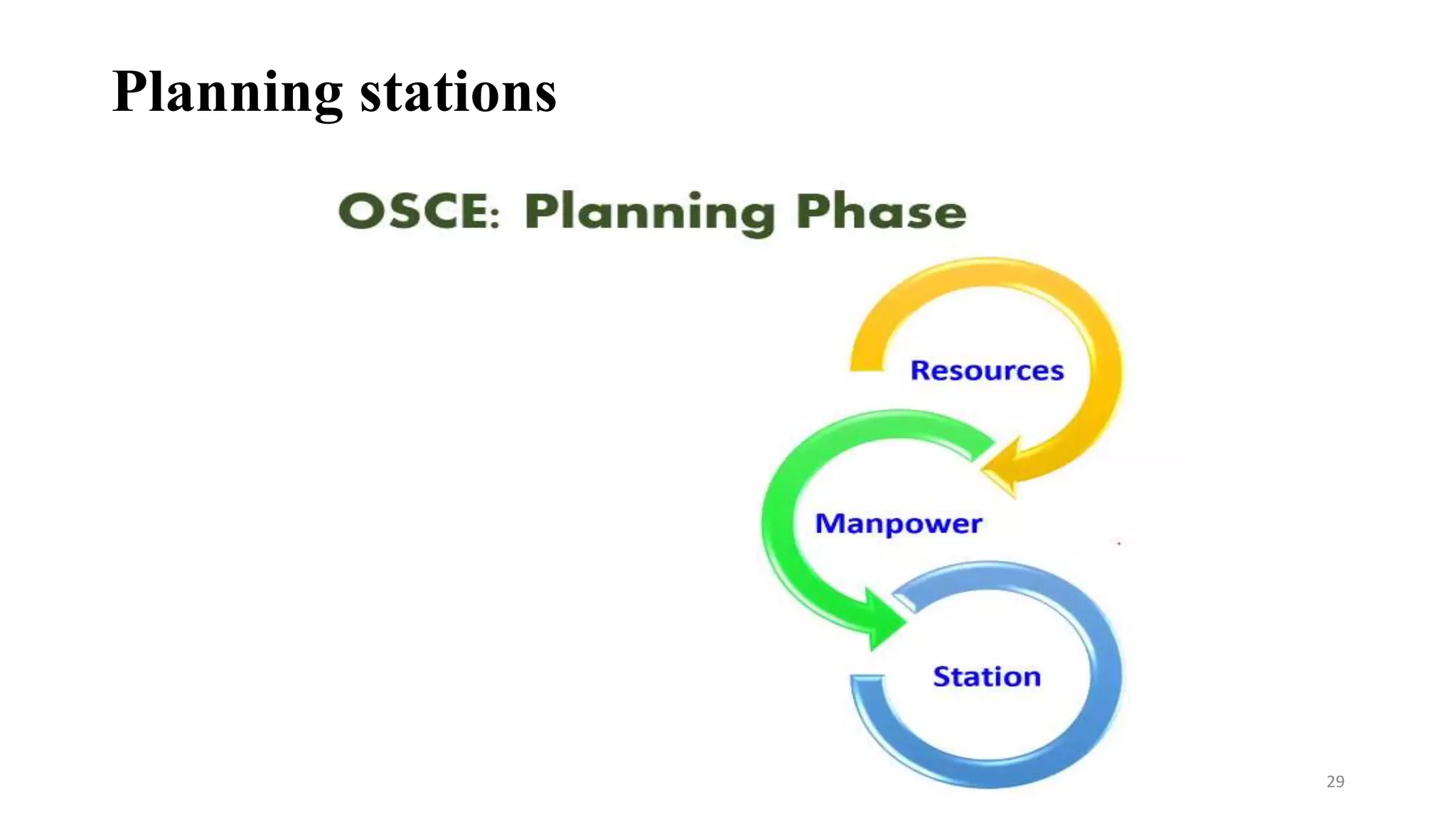
Planning stations
29
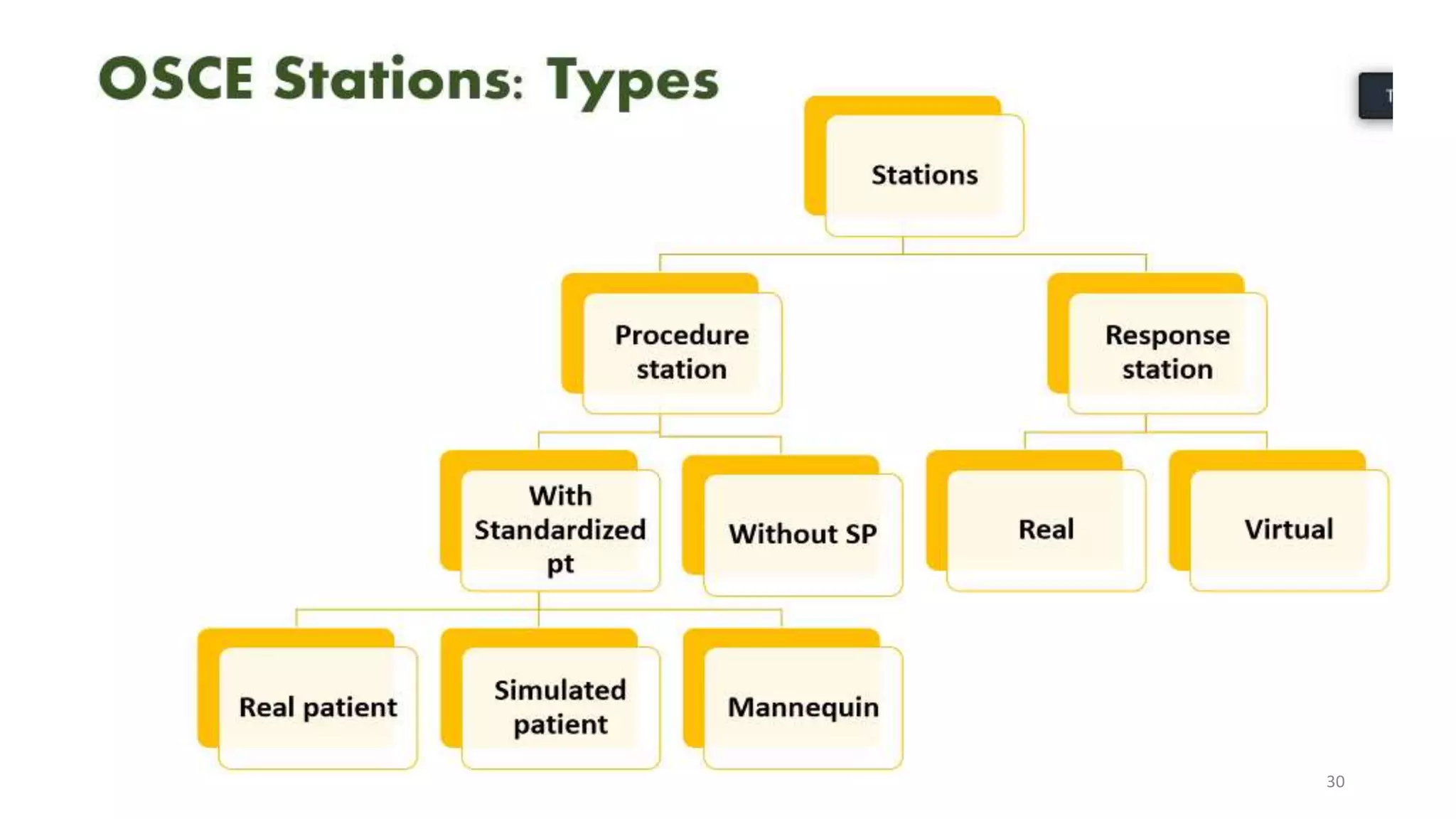
30
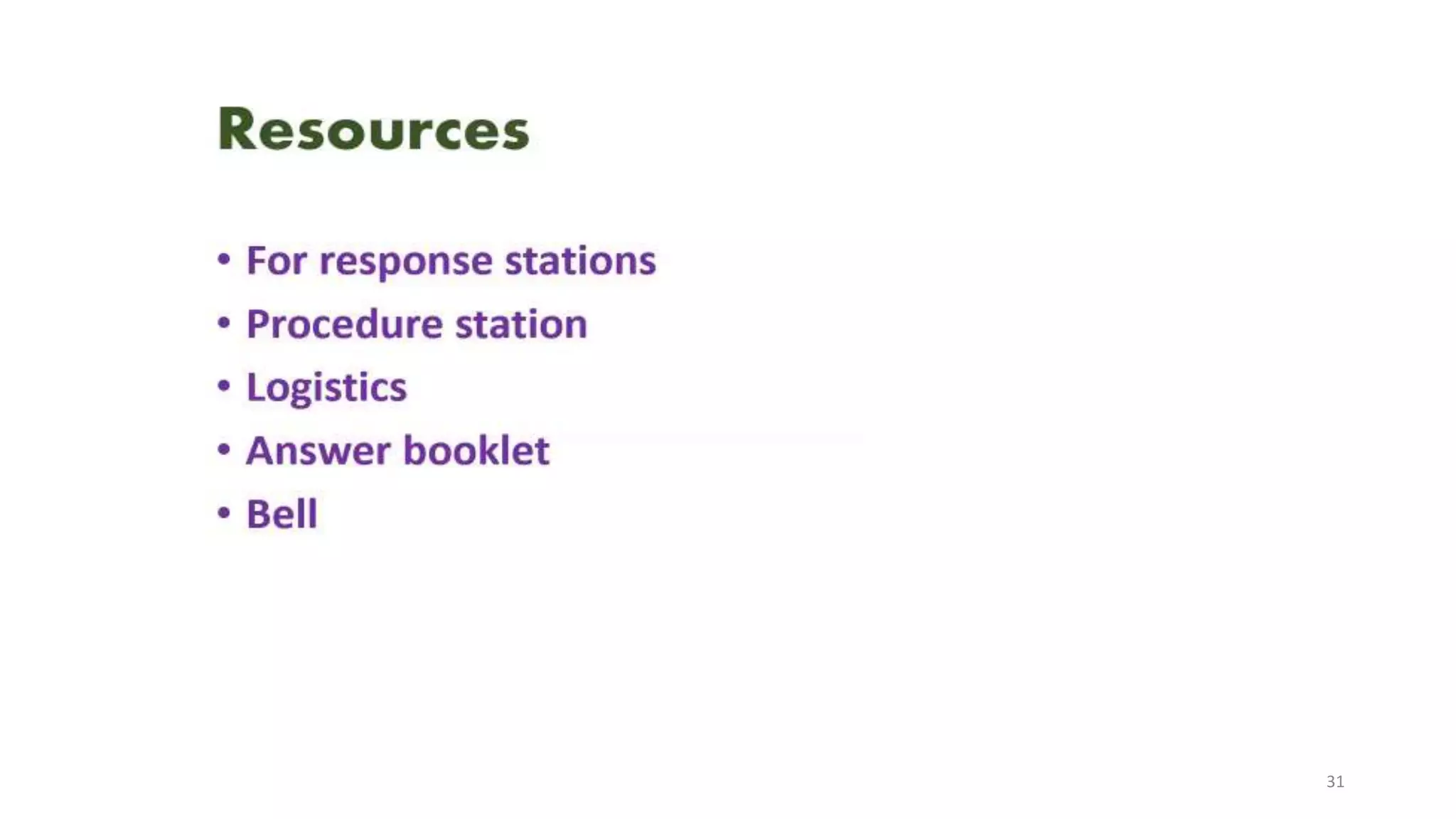
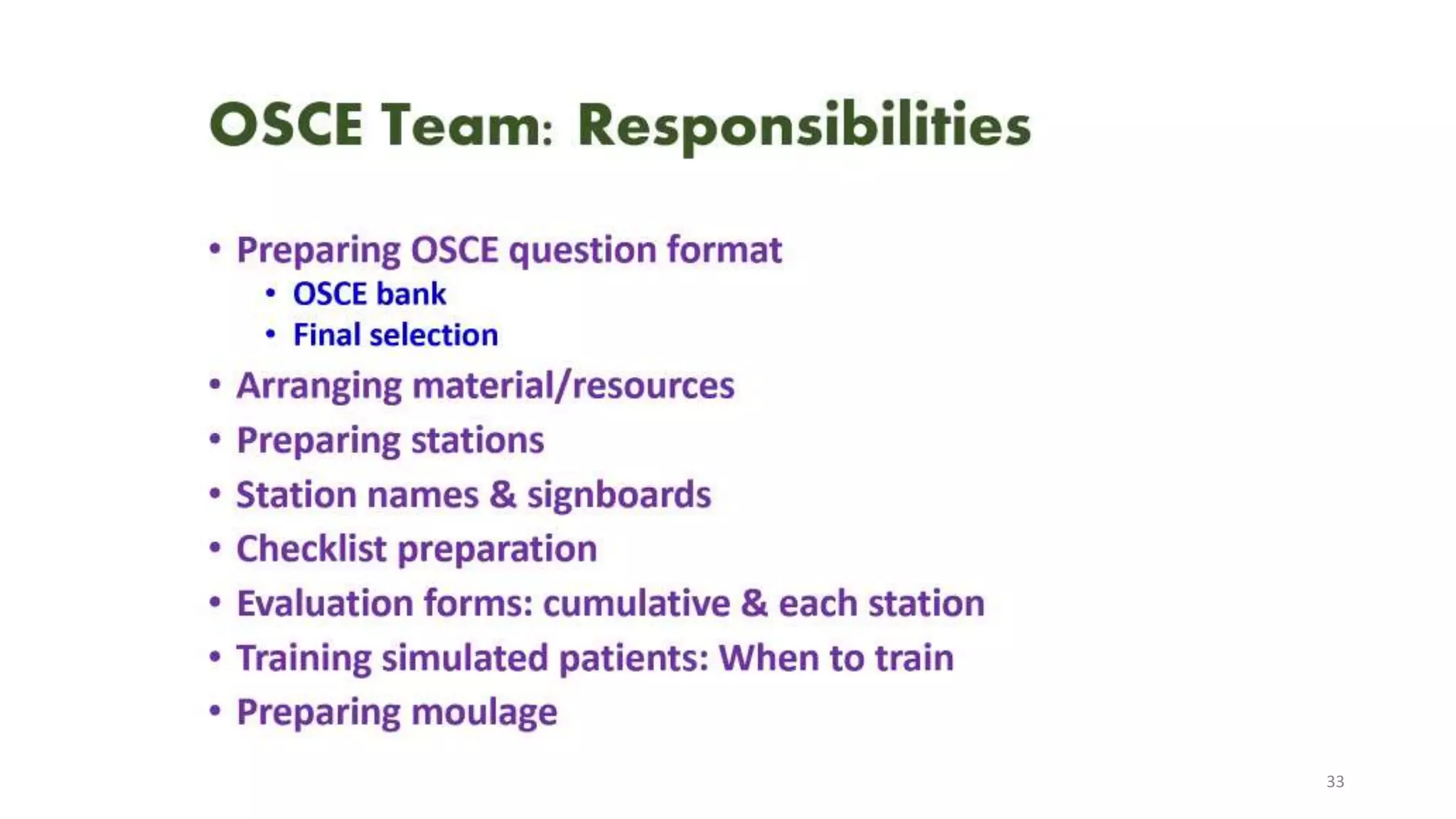
31
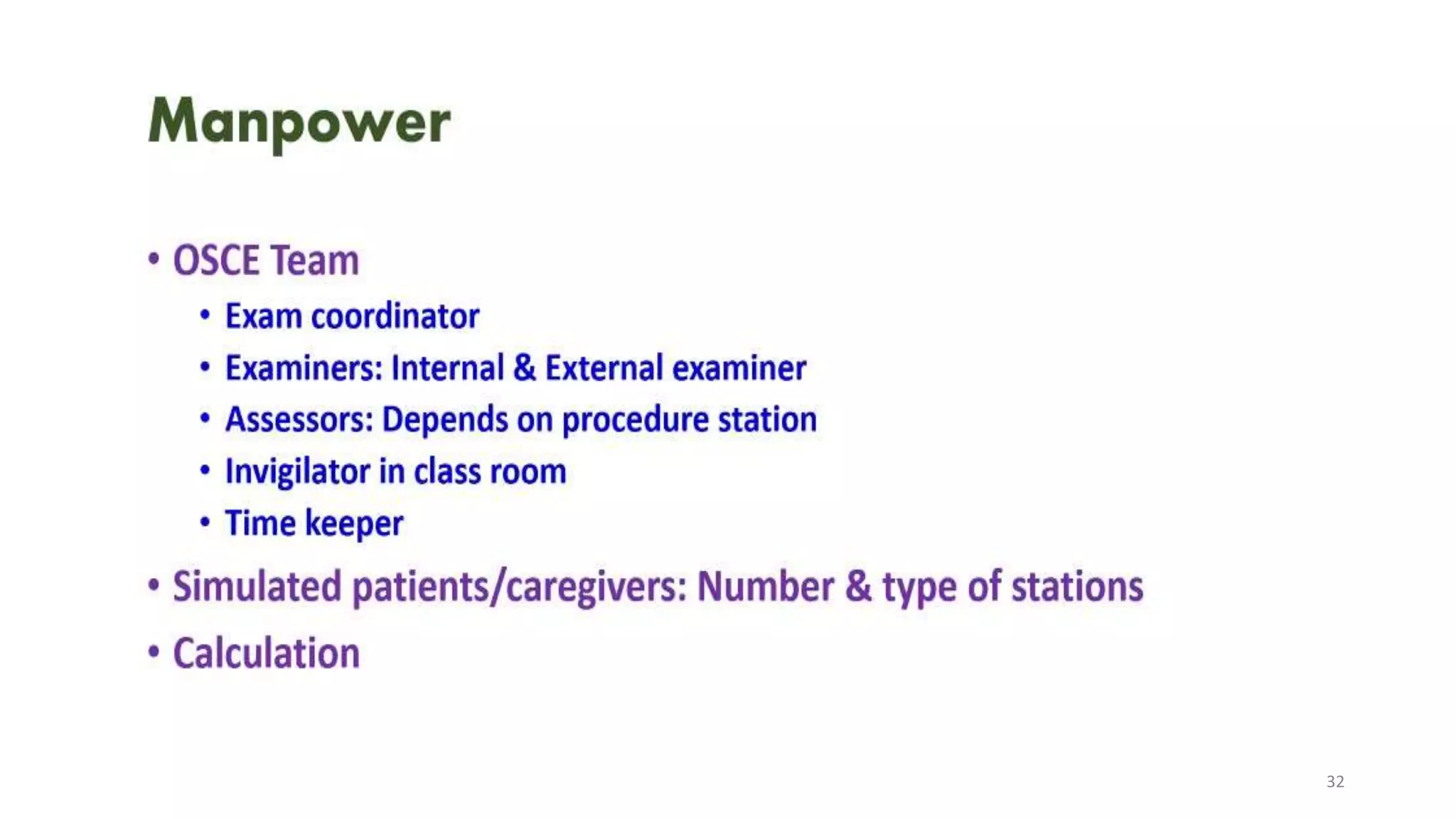
32
33
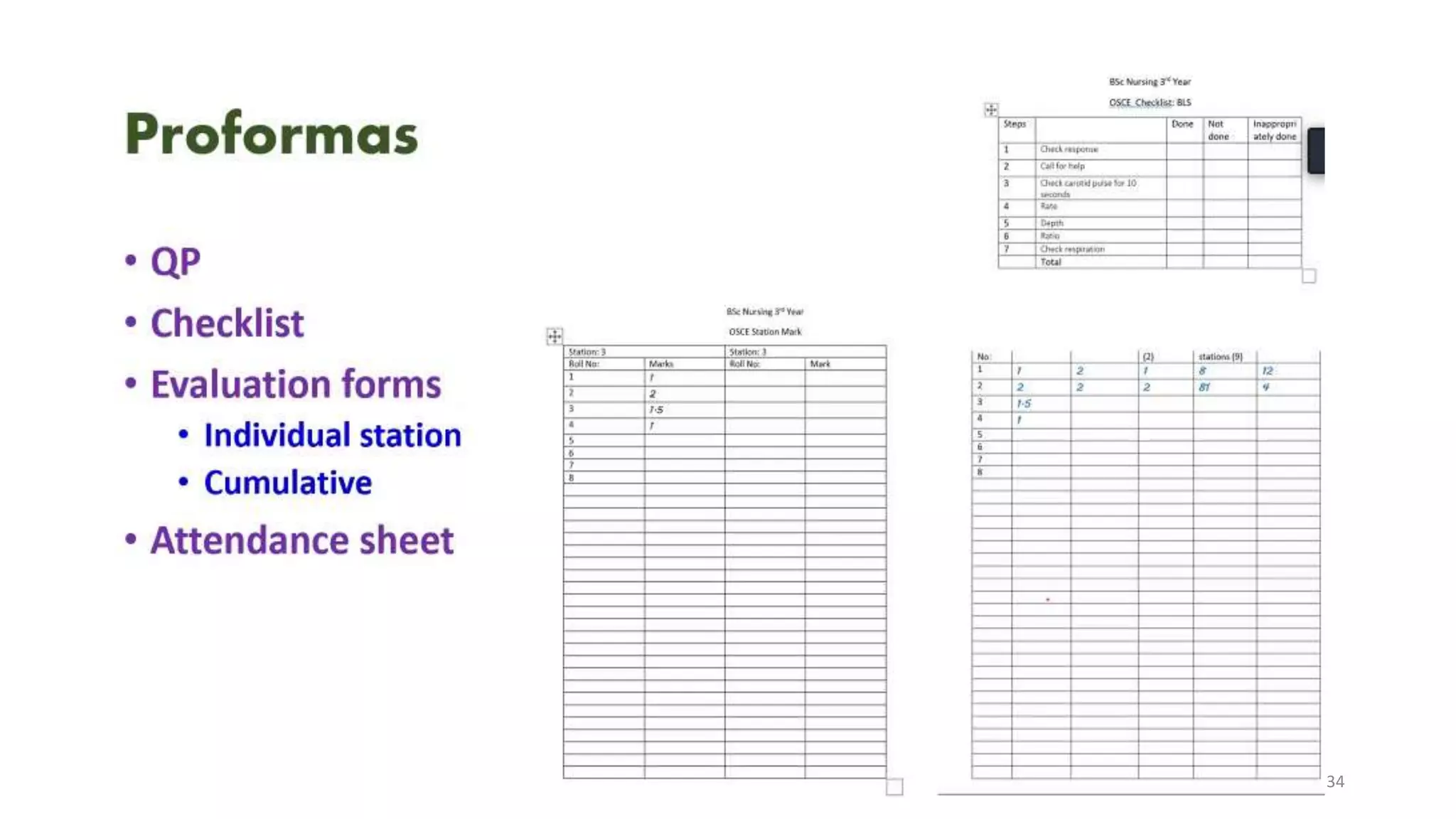
34
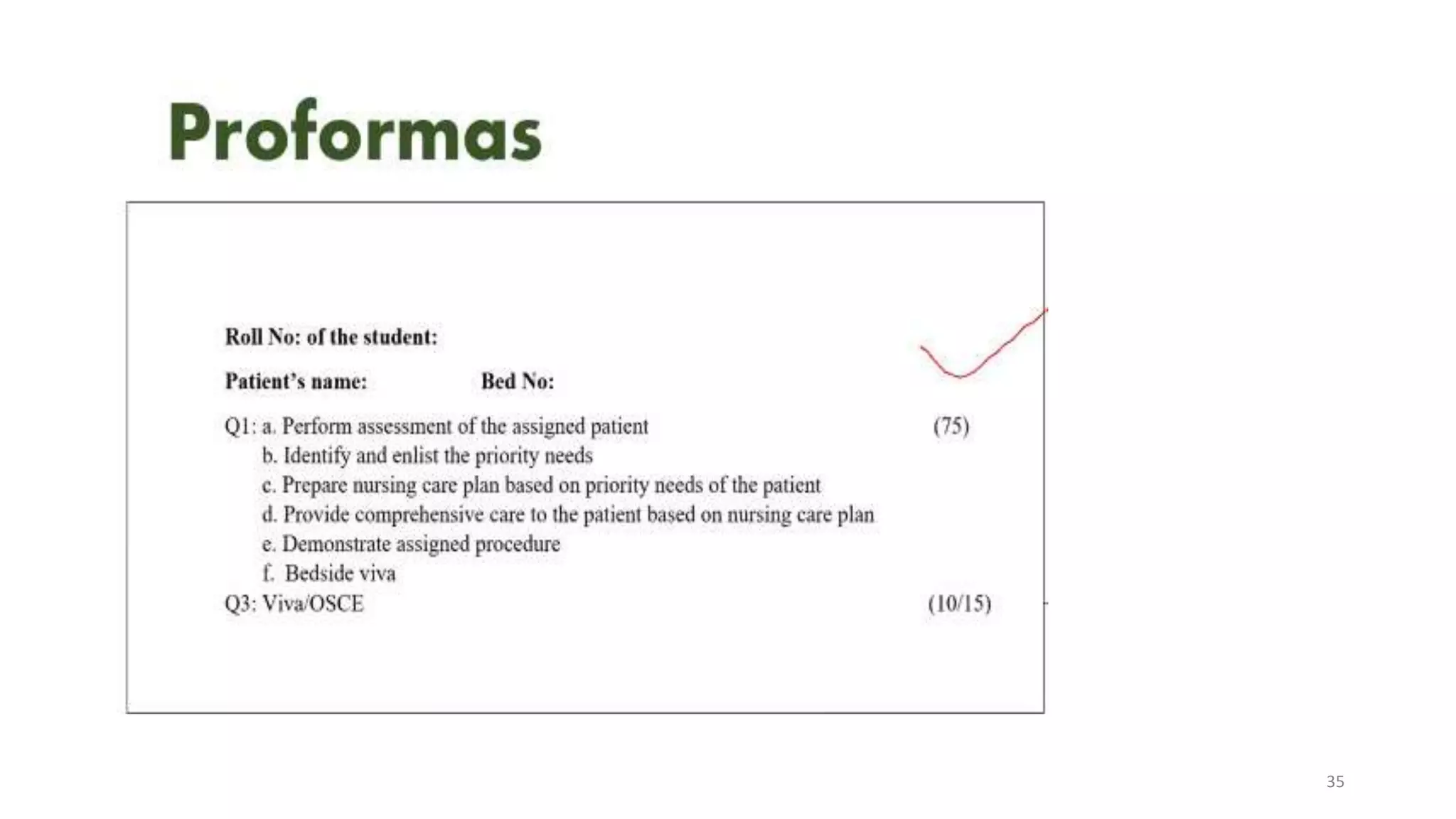
35
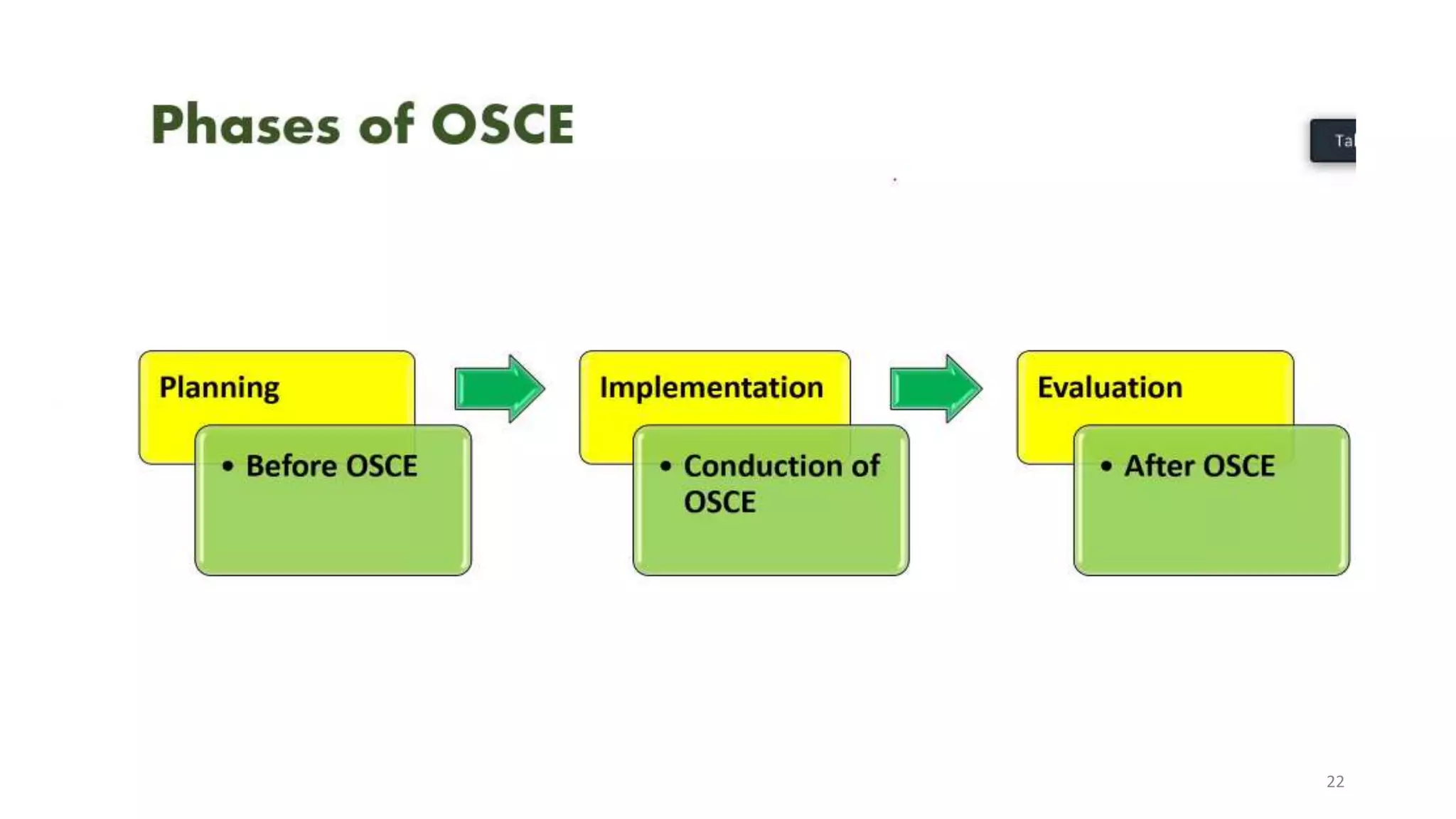
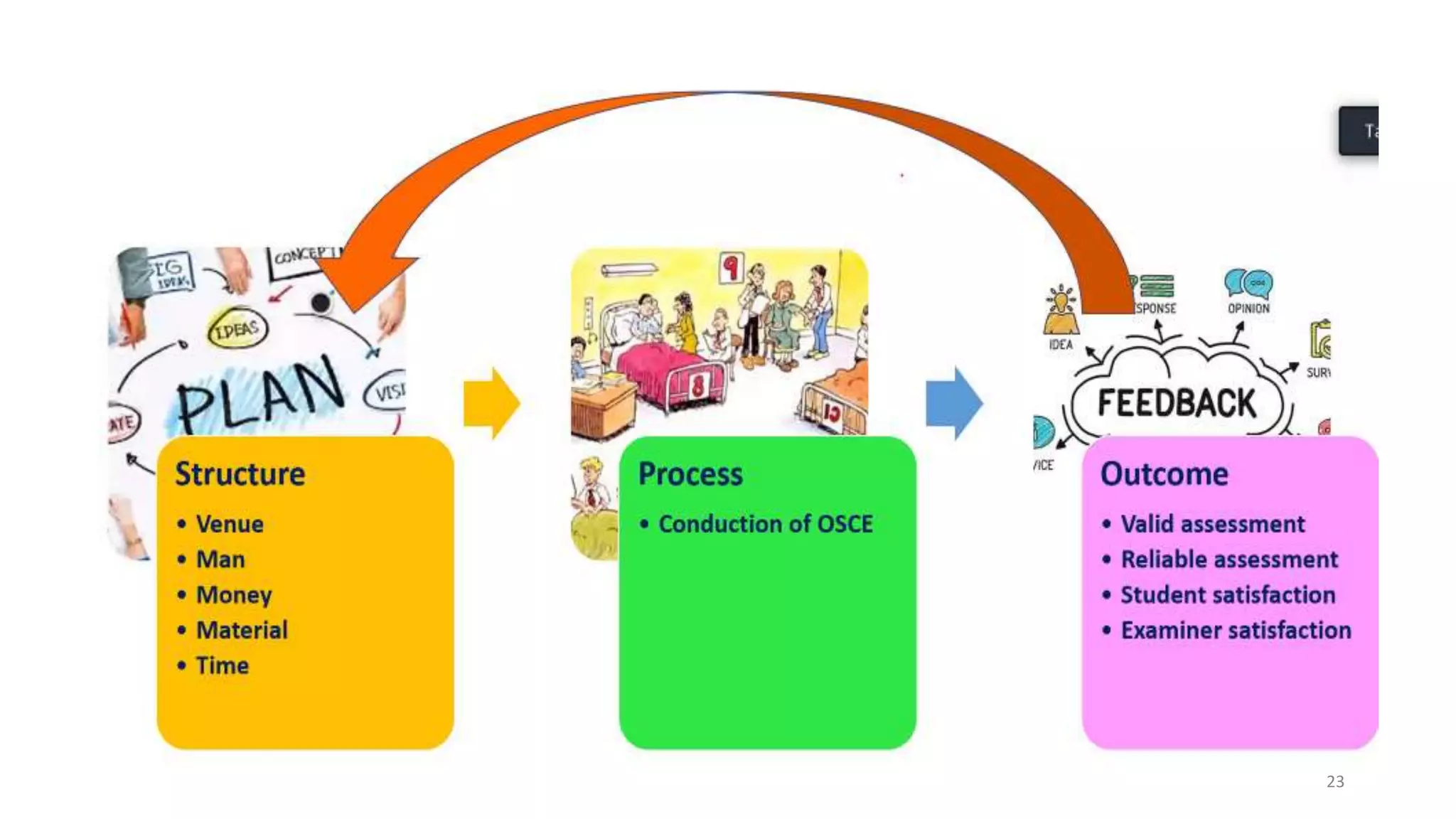
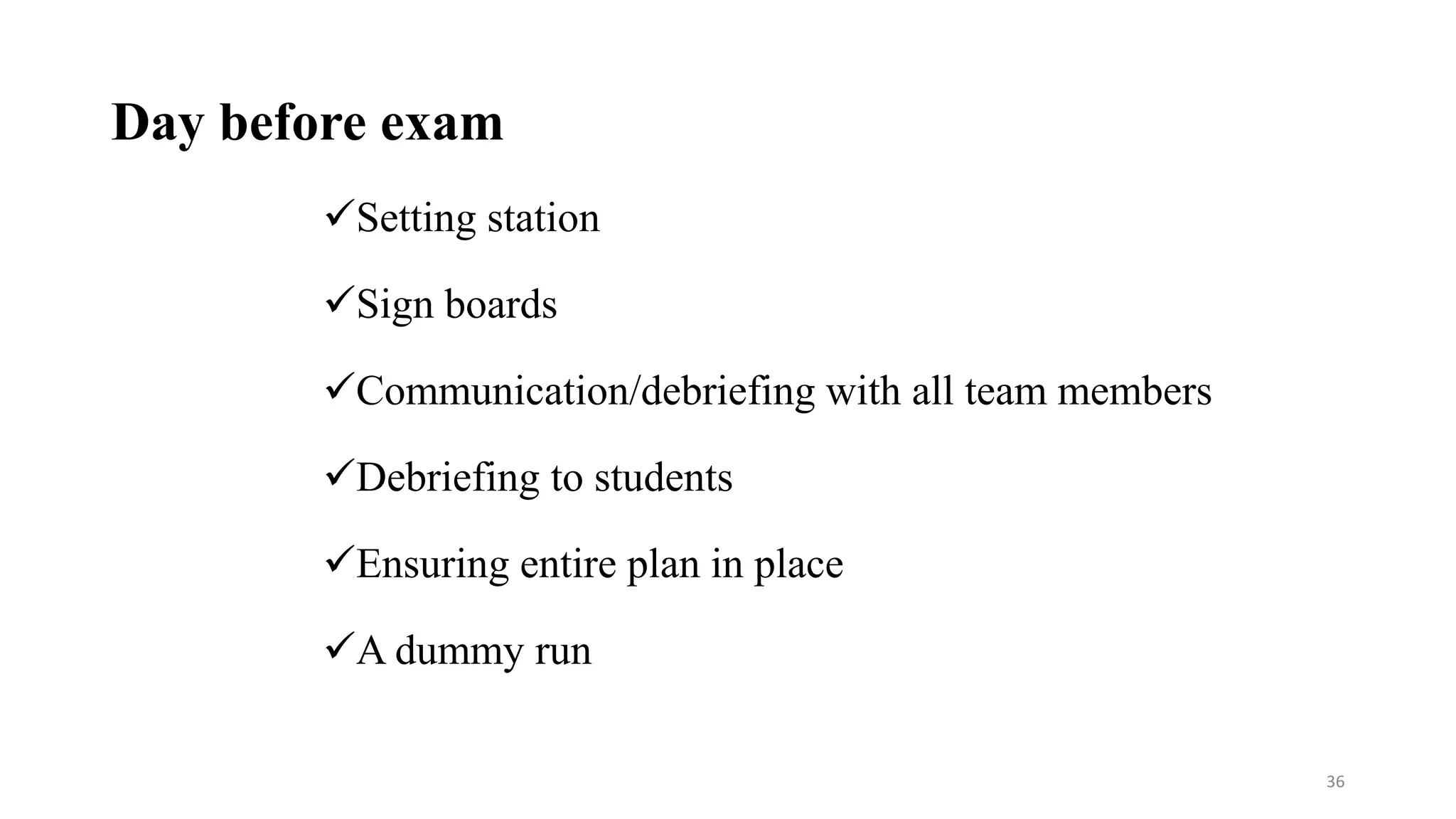
Day before exam
Setting station
Sign boards
Communication/debriefing with all team members
Debriefing to students
Ensuring entire plan in place
A dummy run
36
On the Day of exam
Ensuring stations
Ensure confidentiality
Training simulated patient
Debriefing to team
Debriefing to students
Managing student flow
37
Conduction of exam
Attendance
Debriefing to students
Ensuring confidentiality
Managing student flow
Invigilation
38
Termination
• Feedback to students & from students
• Feedback to team & from team
39
OSLER + OSCE + VIVA VOCE
40
A 54-year-old heavy smoker with a 20-year history of COPD, confirmed by spirometry, and previous
gastric ulcer presented to the emergency room with mild mid-epigastric pain, nausea and vomiting evolving
over 3 days.
He reported taking a traditional herbal tea made of Retama (approximately 1000 mL) which caused
subsequent symptom deterioration and acute confusion.
On examination, the patient had no fever and was confused with a Glasgow coma score of 13/15.
His abdomen was soft. The remainder of the physical examination was unremarkable. Chest X-ray, ECG, CT
brain scan and laboratory blood tests were normal. Arterial blood gas (ABG) analysis on room air disclosed
severe respiratory acidosis with hypercapnia and high bicarbonate level (pH=7.14,
pCO2=11 kPa, =36 mmol/L) as well as severe hypoxaemia (paO2=5.4 kPa).
Subsequently, because of a rapid deterioration of the level of consciousness, as assessed by a fall in
Glasgow coma score (GCS) to 6/15, the patient required intubation, sedation and mechanical ventilation. His
blood pressure and pulse fell substantially soon after he was placed on the ventilator.
41
Positive aspects of OSCE stations
Simulated OSCE stations
They are controlled and safe (BLS)
Feedback from modern sophisticated
simulators can be obtained.
Simulators are readily available
within required.
Simulated stations can be tailored to
the level of skill to be assessed.
Real life OSCE stations
It provide actual competence of a
person on performance because
idealized ‘textbook’ scenarios may
not mimic real life situations.
They allow assessment of complex
skills which may not be possible at
simulated stations.
42
contd.,
Scenarios that are distressing to
real patients can be simulated.
(Dyspnea condition)
In simulated stations, the patient
variable in examination is
uniform across trainees.
Real life situations may be more
cost-effective.
43
Problems of using OSCE in the Indian scenario
Lack of feasibility due to time constrains
Shortage of training for use of OSCE.
Shortage of observers/examiners
Lack of interest in examiners
Lack of enforced guidance for practical examination by universities.
44
Advantages of OSCE
• More valid than the traditional approach to clinical examination.
• Examiners can decide in advance what is to be tested and can then
design the examination to test these competencies.
• Examiners can have better control on the content and complexities.
• More reliable because variables of the examiner and the patient are
removed to a large extent.
• More practical because it can be used with a large numbers of students.
45
Contd.,
• Emphasis can be moved away from testing factual knowledge to
testing s wide-range of skills including advanced clinical skills.
• The use of checklists by examiners and the use of multiple choice
questions results in a more objective examination.
46
Contd.,
• Uniform scenarios for all candidates
• Availability
• Safety, no danger of injury to patients
• No risk of litigation
• Feedback from Actors (simulators)
• Allows for Recall
• Stations can be tailored to level of skills to be assessed
• Allows for demonstration of emergency skills
47
Disadvantages of OSCE
• Students knowledge and skills are tested in compartments and they are
not tested on their ability to look at the patient as a whole.
• Demanding for both examiners and patient.
• Examiners are required to pay close attention to the students repeating
the same task on a number of occasions.
• The time involved in setting up the examination is greatest than for
the traditional examination.
• Maintaining uniform difficulty levels is not always possible.
48
Contd.,
• Organizational training
• The idealized ‘textbook’ scenarios may not mimic real-life situations
• Expensive
49
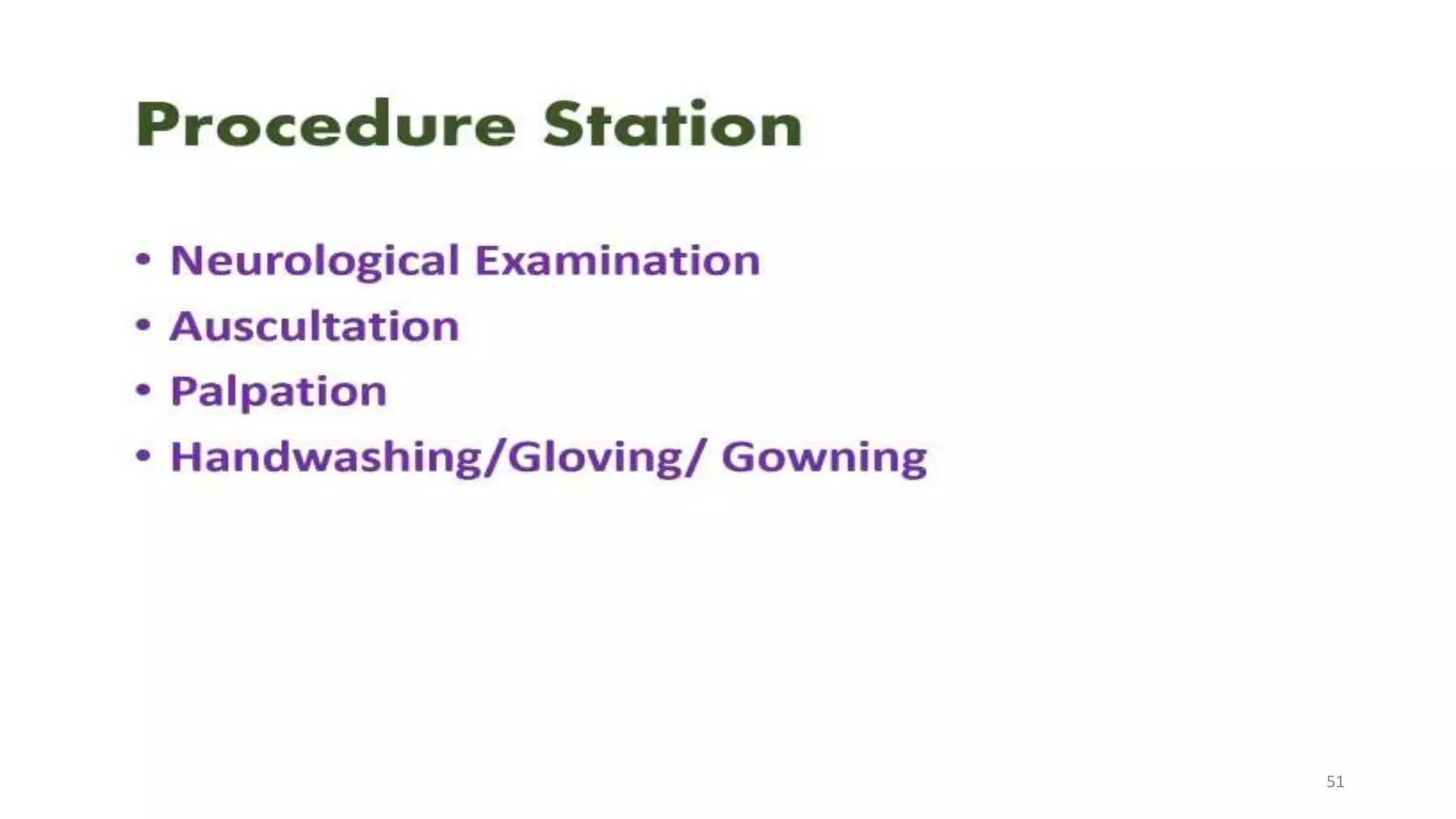
Example of a OSCE
50
51
52
53
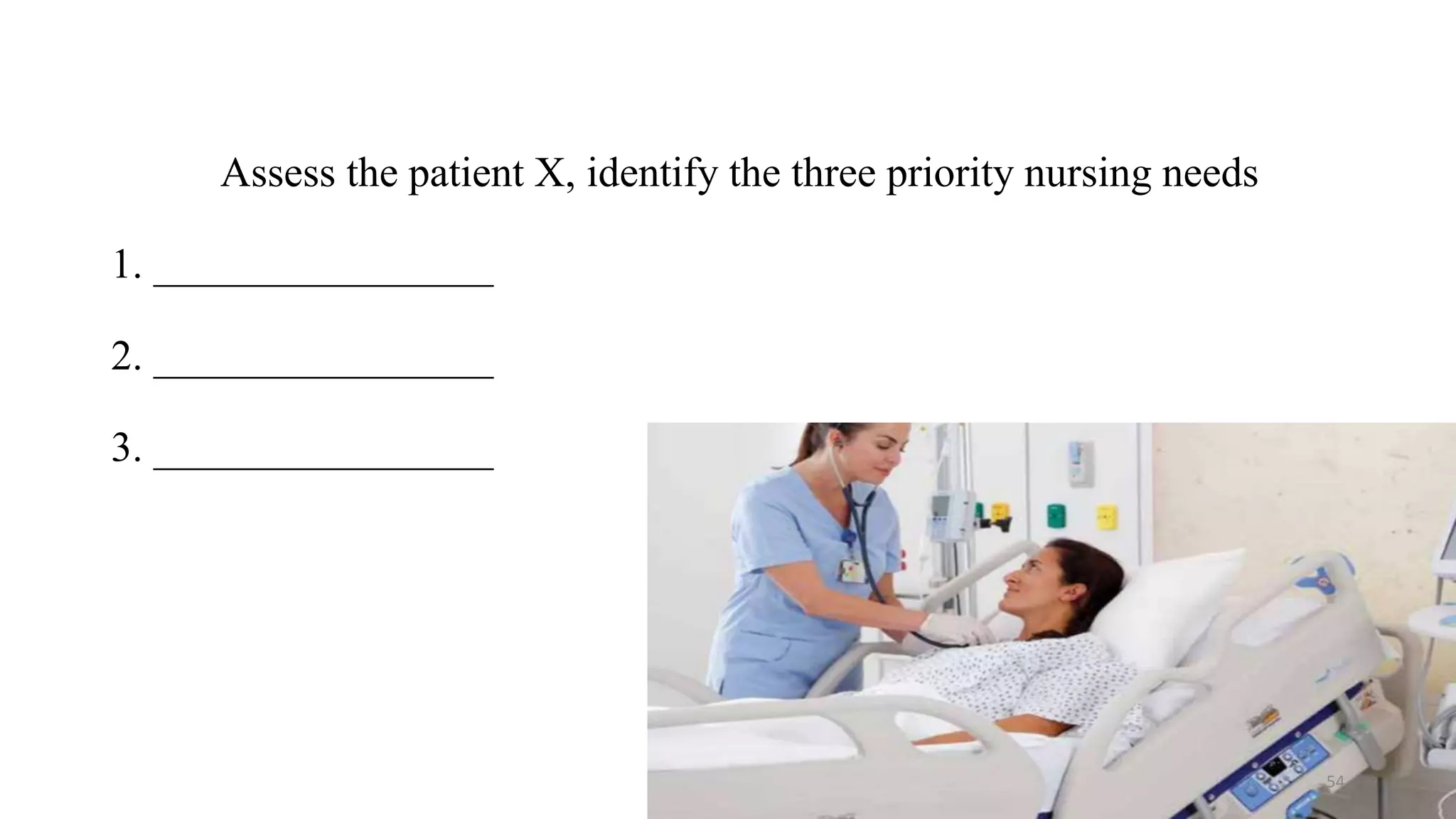
Assess the patient X, identify the three priority nursing needs
1. ________________
2. ________________
3. ________________
54
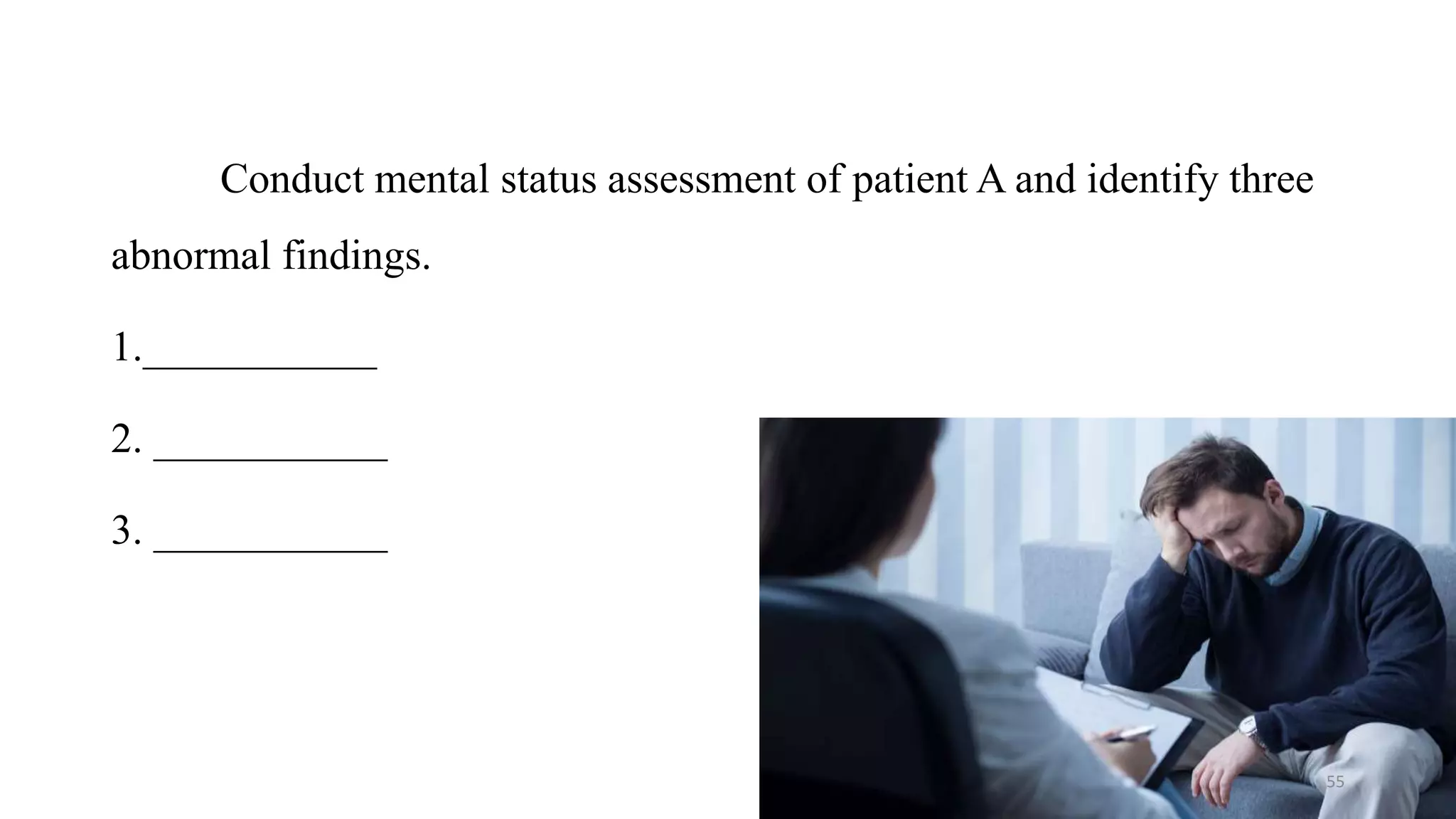
Conduct mental status assessment of patient A and identify three
abnormal findings.
1.___________
2. ___________
3. ___________
55
Carry out Pre-ECT Nursing care of patient Y and record the procedure:
__________________________________________________________
__________________________________________________________
__________________________________________________________
_________________________
56
57
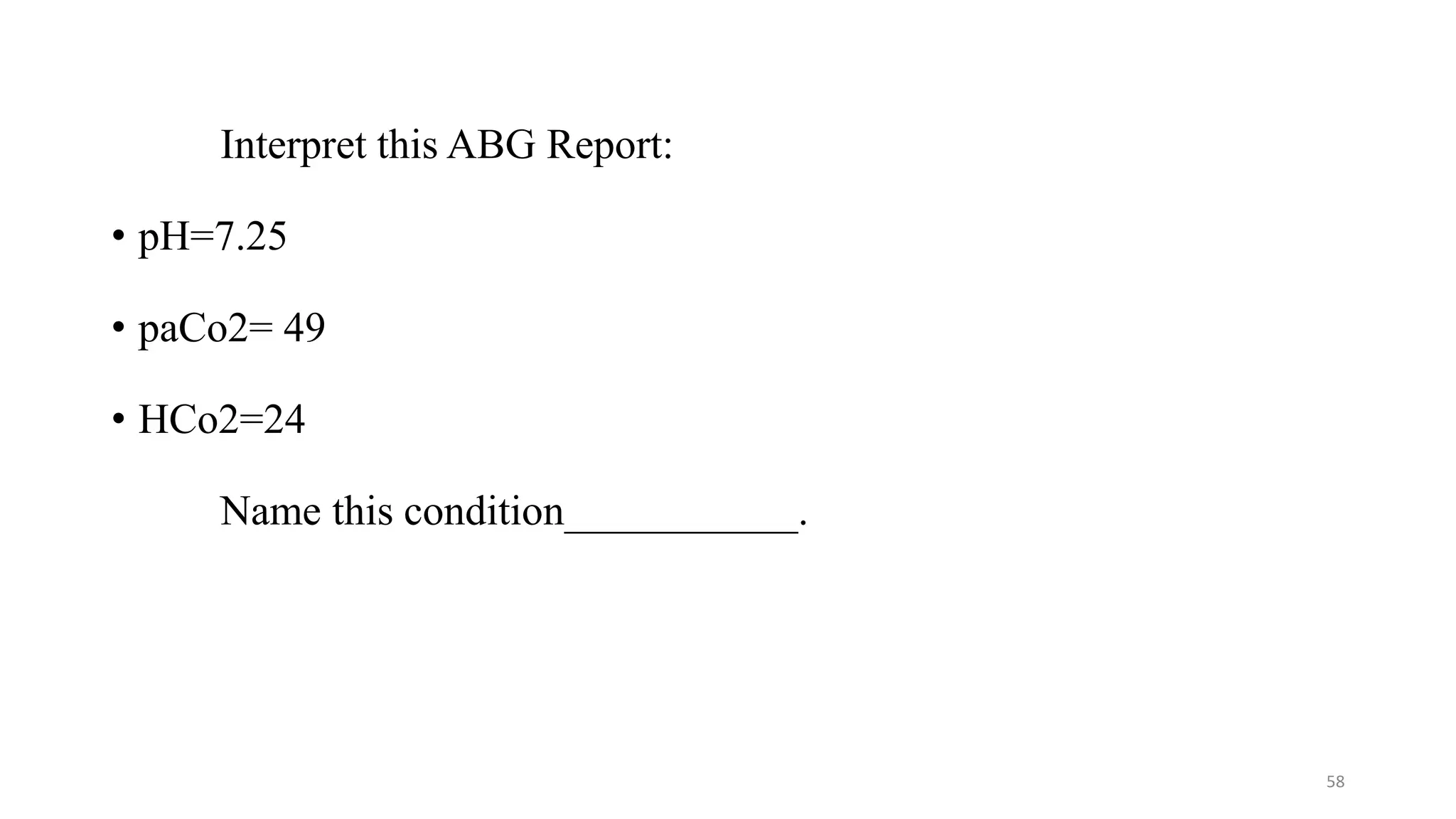
Interpret this ABG Report:
• pH=7.25
• paCo2= 49
• HCo2=24
Name this condition___________.
58
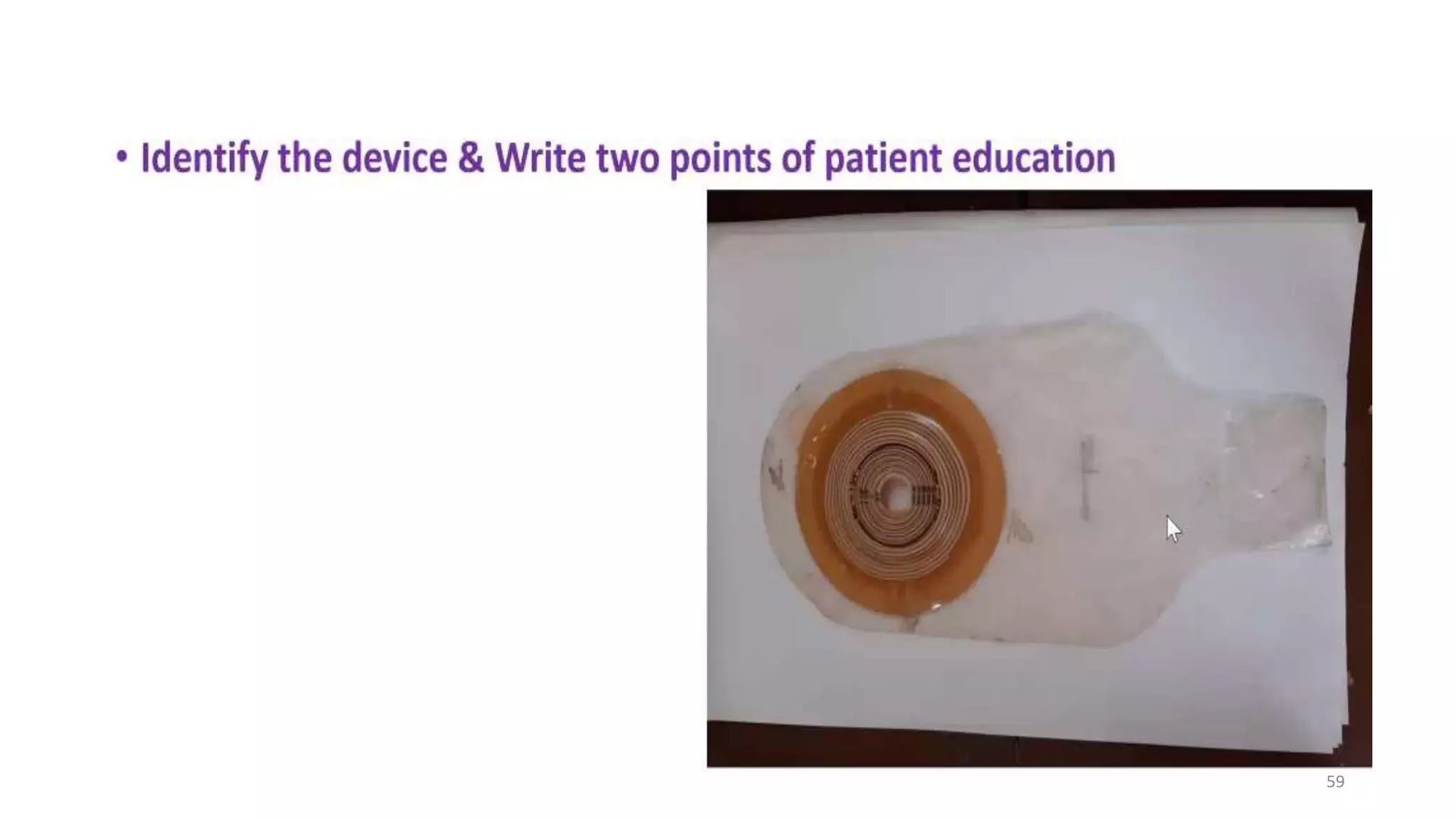
59
Patient G has a prescription of 1200ml fluid for 12 hours. How
many drops per minute nurse will be administrator through macro drip
set?
60
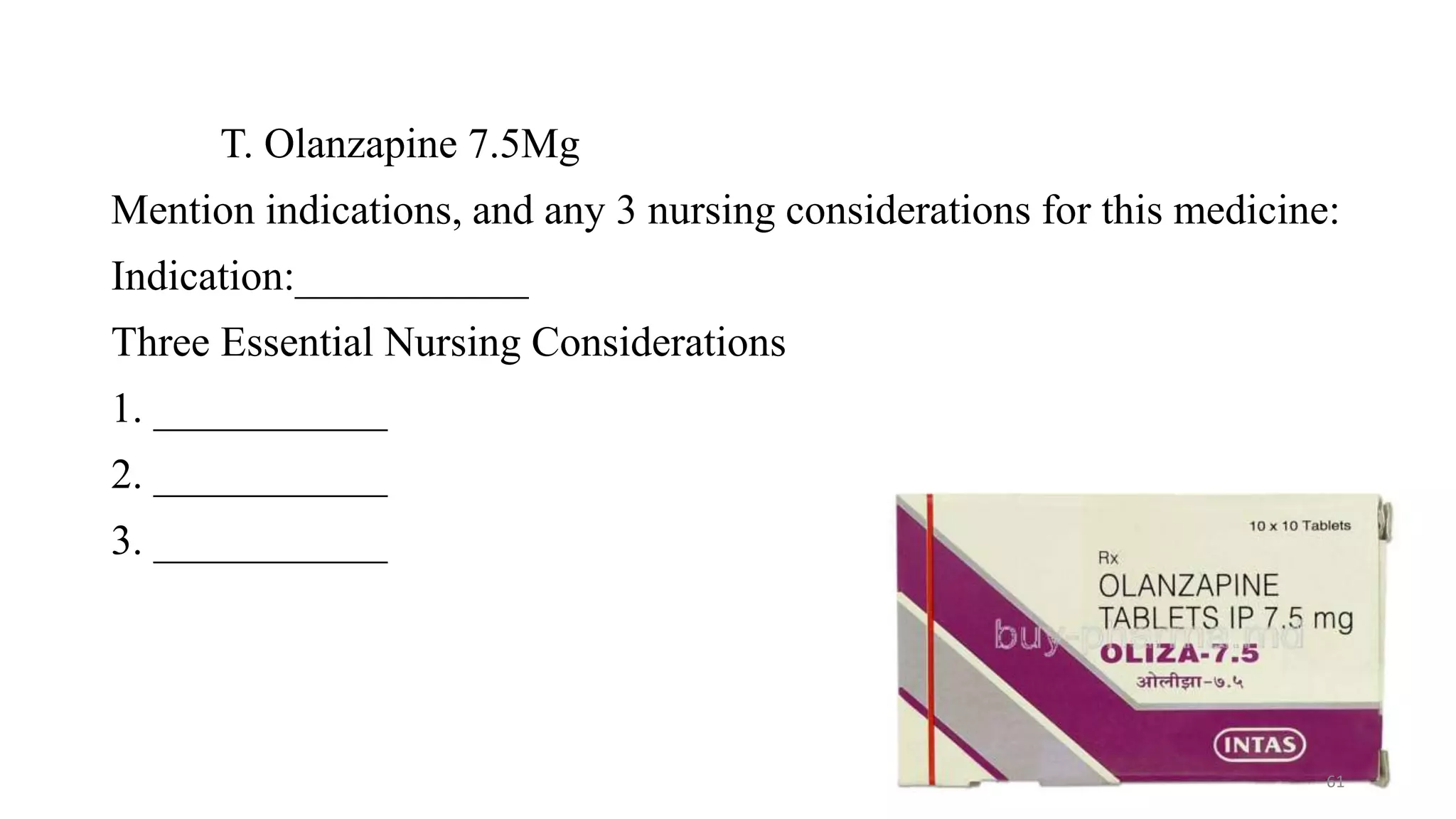
T. Olanzapine 7.5Mg
Mention indications, and any 3 nursing considerations for this medicine:
Indication:___________
Three Essential Nursing Considerations
1. ___________
2. ___________
3. ___________
61
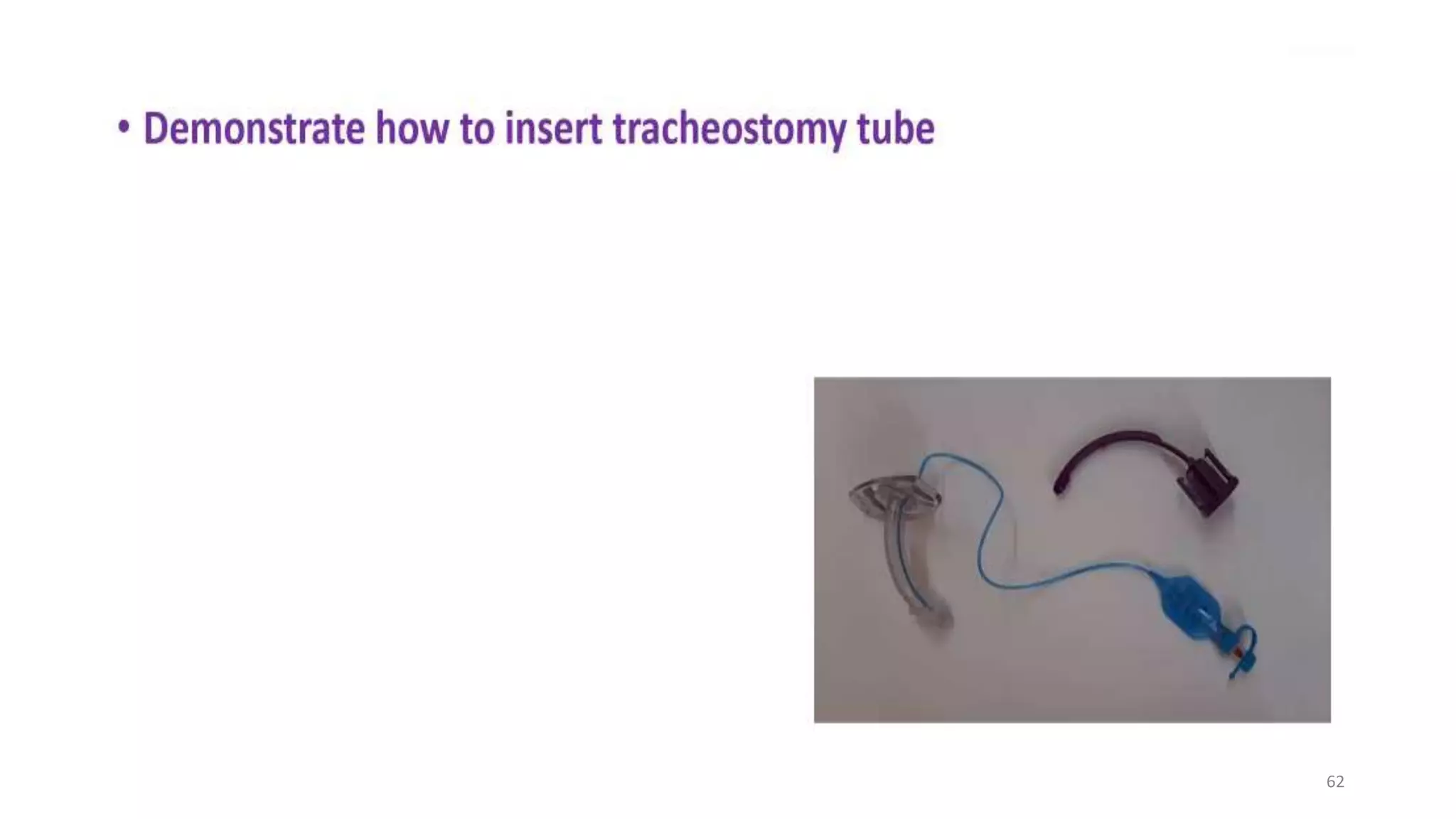
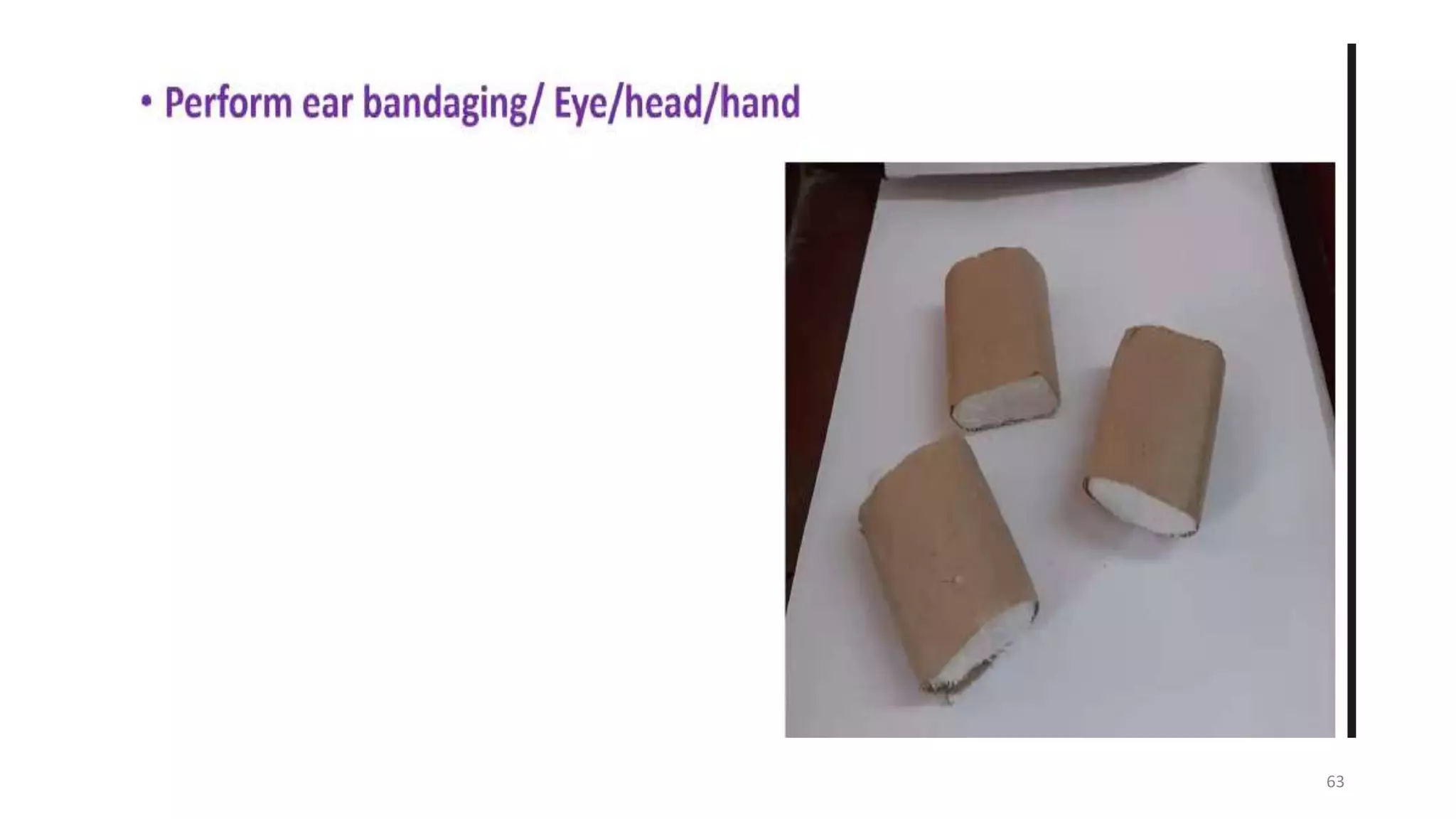
62
63
Nursing Students' Perceptions of the Objective Structured Clinical Examination:
An Integrative Review
Amy N.B. Johnston, et.al,
March 2017 Volume 13, Issue 3, Pages 127–142
Highlights
•Assessment of clinical skills is essential for education and safe practice.
•Student engagement with clinical assessment is critical.
•Objective structured clinical examinations (OSCEs) are used to assess clinical skills.
•Evidence suggests that students find OSCEs highly stressful.
•Time for OSCE preparation is critical to reduce student anxiety.
•Clear examination processes throughout the OSCE are important for student success.
•Appropriate environment for the OSCE is important for assessment veracity.
•Feedback on OSCE is important for students.
64
Objective Structured Clinical Evaluation Effectiveness in Clinical Evaluation for
Family Nurse Practitioner Students
Nancy D. Beckham,
October 2013 Volume 9, Issue 10, Pages e453–e459
Retrospective data were analyzed for FNP students (n = 52) who had
completed six OSCEs and the three requisite clinical courses. Performance scores on
OSCEs were compared with clinical course grades.
OSCEs can identify student weaknesses and strengths and help faculty guide
students in strategies to improve clinical skills. The results provide needed evidence
for the use of OSCEs, especially in terms of graduate nursing education.
65
Conclusion
• The OSCE has several district advantages. In view of these, the nurse
educators can adopt it as an objective method for clinical evaluation.
• This will help the students to improve their clinical competence.
• The emphasis is on assessing what students can do rather than what
they knows.
• Therefore, OSCE gives direction for attaining the ultimate aim of the
teaching – learning process.
66
Thank you
67

Objective Structured Clinical Examination (OSCE)

  • 1.
    Objective Structured Clinical Examination(OSCE) Asokan.R, Asso. Professor, KINS, KIIT (DU) Bhubaneswar. 1
  • 2.
    • Objective –Examiners use a checklist for evaluating the trainees. • Structured – Trainee sees the same problem and perform the same tasks in the same time frame. • Clinical – the task are representative of those faced in real critical situations. 2
  • 3.
    The Objective StructuredClinical Examination (OSCE) is an assessment method based on a student's performance that measure their clinical competence. 3
  • 4.
    Definition • OSCE isa form of performance – based testing used to measure candidate’s clinical competence. • During OSCE, candidate observed and evaluated as they go through a series of stations in which they interview, examine and treat standardized patients who present with some type of medical problems. 4
  • 5.
    Who is thestandardized patient? 5
  • 6.
    Standardized patients areindividuals who have been trained to exhibit certain signs and symptoms of specific conditions under certain testing conditions. Most OSCEs use "standardized patients (SP)" for accomplishing clinical history, examination and counselling sessions. Standardized patients may be professionally trained actors, volunteer simulators. 6
  • 7.
    Introduced in 1963by Barrows and Abrahamson, the term SP is “the umbrella term for both a simulated patient (a well person trained to simulate a patient's illness in a standardized way) and an actual patient (who is trained to present his or her own illness in a standardized way)” (Barrows, 1993, p. 443). 7
  • 8.
    OSCE is amodern type of examination often used in health sciences ( medicine, dentistry, nursing, pharmacy and physiotherapy) to assess clinical skill performance and competence in skill such as communication, clinical examination, medical and nursing procedures, exercise, manipulation techniques and interpretation of results. 8
  • 9.
    “The OSCE isan approach to the assessment of clinical competence in which the components of competence are assessed in a planned or structured way with attention being paid to the objectivity of the examination.” - Ronald Harden. 9
  • 10.
    History of OSCE •OSCE was developed in University of Dundee (Scotland) in the early 1975 by Dr.Harden and his colleagues. • After some modification it was described in detail on 1979. • This method was the subject of an international conference in OTawa in 1985 and experience were exchanged about OSCE & OSPE. • Globally using now. 10
  • 11.
    When to conductthe OSCE? • Entry level • Formative assessment • Summative assessment • Job interview 11
  • 12.
  • 13.
    Features of theObjective Structured Clinical Examination (OSCEs) •Stations are short •Stations are numerous •Stations are highly focused •Candidates are given very specific instructions •A pre-set structured mark scheme is used •Reduced examiner input and discretion 13
  • 14.
    Contd., Emphasis on.. •What candidatescan do rather than what they know •The application of knowledge rather than the recall of knowledge 14
  • 15.
    Additional options… •Double ortriple length stations •Linked stations •Preparatory stations •“Must pass” stations •Rest stations Contd., 15
  • 16.
    Complex stations for postgraduatestudent could test varying skills including management problems, administrative skills, handling unpredictable patient behavior and data interpretation. These assessments and many others are impossible in traditional clinical examination. 16
  • 17.
    OSCE in nursing TheOSCE is designed to assess ability to competently apply professional nursing or midwifery skills and knowledge. It is set at the level expected of nurses and midwives as they enter the profession (at the point of registration). 17
  • 18.
    Purpose of theOSCE Measure clinical skills Match assessment to intended constructs Promote structured interaction between student and examiner Make structured marking scheme possible Present all candidates with the same test Promote objectivity. 18
  • 19.
    Uses of OSCE Generally,the following range of practical skills are typically assessed in nursing using OSCE, Interpersonal and communication skills History taking skills Physical examination of specific body systems Mental health assessment Clinical decision making, including the formation of differential diagnosis. 19
  • 20.
    Contd., • Clinical problem– solving skills • Interpretation of clinical finding and investigations • Management of a clinical situation, including treatment and referral • Patient education • Health promotion • Acting safely and appropriately in an urgent clinical situation • Basic and advanced nursing care procedure practices. 20
  • 21.
  • 22.
  • 23.
  • 24.
  • 25.
    Practical exam forPG students • Long case : 50 • Short case: 20 • Problem solving/ administrative skill : 10 • Viva : 10 • OSCE : 10 25
  • 26.
    Practical exam forUG students • Long case: 75 • OSCE : 15 • Viva : 10 26
  • 27.
  • 28.
  • 29.
  • 30.
  • 31.
  • 32.
  • 33.
  • 34.
  • 35.
  • 36.
    Day before exam Settingstation Sign boards Communication/debriefing with all team members Debriefing to students Ensuring entire plan in place A dummy run 36
  • 37.
    On the Dayof exam Ensuring stations Ensure confidentiality Training simulated patient Debriefing to team Debriefing to students Managing student flow 37
  • 38.
    Conduction of exam Attendance Debriefingto students Ensuring confidentiality Managing student flow Invigilation 38
  • 39.
    Termination • Feedback tostudents & from students • Feedback to team & from team 39
  • 40.
    OSLER + OSCE+ VIVA VOCE 40
  • 41.
    A 54-year-old heavysmoker with a 20-year history of COPD, confirmed by spirometry, and previous gastric ulcer presented to the emergency room with mild mid-epigastric pain, nausea and vomiting evolving over 3 days. He reported taking a traditional herbal tea made of Retama (approximately 1000 mL) which caused subsequent symptom deterioration and acute confusion. On examination, the patient had no fever and was confused with a Glasgow coma score of 13/15. His abdomen was soft. The remainder of the physical examination was unremarkable. Chest X-ray, ECG, CT brain scan and laboratory blood tests were normal. Arterial blood gas (ABG) analysis on room air disclosed severe respiratory acidosis with hypercapnia and high bicarbonate level (pH=7.14, pCO2=11 kPa, =36 mmol/L) as well as severe hypoxaemia (paO2=5.4 kPa). Subsequently, because of a rapid deterioration of the level of consciousness, as assessed by a fall in Glasgow coma score (GCS) to 6/15, the patient required intubation, sedation and mechanical ventilation. His blood pressure and pulse fell substantially soon after he was placed on the ventilator. 41
  • 42.
    Positive aspects ofOSCE stations Simulated OSCE stations They are controlled and safe (BLS) Feedback from modern sophisticated simulators can be obtained. Simulators are readily available within required. Simulated stations can be tailored to the level of skill to be assessed. Real life OSCE stations It provide actual competence of a person on performance because idealized ‘textbook’ scenarios may not mimic real life situations. They allow assessment of complex skills which may not be possible at simulated stations. 42
  • 43.
    contd., Scenarios that aredistressing to real patients can be simulated. (Dyspnea condition) In simulated stations, the patient variable in examination is uniform across trainees. Real life situations may be more cost-effective. 43
  • 44.
    Problems of usingOSCE in the Indian scenario Lack of feasibility due to time constrains Shortage of training for use of OSCE. Shortage of observers/examiners Lack of interest in examiners Lack of enforced guidance for practical examination by universities. 44
  • 45.
    Advantages of OSCE •More valid than the traditional approach to clinical examination. • Examiners can decide in advance what is to be tested and can then design the examination to test these competencies. • Examiners can have better control on the content and complexities. • More reliable because variables of the examiner and the patient are removed to a large extent. • More practical because it can be used with a large numbers of students. 45
  • 46.
    Contd., • Emphasis canbe moved away from testing factual knowledge to testing s wide-range of skills including advanced clinical skills. • The use of checklists by examiners and the use of multiple choice questions results in a more objective examination. 46
  • 47.
    Contd., • Uniform scenariosfor all candidates • Availability • Safety, no danger of injury to patients • No risk of litigation • Feedback from Actors (simulators) • Allows for Recall • Stations can be tailored to level of skills to be assessed • Allows for demonstration of emergency skills 47
  • 48.
    Disadvantages of OSCE •Students knowledge and skills are tested in compartments and they are not tested on their ability to look at the patient as a whole. • Demanding for both examiners and patient. • Examiners are required to pay close attention to the students repeating the same task on a number of occasions. • The time involved in setting up the examination is greatest than for the traditional examination. • Maintaining uniform difficulty levels is not always possible. 48
  • 49.
    Contd., • Organizational training •The idealized ‘textbook’ scenarios may not mimic real-life situations • Expensive 49
  • 50.
    Example of aOSCE 50
  • 51.
  • 52.
  • 53.
  • 54.
    Assess the patientX, identify the three priority nursing needs 1. ________________ 2. ________________ 3. ________________ 54
  • 55.
    Conduct mental statusassessment of patient A and identify three abnormal findings. 1.___________ 2. ___________ 3. ___________ 55
  • 56.
    Carry out Pre-ECTNursing care of patient Y and record the procedure: __________________________________________________________ __________________________________________________________ __________________________________________________________ _________________________ 56
  • 57.
  • 58.
    Interpret this ABGReport: • pH=7.25 • paCo2= 49 • HCo2=24 Name this condition___________. 58
  • 59.
  • 60.
    Patient G hasa prescription of 1200ml fluid for 12 hours. How many drops per minute nurse will be administrator through macro drip set? 60
  • 61.
    T. Olanzapine 7.5Mg Mentionindications, and any 3 nursing considerations for this medicine: Indication:___________ Three Essential Nursing Considerations 1. ___________ 2. ___________ 3. ___________ 61
  • 62.
  • 63.
  • 64.
    Nursing Students' Perceptionsof the Objective Structured Clinical Examination: An Integrative Review Amy N.B. Johnston, et.al, March 2017 Volume 13, Issue 3, Pages 127–142 Highlights •Assessment of clinical skills is essential for education and safe practice. •Student engagement with clinical assessment is critical. •Objective structured clinical examinations (OSCEs) are used to assess clinical skills. •Evidence suggests that students find OSCEs highly stressful. •Time for OSCE preparation is critical to reduce student anxiety. •Clear examination processes throughout the OSCE are important for student success. •Appropriate environment for the OSCE is important for assessment veracity. •Feedback on OSCE is important for students. 64
  • 65.
    Objective Structured ClinicalEvaluation Effectiveness in Clinical Evaluation for Family Nurse Practitioner Students Nancy D. Beckham, October 2013 Volume 9, Issue 10, Pages e453–e459 Retrospective data were analyzed for FNP students (n = 52) who had completed six OSCEs and the three requisite clinical courses. Performance scores on OSCEs were compared with clinical course grades. OSCEs can identify student weaknesses and strengths and help faculty guide students in strategies to improve clinical skills. The results provide needed evidence for the use of OSCEs, especially in terms of graduate nursing education. 65
  • 66.
    Conclusion • The OSCEhas several district advantages. In view of these, the nurse educators can adopt it as an objective method for clinical evaluation. • This will help the students to improve their clinical competence. • The emphasis is on assessing what students can do rather than what they knows. • Therefore, OSCE gives direction for attaining the ultimate aim of the teaching – learning process. 66
  • 67.