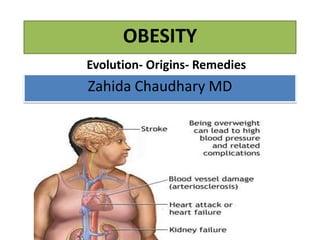
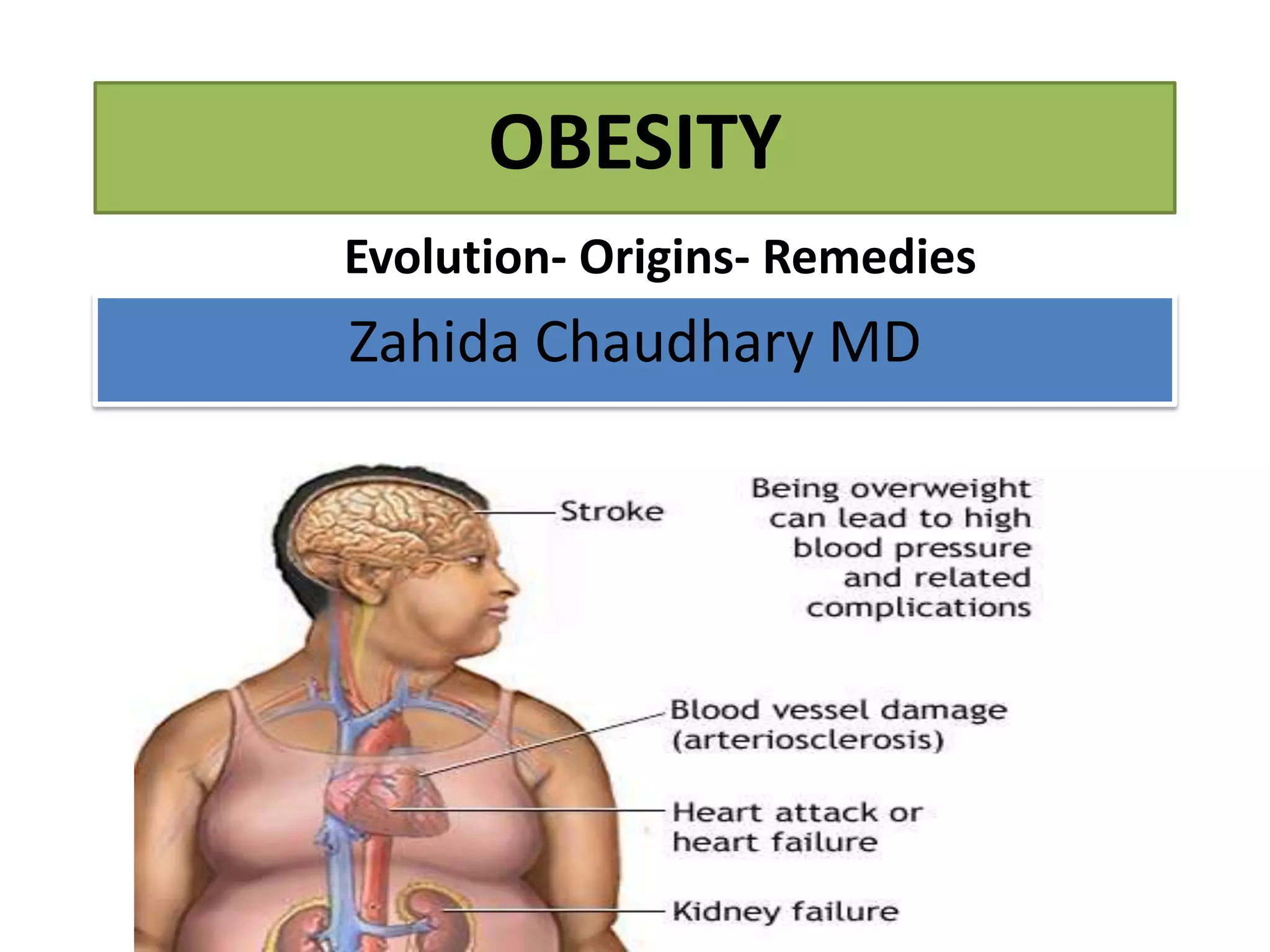


OBESITY
Evolution- Origins- Remedies

Zahida Chaudhary MD
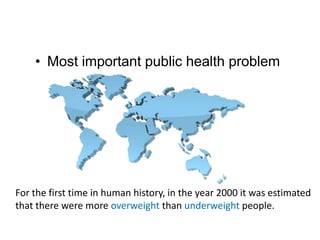
• Most important public health problem

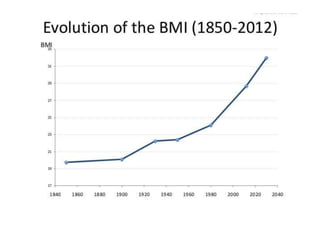
For the first time in human history, in the year 2000 it was estimated
that there were more overweight than underweight people.
A Nation in Crisis
 Our nation stands at a crossroads
 The present obesity epidemic threatens

progress related to increasing
American’s quality and years of healthy
life
 Result – a decreased ability to compete
in the global economy.
Source: Surgeon General’s Vision for a Fit and Healthy
Nation 2010
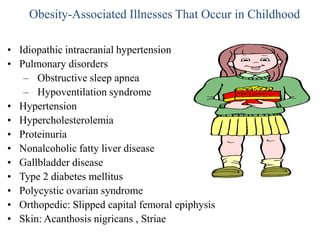
Obesity-Associated Illnesses That Occur in Childhood
• Idiopathic intracranial hypertension
• Pulmonary disorders
– Obstructive sleep apnea
– Hypoventilation syndrome
• Hypertension
• Hypercholesterolemia
• Proteinuria
• Nonalcoholic fatty liver disease
• Gallbladder disease
• Type 2 diabetes mellitus
• Polycystic ovarian syndrome
• Orthopedic: Slipped capital femoral epiphysis
• Skin: Acanthosis nigricans , Striae
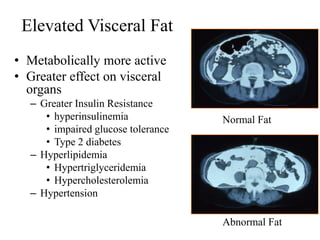
Elevated Visceral Fat
• Metabolically more active
• Greater effect on visceral
organs
– Greater Insulin Resistance
• hyperinsulinemia
• impaired glucose tolerance
• Type 2 diabetes
– Hyperlipidemia
• Hypertriglyceridemia
• Hypercholesterolemia
– Hypertension

Normal Fat

Abnormal Fat
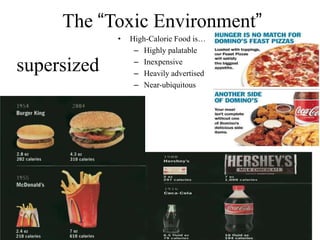
The “Toxic Environment”
•

supersized

High-Calorie Food is…
– Highly palatable
– Inexpensive
– Heavily advertised
– Near-ubiquitous

Brownell KD & Horgen KB. Food Fight. New York: McGraw-Hill; 2003.
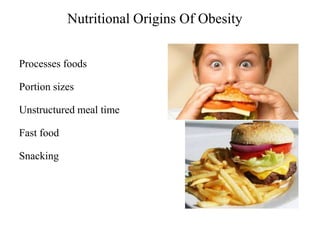
Nutritional Origins Of Obesity
Processes foods

Portion sizes
Unstructured meal time
Fast food
Snacking
The “Toxic Environment”
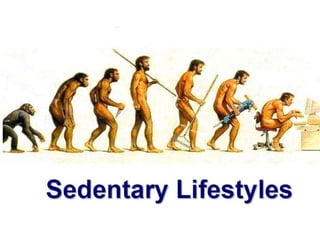
• Physical Activity is…
-To be avoided
-Nearly unnecessary
-Limited by infrastructure
-Introduction of
tv, computers and
videogames
Treatment and Drugs For Obesity
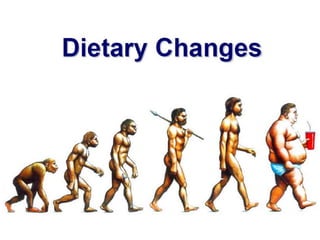
Dietary changes
Exercise and activity
Behavior change
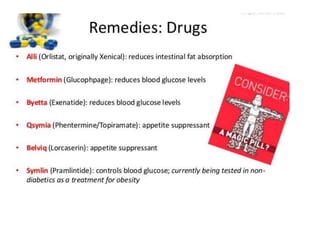
Prescription weight-loss medications
Weight-loss surgery
Who may use obesity medications?
Health care providers often use the body mass
index (BMI) to help decide who may benefit from
weight-loss drugs.
BMI estimates overweight and obesity based on
your height in relation to your weight.
Your doctor may prescribe you a medication to
treat your obesity if you are an adult with
a BMI of 30 or greater
OR
a BMI of 27 or greater and you have obesityrelated medical problems, such as high blood
pressure, type 2 diabetes, or high cholesterol
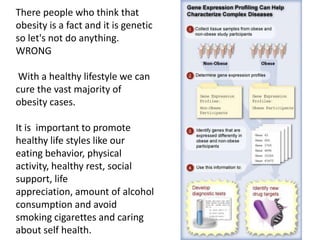
There people who think that
obesity is a fact and it is genetic
so let's not do anything.
WRONG

With a healthy lifestyle we can
cure the vast majority of
obesity cases.
It is important to promote
healthy life styles like our
eating behavior, physical
activity, healthy rest, social
support, life
appreciation, amount of alcohol
consumption and avoid
smoking cigarettes and caring
about self health.
Educational Grand Rounds: Obesity

Educational Grand Rounds: Obesity

  • 1.
  • 2.
    • Most importantpublic health problem For the first time in human history, in the year 2000 it was estimated that there were more overweight than underweight people.
  • 3.
    A Nation inCrisis  Our nation stands at a crossroads  The present obesity epidemic threatens progress related to increasing American’s quality and years of healthy life  Result – a decreased ability to compete in the global economy. Source: Surgeon General’s Vision for a Fit and Healthy Nation 2010
  • 5.
    Obesity-Associated Illnesses ThatOccur in Childhood • Idiopathic intracranial hypertension • Pulmonary disorders – Obstructive sleep apnea – Hypoventilation syndrome • Hypertension • Hypercholesterolemia • Proteinuria • Nonalcoholic fatty liver disease • Gallbladder disease • Type 2 diabetes mellitus • Polycystic ovarian syndrome • Orthopedic: Slipped capital femoral epiphysis • Skin: Acanthosis nigricans , Striae
  • 7.
    Elevated Visceral Fat •Metabolically more active • Greater effect on visceral organs – Greater Insulin Resistance • hyperinsulinemia • impaired glucose tolerance • Type 2 diabetes – Hyperlipidemia • Hypertriglyceridemia • Hypercholesterolemia – Hypertension Normal Fat Abnormal Fat
  • 10.
    The “Toxic Environment” • supersized High-CalorieFood is… – Highly palatable – Inexpensive – Heavily advertised – Near-ubiquitous Brownell KD & Horgen KB. Food Fight. New York: McGraw-Hill; 2003.
  • 11.
    Nutritional Origins OfObesity Processes foods Portion sizes Unstructured meal time Fast food Snacking
  • 13.
    The “Toxic Environment” •Physical Activity is… -To be avoided -Nearly unnecessary -Limited by infrastructure -Introduction of tv, computers and videogames
  • 14.
    Treatment and DrugsFor Obesity Dietary changes Exercise and activity Behavior change Prescription weight-loss medications Weight-loss surgery
  • 15.
    Who may useobesity medications? Health care providers often use the body mass index (BMI) to help decide who may benefit from weight-loss drugs. BMI estimates overweight and obesity based on your height in relation to your weight. Your doctor may prescribe you a medication to treat your obesity if you are an adult with a BMI of 30 or greater OR a BMI of 27 or greater and you have obesityrelated medical problems, such as high blood pressure, type 2 diabetes, or high cholesterol
  • 20.
    There people whothink that obesity is a fact and it is genetic so let's not do anything. WRONG With a healthy lifestyle we can cure the vast majority of obesity cases. It is important to promote healthy life styles like our eating behavior, physical activity, healthy rest, social support, life appreciation, amount of alcohol consumption and avoid smoking cigarettes and caring about self health.

Editor's Notes

  • #15 Obesity is a chronic condition that affects many people. If you are struggling with excess weight, you may find that a healthy eating plan and regular physical activity help you lose weight and maintain weight loss over the long term. But if these lifestyle changes are not enough, prescription medications for obesity treatment may be a helpful part of your weight-control program.