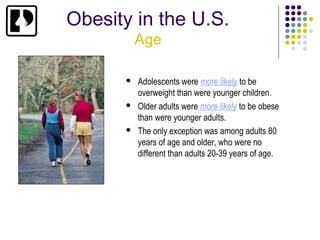
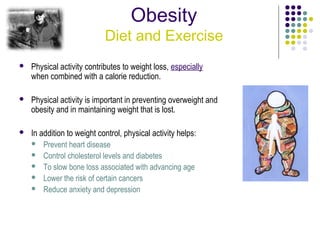
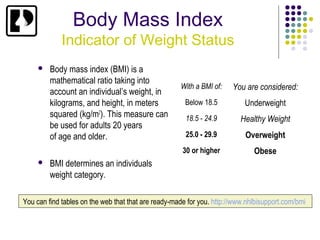
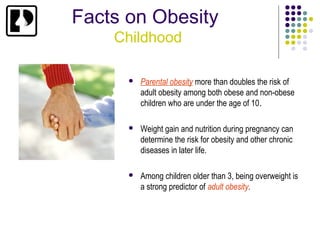
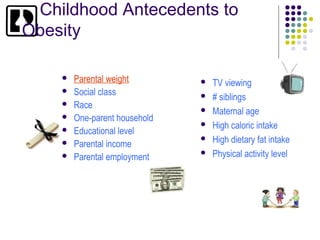
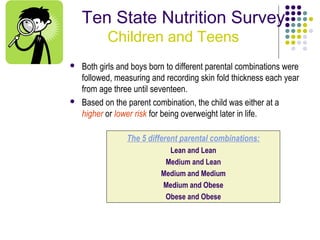
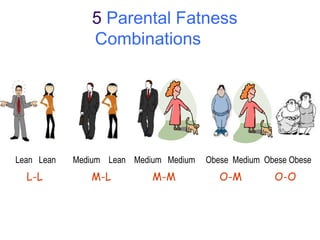
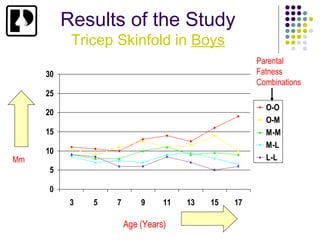
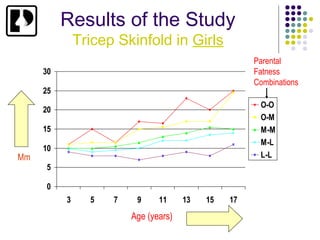
This document summarizes research on childhood obesity in the United States. It finds that obesity rates are higher among some racial/ethnic groups and older adolescents. Obesity results from long-term energy imbalance where calories consumed exceed calories used. Factors like diet, exercise, genetics, and environment contribute to obesity. Body mass index (BMI) is used to determine weight categories for adults and BMI-for-age for children/teens. Childhood obesity increases risk of adult obesity and chronic diseases. Parental obesity and other socioeconomic factors influence childhood obesity risk. A study found children of obese parents had much higher skin fold thickness, indicating higher body fat levels.












![CASE_PRESENTATION_ON_subdural_hematoma(SDH)[1 FINAL PPT]-1.pptx](https://cdn.slidesharecdn.com/ss_thumbnails/casepresentationonsubduralhematomasdh1finalppt-1-260129172522-d405d375-thumbnail.jpg?width=640&height=640&fit=bounds)


