Sodium and Blood Pressure
By Sarah Davis
Secondary Prevention Specialist
Heart Disease and Stroke Prevention
Utah Department of Health
True or False

I’d know if I had high blood pressure.
False: Many people with high blood pressure have no
symptoms, so you can’t assume that your blood pressure is
normal if you haven’t had it tested.
True or False

If I cut down on salt my body won’t
have enough.
False: It’s actually very difficult to eat too little salt. This is
because it’s in so many everyday foods, such as breakfast
cereals, bread, soups and sauces. And people is some
countries survive on a fraction of the amount of salt eaten by
people in the United States.
True or False
Sea salt is better for you than table salt.
False: It doesn’t matter how expensive the salt is, where it’s
from, or whether it comes in grains, crystals or flakes – it all
contains sodium and it’s the sodium in salt that can raise your
blood pressure if you have too much.
True of False

Only old people need to worry about
how much salt they eat.
False: Eating too much salt can raise your blood pressure at any
age. It’s true that you have less chance of developing heart
disease or stroke in your 20s or 30s than when you’re older.
But if you have high blood pressure when you’re young,
you’re still at greater risk than someone the same age with
normal blood pressure.
True or False
You can tell what foods are high in salt
because they taste salty.
False: Some foods that are high in salt don’t taste very salty.
Sometimes this is because they have lots of sugar in them as well,
for example some breakfast cereals.
Also, our taste buds get used to high levels of salt, so you might not
notice the saltiness of some foods. When people get used to eating
less salt, their taste buds become more sensitive. So sometimes
when they eat a food they used to eat all the time, they are
surprised to find how salty it tastes.
Sodium Blood Pressure Connection
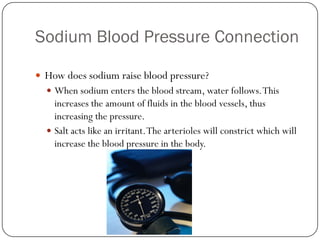
 How does sodium raise blood pressure?
 When sodium enters the blood stream, water follows. This

increases the amount of fluids in the blood vessels, thus
increasing the pressure.
 Salt acts like an irritant. The arterioles will constrict which will
increase the blood pressure in the body.
Sodium Blood Pressure Connection
 Generally, higher consumption of salt means higher blood

pressure
 Sodium intake is related to levels of blood pressure, the
incremental rise in blood pressure with age, and the
prevalence of hypertension across populations
 Within the span of a few weeks, most people experience a
reduction in blood pressure when salt intake is reduced
The Recommended Guidelines
 The 2005 Dietary Guidelines for Americans recommends
 Consume less than 2,300 mg of sodium per day.
 Except individuals with hypertension, blacks and middle aged

and older adults – these groups aim to consume no more than
1,500 mg of sodium per day (and meet the potassium
recommendation with food).

 Average American daily intake of sodium is 3,375 mg
 Sodium consumption has increased over the past few decades
Salt Consumption
 The majority of sodium consumed is from processed foods:
 77% processed foods
 12% inherent
 6% at the table
 5% added while cooking

 Understanding how much sodium one should consume and

how much one is consuming can be difficult.
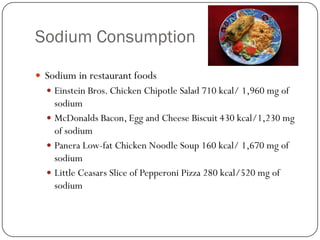
Sodium Consumption
 Sodium in restaurant foods
 Einstein Bros. Chicken Chipotle Salad 710 kcal/ 1,960 mg of

sodium
 McDonalds Bacon, Egg and Cheese Biscuit 430 kcal/1,230 mg
of sodium
 Panera Low-fat Chicken Noodle Soup 160 kcal/ 1,670 mg of
sodium
 Little Ceasars Slice of Pepperoni Pizza 280 kcal/520 mg of
sodium
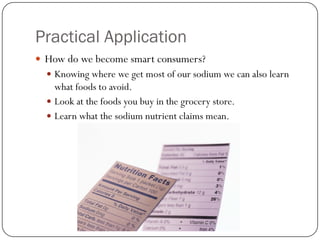
Practical Application
 How do we become smart consumers?
 Knowing where we get most of our sodium we can also learn

what foods to avoid.
 Look at the foods you buy in the grocery store.
 Learn what the sodium nutrient claims mean.
Sodium Nutrient Claims
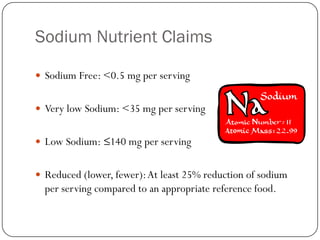
 Sodium Free: <0.5 mg per serving
 Very low Sodium: <35 mg per serving
 Low Sodium: ≤140 mg per serving
 Reduced (lower, fewer): At least 25% reduction of sodium

per serving compared to an appropriate reference food.
Sodium Nutrient Claims
 No Salt Added/Unsalted: Declaration: “This is not a sodium

free food” if food is not sodium free

 Salt Free: Must meet criteria for “sodium free”
 Lite in Sodium/Light in Sodium: 50% reduction in sodium
 Lightly Salted: 50% less sodium than normally added to

reference food
Reducing Salt, Reducing Mortality
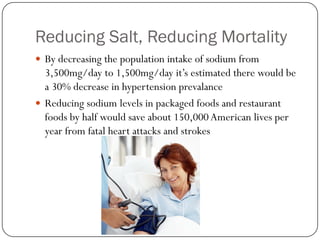
 By decreasing the population intake of sodium from

3,500mg/day to 1,500mg/day it’s estimated there would be
a 30% decrease in hypertension prevalance
 Reducing sodium levels in packaged foods and restaurant
foods by half would save about 150,000 American lives per
year from fatal heart attacks and strokes
Conclusion
 For more information please contact:

Sarah Davis
scdavis@utah.gov
801-538-9209

Sodium and Blood Pressure

  • 1.
    Sodium and BloodPressure By Sarah Davis Secondary Prevention Specialist Heart Disease and Stroke Prevention Utah Department of Health
  • 2.
    True or False I’dknow if I had high blood pressure. False: Many people with high blood pressure have no symptoms, so you can’t assume that your blood pressure is normal if you haven’t had it tested.
  • 3.
    True or False IfI cut down on salt my body won’t have enough. False: It’s actually very difficult to eat too little salt. This is because it’s in so many everyday foods, such as breakfast cereals, bread, soups and sauces. And people is some countries survive on a fraction of the amount of salt eaten by people in the United States.
  • 4.
    True or False Seasalt is better for you than table salt. False: It doesn’t matter how expensive the salt is, where it’s from, or whether it comes in grains, crystals or flakes – it all contains sodium and it’s the sodium in salt that can raise your blood pressure if you have too much.
  • 5.
    True of False Onlyold people need to worry about how much salt they eat. False: Eating too much salt can raise your blood pressure at any age. It’s true that you have less chance of developing heart disease or stroke in your 20s or 30s than when you’re older. But if you have high blood pressure when you’re young, you’re still at greater risk than someone the same age with normal blood pressure.
  • 6.
    True or False Youcan tell what foods are high in salt because they taste salty. False: Some foods that are high in salt don’t taste very salty. Sometimes this is because they have lots of sugar in them as well, for example some breakfast cereals. Also, our taste buds get used to high levels of salt, so you might not notice the saltiness of some foods. When people get used to eating less salt, their taste buds become more sensitive. So sometimes when they eat a food they used to eat all the time, they are surprised to find how salty it tastes.
  • 7.
    Sodium Blood PressureConnection  How does sodium raise blood pressure?  When sodium enters the blood stream, water follows. This increases the amount of fluids in the blood vessels, thus increasing the pressure.  Salt acts like an irritant. The arterioles will constrict which will increase the blood pressure in the body.
  • 8.
    Sodium Blood PressureConnection  Generally, higher consumption of salt means higher blood pressure  Sodium intake is related to levels of blood pressure, the incremental rise in blood pressure with age, and the prevalence of hypertension across populations  Within the span of a few weeks, most people experience a reduction in blood pressure when salt intake is reduced
  • 9.
    The Recommended Guidelines The 2005 Dietary Guidelines for Americans recommends  Consume less than 2,300 mg of sodium per day.  Except individuals with hypertension, blacks and middle aged and older adults – these groups aim to consume no more than 1,500 mg of sodium per day (and meet the potassium recommendation with food).  Average American daily intake of sodium is 3,375 mg  Sodium consumption has increased over the past few decades
  • 10.
    Salt Consumption  Themajority of sodium consumed is from processed foods:  77% processed foods  12% inherent  6% at the table  5% added while cooking  Understanding how much sodium one should consume and how much one is consuming can be difficult.
  • 11.
    Sodium Consumption  Sodiumin restaurant foods  Einstein Bros. Chicken Chipotle Salad 710 kcal/ 1,960 mg of sodium  McDonalds Bacon, Egg and Cheese Biscuit 430 kcal/1,230 mg of sodium  Panera Low-fat Chicken Noodle Soup 160 kcal/ 1,670 mg of sodium  Little Ceasars Slice of Pepperoni Pizza 280 kcal/520 mg of sodium
  • 12.
    Practical Application  Howdo we become smart consumers?  Knowing where we get most of our sodium we can also learn what foods to avoid.  Look at the foods you buy in the grocery store.  Learn what the sodium nutrient claims mean.
  • 13.
    Sodium Nutrient Claims Sodium Free: <0.5 mg per serving  Very low Sodium: <35 mg per serving  Low Sodium: ≤140 mg per serving  Reduced (lower, fewer): At least 25% reduction of sodium per serving compared to an appropriate reference food.
  • 14.
    Sodium Nutrient Claims No Salt Added/Unsalted: Declaration: “This is not a sodium free food” if food is not sodium free  Salt Free: Must meet criteria for “sodium free”  Lite in Sodium/Light in Sodium: 50% reduction in sodium  Lightly Salted: 50% less sodium than normally added to reference food
  • 15.
    Reducing Salt, ReducingMortality  By decreasing the population intake of sodium from 3,500mg/day to 1,500mg/day it’s estimated there would be a 30% decrease in hypertension prevalance  Reducing sodium levels in packaged foods and restaurant foods by half would save about 150,000 American lives per year from fatal heart attacks and strokes
  • 16.
    Conclusion  For moreinformation please contact: Sarah Davis scdavis@utah.gov 801-538-9209