Obesity is defined as an
abnormal growth of the
adipose tissue due to an
enlargement of fat cell
size(hypertrophic
obesity)or an increase in
fat cell
number(hyperplastic
obesity)or a
combination of both.

Central obesity is defined as waist
circumference ≥ 90 cm in males
and ≥ 80 cm in females.
+
Any two of the following
-Increased triglycerides ≥ 150
mg/dl (1.70 mmol/L)
-reduced HDL cholesterol <40
mg/dl in males and < 50 mg/dl in
females.
-raised blood pressure systolic bp ≥
130 mm Hg and diastolic bp ≥
85mm Hg.
-raised fasting plasma glucose ≥
100 mg/dl.
Or treatment for previously
diagnosed any of the above
condition.
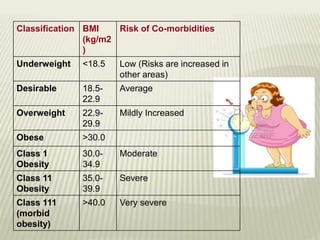
Classification BMI
Risk of Co-morbidities
(kg/m2
)
Underweight

<18.5

Low (Risks are increased in
other areas)

Desirable

18.522.9

Average

Overweight

22.929.9

Mildly Increased

Obese

>30.0

Class 1
Obesity

30.034.9

Moderate

Class 11
Obesity

35.039.9

Severe

Class 111
(morbid
obesity)

>40.0

Very severe
The food environment - there has
also been a huge increase in the
quantity of quick convenience
foods, which tend to be high in
saturated fat, salt and sugar.

Culture/Individual
psychology - it is
difficult to break
habituated
unhealthy eating
patterns, especially
when common to
those around us

Obesity is primarily
driven by individual
decisions, and the
way society
influences them

The physical environment - our
lives have become increasingly
sedentary. For e.g. last two
decades have seen marked
reduction in school walking.

Human biology genetics plays a
part but does not
pre-destine us to
be obese
RELATIVE RISK OF HEALTH PROBLEMS
ASSOCIATED WITH OBESITY
Greatly increased
(relative risk >>3)
• Diabetes
• Gall bladder diseases
• Hypertension
• Dyslipidemia
• Insulin resistance
• Sleep apnea
• Breathlessness

Moderately increased
(relative risk 2-3)
• Coronary heart disease
• Osteoarthritis (knees)
• Hyperuricemia and gout

Slightly increased
(1-2)
• Cancer(breast cancer in
postmenopausal women,
endometrial cancer,
colon cancer)
• Reproductive hormone
abnormalities
• Polycystic ovarian
syndrome
• Infertility
• Low back ache
• Increased anesthetic risk
• Foetal defect arising from
maternal obesity.
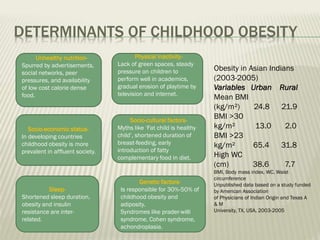
DETERMINANTS OF CHILDHOOD OBESITY
Unhealthy nutritionSpurred by advertisements,
social networks, peer
pressures, and availability
of low cost calorie dense
food.

Physical inactivityLack of green spaces, steady
pressure on children to
perform well in academics,
gradual erosion of playtime by
television and internet.

Socio-economic statusIn developing countries
childhood obesity is more
prevalent in affluent society.

Socio-cultural factorsMyths like ‘Fat child is healthy
child’, shortened duration of
breast-feeding, early
introduction of fatty
complementary food in diet.

SleepShortened sleep duration,
obesity and insulin
resistance are interrelated.

Genetic factorsIs responsible for 30%-50% of
childhood obesity and
adiposity.
Syndromes like prader-willi
syndrome, Cohen syndrome,
achondroplasia.

Obesity in Asian Indians
(2003-2005)
Variables Urban Rural
Mean BMI
(kg/m²)
24.8 21.9
BMI >30
kg/m²
13.0
2.0
BMI >23
kg/m²
65.4 31.8
High WC
(cm)
38.6
7.7
BMI, Body mass index, WC, Waist
circumference
Unpublished data based on a study funded
by American Association
of Physicians of Indian Origin and Texas A
&M
University, TX, USA, 2003-2005
HORMONE DISORDERS CAUSING OBESITY

Growth hormone
deficiencyAssociated with
visceral obesity, and
increases in the ratio
of fat to lean body
mass

Cushing’s syndromeStriae, easy bruising,
and central fat
distribution
accompany glucocorticoid excess.

HypothyroidismIncreased fatigue,
excessively dry
skin, constipation,
cold intolerance,
poor scholastic
performance, and
short stature.
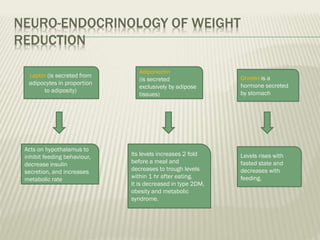
NEURO-ENDOCRINOLOGY OF WEIGHT
REDUCTION
Leptin (is secreted from
adipocytes in proportion
to adiposity)

Acts on hypothalamus to
inhibit feeding behaviour,
decrease insulin
secretion, and increases
metabolic rate

Adiponectin
(is secreted
exclusively by adipose
tissues)

Its levels increases 2 fold
before a meal and
decreases to trough levels
within 1 hr after eating.
It is decreased in type 2DM,
obesity and metabolic
syndrome.

Ghrelin-is a
hormone secreted
by stomach

Levels rises with
fasted state and
decreases with
feeding.
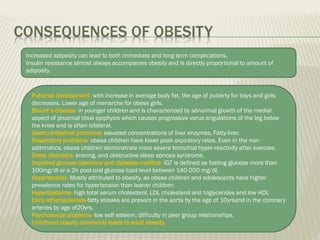
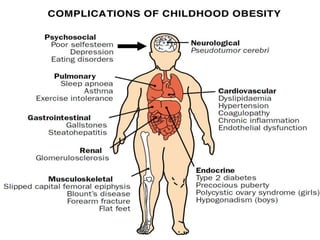
CONSEQUENCES OF OBESITY
Increased adiposity can lead to both immediate and long term complications.
Insulin resistance almost always accompanies obesity and is directly proportional to amount of
adiposity.

Pubertal development- with increase in average body fat, the age of puberty for boys and girls
decreases. Lower age of menarche for obese girls.
Blount’s disease- in younger children and is characterized by abnormal growth of the medial
aspect of proximal tibial epiphysis which causes progressive varus angulations of the leg below
the knee and is often bilateral.
Gastro-intestinal problems- elevated concentrations of liver enzymes, Fatty liver.
Respiratory problems- obese children have lower peak expiratory rates. Even in the nonasthmatics, obese children demonstrate more severe bronchial hyper-reactivity after exercise.
Sleep disorders- snoring, and obstructive sleep apnoea syndrome.
Impaired glucose tolerance and diabetes mellitus- IGT is defined as fasting glucose more than
100mg/dl or a 2h post-oral glucose load level between 140-200 mg/dl.
Hypertension- Mostly attributed to obesity, as obese children and adolescents have higher
prevalence rates for hypertension than leaner children
Hyperlipidemia- high total serum cholesterol, LDL cholesterol and triglycerides and low HDL
Early atherosclerosis-fatty streaks are present in the aorta by the age of 10yrsand in the coronary
arteries by age of20yrs.
Psychosocial problems- low self esteem, difficulty in peer group relationships.
Childhood obesity commonly leads to adult obesity.
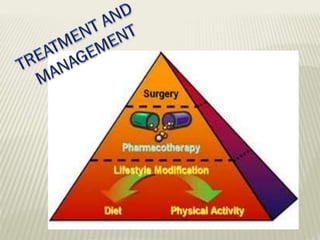
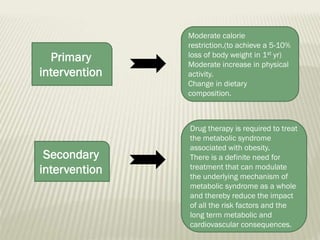
Primary
intervention

Secondary
intervention

Moderate calorie
restriction.(to achieve a 5-10%
loss of body weight in 1st yr)
Moderate increase in physical
activity.
Change in dietary
composition.

Drug therapy is required to treat
the metabolic syndrome
associated with obesity.
There is a definite need for
treatment that can modulate
the underlying mechanism of
metabolic syndrome as a whole
and thereby reduce the impact
of all the risk factors and the
long term metabolic and
cardiovascular consequences.
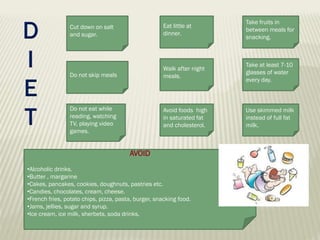
D
I
E
T

Cut down on salt
and sugar.

Eat little at
dinner.

Take fruits in
between meals for
snacking.

Do not skip meals

Walk after night
meals.

Take at least 7-10
glasses of water
every day.

Do not eat while
reading, watching
TV, playing video
games.

Avoid foods high
in saturated fat
and cholesterol.

Use skimmed milk
instead of full fat
milk.

AVOID
•Alcoholic drinks.
•Butter , margarine
•Cakes, pancakes, cookies, doughnuts, pastries etc.
•Candies, chocolates, cream, cheese.
•French fries, potato chips, pizza, pasta, burger, snacking food.
•Jams, jellies, sugar and syrup.
•Ice cream, ice milk, sherbets, soda drinks.
Diets high in carbohydrate and
low in fat results in increased
hepatic lipogenesis and
increased triglycerides.

The main emphasis should be
on a diet which provides
sufficient dietary caloric
restriction while providing
adequate protein to ensure
ideal growth.

Very low energy diets with a
restricted energy intake of
600 to 800 kcal per day with
1.5-2.5g of high quality
protein per kilogram of ideal
body weight , carbohydrates
20-40 g per day and
multivitamins .

High fat diet causes less
satiety than high carbohydrate
diets and such diets may
promote over eating

Refined sugars and diet rich in
fructose should be avoided.
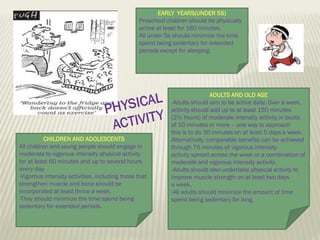
EARLY YEARS(UNDER 5S)
Preschool children should be physically
active at least for 180 minutes.
All under 5s should minimize the time
spend being sedentary for extended
periods except for sleeping.

CHILDREN AND ADOLESCENTS
All children and young people should engage in
moderate to vigorous intensity physical activity
for at least 60 minutes and up to several hours
every day.
-Vigorous intensity activities, including those that
strengthen muscle and bone should be
incorporated at least thrice a week.
-They should minimize the time spend being
sedentary for extended periods.

ADULTS AND OLD AGE
-Adults should aim to be active daily. Over a week,
activity should add up to at least 150 minutes
(2½ hours) of moderate intensity activity in bouts
of 10 minutes or more – one way to approach
this is to do 30 minutes on at least 5 days a week.
Alternatively, comparable benefits can be achieved
through 75 minutes of vigorous intensity
activity spread across the week or a combination of
moderate and vigorous intensity activity.
-Adults should also undertake physical activity to
improve muscle strength on at least two days
a week.
-All adults should minimize the amount of time
spend being sedentary for long.
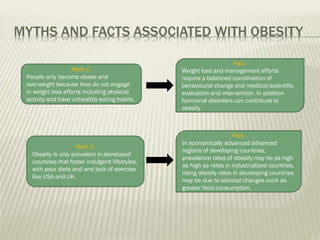
MYTHS AND FACTS ASSOCIATED WITH OBESITY
Myth 1People only become obese and
overweight because they do not engage
in weight loss efforts including physical
activity and have unhealthy eating habits.

Myth 2Obesity is only prevalent in developed
countries that foster indulgent lifestyles,
with poor diets and and lack of exercise
like USA and UK.

FactWeight loss and management efforts
require a balanced combination of
behavioural change and medical/scientific
evaluation and intervention. In addition
hormonal disorders can contribute to
obesity

FactIn economically advanced advanced
regions of developing countries,
prevalence rates of obesity may be as high
as high as rates in industrialized countries.
rising obesity rates in developing countries
may be due to societal changes such as
greater food consumption.
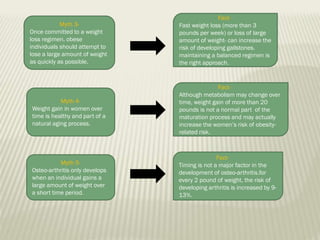
Myth 3Once committed to a weight
loss regimen, obese
individuals should attempt to
lose a large amount of weight
as quickly as possible.

FactFast weight loss (more than 3
pounds per week) or loss of large
amount of weight- can increase the
risk of developing gallstones.
maintaining a balanced regimen is
the right approach.

Myth 4Weight gain in women over
time is healthy and part of a
natural aging process.

FactAlthough metabolism may change over
time, weight gain of more than 20
pounds is not a normal part of the
maturation process and may actually
increase the women’s risk of obesityrelated risk.

Myth 5Osteo-arthritis only develops
when an individual gains a
large amount of weight over
a short time period.

FactTiming is not a major factor in the
development of osteo-arthritis.for
every 2 pound of weight, the risk of
developing arthritis is increased by 913%.
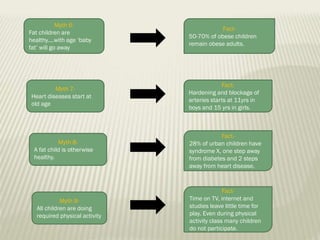
Myth 6Fat children are
healthy....with age ‘baby
fat’ will go away

Fact50-70% of obese children
remain obese adults.

Myth 7Heart diseases start at
old age

FactHardening and blockage of
arteries starts at 11yrs in
boys and 15 yrs in girls.

Myth 8A fat child is otherwise
healthy.

Myth 9All children are doing
required physical activity

Fact28% of urban children have
syndrome X, one step away
from diabetes and 2 steps
away from heart disease.

FactTime on TV, internet and
studies leave little time for
play. Even during physical
activity class many children
do not participate.
Ammonium carbFat patients with weak heart.
Women who are tired and weary and takes cold
easily.
Leads a sedentary lifestyle.
Dry coryza-stoppage of nose-at night-can only
breathe through mouth-danger of suffocation.
Sadness with disposition to weep, timidity,
disgust with life, heedlessness, weakness of
memory, great absence of mind.
Chilly patient < wet stormy weather ; washing
> warmth.

Ammonium muriaticumBody is fat and legs are thin with large buttocks.
Full of grief but cannot weep. Irritability and
disposition to be angry.
Feets get very cold in the evening in bed.
Antium crudumChildren and old people who have a tendency to grow
fat with coated white tongue.
Belching and great eructations of ingesta.bloating
after eating.
Cold and callous excrescenses.
Patient is aggravated from extremes of temperature.

Calcarea carbonicumSweating on the forehead which wets the
pillow while sleeping.
Fair, fat, flabby are the red lined symptom.
Great sensitiveness to cold damp air.
Calotropis giganteaHelps in reducing the obesity, without
reducing the weight i.e. flesh would
decrease but the muscle would become
more firm.
There is great heat in stomach.

CapsicumPerson who are weak of lax fibre.the
digestion is poor and suffer from myalgia.
Have burning pains still doesn’t like cold.
Old people who have exhausted their vitality.
Home-sickness.
>from heat
CarlsbadAction on liver, treatment of obesity and
diabetes.
Self satisfied, very talkative, good humored.
Discouraged and anxious about domestic
duties. Absent minded, heedless, forgets
names.
Sensitive to cold air. sweats more easily.
> Motion and open air.
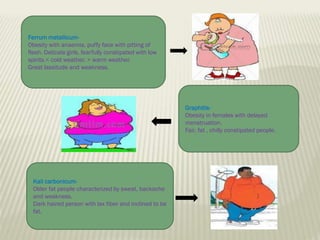
Ferrum metallicumObesity with anaemia, puffy face with pitting of
flesh. Delicate girls, fearfully constipated with low
spirits.< cold weather. > warm weather.
Great lassitude and weakness.

GraphitisObesity in females with delayed
menstruation.
Fair, fat , chilly constipated people.

Kali carbonicumOlder fat people characterized by sweat, backache
and weakness.
Dark haired person with lax fiber and inclined to be
fat.
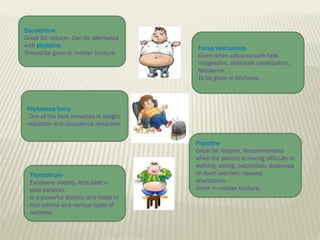
EsculentineGreat fat reducer. Can be alternated
with phytoline.
Should be given in mother tincture.

Fucus vesiculosusGiven when calcarea carb fails.
Indigestion, obstinate constipation,
flatulence.
To be given in tinctures.

Phytolacca berryOne of the best remedies in weight
reduction and corpulence reduction

ThyroidinumExcessive obesity. Acts best in
pale patients.
Is a powerful diuretic and helps in
myx-odema and various types of
oedema.

PhytolineGreat fat reducer. Recommended
when the patient is having difficulty in
walking, sitting, palpitation, dyspnoea
on least exertion, nausea,
eructations.
Given in mother tincture.
COMPILED BYDr Neena Mehan(Head, Deptt. of Medicine)
 Dr Pavneet Kaur (Intern 2013-2014 Dr B R Sur
Homoeopathic Medical College, Hospital and
Research Centre)


Obesity

  • 2.
    Obesity is definedas an abnormal growth of the adipose tissue due to an enlargement of fat cell size(hypertrophic obesity)or an increase in fat cell number(hyperplastic obesity)or a combination of both. Central obesity is defined as waist circumference ≥ 90 cm in males and ≥ 80 cm in females. + Any two of the following -Increased triglycerides ≥ 150 mg/dl (1.70 mmol/L) -reduced HDL cholesterol <40 mg/dl in males and < 50 mg/dl in females. -raised blood pressure systolic bp ≥ 130 mm Hg and diastolic bp ≥ 85mm Hg. -raised fasting plasma glucose ≥ 100 mg/dl. Or treatment for previously diagnosed any of the above condition.
  • 3.
    Classification BMI Risk ofCo-morbidities (kg/m2 ) Underweight <18.5 Low (Risks are increased in other areas) Desirable 18.522.9 Average Overweight 22.929.9 Mildly Increased Obese >30.0 Class 1 Obesity 30.034.9 Moderate Class 11 Obesity 35.039.9 Severe Class 111 (morbid obesity) >40.0 Very severe
  • 4.
    The food environment- there has also been a huge increase in the quantity of quick convenience foods, which tend to be high in saturated fat, salt and sugar. Culture/Individual psychology - it is difficult to break habituated unhealthy eating patterns, especially when common to those around us Obesity is primarily driven by individual decisions, and the way society influences them The physical environment - our lives have become increasingly sedentary. For e.g. last two decades have seen marked reduction in school walking. Human biology genetics plays a part but does not pre-destine us to be obese
  • 5.
    RELATIVE RISK OFHEALTH PROBLEMS ASSOCIATED WITH OBESITY Greatly increased (relative risk >>3) • Diabetes • Gall bladder diseases • Hypertension • Dyslipidemia • Insulin resistance • Sleep apnea • Breathlessness Moderately increased (relative risk 2-3) • Coronary heart disease • Osteoarthritis (knees) • Hyperuricemia and gout Slightly increased (1-2) • Cancer(breast cancer in postmenopausal women, endometrial cancer, colon cancer) • Reproductive hormone abnormalities • Polycystic ovarian syndrome • Infertility • Low back ache • Increased anesthetic risk • Foetal defect arising from maternal obesity.
  • 8.
    DETERMINANTS OF CHILDHOODOBESITY Unhealthy nutritionSpurred by advertisements, social networks, peer pressures, and availability of low cost calorie dense food. Physical inactivityLack of green spaces, steady pressure on children to perform well in academics, gradual erosion of playtime by television and internet. Socio-economic statusIn developing countries childhood obesity is more prevalent in affluent society. Socio-cultural factorsMyths like ‘Fat child is healthy child’, shortened duration of breast-feeding, early introduction of fatty complementary food in diet. SleepShortened sleep duration, obesity and insulin resistance are interrelated. Genetic factorsIs responsible for 30%-50% of childhood obesity and adiposity. Syndromes like prader-willi syndrome, Cohen syndrome, achondroplasia. Obesity in Asian Indians (2003-2005) Variables Urban Rural Mean BMI (kg/m²) 24.8 21.9 BMI >30 kg/m² 13.0 2.0 BMI >23 kg/m² 65.4 31.8 High WC (cm) 38.6 7.7 BMI, Body mass index, WC, Waist circumference Unpublished data based on a study funded by American Association of Physicians of Indian Origin and Texas A &M University, TX, USA, 2003-2005
  • 9.
    HORMONE DISORDERS CAUSINGOBESITY Growth hormone deficiencyAssociated with visceral obesity, and increases in the ratio of fat to lean body mass Cushing’s syndromeStriae, easy bruising, and central fat distribution accompany glucocorticoid excess. HypothyroidismIncreased fatigue, excessively dry skin, constipation, cold intolerance, poor scholastic performance, and short stature.
  • 10.
    NEURO-ENDOCRINOLOGY OF WEIGHT REDUCTION Leptin(is secreted from adipocytes in proportion to adiposity) Acts on hypothalamus to inhibit feeding behaviour, decrease insulin secretion, and increases metabolic rate Adiponectin (is secreted exclusively by adipose tissues) Its levels increases 2 fold before a meal and decreases to trough levels within 1 hr after eating. It is decreased in type 2DM, obesity and metabolic syndrome. Ghrelin-is a hormone secreted by stomach Levels rises with fasted state and decreases with feeding.
  • 11.
    CONSEQUENCES OF OBESITY Increasedadiposity can lead to both immediate and long term complications. Insulin resistance almost always accompanies obesity and is directly proportional to amount of adiposity. Pubertal development- with increase in average body fat, the age of puberty for boys and girls decreases. Lower age of menarche for obese girls. Blount’s disease- in younger children and is characterized by abnormal growth of the medial aspect of proximal tibial epiphysis which causes progressive varus angulations of the leg below the knee and is often bilateral. Gastro-intestinal problems- elevated concentrations of liver enzymes, Fatty liver. Respiratory problems- obese children have lower peak expiratory rates. Even in the nonasthmatics, obese children demonstrate more severe bronchial hyper-reactivity after exercise. Sleep disorders- snoring, and obstructive sleep apnoea syndrome. Impaired glucose tolerance and diabetes mellitus- IGT is defined as fasting glucose more than 100mg/dl or a 2h post-oral glucose load level between 140-200 mg/dl. Hypertension- Mostly attributed to obesity, as obese children and adolescents have higher prevalence rates for hypertension than leaner children Hyperlipidemia- high total serum cholesterol, LDL cholesterol and triglycerides and low HDL Early atherosclerosis-fatty streaks are present in the aorta by the age of 10yrsand in the coronary arteries by age of20yrs. Psychosocial problems- low self esteem, difficulty in peer group relationships. Childhood obesity commonly leads to adult obesity.
  • 14.
    Primary intervention Secondary intervention Moderate calorie restriction.(to achievea 5-10% loss of body weight in 1st yr) Moderate increase in physical activity. Change in dietary composition. Drug therapy is required to treat the metabolic syndrome associated with obesity. There is a definite need for treatment that can modulate the underlying mechanism of metabolic syndrome as a whole and thereby reduce the impact of all the risk factors and the long term metabolic and cardiovascular consequences.
  • 16.
    D I E T Cut down onsalt and sugar. Eat little at dinner. Take fruits in between meals for snacking. Do not skip meals Walk after night meals. Take at least 7-10 glasses of water every day. Do not eat while reading, watching TV, playing video games. Avoid foods high in saturated fat and cholesterol. Use skimmed milk instead of full fat milk. AVOID •Alcoholic drinks. •Butter , margarine •Cakes, pancakes, cookies, doughnuts, pastries etc. •Candies, chocolates, cream, cheese. •French fries, potato chips, pizza, pasta, burger, snacking food. •Jams, jellies, sugar and syrup. •Ice cream, ice milk, sherbets, soda drinks.
  • 17.
    Diets high incarbohydrate and low in fat results in increased hepatic lipogenesis and increased triglycerides. The main emphasis should be on a diet which provides sufficient dietary caloric restriction while providing adequate protein to ensure ideal growth. Very low energy diets with a restricted energy intake of 600 to 800 kcal per day with 1.5-2.5g of high quality protein per kilogram of ideal body weight , carbohydrates 20-40 g per day and multivitamins . High fat diet causes less satiety than high carbohydrate diets and such diets may promote over eating Refined sugars and diet rich in fructose should be avoided.
  • 18.
    EARLY YEARS(UNDER 5S) Preschoolchildren should be physically active at least for 180 minutes. All under 5s should minimize the time spend being sedentary for extended periods except for sleeping. CHILDREN AND ADOLESCENTS All children and young people should engage in moderate to vigorous intensity physical activity for at least 60 minutes and up to several hours every day. -Vigorous intensity activities, including those that strengthen muscle and bone should be incorporated at least thrice a week. -They should minimize the time spend being sedentary for extended periods. ADULTS AND OLD AGE -Adults should aim to be active daily. Over a week, activity should add up to at least 150 minutes (2½ hours) of moderate intensity activity in bouts of 10 minutes or more – one way to approach this is to do 30 minutes on at least 5 days a week. Alternatively, comparable benefits can be achieved through 75 minutes of vigorous intensity activity spread across the week or a combination of moderate and vigorous intensity activity. -Adults should also undertake physical activity to improve muscle strength on at least two days a week. -All adults should minimize the amount of time spend being sedentary for long.
  • 19.
    MYTHS AND FACTSASSOCIATED WITH OBESITY Myth 1People only become obese and overweight because they do not engage in weight loss efforts including physical activity and have unhealthy eating habits. Myth 2Obesity is only prevalent in developed countries that foster indulgent lifestyles, with poor diets and and lack of exercise like USA and UK. FactWeight loss and management efforts require a balanced combination of behavioural change and medical/scientific evaluation and intervention. In addition hormonal disorders can contribute to obesity FactIn economically advanced advanced regions of developing countries, prevalence rates of obesity may be as high as high as rates in industrialized countries. rising obesity rates in developing countries may be due to societal changes such as greater food consumption.
  • 20.
    Myth 3Once committedto a weight loss regimen, obese individuals should attempt to lose a large amount of weight as quickly as possible. FactFast weight loss (more than 3 pounds per week) or loss of large amount of weight- can increase the risk of developing gallstones. maintaining a balanced regimen is the right approach. Myth 4Weight gain in women over time is healthy and part of a natural aging process. FactAlthough metabolism may change over time, weight gain of more than 20 pounds is not a normal part of the maturation process and may actually increase the women’s risk of obesityrelated risk. Myth 5Osteo-arthritis only develops when an individual gains a large amount of weight over a short time period. FactTiming is not a major factor in the development of osteo-arthritis.for every 2 pound of weight, the risk of developing arthritis is increased by 913%.
  • 21.
    Myth 6Fat childrenare healthy....with age ‘baby fat’ will go away Fact50-70% of obese children remain obese adults. Myth 7Heart diseases start at old age FactHardening and blockage of arteries starts at 11yrs in boys and 15 yrs in girls. Myth 8A fat child is otherwise healthy. Myth 9All children are doing required physical activity Fact28% of urban children have syndrome X, one step away from diabetes and 2 steps away from heart disease. FactTime on TV, internet and studies leave little time for play. Even during physical activity class many children do not participate.
  • 22.
    Ammonium carbFat patientswith weak heart. Women who are tired and weary and takes cold easily. Leads a sedentary lifestyle. Dry coryza-stoppage of nose-at night-can only breathe through mouth-danger of suffocation. Sadness with disposition to weep, timidity, disgust with life, heedlessness, weakness of memory, great absence of mind. Chilly patient < wet stormy weather ; washing > warmth. Ammonium muriaticumBody is fat and legs are thin with large buttocks. Full of grief but cannot weep. Irritability and disposition to be angry. Feets get very cold in the evening in bed.
  • 23.
    Antium crudumChildren andold people who have a tendency to grow fat with coated white tongue. Belching and great eructations of ingesta.bloating after eating. Cold and callous excrescenses. Patient is aggravated from extremes of temperature. Calcarea carbonicumSweating on the forehead which wets the pillow while sleeping. Fair, fat, flabby are the red lined symptom. Great sensitiveness to cold damp air.
  • 24.
    Calotropis giganteaHelps inreducing the obesity, without reducing the weight i.e. flesh would decrease but the muscle would become more firm. There is great heat in stomach. CapsicumPerson who are weak of lax fibre.the digestion is poor and suffer from myalgia. Have burning pains still doesn’t like cold. Old people who have exhausted their vitality. Home-sickness. >from heat CarlsbadAction on liver, treatment of obesity and diabetes. Self satisfied, very talkative, good humored. Discouraged and anxious about domestic duties. Absent minded, heedless, forgets names. Sensitive to cold air. sweats more easily. > Motion and open air.
  • 25.
    Ferrum metallicumObesity withanaemia, puffy face with pitting of flesh. Delicate girls, fearfully constipated with low spirits.< cold weather. > warm weather. Great lassitude and weakness. GraphitisObesity in females with delayed menstruation. Fair, fat , chilly constipated people. Kali carbonicumOlder fat people characterized by sweat, backache and weakness. Dark haired person with lax fiber and inclined to be fat.
  • 26.
    EsculentineGreat fat reducer.Can be alternated with phytoline. Should be given in mother tincture. Fucus vesiculosusGiven when calcarea carb fails. Indigestion, obstinate constipation, flatulence. To be given in tinctures. Phytolacca berryOne of the best remedies in weight reduction and corpulence reduction ThyroidinumExcessive obesity. Acts best in pale patients. Is a powerful diuretic and helps in myx-odema and various types of oedema. PhytolineGreat fat reducer. Recommended when the patient is having difficulty in walking, sitting, palpitation, dyspnoea on least exertion, nausea, eructations. Given in mother tincture.
  • 27.
    COMPILED BYDr NeenaMehan(Head, Deptt. of Medicine)  Dr Pavneet Kaur (Intern 2013-2014 Dr B R Sur Homoeopathic Medical College, Hospital and Research Centre) 