INTRODUCTION TO
ORGANIZATIONAL
BEHAVIOR
Definitions of Organizational Behavior
 “Organizational behaviour is a field of study that investigates the impact that
individuals, groups and structure have on behaviour within the
organisations for the purpose of applying such knowledge toward improving
an organization’s effectiveness.”—Stephens P. Robbins
 “Organizational behavior is directly concerned with the understanding,
prediction, and control of human behavior in organizations.”
— Fred Luthans.
2
Dr. M. Jothilakshmi, VVVCollege, Virudhunagar
Meaning of Organizational Behaviour (OB)
 Organizational behavior is the study of both group and individual
performance and activity within an organization.
 This area of study examines human behavior in a work environment and
determines its impact on job structure, performance, communication,
motivation, leadership, etc.
 It is the systematic study and application of knowledge about how individuals
and groups act within the organizations where they work.
3
Dr. M. Jothilakshmi, VVVCollege, Virudhunagar
Features/ Nature of Organizational Behaviour (OB)
 A Separate Field of Study and not a Discipline Only.
 An Interdisciplinary Approach.
 An Applied Science.
 A Normative Science.
 A Humanistic and Optimistic Approach.
 A Total System Approach.
4
Dr. M. Jothilakshmi, VVVCollege, Virudhunagar
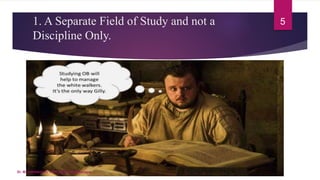
1. A Separate Field of Study and not a
Discipline Only.
5
Dr. M. Jothilakshmi, VVVCollege, Virudhunagar
2. An Interdisciplinary Approach
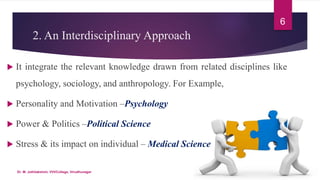
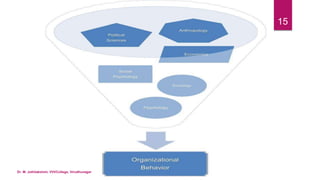
 It integrate the relevant knowledge drawn from related disciplines like
psychology, sociology, and anthropology. For Example,
 Personality and Motivation –Psychology
 Power & Politics –Political Science
 Stress & its impact on individual – Medical Science
6
Dr. M. Jothilakshmi, VVVCollege, Virudhunagar
3. An Applied Science
OB is an Application of various research to solve the
organizational problems related to human behavior.
7
Dr. M. Jothilakshmi, VVVCollege, Virudhunagar
4. A Normative Science.
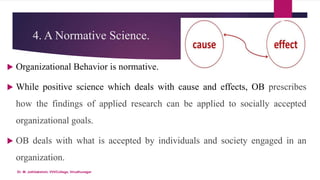
 Organizational Behavior is normative.
 While positive science which deals with cause and effects, OB prescribes
how the findings of applied research can be applied to socially accepted
organizational goals.
 OB deals with what is accepted by individuals and society engaged in an
organization.
8
Dr. M. Jothilakshmi, VVVCollege, Virudhunagar
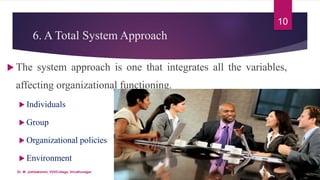
5. A Humanistic and Optimistic Approach
 Humanistic Perspective: OB deals with the thinking and feeling of human
beings which is based on the belief that people have an innate desire to be
independent, creative and productive.
 Optimistic Perspective: OB realizes, in the organizations, people can and
will actualize their potentials, if they are given proper conditions and
environment.
9
Dr. M. Jothilakshmi, VVVCollege, Virudhunagar
6. A Total System Approach
 The system approach is one that integrates all the variables,
affecting organizational functioning.
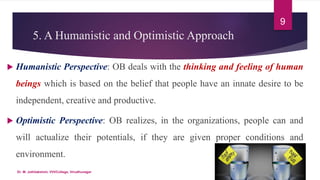
 Individuals
 Group
 Organizational policies
 Environment
10
Dr. M. Jothilakshmi, VVVCollege, Virudhunagar
Objectives of Organizational Behaviour (OB)
 Job Satisfaction
 Finding the Right People
 Organizational Culture
 Leadership and Conflict Resolution
 Understanding the Employees Better
 Understand how to Develop Good Leaders
 Develop a Good Team
 Higher Productivity
11
Dr. M. Jothilakshmi, VVVCollege, Virudhunagar
12
13
Dr. M. Jothilakshmi, VVVCollege, Virudhunagar
14
Dr. M. Jothilakshmi, VVVCollege, Virudhunagar
15
Dr. M. Jothilakshmi, VVVCollege, Virudhunagar
Challenges & Opportunities of
Organizational Behaviour (OB)
 Improving Peoples’ Skills.
 Improving Quality and
Productivity.
 Total Quality Management
(TQM).
 Managing Workforce Diversity.
 Responding to Globalization.
 Empowering People.
 Coping with Temporariness.
 Stimulating Innovation and Change.
 Emergence of E-Organisation & E-
Commerce.
 Improving Ethical Behavior.
 Improving Customer Service.
 Helping Employees Balance Work-Life
Conflicts.
16
Dr. M. Jothilakshmi, VVVCollege, Virudhunagar
17
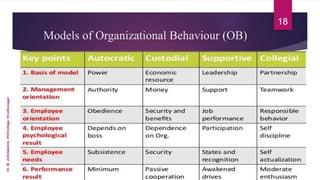
Models of Organizational Behaviour (OB)
18
Dr.M.Jothilakshmi,VVVCollege,Virudhunagar
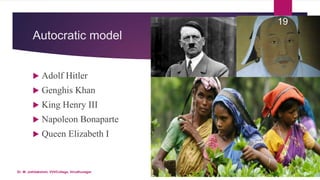
Autocratic model
 Adolf Hitler
 Genghis Khan
 King Henry III
 Napoleon Bonaparte
 Queen Elizabeth I
19
Dr. M. Jothilakshmi, VVVCollege, Virudhunagar
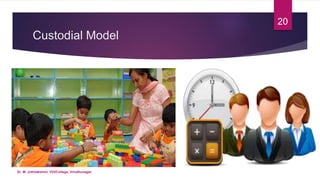
Custodial Model
20
Dr. M. Jothilakshmi, VVVCollege, Virudhunagar
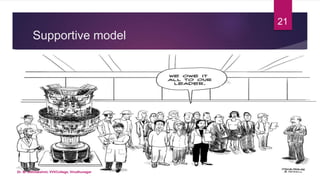
Supportive model
21
Dr. M. Jothilakshmi, VVVCollege, Virudhunagar
22
Dr. M. Jothilakshmi, VVVCollege, Virudhunagar

OB introduction

  • 1.
  • 2.
    Definitions of OrganizationalBehavior  “Organizational behaviour is a field of study that investigates the impact that individuals, groups and structure have on behaviour within the organisations for the purpose of applying such knowledge toward improving an organization’s effectiveness.”—Stephens P. Robbins  “Organizational behavior is directly concerned with the understanding, prediction, and control of human behavior in organizations.” — Fred Luthans. 2 Dr. M. Jothilakshmi, VVVCollege, Virudhunagar
  • 3.
    Meaning of OrganizationalBehaviour (OB)  Organizational behavior is the study of both group and individual performance and activity within an organization.  This area of study examines human behavior in a work environment and determines its impact on job structure, performance, communication, motivation, leadership, etc.  It is the systematic study and application of knowledge about how individuals and groups act within the organizations where they work. 3 Dr. M. Jothilakshmi, VVVCollege, Virudhunagar
  • 4.
    Features/ Nature ofOrganizational Behaviour (OB)  A Separate Field of Study and not a Discipline Only.  An Interdisciplinary Approach.  An Applied Science.  A Normative Science.  A Humanistic and Optimistic Approach.  A Total System Approach. 4 Dr. M. Jothilakshmi, VVVCollege, Virudhunagar
  • 5.
    1. A SeparateField of Study and not a Discipline Only. 5 Dr. M. Jothilakshmi, VVVCollege, Virudhunagar
  • 6.
    2. An InterdisciplinaryApproach  It integrate the relevant knowledge drawn from related disciplines like psychology, sociology, and anthropology. For Example,  Personality and Motivation –Psychology  Power & Politics –Political Science  Stress & its impact on individual – Medical Science 6 Dr. M. Jothilakshmi, VVVCollege, Virudhunagar
  • 7.
    3. An AppliedScience OB is an Application of various research to solve the organizational problems related to human behavior. 7 Dr. M. Jothilakshmi, VVVCollege, Virudhunagar
  • 8.
    4. A NormativeScience.  Organizational Behavior is normative.  While positive science which deals with cause and effects, OB prescribes how the findings of applied research can be applied to socially accepted organizational goals.  OB deals with what is accepted by individuals and society engaged in an organization. 8 Dr. M. Jothilakshmi, VVVCollege, Virudhunagar
  • 9.
    5. A Humanisticand Optimistic Approach  Humanistic Perspective: OB deals with the thinking and feeling of human beings which is based on the belief that people have an innate desire to be independent, creative and productive.  Optimistic Perspective: OB realizes, in the organizations, people can and will actualize their potentials, if they are given proper conditions and environment. 9 Dr. M. Jothilakshmi, VVVCollege, Virudhunagar
  • 10.
    6. A TotalSystem Approach  The system approach is one that integrates all the variables, affecting organizational functioning.  Individuals  Group  Organizational policies  Environment 10 Dr. M. Jothilakshmi, VVVCollege, Virudhunagar
  • 11.
    Objectives of OrganizationalBehaviour (OB)  Job Satisfaction  Finding the Right People  Organizational Culture  Leadership and Conflict Resolution  Understanding the Employees Better  Understand how to Develop Good Leaders  Develop a Good Team  Higher Productivity 11 Dr. M. Jothilakshmi, VVVCollege, Virudhunagar
  • 12.
  • 13.
    13 Dr. M. Jothilakshmi,VVVCollege, Virudhunagar
  • 14.
    14 Dr. M. Jothilakshmi,VVVCollege, Virudhunagar
  • 15.
    15 Dr. M. Jothilakshmi,VVVCollege, Virudhunagar
  • 16.
    Challenges & Opportunitiesof Organizational Behaviour (OB)  Improving Peoples’ Skills.  Improving Quality and Productivity.  Total Quality Management (TQM).  Managing Workforce Diversity.  Responding to Globalization.  Empowering People.  Coping with Temporariness.  Stimulating Innovation and Change.  Emergence of E-Organisation & E- Commerce.  Improving Ethical Behavior.  Improving Customer Service.  Helping Employees Balance Work-Life Conflicts. 16 Dr. M. Jothilakshmi, VVVCollege, Virudhunagar
  • 17.
  • 18.
    Models of OrganizationalBehaviour (OB) 18 Dr.M.Jothilakshmi,VVVCollege,Virudhunagar
  • 19.
    Autocratic model  AdolfHitler  Genghis Khan  King Henry III  Napoleon Bonaparte  Queen Elizabeth I 19 Dr. M. Jothilakshmi, VVVCollege, Virudhunagar
  • 20.
    Custodial Model 20 Dr. M.Jothilakshmi, VVVCollege, Virudhunagar
  • 21.
    Supportive model 21 Dr. M.Jothilakshmi, VVVCollege, Virudhunagar
  • 22.
    22 Dr. M. Jothilakshmi,VVVCollege, Virudhunagar