NUTRITION IN AGED
BCH 815 – FOOD BIOCHEMISTRY
PRESENTED BY : OLASUPO ABISOLA O.
DEPARTMENT OF BIOCHEMISTY
COVENANT UNIVERSITY, NIGERIA
INTRODUCTION
 NUTRITION can be defined as the intake of food
considered in relation to the body’s dietary needs.
 OLD AGE is best defined as age of retirement that is
60 years and above.
 Nutrition for old age is known as Geriatric Nutrition.
 Aging brings physiological, psychological and
immunological changes which influences their nutritional
status.
GOOD NUTRITION = BALANCED DIET + REGULAR PHYSICAL ACTIVITIES
Geriatrics: the branch of the medicine
dealing with health problems of the
elderly i.e. delaying the onset of
severely degenerating aspects of aging
and treating the disease of the aged.
Gerontology: Broad area of science
concerned with all the psychological,
social, economic, physiological and
medical problem of elderly.
INTRODUCTION
CHANGES ASSOCIATED WITH AGEING
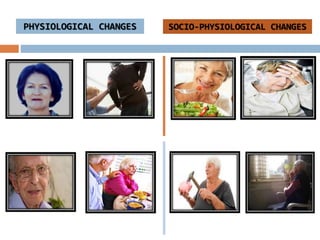
SOCIO-PHYSIOLOGICAL CHANGES
 Loss of Teeth
 Decreased Neuromuscular co-
ordination
 Impaired hearing and failing
vision
 Diminished sense of taste and
smell
 Anorexia
 Physical discomfort
 Change in cardiovascular system
 Change in renal functions
 Change in respiratory functions
 Change in skeletal tissues
PHYSIOLOGICAL CHANGES
 Food Habit
 Economic aspects
 Loneliness
 Depression
 Anxiety
 Lack of nutritional
knowledge
 Loss of self- esteem
 Loss of independence
SOCIO-PHYSIOLOGICAL CHANGESPHYSIOLOGICAL CHANGES
NUTRITIONAL REQUIREMENTS FOR AGED/ELDERLY
 CARBOHYDRATES
 PROTEINS
 LIPIDS
 MINERALS
 VITAMINS
 WATER (FLUID)
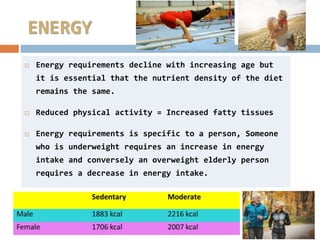
 Energy requirements decline with increasing age but
it is essential that the nutrient density of the diet
remains the same.
 Reduced physical activity = Increased fatty tissues
 Energy requirements is specific to a person, Someone
who is underweight requires an increase in energy
intake and conversely an overweight elderly person
requires a decrease in energy intake.
ENERGY
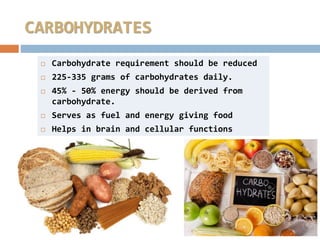
 Carbohydrate requirement should be reduced
 225-335 grams of carbohydrates daily.
 45% - 50% energy should be derived from
carbohydrate.
 Serves as fuel and energy giving food
 Helps in brain and cellular functions
CARBOHYDRATES
PROTEIN
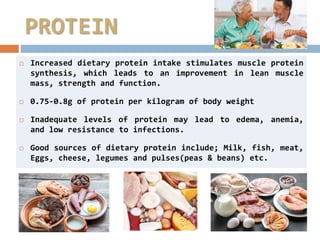
 Increased dietary protein intake stimulates muscle protein
synthesis, which leads to an improvement in lean muscle
mass, strength and function.
 0.75-0.8g of protein per kilogram of body weight
 Inadequate levels of protein may lead to edema, anemia,
and low resistance to infections.
 Good sources of dietary protein include; Milk, fish, meat,
Eggs, cheese, legumes and pulses(peas & beans) etc.
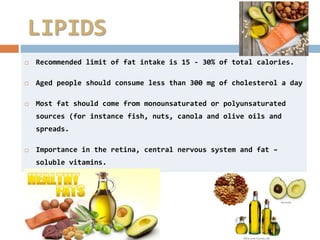
 Recommended limit of fat intake is 15 - 30% of total calories.
 Aged people should consume less than 300 mg of cholesterol a day
 Most fat should come from monounsaturated or polyunsaturated
sources (for instance fish, nuts, canola and olive oils and
spreads.
 Importance in the retina, central nervous system and fat –
soluble vitamins.
LIPIDS
MINERALS
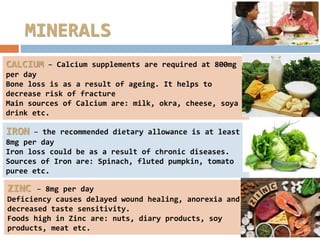
CALCIUM – Calcium supplements are required at 800mg
per day
Bone loss is as a result of ageing. It helps to
decrease risk of fracture
Main sources of Calcium are: milk, okra, cheese, soya
drink etc.
IRON – the recommended dietary allowance is at least
8mg per day
Iron loss could be as a result of chronic diseases.
Sources of Iron are: Spinach, fluted pumpkin, tomato
puree etc.
ZINC – 8mg per day
Deficiency causes delayed wound healing, anorexia and
decreased taste sensitivity.
Foods high in Zinc are: nuts, diary products, soy
products, meat etc.
VITAMINS
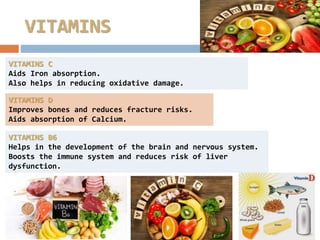
VITAMINS C
Aids Iron absorption.
Also helps in reducing oxidative damage.
VITAMINS D
Improves bones and reduces fracture risks.
Aids absorption of Calcium.
VITAMINS B6
Helps in the development of the brain and nervous system.
Boosts the immune system and reduces risk of liver
dysfunction.
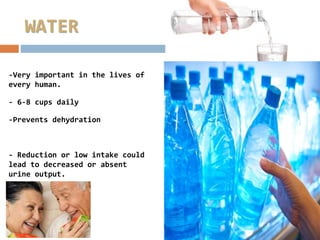
WATER
-Very important in the lives of
every human.
- 6-8 cups daily
-Prevents dehydration
- Reduction or low intake could
lead to decreased or absent
urine output.
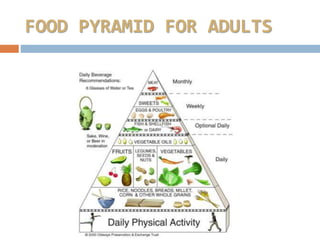
FOOD PYRAMID FOR ADULTS
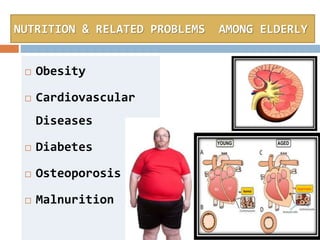
NUTRITION & RELATED PROBLEMS AMONG ELDERLY
 Obesity
 Cardiovascular
Diseases
 Diabetes
 Osteoporosis
 Malnurition
Nutrition in aged  olasupo

Nutrition in aged olasupo

  • 1.
    NUTRITION IN AGED BCH815 – FOOD BIOCHEMISTRY PRESENTED BY : OLASUPO ABISOLA O. DEPARTMENT OF BIOCHEMISTY COVENANT UNIVERSITY, NIGERIA
  • 2.
    INTRODUCTION  NUTRITION canbe defined as the intake of food considered in relation to the body’s dietary needs.  OLD AGE is best defined as age of retirement that is 60 years and above.  Nutrition for old age is known as Geriatric Nutrition.  Aging brings physiological, psychological and immunological changes which influences their nutritional status. GOOD NUTRITION = BALANCED DIET + REGULAR PHYSICAL ACTIVITIES
  • 3.
    Geriatrics: the branchof the medicine dealing with health problems of the elderly i.e. delaying the onset of severely degenerating aspects of aging and treating the disease of the aged. Gerontology: Broad area of science concerned with all the psychological, social, economic, physiological and medical problem of elderly. INTRODUCTION
  • 4.
    CHANGES ASSOCIATED WITHAGEING SOCIO-PHYSIOLOGICAL CHANGES  Loss of Teeth  Decreased Neuromuscular co- ordination  Impaired hearing and failing vision  Diminished sense of taste and smell  Anorexia  Physical discomfort  Change in cardiovascular system  Change in renal functions  Change in respiratory functions  Change in skeletal tissues PHYSIOLOGICAL CHANGES  Food Habit  Economic aspects  Loneliness  Depression  Anxiety  Lack of nutritional knowledge  Loss of self- esteem  Loss of independence
  • 5.
  • 6.
    NUTRITIONAL REQUIREMENTS FORAGED/ELDERLY  CARBOHYDRATES  PROTEINS  LIPIDS  MINERALS  VITAMINS  WATER (FLUID)
  • 7.
     Energy requirementsdecline with increasing age but it is essential that the nutrient density of the diet remains the same.  Reduced physical activity = Increased fatty tissues  Energy requirements is specific to a person, Someone who is underweight requires an increase in energy intake and conversely an overweight elderly person requires a decrease in energy intake. ENERGY
  • 8.
     Carbohydrate requirementshould be reduced  225-335 grams of carbohydrates daily.  45% - 50% energy should be derived from carbohydrate.  Serves as fuel and energy giving food  Helps in brain and cellular functions CARBOHYDRATES
  • 9.
    PROTEIN  Increased dietaryprotein intake stimulates muscle protein synthesis, which leads to an improvement in lean muscle mass, strength and function.  0.75-0.8g of protein per kilogram of body weight  Inadequate levels of protein may lead to edema, anemia, and low resistance to infections.  Good sources of dietary protein include; Milk, fish, meat, Eggs, cheese, legumes and pulses(peas & beans) etc.
  • 10.
     Recommended limitof fat intake is 15 - 30% of total calories.  Aged people should consume less than 300 mg of cholesterol a day  Most fat should come from monounsaturated or polyunsaturated sources (for instance fish, nuts, canola and olive oils and spreads.  Importance in the retina, central nervous system and fat – soluble vitamins. LIPIDS
  • 11.
    MINERALS CALCIUM – Calciumsupplements are required at 800mg per day Bone loss is as a result of ageing. It helps to decrease risk of fracture Main sources of Calcium are: milk, okra, cheese, soya drink etc. IRON – the recommended dietary allowance is at least 8mg per day Iron loss could be as a result of chronic diseases. Sources of Iron are: Spinach, fluted pumpkin, tomato puree etc. ZINC – 8mg per day Deficiency causes delayed wound healing, anorexia and decreased taste sensitivity. Foods high in Zinc are: nuts, diary products, soy products, meat etc.
  • 12.
    VITAMINS VITAMINS C Aids Ironabsorption. Also helps in reducing oxidative damage. VITAMINS D Improves bones and reduces fracture risks. Aids absorption of Calcium. VITAMINS B6 Helps in the development of the brain and nervous system. Boosts the immune system and reduces risk of liver dysfunction.
  • 13.
    WATER -Very important inthe lives of every human. - 6-8 cups daily -Prevents dehydration - Reduction or low intake could lead to decreased or absent urine output.
  • 14.
  • 15.
    NUTRITION & RELATEDPROBLEMS AMONG ELDERLY  Obesity  Cardiovascular Diseases  Diabetes  Osteoporosis  Malnurition