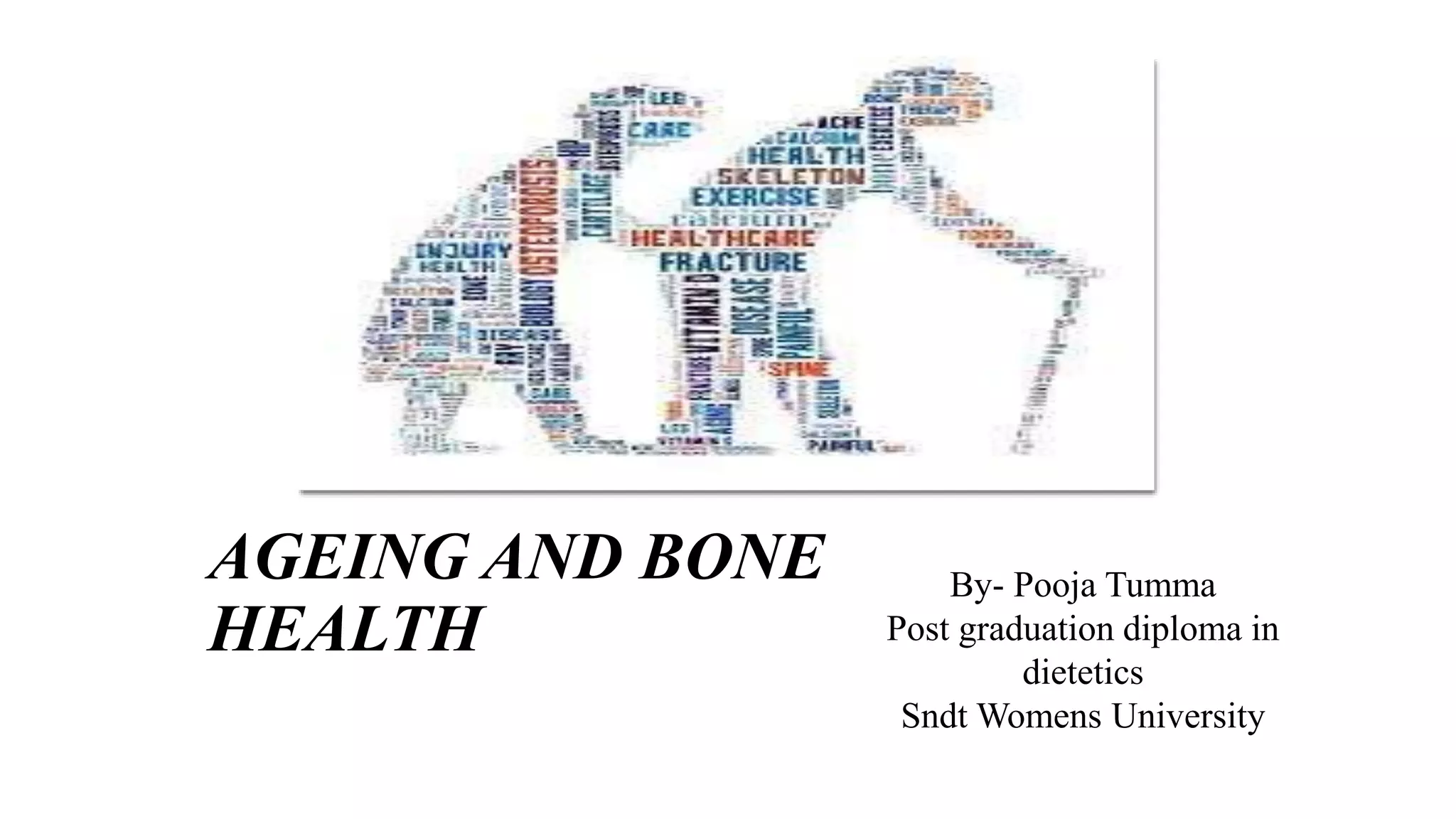
AGEING AND BONE
HEALTH
By- Pooja Tumma
Post graduation diploma in
dietetics
Sndt Womens University
Aging is the progressive accumulation of changes with time that are associated
with or responsible for the ever-increasing susceptibility to disease and death
which accompanies advancing age.
What is Aging
Physiological changes
Body mass and composition
• Decrease in lean body mass
• Increase in body fat
• Alteration in bone density
Physical activity
• Reduction in TEE
• Lead to reduce energy requirement
• Develop a variety of degenerative and chronic disease
• Loss of muscle tone and mass
Etiology of Weight Loss
• Wasting
• Cachexia
• Sarcopenia
• Causes of involuntary of weight loss are depression, cancer, cardiac disorders,
benign gastrointestinal diseases
Age-associated changes in the Gastrointestinal System
• Altered smell & taste
• Impaired appetite
• Decrease in food intake
• Improperly fitting dentures may change eating pattern
Age-associated changes in the Renal and Genitourinary
Systems
• Renal function declines
• Decrease in kidney mass
• Decrease in blood flow
• Decrease in Glomerular rate.
Endocrine system
• progressive deterioration in the number and the function of insulin producing
beta cells with age
• Development of progressive peripheral insulin resistance
• There is peripheral insulin resistance due to increased size of adipocytes with a
relative decrease in insulin receptors.
• The combination of abnormal beta cell function with peripheral insulin
resistance leads to increased glucose intolerance in normal aged persons.
Age-associated changes in the Nervous System and
Cognition
• Increase risk of cognitive decline affects independence of quality of life
• Affects synaptic plasticity
• Decrease in the ability to prepare food, forgetting to eat & inability to asses food
• Vitamin deficiencies are associated with cognitive impairment
• Nutritional intervention impacts on vascular disease prevention
• Supplementation with omega-3 fatty acid consumption of cruciferous vegetables
are associated with stroke prevention
• Antioxidants are known to reduce oxidative stress & cognitive impairment
Age-associated changes in the Immune System
• Increased susceptibility to infection
• Reduced efficiency of vaccination
• Chronic inflammatory state
• Reduced life expectancy
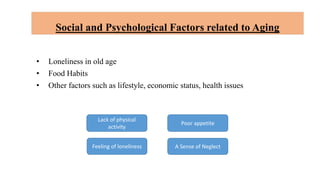
Social and Psychological Factors related to Aging
• Loneliness in old age
• Food Habits
• Other factors such as lifestyle, economic status, health issues
Lack of physical
activity
Poor appetite
A Sense of NeglectFeeling of loneliness
NUTRITION
REQUIREMENT
FOR ELDERLY
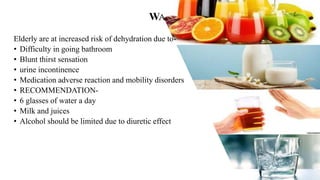
WATER
Elderly are at increased risk of dehydration due to-
• Difficulty in going bathroom
• Blunt thirst sensation
• urine incontinence
• Medication adverse reaction and mobility disorders
• RECOMMENDATION-
• 6 glasses of water a day
• Milk and juices
• Alcohol should be limited due to diuretic effect
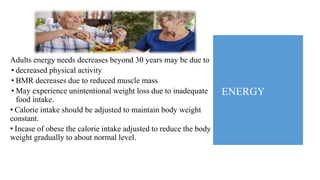
ENERGY
Adults energy needs decreases beyond 30 years may be due to
• decreased physical activity
• BMR decreases due to reduced muscle mass
• May experience unintentional weight loss due to inadequate
food intake.
• Calorie intake should be adjusted to maintain body weight
constant.
• Incase of obese the calorie intake adjusted to reduce the body
weight gradually to about normal level.
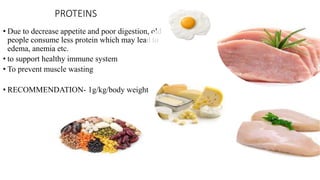
PROTEINS
• Due to decrease appetite and poor digestion, old
people consume less protein which may lead to
edema, anemia etc.
• to support healthy immune system
• To prevent muscle wasting
• RECOMMENDATION- 1g/kg/body weight
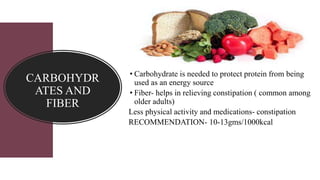
CARBOHYDR
ATES AND
FIBER
• Carbohydrate is needed to protect protein from being
used as an energy source
• Fiber- helps in relieving constipation ( common among
older adults)
Less physical activity and medications- constipation
RECOMMENDATION- 10-13gms/1000kcal
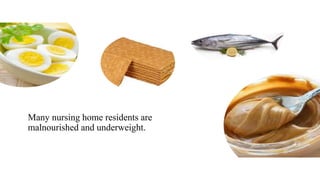
Many nursing home residents are
malnourished and underweight.
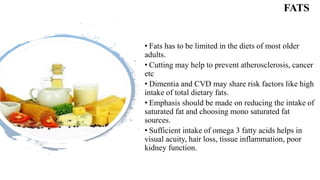
FATS
• Fats has to be limited in the diets of most older
adults.
• Cutting may help to prevent atherosclerosis, cancer
etc
• Dimentia and CVD may share risk factors like high
intake of total dietary fats.
• Emphasis should be made on reducing the intake of
saturated fat and choosing mono saturated fat
sources.
• Sufficient intake of omega 3 fatty acids helps in
visual acuity, hair loss, tissue inflammation, poor
kidney function.
VITAMINS AND
MINERALS
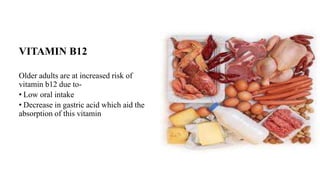
VITAMIN B12
Older adults are at increased risk of
vitamin b12 due to-
• Low oral intake
• Decrease in gastric acid which aid the
absorption of this vitamin
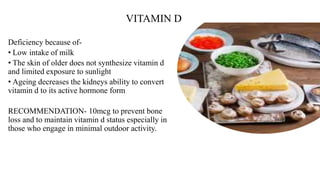
VITAMIN D
Deficiency because of-
• Low intake of milk
• The skin of older does not synthesize vitamin d
and limited exposure to sunlight
• Ageing decreases the kidneys ability to convert
vitamin d to its active hormone form
RECOMMENDATION- 10mcg to prevent bone
loss and to maintain vitamin d status especially in
those who engage in minimal outdoor activity.
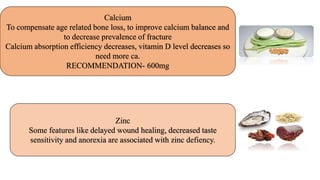
Calcium
To compensate age related bone loss, to improve calcium balance and
to decrease prevalence of fracture
Calcium absorption efficiency decreases, vitamin D level decreases so
need more ca.
RECOMMENDATION- 600mg
Zinc
Some features like delayed wound healing, decreased taste
sensitivity and anorexia are associated with zinc defiency.
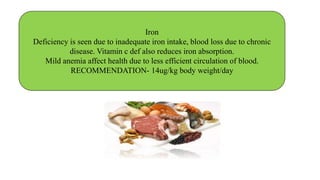
Iron
Deficiency is seen due to inadequate iron intake, blood loss due to chronic
disease. Vitamin c def also reduces iron absorption.
Mild anemia affect health due to less efficient circulation of blood.
RECOMMENDATION- 14ug/kg body weight/day
NUTRIENT
RELATED DISORDERS
AMONG ELDERLY
ARTHRITIS
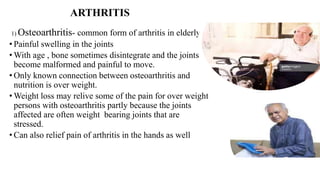
1) Osteoarthritis- common form of arthritis in elderly
• Painful swelling in the joints
• With age , bone sometimes disintegrate and the joints
become malformed and painful to move.
• Only known connection between osteoarthritis and
nutrition is over weight.
• Weight loss may relive some of the pain for over weight
persons with osteoarthritis partly because the joints
affected are often weight bearing joints that are
stressed.
• Can also relief pain of arthritis in the hands as well
2) Rheumatoid arthritis- another type of arthritis
• Has a possible link to diet through the immune system
• In this the immune system mistakenly attacks the bone coverings
• It is also possible that certain foods may stimulate the immune system to
attack. For e.g. milk and milk products seems to aggrevate rheumatoid
arthritis in some people.
• Nutrition is linked with rheumatoid arthritis- EPA and DHA, omega 3
fatty acids found in fish oil.
• The diet low in saturated fats and high in oils helps to reduce
inflammation in the arthritis.
• Another link is the oxidative damage to the membranes within joints that
cause inflammation and swelling
• Vitamin E prevents oxidation but not inflammation
Treatment- medications and surgery.
Two popular supplements- glucosamine and chondroitin
CATARACTS AND
MUSCULAR DEGENERATION
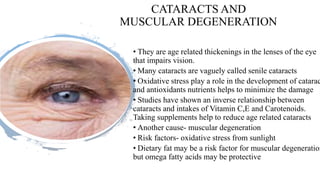
• They are age related thickenings in the lenses of the eye
that impairs vision.
• Many cataracts are vaguely called senile cataracts
• Oxidative stress play a role in the development of catarac
and antioxidants nutrients helps to minimize the damage
• Studies have shown an inverse relationship between
cataracts and intakes of Vitamin C,E and Carotenoids.
Taking supplements help to reduce age related cataracts
• Another cause- muscular degeneration
• Risk factors- oxidative stress from sunlight
• Dietary fat may be a risk factor for muscular degeneration
but omega fatty acids may be protective
Alzheimer's Disease
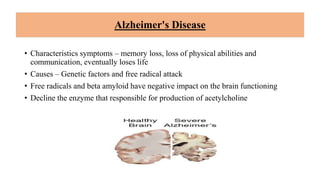
• Characteristics symptoms – memory loss, loss of physical abilities and
communication, eventually loses life
• Causes – Genetic factors and free radical attack
• Free radicals and beta amyloid have negative impact on the brain functioning
• Decline the enzyme that responsible for production of acetylcholine
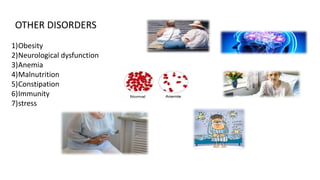
OTHER DISORDERS
1)Obesity
2)Neurological dysfunction
3)Anemia
4)Malnutrition
5)Constipation
6)Immunity
7)stress
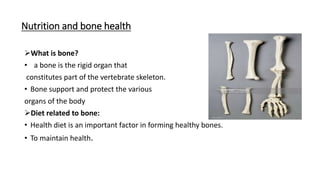
Nutrition and bone health
What is bone?
• a bone is the rigid organ that
constitutes part of the vertebrate skeleton.
• Bone support and protect the various
organs of the body
Diet related to bone:
• Health diet is an important factor in forming healthy bones.
• To maintain health.
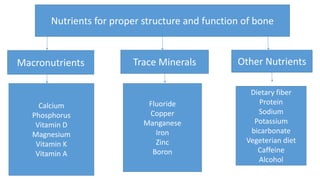
Nutrients for proper structure and function of bone
Macronutrients Trace Minerals Other Nutrients
Calcium
Phosphorus
Vitamin D
Magnesium
Vitamin K
Vitamin A
Fluoride
Copper
Manganese
Iron
Zinc
Boron
Dietary fiber
Protein
Sodium
Potassium
bicarbonate
Vegeterian diet
Caffeine
Alcohol
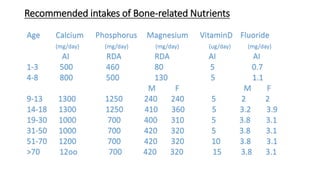
Recommended intakes of Bone-related Nutrients
Age Calcium Phosphorus Magnesium VitaminD Fluoride
(mg/day) (mg/day) (mg/day) (ug/day) (mg/day)
AI RDA RDA AI AI
1-3 500 460 80 5 0.7
4-8 800 500 130 5 1.1
M F M F
9-13 1300 1250 240 240 5 2 2
14-18 1300 1250 410 360 5 3.2 3.9
19-30 1000 700 400 310 5 3.8 3.1
31-50 1000 700 420 320 5 3.8 3.1
51-70 1200 700 420 320 10 3.8 3.1
>70 12oo 700 420 320 15 3.8 3.1
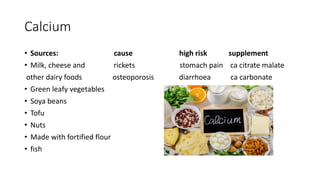
Calcium
• Sources: cause high risk supplement
• Milk, cheese and rickets stomach pain ca citrate malate
other dairy foods osteoporosis diarrhoea ca carbonate
• Green leafy vegetables
• Soya beans
• Tofu
• Nuts
• Made with fortified flour
• fish
Phosphorus
• Sources
• Red meat, dairy foods, fish, poultry, bread, brown rice, oats
• High risk:
• Short term use-diarrhea or stomach pain
• Long term use-reduce the amount of Ca can lead to bone fracture
• Per day- 250mg or less supplement
Vitamin D
• Sources:
• Sunlight, oily fish, red meat, liver, egg yolks, fortified food
• Health risk:
• Hyperthyroidism and increased bone marrow, osteoporosis, osteomalacia
• High risk:
• Hypercalcemia
• Per day-10mcg vitamin supplements
Magnesium
• 50% of Ca found in bone tissue
• Sources:
• Green leafy vegetables, nuts, brown rice, whole grains, fish, meat, dairy food
• Health risk:
• fracture
• Per day use-400mg or less supplement
• Function:
• Ca homeostasis, bone health, reduction of fracture.
Vitamin K:
Helps in Formation of osteocalcin (osteoblast)
Improve intestinal ca absorption
• Sources:
• Green leafy vegetables, vegetable oils, cereal grains, meat and dairy food.
• 1mg or less vitamin k suuplements /day is unlikely to cause any harm.
Vitamin A
• Helps in bone growth and maintainance
• Sources:
• Cheese, eggs, oily fish, fortified low fat spreads, milk and yoghurts, liver and liver
products.
Need:
Man- 0.7mg/day
Female-0.6mg/day
High risk:
>1.5mg/day – affect your bone ( hip fracture)
Normal use-Average of 1.5mg/day or less
Fluoride:
it enters the hydroxyapatite crystals of bone increases the hardness of bone mineral
without any adverse effect,
• Copper:
• Needed for cross linking of collagen and elastin molecules
• Sources:
• Tea, bread, nuts, cereals, green vegetables
• Iron:
• It has role in osteoblast and osteoclasts
• Zinc:
• Collagen synthesis (osteoblasts) , alkaline phosphatase
• Sources:
• Wheat gram, meat, shell fish, cheese
• Boron:
utilized by osteoblast for bone formation.
• Dietary fiber:
• Helps in ca absorption
• High risk- >50g – depression in intestinal ca a absorption.
• Protein:
• 1g/ body weight
• Health risk- ca retention
• Low level of serum albumin effects serum ca
• Health risk: <0.8g/kg body weight/ day)- hip fractures
• Sodium:
• Potassium bicarbonate:
• Improves cs balance and bone
• Decrease bone resorption and increase bone formation
• Vegeterian diet:
• Health risk- osteoporotic fractures
• Caffeine:
• Older women- intestinal ca balance
• Alcohol:
• Bone loss
• Adverse effect on skeleton
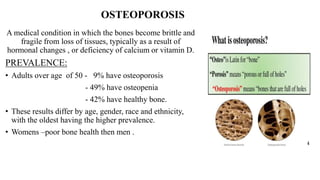
OSTEOPOROSIS
A medical condition in which the bones become brittle and
fragile from loss of tissues, typically as a result of
hormonal changes , or deficiency of calcium or vitamin D.
PREVALENCE:
• Adults over age of 50 - 9% have osteoporosis
- 49% have osteopenia
- 42% have healthy bone.
• These results differ by age, gender, race and ethnicity,
with the oldest having the higher prevalence.
• Womens –poor bone health then men .
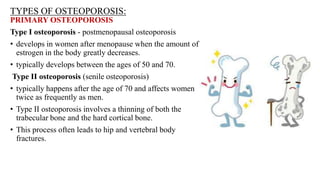
TYPES OF OSTEOPOROSIS:
PRIMARY OSTEOPOROSIS
Type I osteoporosis - postmenopausal osteoporosis
• develops in women after menopause when the amount of
estrogen in the body greatly decreases.
• typically develops between the ages of 50 and 70.
Type II osteoporosis (senile osteoporosis)
• typically happens after the age of 70 and affects women
twice as frequently as men.
• Type II osteoporosis involves a thinning of both the
trabecular bone and the hard cortical bone.
• This process often leads to hip and vertebral body
fractures.
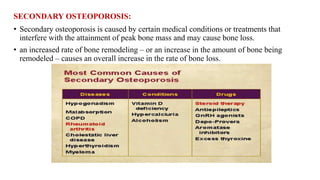
SECONDARY OSTEOPOROSIS:
• Secondary osteoporosis is caused by certain medical conditions or treatments that
interfere with the attainment of peak bone mass and may cause bone loss.
• an increased rate of bone remodeling – or an increase in the amount of bone being
remodeled – causes an overall increase in the rate of bone loss.
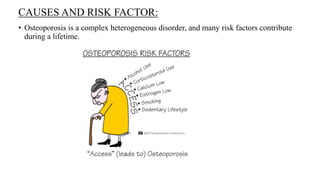
CAUSES AND RISK FACTOR:
• Osteoporosis is a complex heterogeneous disorder, and many risk factors contribute
during a lifetime.
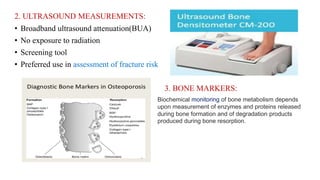
2. ULTRASOUND MEASUREMENTS:
• Broadband ultrasound attenuation(BUA)
• No exposure to radiation
• Screening tool
• Preferred use in assessment of fracture risk
3. BONE MARKERS:
Biochemical monitoring of bone metabolism depends
upon measurement of enzymes and proteins released
during bone formation and of degradation products
produced during bone resorption.
DIAGNOSIS AND MONITORING:
• Physical examination
• Bone densitometry ( measurement of bone density)
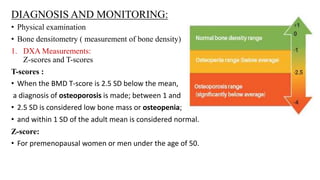
1. DXA Measurements:
Z-scores and T-scores
T-scores :
• When the BMD T-score is 2.5 SD below the mean,
a diagnosis of osteoporosis is made; between 1 and
• 2.5 SD is considered low bone mass or osteopenia;
• and within 1 SD of the adult mean is considered normal.
Z-score:
• For premenopausal women or men under the age of 50.
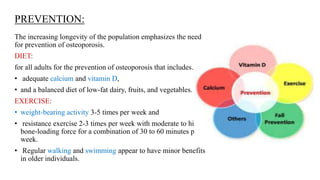
PREVENTION:
The increasing longevity of the population emphasizes the need
for prevention of osteoporosis.
DIET:
for all adults for the prevention of osteoporosis that includes…..
• adequate calcium and vitamin D,
• and a balanced diet of low-fat dairy, fruits, and vegetables.
EXERCISE:
• weight-bearing activity 3-5 times per week and
• resistance exercise 2-3 times per week with moderate to high
bone-loading force for a combination of 30 to 60 minutes per
week.
• Regular walking and swimming appear to have minor benefits
in older individuals.
FDAAPPROVED DRUG:
Estrogen agonist/antagonist agents: Raloxifene and tamoxiphen
Bisphosphonates: alendronate sodium, risedronate sodium, and zoledronic acid and
Estrogen replacement therapy (ERT) are all approved for the prevention of
osteoporosis.
TREATMENT:
• Nutritional treatment:
Calcium (1000 mg/day) and vitamin D (800 to 1000 units/day) typically are recommended as
supplements for patients being treated with one of the bone drugs, either antiresorptive or
anabolic.
• Exercise:
exercises that exert strong force against potentially weak bone are not recommended, such as sit
ups or twisting.
Exercises should focus on posture, balance, gait, coordination, and hip and trunk stabilization.
• FDAApproved drugs treatment:
• medications that are approved for prevention are also approved for treatment of osteoporosis,
with the exception of ERT. In addition, calcitonin, the hormone
is used to inhibit osteoclastic bone resorption.
• Drug treatments not yet approved by FDA:
These include calcitiol, sodium fluoride, and strontium ranelate.
 Witney, Rolfes: Understanding Normal and Clinical Nutrition, sixth edition
 Kumud Khanna: Textbook of Nutrition and Dietetics, second edition
 Srilaksmi : Dietetics, seventh edition
 Sue Rosewell Williams, Essentials of Nutrition and Diet Therapy, fifth edition
 Shilpa Amarya, Changes during aging and their association with malnutrition,
published on 12 August 2015.

Aging and bone health [autosaved]

  • 1.
    AGEING AND BONE HEALTH By-Pooja Tumma Post graduation diploma in dietetics Sndt Womens University
  • 2.
    Aging is theprogressive accumulation of changes with time that are associated with or responsible for the ever-increasing susceptibility to disease and death which accompanies advancing age. What is Aging
  • 3.
    Physiological changes Body massand composition • Decrease in lean body mass • Increase in body fat • Alteration in bone density Physical activity • Reduction in TEE • Lead to reduce energy requirement • Develop a variety of degenerative and chronic disease • Loss of muscle tone and mass
  • 4.
    Etiology of WeightLoss • Wasting • Cachexia • Sarcopenia • Causes of involuntary of weight loss are depression, cancer, cardiac disorders, benign gastrointestinal diseases
  • 5.
    Age-associated changes inthe Gastrointestinal System • Altered smell & taste • Impaired appetite • Decrease in food intake • Improperly fitting dentures may change eating pattern
  • 6.
    Age-associated changes inthe Renal and Genitourinary Systems • Renal function declines • Decrease in kidney mass • Decrease in blood flow • Decrease in Glomerular rate.
  • 7.
    Endocrine system • progressivedeterioration in the number and the function of insulin producing beta cells with age • Development of progressive peripheral insulin resistance • There is peripheral insulin resistance due to increased size of adipocytes with a relative decrease in insulin receptors. • The combination of abnormal beta cell function with peripheral insulin resistance leads to increased glucose intolerance in normal aged persons.
  • 8.
    Age-associated changes inthe Nervous System and Cognition • Increase risk of cognitive decline affects independence of quality of life • Affects synaptic plasticity • Decrease in the ability to prepare food, forgetting to eat & inability to asses food • Vitamin deficiencies are associated with cognitive impairment • Nutritional intervention impacts on vascular disease prevention • Supplementation with omega-3 fatty acid consumption of cruciferous vegetables are associated with stroke prevention • Antioxidants are known to reduce oxidative stress & cognitive impairment
  • 9.
    Age-associated changes inthe Immune System • Increased susceptibility to infection • Reduced efficiency of vaccination • Chronic inflammatory state • Reduced life expectancy
  • 10.
    Social and PsychologicalFactors related to Aging • Loneliness in old age • Food Habits • Other factors such as lifestyle, economic status, health issues Lack of physical activity Poor appetite A Sense of NeglectFeeling of loneliness
  • 11.
  • 12.
    WATER Elderly are atincreased risk of dehydration due to- • Difficulty in going bathroom • Blunt thirst sensation • urine incontinence • Medication adverse reaction and mobility disorders • RECOMMENDATION- • 6 glasses of water a day • Milk and juices • Alcohol should be limited due to diuretic effect
  • 13.
    ENERGY Adults energy needsdecreases beyond 30 years may be due to • decreased physical activity • BMR decreases due to reduced muscle mass • May experience unintentional weight loss due to inadequate food intake. • Calorie intake should be adjusted to maintain body weight constant. • Incase of obese the calorie intake adjusted to reduce the body weight gradually to about normal level.
  • 14.
    PROTEINS • Due todecrease appetite and poor digestion, old people consume less protein which may lead to edema, anemia etc. • to support healthy immune system • To prevent muscle wasting • RECOMMENDATION- 1g/kg/body weight
  • 15.
    CARBOHYDR ATES AND FIBER • Carbohydrateis needed to protect protein from being used as an energy source • Fiber- helps in relieving constipation ( common among older adults) Less physical activity and medications- constipation RECOMMENDATION- 10-13gms/1000kcal
  • 16.
    Many nursing homeresidents are malnourished and underweight.
  • 17.
    FATS • Fats hasto be limited in the diets of most older adults. • Cutting may help to prevent atherosclerosis, cancer etc • Dimentia and CVD may share risk factors like high intake of total dietary fats. • Emphasis should be made on reducing the intake of saturated fat and choosing mono saturated fat sources. • Sufficient intake of omega 3 fatty acids helps in visual acuity, hair loss, tissue inflammation, poor kidney function.
  • 18.
  • 19.
    VITAMIN B12 Older adultsare at increased risk of vitamin b12 due to- • Low oral intake • Decrease in gastric acid which aid the absorption of this vitamin
  • 20.
    VITAMIN D Deficiency becauseof- • Low intake of milk • The skin of older does not synthesize vitamin d and limited exposure to sunlight • Ageing decreases the kidneys ability to convert vitamin d to its active hormone form RECOMMENDATION- 10mcg to prevent bone loss and to maintain vitamin d status especially in those who engage in minimal outdoor activity.
  • 21.
    Calcium To compensate agerelated bone loss, to improve calcium balance and to decrease prevalence of fracture Calcium absorption efficiency decreases, vitamin D level decreases so need more ca. RECOMMENDATION- 600mg Zinc Some features like delayed wound healing, decreased taste sensitivity and anorexia are associated with zinc defiency.
  • 22.
    Iron Deficiency is seendue to inadequate iron intake, blood loss due to chronic disease. Vitamin c def also reduces iron absorption. Mild anemia affect health due to less efficient circulation of blood. RECOMMENDATION- 14ug/kg body weight/day
  • 23.
  • 24.
    ARTHRITIS 1) Osteoarthritis- commonform of arthritis in elderly • Painful swelling in the joints • With age , bone sometimes disintegrate and the joints become malformed and painful to move. • Only known connection between osteoarthritis and nutrition is over weight. • Weight loss may relive some of the pain for over weight persons with osteoarthritis partly because the joints affected are often weight bearing joints that are stressed. • Can also relief pain of arthritis in the hands as well
  • 25.
    2) Rheumatoid arthritis-another type of arthritis • Has a possible link to diet through the immune system • In this the immune system mistakenly attacks the bone coverings • It is also possible that certain foods may stimulate the immune system to attack. For e.g. milk and milk products seems to aggrevate rheumatoid arthritis in some people. • Nutrition is linked with rheumatoid arthritis- EPA and DHA, omega 3 fatty acids found in fish oil. • The diet low in saturated fats and high in oils helps to reduce inflammation in the arthritis.
  • 26.
    • Another linkis the oxidative damage to the membranes within joints that cause inflammation and swelling • Vitamin E prevents oxidation but not inflammation Treatment- medications and surgery. Two popular supplements- glucosamine and chondroitin
  • 27.
    CATARACTS AND MUSCULAR DEGENERATION •They are age related thickenings in the lenses of the eye that impairs vision. • Many cataracts are vaguely called senile cataracts • Oxidative stress play a role in the development of catarac and antioxidants nutrients helps to minimize the damage • Studies have shown an inverse relationship between cataracts and intakes of Vitamin C,E and Carotenoids. Taking supplements help to reduce age related cataracts • Another cause- muscular degeneration • Risk factors- oxidative stress from sunlight • Dietary fat may be a risk factor for muscular degeneration but omega fatty acids may be protective
  • 28.
    Alzheimer's Disease • Characteristicssymptoms – memory loss, loss of physical abilities and communication, eventually loses life • Causes – Genetic factors and free radical attack • Free radicals and beta amyloid have negative impact on the brain functioning • Decline the enzyme that responsible for production of acetylcholine
  • 29.
  • 30.
    Nutrition and bonehealth What is bone? • a bone is the rigid organ that constitutes part of the vertebrate skeleton. • Bone support and protect the various organs of the body Diet related to bone: • Health diet is an important factor in forming healthy bones. • To maintain health.
  • 31.
    Nutrients for properstructure and function of bone Macronutrients Trace Minerals Other Nutrients Calcium Phosphorus Vitamin D Magnesium Vitamin K Vitamin A Fluoride Copper Manganese Iron Zinc Boron Dietary fiber Protein Sodium Potassium bicarbonate Vegeterian diet Caffeine Alcohol
  • 32.
    Recommended intakes ofBone-related Nutrients Age Calcium Phosphorus Magnesium VitaminD Fluoride (mg/day) (mg/day) (mg/day) (ug/day) (mg/day) AI RDA RDA AI AI 1-3 500 460 80 5 0.7 4-8 800 500 130 5 1.1 M F M F 9-13 1300 1250 240 240 5 2 2 14-18 1300 1250 410 360 5 3.2 3.9 19-30 1000 700 400 310 5 3.8 3.1 31-50 1000 700 420 320 5 3.8 3.1 51-70 1200 700 420 320 10 3.8 3.1 >70 12oo 700 420 320 15 3.8 3.1
  • 33.
    Calcium • Sources: causehigh risk supplement • Milk, cheese and rickets stomach pain ca citrate malate other dairy foods osteoporosis diarrhoea ca carbonate • Green leafy vegetables • Soya beans • Tofu • Nuts • Made with fortified flour • fish
  • 34.
    Phosphorus • Sources • Redmeat, dairy foods, fish, poultry, bread, brown rice, oats • High risk: • Short term use-diarrhea or stomach pain • Long term use-reduce the amount of Ca can lead to bone fracture • Per day- 250mg or less supplement Vitamin D • Sources: • Sunlight, oily fish, red meat, liver, egg yolks, fortified food • Health risk: • Hyperthyroidism and increased bone marrow, osteoporosis, osteomalacia • High risk: • Hypercalcemia • Per day-10mcg vitamin supplements
  • 35.
    Magnesium • 50% ofCa found in bone tissue • Sources: • Green leafy vegetables, nuts, brown rice, whole grains, fish, meat, dairy food • Health risk: • fracture • Per day use-400mg or less supplement • Function: • Ca homeostasis, bone health, reduction of fracture. Vitamin K: Helps in Formation of osteocalcin (osteoblast) Improve intestinal ca absorption • Sources: • Green leafy vegetables, vegetable oils, cereal grains, meat and dairy food. • 1mg or less vitamin k suuplements /day is unlikely to cause any harm.
  • 36.
    Vitamin A • Helpsin bone growth and maintainance • Sources: • Cheese, eggs, oily fish, fortified low fat spreads, milk and yoghurts, liver and liver products. Need: Man- 0.7mg/day Female-0.6mg/day High risk: >1.5mg/day – affect your bone ( hip fracture) Normal use-Average of 1.5mg/day or less
  • 37.
    Fluoride: it enters thehydroxyapatite crystals of bone increases the hardness of bone mineral without any adverse effect, • Copper: • Needed for cross linking of collagen and elastin molecules • Sources: • Tea, bread, nuts, cereals, green vegetables • Iron: • It has role in osteoblast and osteoclasts • Zinc: • Collagen synthesis (osteoblasts) , alkaline phosphatase • Sources: • Wheat gram, meat, shell fish, cheese
  • 38.
    • Boron: utilized byosteoblast for bone formation. • Dietary fiber: • Helps in ca absorption • High risk- >50g – depression in intestinal ca a absorption. • Protein: • 1g/ body weight • Health risk- ca retention • Low level of serum albumin effects serum ca • Health risk: <0.8g/kg body weight/ day)- hip fractures
  • 39.
    • Sodium: • Potassiumbicarbonate: • Improves cs balance and bone • Decrease bone resorption and increase bone formation • Vegeterian diet: • Health risk- osteoporotic fractures • Caffeine: • Older women- intestinal ca balance • Alcohol: • Bone loss • Adverse effect on skeleton
  • 40.
    OSTEOPOROSIS A medical conditionin which the bones become brittle and fragile from loss of tissues, typically as a result of hormonal changes , or deficiency of calcium or vitamin D. PREVALENCE: • Adults over age of 50 - 9% have osteoporosis - 49% have osteopenia - 42% have healthy bone. • These results differ by age, gender, race and ethnicity, with the oldest having the higher prevalence. • Womens –poor bone health then men .
  • 41.
    TYPES OF OSTEOPOROSIS: PRIMARYOSTEOPOROSIS Type I osteoporosis - postmenopausal osteoporosis • develops in women after menopause when the amount of estrogen in the body greatly decreases. • typically develops between the ages of 50 and 70. Type II osteoporosis (senile osteoporosis) • typically happens after the age of 70 and affects women twice as frequently as men. • Type II osteoporosis involves a thinning of both the trabecular bone and the hard cortical bone. • This process often leads to hip and vertebral body fractures.
  • 42.
    SECONDARY OSTEOPOROSIS: • Secondaryosteoporosis is caused by certain medical conditions or treatments that interfere with the attainment of peak bone mass and may cause bone loss. • an increased rate of bone remodeling – or an increase in the amount of bone being remodeled – causes an overall increase in the rate of bone loss.
  • 43.
    CAUSES AND RISKFACTOR: • Osteoporosis is a complex heterogeneous disorder, and many risk factors contribute during a lifetime.
  • 44.
    2. ULTRASOUND MEASUREMENTS: •Broadband ultrasound attenuation(BUA) • No exposure to radiation • Screening tool • Preferred use in assessment of fracture risk 3. BONE MARKERS: Biochemical monitoring of bone metabolism depends upon measurement of enzymes and proteins released during bone formation and of degradation products produced during bone resorption.
  • 45.
    DIAGNOSIS AND MONITORING: •Physical examination • Bone densitometry ( measurement of bone density) 1. DXA Measurements: Z-scores and T-scores T-scores : • When the BMD T-score is 2.5 SD below the mean, a diagnosis of osteoporosis is made; between 1 and • 2.5 SD is considered low bone mass or osteopenia; • and within 1 SD of the adult mean is considered normal. Z-score: • For premenopausal women or men under the age of 50.
  • 46.
    PREVENTION: The increasing longevityof the population emphasizes the need for prevention of osteoporosis. DIET: for all adults for the prevention of osteoporosis that includes….. • adequate calcium and vitamin D, • and a balanced diet of low-fat dairy, fruits, and vegetables. EXERCISE: • weight-bearing activity 3-5 times per week and • resistance exercise 2-3 times per week with moderate to high bone-loading force for a combination of 30 to 60 minutes per week. • Regular walking and swimming appear to have minor benefits in older individuals.
  • 47.
    FDAAPPROVED DRUG: Estrogen agonist/antagonistagents: Raloxifene and tamoxiphen Bisphosphonates: alendronate sodium, risedronate sodium, and zoledronic acid and Estrogen replacement therapy (ERT) are all approved for the prevention of osteoporosis.
  • 48.
    TREATMENT: • Nutritional treatment: Calcium(1000 mg/day) and vitamin D (800 to 1000 units/day) typically are recommended as supplements for patients being treated with one of the bone drugs, either antiresorptive or anabolic. • Exercise: exercises that exert strong force against potentially weak bone are not recommended, such as sit ups or twisting. Exercises should focus on posture, balance, gait, coordination, and hip and trunk stabilization. • FDAApproved drugs treatment: • medications that are approved for prevention are also approved for treatment of osteoporosis, with the exception of ERT. In addition, calcitonin, the hormone is used to inhibit osteoclastic bone resorption. • Drug treatments not yet approved by FDA: These include calcitiol, sodium fluoride, and strontium ranelate.
  • 49.
     Witney, Rolfes:Understanding Normal and Clinical Nutrition, sixth edition  Kumud Khanna: Textbook of Nutrition and Dietetics, second edition  Srilaksmi : Dietetics, seventh edition  Sue Rosewell Williams, Essentials of Nutrition and Diet Therapy, fifth edition  Shilpa Amarya, Changes during aging and their association with malnutrition, published on 12 August 2015.