Sports Nutrition
What you should be eating for better performance.
Health Benefits
General
 Weight control
 Increased lean body mass
 Decreased risk of Cardiovascular Disease,
Stroke, Metabolic Syndrome, etc.

Sports Specific
 Increase in athletic performance
 Decrease in recovery time
The major things to focus on…
Fat
Protein
Carbohydrates
Hydration
Fat
 Compound that is insoluble in water (oils and animal fat)
 Ex-lard, butter, whale blubber, beef fat.
 Sometimes tastes good but can be terrible for you!
 Causes: heart disease, type 2 diabetes, musculoskeletal
disorders, cancer, and impotence.
 Good news!!! Obesity and being overweight is mostly
preventable!
Protein
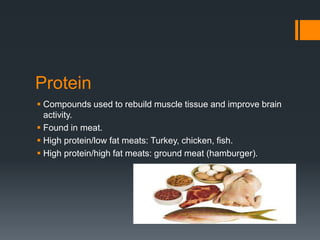
 Compounds used to rebuild muscle tissue and improve brain
activity.
 Found in meat.
 High protein/low fat meats: Turkey, chicken, fish.
 High protein/high fat meats: ground meat (hamburger).
Carbohydrates
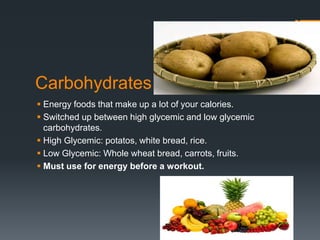
 Energy foods that make up a lot of your calories.
 Switched up between high glycemic and low glycemic
carbohydrates.
 High Glycemic: potatos, white bread, rice.
 Low Glycemic: Whole wheat bread, carrots, fruits.
 Must use for energy before a workout.
Two types of activity:
 Aerobic
 How muscles use oxygen for long workouts at a slower pace (4
lap run).
 Low intensity activity
 Done for longer periods of time
 Oxygen consumption meets demands of muscle activation.

 Anaerobic
 How muscles use no oxygen for short bursts (sprints,
weightlifting).
 Triggers lactic acid build up (the burn!!!!)
 2 seconds to 2 minutes in duration
 Promotes strength, speed, and power to build muscle mass.
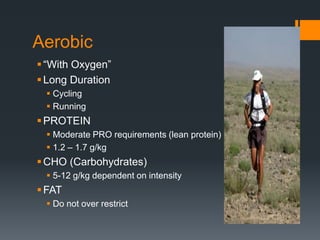
Aerobic
 “With Oxygen”
 Long Duration
 Cycling
 Running

 PROTEIN
 Moderate PRO requirements (lean protein)
 1.2 – 1.7 g/kg

 CHO (Carbohydrates)
 5-12 g/kg dependent on intensity

 FAT
 Do not over restrict
Aerobic
 Pre
 45g CHO 30-60 min prior
 Limit fat, low-glycemic CHO (Whole wheat bread, oatmeal, pasta,
sweet potato, chocolate)
 During
 30g CHO/hr
 High-glycemic CHOs (white bread, rice, potatoes, corn,
bananas peaches,)
 Post
 4:1 ratio of CHO to PRO within 30 minutes
 Meal 2 hours after
 http://yourhealthybody.jillianmichaels.com/high-glycemiccarbohydrates-2594.html
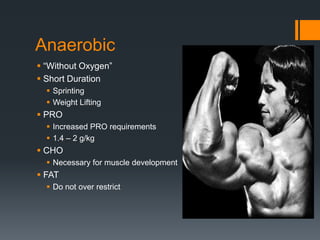
Anaerobic
 “Without Oxygen”
 Short Duration
 Sprinting
 Weight Lifting

 PRO
 Increased PRO requirements
 1.4 – 2 g/kg

 CHO
 Necessary for muscle development

 FAT
 Do not over restrict
Anaerobic
 Before you exercise!
 Full meal 3 - 4 hours before
 Snack 30 minutes before

 During
 5 to 10 oz water or sports drink per 15-20 minutes

 Post
 Snack within 30 minutes
 4:1 CHO to PRO
 1 – 1.5g/kg CHO

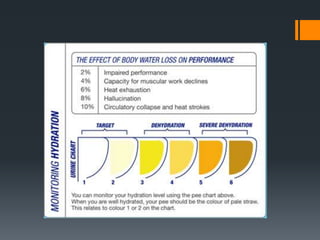
 Hydrate for losses
Hydration
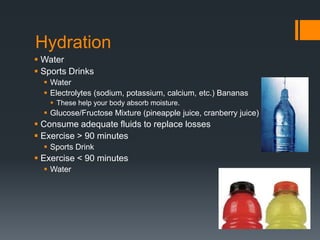
 Water
 Sports Drinks
 Water
 Electrolytes (sodium, potassium, calcium, etc.) Bananas
 These help your body absorb moisture.

 Glucose/Fructose Mixture (pineapple juice, cranberry juice)

 Consume adequate fluids to replace losses
 Exercise > 90 minutes
 Sports Drink

 Exercise < 90 minutes
 Water
Common Supplements
 Vitamins
 No Calories = No Energy!
 Energy Drinks
 5 hour energy – No Caffeine / Low CHO
 Monster / Red Bull

"The amounts of guarana, taurine, and ginseng found in popular energy drinks are far below the amounts
expected to deliver either therapeutic benefits or adverse events".
Journal of American Pharmacists Association 2008
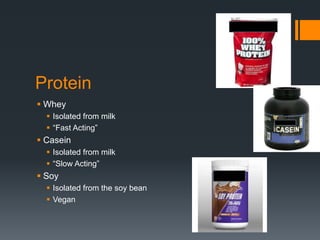
Protein
 Whey
 Isolated from milk
 “Fast Acting”

 Casein
 Isolated from milk
 “Slow Acting”

 Soy
 Isolated from the soy bean
 Vegan

Exercise sports nutrition

  • 1.
    Sports Nutrition What youshould be eating for better performance.
  • 2.
    Health Benefits General  Weightcontrol  Increased lean body mass  Decreased risk of Cardiovascular Disease, Stroke, Metabolic Syndrome, etc. Sports Specific  Increase in athletic performance  Decrease in recovery time
  • 3.
    The major thingsto focus on… Fat Protein Carbohydrates Hydration
  • 4.
    Fat  Compound thatis insoluble in water (oils and animal fat)  Ex-lard, butter, whale blubber, beef fat.  Sometimes tastes good but can be terrible for you!  Causes: heart disease, type 2 diabetes, musculoskeletal disorders, cancer, and impotence.  Good news!!! Obesity and being overweight is mostly preventable!
  • 5.
    Protein  Compounds usedto rebuild muscle tissue and improve brain activity.  Found in meat.  High protein/low fat meats: Turkey, chicken, fish.  High protein/high fat meats: ground meat (hamburger).
  • 6.
    Carbohydrates  Energy foodsthat make up a lot of your calories.  Switched up between high glycemic and low glycemic carbohydrates.  High Glycemic: potatos, white bread, rice.  Low Glycemic: Whole wheat bread, carrots, fruits.  Must use for energy before a workout.
  • 7.
    Two types ofactivity:  Aerobic  How muscles use oxygen for long workouts at a slower pace (4 lap run).  Low intensity activity  Done for longer periods of time  Oxygen consumption meets demands of muscle activation.  Anaerobic  How muscles use no oxygen for short bursts (sprints, weightlifting).  Triggers lactic acid build up (the burn!!!!)  2 seconds to 2 minutes in duration  Promotes strength, speed, and power to build muscle mass.
  • 8.
    Aerobic  “With Oxygen” Long Duration  Cycling  Running  PROTEIN  Moderate PRO requirements (lean protein)  1.2 – 1.7 g/kg  CHO (Carbohydrates)  5-12 g/kg dependent on intensity  FAT  Do not over restrict
  • 9.
    Aerobic  Pre  45gCHO 30-60 min prior  Limit fat, low-glycemic CHO (Whole wheat bread, oatmeal, pasta, sweet potato, chocolate)  During  30g CHO/hr  High-glycemic CHOs (white bread, rice, potatoes, corn, bananas peaches,)  Post  4:1 ratio of CHO to PRO within 30 minutes  Meal 2 hours after  http://yourhealthybody.jillianmichaels.com/high-glycemiccarbohydrates-2594.html
  • 10.
    Anaerobic  “Without Oxygen” Short Duration  Sprinting  Weight Lifting  PRO  Increased PRO requirements  1.4 – 2 g/kg  CHO  Necessary for muscle development  FAT  Do not over restrict
  • 11.
    Anaerobic  Before youexercise!  Full meal 3 - 4 hours before  Snack 30 minutes before  During  5 to 10 oz water or sports drink per 15-20 minutes  Post  Snack within 30 minutes  4:1 CHO to PRO  1 – 1.5g/kg CHO  Hydrate for losses
  • 12.
    Hydration  Water  SportsDrinks  Water  Electrolytes (sodium, potassium, calcium, etc.) Bananas  These help your body absorb moisture.  Glucose/Fructose Mixture (pineapple juice, cranberry juice)  Consume adequate fluids to replace losses  Exercise > 90 minutes  Sports Drink  Exercise < 90 minutes  Water
  • 14.
    Common Supplements  Vitamins No Calories = No Energy!  Energy Drinks  5 hour energy – No Caffeine / Low CHO  Monster / Red Bull "The amounts of guarana, taurine, and ginseng found in popular energy drinks are far below the amounts expected to deliver either therapeutic benefits or adverse events". Journal of American Pharmacists Association 2008
  • 15.
    Protein  Whey  Isolatedfrom milk  “Fast Acting”  Casein  Isolated from milk  “Slow Acting”  Soy  Isolated from the soy bean  Vegan

Editor's Notes

  • #11 According to the Harvard Medical School, on average, caloric burn ranges from 90 calories per hour of moderate training by a 125-pound person to up to 266 calories per hour of vigorous effort by a 185-pound person.1.4 – 1.7g/kg per ADA1.5 – 2.0g/kg per NSCA national strength and conditioning associationThere is a modest increase in needs most literature shows that you increase your efficiency rather than increase needInsulin induced growth factorYou want to limit fat around the time of exercise but need it in normal diet
  • #12 High in complex carbohydrates Limit Fat/Fiber beforeMix of complex and simple carbohydrateHigh CHO snack 30 minutes before
  • #13 You can over consume water! Water toxicity, hypohydration, hyponatremia
  • #16 Shown to increase protein synthesisCurrent research: Antioxidant properties: GlutathioneMilk Proteins may reduce risk of cancer