How to train your agent to
play Blackjack
Lee Chuk Munn
chukmunnlee@nus.edu.sg
Slides athttps://bit.ly/agent2018
What is this talk about?
An introduction to key ideas in reinforcement learning
Conceptual, fairly high level
Intuition about the maths behind RL
Demos
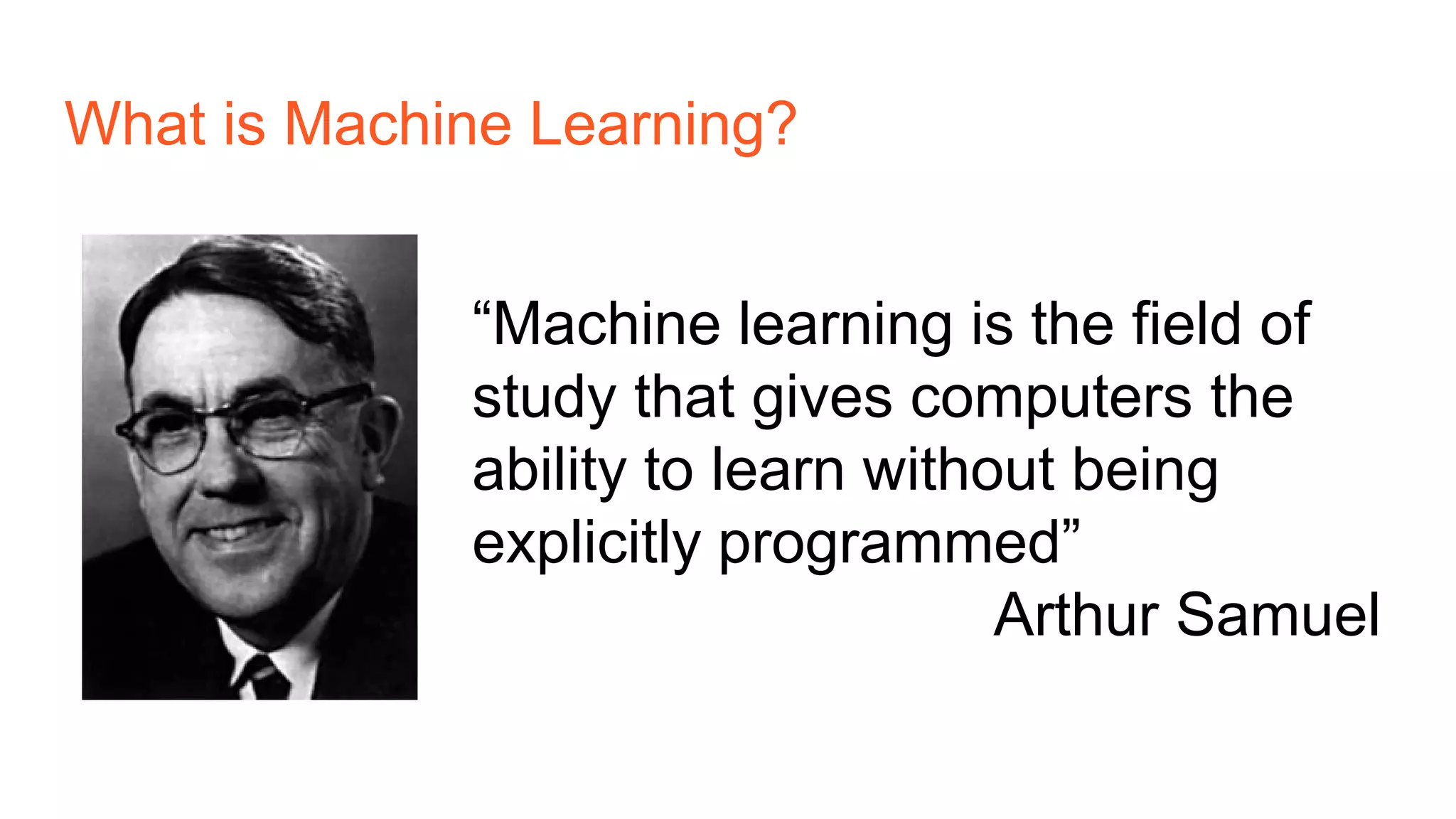
What is Machine Learning?
“Machine learning is the field of
study that gives computers the
ability to learn without being
explicitly programmed”
Arthur Samuel
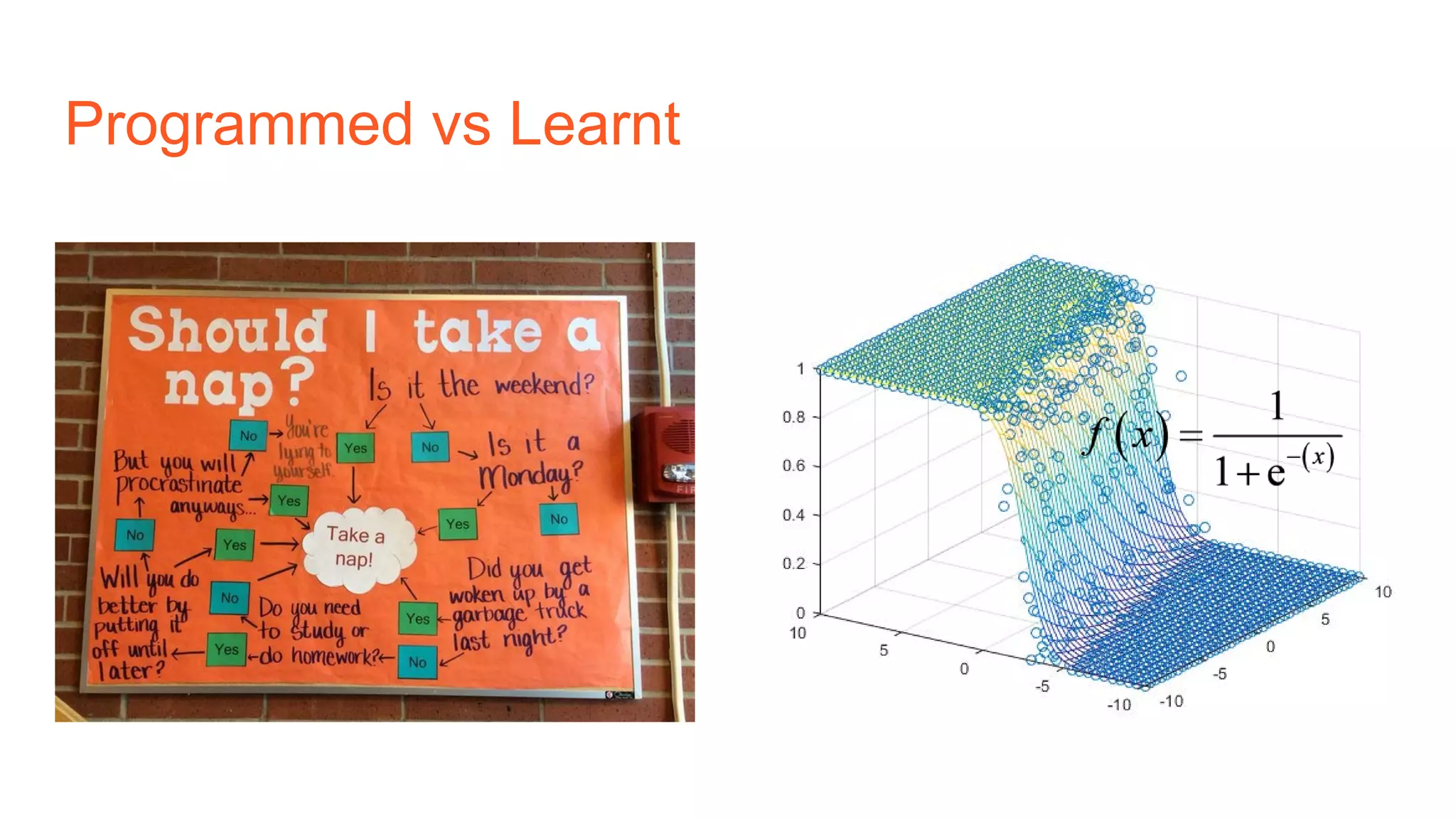
Programmed vs Learnt
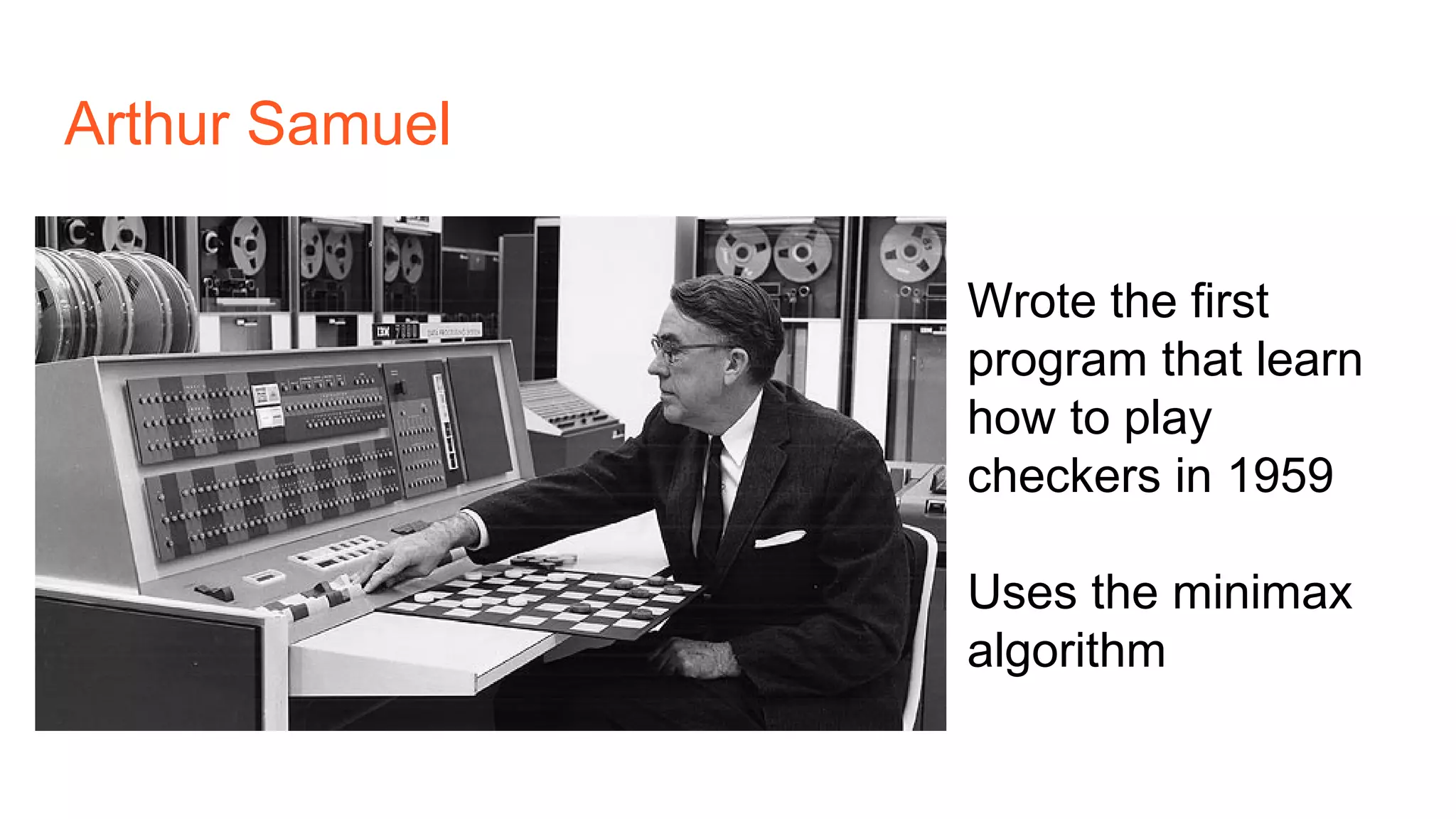
Wrote the first
program that learn
how to play
checkers in 1959
Uses the minimax
algorithm
Arthur Samuel
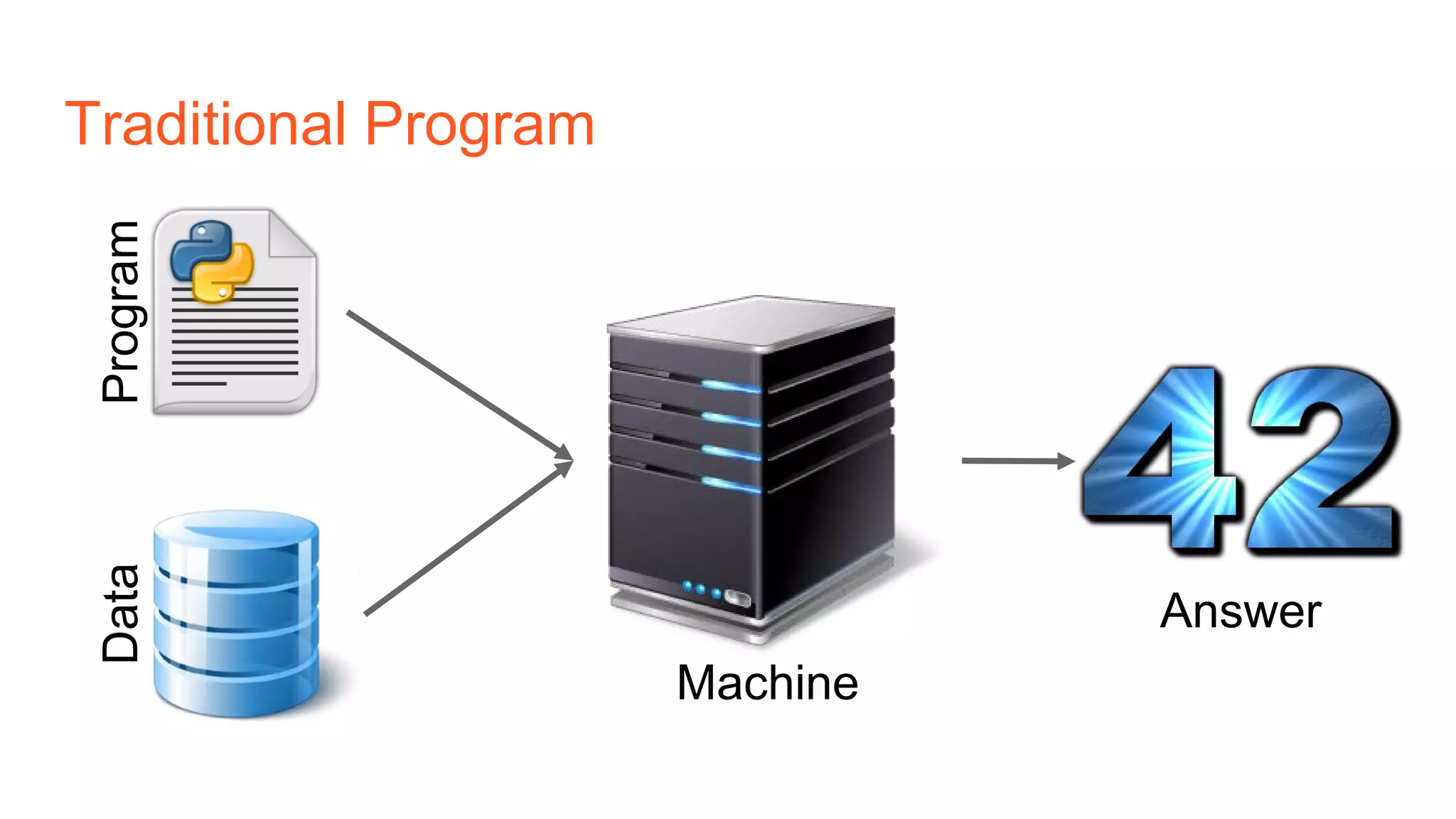
Traditional ProgramProgramData
Machine
Answer
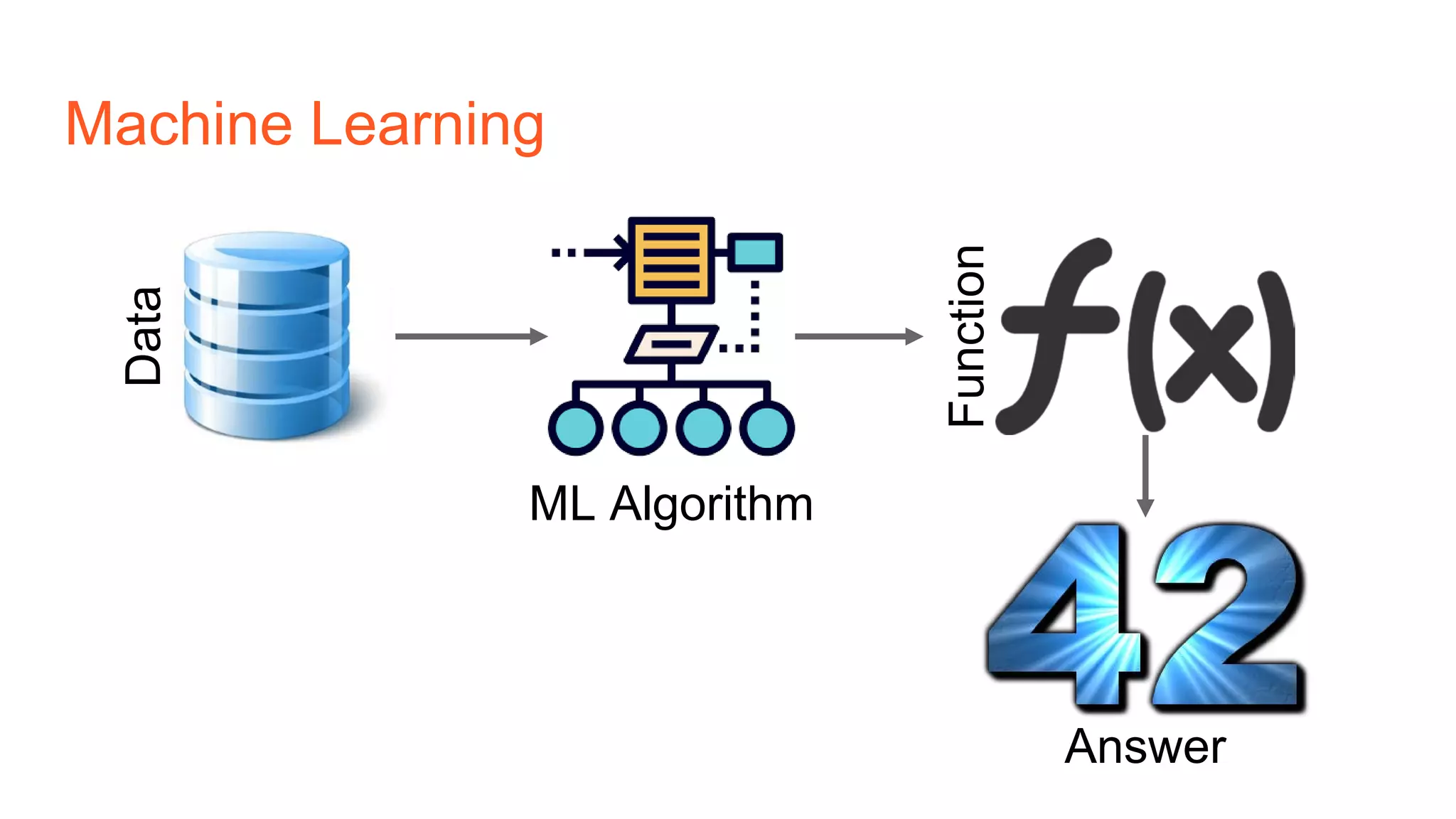
Machine LearningData
ML Algorithm
Function
Answer
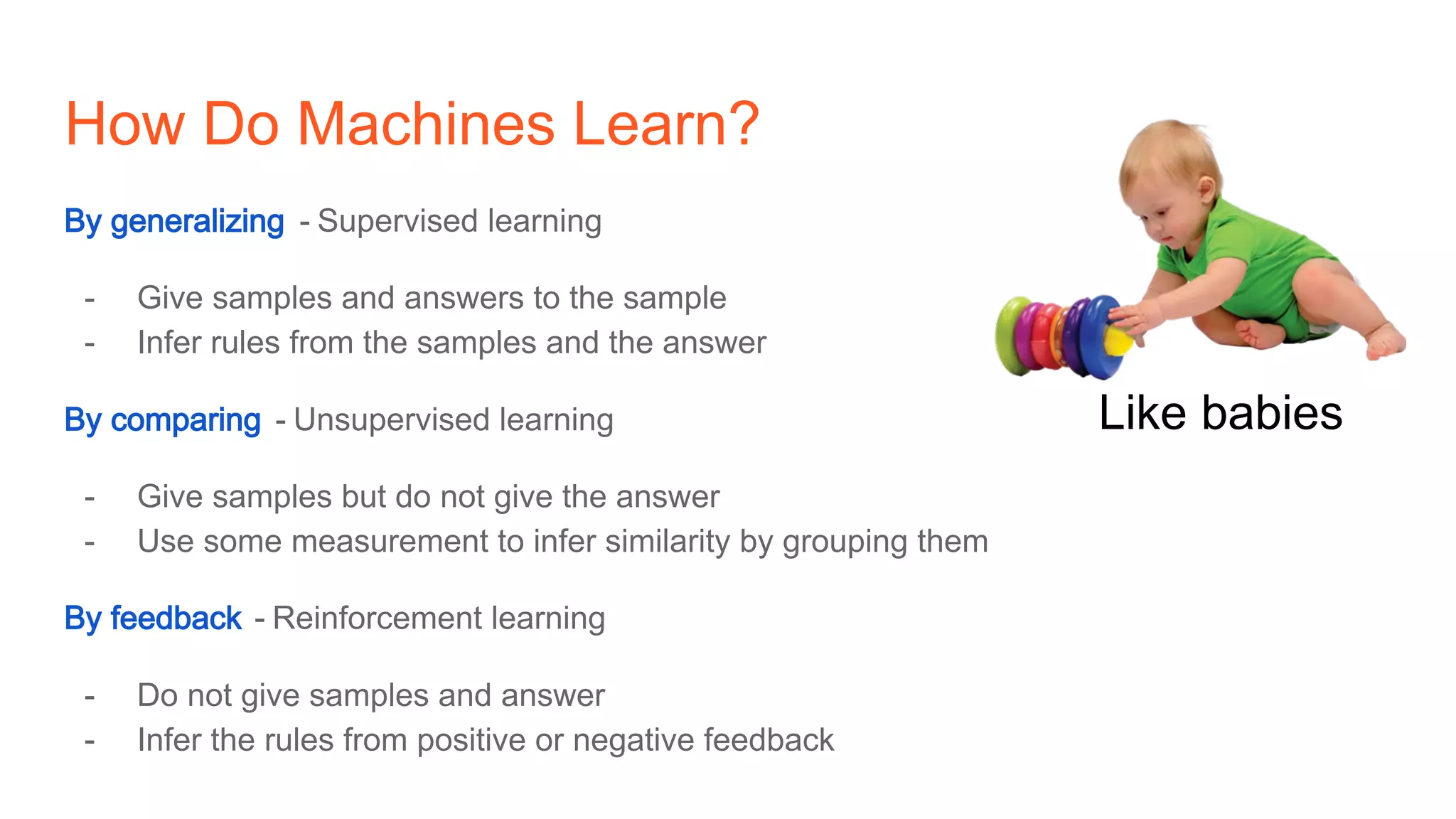
How Do Machines Learn?
By generalizing - Supervised learning
- Give samples and answers to the sample
- Infer rules from the samples and the answer
By comparing - Unsupervised learning
- Give samples but do not give the answer
- Use some measurement to infer similarity by grouping them
By feedback - Reinforcement learning
- Do not give samples and answer
- Infer the rules from positive or negative feedback
Like babies
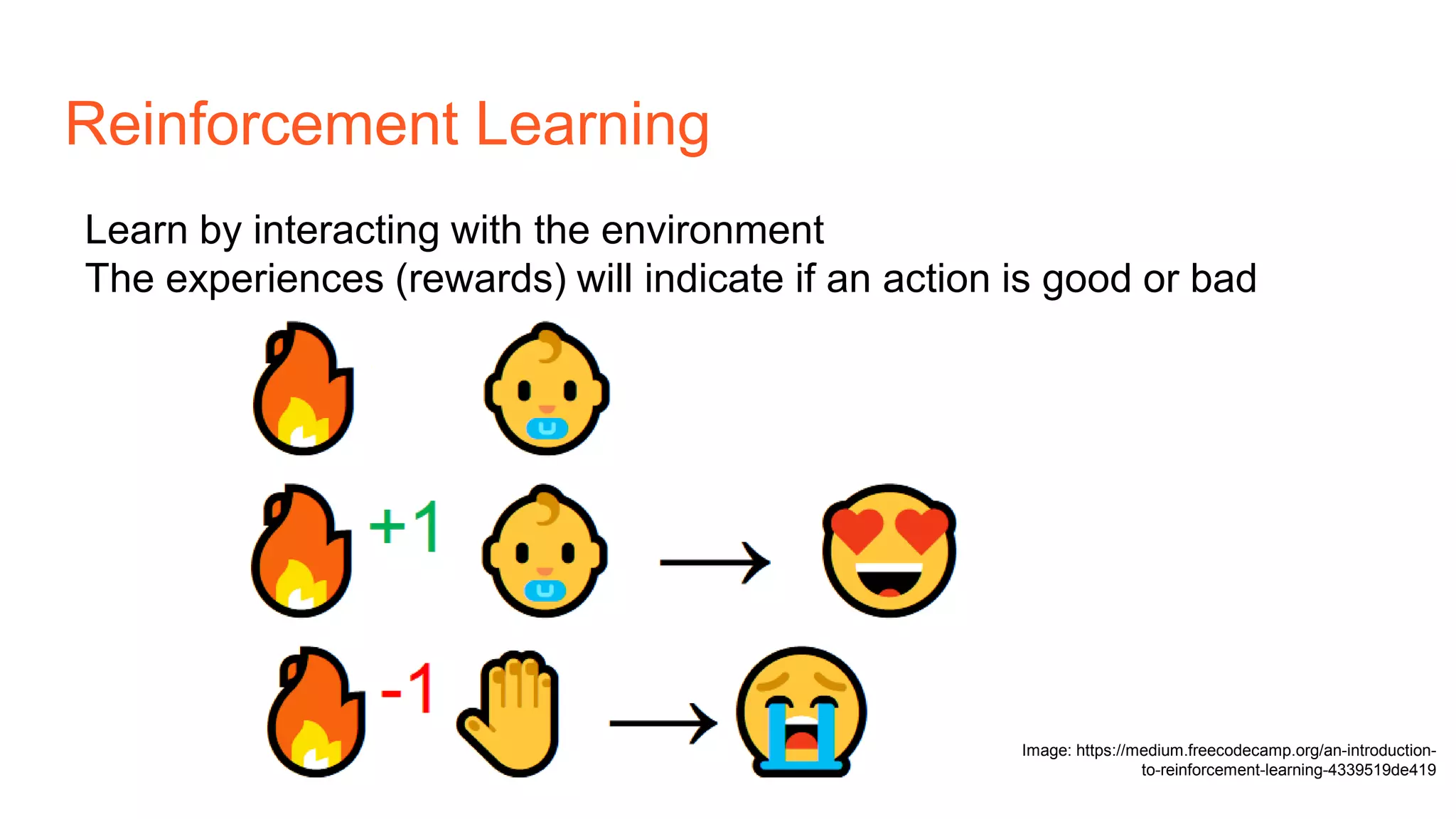
Reinforcement Learning
Learn by interacting with the environment
The experiences (rewards) will indicate if an action is good or bad
Image: https://medium.freecodecamp.org/an-introduction-
to-reinforcement-learning-4339519de419
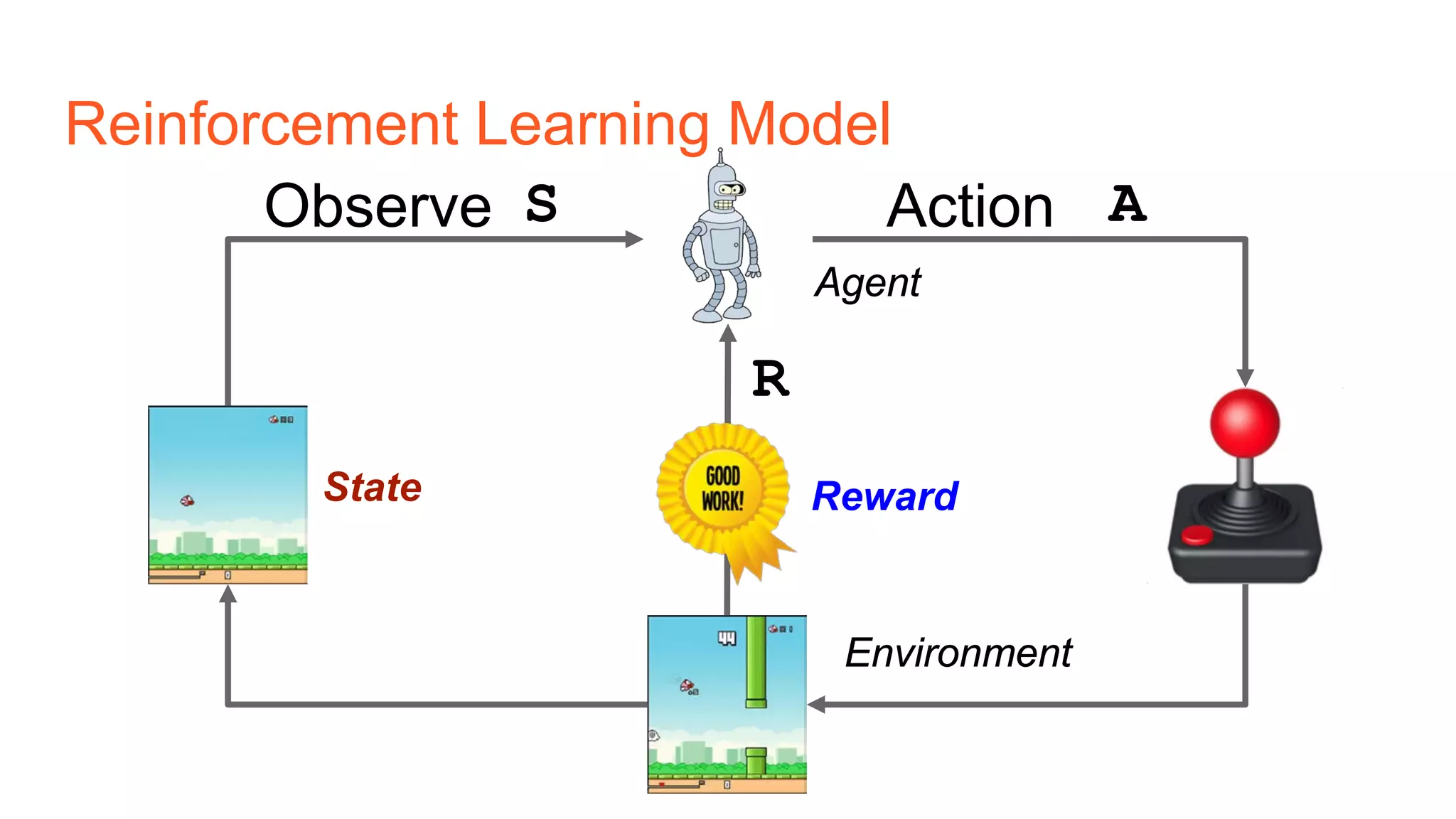
ActionObserve
Agent
Environment
State Reward
Reinforcement Learning Model
S A
R
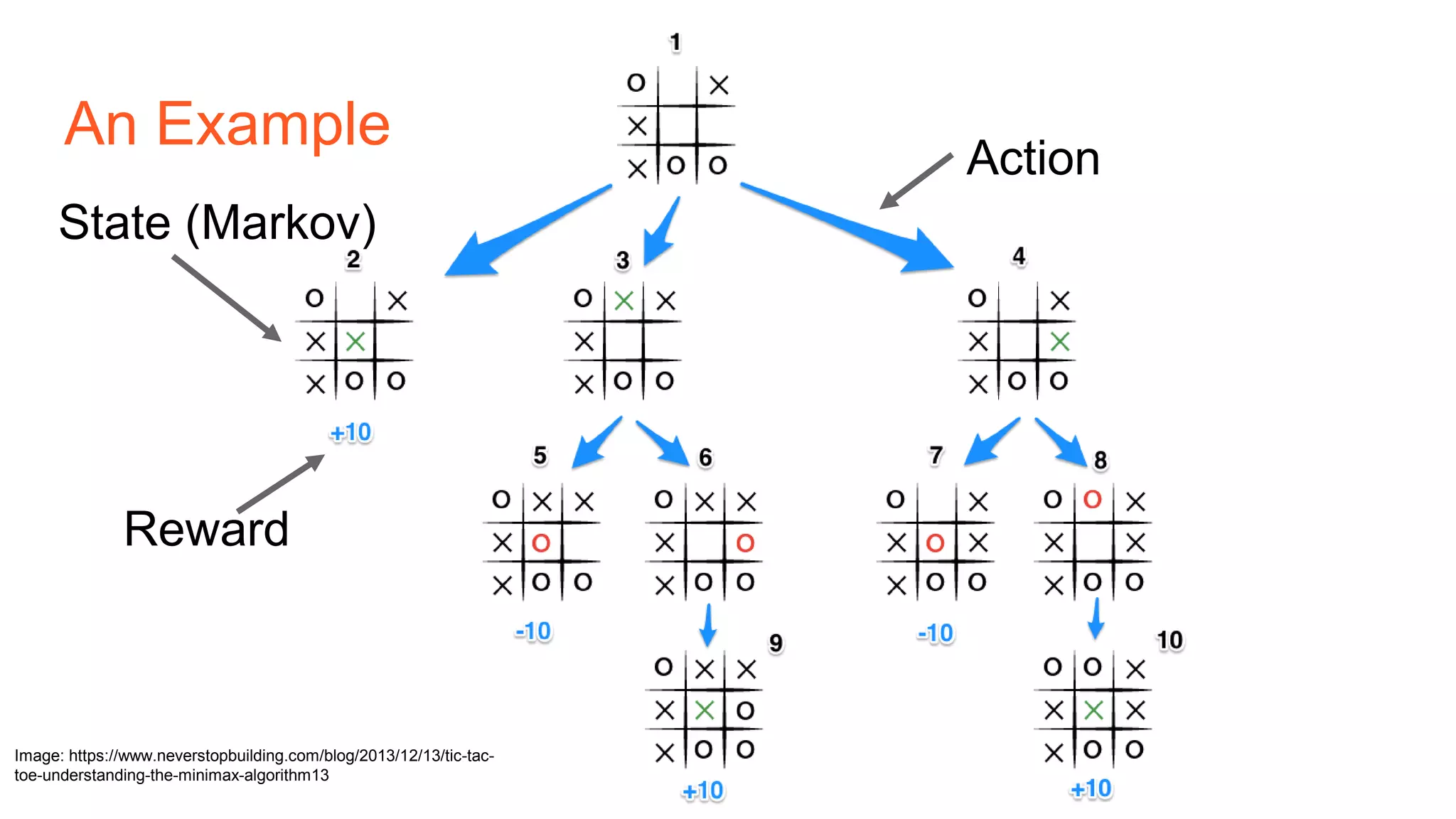
An Example
Image: https://www.neverstopbuilding.com/blog/2013/12/13/tic-tac-
toe-understanding-the-minimax-algorithm13
State (Markov)
Reward
Action
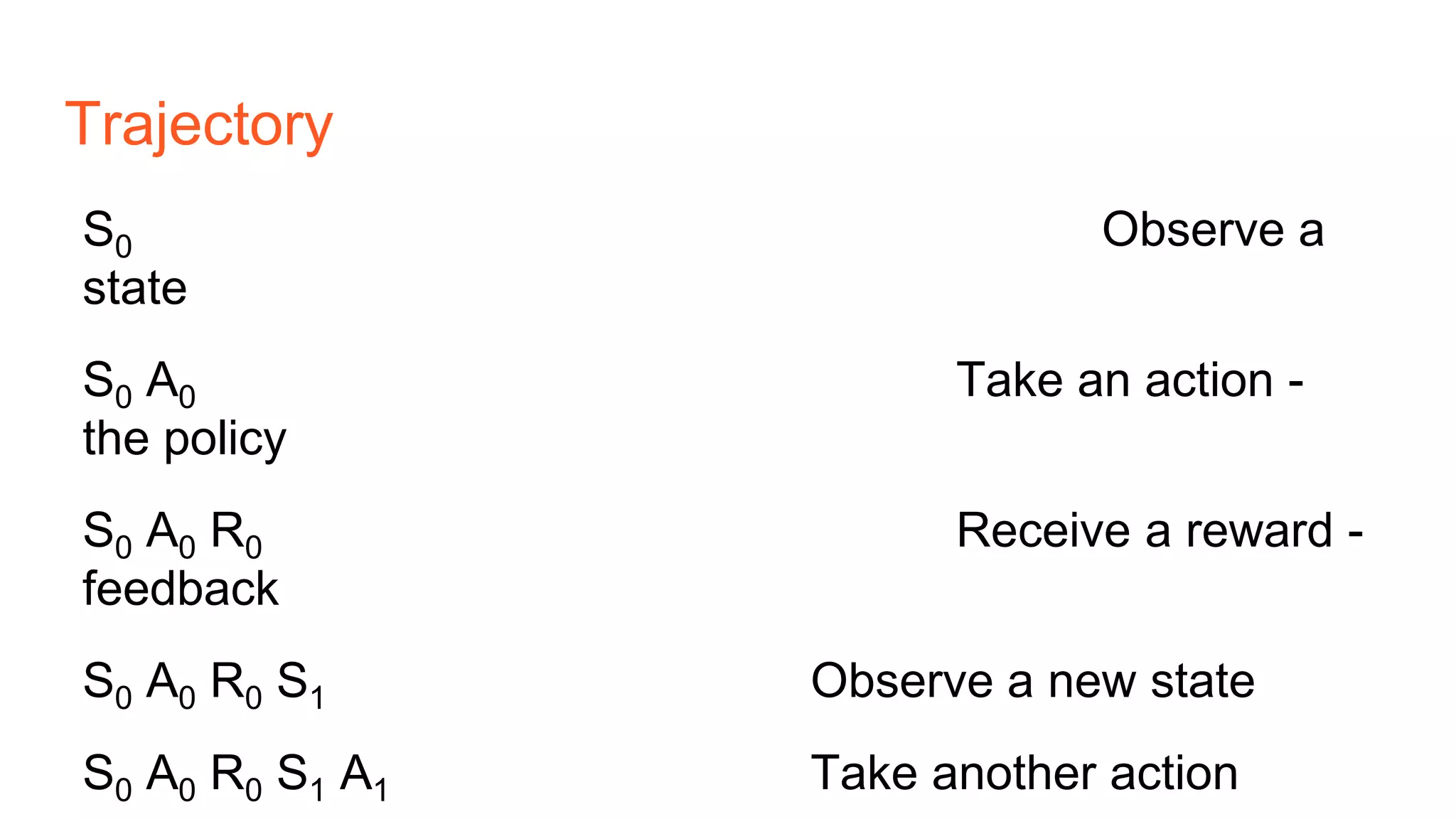
Trajectory
S0 Observe a
state
S0 A0 Take an action -
the policy
S0 A0 R0 Receive a reward -
feedback
S0 A0 R0 S1 Observe a new state
S0 A0 R0 S1 A1 Take another action
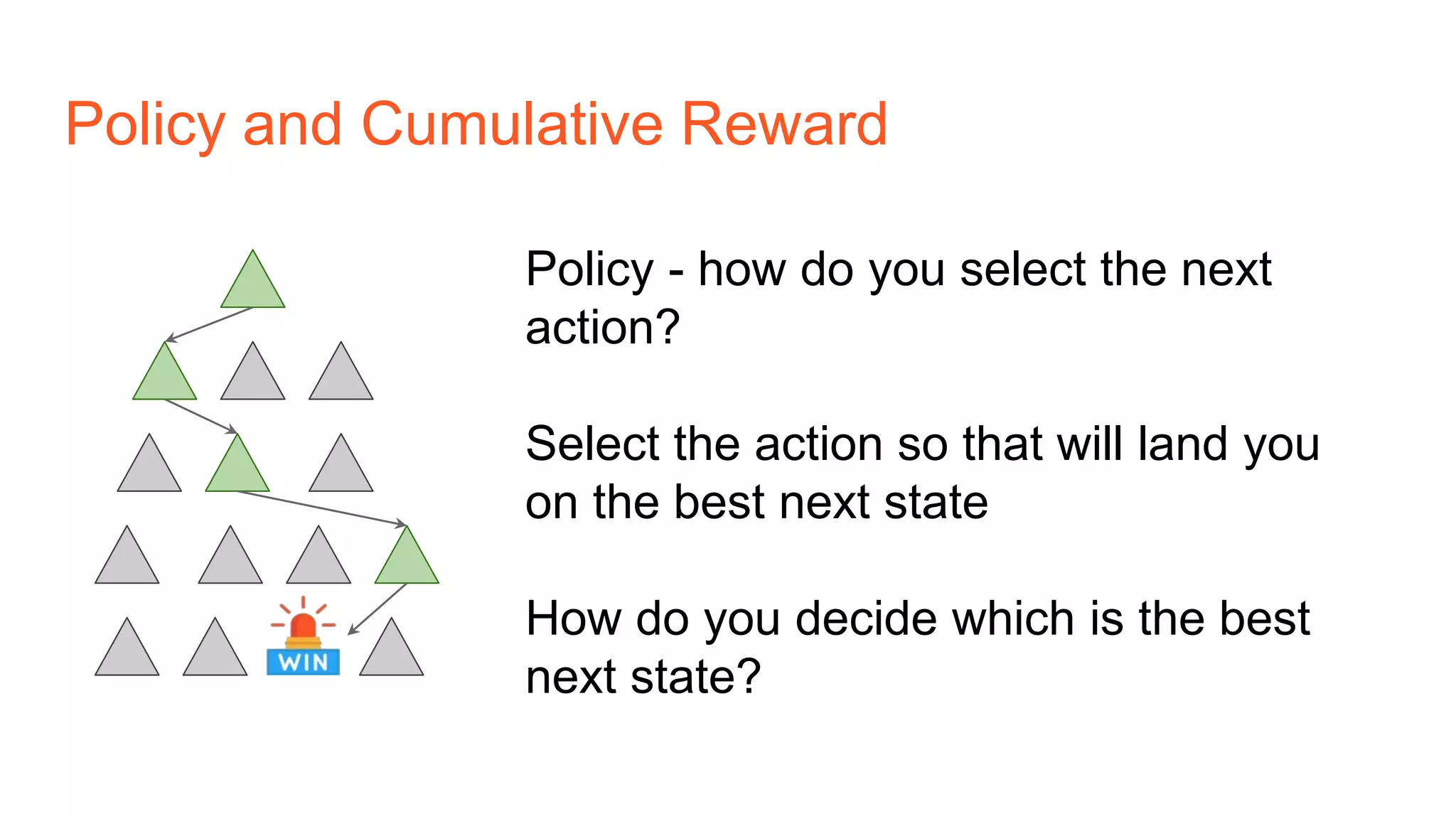
Policy and Cumulative Reward
Policy - how do you select the next
action?
Select the action so that will land you
on the best next state
How do you decide which is the best
next state?
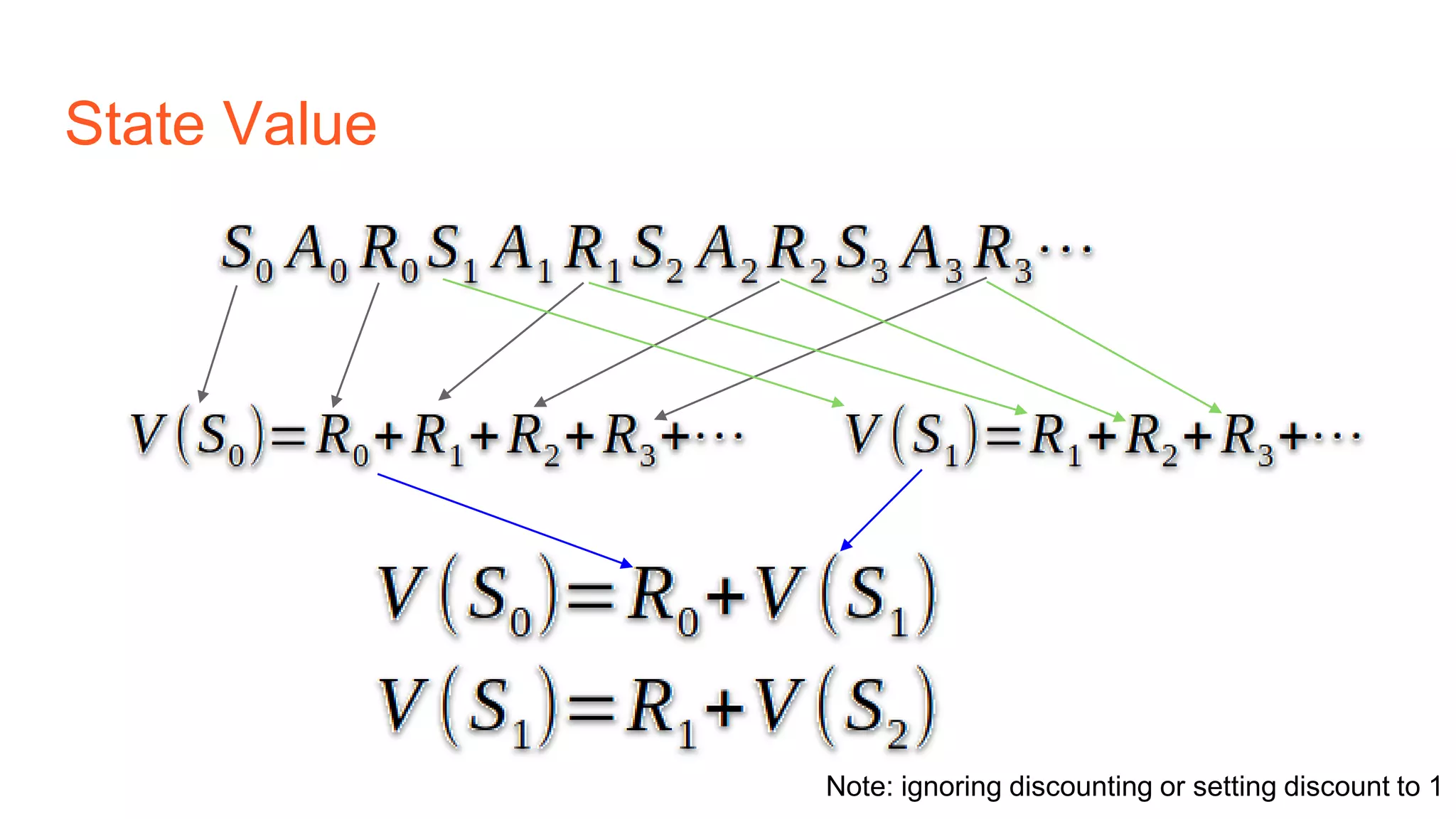
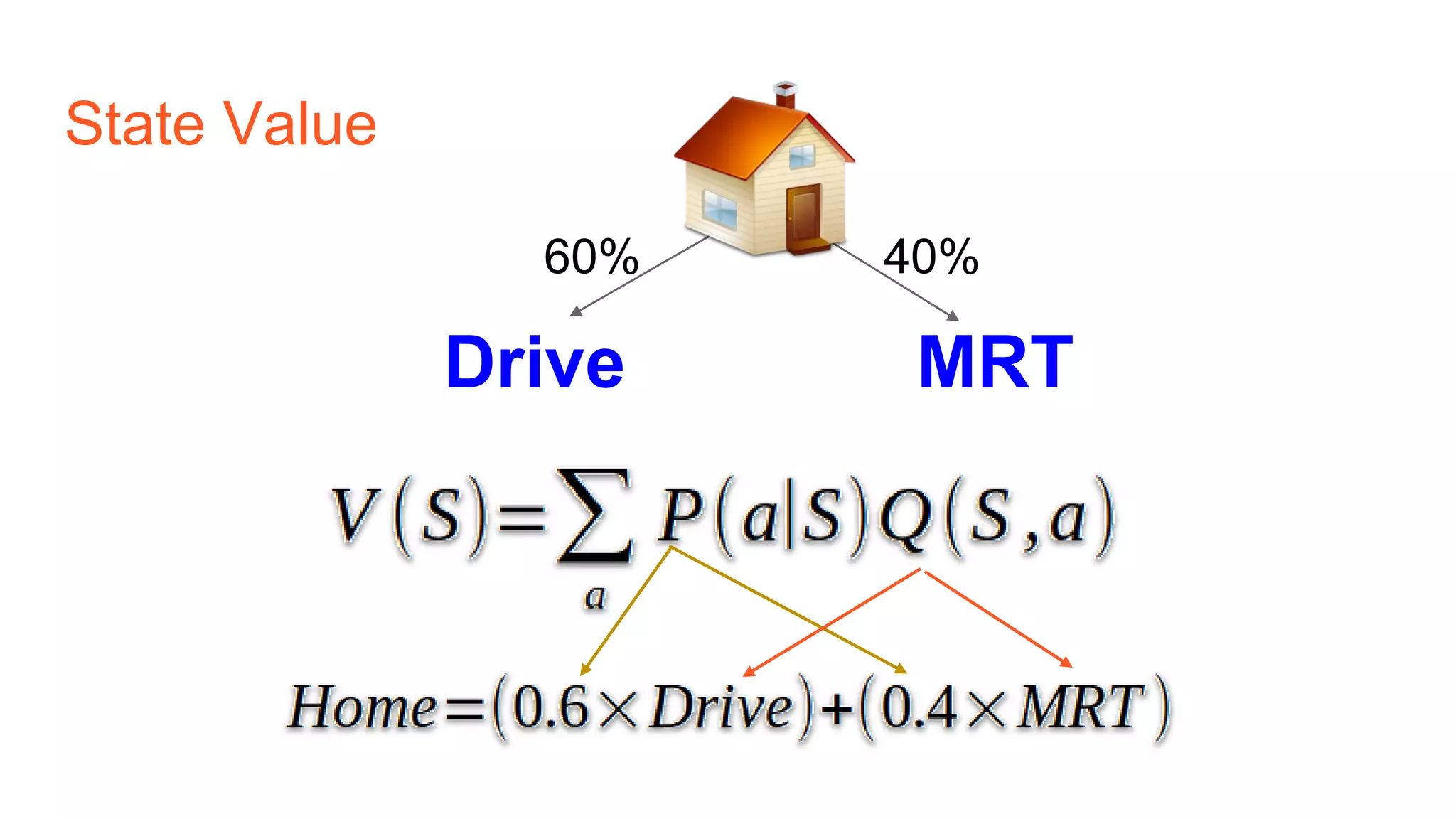
State Value
Note: ignoring discounting or setting discount to 1
State Value
Estimate how good a state is with respect to how much cumulative reward I can get
from this point onwards
The better the returns the higher the state value
Some state values are real returns some are estimated
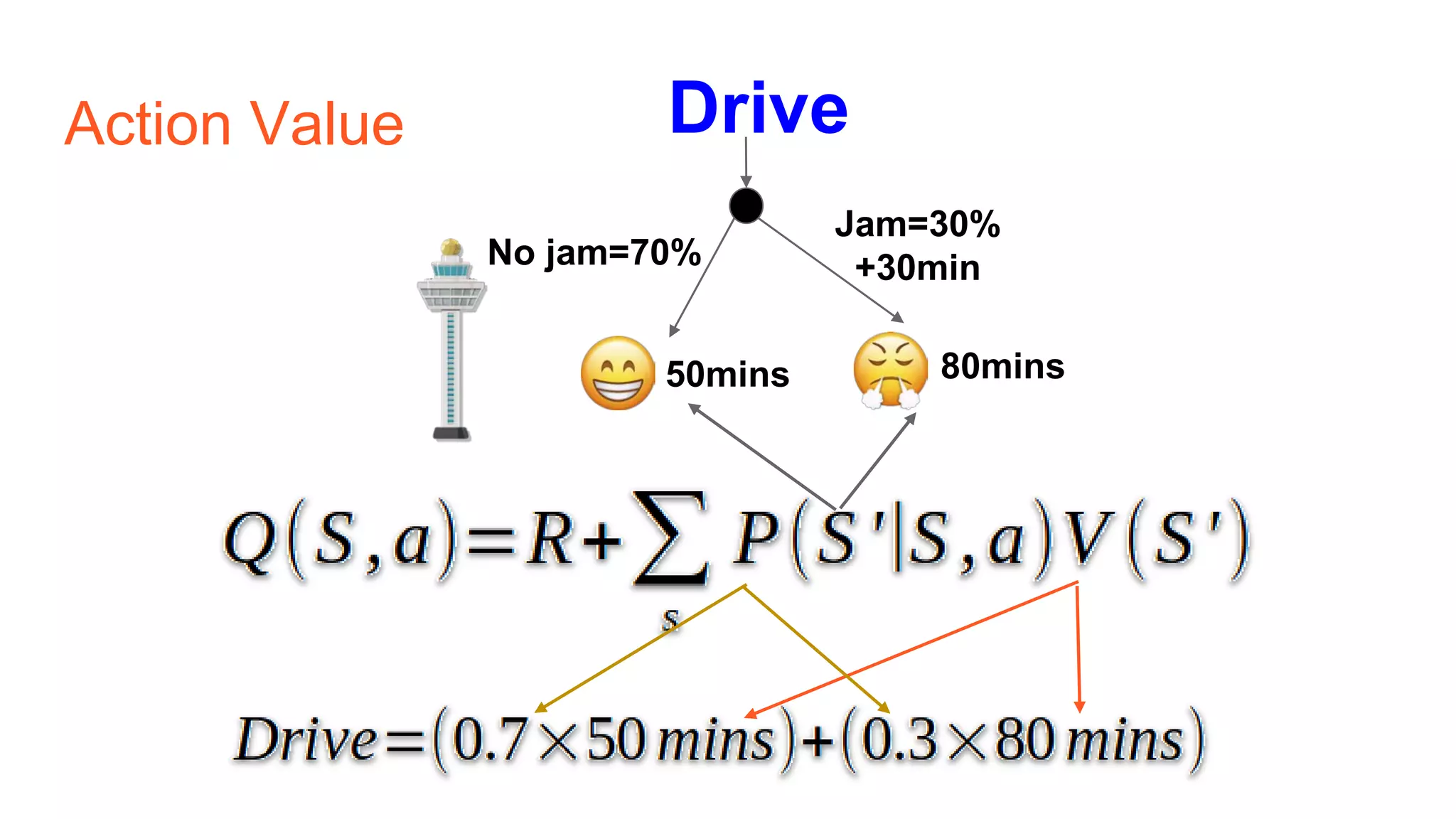
Action Value
What is the best action to take from a particular state
The best action is the action that will land me in the next best state
Actions that lead to states with high state values will have high action values
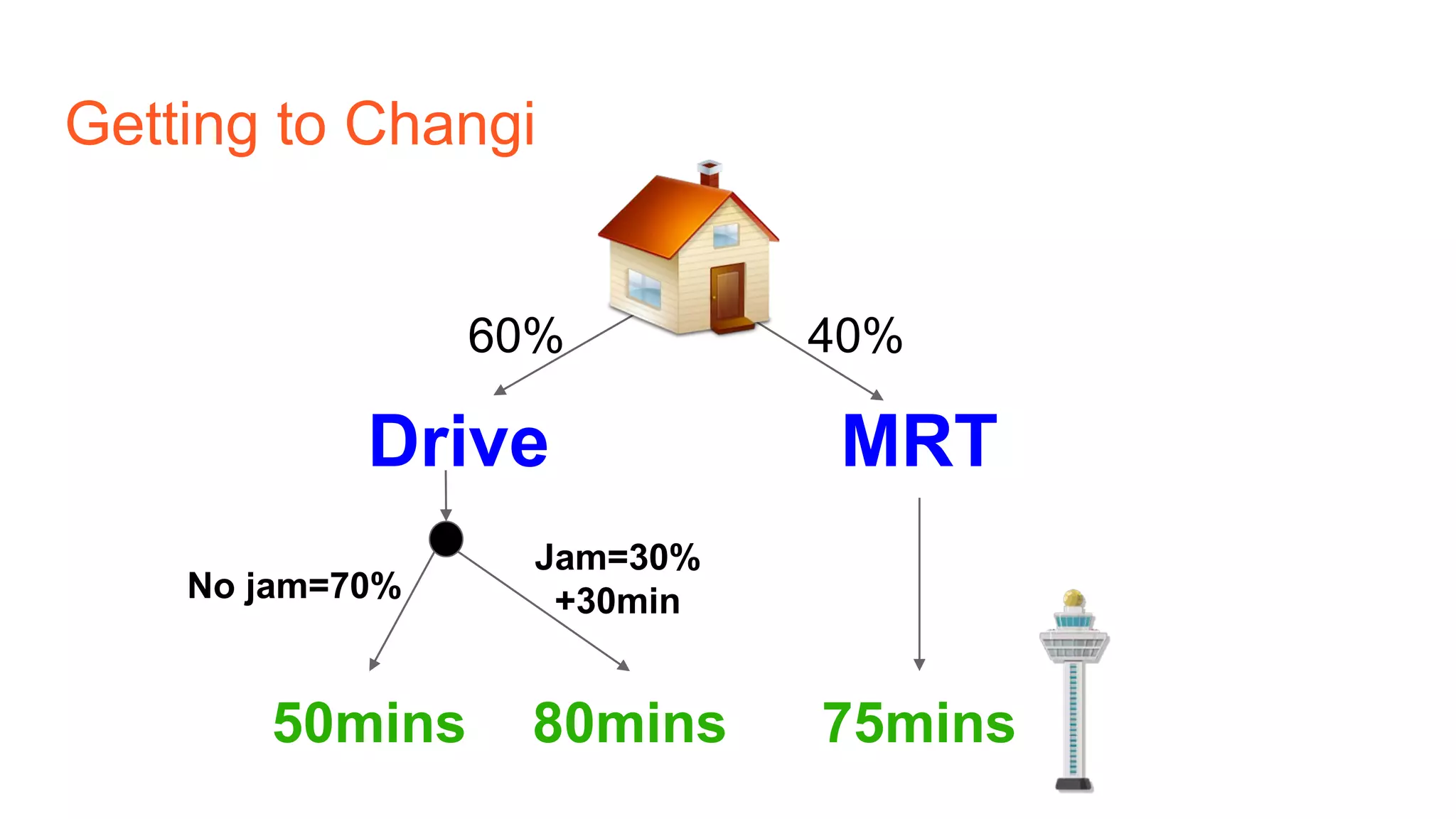
Getting to Changi
Drive MRT
60% 40%
Jam=30%
+30min
75mins50mins 80mins
No jam=70%
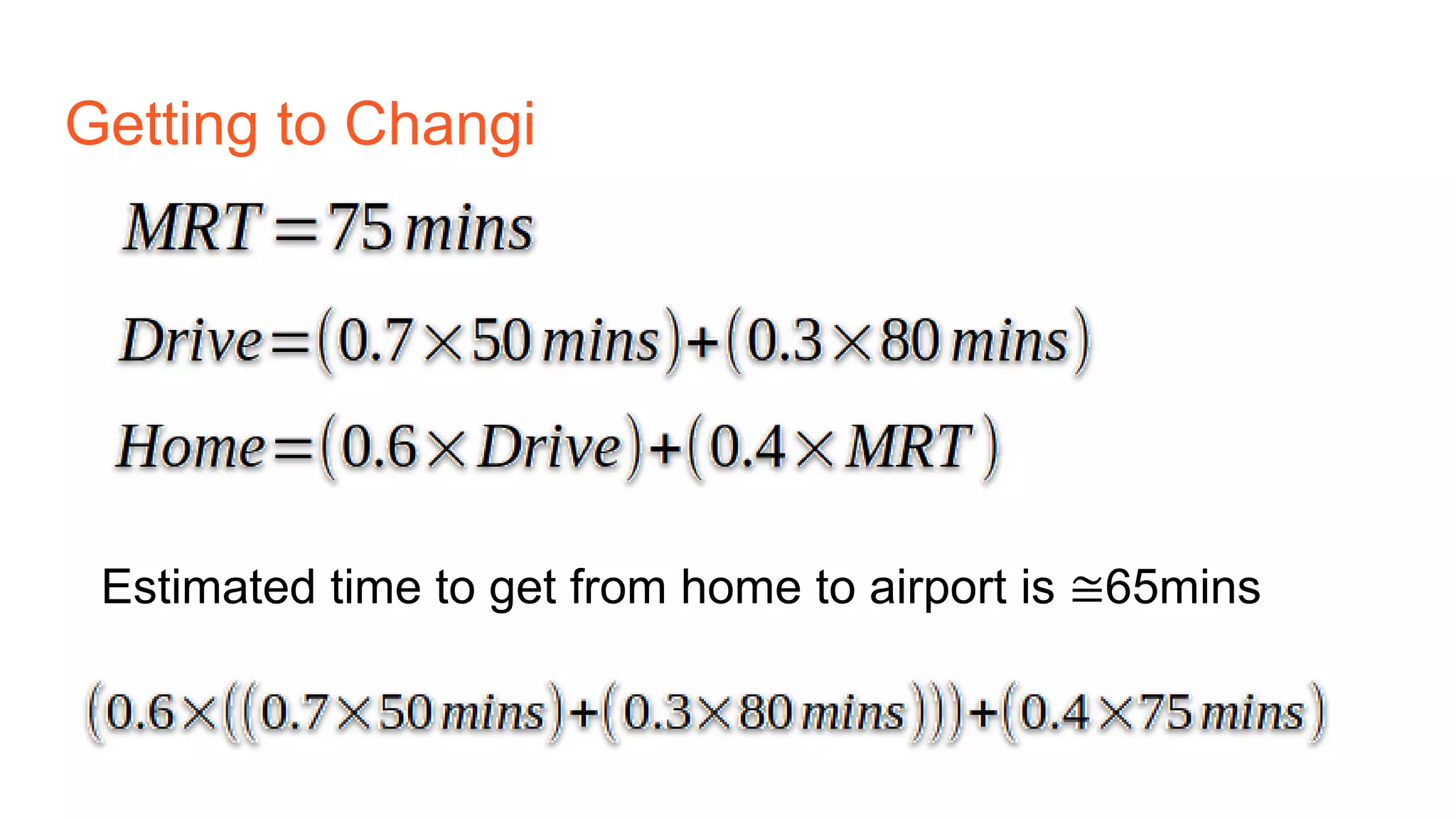
Getting to Changi
Estimated time to get from home to airport is ≅65mins
State Value
Drive MRT
60% 40%
Action Value Drive
Jam=30%
+30minNo jam=70%
50mins 80mins
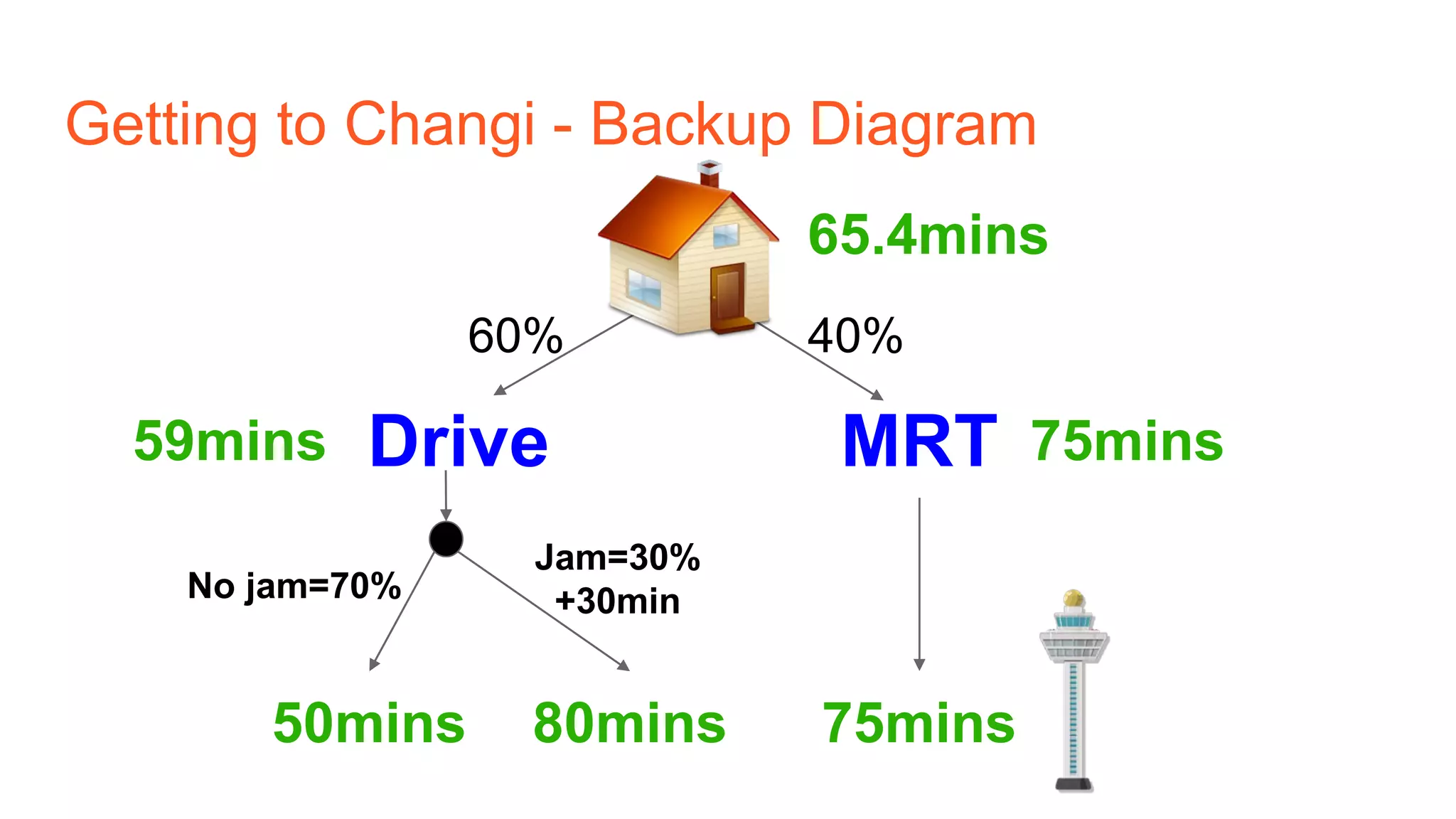
Getting to Changi - Backup Diagram
Drive MRT
60% 40%
Jam=30%
+30min
75mins50mins 80mins
No jam=70%
59mins 75mins
65.4mins
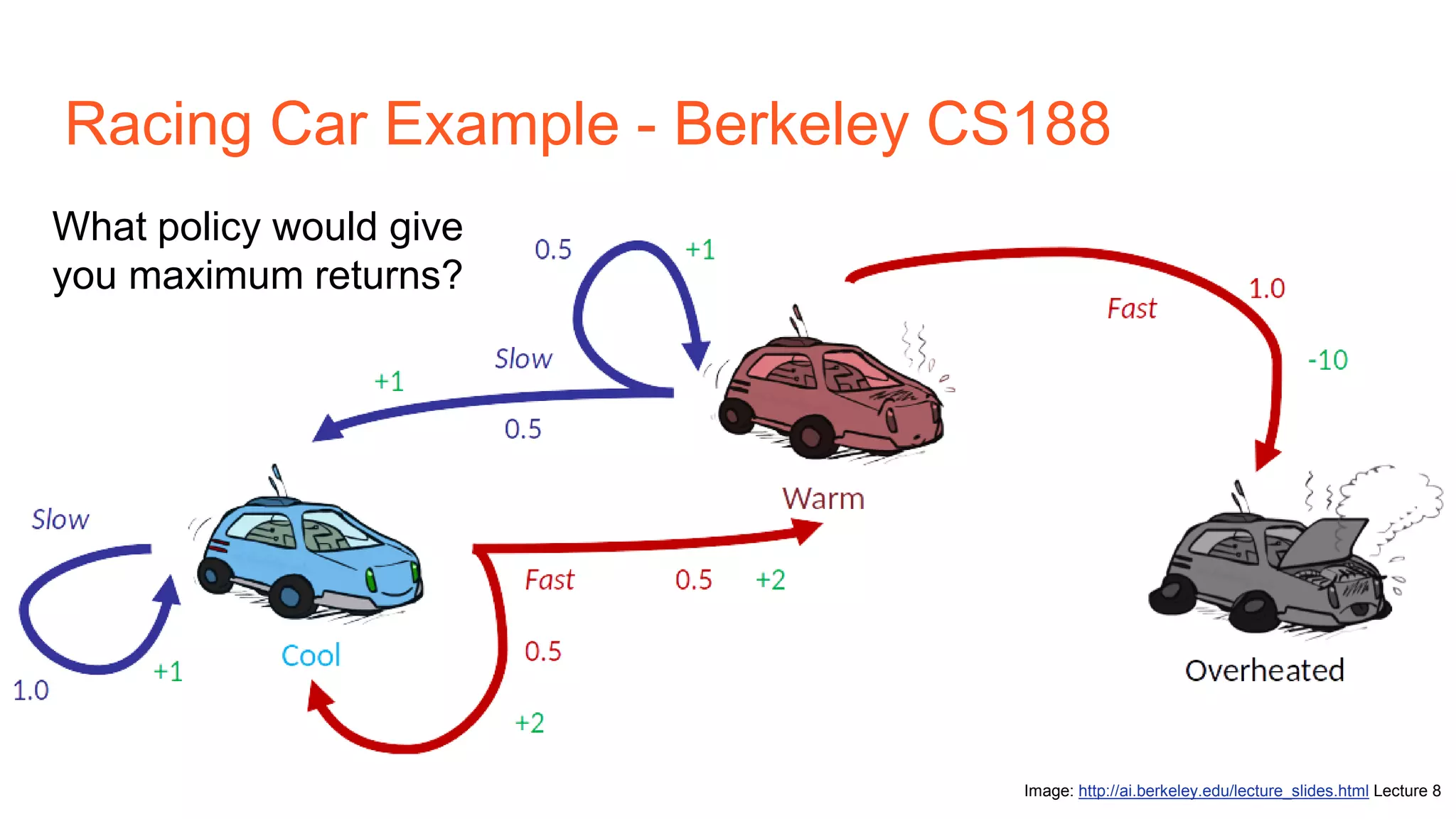
Racing Car Example - Berkeley CS188
Image: http://ai.berkeley.edu/lecture_slides.html Lecture 8
What policy would give
you maximum returns?
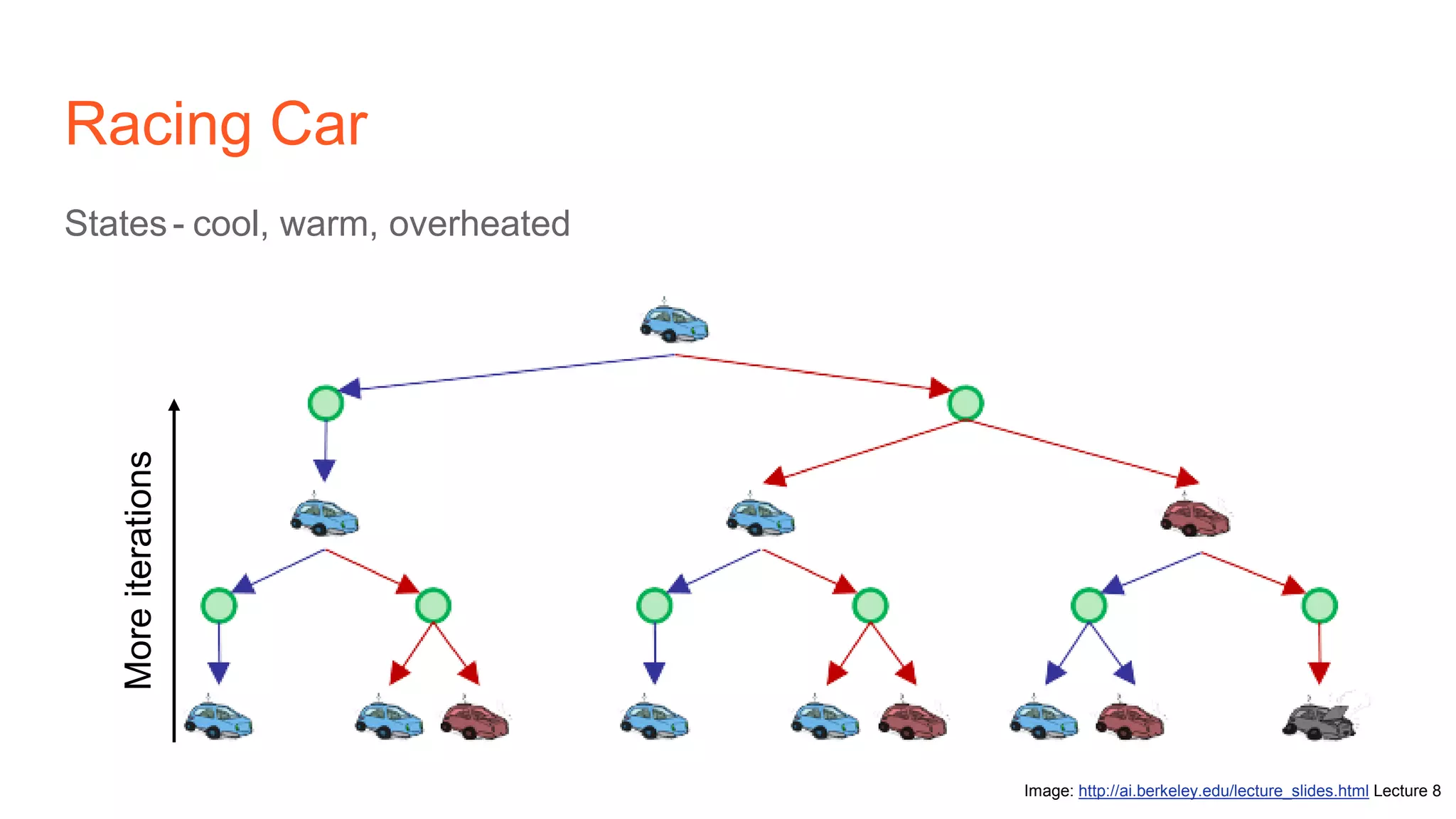
Racing Car
States- cool, warm, overheated
Image: http://ai.berkeley.edu/lecture_slides.html Lecture 8
Moreiterations
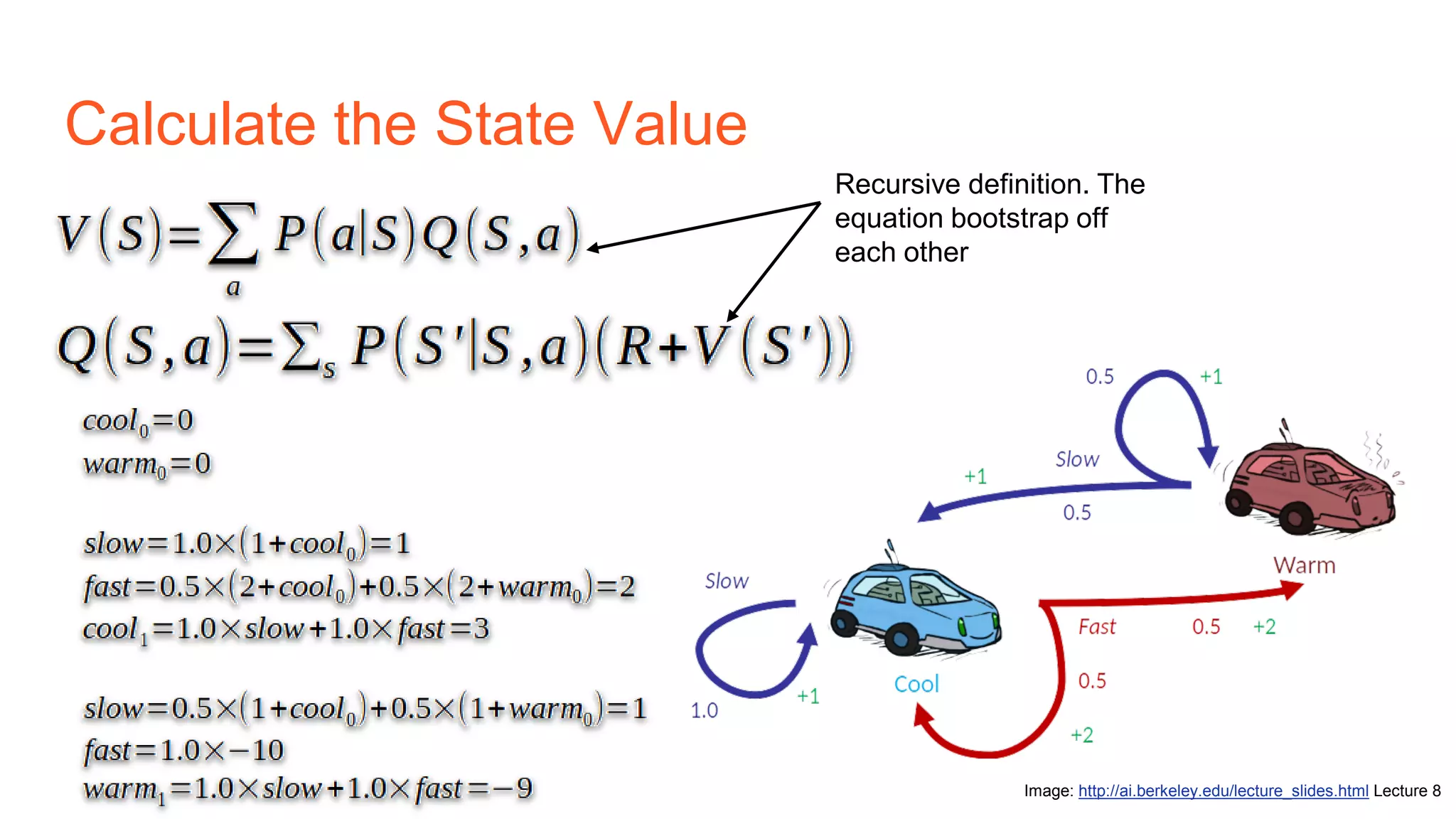
Calculate the State Value
Recursive definition. The
equation bootstrap off
each other
Image: http://ai.berkeley.edu/lecture_slides.html Lecture 8
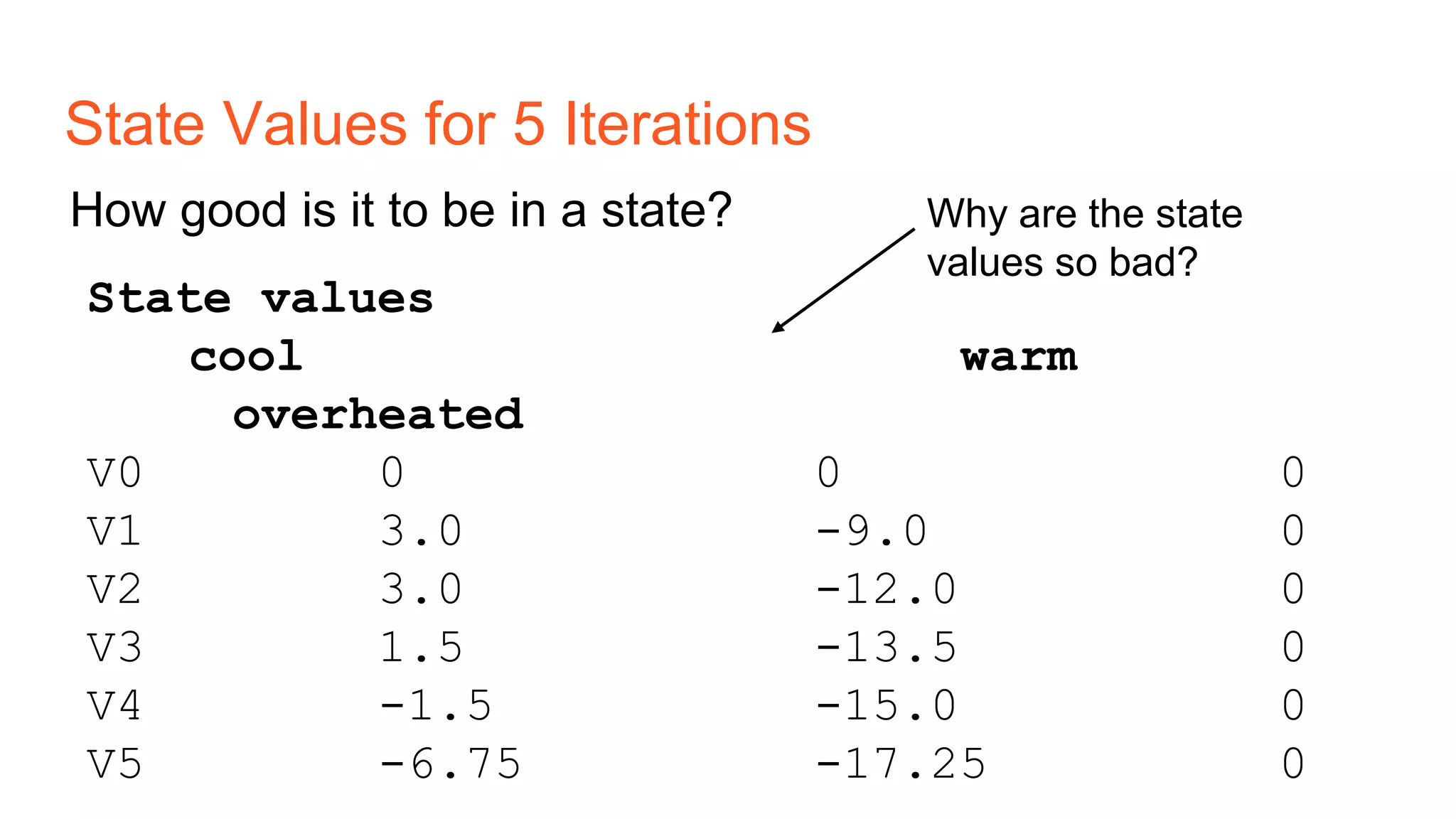
State Values for 5 Iterations
State values
cool warm
overheated
V0 0 0 0
V1 3.0 -9.0 0
V2 3.0 -12.0 0
V3 1.5 -13.5 0
V4 -1.5 -15.0 0
V5 -6.75 -17.25 0
How good is it to be in a state? Why are the state
values so bad?
Action Value
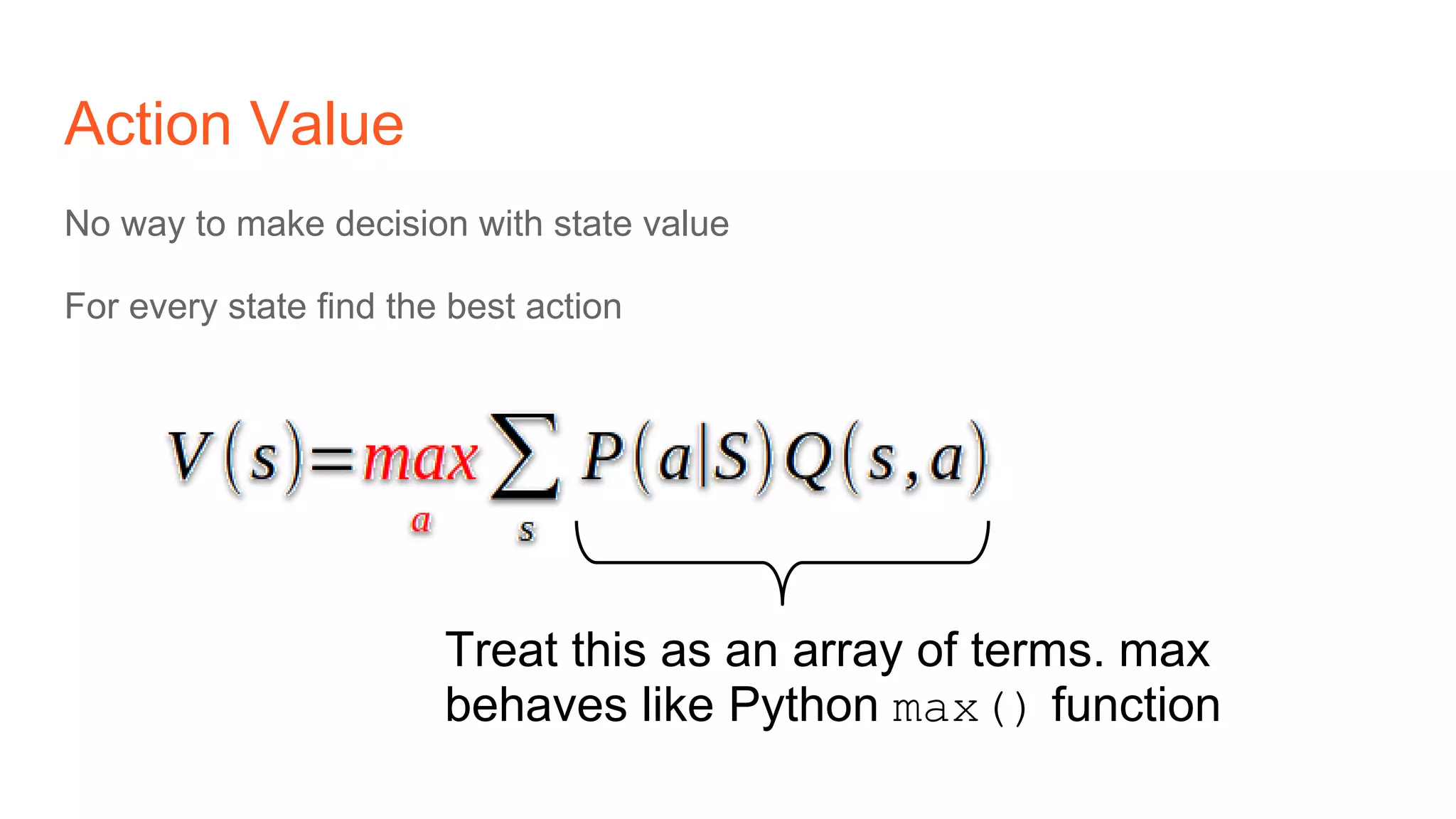
No way to make decision with state value
For every state find the best action
Treat this as an array of terms. max
behaves like Python max() function
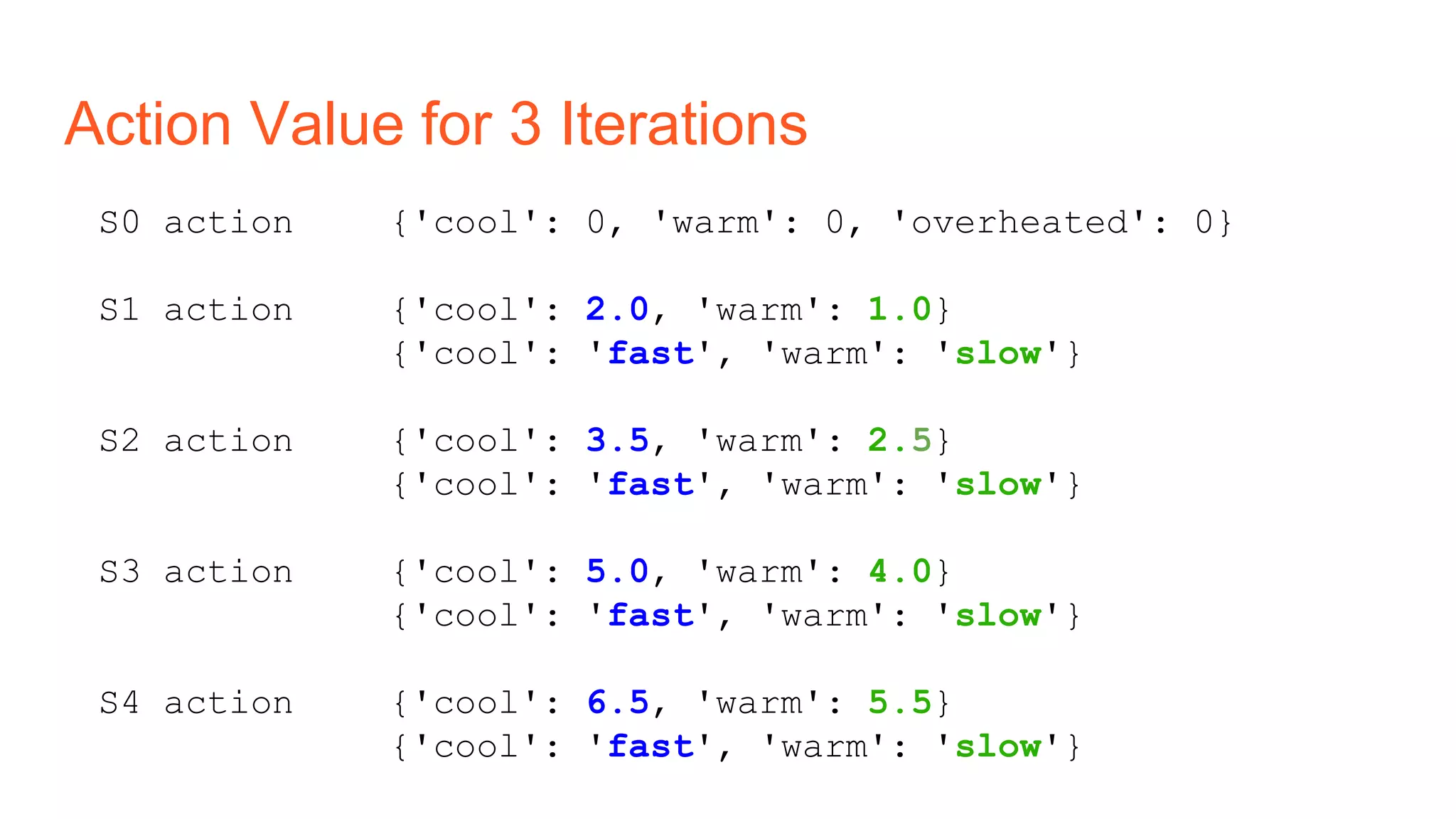
Action Value for 3 Iterations
S0 action {'cool': 0, 'warm': 0, 'overheated': 0}
S1 action {'cool': 2.0, 'warm': 1.0}
{'cool': 'fast', 'warm': 'slow'}
S2 action {'cool': 3.5, 'warm': 2.5}
{'cool': 'fast', 'warm': 'slow'}
S3 action {'cool': 5.0, 'warm': 4.0}
{'cool': 'fast', 'warm': 'slow'}
S4 action {'cool': 6.5, 'warm': 5.5}
{'cool': 'fast', 'warm': 'slow'}
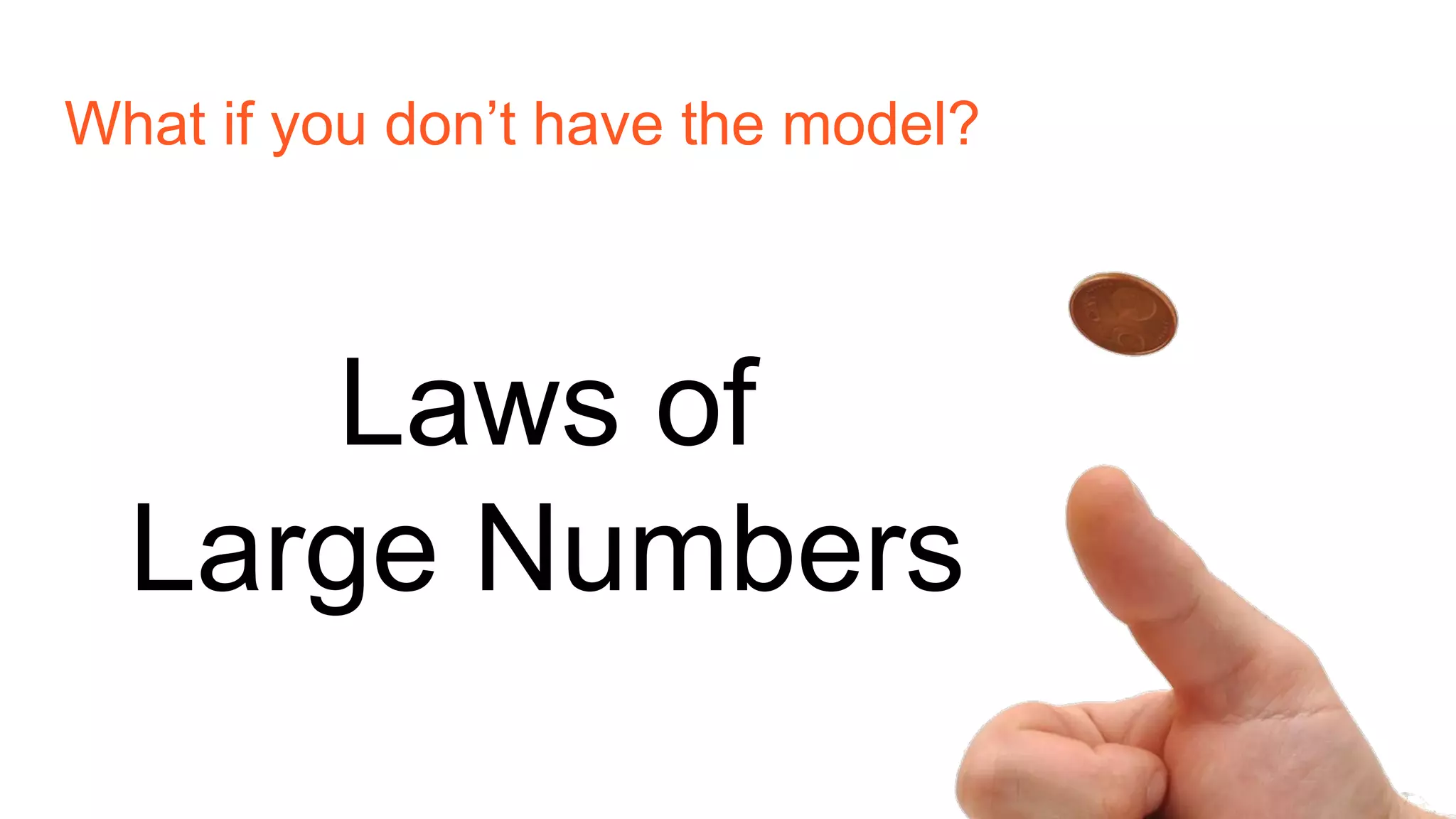
What if you don’t have the model?
Laws of
Large Numbers
Model Free
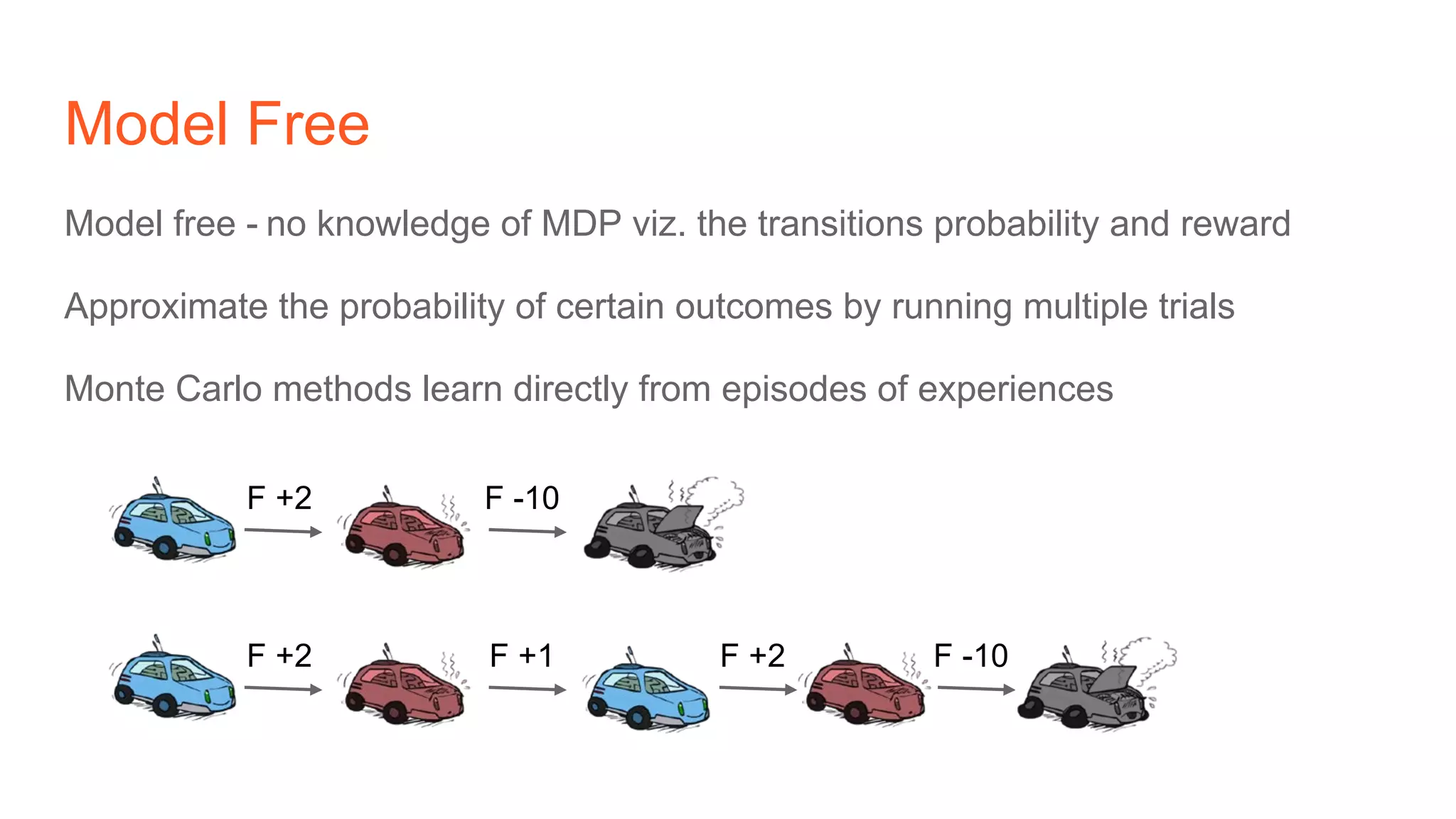
Model free - no knowledge of MDP viz. the transitions probability and reward
Approximate the probability of certain outcomes by running multiple trials
Monte Carlo methods learn directly from episodes of experiences
F +2 F -10
F +2 F +1 F +2 F -10
Monte Carlo Algorithm
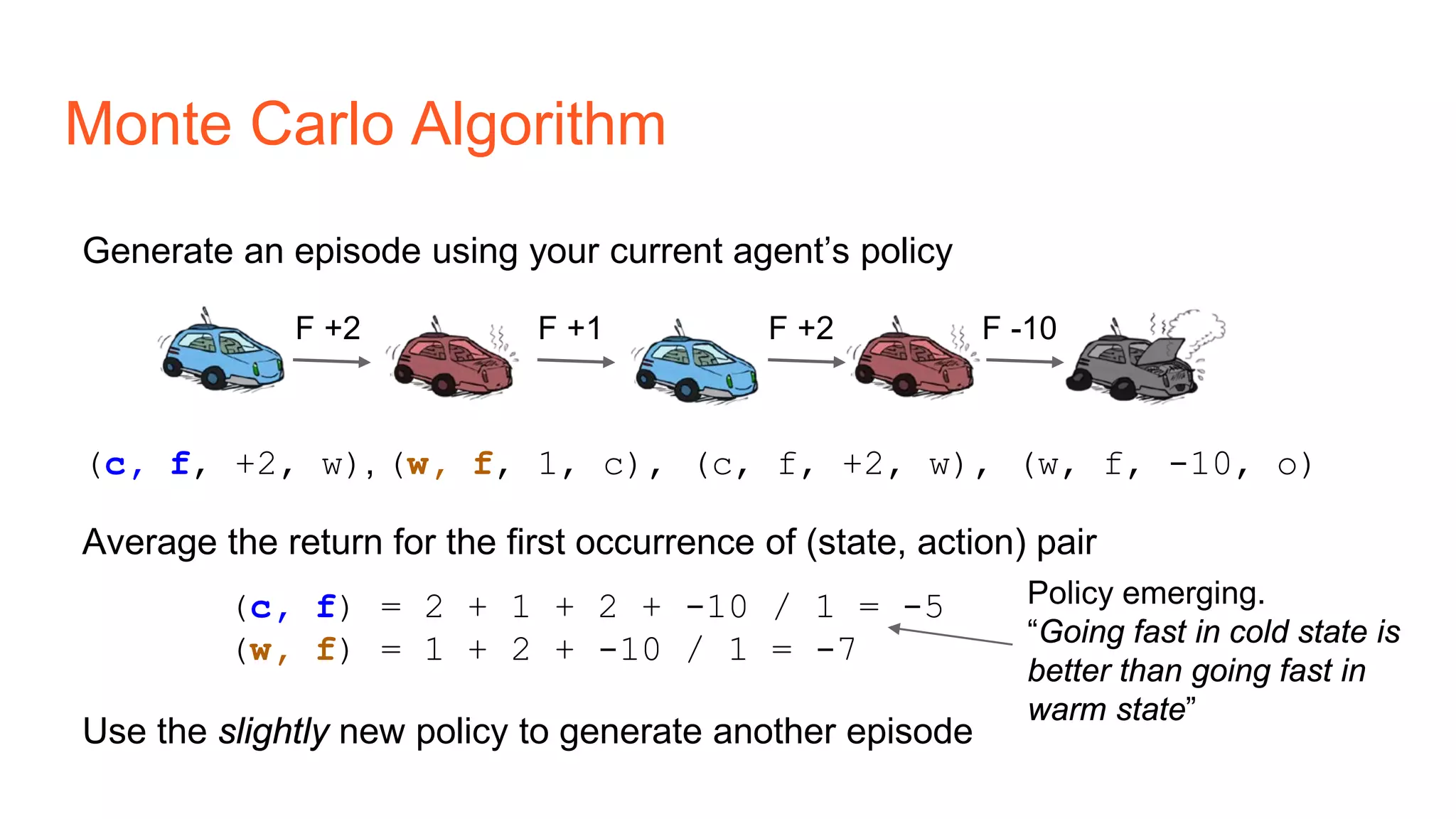
Generate an episode using your current agent’s policy
(c, f, +2, w), (w, f, 1, c), (c, f, +2, w), (w, f, -10, o)
Average the return for the first occurrence of (state, action) pair
(c, f) = 2 + 1 + 2 + -10 / 1 = -5
(w, f) = 1 + 2 + -10 / 1 = -7
Use the slightly new policy to generate another episode
F +2 F +1 F +2 F -10
Policy emerging.
“Going fast in cold state is
better than going fast in
warm state”
Monte Carlo Algorithm
Laws of large numbers only works if you havelots of varied data
Require to explore all possible (state, action) pair
Current policy is ‘greedy’ - only select the best action for a state
Not an issue if its model-based
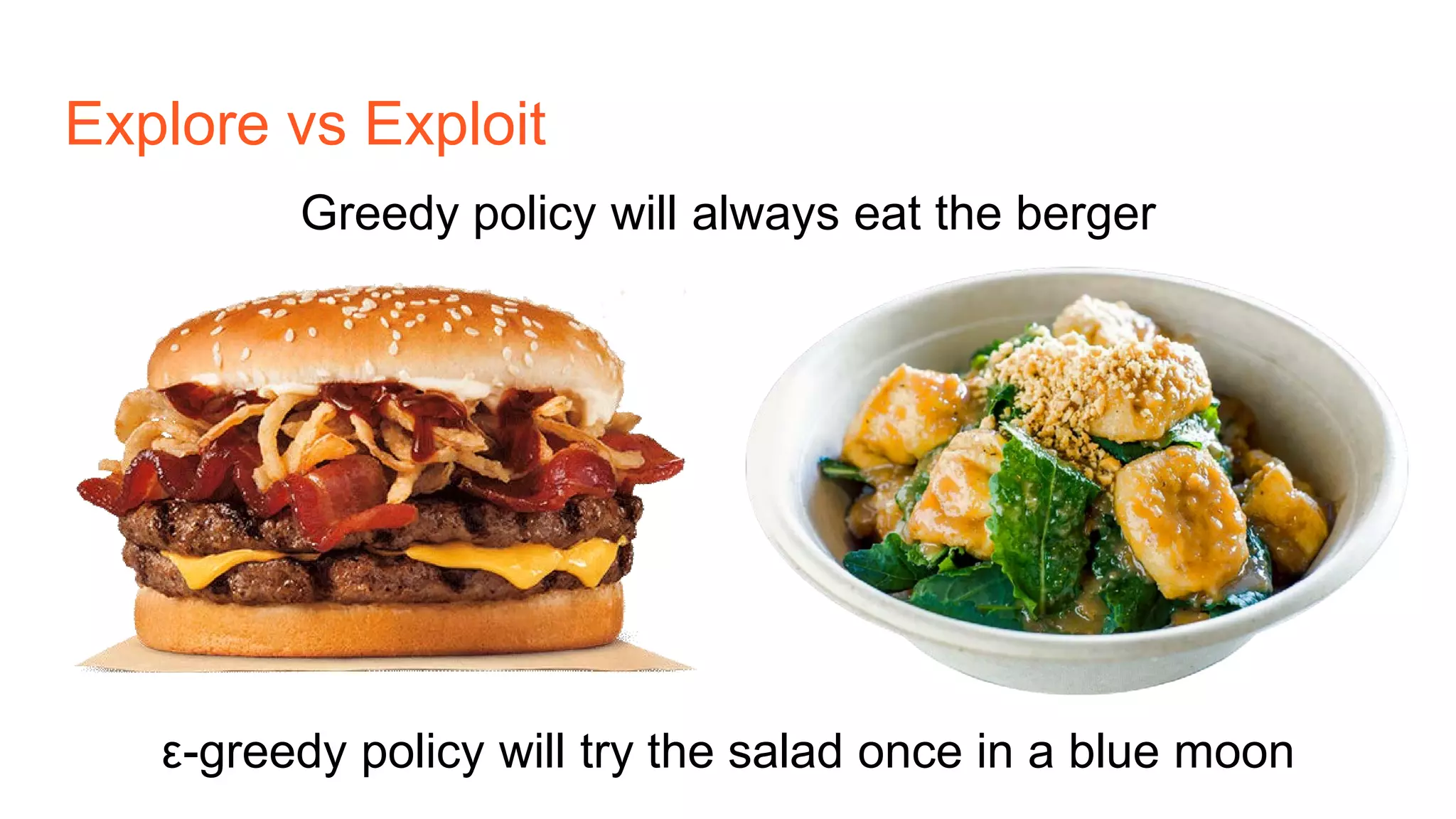
Explore vs Exploit
Greedy policy will always eat the berger
ε-greedy policy will try the salad once in a blue moon
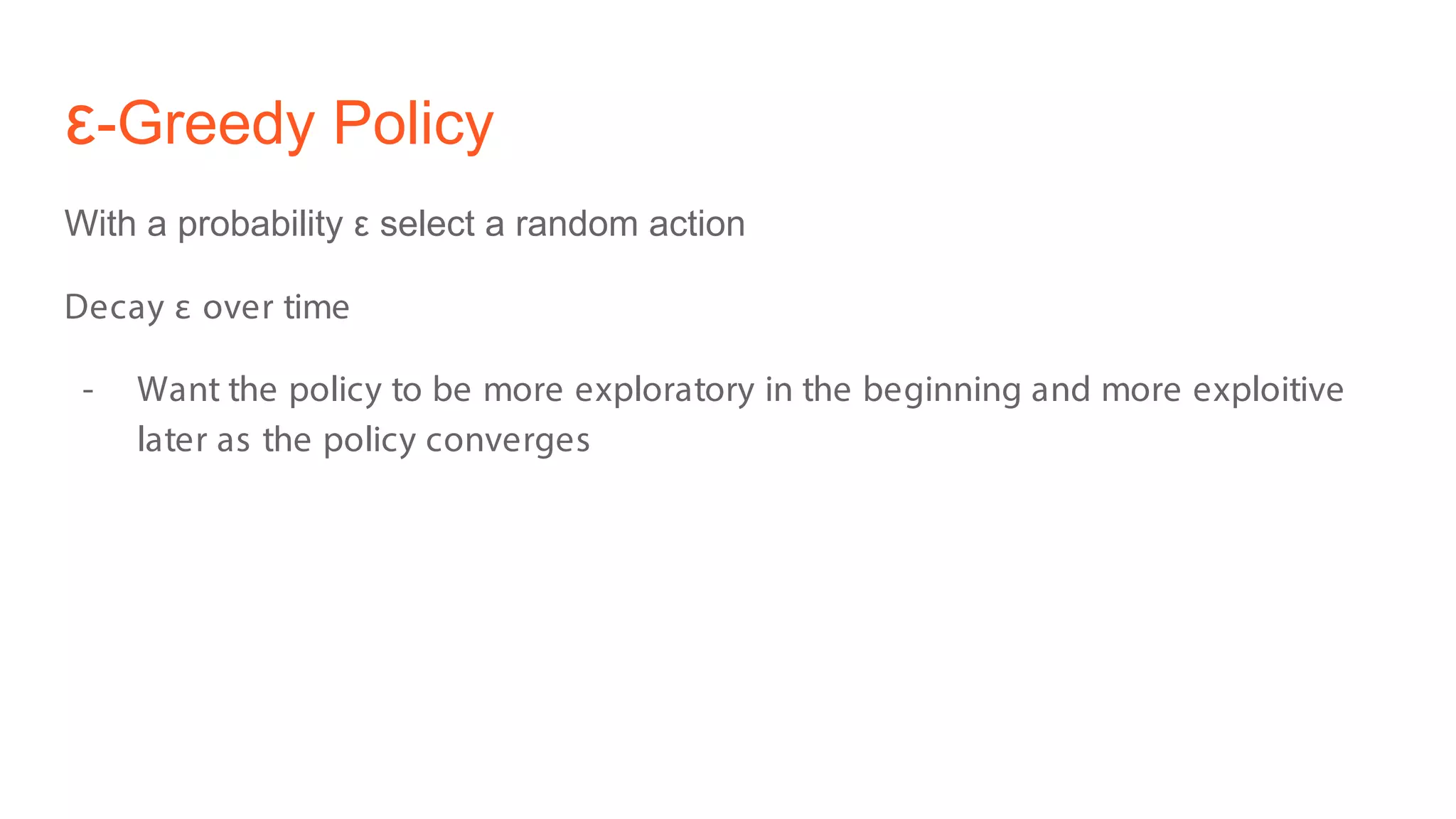
ε-Greedy Policy
With a probability ε select a random action
Decay ε over time
- Want the policy to be more exploratory in the beginning and more exploitive
later as the policy converges
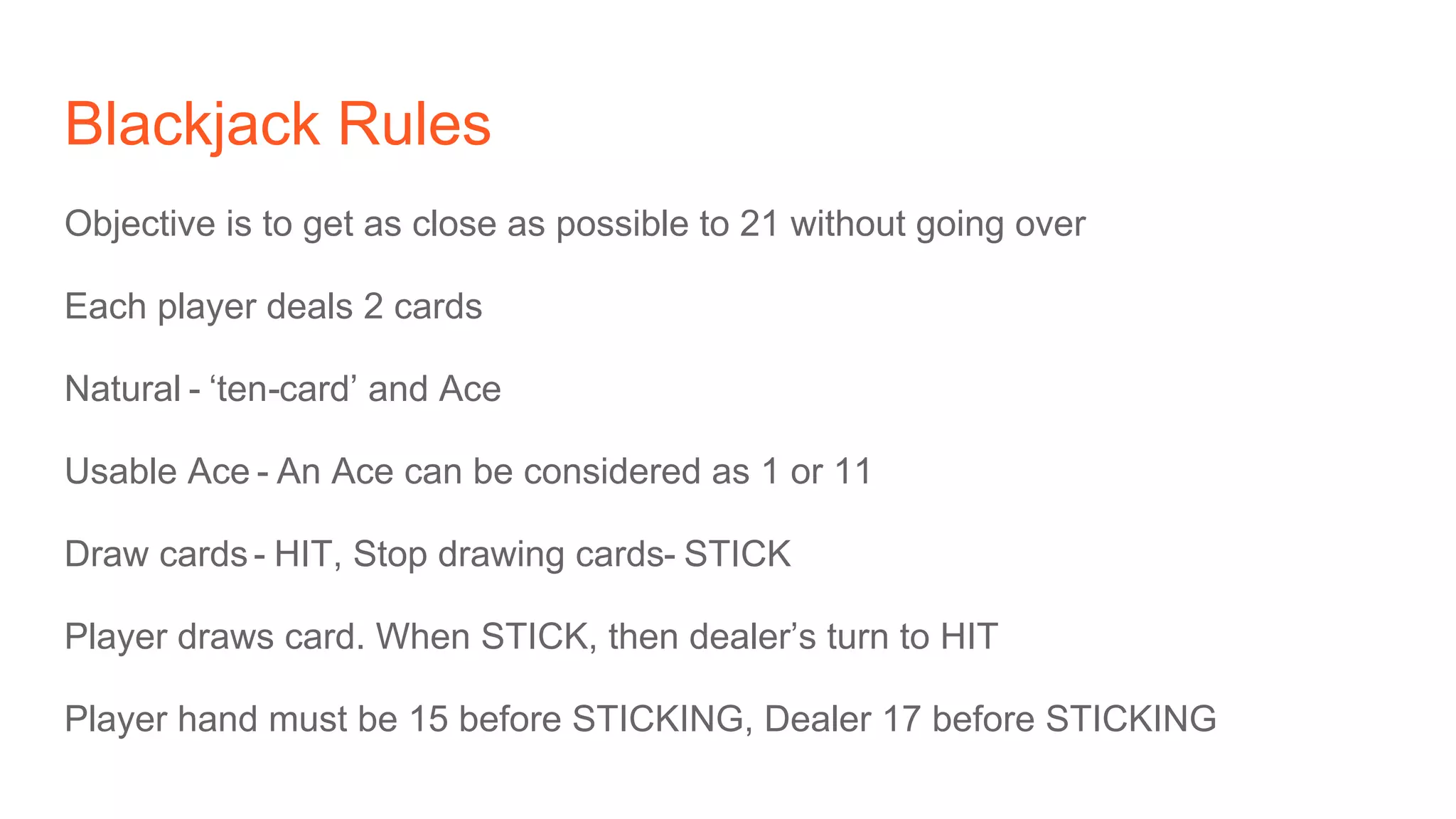
Blackjack Rules
Objective is to get as close as possible to 21 without going over
Each player deals 2 cards
Natural - ‘ten-card’ and Ace
Usable Ace - An Ace can be considered as 1 or 11
Draw cards - HIT, Stop drawing cards- STICK
Player draws card. When STICK, then dealer’s turn to HIT
Player hand must be 15 before STICKING, Dealer 17 before STICKING
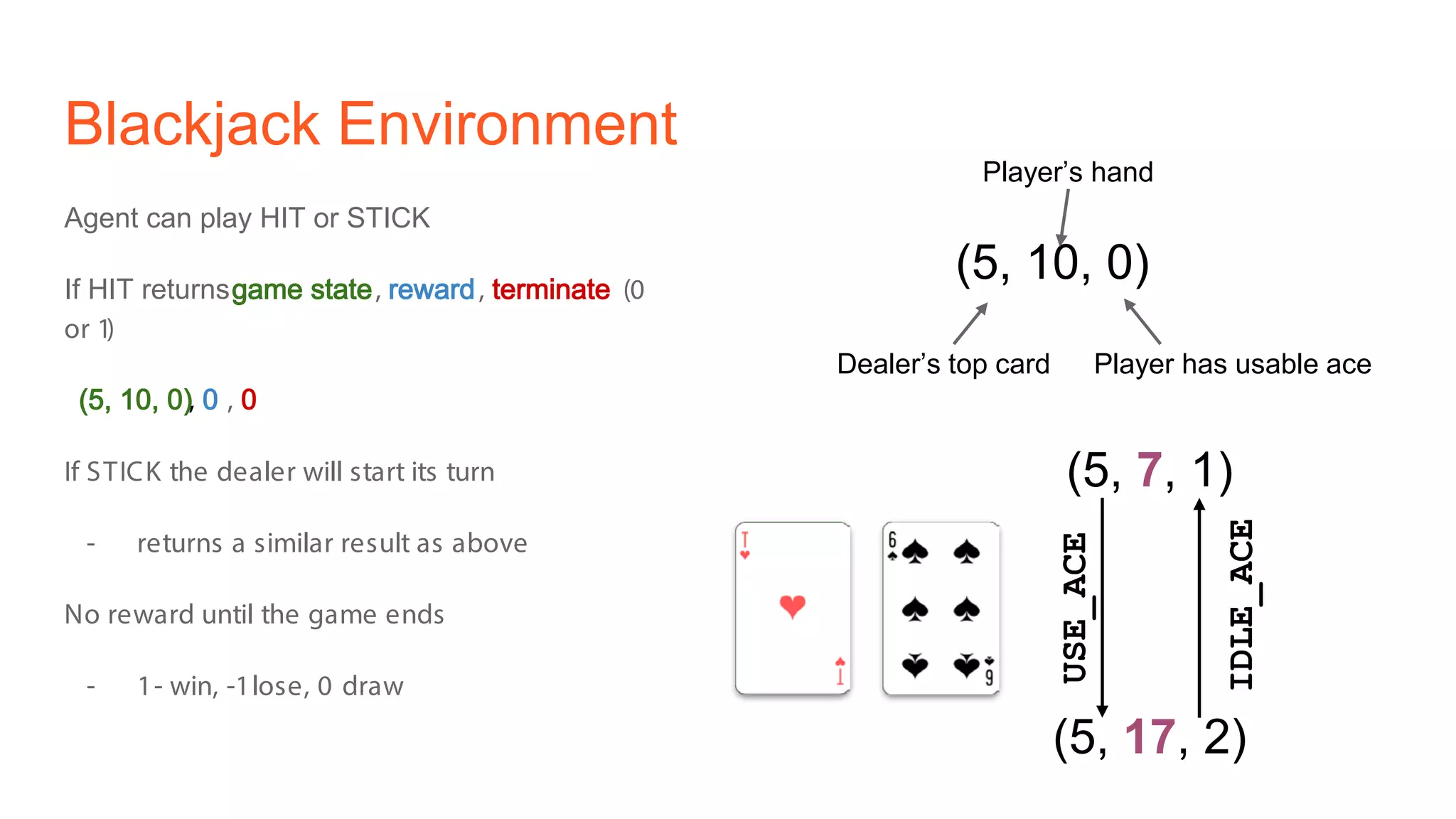
Blackjack Environment
Agent can play HIT or STICK
If HIT returnsgame state, reward, terminate (0
or 1)
(5, 10, 0), 0 , 0
If STICK the dealer will start its turn
- returns a similar result as above
No reward until the game ends
- 1- win, -1lose, 0 draw
(5, 10, 0)
Dealer’s top card
Player’s hand
Player has usable ace
(5, 7, 1)
(5, 17, 2)
USE_ACE
IDLE_ACE
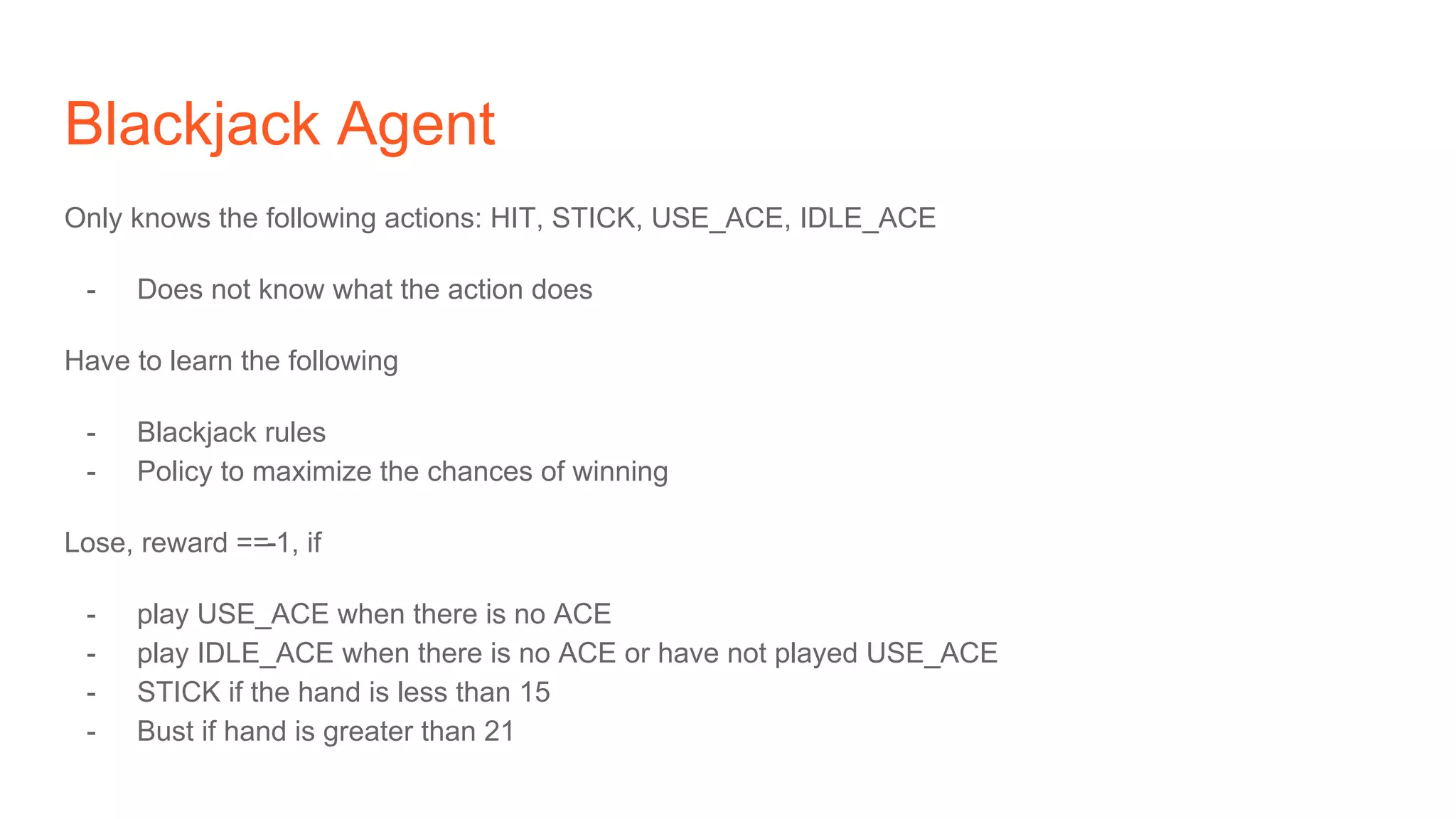
Blackjack Agent
Only knows the following actions: HIT, STICK, USE_ACE, IDLE_ACE
- Does not know what the action does
Have to learn the following
- Blackjack rules
- Policy to maximize the chances of winning
Lose, reward ==-1, if
- play USE_ACE when there is no ACE
- play IDLE_ACE when there is no ACE or have not played USE_ACE
- STICK if the hand is less than 15
- Bust if hand is greater than 21
Demo
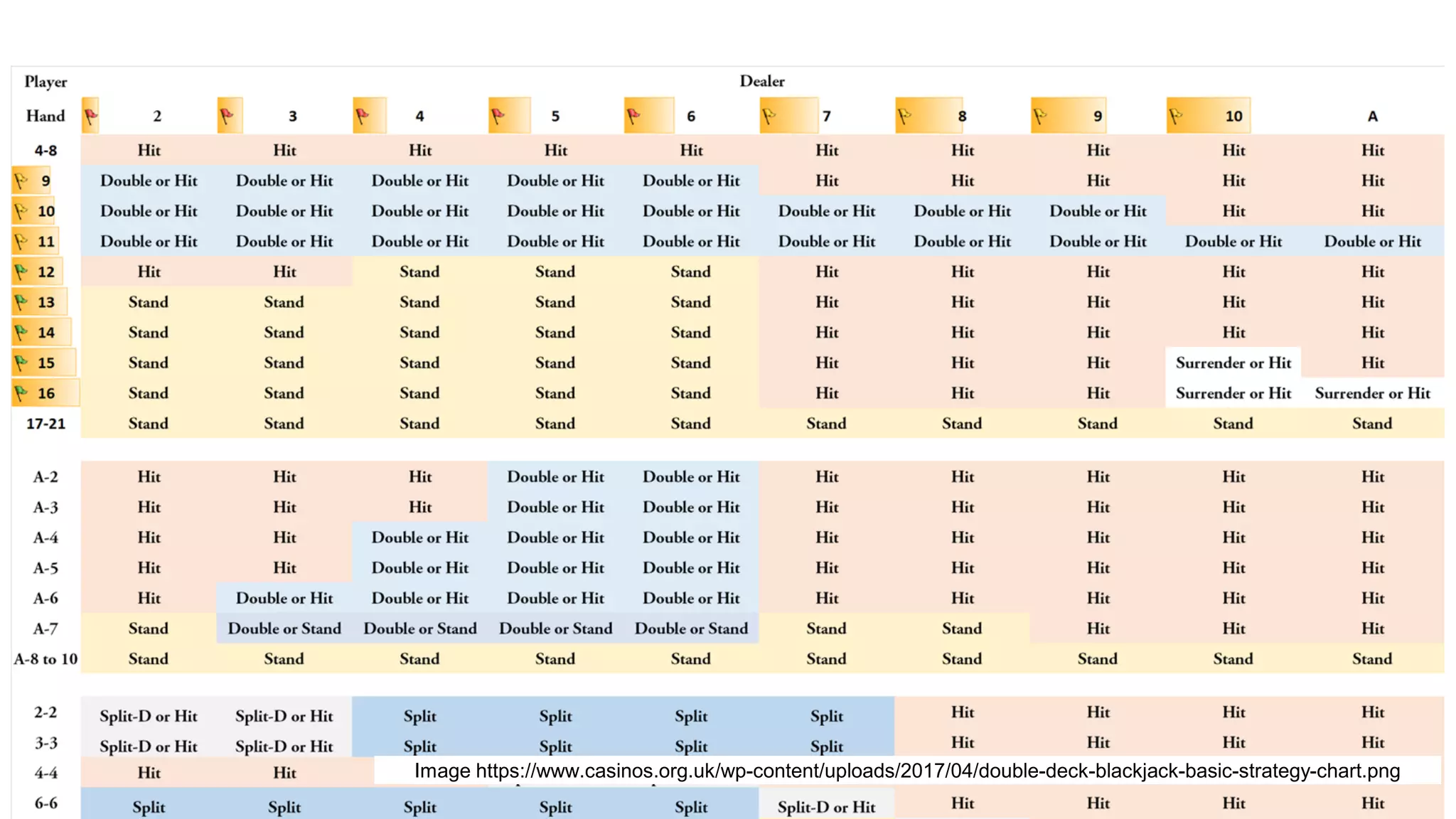
Image https://www.casinos.org.uk/wp-content/uploads/2017/04/double-deck-blackjack-basic-strategy-chart.png
Where can I learn more?
Berkeley CS188- http://ai.berkeley.edu/lecture_slides.html (MDP)
David Silver- http://www0.cs.ucl.ac.uk/staff/D.Silver/web/Teaching.html
Reinforcement Learning - An Introduction
by Richard S Sutton and Andrew G Barto
http://www.incompleteideas.net/book/bookdraft2017no
v5.pdf

NUS-ISS Learning Day 2018-How to train your program to play black jack

  • 1.
    How to trainyour agent to play Blackjack Lee Chuk Munn chukmunnlee@nus.edu.sg Slides athttps://bit.ly/agent2018
  • 2.
    What is thistalk about? An introduction to key ideas in reinforcement learning Conceptual, fairly high level Intuition about the maths behind RL Demos
  • 3.
    What is MachineLearning? “Machine learning is the field of study that gives computers the ability to learn without being explicitly programmed” Arthur Samuel
  • 4.
  • 5.
    Wrote the first programthat learn how to play checkers in 1959 Uses the minimax algorithm Arthur Samuel
  • 6.
  • 7.
  • 8.
    How Do MachinesLearn? By generalizing - Supervised learning - Give samples and answers to the sample - Infer rules from the samples and the answer By comparing - Unsupervised learning - Give samples but do not give the answer - Use some measurement to infer similarity by grouping them By feedback - Reinforcement learning - Do not give samples and answer - Infer the rules from positive or negative feedback Like babies
  • 9.
    Reinforcement Learning Learn byinteracting with the environment The experiences (rewards) will indicate if an action is good or bad Image: https://medium.freecodecamp.org/an-introduction- to-reinforcement-learning-4339519de419
  • 10.
  • 11.
  • 12.
    Trajectory S0 Observe a state S0A0 Take an action - the policy S0 A0 R0 Receive a reward - feedback S0 A0 R0 S1 Observe a new state S0 A0 R0 S1 A1 Take another action
  • 13.
    Policy and CumulativeReward Policy - how do you select the next action? Select the action so that will land you on the best next state How do you decide which is the best next state?
  • 14.
    State Value Note: ignoringdiscounting or setting discount to 1
  • 15.
    State Value Estimate howgood a state is with respect to how much cumulative reward I can get from this point onwards The better the returns the higher the state value Some state values are real returns some are estimated
  • 16.
    Action Value What isthe best action to take from a particular state The best action is the action that will land me in the next best state Actions that lead to states with high state values will have high action values
  • 17.
    Getting to Changi DriveMRT 60% 40% Jam=30% +30min 75mins50mins 80mins No jam=70%
  • 18.
    Getting to Changi Estimatedtime to get from home to airport is ≅65mins
  • 19.
  • 20.
  • 21.
    Getting to Changi- Backup Diagram Drive MRT 60% 40% Jam=30% +30min 75mins50mins 80mins No jam=70% 59mins 75mins 65.4mins
  • 22.
    Racing Car Example- Berkeley CS188 Image: http://ai.berkeley.edu/lecture_slides.html Lecture 8 What policy would give you maximum returns?
  • 23.
    Racing Car States- cool,warm, overheated Image: http://ai.berkeley.edu/lecture_slides.html Lecture 8 Moreiterations
  • 24.
    Calculate the StateValue Recursive definition. The equation bootstrap off each other Image: http://ai.berkeley.edu/lecture_slides.html Lecture 8
  • 25.
    State Values for5 Iterations State values cool warm overheated V0 0 0 0 V1 3.0 -9.0 0 V2 3.0 -12.0 0 V3 1.5 -13.5 0 V4 -1.5 -15.0 0 V5 -6.75 -17.25 0 How good is it to be in a state? Why are the state values so bad?
  • 26.
    Action Value No wayto make decision with state value For every state find the best action Treat this as an array of terms. max behaves like Python max() function
  • 27.
    Action Value for3 Iterations S0 action {'cool': 0, 'warm': 0, 'overheated': 0} S1 action {'cool': 2.0, 'warm': 1.0} {'cool': 'fast', 'warm': 'slow'} S2 action {'cool': 3.5, 'warm': 2.5} {'cool': 'fast', 'warm': 'slow'} S3 action {'cool': 5.0, 'warm': 4.0} {'cool': 'fast', 'warm': 'slow'} S4 action {'cool': 6.5, 'warm': 5.5} {'cool': 'fast', 'warm': 'slow'}
  • 28.
    What if youdon’t have the model? Laws of Large Numbers
  • 29.
    Model Free Model free- no knowledge of MDP viz. the transitions probability and reward Approximate the probability of certain outcomes by running multiple trials Monte Carlo methods learn directly from episodes of experiences F +2 F -10 F +2 F +1 F +2 F -10
  • 30.
    Monte Carlo Algorithm Generatean episode using your current agent’s policy (c, f, +2, w), (w, f, 1, c), (c, f, +2, w), (w, f, -10, o) Average the return for the first occurrence of (state, action) pair (c, f) = 2 + 1 + 2 + -10 / 1 = -5 (w, f) = 1 + 2 + -10 / 1 = -7 Use the slightly new policy to generate another episode F +2 F +1 F +2 F -10 Policy emerging. “Going fast in cold state is better than going fast in warm state”
  • 31.
    Monte Carlo Algorithm Lawsof large numbers only works if you havelots of varied data Require to explore all possible (state, action) pair Current policy is ‘greedy’ - only select the best action for a state Not an issue if its model-based
  • 32.
    Explore vs Exploit Greedypolicy will always eat the berger ε-greedy policy will try the salad once in a blue moon
  • 33.
    ε-Greedy Policy With aprobability ε select a random action Decay ε over time - Want the policy to be more exploratory in the beginning and more exploitive later as the policy converges
  • 34.
    Blackjack Rules Objective isto get as close as possible to 21 without going over Each player deals 2 cards Natural - ‘ten-card’ and Ace Usable Ace - An Ace can be considered as 1 or 11 Draw cards - HIT, Stop drawing cards- STICK Player draws card. When STICK, then dealer’s turn to HIT Player hand must be 15 before STICKING, Dealer 17 before STICKING
  • 35.
    Blackjack Environment Agent canplay HIT or STICK If HIT returnsgame state, reward, terminate (0 or 1) (5, 10, 0), 0 , 0 If STICK the dealer will start its turn - returns a similar result as above No reward until the game ends - 1- win, -1lose, 0 draw (5, 10, 0) Dealer’s top card Player’s hand Player has usable ace (5, 7, 1) (5, 17, 2) USE_ACE IDLE_ACE
  • 36.
    Blackjack Agent Only knowsthe following actions: HIT, STICK, USE_ACE, IDLE_ACE - Does not know what the action does Have to learn the following - Blackjack rules - Policy to maximize the chances of winning Lose, reward ==-1, if - play USE_ACE when there is no ACE - play IDLE_ACE when there is no ACE or have not played USE_ACE - STICK if the hand is less than 15 - Bust if hand is greater than 21
  • 37.
  • 38.
  • 39.
    Where can Ilearn more? Berkeley CS188- http://ai.berkeley.edu/lecture_slides.html (MDP) David Silver- http://www0.cs.ucl.ac.uk/staff/D.Silver/web/Teaching.html Reinforcement Learning - An Introduction by Richard S Sutton and Andrew G Barto http://www.incompleteideas.net/book/bookdraft2017no v5.pdf