IMPLEMENTATION
STEPS OF NURSING
PROCESS
Introduction
 Nursing process is action oriented , client
centered and outcome directed
 Based on assessment and diagnosing phases the
nurse implements the interventions and
evaluating the desired outcome
 Implementing is the action phase in which the
nurse performs the nursing interventions
 Consist of doing and documenting the activities
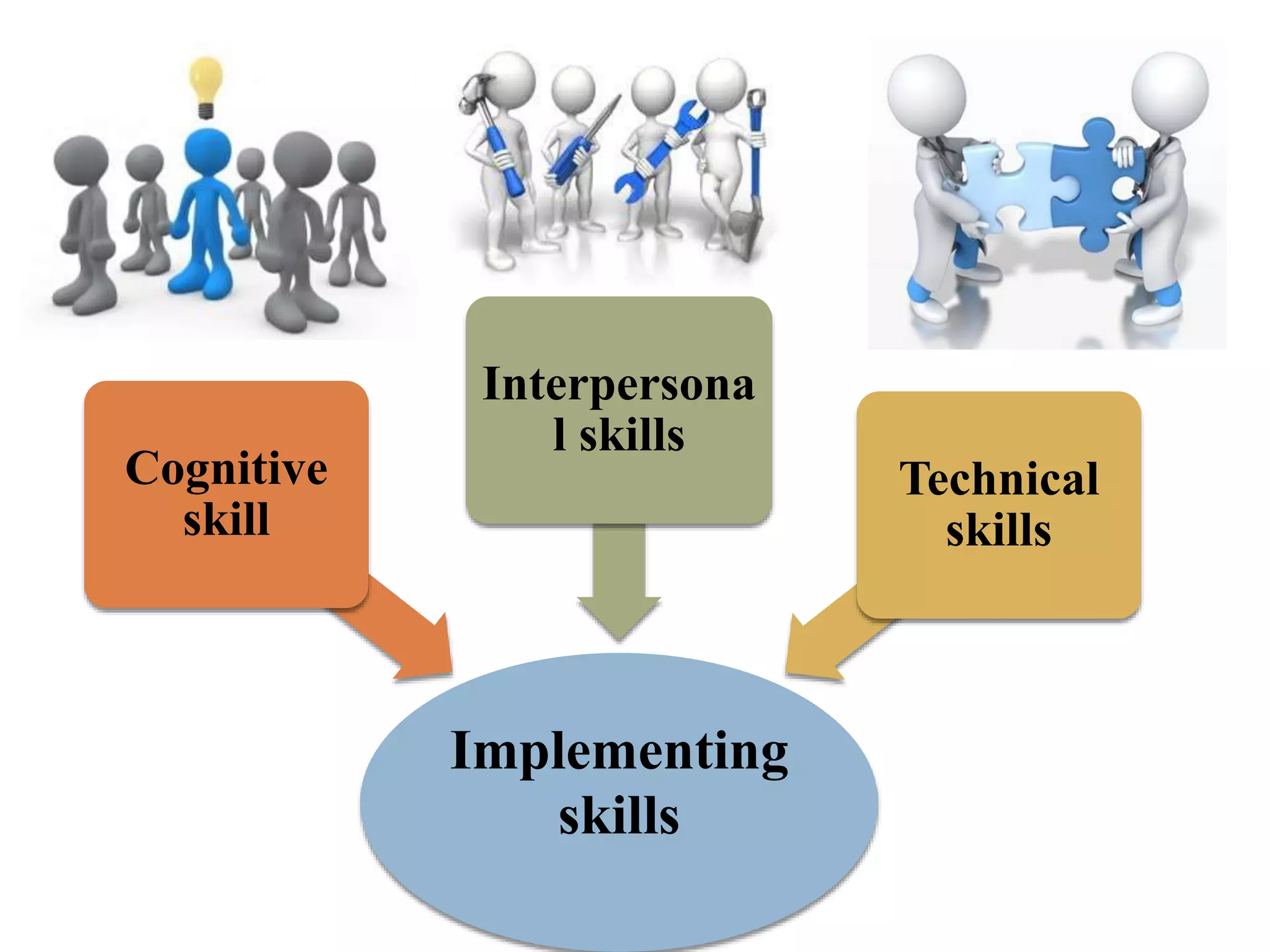
Implementing
skills
Cognitive
skill
Interpersona
l skills
Technical
skills
Skills ………….
Cognitive skills
• Problem
solving
• Decision
making
• Critical
thinking
Interpersonal
skills
• Verbal non
verbal
communication
• Therapeutic
communication
Technical skills
• Manipulating
equipment
• Giving
injections
• Bandaging
• Moving ,lifting
and
repositioning
the client
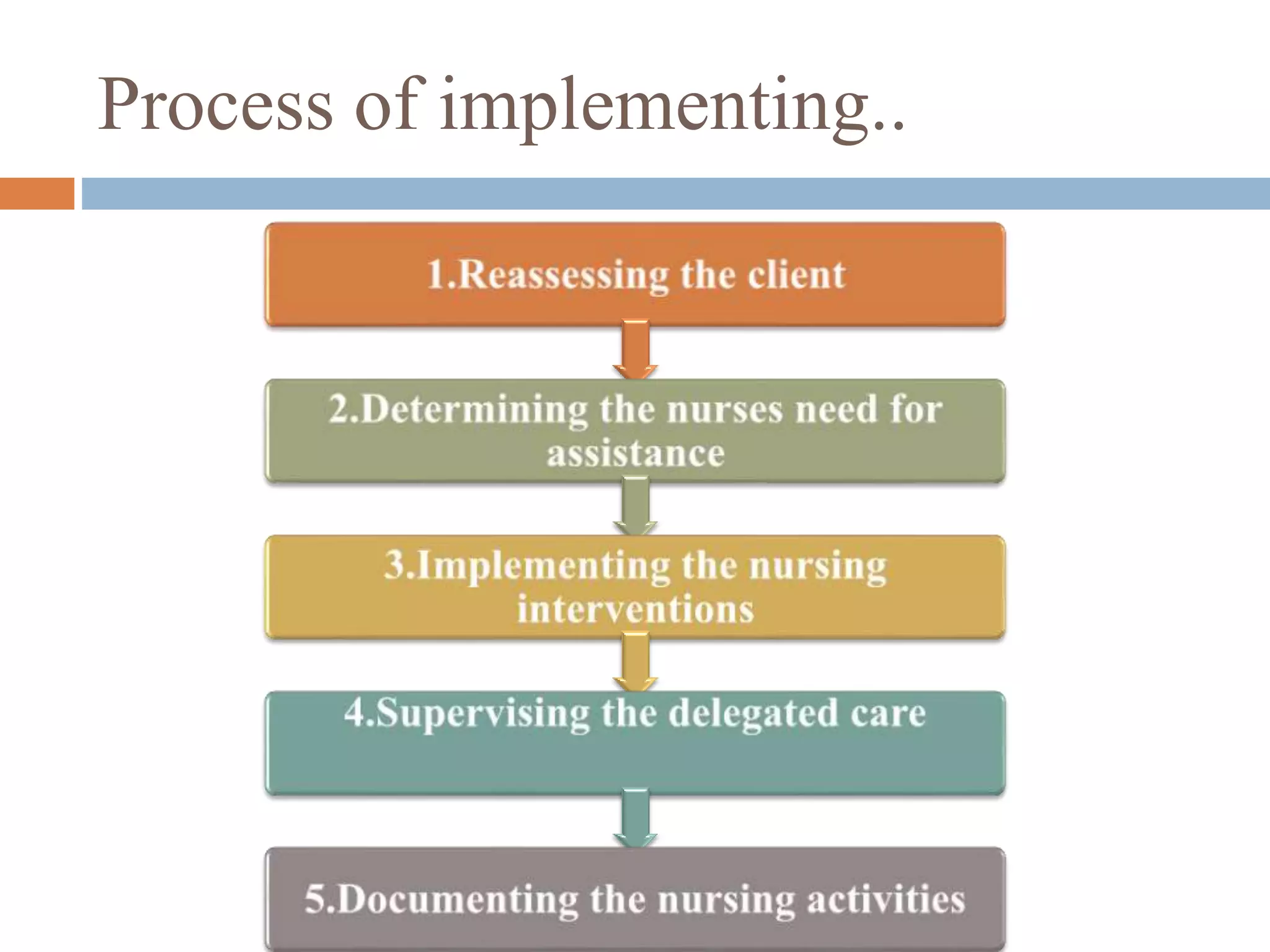
Process of implementing..
Process…….
 1.Reassessing the client
Before implementing an intervention, the nurse must reassess the
client to make sure the interventions still needed.
 2.Determining the nurses need for assistance
When implementing some nursing interventions , the nurse may
require assistance for one or more of the following reasons
 Assistance would reduce the stress on the client
 The nurse unable to implement the nursing activity safely or
efficient alone
 The nurse lacks the knowledge or skills to implement a particular
nursing activity
Process…….
 3.Implementing the nursing interventions
 The nurses actions may be dependent or independent
 It is important to explain to the client what intervention will be done
 Ensure client privacy
 Guidelines
 Basic nursing interventions on scientific knowledge , nursing research ,and
professional standards of care (evidence based practice) when there exists
 Clearly understand the interventions to be implemented and question any
that are not understood
 Adapt activities to the individual client
 Implement safe care
 Provide teaching, support and comfort
 Be holistic
 Respect the dignity of the client and enhance the client self esteem
 Encourage client participation in care
Process………….
 4.Supervising the delegated care
 If care delegated to other health care personnel, the nurse
responsible for the clients overall care
 Ensure that the activities have been implemented according
to the care plan
 5.Documenting the nursing activities
 Nurse complete the implementing phase by recording the
interventions and client responses in the progress note
 Part of permanent client record
 Nursing actions are communicated through verbally as well
as writing
EVALUATION
STEPS OF NURSING
PROCESS
Introduction
 Evaluating is the fifth and last phase of the nursing process
 Evaluating is a planned ,ongoing , purposeful activity in
which clients and health care professionals determine
a) The client progress toward achievement of goals and outcomes
b) Effectiveness of the nursing care plan
 Help to determine whether the nursing interventions
should be terminated, continued or changed
 Evaluation is continuous
 Performed at specified intervals
 Through evaluating , nurses demonstrate responsibility
and accountability for their action
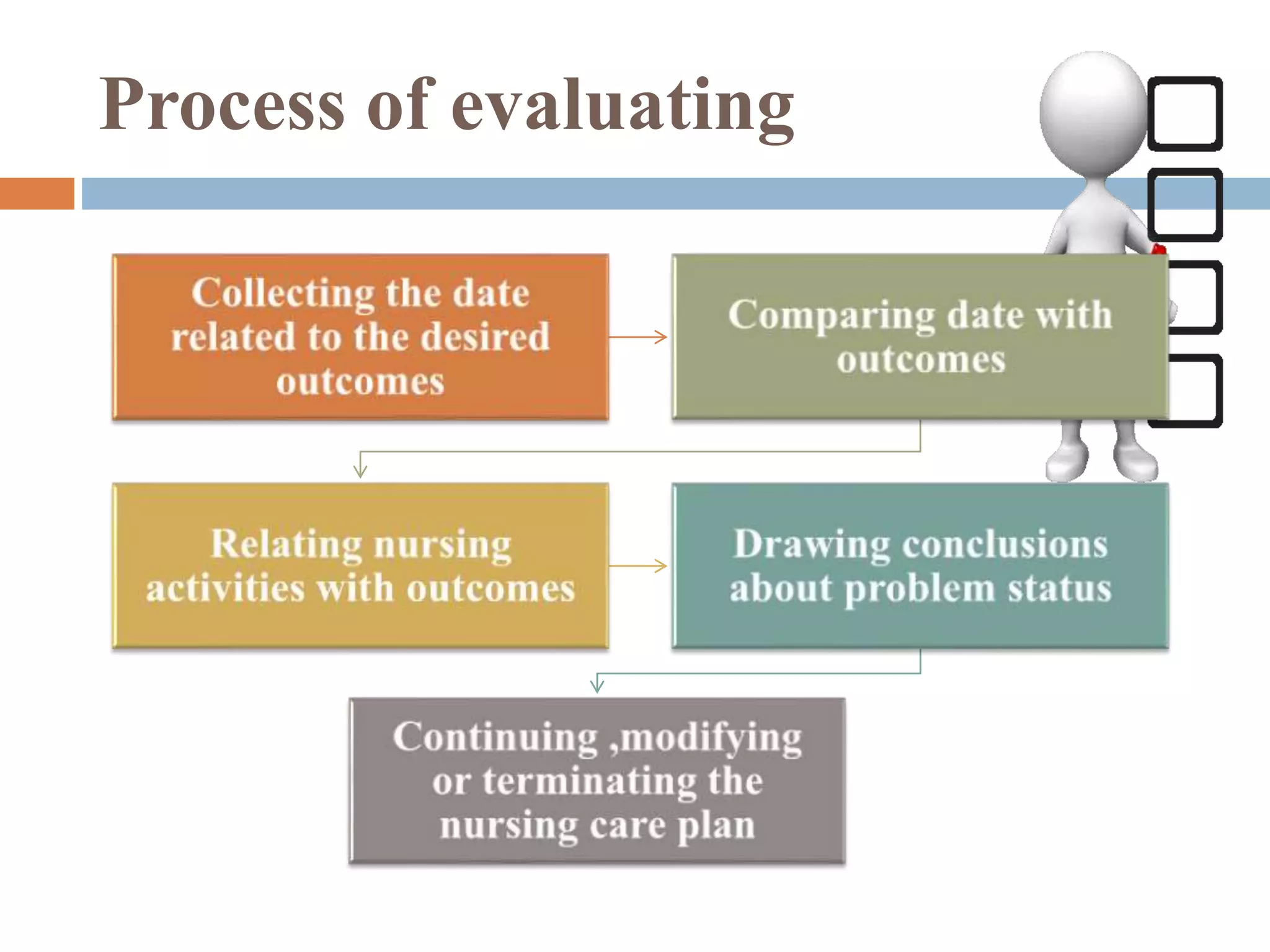
Process of evaluating
1.Collecting the date related to the desired
outcomes
 Using clearly stated ,precise and measurable
desired outcomes as a guide
 Conclusions can be drawn about whether goals
have been met
 Collect both subjective and objective data
 Data must be recorded concisely and accurately to
facilitate the next part of the evaluating process
2. Comparing data with
outcomes
 Both the nurse and client play an active role in
comparing the clients actual responses with the desired
outcome
 Three possible conclusions,
 The goal was met
 The goal was partially met
 The goals was not met
 After determining whether the goal met , the nurse
write an evaluative statement
 Evaluation statement
 Consist of two pats a conclusion and supportive data
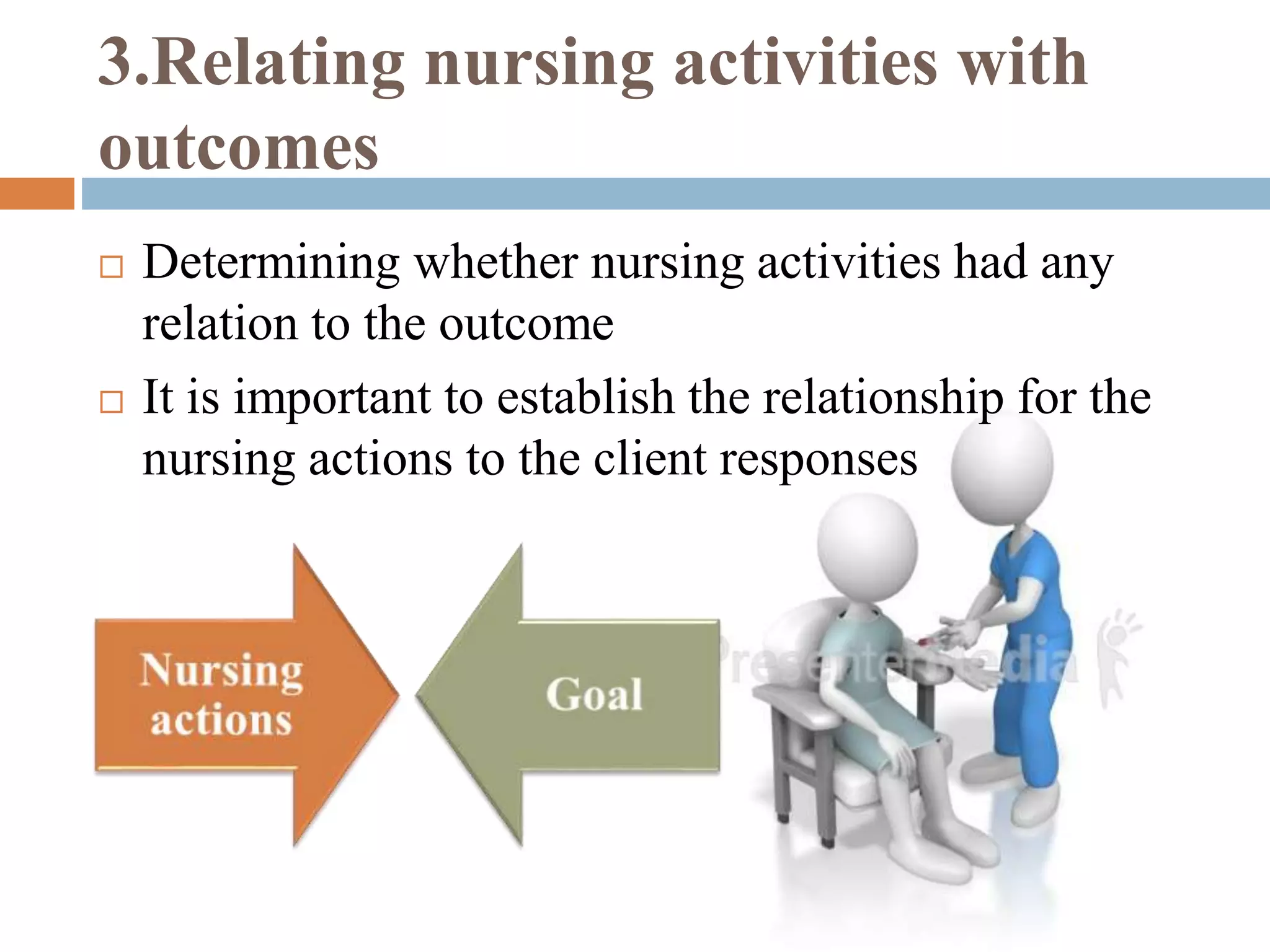
3.Relating nursing activities with
outcomes
 Determining whether nursing activities had any
relation to the outcome
 It is important to establish the relationship for the
nursing actions to the client responses
4.Drawing conclusions about
problem status
 The nurses uses the judgments about goal achievement to
determine whether the care plan was effective in
resolving , reducing or preventing client problem
 Conclusions
 When goals met ,
 The actual problem stated in the nursing diagnoses has been
resolved
 The potential problem is being prevented
 The actual problem still exists even though some goals are being met
 When goals partially met or not met
 The care plan may need to be revised, since the problem is only
partially resolved
 The care plan does more not need revise , because the client merely
need more time to achieve previously established goals
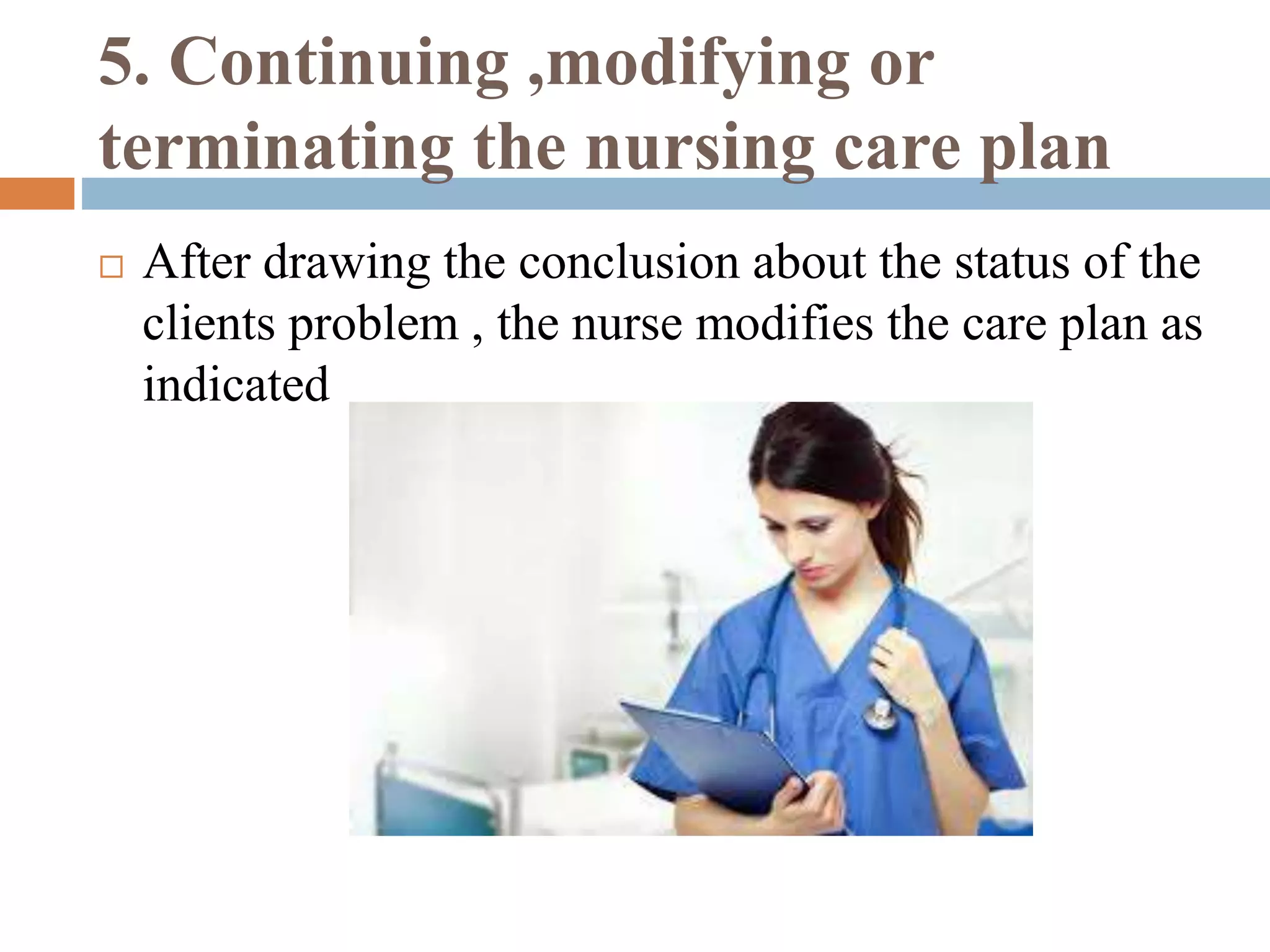
5. Continuing ,modifying or
terminating the nursing care plan
 After drawing the conclusion about the status of the
clients problem , the nurse modifies the care plan as
indicated
THANK YOU

nursing process:Implementation and evaluation

  • 1.
  • 2.
    Introduction  Nursing processis action oriented , client centered and outcome directed  Based on assessment and diagnosing phases the nurse implements the interventions and evaluating the desired outcome  Implementing is the action phase in which the nurse performs the nursing interventions  Consist of doing and documenting the activities
  • 3.
  • 4.
    Skills …………. Cognitive skills •Problem solving • Decision making • Critical thinking Interpersonal skills • Verbal non verbal communication • Therapeutic communication Technical skills • Manipulating equipment • Giving injections • Bandaging • Moving ,lifting and repositioning the client
  • 5.
  • 6.
    Process…….  1.Reassessing theclient Before implementing an intervention, the nurse must reassess the client to make sure the interventions still needed.  2.Determining the nurses need for assistance When implementing some nursing interventions , the nurse may require assistance for one or more of the following reasons  Assistance would reduce the stress on the client  The nurse unable to implement the nursing activity safely or efficient alone  The nurse lacks the knowledge or skills to implement a particular nursing activity
  • 7.
    Process…….  3.Implementing thenursing interventions  The nurses actions may be dependent or independent  It is important to explain to the client what intervention will be done  Ensure client privacy  Guidelines  Basic nursing interventions on scientific knowledge , nursing research ,and professional standards of care (evidence based practice) when there exists  Clearly understand the interventions to be implemented and question any that are not understood  Adapt activities to the individual client  Implement safe care  Provide teaching, support and comfort  Be holistic  Respect the dignity of the client and enhance the client self esteem  Encourage client participation in care
  • 8.
    Process………….  4.Supervising thedelegated care  If care delegated to other health care personnel, the nurse responsible for the clients overall care  Ensure that the activities have been implemented according to the care plan  5.Documenting the nursing activities  Nurse complete the implementing phase by recording the interventions and client responses in the progress note  Part of permanent client record  Nursing actions are communicated through verbally as well as writing
  • 9.
  • 10.
    Introduction  Evaluating isthe fifth and last phase of the nursing process  Evaluating is a planned ,ongoing , purposeful activity in which clients and health care professionals determine a) The client progress toward achievement of goals and outcomes b) Effectiveness of the nursing care plan  Help to determine whether the nursing interventions should be terminated, continued or changed  Evaluation is continuous  Performed at specified intervals  Through evaluating , nurses demonstrate responsibility and accountability for their action
  • 11.
  • 12.
    1.Collecting the daterelated to the desired outcomes  Using clearly stated ,precise and measurable desired outcomes as a guide  Conclusions can be drawn about whether goals have been met  Collect both subjective and objective data  Data must be recorded concisely and accurately to facilitate the next part of the evaluating process
  • 13.
    2. Comparing datawith outcomes  Both the nurse and client play an active role in comparing the clients actual responses with the desired outcome  Three possible conclusions,  The goal was met  The goal was partially met  The goals was not met  After determining whether the goal met , the nurse write an evaluative statement  Evaluation statement  Consist of two pats a conclusion and supportive data
  • 14.
    3.Relating nursing activitieswith outcomes  Determining whether nursing activities had any relation to the outcome  It is important to establish the relationship for the nursing actions to the client responses
  • 15.
    4.Drawing conclusions about problemstatus  The nurses uses the judgments about goal achievement to determine whether the care plan was effective in resolving , reducing or preventing client problem  Conclusions  When goals met ,  The actual problem stated in the nursing diagnoses has been resolved  The potential problem is being prevented  The actual problem still exists even though some goals are being met  When goals partially met or not met  The care plan may need to be revised, since the problem is only partially resolved  The care plan does more not need revise , because the client merely need more time to achieve previously established goals
  • 16.
    5. Continuing ,modifyingor terminating the nursing care plan  After drawing the conclusion about the status of the clients problem , the nurse modifies the care plan as indicated
  • 17.