NURSING MANAGEMENT OF
PATIENTS WITH
IMMUNOLOGIC DISORDERS
UNIT IX
IMMUNITY
• Immunity refers to the body’s specific
protective response to a foreign agent
or organism.
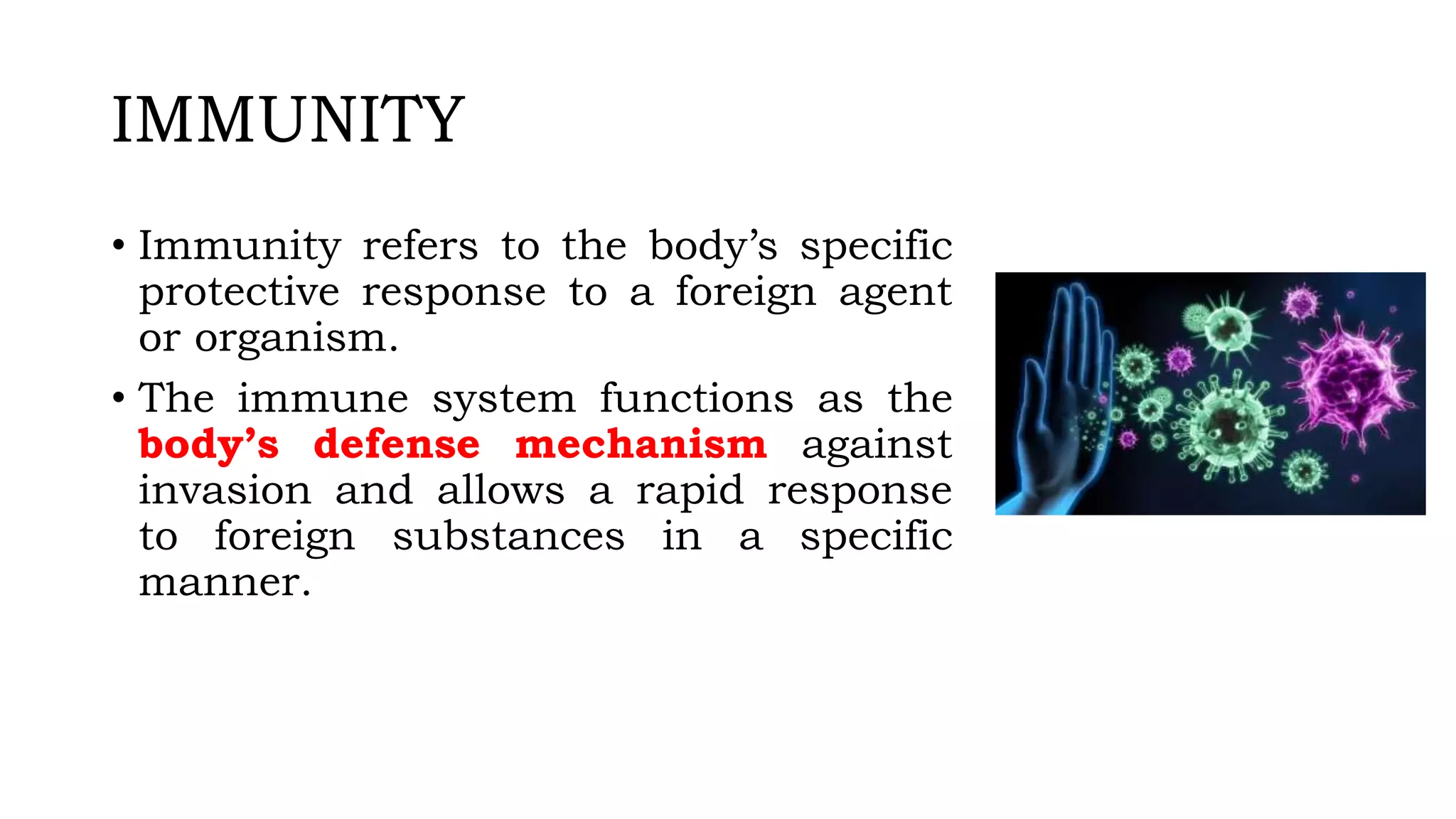
• The immune system functions as the
body’s defense mechanism against
invasion and allows a rapid response
to foreign substances in a specific
manner.
ANATOMY AND PHYSIOLOGY OF
IMMUNE SYSTEM
The basic function of the immune
system is to remove foreign antigens
such as viruses and bacteria to
maintain homeostasis.
TYPES OF IMMUNE SYSTEM
Mechanisms of natural immune
system
• White blood cells action
• Inflammatory response
• Physical and chemical barriers
• Immune regulation
Mechanisms of aquired immune
system
• The phagocytic immune response –WBC and
Macrophages
• The humoral or antibody immune response – B
lymphocytes
• The cellular immune response- T cells
• Complement System- Circulating plasma protein
• Immunomodulators-Interferons and colony-stimulating
factors
•
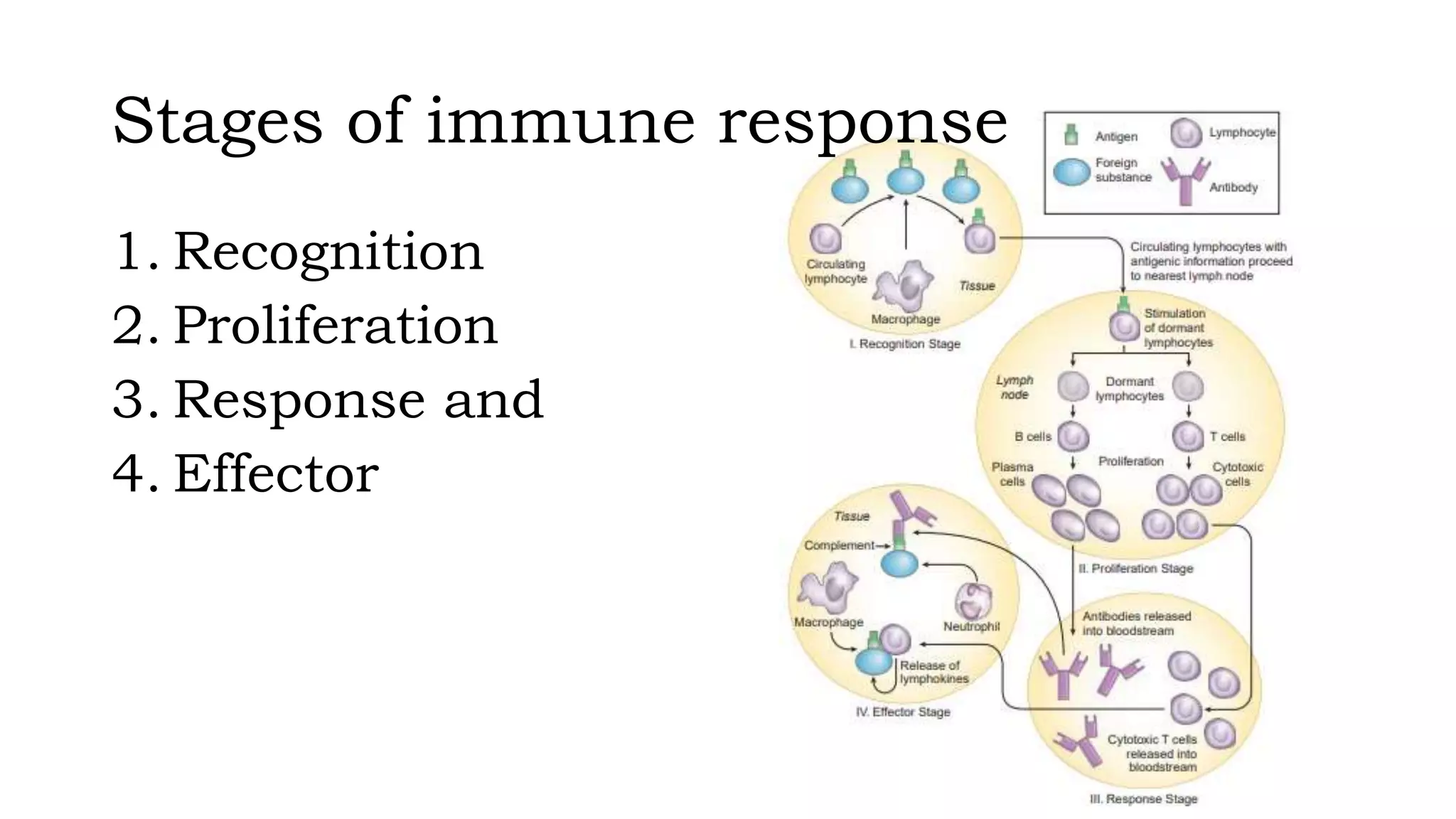
Stages of immune response
1. Recognition
2. Proliferation
3. Response and
4. Effector
Humoral immune response
• Antigen recognition
• Antigen antibody Binding
ASSESSMENT OF IMMUNE
SYSTEM
History
• Gender
• Past and present conditions
• Events provides clues to patients
immune status
• Gerontologic condition
• Nutrition
• Infection and immunization
• Allergy
History
• Disorders and diseases
• Auto immune disorders :SLE, Rheumatoid arthritis
• Neoplastic diseases
• Chronic illness and surgery
• Special problems : burns
• Medications and blood transfusion
• Lifestyle factors
• Psychoneuroimmunologic factors
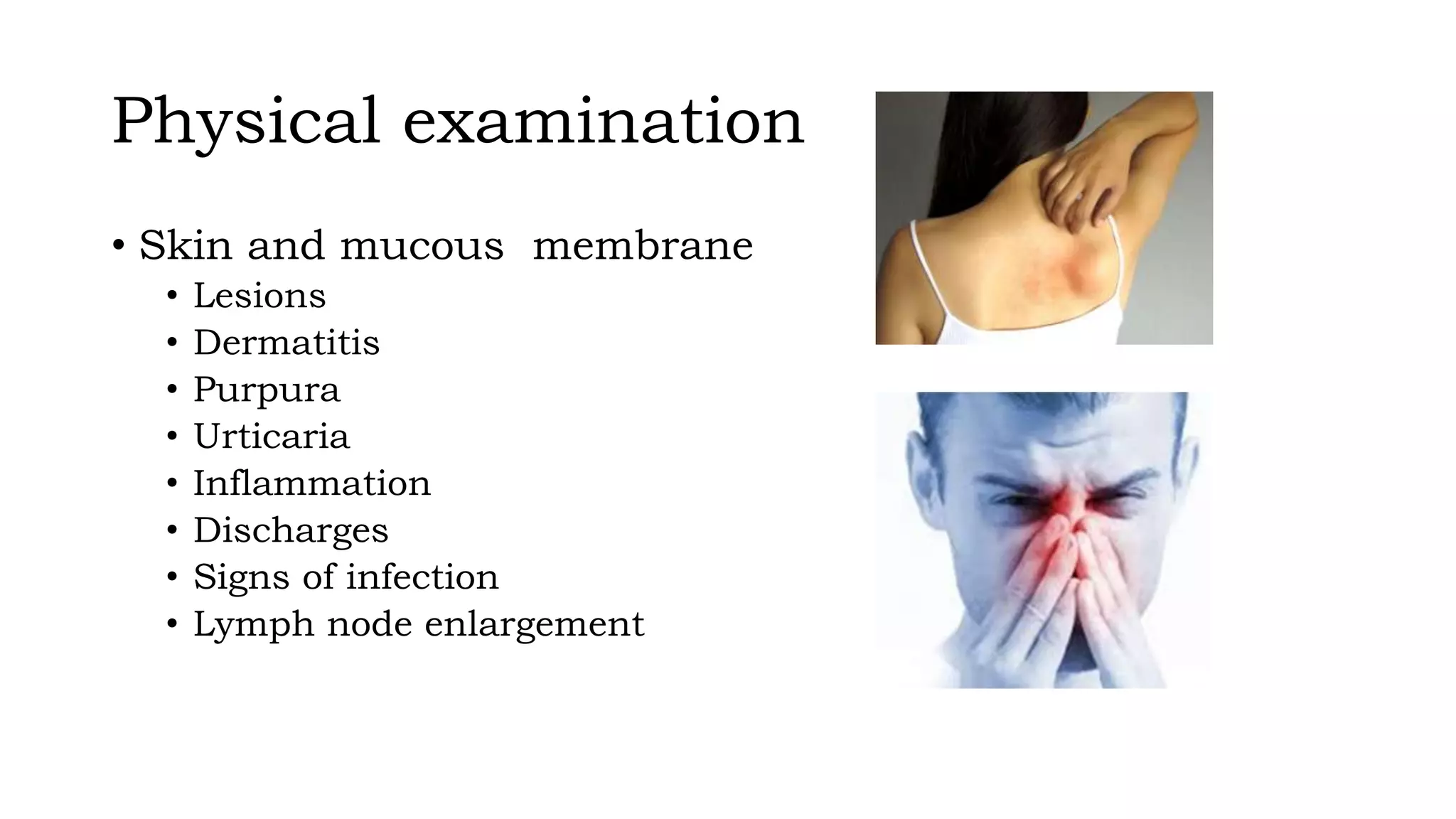
Physical examination
• Skin and mucous membrane
• Lesions
• Dermatitis
• Purpura
• Urticaria
• Inflammation
• Discharges
• Signs of infection
• Lymph node enlargement
Blood tests Skin tests Bone marrow
biopsy
Diagnostic evaluation
Humoral (Antibody-mediated)
Immunity Tests
• B-cell quantification with monoclonal antibody
• In vivo immunoglobulin synthesis with T-cell subsets
• Specific antibody response
• Total serum globulins and individual immunoglobulins
(electrophoresis, immunoelectrophoresis, single radial
immunodiffusion, nephelometry, and isohemagglutinin
techniques)
Cellular (Cell-mediated) Immunity
Tests
• Total lymphocyte count
• T-cell and T-cell-subset quantification with monoclonal
antibody
• Delayed hypersensitivity skin test
• Cytokine production
• Lymphocyte response to mitogens, antigens, and
allogenic cells
• Helper and suppressor T-cell functions
Disorders of immune system
• Disorders of the immune system
may stem from,
• Excesses or deficiencies of
immunocompetent cells
• Alterations in the function of
these cells
• Immunologic attack on self-
antigens or
• Inappropriate or exaggerated
responses to specific antigens
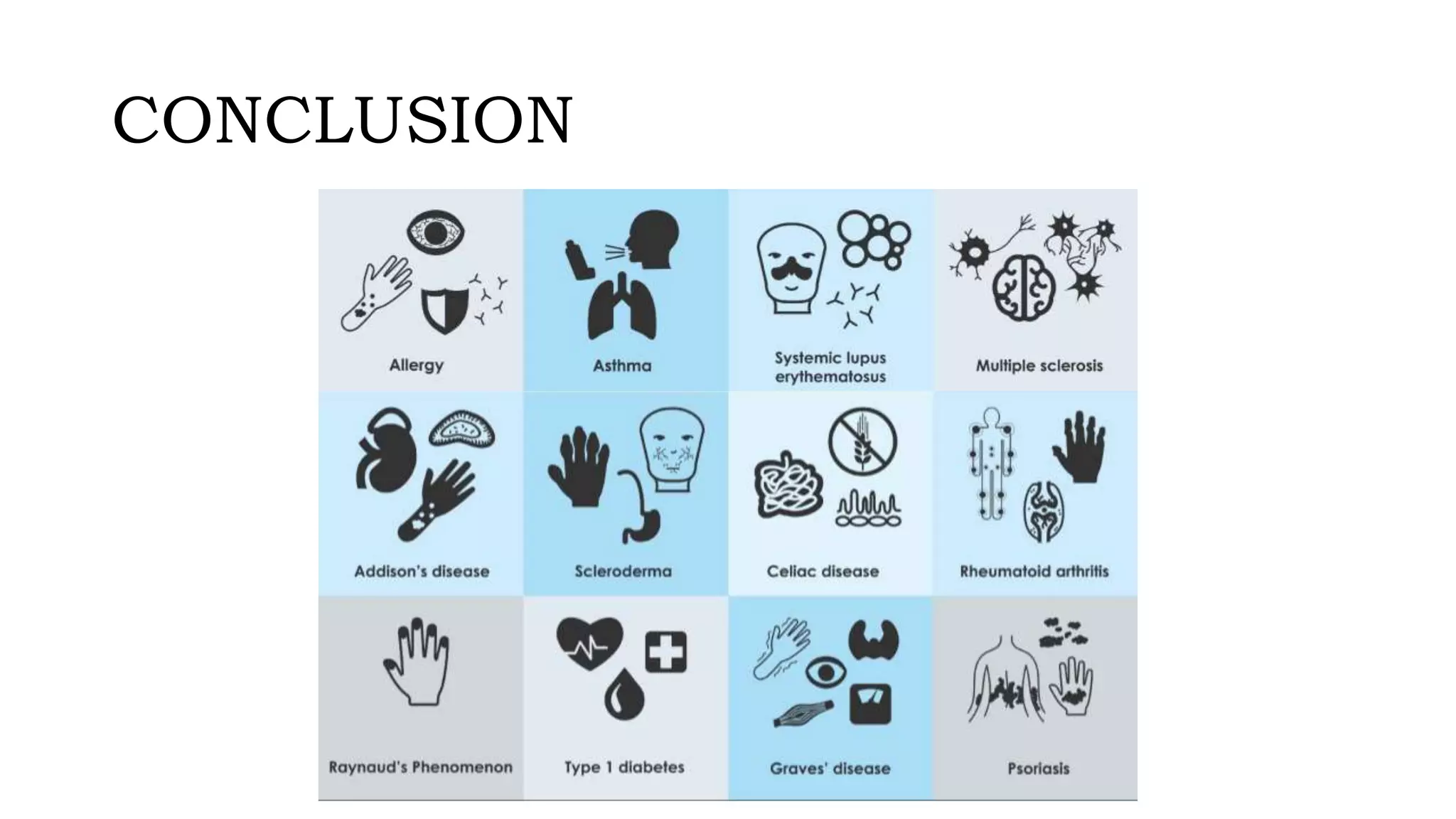
CONCLUSION
Immune system : assessment

Immune system : assessment

  • 1.
    NURSING MANAGEMENT OF PATIENTSWITH IMMUNOLOGIC DISORDERS UNIT IX
  • 2.
    IMMUNITY • Immunity refersto the body’s specific protective response to a foreign agent or organism. • The immune system functions as the body’s defense mechanism against invasion and allows a rapid response to foreign substances in a specific manner.
  • 3.
    ANATOMY AND PHYSIOLOGYOF IMMUNE SYSTEM The basic function of the immune system is to remove foreign antigens such as viruses and bacteria to maintain homeostasis.
  • 4.
  • 5.
    Mechanisms of naturalimmune system • White blood cells action • Inflammatory response • Physical and chemical barriers • Immune regulation
  • 6.
    Mechanisms of aquiredimmune system • The phagocytic immune response –WBC and Macrophages • The humoral or antibody immune response – B lymphocytes • The cellular immune response- T cells • Complement System- Circulating plasma protein • Immunomodulators-Interferons and colony-stimulating factors •
  • 7.
    Stages of immuneresponse 1. Recognition 2. Proliferation 3. Response and 4. Effector
  • 8.
    Humoral immune response •Antigen recognition • Antigen antibody Binding
  • 9.
  • 10.
    History • Gender • Pastand present conditions • Events provides clues to patients immune status • Gerontologic condition • Nutrition • Infection and immunization • Allergy
  • 11.
    History • Disorders anddiseases • Auto immune disorders :SLE, Rheumatoid arthritis • Neoplastic diseases • Chronic illness and surgery • Special problems : burns • Medications and blood transfusion • Lifestyle factors • Psychoneuroimmunologic factors
  • 12.
    Physical examination • Skinand mucous membrane • Lesions • Dermatitis • Purpura • Urticaria • Inflammation • Discharges • Signs of infection • Lymph node enlargement
  • 13.
    Blood tests Skintests Bone marrow biopsy Diagnostic evaluation
  • 14.
    Humoral (Antibody-mediated) Immunity Tests •B-cell quantification with monoclonal antibody • In vivo immunoglobulin synthesis with T-cell subsets • Specific antibody response • Total serum globulins and individual immunoglobulins (electrophoresis, immunoelectrophoresis, single radial immunodiffusion, nephelometry, and isohemagglutinin techniques)
  • 15.
    Cellular (Cell-mediated) Immunity Tests •Total lymphocyte count • T-cell and T-cell-subset quantification with monoclonal antibody • Delayed hypersensitivity skin test • Cytokine production • Lymphocyte response to mitogens, antigens, and allogenic cells • Helper and suppressor T-cell functions
  • 16.
    Disorders of immunesystem • Disorders of the immune system may stem from, • Excesses or deficiencies of immunocompetent cells • Alterations in the function of these cells • Immunologic attack on self- antigens or • Inappropriate or exaggerated responses to specific antigens
  • 17.