Nucleus
-By zoomania
Definition: What is a nucleus?
• The nucleus is a membrane-bound organelle that contains
genetic material (DNA) of eukaryotic organisms. As such, it
serves to maintain the integrity of the cell by facilitating
transcription and replication processes.
• It's the largest organelle inside the cell taking up about a tenth of
the entire cell volume. This makes it one of the easiest organelles
to identify under the microscope.
• Some of the other main components of a nucleus include:
1. A phospholipid bilayer membrane
2. Nucleoplasm
3. Nucleolus
4. Chromatic
• Some eukaryotic cells lack a nucleus and are referred to as
enucleate cells (e.g. erythrocytes) while others may have more
than one nucleus (e.g. slime molds).
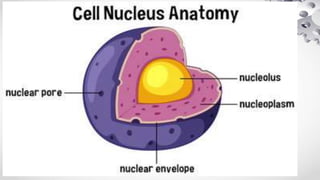
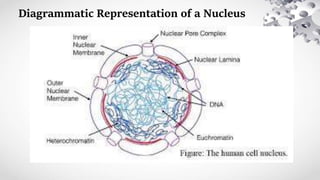
Diagrammatic Representation of a Nucleus
• Structure of nucleus contain:
i. The Nuclear Membrane
ii. Nucleoplasm
iii.Nucleolus
iv.Chromosomes
The Nuclear Membrane
• The nuclear membrane is one of the aspects that distinguish eukaryotic
cells from prokaryotic cells.
• As with the other cell organelles of eukaryotic organisms, the nucleus is a
membrane-bound organelle.
• The nuclear membrane, like the cell membrane, is a double-layered
structure that consists of phospholipids (forming the lipid bilayer nucleus
envelope).
• Present on the nuclear membrane are nuclear pores (made up of proteins)
through which substances enter or leave the cell (RNA, proteins, etc).
• Fibrous lamina - The fibrous lamina is part of the nuclear
cytoskeleton that is attached to the inner layer of the nuclear
membrane. It consists of fine protein filaments and serves to
provide mechanical reinforcement to the bilayer membrane.
• Some of the other functions of the nuclear lamina include:
i. It can play a role in regulating gene expression
ii. Serves as anchor sites for the pore complexes of the nuclear
iii. It regulates material entering or exiting the cell
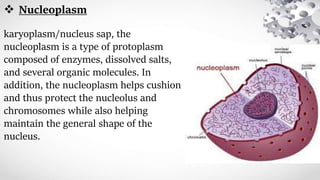
 Nucleoplasm
karyoplasm/nucleus sap, the
nucleoplasm is a type of protoplasm
composed of enzymes, dissolved salts,
and several organic molecules. In
addition, the nucleoplasm helps cushion
and thus protect the nucleolus and
chromosomes while also helping
maintain the general shape of the
nucleus.
Nucleolus
• In the same way that the nucleus is the most
prominent organelle of the cell, the nucleolus is the
most prominent structure of the nucleus. Unlike the
nucleus, however, this dense structure lacks its own
membrane.
• During cell division (mitosis), the nucleolus breaks up
only to reform from specific sections of the
chromosomes after mitosis.
Chromosomes
• In the nucleus, chromosomes are thread-like structures made up of strands of DNA and the
histone proteins.
• Main parts of the chromosome include:
• Kinetochores
• Telomeres
• Chromatids (each of which consists of the p and q arm)
• Chromosomes in the nucleus are tightly packed which makes it possible for very large
amounts of the genetic material (DNA) to be contained in such a small space (about 3 billion
pairs are contained in each cell)
• * Stretched, DNA in a single cell would be about 2 meters long.
• * Histones are alkaline proteins on which the DNA strands are packed.
Some of the main functions of the nucleus include:
• Protein synthesis, cell division, and differentiation
• Control the synthesis of enzymes involved in cellular
metabolism
• Controlling hereditary traits of the organism
• Store DNA strands, proteins, and RNA
• Site of RNA transcription - e.g. mRNA required for protein
synthesis
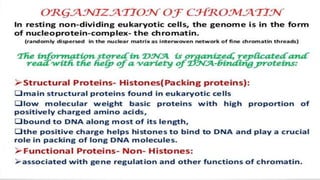
 Chromatin :
• In eukaryotic cells the genetic material is organized into a
complex structure composed of DNA and proteins and localized
in a specialized compartment, the nucleus.
• This structure was called chromatin (from the Greek "khroma"
meaning coloured and "soma" meaning body).
• Close to two meters of DNA in each cell must be assembled into
a small nucleus of some nm in diameter.
• Despite this enormous degree of compaction, DNA must be
rapidly accessible to permit its interaction with protein
machineries that regulate the functions of chromatin:
• Despite this enormous degree of compaction, DNA must be
rapidly accessible to permit its interaction with protein
machineries that regulate the functions of chromatin:
A. replication,
B. repair and
C. recombination.
• The dynamic organization of chromatin structure thereby
influences, potentially, all functions of the genome
 Strucure of chromatin:
• The fundamental unit of chromatin, termed the nucleosome, is
composed of DNA and histone proteins.
• This structure provides the first level of compaction of DNA into
the nucleus.
• Nucleosomes are regularly spaced along the genome to form a
nucleofilament which can adopt higher levels of compaction
ultimately resulting in the highly condensed metaphase
chromosome.
• Within an interphase nucleus chromatin is organized into
functional territories.
• Chromatin has been divided into:
1. euchromatin and
2. heterochromatin.
• Heterochromatin was defined as a structure that does not alter in its condensation
throughout the cell cycle whereas euchromatin is decondensed during interphase.
• Heterochromatin is localized principally on the periphery of the nucleus and
euchromatin in the interior of the nucleoplasm. We can distinguish:
 constitutive heterochromatin, containing few genes and formed principally of
repetitive sequences located in large regions coincident with centromeres and
telomeres, from
 facultative heterochromatin composed of transcriptionally active regions that can
adopt the structural and functional characteristics of heterochromatin, such as the
inactive X chromosome of mammals.
Nucleus ppt
Nucleus ppt

Nucleus ppt

  • 1.
  • 3.
    Definition: What isa nucleus? • The nucleus is a membrane-bound organelle that contains genetic material (DNA) of eukaryotic organisms. As such, it serves to maintain the integrity of the cell by facilitating transcription and replication processes. • It's the largest organelle inside the cell taking up about a tenth of the entire cell volume. This makes it one of the easiest organelles to identify under the microscope.
  • 4.
    • Some ofthe other main components of a nucleus include: 1. A phospholipid bilayer membrane 2. Nucleoplasm 3. Nucleolus 4. Chromatic • Some eukaryotic cells lack a nucleus and are referred to as enucleate cells (e.g. erythrocytes) while others may have more than one nucleus (e.g. slime molds).
  • 5.
  • 6.
    • Structure ofnucleus contain: i. The Nuclear Membrane ii. Nucleoplasm iii.Nucleolus iv.Chromosomes
  • 7.
    The Nuclear Membrane •The nuclear membrane is one of the aspects that distinguish eukaryotic cells from prokaryotic cells. • As with the other cell organelles of eukaryotic organisms, the nucleus is a membrane-bound organelle. • The nuclear membrane, like the cell membrane, is a double-layered structure that consists of phospholipids (forming the lipid bilayer nucleus envelope). • Present on the nuclear membrane are nuclear pores (made up of proteins) through which substances enter or leave the cell (RNA, proteins, etc).
  • 8.
    • Fibrous lamina- The fibrous lamina is part of the nuclear cytoskeleton that is attached to the inner layer of the nuclear membrane. It consists of fine protein filaments and serves to provide mechanical reinforcement to the bilayer membrane. • Some of the other functions of the nuclear lamina include: i. It can play a role in regulating gene expression ii. Serves as anchor sites for the pore complexes of the nuclear iii. It regulates material entering or exiting the cell
  • 9.
     Nucleoplasm karyoplasm/nucleus sap,the nucleoplasm is a type of protoplasm composed of enzymes, dissolved salts, and several organic molecules. In addition, the nucleoplasm helps cushion and thus protect the nucleolus and chromosomes while also helping maintain the general shape of the nucleus.
  • 10.
    Nucleolus • In thesame way that the nucleus is the most prominent organelle of the cell, the nucleolus is the most prominent structure of the nucleus. Unlike the nucleus, however, this dense structure lacks its own membrane. • During cell division (mitosis), the nucleolus breaks up only to reform from specific sections of the chromosomes after mitosis.
  • 11.
    Chromosomes • In thenucleus, chromosomes are thread-like structures made up of strands of DNA and the histone proteins. • Main parts of the chromosome include: • Kinetochores • Telomeres • Chromatids (each of which consists of the p and q arm) • Chromosomes in the nucleus are tightly packed which makes it possible for very large amounts of the genetic material (DNA) to be contained in such a small space (about 3 billion pairs are contained in each cell) • * Stretched, DNA in a single cell would be about 2 meters long. • * Histones are alkaline proteins on which the DNA strands are packed.
  • 12.
    Some of themain functions of the nucleus include: • Protein synthesis, cell division, and differentiation • Control the synthesis of enzymes involved in cellular metabolism • Controlling hereditary traits of the organism • Store DNA strands, proteins, and RNA • Site of RNA transcription - e.g. mRNA required for protein synthesis
  • 13.
     Chromatin : •In eukaryotic cells the genetic material is organized into a complex structure composed of DNA and proteins and localized in a specialized compartment, the nucleus. • This structure was called chromatin (from the Greek "khroma" meaning coloured and "soma" meaning body). • Close to two meters of DNA in each cell must be assembled into a small nucleus of some nm in diameter. • Despite this enormous degree of compaction, DNA must be rapidly accessible to permit its interaction with protein machineries that regulate the functions of chromatin:
  • 14.
    • Despite thisenormous degree of compaction, DNA must be rapidly accessible to permit its interaction with protein machineries that regulate the functions of chromatin: A. replication, B. repair and C. recombination. • The dynamic organization of chromatin structure thereby influences, potentially, all functions of the genome
  • 15.
     Strucure ofchromatin: • The fundamental unit of chromatin, termed the nucleosome, is composed of DNA and histone proteins. • This structure provides the first level of compaction of DNA into the nucleus. • Nucleosomes are regularly spaced along the genome to form a nucleofilament which can adopt higher levels of compaction ultimately resulting in the highly condensed metaphase chromosome. • Within an interphase nucleus chromatin is organized into functional territories.
  • 16.
    • Chromatin hasbeen divided into: 1. euchromatin and 2. heterochromatin. • Heterochromatin was defined as a structure that does not alter in its condensation throughout the cell cycle whereas euchromatin is decondensed during interphase. • Heterochromatin is localized principally on the periphery of the nucleus and euchromatin in the interior of the nucleoplasm. We can distinguish:  constitutive heterochromatin, containing few genes and formed principally of repetitive sequences located in large regions coincident with centromeres and telomeres, from  facultative heterochromatin composed of transcriptionally active regions that can adopt the structural and functional characteristics of heterochromatin, such as the inactive X chromosome of mammals.