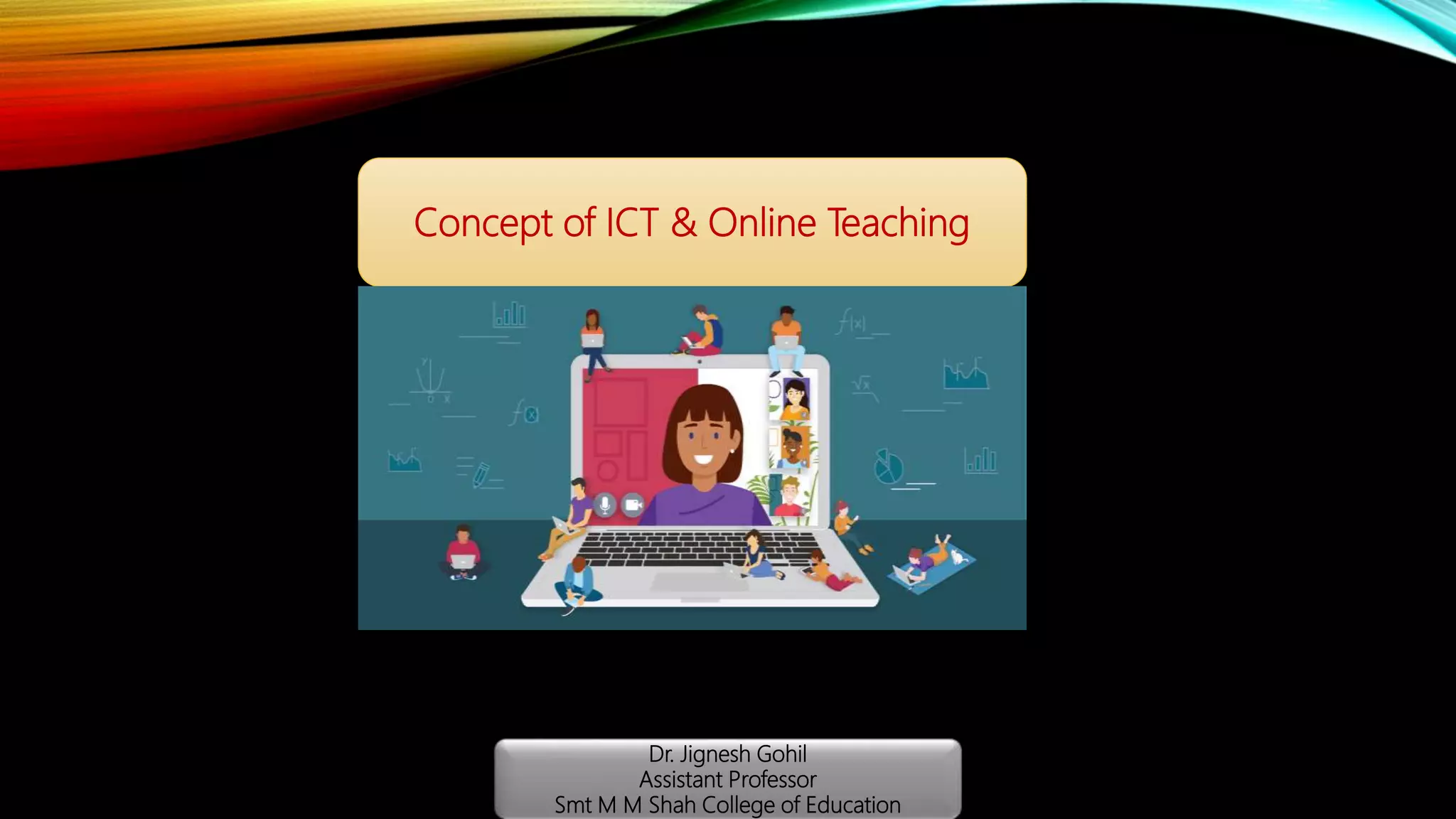
Concept of ICT & Online Teaching
Dr. Jignesh Gohil
Assistant Professor
Smt M M Shah College of Education
We will see….
• What is ICT ? Its role in Education
• Concept of Online Teaching-Learning
• Difference between Online teaching and Traditional
Teaching
• ICT Skills of teachers and students for online
education
• Information and Communication Technology
• A technical channel that transmits information or a message
What is ICT ?
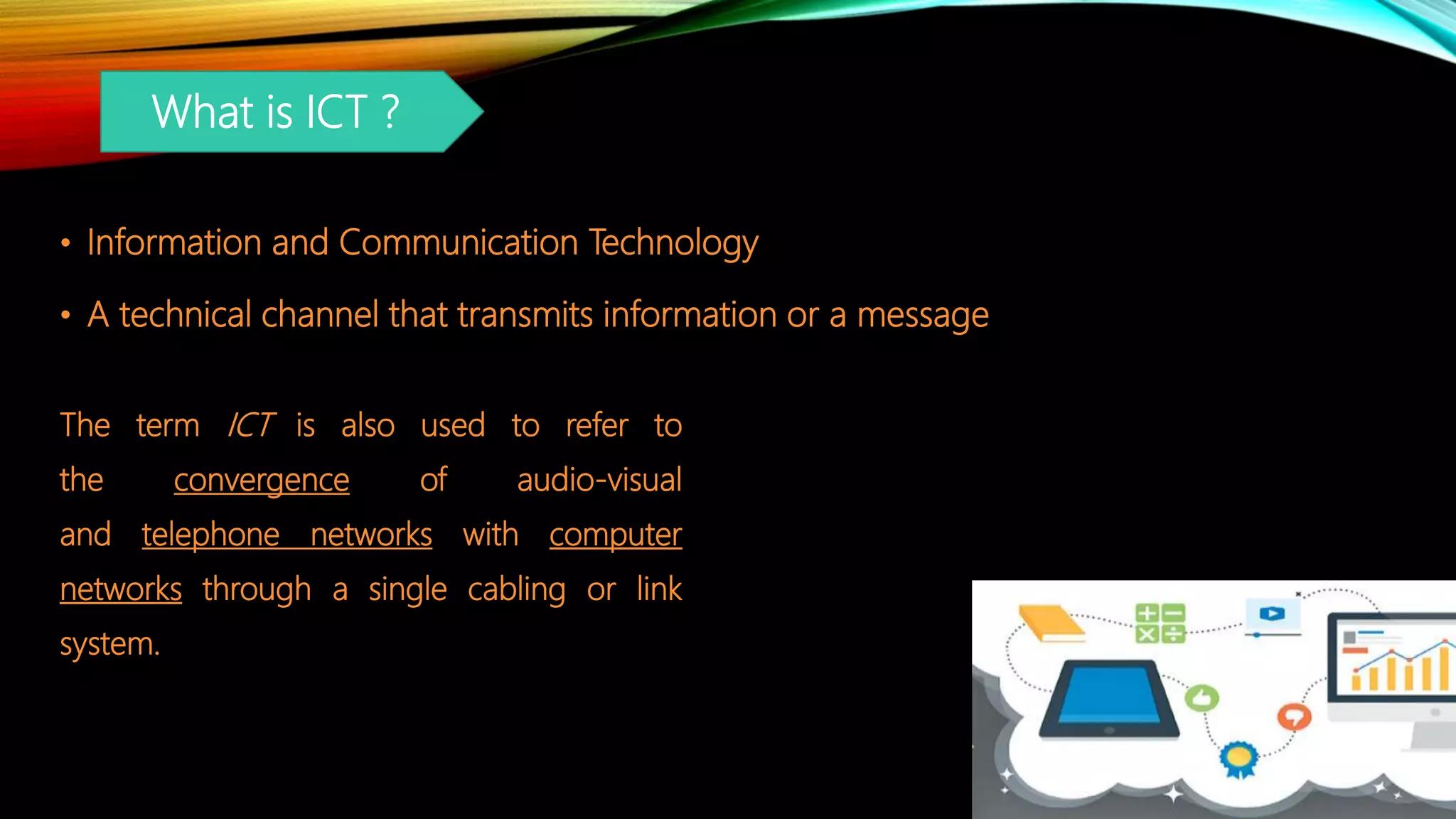
The term ICT is also used to refer to
the convergence of audio-visual
and telephone networks with computer
networks through a single cabling or link
system.
Role of ICT in Education
• Universal access of education
• Equality in education
• Expansion of quality education
• Teacher’s professional development
• Enable powerful educational management,
governance and administration (UNESCO)
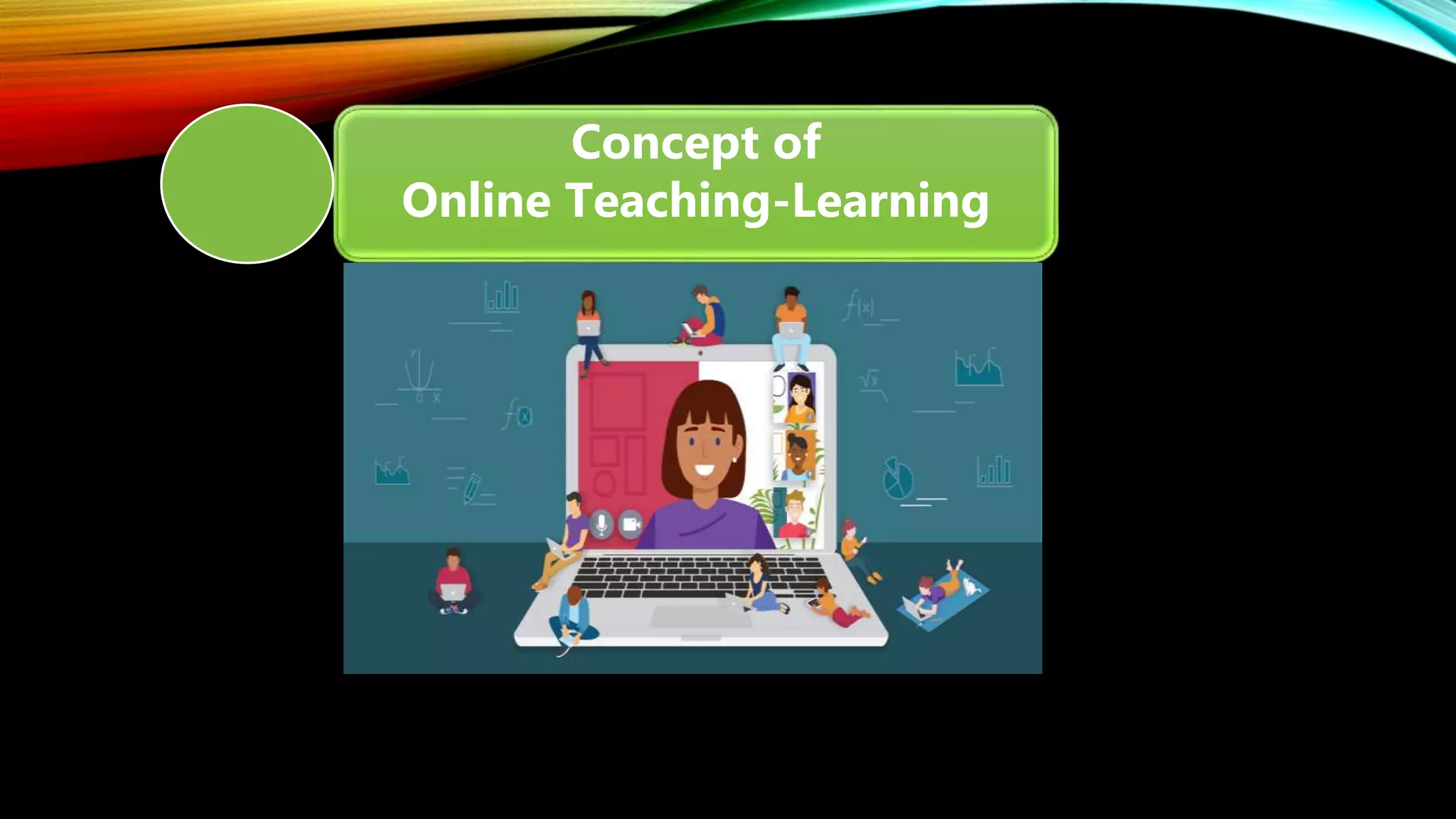
Concept of
Online Teaching-Learning
What is online learning?
• Learning which occurs through internet and online mode only
• Leraner’s physical presence in the classroom is not required
• Learning from anywhere, anytime and with any space
• Accessing multimedia enabled learning material
• Emphasis on creation, collaboration and communication
Online education is electronically
supported learning that relies on
the Internet for teacher/student
interaction and the distribution of
class materials.”
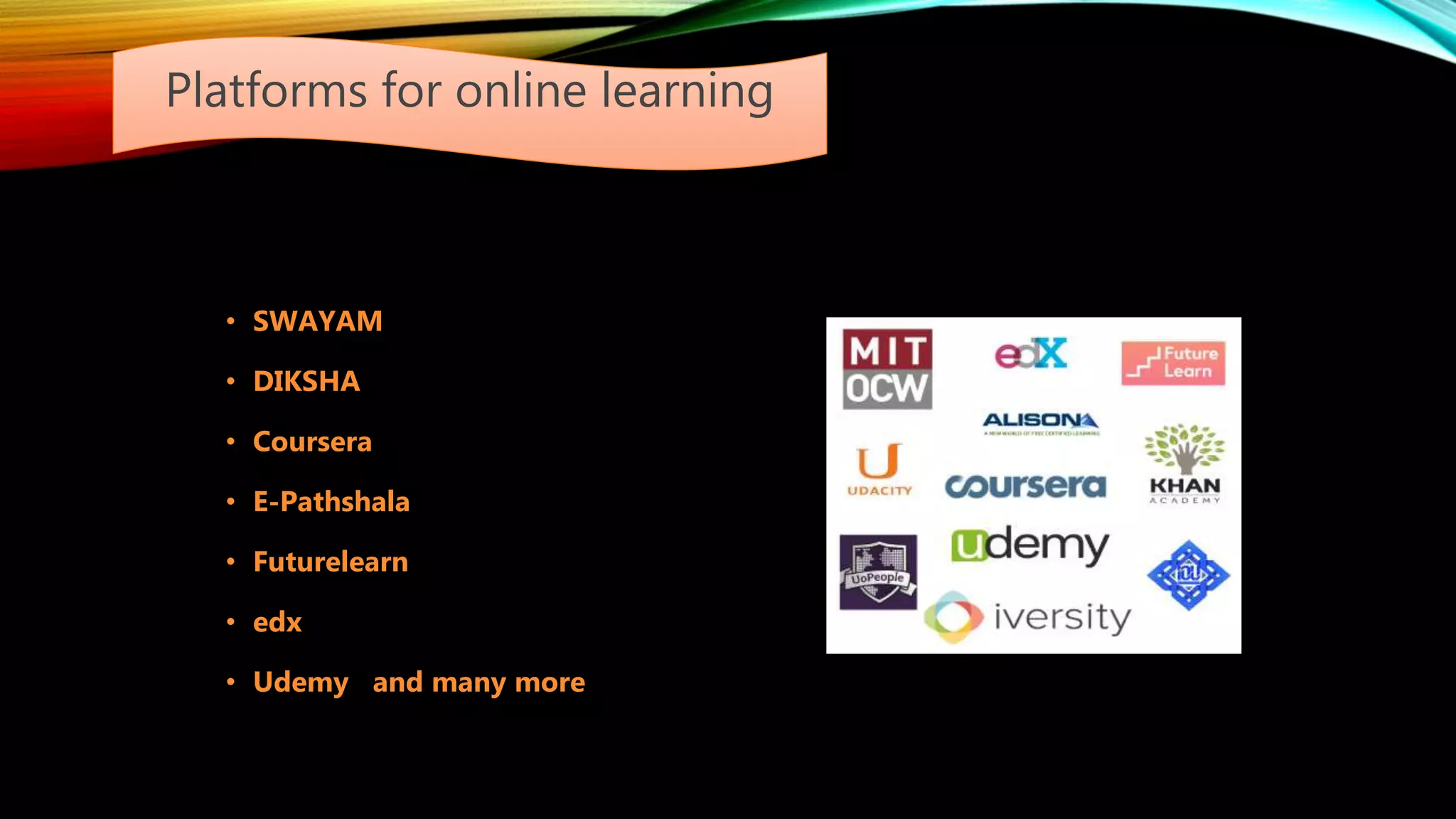
Platforms for online learning
• SWAYAM
• DIKSHA
• Coursera
• E-Pathshala
• Futurelearn
• edx
• Udemy and many more
POLL TIME
What is online teaching?
• Teaching based on internet technology in which a
teacher facilitates interactive learning that can be easily
accessed by the learner from anywhere, anytime.
• Online teaching is a flexible instructional delivery system
that encompasses any kind of learning that takes place
via the Internet. (Encyclopedia).
• Teaching by using internet which can be accessed by a
small group or numbers of learners
•E-tutorial,
•E-content,
•webliography,
•Assessment
Importance of 4-Quadrant approach
Characteristics of online teaching-learning
• Interactive
• Use of multimedia
• Quality learning material and resources
• Encourages self-learning
• Creativity, communication and collaboration
• Interaction between learners-teachers
• Use of different learning strategies
• Easy and clear to access
• Use of Safe technology
Why to teach Online?
• Adjustment with the digital era
• To cultivate digital skills
• To overcome the regional barriers in Education
• Break the limits of time, place and speed
• To promote Emergency Remote Teaching (ERT)
online teaching-Learning Model
Source-https://www.csu.edu.au
1. Learning Communities
2.Interaction Between
Students
3.Teacher Presence
4. Interaction with
the Professionals
6.Interactive
Resources
7.E-Assessment
5.Flexible and Adaptive
Learning
Types of Online teaching-learning
• E.g. Massive open online
course (MOOC)
Asynchronous Online Courses
Synchronous Online Courses
• E.g. Lecture on ZOOM
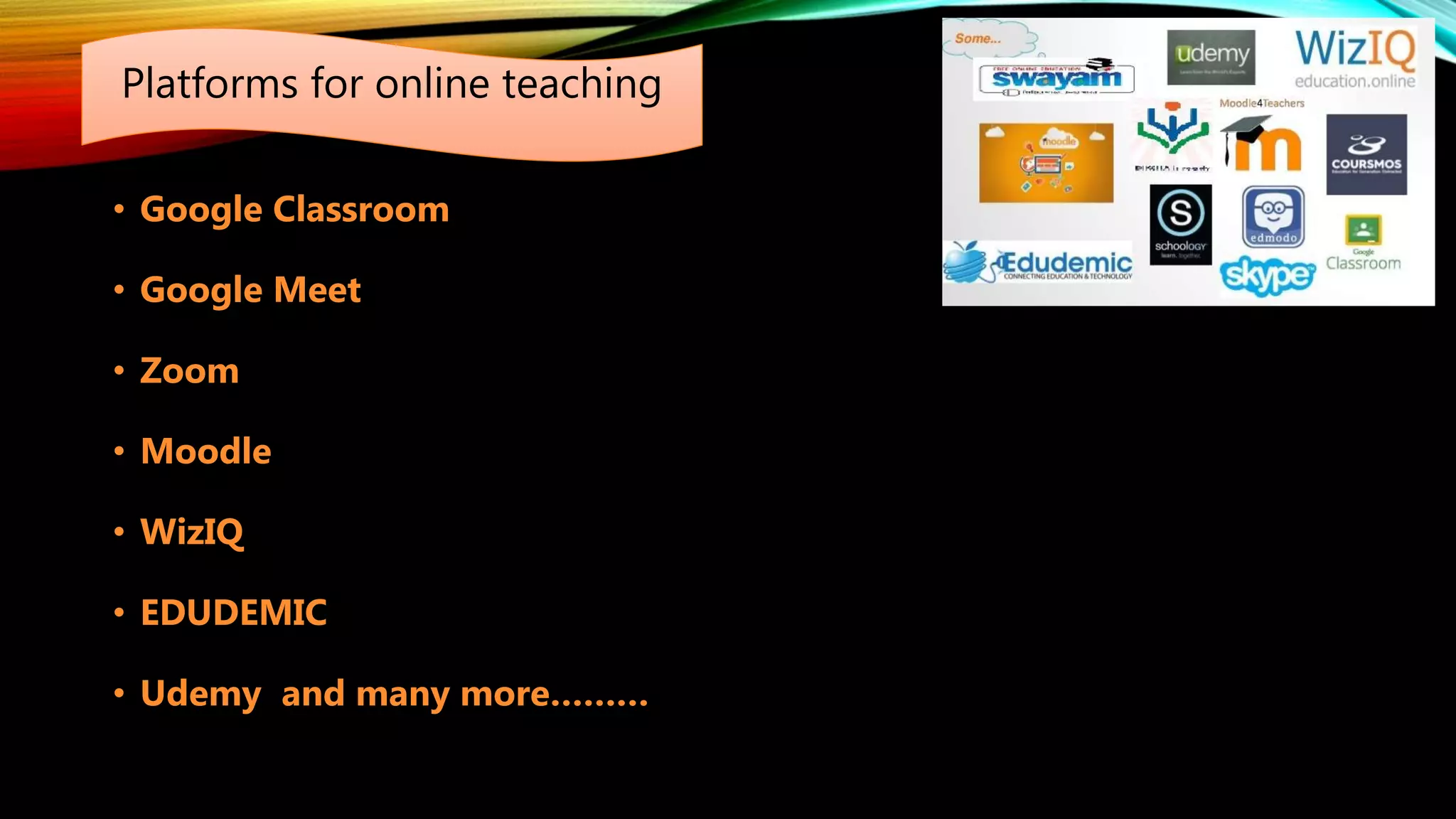
Platforms for online teaching
• Google Classroom
• Google Meet
• Zoom
• Moodle
• WizIQ
• EDUDEMIC
• Udemy and many more………
POLL TIME
Advantages
• Convenient Time, Place and Speed
• Easy transmission of perfect information
• Increases digital literacy
• Access to Global education
• Interactive learning material
• Student centred learning
• Cost-friendly
• Develops self discipline
• Convenient learning environment
•Activity time
Limitations
• Requires digital literacy
• Needs stable internet connectivity
• Isolation of the learner
• Ineffective in case improper management
• Least face-to-face conversation
• Learning by self- discipline only
• Safety issues
• Lacks proper assessment
•Activity time
Online
Teaching-
learning
Traditiona
l teaching-
learning
• Learning style
• Learning environment
Let’s see some features
• Self-learning
• Discipline and self-discipline
• Social interaction
• Use of technology
• Resources
Think…… What is more Effective?
Online Education Traditional education
POLL TIME
ICT Skills of teachers and students for online education
ICT Skills of teachers for online education
• Knowledge of ICT based teaching-learning strategies
• Operating different devices
• Word processing skills
• Spreadsheet skills
• Data-management skill
• Presentation skill
• Internet-navigation skill
• E-mail management
• Social networking skill
• Touch-typing
ICT Skills of Students for online education
• Knowledge of device operating
• Use of internet for education
• Information literacy
• Processing skills
• Presentation skills
• Command over Creation, Communication and
Collaboration
English ict and Online teaching-learning

English ict and Online teaching-learning

  • 1.
    Concept of ICT& Online Teaching Dr. Jignesh Gohil Assistant Professor Smt M M Shah College of Education
  • 2.
    We will see…. •What is ICT ? Its role in Education • Concept of Online Teaching-Learning • Difference between Online teaching and Traditional Teaching • ICT Skills of teachers and students for online education
  • 3.
    • Information andCommunication Technology • A technical channel that transmits information or a message What is ICT ? The term ICT is also used to refer to the convergence of audio-visual and telephone networks with computer networks through a single cabling or link system.
  • 4.
    Role of ICTin Education • Universal access of education • Equality in education • Expansion of quality education • Teacher’s professional development • Enable powerful educational management, governance and administration (UNESCO)
  • 5.
  • 6.
    What is onlinelearning? • Learning which occurs through internet and online mode only • Leraner’s physical presence in the classroom is not required • Learning from anywhere, anytime and with any space • Accessing multimedia enabled learning material • Emphasis on creation, collaboration and communication Online education is electronically supported learning that relies on the Internet for teacher/student interaction and the distribution of class materials.”
  • 7.
    Platforms for onlinelearning • SWAYAM • DIKSHA • Coursera • E-Pathshala • Futurelearn • edx • Udemy and many more
  • 8.
  • 9.
    What is onlineteaching? • Teaching based on internet technology in which a teacher facilitates interactive learning that can be easily accessed by the learner from anywhere, anytime. • Online teaching is a flexible instructional delivery system that encompasses any kind of learning that takes place via the Internet. (Encyclopedia). • Teaching by using internet which can be accessed by a small group or numbers of learners
  • 10.
  • 11.
    Characteristics of onlineteaching-learning • Interactive • Use of multimedia • Quality learning material and resources • Encourages self-learning • Creativity, communication and collaboration • Interaction between learners-teachers • Use of different learning strategies • Easy and clear to access • Use of Safe technology
  • 12.
    Why to teachOnline? • Adjustment with the digital era • To cultivate digital skills • To overcome the regional barriers in Education • Break the limits of time, place and speed • To promote Emergency Remote Teaching (ERT)
  • 13.
    online teaching-Learning Model Source-https://www.csu.edu.au 1.Learning Communities 2.Interaction Between Students 3.Teacher Presence 4. Interaction with the Professionals 6.Interactive Resources 7.E-Assessment 5.Flexible and Adaptive Learning
  • 14.
    Types of Onlineteaching-learning • E.g. Massive open online course (MOOC) Asynchronous Online Courses Synchronous Online Courses • E.g. Lecture on ZOOM
  • 15.
    Platforms for onlineteaching • Google Classroom • Google Meet • Zoom • Moodle • WizIQ • EDUDEMIC • Udemy and many more………
  • 16.
  • 17.
    Advantages • Convenient Time,Place and Speed • Easy transmission of perfect information • Increases digital literacy • Access to Global education • Interactive learning material • Student centred learning • Cost-friendly • Develops self discipline • Convenient learning environment
  • 18.
  • 19.
    Limitations • Requires digitalliteracy • Needs stable internet connectivity • Isolation of the learner • Ineffective in case improper management • Least face-to-face conversation • Learning by self- discipline only • Safety issues • Lacks proper assessment
  • 20.
  • 21.
  • 22.
    • Learning style •Learning environment Let’s see some features
  • 23.
  • 24.
  • 25.
    • Use oftechnology • Resources
  • 26.
    Think…… What ismore Effective? Online Education Traditional education
  • 27.
  • 28.
    ICT Skills ofteachers and students for online education
  • 29.
    ICT Skills ofteachers for online education • Knowledge of ICT based teaching-learning strategies • Operating different devices • Word processing skills • Spreadsheet skills • Data-management skill • Presentation skill • Internet-navigation skill • E-mail management • Social networking skill • Touch-typing
  • 30.
    ICT Skills ofStudents for online education • Knowledge of device operating • Use of internet for education • Information literacy • Processing skills • Presentation skills • Command over Creation, Communication and Collaboration