The Basis of Cultural Differences in Nonverbal Communication Cultures in Contact
What is Nonverbal Communication? Nonverbal communication is a pervasive and powerful form of human behavior which involves a subtle, nonlinguistic, multidimensional, spontaneous process. Nonverbal communication is interpreted through: Facial expression Tones of Voice Spatial relationships Bodily language Environment
Nonverbal Codes Physical Appearance Proxemics  Chronemics Kinesic Haptics Oculesics Vocalics Olfactics
1. Physical Appearance: Is the most externally obvious nonverbal code and covers relatively stable  physical features  of human beings such as: Gender  - Clothing Jewelery - Height Makeup  - Weight Hairstyle - Skin Color - Accessories - Body Shape
Physical Appearance:
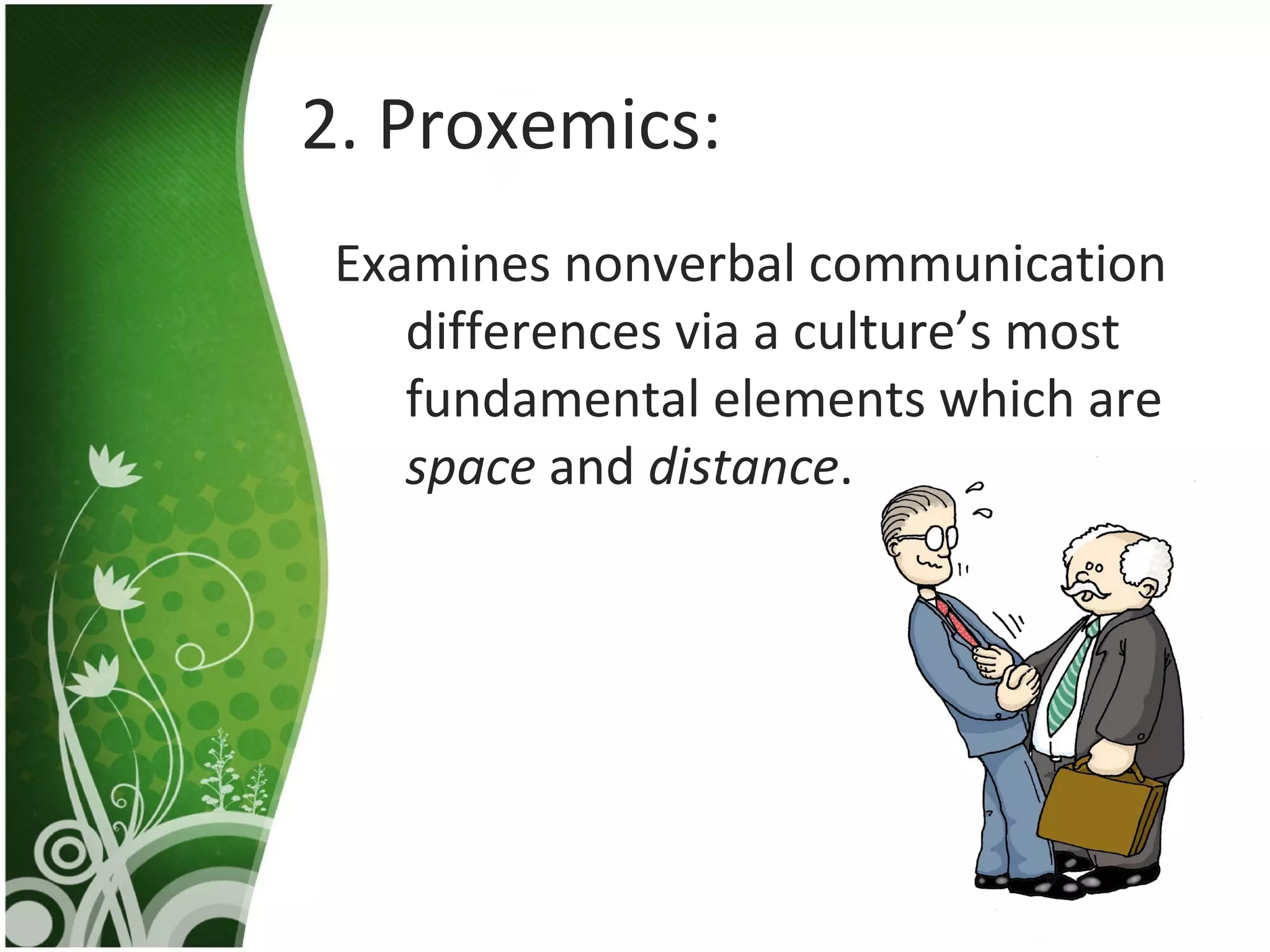
2. Proxemics: Examines nonverbal communication differences via a culture’s most fundamental elements which are  space  and  distance .
3. Chronemics: The study of meanings, usage, and communication of  time .
4. Kinesics: The communication of the body and in  motion  and includes aspects of people’s facial expressions, body movements, gestures and conversational regulators.
Video:  http://www.youtube.com/watch?v=RX3eBScTQNQ
5. Haptics: Is a type of communication that is expressed through  touch .
6. Oculesics: The study of messages sent by the eyes, including eye-contact, blinks, eye-movements and public dilation.
7. Vocalics: Includes all the nonverbal elements of the voice.
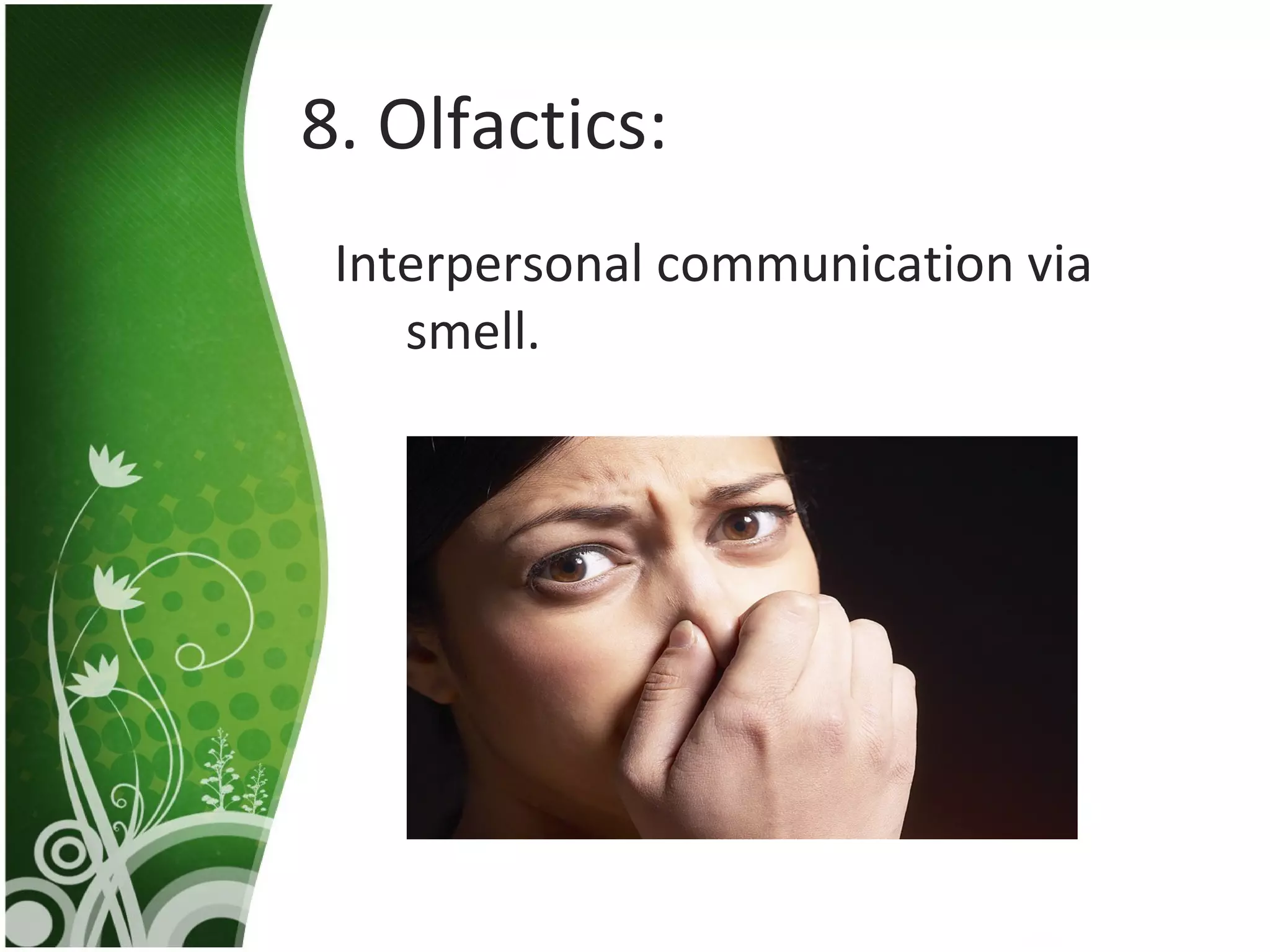
8. Olfactics: Interpersonal communication via smell.
Dimensions of Intercultural Nonverbal Communication: Dimension One Extreme The Other Extreme Context Low Context High Context Identity Individualism Collectivism  Power Low Power Distance High Power Distance Gender Femininity  Masculinity Uncertainty Uncertainty Avoidance Uncertainty Tolerance Time Long Term  Short Term Immediacy Low Contact High Contact
1. Context : The degree to which communication is explicit and verbal or implicit and nonverbal. Dimension 1. Context Low Context High Context Core Values Freedom of Speech, Directness Silence, Indirectness Nonverbal Traits Literal meaning, specific details, and precise time schedules Information in the physical context, or internalized in the person Typical Cultures Switzerland, Germany, North America China, Japan, Korea
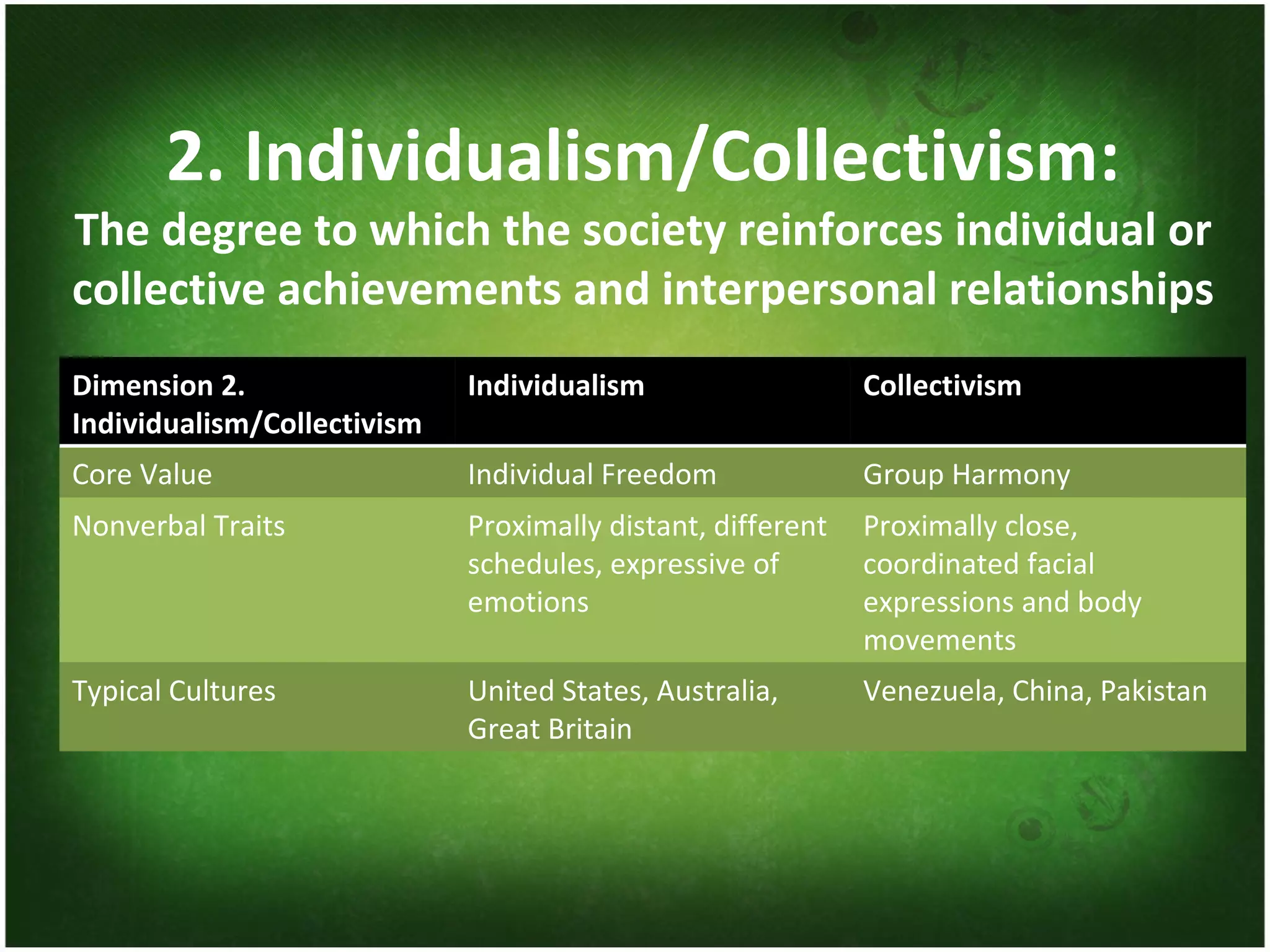
2. Individualism/Collectivism: The degree to which the society reinforces individual or collective achievements and interpersonal relationships Dimension  2. Individualism/Collectivism Individualism Collectivism Core Value Individual Freedom Group Harmony Nonverbal Traits Proximally distant, different schedules, expressive of emotions Proximally close, coordinated facial expressions and body movements Typical Cultures United States, Australia, Great Britain Venezuela, China, Pakistan
3. Power Distance: The degree of equality of inequality between people in the society. Dimension  3.  Power Distance Lower Power Distance Higher Power Distance Core Value People’s Equality Respect for status Nonverbal Traits Located at high latitudes, more tactile, relaxing and clear vocalic cues Located near the equator, untouchable, regulated nonverbal displays Typical Cultures Austria, Israel, Denmark Philippines, Mexico, Venezuela
4. Gender:  The degree of traditional gender roles of achievement, control, and power. Dimension 4.Gender Femininity Masculinity Core Value Caring for others Material Success Nonverbal traits Relaxed and coordinated vocal patterns, nurturing High level of stress, loud, aggressive Typical Cultures Sweden, Norway, the Netherlands Japan, Austria, Venezuela
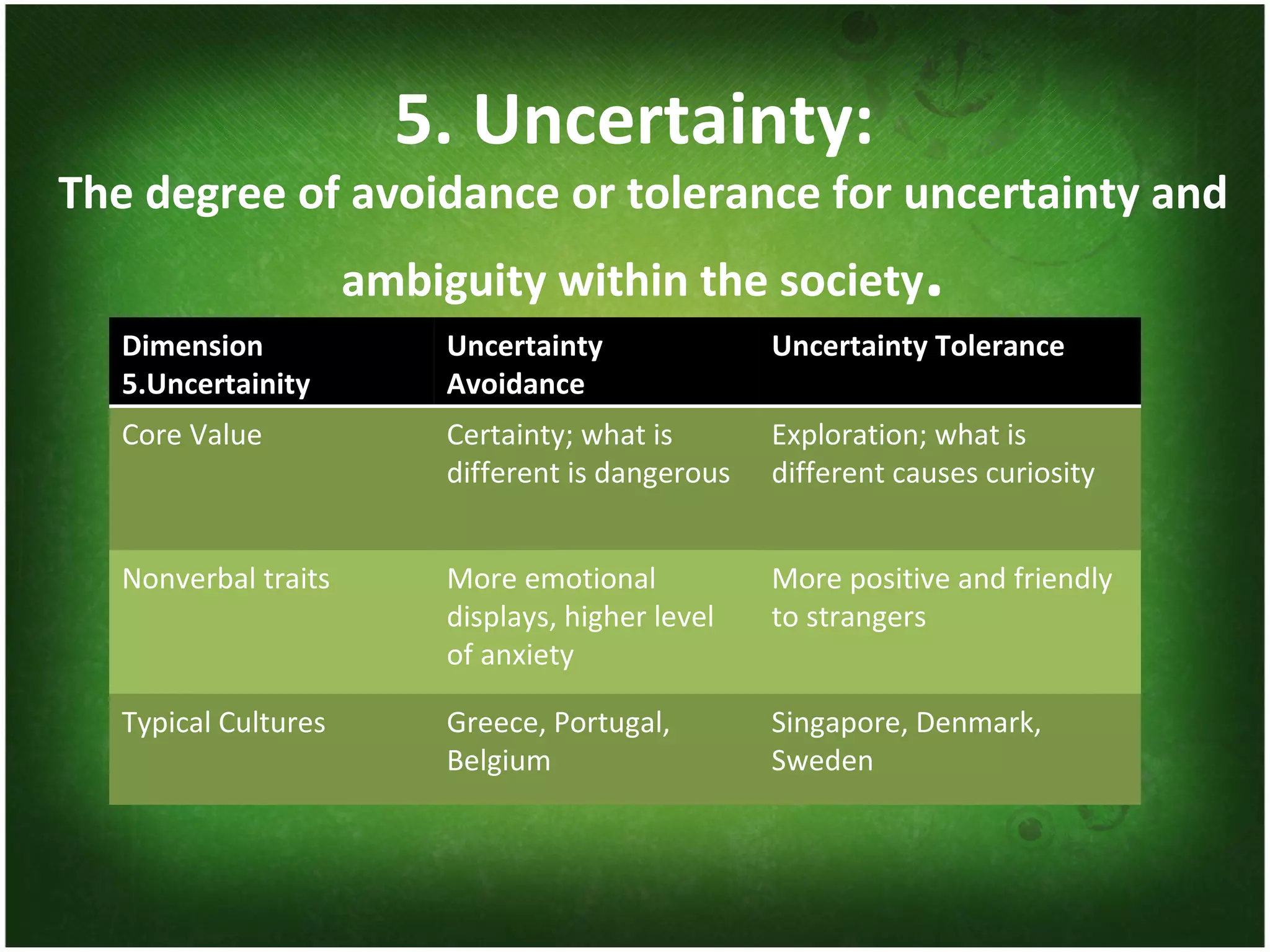
5. Uncertainty:  The degree of avoidance or tolerance for uncertainty and ambiguity within the society . Dimension 5.Uncertainity Uncertainty Avoidance Uncertainty Tolerance Core Value Certainty; what is different is dangerous Exploration; what is different causes curiosity Nonverbal traits More emotional displays, higher level of anxiety  More positive and friendly to strangers Typical Cultures Greece, Portugal, Belgium Singapore, Denmark, Sweden
6. Time Orientation: Short term Cultures: Nonverbal communication is informal and liberated Long term Cultures: Nonverbal communication is more ritualized and prescribed
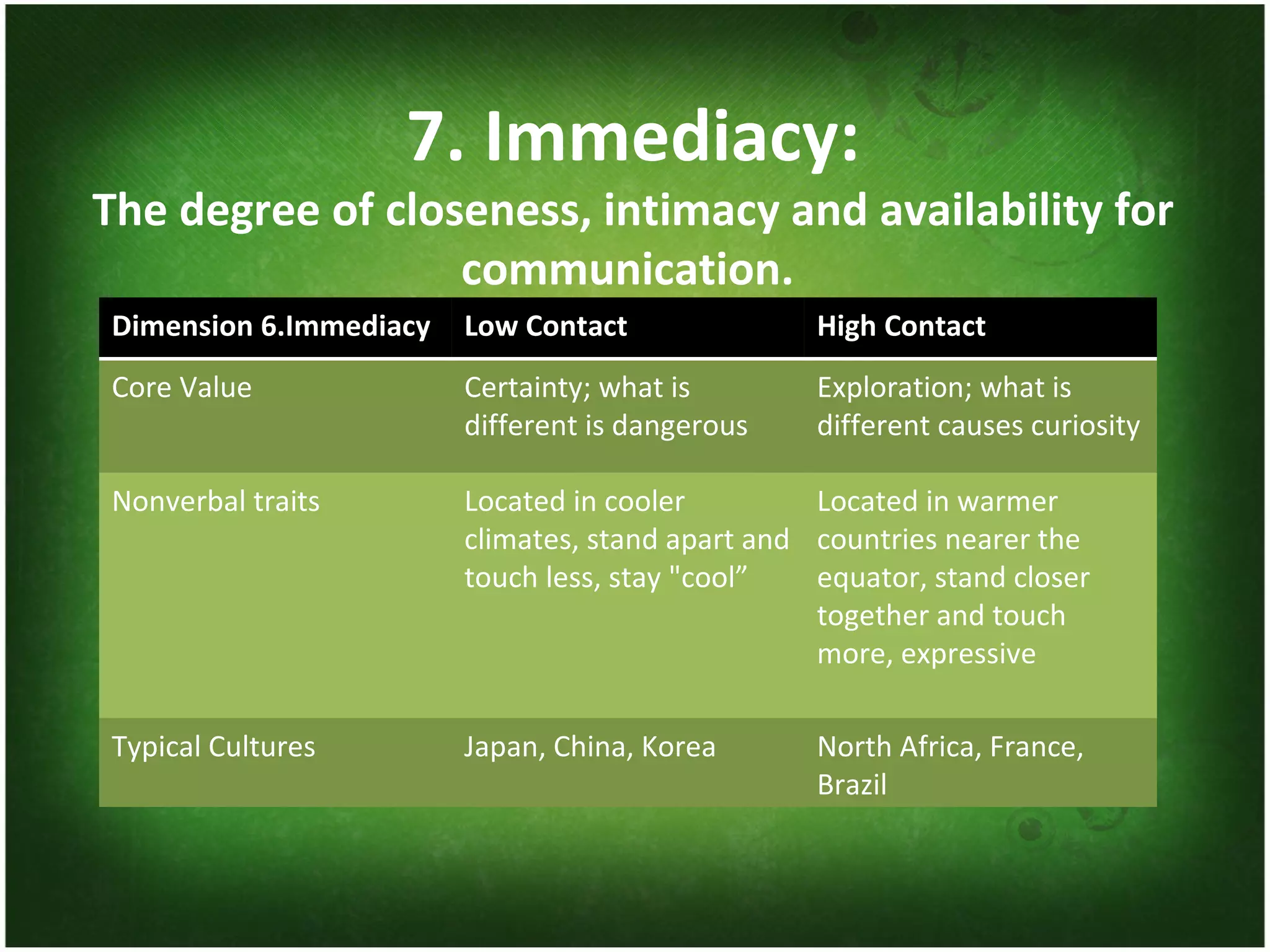
7. Immediacy: The degree of closeness, intimacy and availability for communication.  Dimension 6.Immediacy Low Contact High Contact Core Value Certainty; what is different is dangerous Exploration; what is different causes curiosity Nonverbal traits Located in cooler climates, stand apart and touch less, stay "cool” Located in warmer countries nearer the equator, stand closer together and touch more, expressive Typical Cultures Japan, China, Korea North Africa, France, Brazil
Conclusion These dimensions of intercultural nonverbal communication aim at providing a theoretical framework, but are neither exhaustive nor discrete. Studying these dimensions will help boost one’s intercultural communication competence.
Non verbal communication

  • 1.
    The Basis ofCultural Differences in Nonverbal Communication Cultures in Contact
  • 2.
    What is NonverbalCommunication? Nonverbal communication is a pervasive and powerful form of human behavior which involves a subtle, nonlinguistic, multidimensional, spontaneous process. Nonverbal communication is interpreted through: Facial expression Tones of Voice Spatial relationships Bodily language Environment
  • 3.
    Nonverbal Codes PhysicalAppearance Proxemics Chronemics Kinesic Haptics Oculesics Vocalics Olfactics
  • 4.
    1. Physical Appearance:Is the most externally obvious nonverbal code and covers relatively stable physical features of human beings such as: Gender - Clothing Jewelery - Height Makeup - Weight Hairstyle - Skin Color - Accessories - Body Shape
  • 5.
  • 6.
    2. Proxemics: Examinesnonverbal communication differences via a culture’s most fundamental elements which are space and distance .
  • 7.
    3. Chronemics: Thestudy of meanings, usage, and communication of time .
  • 8.
    4. Kinesics: Thecommunication of the body and in motion and includes aspects of people’s facial expressions, body movements, gestures and conversational regulators.
  • 9.
  • 10.
    5. Haptics: Isa type of communication that is expressed through touch .
  • 11.
    6. Oculesics: Thestudy of messages sent by the eyes, including eye-contact, blinks, eye-movements and public dilation.
  • 12.
    7. Vocalics: Includesall the nonverbal elements of the voice.
  • 13.
    8. Olfactics: Interpersonalcommunication via smell.
  • 14.
    Dimensions of InterculturalNonverbal Communication: Dimension One Extreme The Other Extreme Context Low Context High Context Identity Individualism Collectivism Power Low Power Distance High Power Distance Gender Femininity Masculinity Uncertainty Uncertainty Avoidance Uncertainty Tolerance Time Long Term Short Term Immediacy Low Contact High Contact
  • 15.
    1. Context :The degree to which communication is explicit and verbal or implicit and nonverbal. Dimension 1. Context Low Context High Context Core Values Freedom of Speech, Directness Silence, Indirectness Nonverbal Traits Literal meaning, specific details, and precise time schedules Information in the physical context, or internalized in the person Typical Cultures Switzerland, Germany, North America China, Japan, Korea
  • 16.
    2. Individualism/Collectivism: Thedegree to which the society reinforces individual or collective achievements and interpersonal relationships Dimension 2. Individualism/Collectivism Individualism Collectivism Core Value Individual Freedom Group Harmony Nonverbal Traits Proximally distant, different schedules, expressive of emotions Proximally close, coordinated facial expressions and body movements Typical Cultures United States, Australia, Great Britain Venezuela, China, Pakistan
  • 17.
    3. Power Distance:The degree of equality of inequality between people in the society. Dimension 3. Power Distance Lower Power Distance Higher Power Distance Core Value People’s Equality Respect for status Nonverbal Traits Located at high latitudes, more tactile, relaxing and clear vocalic cues Located near the equator, untouchable, regulated nonverbal displays Typical Cultures Austria, Israel, Denmark Philippines, Mexico, Venezuela
  • 18.
    4. Gender: The degree of traditional gender roles of achievement, control, and power. Dimension 4.Gender Femininity Masculinity Core Value Caring for others Material Success Nonverbal traits Relaxed and coordinated vocal patterns, nurturing High level of stress, loud, aggressive Typical Cultures Sweden, Norway, the Netherlands Japan, Austria, Venezuela
  • 19.
    5. Uncertainty: The degree of avoidance or tolerance for uncertainty and ambiguity within the society . Dimension 5.Uncertainity Uncertainty Avoidance Uncertainty Tolerance Core Value Certainty; what is different is dangerous Exploration; what is different causes curiosity Nonverbal traits More emotional displays, higher level of anxiety More positive and friendly to strangers Typical Cultures Greece, Portugal, Belgium Singapore, Denmark, Sweden
  • 20.
    6. Time Orientation:Short term Cultures: Nonverbal communication is informal and liberated Long term Cultures: Nonverbal communication is more ritualized and prescribed
  • 21.
    7. Immediacy: Thedegree of closeness, intimacy and availability for communication. Dimension 6.Immediacy Low Contact High Contact Core Value Certainty; what is different is dangerous Exploration; what is different causes curiosity Nonverbal traits Located in cooler climates, stand apart and touch less, stay "cool” Located in warmer countries nearer the equator, stand closer together and touch more, expressive Typical Cultures Japan, China, Korea North Africa, France, Brazil
  • 22.
    Conclusion These dimensionsof intercultural nonverbal communication aim at providing a theoretical framework, but are neither exhaustive nor discrete. Studying these dimensions will help boost one’s intercultural communication competence.