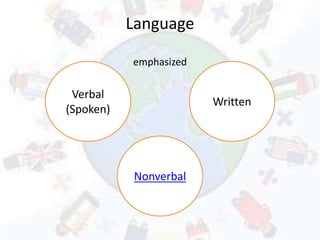
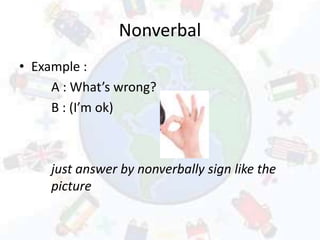
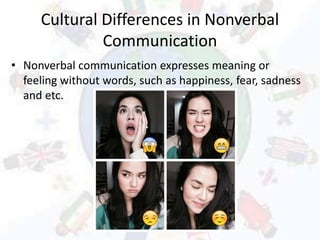
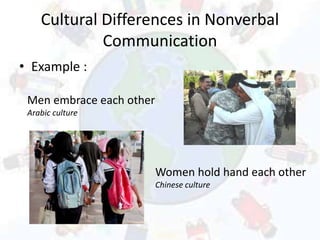
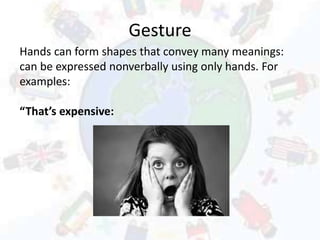
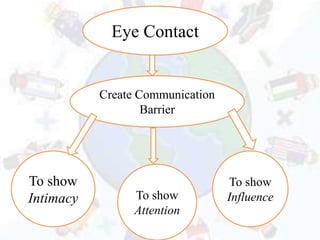
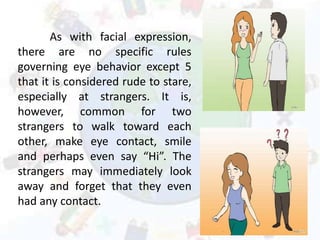
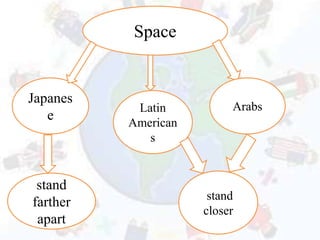
This document discusses nonverbal communication and how it varies across cultures. It notes that nonverbal communication, such as facial expressions, gestures, eye contact and physical space, conveys over 90% of messages. However, the meanings of nonverbal cues differ significantly between cultures. For example, behaviors seen as friendly in one culture, such as embracing, may be inappropriate in another. The document stresses the importance of understanding cultural norms for nonverbal communication to avoid misinterpretations.