Types of Nonverbal
Communication
Mano Po
- Touching the
hand of an elder to
one’s forehead to
show respect.
1. Paralanguage
- It is about “how” something
is said, NOT what is said.
- Tones or voices must match
the content of the Message if the
Message is to be understood at
all.
2. Flowers
- These help us to say what
we cannot say ourselves. But
those messages are also
influenced by culture and gender.
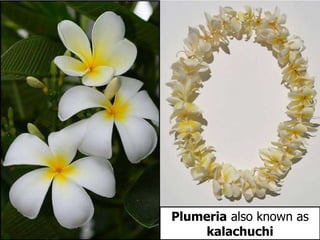
Plumeria also known as
kalachuchi
3. Colors
- These also have certain
meanings based on the dictates
of culture and gender.
Mental hospitals with rooms painted
with pink
Colors for boys and girls
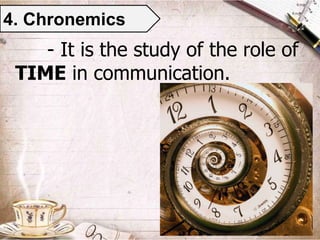
4. Chronemics
- It is the study of the role of
TIME in communication.
5. Proxemics
- It is the branch of
knowledge that deals with the
amount of space that people feel
it necessary to set between
themselves and others.
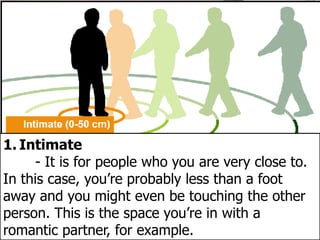
1. Intimate
- It is for people who you are very close to.
In this case, you’re probably less than a foot
away and you might even be touching the other
person. This is the space you’re in with a
romantic partner, for example.
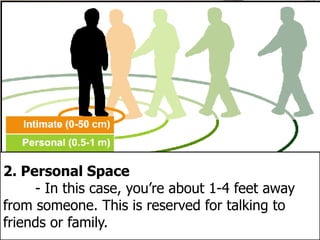
2. Personal Space
- In this case, you’re about 1-4 feet away
from someone. This is reserved for talking to
friends or family.
3. Social Space
- This is the kind of space you’re in if you’re
talking to a colleague or a customer at work.
4. Public Space
- This is the space that characterizes how
close we sit or stand to someone, like a public
figure or public speaker.
6. Haptics
- This is any form of
interaction or communication
involving touch.
Patting the head of a Child
7. Gestures
- This is the most often type
of Nonverbal Communication.
- This is a movement of a
part of the body, especially a
hand or the head, to express an
idea or meaning.
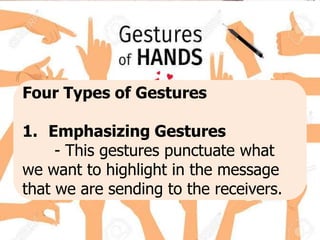
Four Types of Gestures
1. Emphasizing Gestures
- This gestures punctuate what
we want to highlight in the message
that we are sending to the receivers.
Hitting a
Lectern
Four Types of Gestures
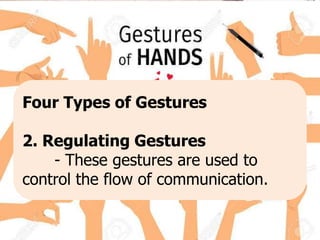
2. Regulating Gestures
- These gestures are used to
control the flow of communication.
Four Types of Gestures
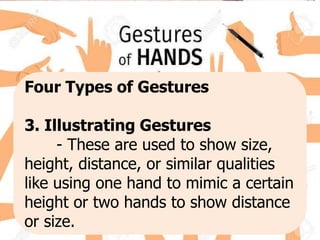
3. Illustrating Gestures
- These are used to show size,
height, distance, or similar qualities
like using one hand to mimic a certain
height or two hands to show distance
or size.
Four Types of Gestures
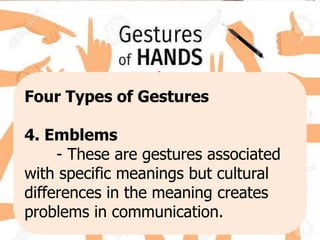
4. Emblems
- These are gestures associated
with specific meanings but cultural
differences in the meaning creates
problems in communication.
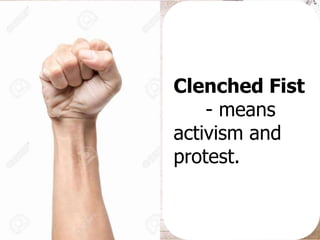
Clenched Fist
- means
activism and
protest.
Royal
Wave
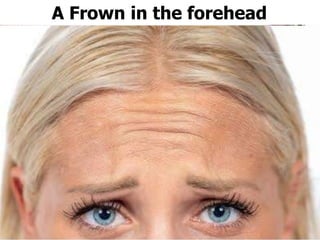
8. Facial Expression
- It is one or more motions or
positions of the muscles beneath
the skin of the face that assists
the Listener in understanding the
Message better.
A Frown in the forehead
9. Posture and Personal Appearance
- It is all about how someone
sits or stands in a
Communicative Situation that
tells the people around how one
sees oneself as a Speaker, or
someone’s attitude towards the
Message.
Types nonverbal communication

Types nonverbal communication

  • 1.
  • 2.
    Mano Po - Touchingthe hand of an elder to one’s forehead to show respect.
  • 3.
    1. Paralanguage - Itis about “how” something is said, NOT what is said. - Tones or voices must match the content of the Message if the Message is to be understood at all.
  • 4.
    2. Flowers - Thesehelp us to say what we cannot say ourselves. But those messages are also influenced by culture and gender.
  • 7.
    Plumeria also knownas kalachuchi
  • 8.
    3. Colors - Thesealso have certain meanings based on the dictates of culture and gender.
  • 9.
    Mental hospitals withrooms painted with pink
  • 10.
    Colors for boysand girls
  • 11.
    4. Chronemics - Itis the study of the role of TIME in communication.
  • 12.
    5. Proxemics - Itis the branch of knowledge that deals with the amount of space that people feel it necessary to set between themselves and others.
  • 13.
    1. Intimate - Itis for people who you are very close to. In this case, you’re probably less than a foot away and you might even be touching the other person. This is the space you’re in with a romantic partner, for example.
  • 14.
    2. Personal Space -In this case, you’re about 1-4 feet away from someone. This is reserved for talking to friends or family.
  • 15.
    3. Social Space -This is the kind of space you’re in if you’re talking to a colleague or a customer at work.
  • 16.
    4. Public Space -This is the space that characterizes how close we sit or stand to someone, like a public figure or public speaker.
  • 17.
    6. Haptics - Thisis any form of interaction or communication involving touch.
  • 19.
    Patting the headof a Child
  • 20.
    7. Gestures - Thisis the most often type of Nonverbal Communication. - This is a movement of a part of the body, especially a hand or the head, to express an idea or meaning.
  • 21.
    Four Types ofGestures 1. Emphasizing Gestures - This gestures punctuate what we want to highlight in the message that we are sending to the receivers.
  • 22.
  • 23.
    Four Types ofGestures 2. Regulating Gestures - These gestures are used to control the flow of communication.
  • 25.
    Four Types ofGestures 3. Illustrating Gestures - These are used to show size, height, distance, or similar qualities like using one hand to mimic a certain height or two hands to show distance or size.
  • 26.
    Four Types ofGestures 4. Emblems - These are gestures associated with specific meanings but cultural differences in the meaning creates problems in communication.
  • 27.
  • 28.
  • 29.
    8. Facial Expression -It is one or more motions or positions of the muscles beneath the skin of the face that assists the Listener in understanding the Message better.
  • 31.
    A Frown inthe forehead
  • 33.
    9. Posture andPersonal Appearance - It is all about how someone sits or stands in a Communicative Situation that tells the people around how one sees oneself as a Speaker, or someone’s attitude towards the Message.