SARDAR PATEL COLLEGE OF
ENGINEERING,BAKROL
Cyber Security
Subject code : (2150002)
BRANCH :- I.T
Group Members
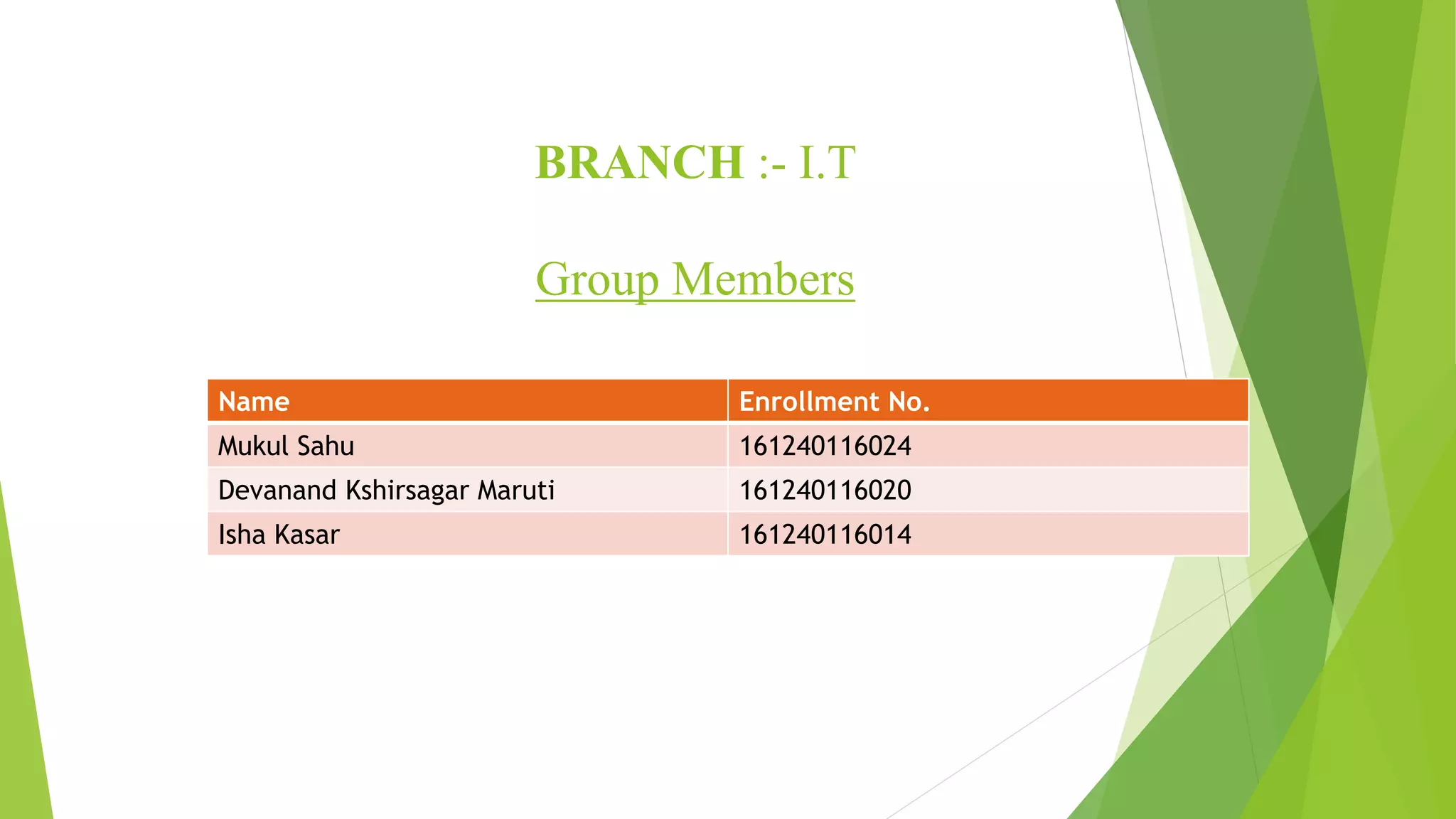
Name Enrollment No.
Mukul Sahu 161240116024
Devanand Kshirsagar Maruti 161240116020
Isha Kasar 161240116014
Network Reconnaissance
 Network reconnaissance is a term for testing for
potential vulnerabilities in a computer network. This
may be a legitimate activity by the network
owner/operator, seeking to protect it or to enforce its
acceptable use policy. It also may be a precursor to
external attacks on the network.
 There are two tools for it:-
1. Nmap
2. THC-Amap
Nmap
 Nmap (Network Mapper) is a security scanner, used to
discover hosts and services on a computer network, thus building
a "map" of the network.
 To accomplish its goal, Nmap sends specially crafted packets to
the target host(s) and then analyzes the responses.
 The software provides a number of features for probing
computer networks, including host discovery and service
and operating-system detection.
THC-Amap
 Amap is a great tool for determining what application is
listening on a given port.
 In other words it is a scanner that identifies
applications/services installed on a remote machine.
 Their database isn't as large as what Nmap uses for
its version detection feature, but it is definitely worth trying
for a 2nd opinion or if Nmap fails to detect a service.
 Amap even knows how to parse Nmap output files and it can
be used to confirm or complete a Nmap analysis.
Network Sniffing
 Process of capturing, decoding, and analyzing network traffic is called
network sniffing.
 Network sniffing is a tool that can help you locate network
problems by allowing you to capture and view packet level
data on your network. The Colasoft Capsa Network sniffer is a
powerful network analyser
 A packet sniffer is a software application that uses a network
adapter card in promiscuous mode to capture all network
packets
EXAMPLE OF NETWORK
SNIFFERS
 TcpDump
 winDump
 Wireshark
 Ettercap
 Hping
 Kismet
TcpDump
 TcpDump is a common packet analyzer that runs under
the command line.
 It allows the user to display TCP/IP and other packets
being transmitted or received over a network to which
the computer is attached.
 TcpDump is free software and it works on most Unix-
like operating systems.
WinDump
 WinDump is the Windows version of tcpdump, the
command line network analyzer for UNIX.
 WinDump is fully compatible with tcpdump and can be
used to watch, diagnose and save to disk network traffic
according to various complex rules.
 It can run under Windows 95, 98, ME, NT, 2000, XP,
2003 and Vista.
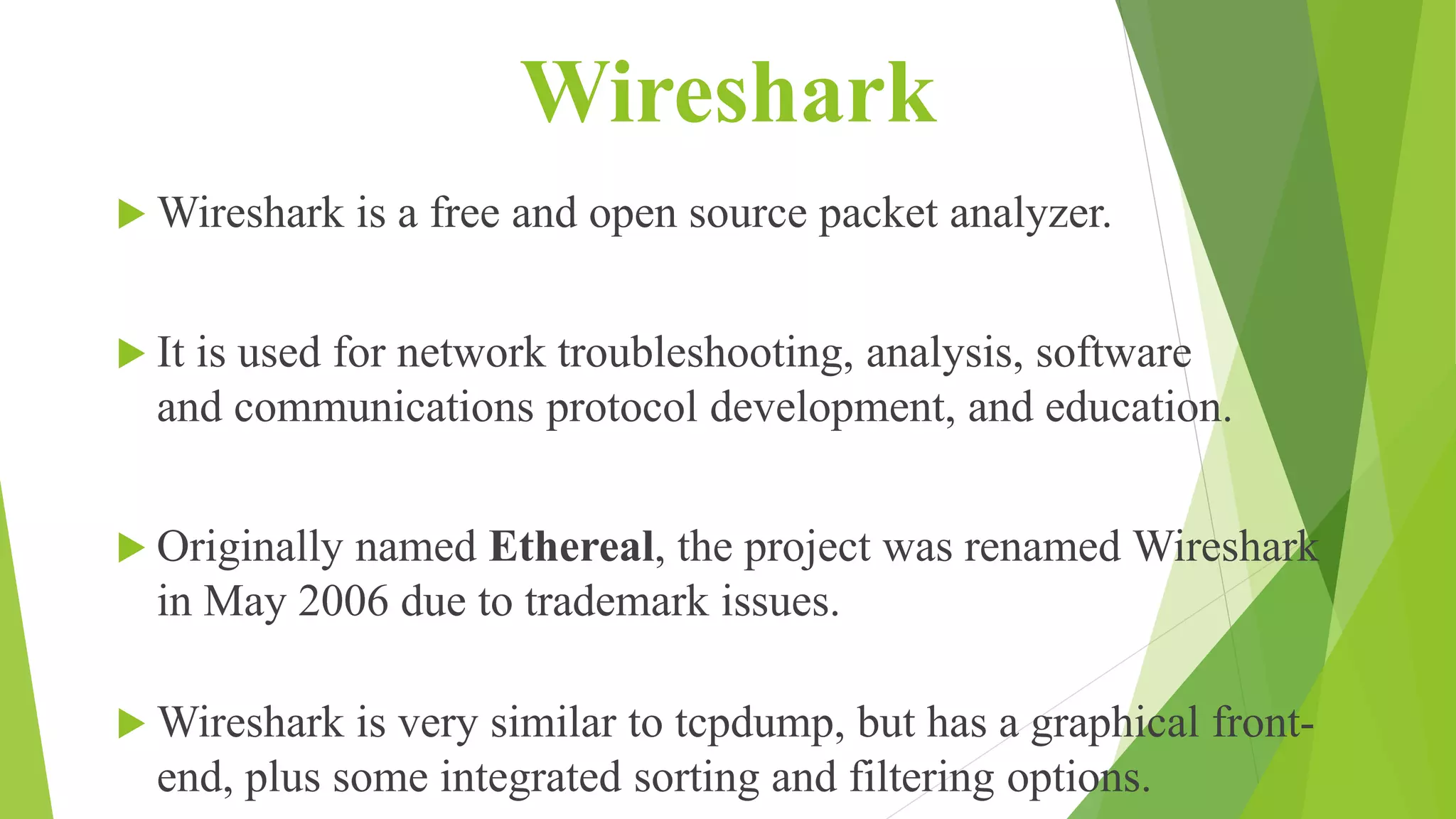
Wireshark
 Wireshark is a free and open source packet analyzer.
 It is used for network troubleshooting, analysis, software
and communications protocol development, and education.
 Originally named Ethereal, the project was renamed Wireshark
in May 2006 due to trademark issues.
 Wireshark is very similar to tcpdump, but has a graphical front-
end, plus some integrated sorting and filtering options.
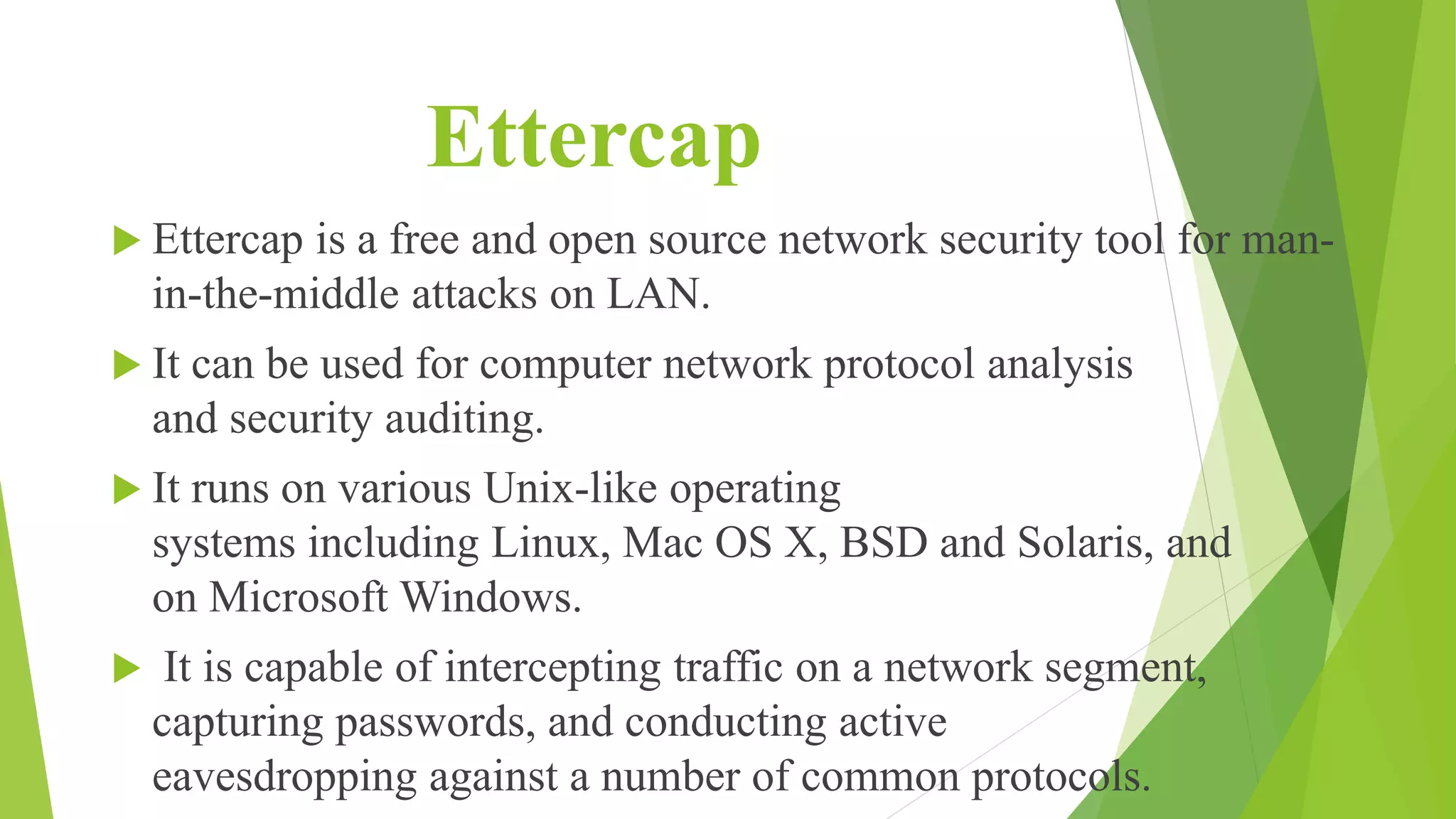
Ettercap
 Ettercap is a free and open source network security tool for man-
in-the-middle attacks on LAN.
 It can be used for computer network protocol analysis
and security auditing.
 It runs on various Unix-like operating
systems including Linux, Mac OS X, BSD and Solaris, and
on Microsoft Windows.
 It is capable of intercepting traffic on a network segment,
capturing passwords, and conducting active
eavesdropping against a number of common protocols.
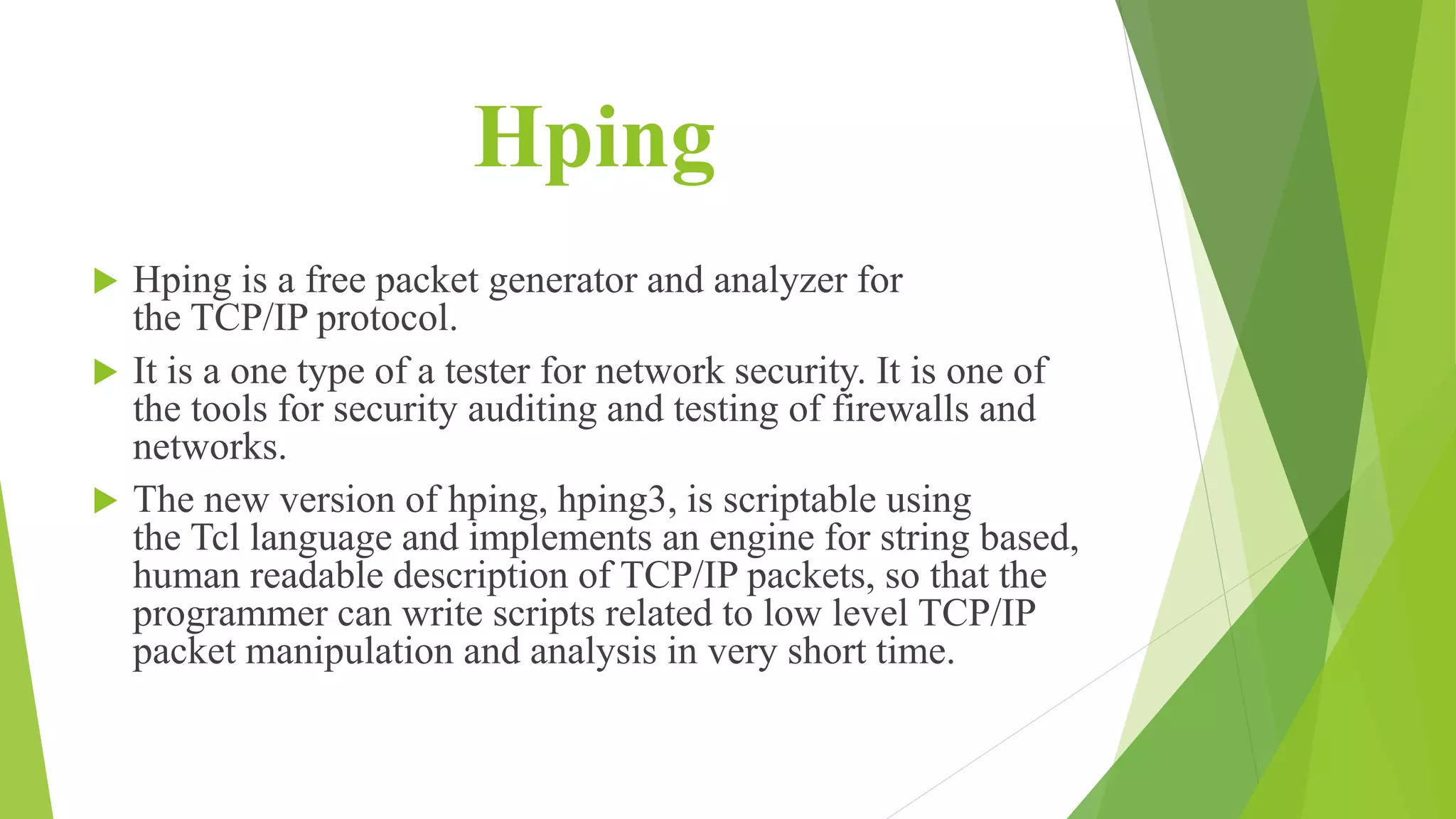
Hping
 Hping is a free packet generator and analyzer for
the TCP/IP protocol.
 It is a one type of a tester for network security. It is one of
the tools for security auditing and testing of firewalls and
networks.
 The new version of hping, hping3, is scriptable using
the Tcl language and implements an engine for string based,
human readable description of TCP/IP packets, so that the
programmer can write scripts related to low level TCP/IP
packet manipulation and analysis in very short time.
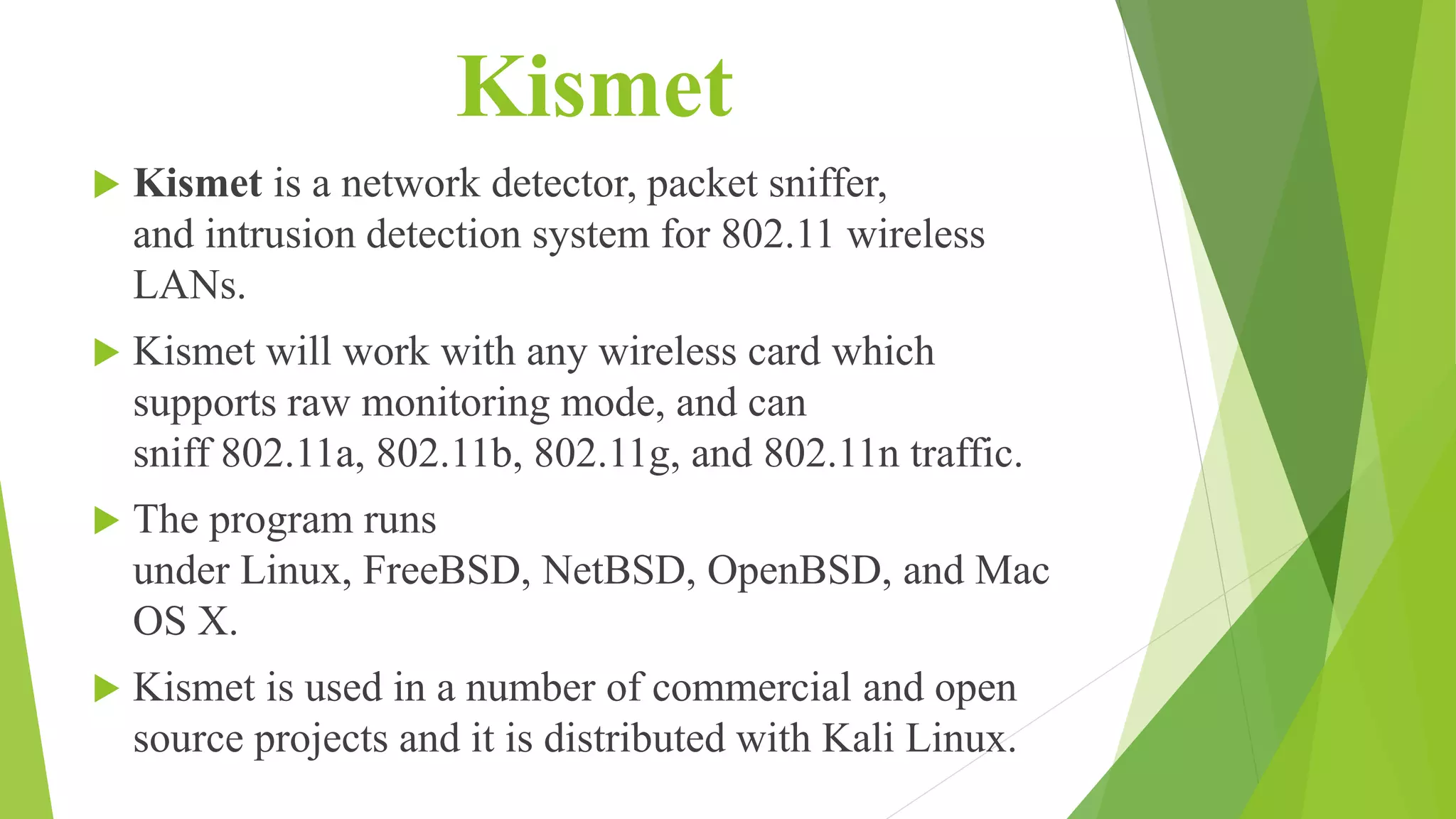
Kismet
 Kismet is a network detector, packet sniffer,
and intrusion detection system for 802.11 wireless
LANs.
 Kismet will work with any wireless card which
supports raw monitoring mode, and can
sniff 802.11a, 802.11b, 802.11g, and 802.11n traffic.
 The program runs
under Linux, FreeBSD, NetBSD, OpenBSD, and Mac
OS X.
 Kismet is used in a number of commercial and open
source projects and it is distributed with Kali Linux.
Injection
 Injection refers to the process of interfering with an
established
network connection, by means of constructing
packets to appear
as if they are part of the normal communication
stream.

Nmap & Network sniffing

  • 1.
    SARDAR PATEL COLLEGEOF ENGINEERING,BAKROL Cyber Security Subject code : (2150002)
  • 2.
    BRANCH :- I.T GroupMembers Name Enrollment No. Mukul Sahu 161240116024 Devanand Kshirsagar Maruti 161240116020 Isha Kasar 161240116014
  • 3.
    Network Reconnaissance  Networkreconnaissance is a term for testing for potential vulnerabilities in a computer network. This may be a legitimate activity by the network owner/operator, seeking to protect it or to enforce its acceptable use policy. It also may be a precursor to external attacks on the network.  There are two tools for it:- 1. Nmap 2. THC-Amap
  • 4.
    Nmap  Nmap (NetworkMapper) is a security scanner, used to discover hosts and services on a computer network, thus building a "map" of the network.  To accomplish its goal, Nmap sends specially crafted packets to the target host(s) and then analyzes the responses.  The software provides a number of features for probing computer networks, including host discovery and service and operating-system detection.
  • 5.
    THC-Amap  Amap isa great tool for determining what application is listening on a given port.  In other words it is a scanner that identifies applications/services installed on a remote machine.  Their database isn't as large as what Nmap uses for its version detection feature, but it is definitely worth trying for a 2nd opinion or if Nmap fails to detect a service.  Amap even knows how to parse Nmap output files and it can be used to confirm or complete a Nmap analysis.
  • 6.
    Network Sniffing  Processof capturing, decoding, and analyzing network traffic is called network sniffing.  Network sniffing is a tool that can help you locate network problems by allowing you to capture and view packet level data on your network. The Colasoft Capsa Network sniffer is a powerful network analyser  A packet sniffer is a software application that uses a network adapter card in promiscuous mode to capture all network packets
  • 7.
    EXAMPLE OF NETWORK SNIFFERS TcpDump  winDump  Wireshark  Ettercap  Hping  Kismet
  • 8.
    TcpDump  TcpDump isa common packet analyzer that runs under the command line.  It allows the user to display TCP/IP and other packets being transmitted or received over a network to which the computer is attached.  TcpDump is free software and it works on most Unix- like operating systems.
  • 9.
    WinDump  WinDump isthe Windows version of tcpdump, the command line network analyzer for UNIX.  WinDump is fully compatible with tcpdump and can be used to watch, diagnose and save to disk network traffic according to various complex rules.  It can run under Windows 95, 98, ME, NT, 2000, XP, 2003 and Vista.
  • 10.
    Wireshark  Wireshark isa free and open source packet analyzer.  It is used for network troubleshooting, analysis, software and communications protocol development, and education.  Originally named Ethereal, the project was renamed Wireshark in May 2006 due to trademark issues.  Wireshark is very similar to tcpdump, but has a graphical front- end, plus some integrated sorting and filtering options.
  • 11.
    Ettercap  Ettercap isa free and open source network security tool for man- in-the-middle attacks on LAN.  It can be used for computer network protocol analysis and security auditing.  It runs on various Unix-like operating systems including Linux, Mac OS X, BSD and Solaris, and on Microsoft Windows.  It is capable of intercepting traffic on a network segment, capturing passwords, and conducting active eavesdropping against a number of common protocols.
  • 12.
    Hping  Hping isa free packet generator and analyzer for the TCP/IP protocol.  It is a one type of a tester for network security. It is one of the tools for security auditing and testing of firewalls and networks.  The new version of hping, hping3, is scriptable using the Tcl language and implements an engine for string based, human readable description of TCP/IP packets, so that the programmer can write scripts related to low level TCP/IP packet manipulation and analysis in very short time.
  • 13.
    Kismet  Kismet isa network detector, packet sniffer, and intrusion detection system for 802.11 wireless LANs.  Kismet will work with any wireless card which supports raw monitoring mode, and can sniff 802.11a, 802.11b, 802.11g, and 802.11n traffic.  The program runs under Linux, FreeBSD, NetBSD, OpenBSD, and Mac OS X.  Kismet is used in a number of commercial and open source projects and it is distributed with Kali Linux.
  • 14.
    Injection  Injection refersto the process of interfering with an established network connection, by means of constructing packets to appear as if they are part of the normal communication stream.