• Nitrate itself is not toxic to animals, but at elevated
levels, it can cause a noninfectious disease called nitrite
poisoning.
• Nitrate poisoning is generally caused when animals eat
too much forage that is high in nitrates not changed to
protein in the plant.
• Poisoning can also happen when animals eat too much
urea or nitrogen fertilizer spilled in the field or left where
the animal scan find it.
• Too much forage that is high in nitrates not changed to
protein in the plants.
• Normally Nitrate is broken down to nitrite (NO2) and
then to ammonia (NH3), Ammonia is then converted to
protein by microbes in the rumen (which is the
compartment of the ruminant stomach).
• If Nitrite is absorbed into the blood and combines with
hemoglobin to form met-hemoglobin, which causes a
reduction in the ability of the blood to carry oxygen from
the lungs to body tissues.
• All plants contain some nitrate, but excessively high
levels are likely to occur in forages grown under stress
conditions.
• Nitrates accumulate in plants only when:
i. A large amount of nitrate in the soil.
ii. Some factor interferes with normal plant growth.
• Plants convert nitrate (NO3) to nitrite (NO2) which in turn
is converted to ammonia and then to amino acids, the
building blocks of protein.
• During the night, nitrate accumulates when
photosynthesis is inactive, then during the day, nitrate is
quickly converted to protein.
• In certain conditions, this balance can be disrupted so
that the roots will accumulate nitrate faster than the plant
can convert the nitrate to protein.
• The highest levels of nitrate accumulate when drought
occurs during heavy nitrate uptake by the plant.
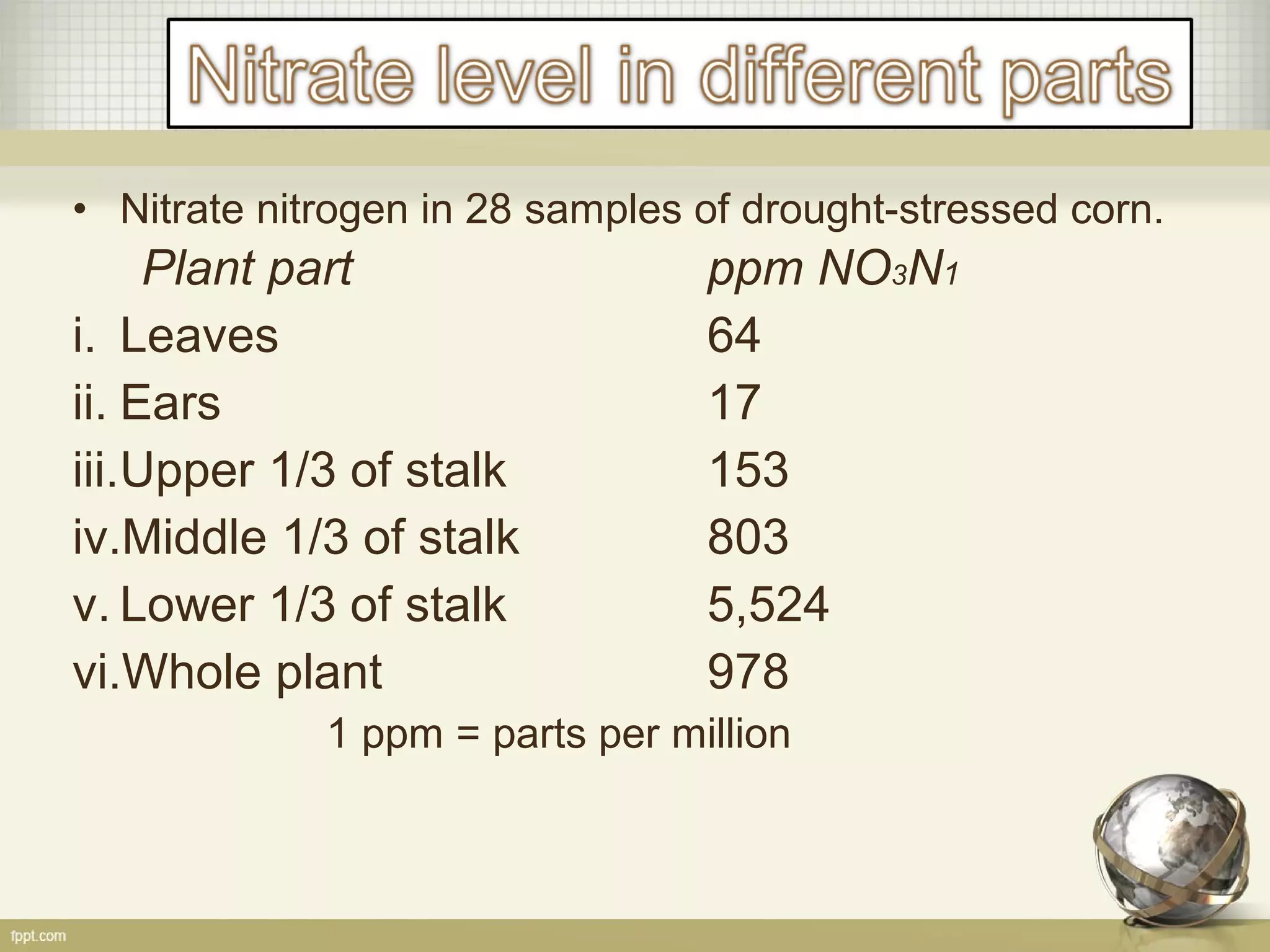
• Nitrate nitrogen in 28 samples of drought-stressed corn.
Plant part ppm NO3N1
i. Leaves 64
ii. Ears 17
iii.Upper 1/3 of stalk 153
iv.Middle 1/3 of stalk 803
v. Lower 1/3 of stalk 5,524
vi.Whole plant 978
1 ppm = parts per million
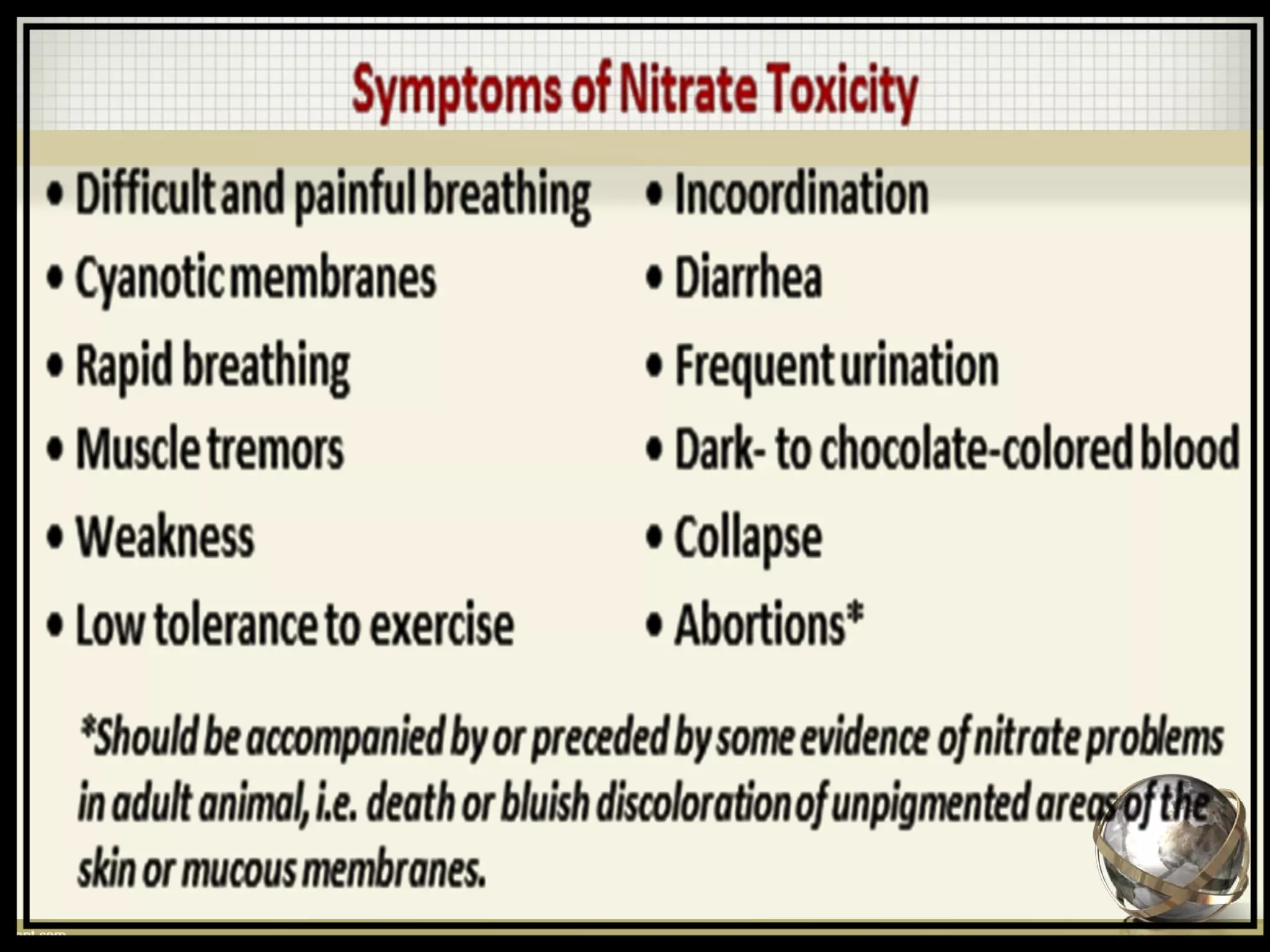
• The first symptom to appear is a grayish to brownish
discoloration of non pigmented skin and mucous
membranes of the mouth, nose, eyes and vulva.
• This discoloration results from the chocolate-brown color
of the blood, a distinct characteristic of nitrate toxicity that
persists several hours after death.
• As the syndrome progresses, a staggering gait, rapid
pulse, labored breathing and frequent urination
develop, followed by collapse, coma and death.
• Pregnant animals may abort a few days later.
• Symptoms often occur rapidly, within one-half to four hours
after ingestion of a toxic dose. Some animals exhibit
symptoms but recover spontaneously and completely.
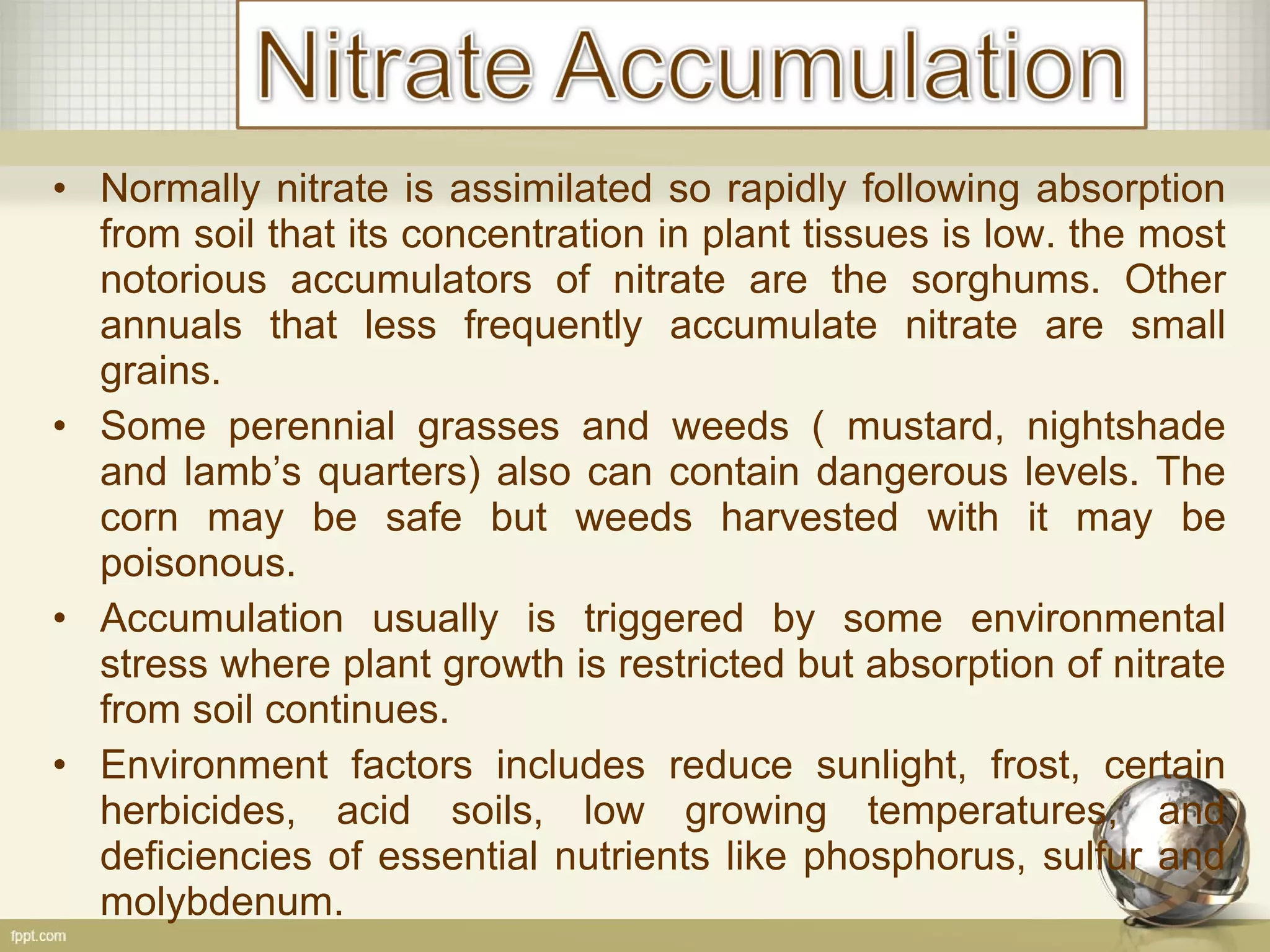
• Normally nitrate is assimilated so rapidly following absorption
from soil that its concentration in plant tissues is low. the most
notorious accumulators of nitrate are the sorghums. Other
annuals that less frequently accumulate nitrate are small
grains.
• Some perennial grasses and weeds ( mustard, nightshade
and lamb’s quarters) also can contain dangerous levels. The
corn may be safe but weeds harvested with it may be
poisonous.
• Accumulation usually is triggered by some environmental
stress where plant growth is restricted but absorption of nitrate
from soil continues.
• Environment factors includes reduce sunlight, frost, certain
herbicides, acid soils, low growing temperatures, and
deficiencies of essential nutrients like phosphorus, sulfur and
molybdenum.
• When more soil nitrogen is present than needed for
maximum growth, some plants tend to accumulate
nitrate even without environmental stress. This response
is particularly true with hardy soil feeders like sorghum,
noted for “luxury consumption” of certain nutrients.
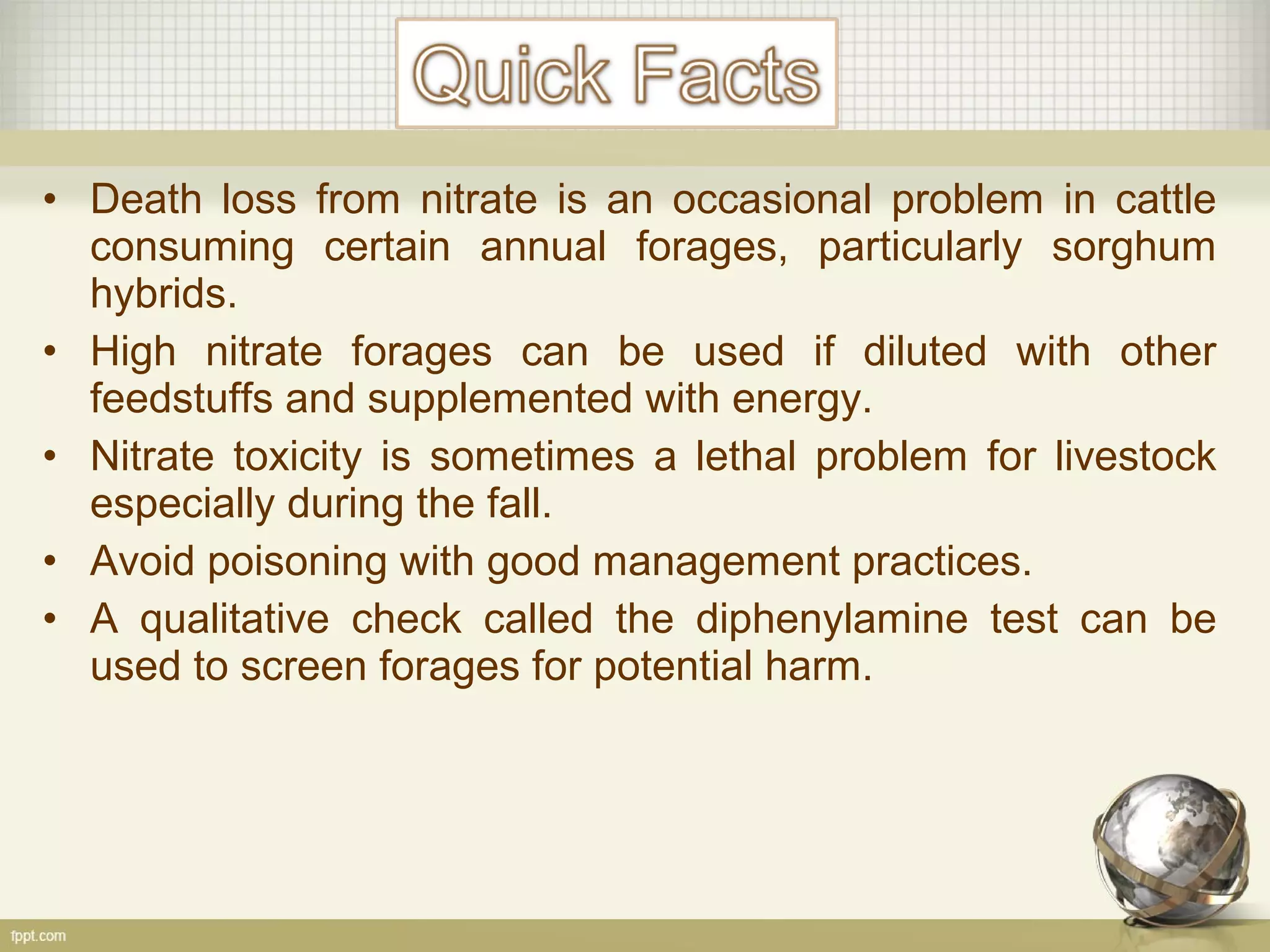
• Death loss from nitrate is an occasional problem in cattle
consuming certain annual forages, particularly sorghum
hybrids.
• High nitrate forages can be used if diluted with other
feedstuffs and supplemented with energy.
• Nitrate toxicity is sometimes a lethal problem for livestock
especially during the fall.
• Avoid poisoning with good management practices.
• A qualitative check called the diphenylamine test can be
used to screen forages for potential harm.
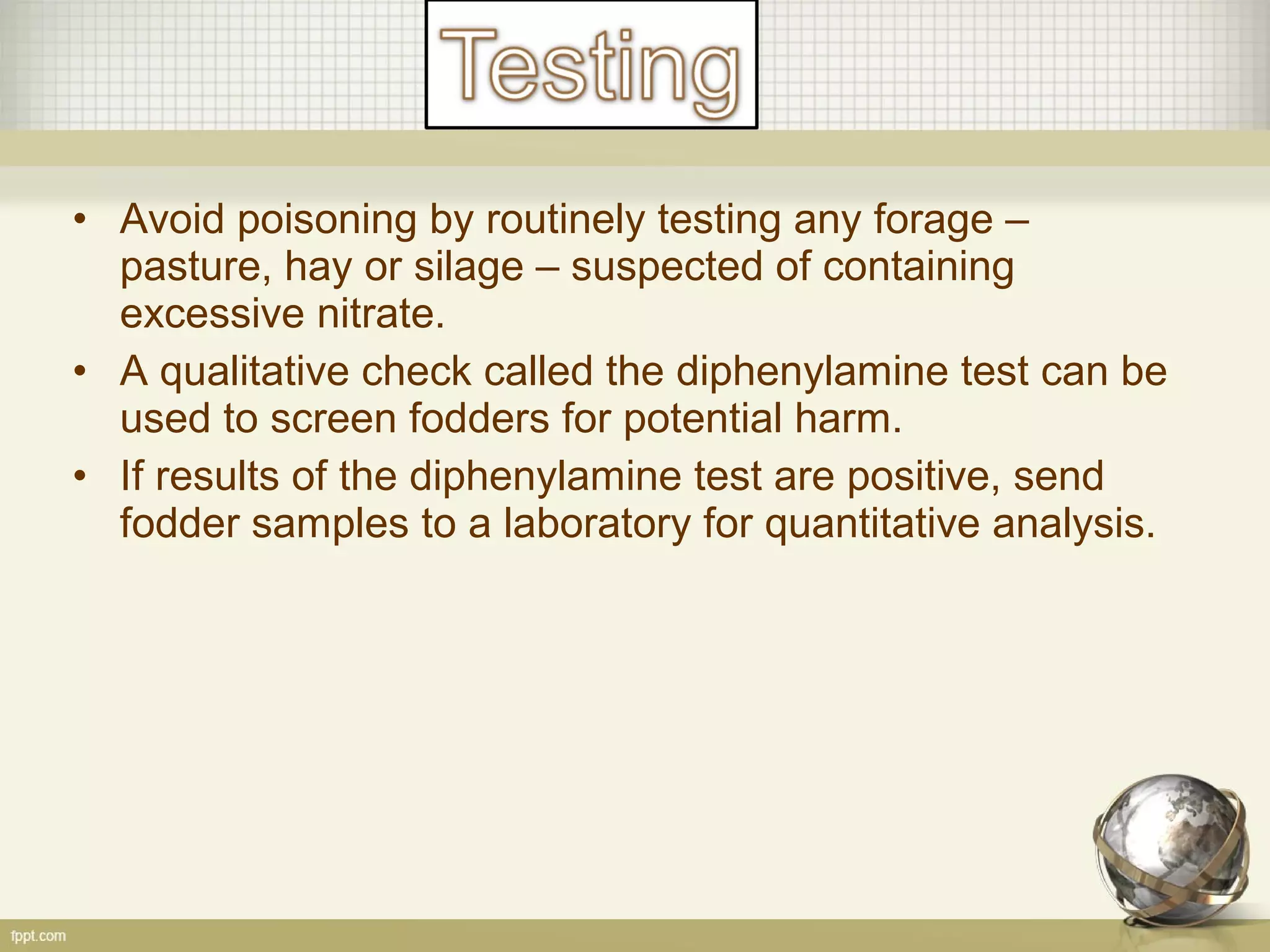
• Avoid poisoning by routinely testing any forage –
pasture, hay or silage – suspected of containing
excessive nitrate.
• A qualitative check called the diphenylamine test can be
used to screen fodders for potential harm.
• If results of the diphenylamine test are positive, send
fodder samples to a laboratory for quantitative analysis.
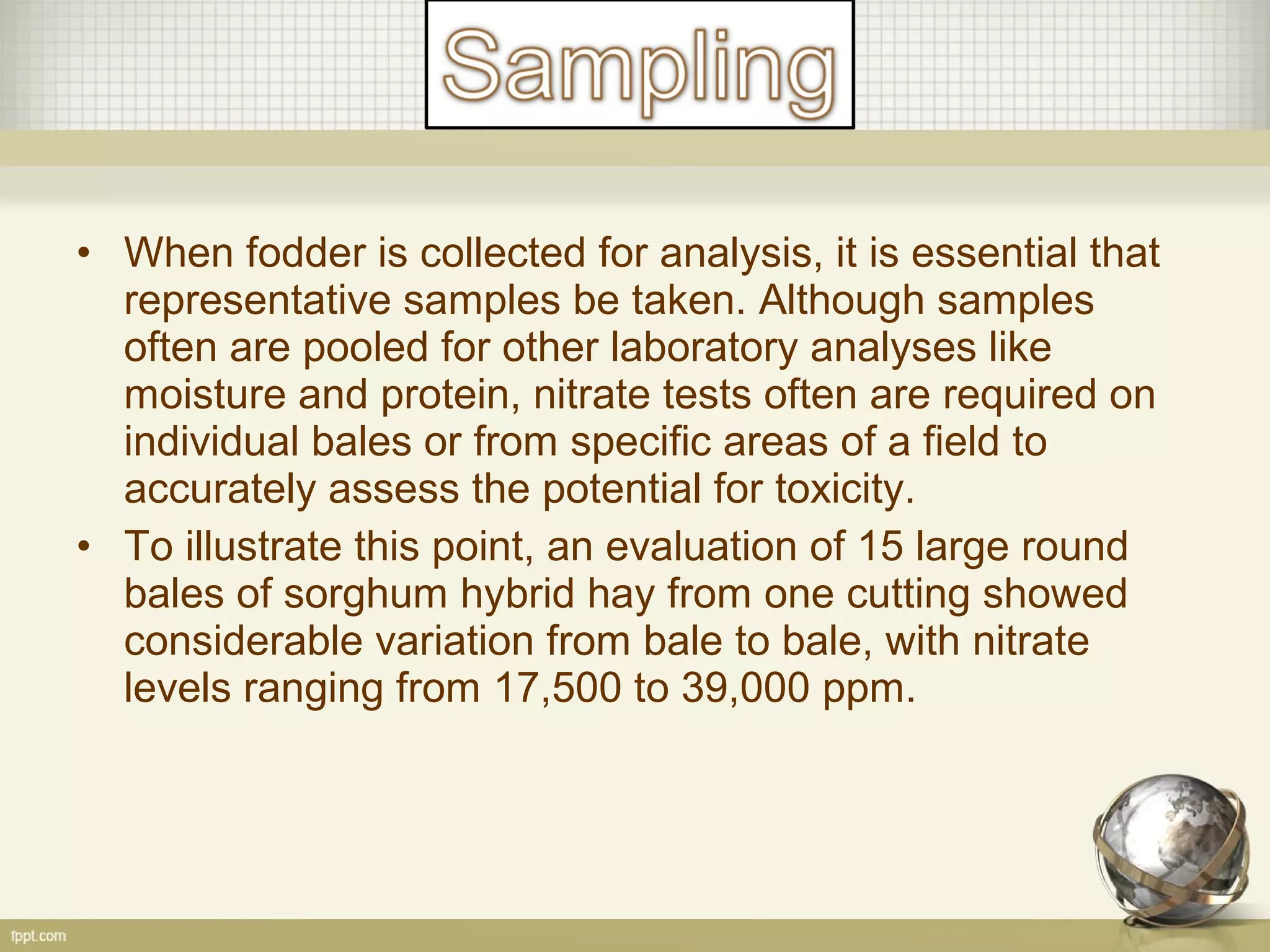
• When fodder is collected for analysis, it is essential that
representative samples be taken. Although samples
often are pooled for other laboratory analyses like
moisture and protein, nitrate tests often are required on
individual bales or from specific areas of a field to
accurately assess the potential for toxicity.
• To illustrate this point, an evaluation of 15 large round
bales of sorghum hybrid hay from one cutting showed
considerable variation from bale to bale, with nitrate
levels ranging from 17,500 to 39,000 ppm.
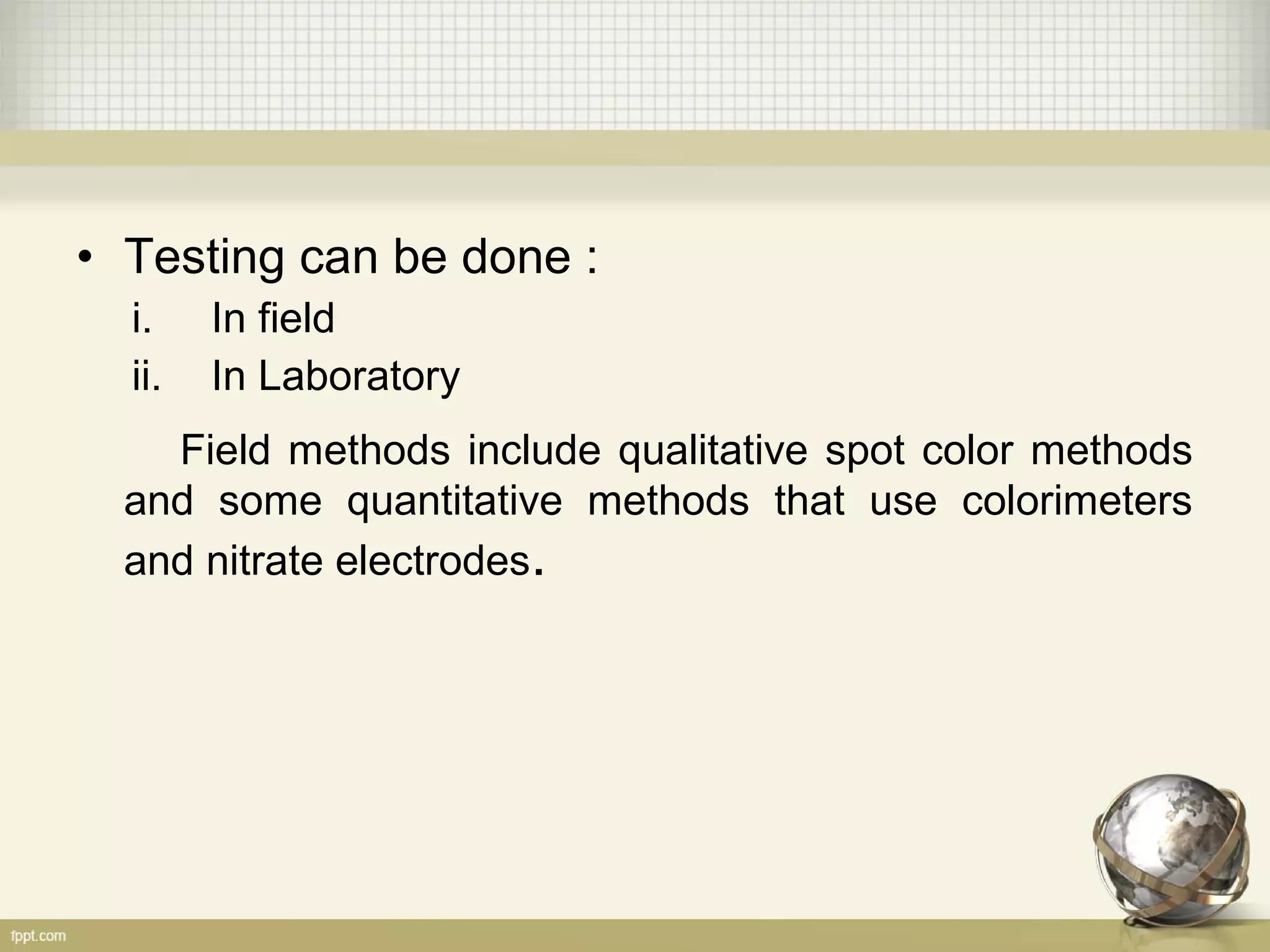
• Testing can be done :
i. In field
ii. In Laboratory
Field methods include qualitative spot color methods
and some quantitative methods that use colorimeters
and nitrate electrodes.
Purpose
• This technical procedure shall be followed
for the preparation of the spot test
solutions within the Trace Unit.
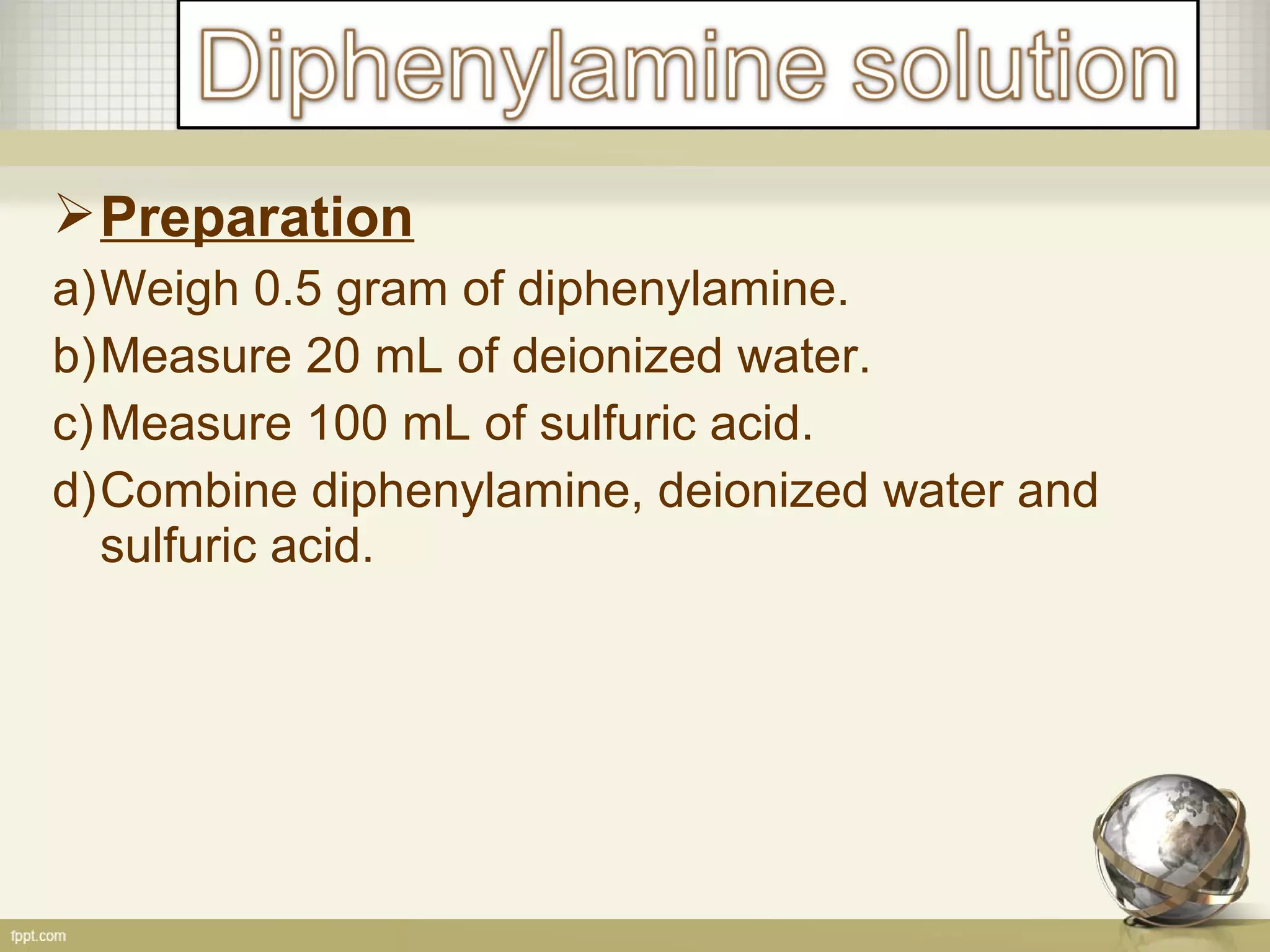
Preparation
a)Weigh 0.5 gram of diphenylamine.
b)Measure 20 mL of deionized water.
c)Measure 100 mL of sulfuric acid.
d)Combine diphenylamine, deionized water and
sulfuric acid.
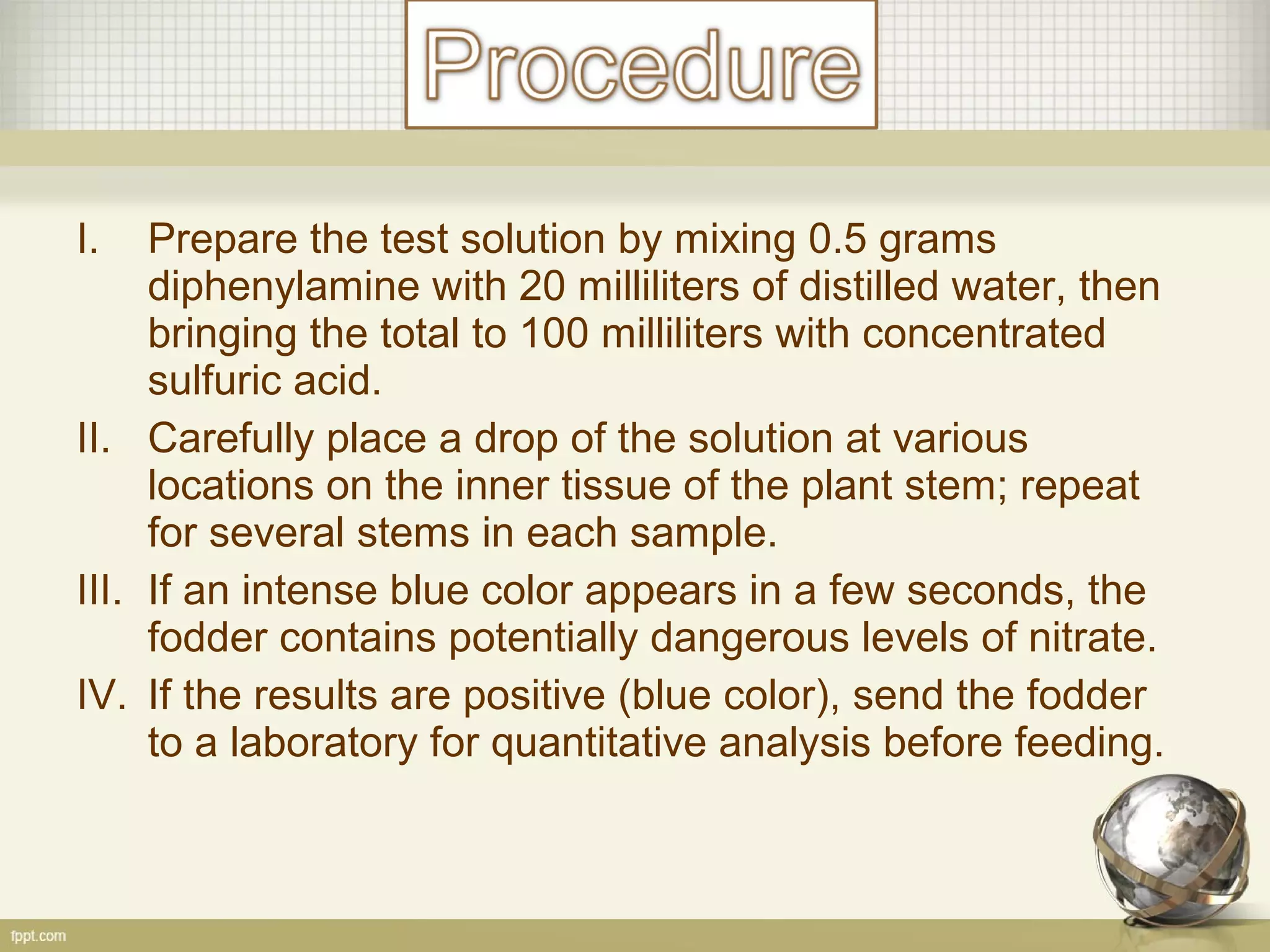
I. Prepare the test solution by mixing 0.5 grams
diphenylamine with 20 milliliters of distilled water, then
bringing the total to 100 milliliters with concentrated
sulfuric acid.
II. Carefully place a drop of the solution at various
locations on the inner tissue of the plant stem; repeat
for several stems in each sample.
III. If an intense blue color appears in a few seconds, the
fodder contains potentially dangerous levels of nitrate.
IV. If the results are positive (blue color), send the fodder
to a laboratory for quantitative analysis before feeding.
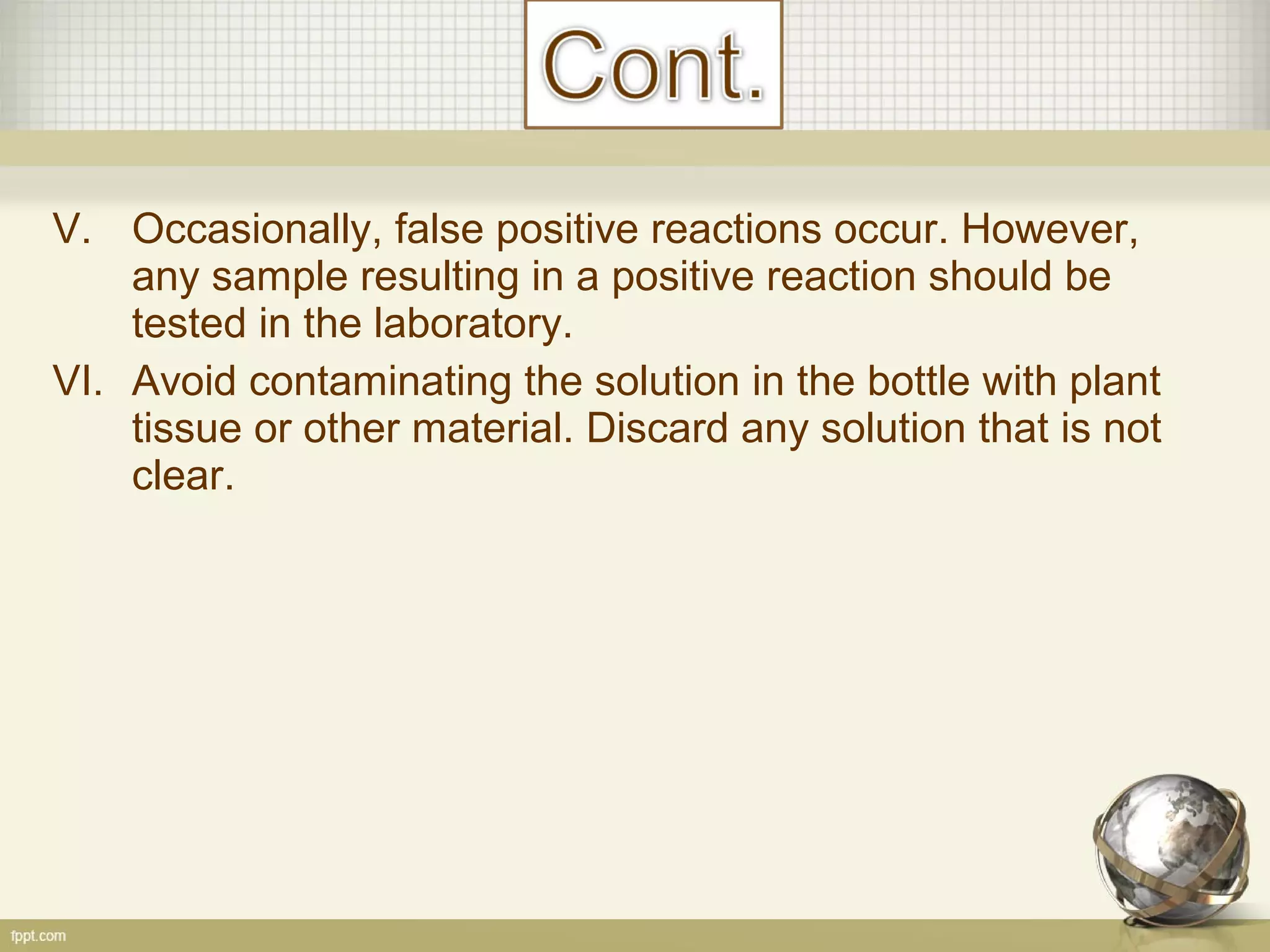
V. Occasionally, false positive reactions occur. However,
any sample resulting in a positive reaction should be
tested in the laboratory.
VI. Avoid contaminating the solution in the bottle with plant
tissue or other material. Discard any solution that is not
clear.
• Observed clinical signs.
• Possible exposure to toxic plants, feeds or water.
• Post-mortem findings.
• Laboratory tests.
• Nitrate accumulation can be minimized by analyzing soil
• Use of true sudans or sudan-sudan hybrids instead of
sorghum-sudan or sorgo-sudan hybrids may be warranted to
reduce potential for accumulating nitrate
• Do not ignore differences in yield, quality, drought tolerance
and insect and disease resistance.
• Test samples of plants from different areas of the field,
particularly those showing the most stress, for nitrate content.
If the level is dangerous, delay harvest until rain comes and
the plant increases in maturity.
• Silage also may be a good alternative since appreciable
reduction in nitrate levels Forages that are high in nitrate will
normally lose 40 to 60 percent of their nitrate content during
fermentation.
• Urgent veterinary attention is required to confirm the
tentative diagnosis and to treat affected animals. Stock
should immediately be removed from suspect material,
and be handled as little and as quietly as possible. Hay or
some other low-nitrate herbage should be fed to dilute the
nitrate and/or nitrite in the stomach.
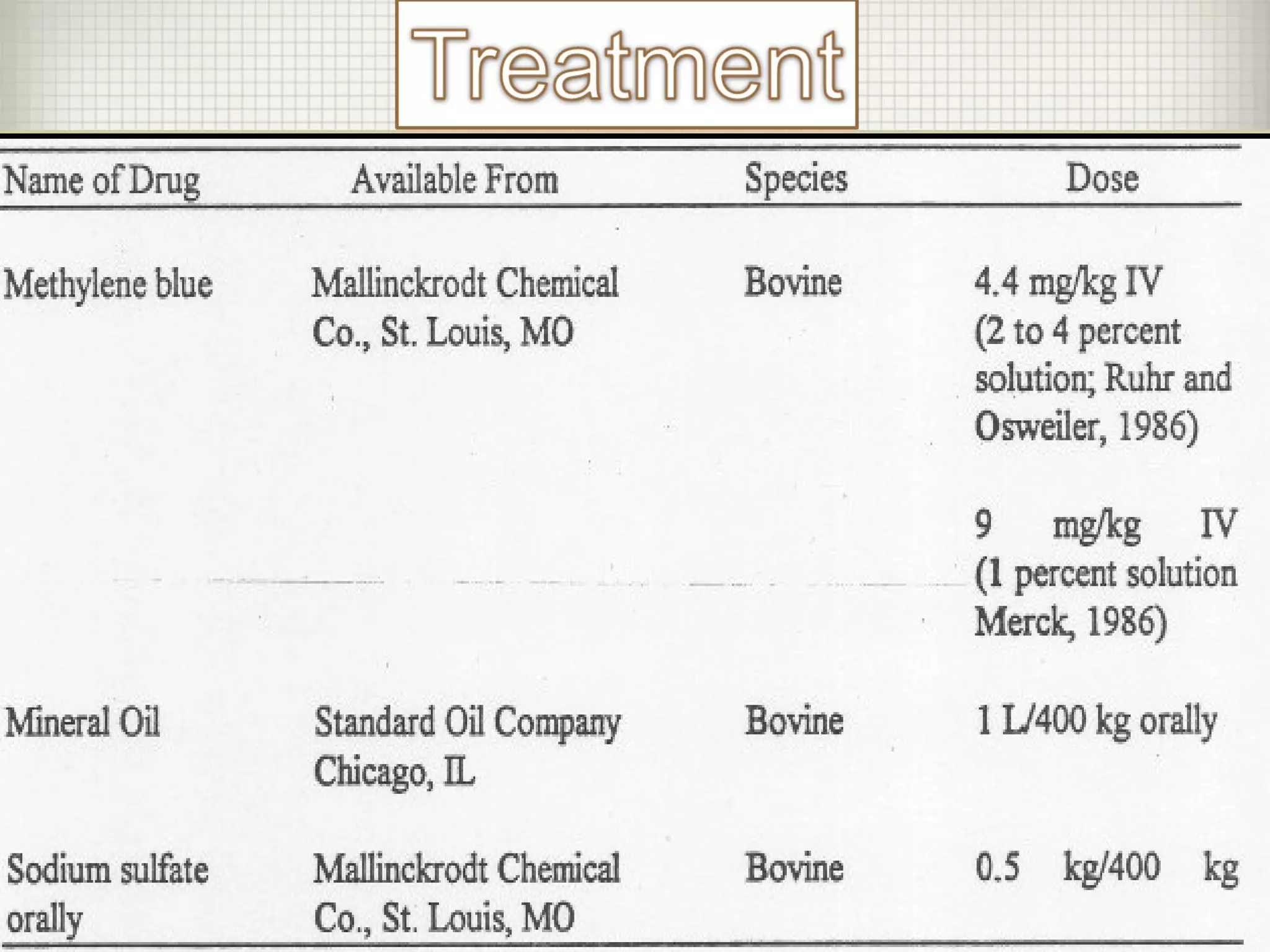
• Affected animals can be treated by intravenous injections
of methylene blue, a powdered dye material. Methylene
blue converts the methaemoglobin back to oxygen-
carrying hemoglobin.
• This matter is under review. Contact your veterinarian for
advice. If producers have an old supply of methylene
blue on hand, they should consult their veterinarian
before attempting to use it.
Nitrate poisoning

Nitrate poisoning

  • 2.
    • Nitrate itselfis not toxic to animals, but at elevated levels, it can cause a noninfectious disease called nitrite poisoning. • Nitrate poisoning is generally caused when animals eat too much forage that is high in nitrates not changed to protein in the plant. • Poisoning can also happen when animals eat too much urea or nitrogen fertilizer spilled in the field or left where the animal scan find it. • Too much forage that is high in nitrates not changed to protein in the plants.
  • 3.
    • Normally Nitrateis broken down to nitrite (NO2) and then to ammonia (NH3), Ammonia is then converted to protein by microbes in the rumen (which is the compartment of the ruminant stomach). • If Nitrite is absorbed into the blood and combines with hemoglobin to form met-hemoglobin, which causes a reduction in the ability of the blood to carry oxygen from the lungs to body tissues.
  • 4.
    • All plantscontain some nitrate, but excessively high levels are likely to occur in forages grown under stress conditions. • Nitrates accumulate in plants only when: i. A large amount of nitrate in the soil. ii. Some factor interferes with normal plant growth.
  • 5.
    • Plants convertnitrate (NO3) to nitrite (NO2) which in turn is converted to ammonia and then to amino acids, the building blocks of protein. • During the night, nitrate accumulates when photosynthesis is inactive, then during the day, nitrate is quickly converted to protein. • In certain conditions, this balance can be disrupted so that the roots will accumulate nitrate faster than the plant can convert the nitrate to protein. • The highest levels of nitrate accumulate when drought occurs during heavy nitrate uptake by the plant.
  • 6.
    • Nitrate nitrogenin 28 samples of drought-stressed corn. Plant part ppm NO3N1 i. Leaves 64 ii. Ears 17 iii.Upper 1/3 of stalk 153 iv.Middle 1/3 of stalk 803 v. Lower 1/3 of stalk 5,524 vi.Whole plant 978 1 ppm = parts per million
  • 8.
    • The firstsymptom to appear is a grayish to brownish discoloration of non pigmented skin and mucous membranes of the mouth, nose, eyes and vulva. • This discoloration results from the chocolate-brown color of the blood, a distinct characteristic of nitrate toxicity that persists several hours after death. • As the syndrome progresses, a staggering gait, rapid pulse, labored breathing and frequent urination develop, followed by collapse, coma and death. • Pregnant animals may abort a few days later. • Symptoms often occur rapidly, within one-half to four hours after ingestion of a toxic dose. Some animals exhibit symptoms but recover spontaneously and completely.
  • 9.
    • Normally nitrateis assimilated so rapidly following absorption from soil that its concentration in plant tissues is low. the most notorious accumulators of nitrate are the sorghums. Other annuals that less frequently accumulate nitrate are small grains. • Some perennial grasses and weeds ( mustard, nightshade and lamb’s quarters) also can contain dangerous levels. The corn may be safe but weeds harvested with it may be poisonous. • Accumulation usually is triggered by some environmental stress where plant growth is restricted but absorption of nitrate from soil continues. • Environment factors includes reduce sunlight, frost, certain herbicides, acid soils, low growing temperatures, and deficiencies of essential nutrients like phosphorus, sulfur and molybdenum.
  • 10.
    • When moresoil nitrogen is present than needed for maximum growth, some plants tend to accumulate nitrate even without environmental stress. This response is particularly true with hardy soil feeders like sorghum, noted for “luxury consumption” of certain nutrients.
  • 11.
    • Death lossfrom nitrate is an occasional problem in cattle consuming certain annual forages, particularly sorghum hybrids. • High nitrate forages can be used if diluted with other feedstuffs and supplemented with energy. • Nitrate toxicity is sometimes a lethal problem for livestock especially during the fall. • Avoid poisoning with good management practices. • A qualitative check called the diphenylamine test can be used to screen forages for potential harm.
  • 14.
    • Avoid poisoningby routinely testing any forage – pasture, hay or silage – suspected of containing excessive nitrate. • A qualitative check called the diphenylamine test can be used to screen fodders for potential harm. • If results of the diphenylamine test are positive, send fodder samples to a laboratory for quantitative analysis.
  • 15.
    • When fodderis collected for analysis, it is essential that representative samples be taken. Although samples often are pooled for other laboratory analyses like moisture and protein, nitrate tests often are required on individual bales or from specific areas of a field to accurately assess the potential for toxicity. • To illustrate this point, an evaluation of 15 large round bales of sorghum hybrid hay from one cutting showed considerable variation from bale to bale, with nitrate levels ranging from 17,500 to 39,000 ppm.
  • 16.
    • Testing canbe done : i. In field ii. In Laboratory Field methods include qualitative spot color methods and some quantitative methods that use colorimeters and nitrate electrodes.
  • 17.
    Purpose • This technicalprocedure shall be followed for the preparation of the spot test solutions within the Trace Unit.
  • 18.
    Preparation a)Weigh 0.5 gramof diphenylamine. b)Measure 20 mL of deionized water. c)Measure 100 mL of sulfuric acid. d)Combine diphenylamine, deionized water and sulfuric acid.
  • 19.
    I. Prepare thetest solution by mixing 0.5 grams diphenylamine with 20 milliliters of distilled water, then bringing the total to 100 milliliters with concentrated sulfuric acid. II. Carefully place a drop of the solution at various locations on the inner tissue of the plant stem; repeat for several stems in each sample. III. If an intense blue color appears in a few seconds, the fodder contains potentially dangerous levels of nitrate. IV. If the results are positive (blue color), send the fodder to a laboratory for quantitative analysis before feeding.
  • 20.
    V. Occasionally, falsepositive reactions occur. However, any sample resulting in a positive reaction should be tested in the laboratory. VI. Avoid contaminating the solution in the bottle with plant tissue or other material. Discard any solution that is not clear.
  • 21.
    • Observed clinicalsigns. • Possible exposure to toxic plants, feeds or water. • Post-mortem findings. • Laboratory tests.
  • 23.
    • Nitrate accumulationcan be minimized by analyzing soil • Use of true sudans or sudan-sudan hybrids instead of sorghum-sudan or sorgo-sudan hybrids may be warranted to reduce potential for accumulating nitrate • Do not ignore differences in yield, quality, drought tolerance and insect and disease resistance. • Test samples of plants from different areas of the field, particularly those showing the most stress, for nitrate content. If the level is dangerous, delay harvest until rain comes and the plant increases in maturity. • Silage also may be a good alternative since appreciable reduction in nitrate levels Forages that are high in nitrate will normally lose 40 to 60 percent of their nitrate content during fermentation.
  • 24.
    • Urgent veterinaryattention is required to confirm the tentative diagnosis and to treat affected animals. Stock should immediately be removed from suspect material, and be handled as little and as quietly as possible. Hay or some other low-nitrate herbage should be fed to dilute the nitrate and/or nitrite in the stomach. • Affected animals can be treated by intravenous injections of methylene blue, a powdered dye material. Methylene blue converts the methaemoglobin back to oxygen- carrying hemoglobin.
  • 25.
    • This matteris under review. Contact your veterinarian for advice. If producers have an old supply of methylene blue on hand, they should consult their veterinarian before attempting to use it.