AIR QUALITY
Ammonia Emissions from Cattle-Feeding Operations
Part 2 of 2: Abatement
                                                                                                         Mitigation: Ammonia Abatement
AIR QUALITY EDUCATION IN ANIMAL AGRICULTURE                                                                          December 2011

Sharon L. P. Sakirkin, Research
  Associate, Texas AgriLife Research            Abatement Measures
N. Andy Cole, Research Animal Scientist 	
  USDA-Agricultural Research Service                 Ammonia abatement measures can be implemented at two different stages of
Richard W. Todd, Soil Scientist                 livestock production. First-stage measures are applied in the pre-excretion stage. These
  USDA-Agricultural Research Service            include nutrition-based strategies to reduce the amount of nitrogen excreted in livestock
Brent W. Auvermann, Extension                   manure. In the second or post-excretion stage, management strategies are implemented
  Agricultural Engineering                      to reduce the amount of ammonia transferred to the environment from the manure by
  Specialist, Texas AgriLife Extension 	        agricultural operations.
  Service, Texas AgriLife Research
                                                Nutritional Ammonia Abatement Methods
                                                     One means of reducing ammonia emissions from concentrated animal feeding op-
                                                erations (CAFOs) is to reduce the amount of nitrogen excreted by the animals, especially
                                                the quantity excreted as urea in urine. Urinary pH also can affect ammonia emissions
                                                (Cole et al., 2008a). In some cases, it is possible to manipulate nutritional intake to re-
This publication discusses ammonia              duce total nitrogen and urinary nitrogen excretion while continuing to meet the nutrition-
                                                al requirements and performance expectations of the animals. Based upon consistent
abatement measures and when                     observations among researchers over the past decade, annual ammonia losses from
they can be implemented in                      beef cattle feedyards tend to be approximately half of the nitrogen consumed by cattle,
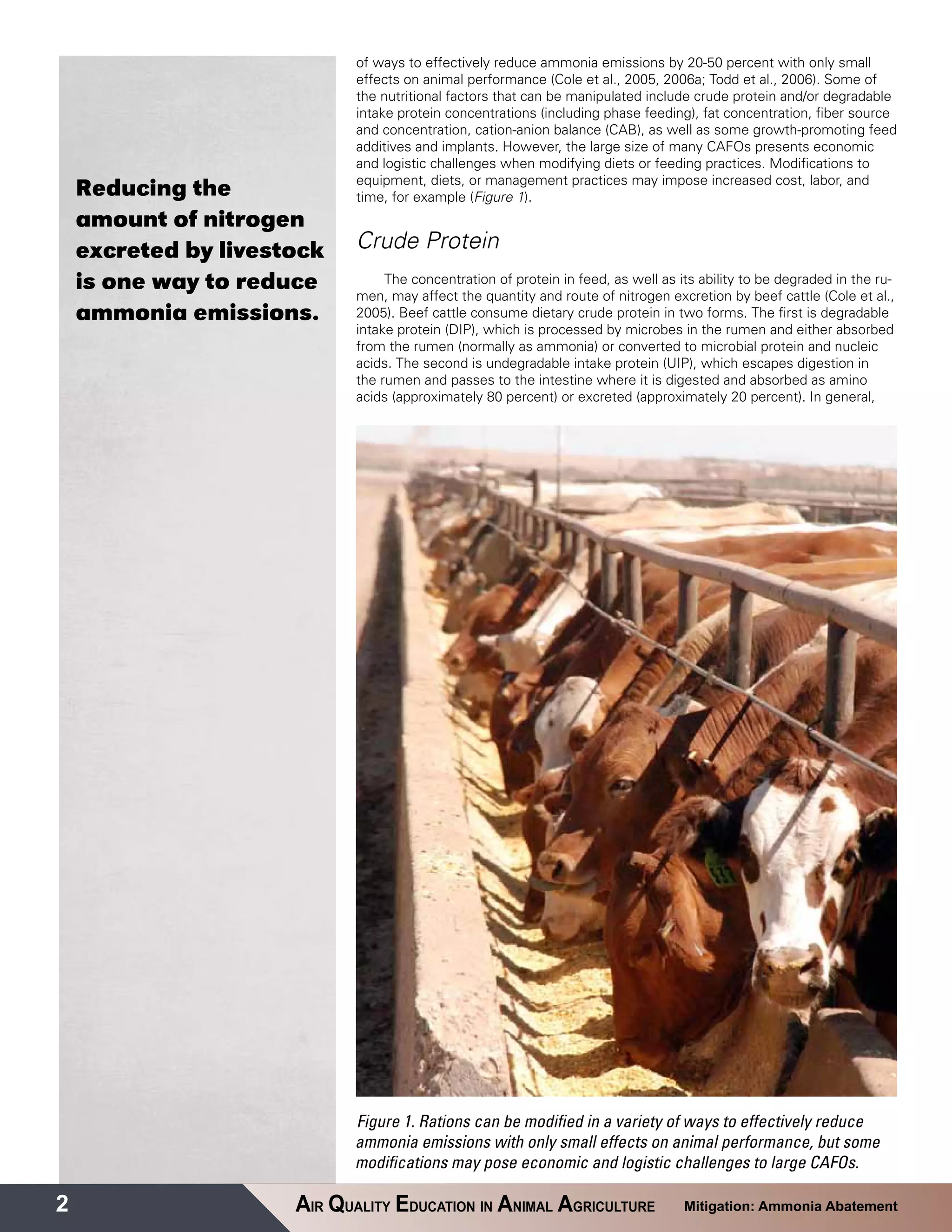
livestock production.                           and summer emission rates are about twice those in winter (Todd et al., 2009).

                                                     Table 1 presents ammonia-nitrogen loss as a percentage of fed nitrogen for beef
Contents                                        cattle feedyards in the Great Plains. Ration composition can be modified in a variety

Measures.................................1
                                                 Table 1. Ammonia-nitrogen loss as a percentage of fed nitrogen from Great Plains
Methods..................................1       beef cattle feedyards. Studies: (a) Todd and Cole, unpublished data, (b) Todd and Cole,
                                                 unpublished data, (c) Todd et al., 2011, (d) Todd et al., 2008, (e) van Haarlem et al., 2008,
Post-Excretion.........................4         (f) McGinn et al., 2007, (g) Flesch et al., 2007, (h) Harper et al., 2007, (i) Todd et al.,
References..............................6        2005, (j) Todd et al., 2005, (k) Cole et al., 2006, (l) Erickson and Klopfenstein, 2004, (m)
                                                 Erickson et al., 2000, (n) Bierman et al., 1999.


eXtension
Air Quality in Animal Agriculture
http://www.extension.org/pages/
15538/air-quality-in-animal-agriculture


Mitigation FS-1                              AIR QUALITY EDUCATION IN ANIMAL AGRICULTURE                                                    3
                                                                                                                                            1
of ways to effectively reduce ammonia emissions by 20-50 percent with only small
                             effects on animal performance (Cole et al., 2005, 2006a; Todd et al., 2006). Some of
                             the nutritional factors that can be manipulated include crude protein and/or degradable
                             intake protein concentrations (including phase feeding), fat concentration, fiber source
                             and concentration, cation-anion balance (CAB), as well as some growth-promoting feed
                             additives and implants. However, the large size of many CAFOs presents economic
                             and logistic challenges when modifying diets or feeding practices. Modifications to
                             equipment, diets, or management practices may impose increased cost, labor, and
    Reducing the             time, for example (Figure 1).
    amount of nitrogen
    excreted by livestock    Crude Protein
    is one way to reduce          The concentration of protein in feed, as well as its ability to be degraded in the ru-
                             men, may affect the quantity and route of nitrogen excretion by beef cattle (Cole et al.,
    ammonia emissions.       2005). Beef cattle consume dietary crude protein in two forms. The first is degradable
                             intake protein (DIP), which is processed by microbes in the rumen and either absorbed
                             from the rumen (normally as ammonia) or converted to microbial protein and nucleic
                             acids. The second is undegradable intake protein (UIP), which escapes digestion in
                             the rumen and passes to the intestine where it is digested and absorbed as amino
                             acids (approximately 80 percent) or excreted (approximately 20 percent). In general,


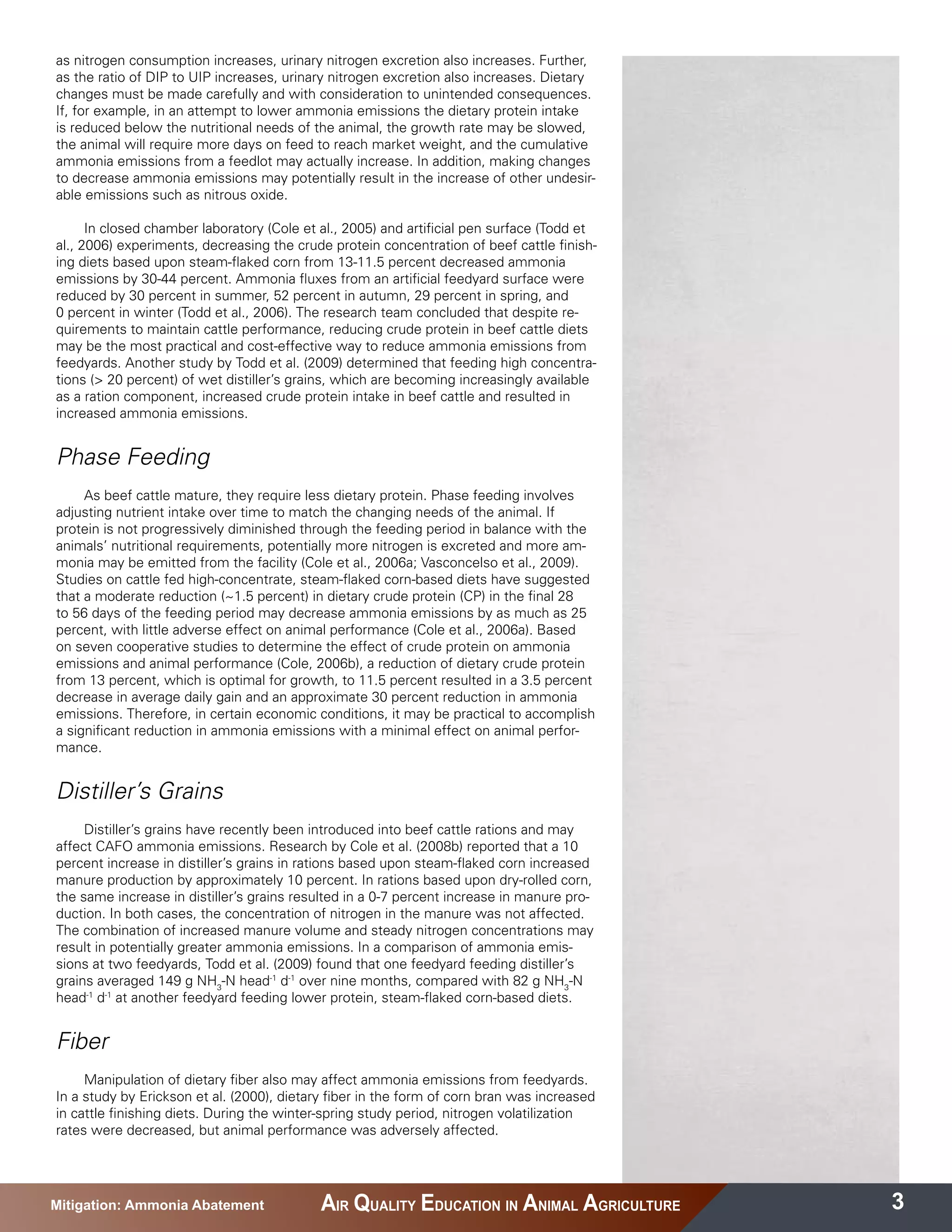
                             Figure 1. Rations can be modified in a variety of ways to effectively reduce
                             ammonia emissions with only small effects on animal performance, but some
                             modifications may pose economic and logistic challenges to large CAFOs.

2                     AIR QUALITY EDUCATION IN ANIMAL AGRICULTURE                   Mitigation: Ammonia Abatement
as nitrogen consumption increases, urinary nitrogen excretion also increases. Further,
as the ratio of DIP to UIP increases, urinary nitrogen excretion also increases. Dietary
changes must be made carefully and with consideration to unintended consequences.
If, for example, in an attempt to lower ammonia emissions the dietary protein intake
is reduced below the nutritional needs of the animal, the growth rate may be slowed,
the animal will require more days on feed to reach market weight, and the cumulative
ammonia emissions from a feedlot may actually increase. In addition, making changes
to decrease ammonia emissions may potentially result in the increase of other undesir-
able emissions such as nitrous oxide.

      In closed chamber laboratory (Cole et al., 2005) and artificial pen surface (Todd et
al., 2006) experiments, decreasing the crude protein concentration of beef cattle finish-
ing diets based upon steam-flaked corn from 13-11.5 percent decreased ammonia
emissions by 30-44 percent. Ammonia fluxes from an artificial feedyard surface were
reduced by 30 percent in summer, 52 percent in autumn, 29 percent in spring, and
0 percent in winter (Todd et al., 2006). The research team concluded that despite re-
quirements to maintain cattle performance, reducing crude protein in beef cattle diets
may be the most practical and cost-effective way to reduce ammonia emissions from
feedyards. Another study by Todd et al. (2009) determined that feeding high concentra-
tions (> 20 percent) of wet distiller’s grains, which are becoming increasingly available
as a ration component, increased crude protein intake in beef cattle and resulted in
increased ammonia emissions.


Phase Feeding
     As beef cattle mature, they require less dietary protein. Phase feeding involves
adjusting nutrient intake over time to match the changing needs of the animal. If
protein is not progressively diminished through the feeding period in balance with the
animals’ nutritional requirements, potentially more nitrogen is excreted and more am-
monia may be emitted from the facility (Cole et al., 2006a; Vasconcelso et al., 2009).
Studies on cattle fed high-concentrate, steam-flaked corn-based diets have suggested
that a moderate reduction (~1.5 percent) in dietary crude protein (CP) in the final 28
to 56 days of the feeding period may decrease ammonia emissions by as much as 25
percent, with little adverse effect on animal performance (Cole et al., 2006a). Based
on seven cooperative studies to determine the effect of crude protein on ammonia
emissions and animal performance (Cole, 2006b), a reduction of dietary crude protein
from 13 percent, which is optimal for growth, to 11.5 percent resulted in a 3.5 percent
decrease in average daily gain and an approximate 30 percent reduction in ammonia
emissions. Therefore, in certain economic conditions, it may be practical to accomplish
a significant reduction in ammonia emissions with a minimal effect on animal perfor-
mance.


Distiller’s Grains
     Distiller’s grains have recently been introduced into beef cattle rations and may
affect CAFO ammonia emissions. Research by Cole et al. (2008b) reported that a 10
percent increase in distiller’s grains in rations based upon steam-flaked corn increased
manure production by approximately 10 percent. In rations based upon dry-rolled corn,
the same increase in distiller’s grains resulted in a 0-7 percent increase in manure pro-
duction. In both cases, the concentration of nitrogen in the manure was not affected.
The combination of increased manure volume and steady nitrogen concentrations may
result in potentially greater ammonia emissions. In a comparison of ammonia emis-
sions at two feedyards, Todd et al. (2009) found that one feedyard feeding distiller’s
grains averaged 149 g NH3-N head-1 d-1 over nine months, compared with 82 g NH3-N
head-1 d-1 at another feedyard feeding lower protein, steam-flaked corn-based diets.


Fiber
     Manipulation of dietary fiber also may affect ammonia emissions from feedyards.
In a study by Erickson et al. (2000), dietary fiber in the form of corn bran was increased
in cattle finishing diets. During the winter-spring study period, nitrogen volatilization
rates were decreased, but animal performance was adversely affected.


Mitigation: Ammonia Abatement               AIR QUALITY EDUCATION IN ANIMAL AGRICULTURE      3
In another study by Bierman et al. (1999), beef cattle were fed different diets con-
                              taining wet corn gluten feed (WCGF), corn silage, and alfalfa hay. The researchers con-
                              cluded that dietary fiber and carbohydrate source affected the way feed was digested
                              and excreted by cattle, resulting in changes to the amount of nitrogen excreted.
                              Nitrogen excretion was highest for cattle fed a ration based on WCGF, but these cattle
                              also had the highest performance.

                                  Farran et al. (2006) manipulated alfalfa hay and WCGF in beef cattle diets and
    As beef cattle            made similar observations. Increasing alfalfa hay or WCGF intake resulted in an in-
    mature, they require      crease in nitrogen intake, nitrogen excretion, nitrogen volatilization, and cattle perfor-
                              mance. They further concluded that recovery of nitrogen in the manure and finished
    less dietary protein.     compost was also increased, especially in the case of WCGF, as a result of increased
                              organic matter content in the manure.
    Phase feeding
    involves adjusting        Cation-Anion Balance
    nutrient intake over           Ammonia emissions are inhibited in low-pH environments, and lowering dietary
                              cation-anion balance (DCAB) can potentially lower the pH of cattle urine. Thus, notwith-
    time to match the         standing other factors, lowering the pH of cattle urine may potentially reduce CAFO
                              ammonia emissions. However, Erickson and Klopfenstein (2010) noted no effect of
    animal’s changing         DCAB on nitrogen volatilization losses. Lowering urine pH may have little effect on
    needs.                    ammonia emissions because the pen surface of feedyard pens may have significant
                              buffering properties that strongly resist pH changes, tending to maintain a pH of ap-
                              proximately 8 or higher (Cole et al., 2009). Furthermore, cattle performance may be
                              reduced by low-DCAB diets (Cole and Greene, 2004).


                              Post-Excretion Ammonia Abatement Methods
                                   Post-excretion ammonia abatement strategies, such as improving manure man-
                              agement, can reduce the rate of nitrogen volatilization and ammonia emissions. Animal
                              health considerations in post-excretion methods are not as great a concern when com-
                              pared to nutritional methods. However, some manure management strategies, such
                              as pen scraping, can be beneficial for animal health. Manure contains nitrogen and
                              phosphorus, both of which contribute to the value of manure as a fertilizer. Nitrogen
                              volatilization can reduce the nitrogen:phosphorus ratio to below most plant require-
                              ments, thereby reducing the fertilizer value of the manure and requiring a greater land
                              application area to avoid excessive phosphorus applications. Reducing ammonia emis-
                              sion rates from manure will enhance the fertilizer value of manure and lower ammonia
                              emissions. Besides manure management, manipulating other factors such as the pH
                              and moisture content of soil and/or manure also can affect ammonia emissions (Cole
                              et al., 2008a).


                              Urease Inhibitors, Zeolites, Fats, and Other Pen
                              Surface Amendments
                                   Based upon laboratory studies, a number of compounds can potentially be applied
                              to feedlot pen surfaces to reduce ammonia emissions from feedyard surfaces (Varel,
                              1997; Varel et al., 1999; Shi et al., 2001; Parker et al., 2005; Cole et al., 2007). Sub-
                              stances such as zeolites (a microporous, aluminosilicate mineral), fats, and urease in-
                              hibitors such as N-(n-butyl) thiophsphoric triamide, cyclohexylphosphoric triamide, and
                              phenyl phospohorodiamidate may change manure properties such as pH, ammonia
                              adsorption potential, or hydrolysis potential, which in turn affects ammonia emission
                              rates.

                                    Urease inhibitors work by slowing down or blocking the hydrolysis of urea (found
                              in urine) by the enzyme urease (found in feces). However, urease inhibitors must
                              continually be applied to manure because they rapidly degrade (Powers, 2002; Parker
                              et al., 2005). Application of some compounds such as fats may be accomplished
                              indirectly via dietary supplementation. Zeolites and urease inhibitors have been shown
                              to decrease ammonia emissions when applied as a surface amendment, but not when
                              used as a dietary amendment (Varel, 1997; Varel et al., 1999; Shi et al., 2001; Parker et
                              al., 2005; Cole et al., 2007). Both dietary and surface amendments of fat appeared to


4                      AIR QUALITY EDUCATION IN ANIMAL AGRICULTURE                    Mitigation: Ammonia Abatement
decrease ammonia emissions (Cole et al., 2007). The dietary fat effect is likely because
a proportion of fed fat is voided onto the feedyard surface after being excreted in
undigested form by feedyard cattle. No significant effects on animal performance were
observed.


Lowering pH
     One of the most important factors involved in ammonia emissions from surfaces
is the pH of the emitting medium. In general, ammonia volatilization rates increase
with pH. Therefore, lowering the pH of soil or manure can reduce ammonia emissions.
With acidic conditions, given a constant temperature, more nitrogen will remain in the
form of ammonium (NH4+), thereby decreasing the amount of ammonia available to
volatilize. A significant reduction in ammonia emissions has been observed with acidi-
fying amendments such as aluminum sulfate (alum), ferrous sulfate, phosphoric acid,
or calcium salts.

     Maintaining the low pH can be challenging, however, because manure may have a
strong buffering capacity, which results in the pH eventually returning to a more basic
level and a resumption of ammonia emission. Strong acids are more cost-effective
than weak acids or acidifying salts, but they are more hazardous and, therefore, are not
suitable for use in agricultural environments (Ndegwa et al., 2008).


Manure Harvesting, Storage, and Application
     Frequent pen cleaning may help to capture nitrogen in the manure by decreas-
ing loss to the atmosphere. Research in Nebraska (Erickson and Klopfenstein, 2010)
revealed that cleaning pens once per month, as opposed to once after every 166-day
feeding period, reduced apparent ammonia nitrogen losses by 24 percent. The effec-
tiveness of the monthly cleaning strategy varied seasonally, being less in winter. This
may be due to the accumulation of nitrogen that occurs in the pen surface manure
pack during the winter, apparently the result of decreased ammonia losses during the
colder months (Cole et al., 2009). In addition, the amount of nitrogen collected in the
manure was 50 percent greater from pens cleaned monthly.

      Covering manure to reduce its exposure to elements such as sun, wind, and rain
is very effective at reducing ammonia emissions from storage areas. When manure
is land-applied, immediate incorporation or injection into the soil has been shown to
significantly reduce ammonia losses when compared to broadcasting alone (Ndegwa
et al., 2008).


                                                                                           Post-excretion
                                                                                           ammonia abatement
                                                                                           strategies can
                                                                                           reduce the rate
                                                                                           of nitrogen
                                                                                           volatilization and
                                                                                           ammonia emissions.


Mitigation: Ammonia Abatement              AIR QUALITY EDUCATION IN ANIMAL AGRICULTURE                          5
References
                               Bierman, S., G. E. Erickson, T. J. Klopfenstein, R. A. Stock, and D. H. Shain. 1999. Evaluation of
                                    nitrogen and organic matter balance in the feedlot as affected by level and source of dietary
                                    fiber. J. Animal Sci. 77:(7)1645-1653.

                               Cole, N. A., and L. W. Greene. 2004. Nutrient management for livestock feeding operations:
                                    challenges and opportunities. In Proc. California Animal Nutrition Conference, 82-104.
    Frequent pen                    Fresno, Cal.

    cleaning may help          Cole, N. A., R. N. Clark, R. W. Todd, C. R. Richardson, A. Gueye, L. W. Greene, and K. McBride.
                                    2005. Influence of dietary crude protein concentration and source on potential ammonia
    capture nitrogen                emissions from beef cattle manure. J. Animal Sci. 83:(3)722.

    in the manure by           Cole, N. A., P. J. Defoor, M. L. Galyean, G. C. Duff, and J. F. Gleghorn. 2006. Effects of phase-
                                    feeding of crude protein on performance, carcass characteristics, serum urea nitrogen
    decreasing loss to              concentrations, and manure nitrogen of finishing beef steers. J. Animal Sci. 84:(12)3421.

    the atmosphere.            Cole, N. A. 2006b. Update on recent protein research for finishing beef cattle fed steam-flaked
                                    corn based diets. In Proc. 21st Annual Southwest Nutrition and Management Conference,
                                    67-87. Tempe, Ariz.

                               Cole, N. A., R. W. Todd, and D. B. Parker. 2007. Use of fat and zeolite to reduce ammonia
                                    emaissions from beef cattle feedyards. In Proc. International Symposium on Air Quality and
                                    Waste Management for Agriculture, CD-ROM. ASABE Paper No. 701P0907cd.

                               Cole, N. A., R. Todd, B. Auvermann, and D. Parker. 2008. Auditing and Assessing Air Quality in
                                    Concentrated Feeding Operations. Professional Animal Scientist 24(1):1-22.

                               Cole, N. A., M. S. Brown, and J. C. MacDonald. 2008. Environmental considerations of
                                    feeding biofuel co-products. In ALPHARMA Beef Cattle Nutrition and Beef Species Joint
                                    Symposium: Producing Quality Beef in a Bio-Based Economy. J. Animal Sci. 86:E-Suppl. 2.

                               Cole, N. A., and R. W. Todd. 2009. Nitrogen and phosphorus balance of beef cattle feedyards. In
                                    Proc. Texas Animal Manure Management Issues Conference, 17-24. Round Rock, Texas.

                               Cole, N. A., A. M. Mason, R. W. Todd, M. Rhoades, and D. B. Parker. 2009. Chemical composition
                                    of pen surface layers of beef cattle feedyards. Professional Animal Scientist, 25:(5)541-552.

                               Erickson, G. E., C. T. Milton, and T. J. Klopfenstein. 2000. Dietary protein effects on nitrogen
                                    excretion and volatilization in open-dirt feedlots. In Proc. Eighth International Symposium on
                                    Animal, Agricultural, and Food Processing Waste (ISAAF). St. Joseph, Mich. ASABE.

                               Erickson, G., and T. Klopfenstein. 2010. Nutritional and management methods to decrease
                                    nitrogen losses from beef feedlots. J. Animal Sci. In press.

                               Farran, T. B., G. E. Erickson, T. J. Klopfenstein, C. N. Macken, and R. U. Lindquist. 2006. Wet
                                    corn gluten feed and alfalfa hay levels in dry-rolled corn finishing diets: Effects on finishing
                                    performance and feedlot nitrogen mass balance. J. Animal Sci. 84:(5)1205-1214.

                               Harper, L. A., T. K. Flesch, R. W. Todd, and N. A. Cole. 2007. Air-quality and global-change gas
                                   emissions in a beef feeding operation. In Agronomy Abstracts, 2004 Annual Meetings.
                                   American Society of Agronomy. Seattle, Mich.

                               McGinn, S. M., T. K. Flesch, B. P. Crenna, K. A. Beauchemin, and T. Coates. 2007. Quantifying
                                  ammonia emissions from a cattle feedlot using a dispersion model. J. Environ. Quality
                                  36:(6)1585-1590.

                               Ndegwa, P. M., A. N. Hristov, J. Arogo, and R. E. Sheffield. 2008. A review of ammonia emission
                                   mitigation techniques for concentrated animal feeding operations. Biosystems Eng.
                                   100(4):453-469.

                               Parker, D. B., S. Pandrangi, L. W. Greene, L. K. Almas, N. A. Cole, M. B. Rhoades, and J. K. Koziel.
                                    2005. Rate and frequency of urease inhibitor application for minimizing ammonia emissions
                                    form beef cattle feedyards. Trans. ASABE 48:(2)787-793.

                                Powers, W. 2002. Emerging air quality issues and the impact on animal agriculture:
                                   Management and nutritional strategies. 49th Annual Maryland Nutrition Conference for Feed
                                   Manufacturers. Timonium, Md.


6                        AIR QUALITY EDUCATION IN ANIMAL AGRICULTURE                           Mitigation: Ammonia Abatement
Shi, Y., D. B. Parker, N. A. Cole, B. W. Auvermann, and J. E. Melhorn. 2001. Surface amendments
     to minimize ammonia emissions from beef cattle feedlots. Trans. ASABE 44:(3)677-682.

Todd, R. W., N. A. Cole, L. A. Harper, T. K. Flesch, and B. H. Baak. 2005. Ammonia and gaseous
    nitrogen emissions from a commercial beef cattle feedyard estimated using the flux gradient
    method and N:P ratio analysis. In Proc. State of the Science: Animal Manure and Waste              Kevin A. Janni, Professor,
    Management, CD-ROM. San Antonio, Texas.
                                                                                                         Department of Bioproducts 	 	
Todd, R. W., N. A. Cole, and R. N. Clark. 2006. Reducing crude protein in beef cattle diet reduces      and Biosystems Engineering,
    ammonia emissions from artificial feedyard surfaces. J. Environ. Quality 35:(2)404-411.
                                                                                                         University of Minnesota
Todd, R. W., N. A. Cole, L. A. Harper, T. K. Flesch, and B. H. Baek. 2008. Ammonia emissions
    from a beef cattle feedyard on the southern High Plains. Atmospheric Environ. 42:(28)6797-         Heidi Waldrip, USDA-
    6805.                                                                                                Agricultural Research Service
Todd, R. W., N. A. Cole, D. B. Parker, M. Rhoades, and K. Casey. 2009. Effect of feeding distiller’s
    grains on dietary crude protein and ammonia emissions from beef cattle feedyards. In Proc.
    Texas Animal Manure Management Issues Conference, 83-90. E. Jordan, ed. Round Rock,
    Texas.

Todd, R. W., N. A. Cole, M. B. Rhoades, D. B. Parker, and K. D. Casey. 2011. Daily, monthly,
    seasonal and annual ammonia emissions from Southern High Plains cattle feedyards. J.
    Environ. Quality 40(4):1090-1095.

van Haarlem, R. P., R. L. Desjardins, Z. Gao, T. K. Flesch, and X. Li. 2008. Methane and ammonia
     emissions from a beef feedlot in Western Canada for a twelve-day period in the fall.
     Canadian J. Animal Sci. 88:(4)641-649.

Varel, V. H. 1997. Use of urease inhibitors to control nitrogen loss from livestock waste.
     Bioresource Tech. 62:(1-2)11-17.

Varel, V. H., J. A. Nienaber, and H. C. Freetly. 1999. Conservation of nitrogen in cattle feedlot
     waste with urease inhibitors. J. Animal Sci. 77:(5)1162-1168.

Vasconcelos, J. T., N. A. Cole, K. W. McBride, A. Gueye, M. L. Galyean, C. R. Richardson, and L.
    W. Greene. 2009. Effects of dietary crude protein and supplemental urea levels on nitrogen
    and phosphorus utilization by feedlot cattle. J. Animal Sci. 87:(4)1174-1183.


USDA is an equal opportunity provider and employer.

Disclaimer: The information given herein is for educational purposes only. Reference
to commercial products or trade names is made with the understanding that no dis-
crimination is intended and no endorsement by the Texas AgriLife Extension Service
is implied. Mention of trade names or commercial products in this article is solely for
the purpose of providing specific information and does not imply recommendation or
endorsement by the U. S. Department of Agriculture.

Educational programs of the Texas AgriLife Extension Service are open to all people
without regard to race, color, sex, disability, religion, age, or national origin.

Acknowledgements: Funding for the research reported herein was generously provid-
ed by the USDA National Institute for Food and Agriculture through Special Research
Grant number 2010-34466-20739.


The Air Quality Education in Animal Agriculture project was supported by
National Research Initiative Competitive Grant 2007-55112-17856 from the USDA National
Institute of Food and Agriculture.

Educational programs of the eXtension Foundation serve all people regardless of race, color, age,
sex, religion, disability, national origin, or sexual orientation. For more information see the
eXtension Terms of Use at eXtension.org.
                                                                                                       Air Quality Education
Reference to commercial products or trade names is made with the understanding that no
                                                                                                       in Animal Agriculture
discrimination is intended and no endorsement by eXtension is implied.


Mitigation: Ammonia Abatement                      AIR QUALITY EDUCATION IN ANIMAL AGRICULTURE                                           7

Ammonia from cattle part 2 final

  • 1.
    AIR QUALITY Ammonia Emissionsfrom Cattle-Feeding Operations Part 2 of 2: Abatement Mitigation: Ammonia Abatement AIR QUALITY EDUCATION IN ANIMAL AGRICULTURE December 2011 Sharon L. P. Sakirkin, Research   Associate, Texas AgriLife Research Abatement Measures N. Andy Cole, Research Animal Scientist USDA-Agricultural Research Service Ammonia abatement measures can be implemented at two different stages of Richard W. Todd, Soil Scientist livestock production. First-stage measures are applied in the pre-excretion stage. These USDA-Agricultural Research Service include nutrition-based strategies to reduce the amount of nitrogen excreted in livestock Brent W. Auvermann, Extension manure. In the second or post-excretion stage, management strategies are implemented   Agricultural Engineering to reduce the amount of ammonia transferred to the environment from the manure by   Specialist, Texas AgriLife Extension agricultural operations.   Service, Texas AgriLife Research Nutritional Ammonia Abatement Methods One means of reducing ammonia emissions from concentrated animal feeding op- erations (CAFOs) is to reduce the amount of nitrogen excreted by the animals, especially the quantity excreted as urea in urine. Urinary pH also can affect ammonia emissions (Cole et al., 2008a). In some cases, it is possible to manipulate nutritional intake to re- This publication discusses ammonia duce total nitrogen and urinary nitrogen excretion while continuing to meet the nutrition- al requirements and performance expectations of the animals. Based upon consistent abatement measures and when observations among researchers over the past decade, annual ammonia losses from they can be implemented in beef cattle feedyards tend to be approximately half of the nitrogen consumed by cattle, livestock production. and summer emission rates are about twice those in winter (Todd et al., 2009). Table 1 presents ammonia-nitrogen loss as a percentage of fed nitrogen for beef Contents cattle feedyards in the Great Plains. Ration composition can be modified in a variety Measures.................................1 Table 1. Ammonia-nitrogen loss as a percentage of fed nitrogen from Great Plains Methods..................................1 beef cattle feedyards. Studies: (a) Todd and Cole, unpublished data, (b) Todd and Cole, unpublished data, (c) Todd et al., 2011, (d) Todd et al., 2008, (e) van Haarlem et al., 2008, Post-Excretion.........................4 (f) McGinn et al., 2007, (g) Flesch et al., 2007, (h) Harper et al., 2007, (i) Todd et al., References..............................6 2005, (j) Todd et al., 2005, (k) Cole et al., 2006, (l) Erickson and Klopfenstein, 2004, (m) Erickson et al., 2000, (n) Bierman et al., 1999. eXtension Air Quality in Animal Agriculture http://www.extension.org/pages/ 15538/air-quality-in-animal-agriculture Mitigation FS-1 AIR QUALITY EDUCATION IN ANIMAL AGRICULTURE 3 1
  • 2.
    of ways toeffectively reduce ammonia emissions by 20-50 percent with only small effects on animal performance (Cole et al., 2005, 2006a; Todd et al., 2006). Some of the nutritional factors that can be manipulated include crude protein and/or degradable intake protein concentrations (including phase feeding), fat concentration, fiber source and concentration, cation-anion balance (CAB), as well as some growth-promoting feed additives and implants. However, the large size of many CAFOs presents economic and logistic challenges when modifying diets or feeding practices. Modifications to equipment, diets, or management practices may impose increased cost, labor, and Reducing the time, for example (Figure 1). amount of nitrogen excreted by livestock Crude Protein is one way to reduce The concentration of protein in feed, as well as its ability to be degraded in the ru- men, may affect the quantity and route of nitrogen excretion by beef cattle (Cole et al., ammonia emissions. 2005). Beef cattle consume dietary crude protein in two forms. The first is degradable intake protein (DIP), which is processed by microbes in the rumen and either absorbed from the rumen (normally as ammonia) or converted to microbial protein and nucleic acids. The second is undegradable intake protein (UIP), which escapes digestion in the rumen and passes to the intestine where it is digested and absorbed as amino acids (approximately 80 percent) or excreted (approximately 20 percent). In general, Figure 1. Rations can be modified in a variety of ways to effectively reduce ammonia emissions with only small effects on animal performance, but some modifications may pose economic and logistic challenges to large CAFOs. 2 AIR QUALITY EDUCATION IN ANIMAL AGRICULTURE Mitigation: Ammonia Abatement
  • 3.
    as nitrogen consumptionincreases, urinary nitrogen excretion also increases. Further, as the ratio of DIP to UIP increases, urinary nitrogen excretion also increases. Dietary changes must be made carefully and with consideration to unintended consequences. If, for example, in an attempt to lower ammonia emissions the dietary protein intake is reduced below the nutritional needs of the animal, the growth rate may be slowed, the animal will require more days on feed to reach market weight, and the cumulative ammonia emissions from a feedlot may actually increase. In addition, making changes to decrease ammonia emissions may potentially result in the increase of other undesir- able emissions such as nitrous oxide. In closed chamber laboratory (Cole et al., 2005) and artificial pen surface (Todd et al., 2006) experiments, decreasing the crude protein concentration of beef cattle finish- ing diets based upon steam-flaked corn from 13-11.5 percent decreased ammonia emissions by 30-44 percent. Ammonia fluxes from an artificial feedyard surface were reduced by 30 percent in summer, 52 percent in autumn, 29 percent in spring, and 0 percent in winter (Todd et al., 2006). The research team concluded that despite re- quirements to maintain cattle performance, reducing crude protein in beef cattle diets may be the most practical and cost-effective way to reduce ammonia emissions from feedyards. Another study by Todd et al. (2009) determined that feeding high concentra- tions (> 20 percent) of wet distiller’s grains, which are becoming increasingly available as a ration component, increased crude protein intake in beef cattle and resulted in increased ammonia emissions. Phase Feeding As beef cattle mature, they require less dietary protein. Phase feeding involves adjusting nutrient intake over time to match the changing needs of the animal. If protein is not progressively diminished through the feeding period in balance with the animals’ nutritional requirements, potentially more nitrogen is excreted and more am- monia may be emitted from the facility (Cole et al., 2006a; Vasconcelso et al., 2009). Studies on cattle fed high-concentrate, steam-flaked corn-based diets have suggested that a moderate reduction (~1.5 percent) in dietary crude protein (CP) in the final 28 to 56 days of the feeding period may decrease ammonia emissions by as much as 25 percent, with little adverse effect on animal performance (Cole et al., 2006a). Based on seven cooperative studies to determine the effect of crude protein on ammonia emissions and animal performance (Cole, 2006b), a reduction of dietary crude protein from 13 percent, which is optimal for growth, to 11.5 percent resulted in a 3.5 percent decrease in average daily gain and an approximate 30 percent reduction in ammonia emissions. Therefore, in certain economic conditions, it may be practical to accomplish a significant reduction in ammonia emissions with a minimal effect on animal perfor- mance. Distiller’s Grains Distiller’s grains have recently been introduced into beef cattle rations and may affect CAFO ammonia emissions. Research by Cole et al. (2008b) reported that a 10 percent increase in distiller’s grains in rations based upon steam-flaked corn increased manure production by approximately 10 percent. In rations based upon dry-rolled corn, the same increase in distiller’s grains resulted in a 0-7 percent increase in manure pro- duction. In both cases, the concentration of nitrogen in the manure was not affected. The combination of increased manure volume and steady nitrogen concentrations may result in potentially greater ammonia emissions. In a comparison of ammonia emis- sions at two feedyards, Todd et al. (2009) found that one feedyard feeding distiller’s grains averaged 149 g NH3-N head-1 d-1 over nine months, compared with 82 g NH3-N head-1 d-1 at another feedyard feeding lower protein, steam-flaked corn-based diets. Fiber Manipulation of dietary fiber also may affect ammonia emissions from feedyards. In a study by Erickson et al. (2000), dietary fiber in the form of corn bran was increased in cattle finishing diets. During the winter-spring study period, nitrogen volatilization rates were decreased, but animal performance was adversely affected. Mitigation: Ammonia Abatement AIR QUALITY EDUCATION IN ANIMAL AGRICULTURE 3
  • 4.
    In another studyby Bierman et al. (1999), beef cattle were fed different diets con- taining wet corn gluten feed (WCGF), corn silage, and alfalfa hay. The researchers con- cluded that dietary fiber and carbohydrate source affected the way feed was digested and excreted by cattle, resulting in changes to the amount of nitrogen excreted. Nitrogen excretion was highest for cattle fed a ration based on WCGF, but these cattle also had the highest performance. Farran et al. (2006) manipulated alfalfa hay and WCGF in beef cattle diets and As beef cattle made similar observations. Increasing alfalfa hay or WCGF intake resulted in an in- mature, they require crease in nitrogen intake, nitrogen excretion, nitrogen volatilization, and cattle perfor- mance. They further concluded that recovery of nitrogen in the manure and finished less dietary protein. compost was also increased, especially in the case of WCGF, as a result of increased organic matter content in the manure. Phase feeding involves adjusting Cation-Anion Balance nutrient intake over Ammonia emissions are inhibited in low-pH environments, and lowering dietary cation-anion balance (DCAB) can potentially lower the pH of cattle urine. Thus, notwith- time to match the standing other factors, lowering the pH of cattle urine may potentially reduce CAFO ammonia emissions. However, Erickson and Klopfenstein (2010) noted no effect of animal’s changing DCAB on nitrogen volatilization losses. Lowering urine pH may have little effect on needs. ammonia emissions because the pen surface of feedyard pens may have significant buffering properties that strongly resist pH changes, tending to maintain a pH of ap- proximately 8 or higher (Cole et al., 2009). Furthermore, cattle performance may be reduced by low-DCAB diets (Cole and Greene, 2004). Post-Excretion Ammonia Abatement Methods Post-excretion ammonia abatement strategies, such as improving manure man- agement, can reduce the rate of nitrogen volatilization and ammonia emissions. Animal health considerations in post-excretion methods are not as great a concern when com- pared to nutritional methods. However, some manure management strategies, such as pen scraping, can be beneficial for animal health. Manure contains nitrogen and phosphorus, both of which contribute to the value of manure as a fertilizer. Nitrogen volatilization can reduce the nitrogen:phosphorus ratio to below most plant require- ments, thereby reducing the fertilizer value of the manure and requiring a greater land application area to avoid excessive phosphorus applications. Reducing ammonia emis- sion rates from manure will enhance the fertilizer value of manure and lower ammonia emissions. Besides manure management, manipulating other factors such as the pH and moisture content of soil and/or manure also can affect ammonia emissions (Cole et al., 2008a). Urease Inhibitors, Zeolites, Fats, and Other Pen Surface Amendments Based upon laboratory studies, a number of compounds can potentially be applied to feedlot pen surfaces to reduce ammonia emissions from feedyard surfaces (Varel, 1997; Varel et al., 1999; Shi et al., 2001; Parker et al., 2005; Cole et al., 2007). Sub- stances such as zeolites (a microporous, aluminosilicate mineral), fats, and urease in- hibitors such as N-(n-butyl) thiophsphoric triamide, cyclohexylphosphoric triamide, and phenyl phospohorodiamidate may change manure properties such as pH, ammonia adsorption potential, or hydrolysis potential, which in turn affects ammonia emission rates. Urease inhibitors work by slowing down or blocking the hydrolysis of urea (found in urine) by the enzyme urease (found in feces). However, urease inhibitors must continually be applied to manure because they rapidly degrade (Powers, 2002; Parker et al., 2005). Application of some compounds such as fats may be accomplished indirectly via dietary supplementation. Zeolites and urease inhibitors have been shown to decrease ammonia emissions when applied as a surface amendment, but not when used as a dietary amendment (Varel, 1997; Varel et al., 1999; Shi et al., 2001; Parker et al., 2005; Cole et al., 2007). Both dietary and surface amendments of fat appeared to 4 AIR QUALITY EDUCATION IN ANIMAL AGRICULTURE Mitigation: Ammonia Abatement
  • 5.
    decrease ammonia emissions(Cole et al., 2007). The dietary fat effect is likely because a proportion of fed fat is voided onto the feedyard surface after being excreted in undigested form by feedyard cattle. No significant effects on animal performance were observed. Lowering pH One of the most important factors involved in ammonia emissions from surfaces is the pH of the emitting medium. In general, ammonia volatilization rates increase with pH. Therefore, lowering the pH of soil or manure can reduce ammonia emissions. With acidic conditions, given a constant temperature, more nitrogen will remain in the form of ammonium (NH4+), thereby decreasing the amount of ammonia available to volatilize. A significant reduction in ammonia emissions has been observed with acidi- fying amendments such as aluminum sulfate (alum), ferrous sulfate, phosphoric acid, or calcium salts. Maintaining the low pH can be challenging, however, because manure may have a strong buffering capacity, which results in the pH eventually returning to a more basic level and a resumption of ammonia emission. Strong acids are more cost-effective than weak acids or acidifying salts, but they are more hazardous and, therefore, are not suitable for use in agricultural environments (Ndegwa et al., 2008). Manure Harvesting, Storage, and Application Frequent pen cleaning may help to capture nitrogen in the manure by decreas- ing loss to the atmosphere. Research in Nebraska (Erickson and Klopfenstein, 2010) revealed that cleaning pens once per month, as opposed to once after every 166-day feeding period, reduced apparent ammonia nitrogen losses by 24 percent. The effec- tiveness of the monthly cleaning strategy varied seasonally, being less in winter. This may be due to the accumulation of nitrogen that occurs in the pen surface manure pack during the winter, apparently the result of decreased ammonia losses during the colder months (Cole et al., 2009). In addition, the amount of nitrogen collected in the manure was 50 percent greater from pens cleaned monthly. Covering manure to reduce its exposure to elements such as sun, wind, and rain is very effective at reducing ammonia emissions from storage areas. When manure is land-applied, immediate incorporation or injection into the soil has been shown to significantly reduce ammonia losses when compared to broadcasting alone (Ndegwa et al., 2008). Post-excretion ammonia abatement strategies can reduce the rate of nitrogen volatilization and ammonia emissions. Mitigation: Ammonia Abatement AIR QUALITY EDUCATION IN ANIMAL AGRICULTURE 5
  • 6.
    References Bierman, S., G. E. Erickson, T. J. Klopfenstein, R. A. Stock, and D. H. Shain. 1999. Evaluation of nitrogen and organic matter balance in the feedlot as affected by level and source of dietary fiber. J. Animal Sci. 77:(7)1645-1653. Cole, N. A., and L. W. Greene. 2004. Nutrient management for livestock feeding operations: challenges and opportunities. In Proc. California Animal Nutrition Conference, 82-104. Frequent pen Fresno, Cal. cleaning may help Cole, N. A., R. N. Clark, R. W. Todd, C. R. Richardson, A. Gueye, L. W. Greene, and K. McBride. 2005. Influence of dietary crude protein concentration and source on potential ammonia capture nitrogen emissions from beef cattle manure. J. Animal Sci. 83:(3)722. in the manure by Cole, N. A., P. J. Defoor, M. L. Galyean, G. C. Duff, and J. F. Gleghorn. 2006. Effects of phase- feeding of crude protein on performance, carcass characteristics, serum urea nitrogen decreasing loss to concentrations, and manure nitrogen of finishing beef steers. J. Animal Sci. 84:(12)3421. the atmosphere. Cole, N. A. 2006b. Update on recent protein research for finishing beef cattle fed steam-flaked corn based diets. In Proc. 21st Annual Southwest Nutrition and Management Conference, 67-87. Tempe, Ariz. Cole, N. A., R. W. Todd, and D. B. Parker. 2007. Use of fat and zeolite to reduce ammonia emaissions from beef cattle feedyards. In Proc. International Symposium on Air Quality and Waste Management for Agriculture, CD-ROM. ASABE Paper No. 701P0907cd. Cole, N. A., R. Todd, B. Auvermann, and D. Parker. 2008. Auditing and Assessing Air Quality in Concentrated Feeding Operations. Professional Animal Scientist 24(1):1-22. Cole, N. A., M. S. Brown, and J. C. MacDonald. 2008. Environmental considerations of feeding biofuel co-products. In ALPHARMA Beef Cattle Nutrition and Beef Species Joint Symposium: Producing Quality Beef in a Bio-Based Economy. J. Animal Sci. 86:E-Suppl. 2. Cole, N. A., and R. W. Todd. 2009. Nitrogen and phosphorus balance of beef cattle feedyards. In Proc. Texas Animal Manure Management Issues Conference, 17-24. Round Rock, Texas. Cole, N. A., A. M. Mason, R. W. Todd, M. Rhoades, and D. B. Parker. 2009. Chemical composition of pen surface layers of beef cattle feedyards. Professional Animal Scientist, 25:(5)541-552. Erickson, G. E., C. T. Milton, and T. J. Klopfenstein. 2000. Dietary protein effects on nitrogen excretion and volatilization in open-dirt feedlots. In Proc. Eighth International Symposium on Animal, Agricultural, and Food Processing Waste (ISAAF). St. Joseph, Mich. ASABE. Erickson, G., and T. Klopfenstein. 2010. Nutritional and management methods to decrease nitrogen losses from beef feedlots. J. Animal Sci. In press. Farran, T. B., G. E. Erickson, T. J. Klopfenstein, C. N. Macken, and R. U. Lindquist. 2006. Wet corn gluten feed and alfalfa hay levels in dry-rolled corn finishing diets: Effects on finishing performance and feedlot nitrogen mass balance. J. Animal Sci. 84:(5)1205-1214. Harper, L. A., T. K. Flesch, R. W. Todd, and N. A. Cole. 2007. Air-quality and global-change gas emissions in a beef feeding operation. In Agronomy Abstracts, 2004 Annual Meetings. American Society of Agronomy. Seattle, Mich. McGinn, S. M., T. K. Flesch, B. P. Crenna, K. A. Beauchemin, and T. Coates. 2007. Quantifying ammonia emissions from a cattle feedlot using a dispersion model. J. Environ. Quality 36:(6)1585-1590. Ndegwa, P. M., A. N. Hristov, J. Arogo, and R. E. Sheffield. 2008. A review of ammonia emission mitigation techniques for concentrated animal feeding operations. Biosystems Eng. 100(4):453-469. Parker, D. B., S. Pandrangi, L. W. Greene, L. K. Almas, N. A. Cole, M. B. Rhoades, and J. K. Koziel. 2005. Rate and frequency of urease inhibitor application for minimizing ammonia emissions form beef cattle feedyards. Trans. ASABE 48:(2)787-793. Powers, W. 2002. Emerging air quality issues and the impact on animal agriculture: Management and nutritional strategies. 49th Annual Maryland Nutrition Conference for Feed Manufacturers. Timonium, Md. 6 AIR QUALITY EDUCATION IN ANIMAL AGRICULTURE Mitigation: Ammonia Abatement
  • 7.
    Shi, Y., D.B. Parker, N. A. Cole, B. W. Auvermann, and J. E. Melhorn. 2001. Surface amendments to minimize ammonia emissions from beef cattle feedlots. Trans. ASABE 44:(3)677-682. Todd, R. W., N. A. Cole, L. A. Harper, T. K. Flesch, and B. H. Baak. 2005. Ammonia and gaseous nitrogen emissions from a commercial beef cattle feedyard estimated using the flux gradient method and N:P ratio analysis. In Proc. State of the Science: Animal Manure and Waste Kevin A. Janni, Professor, Management, CD-ROM. San Antonio, Texas.   Department of Bioproducts Todd, R. W., N. A. Cole, and R. N. Clark. 2006. Reducing crude protein in beef cattle diet reduces and Biosystems Engineering, ammonia emissions from artificial feedyard surfaces. J. Environ. Quality 35:(2)404-411.   University of Minnesota Todd, R. W., N. A. Cole, L. A. Harper, T. K. Flesch, and B. H. Baek. 2008. Ammonia emissions from a beef cattle feedyard on the southern High Plains. Atmospheric Environ. 42:(28)6797- Heidi Waldrip, USDA- 6805.   Agricultural Research Service Todd, R. W., N. A. Cole, D. B. Parker, M. Rhoades, and K. Casey. 2009. Effect of feeding distiller’s grains on dietary crude protein and ammonia emissions from beef cattle feedyards. In Proc. Texas Animal Manure Management Issues Conference, 83-90. E. Jordan, ed. Round Rock, Texas. Todd, R. W., N. A. Cole, M. B. Rhoades, D. B. Parker, and K. D. Casey. 2011. Daily, monthly, seasonal and annual ammonia emissions from Southern High Plains cattle feedyards. J. Environ. Quality 40(4):1090-1095. van Haarlem, R. P., R. L. Desjardins, Z. Gao, T. K. Flesch, and X. Li. 2008. Methane and ammonia emissions from a beef feedlot in Western Canada for a twelve-day period in the fall. Canadian J. Animal Sci. 88:(4)641-649. Varel, V. H. 1997. Use of urease inhibitors to control nitrogen loss from livestock waste. Bioresource Tech. 62:(1-2)11-17. Varel, V. H., J. A. Nienaber, and H. C. Freetly. 1999. Conservation of nitrogen in cattle feedlot waste with urease inhibitors. J. Animal Sci. 77:(5)1162-1168. Vasconcelos, J. T., N. A. Cole, K. W. McBride, A. Gueye, M. L. Galyean, C. R. Richardson, and L. W. Greene. 2009. Effects of dietary crude protein and supplemental urea levels on nitrogen and phosphorus utilization by feedlot cattle. J. Animal Sci. 87:(4)1174-1183. USDA is an equal opportunity provider and employer. Disclaimer: The information given herein is for educational purposes only. Reference to commercial products or trade names is made with the understanding that no dis- crimination is intended and no endorsement by the Texas AgriLife Extension Service is implied. Mention of trade names or commercial products in this article is solely for the purpose of providing specific information and does not imply recommendation or endorsement by the U. S. Department of Agriculture. Educational programs of the Texas AgriLife Extension Service are open to all people without regard to race, color, sex, disability, religion, age, or national origin. Acknowledgements: Funding for the research reported herein was generously provid- ed by the USDA National Institute for Food and Agriculture through Special Research Grant number 2010-34466-20739. The Air Quality Education in Animal Agriculture project was supported by National Research Initiative Competitive Grant 2007-55112-17856 from the USDA National Institute of Food and Agriculture. Educational programs of the eXtension Foundation serve all people regardless of race, color, age, sex, religion, disability, national origin, or sexual orientation. For more information see the eXtension Terms of Use at eXtension.org. Air Quality Education Reference to commercial products or trade names is made with the understanding that no in Animal Agriculture discrimination is intended and no endorsement by eXtension is implied. Mitigation: Ammonia Abatement AIR QUALITY EDUCATION IN ANIMAL AGRICULTURE 7