Nitrate Toxicity
In Ruminants
Technical Company for Industry and Trade
C.E.O
Eng. Mohammad AlSaleh
technovet@yahoo.com
OUTLINE
-Introduction.
-Objective.
-Safe levels of nitrates in most feeds for ruminants.
-Sources of nitrate.
-Action of nitrate toxicity.
-Signs and symptoms of nitrate toxicity.
-Treatment.
-Prevention.
-References.
INTRODUCTION
Nitrate poisoning is a rare but important cause of
poisoning in ruminants. It can occur as the result of eating
crops that contain high levels of nitrate. However, the
most common source is inorganic nitrate fertilizer or via
water run-off from heavily fertilized fields. Spring is the
most common season for nitrate poisoning.
OBJECTIVE
Highlight about Nitrate toxicity.
SAFE LEVELS OF NITRATES IN MOST
FEEDS FOR RUMINANTS
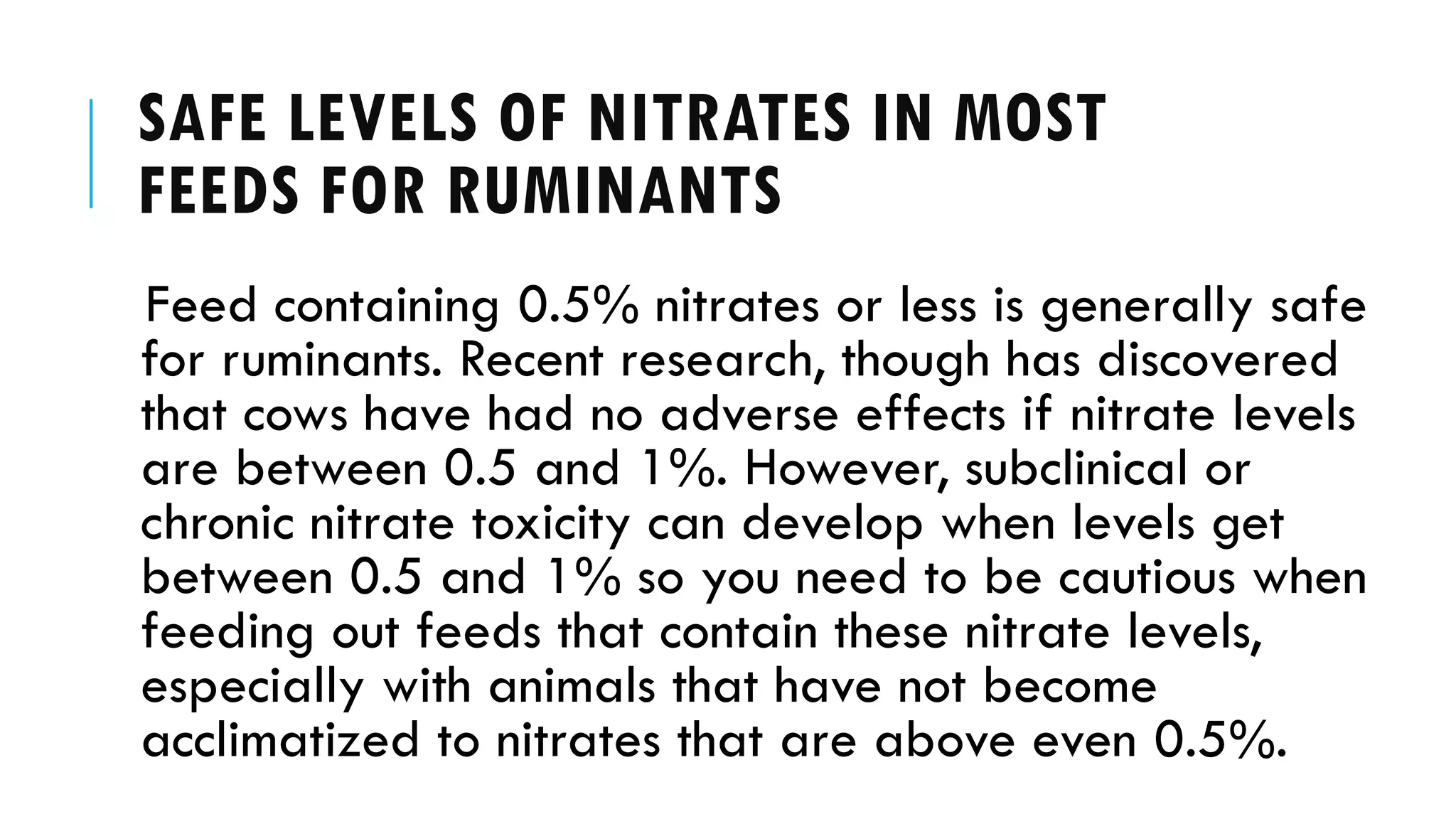
Feed containing 0.5% nitrates or less is generally safe
for ruminants. Recent research, though has discovered
that cows have had no adverse effects if nitrate levels
are between 0.5 and 1%. However, subclinical or
chronic nitrate toxicity can develop when levels get
between 0.5 and 1% so you need to be cautious when
feeding out feeds that contain these nitrate levels,
especially with animals that have not become
acclimatized to nitrates that are above even 0.5%.
SOURCES OF NITRATE
There are several plant species that may accumulate
nitrate, including the Brassica plants, green cereal grains
(barley, wheat, rye and maize), sorghum and Sudan
grasses, corn, beets, rape, docks, sweet clover and
nightshades. Application of large amounts of fertilizer
or drainage from fertilized fields and contaminated
water sources can also serve as a source for nitrate.
Drought can also allow accumulation of nitrate in certain
plants.
ACTION OF NITRATE TOXICITY
The toxic principle for all animals is nitrite. Nitrate,
prior to being reduced to nitrite, is not overtly toxic to
non-ruminant species. Nitrite is essentially equally toxic
to both ruminant and non-ruminant species. Toxicity in
ruminants is primarily seen following the consumption of
high amounts of nitrate, which is subsequently reduced
to nitrite by rumen microbes. Cattle, sheep and goats
are the species that are most commonly affected by
nitrate poisoning, with neonatal animals being at
greater risk.
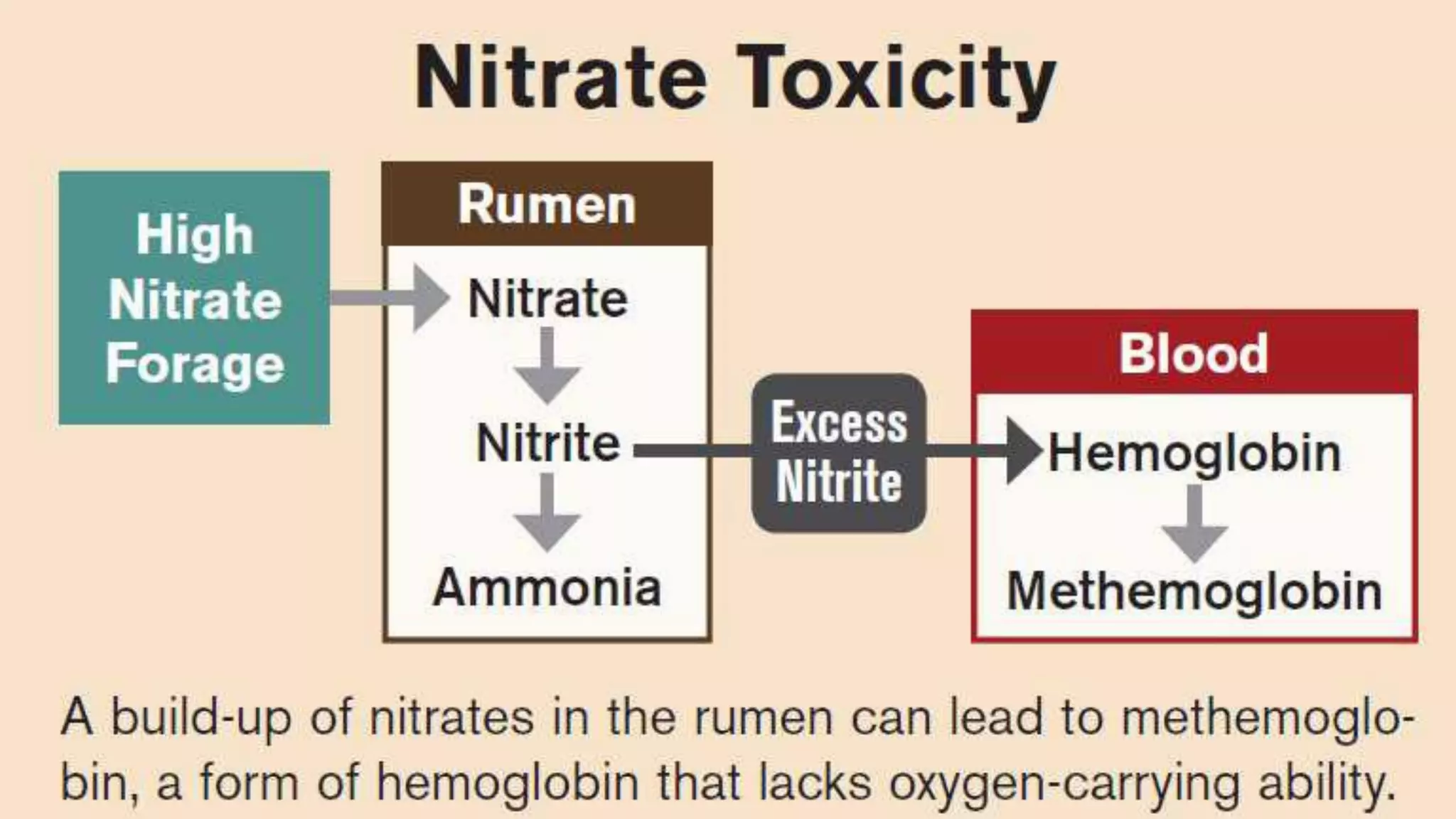
Nitrate poisoning occurs because the nitrate is broken
down to nitrite in the rumen. In normal circumstances this
nitrite is further broken down to ammonia in the rumen
and is then used by the rumen microbes to make
protein. However, when large amounts of nitrate are
eaten over a short period of time, the nitrite
accumulates in the rumen and is absorbed. Once in the
bloodstream it reacts with iron in the red blood cells so
that they can no longer bind oxygen.
Nitrate (NO3)
Nitrite (NO2)
SIGNS AND SYMPTOMS OF NITRATE
TOXICITY
symptoms include rapid and weak heart-beat, subnormal
body temperature, muscular tremors, weakness and
ataxia (as in staggered gait, disorientation, etc.).
Brown/bluish-grey mucous membranes, excessive saliva
and tear production, rapid breathing, frequent urination,
as well as vomiting (more common in monogastric
animals), diarrhea or scouring, and an inability to get
back up from laying down are also frequent. Death soon
follows within a few hours after animals have been fed.
The main cause of death is via asphyxiation with a lack
of oxygen being supplied to bodily tissues.
Subacute nitrate toxicity is often corresponding with
abortions, reduced weight gain, reduced feed intake,
reduced milk production, increased susceptibility to
illness and infections, and reproductive problems such as
silent heats and reduced fertility. Often signs and
symptoms of subclinical or chronic nitrate toxicity go
unnoticed or are not related to feed quality.
Animals can go without showing signs of distress for
several days to several weeks while consuming nitrate-
containing feedstuffs. By this time they can appear
belligerent, uncoordinated, develop diarrhea, eye
lesions, and symptoms similar to pneumonia, such as
interstitial pulmonary emphysema (fluid accumulating in
the lungs). Prolonged exposure to nitrate-containing
feeds coupled with cold stress and poor nutrition can
lead to downer cow syndrome.
(A)Brownish mucosa of conjunctiva.
(B) Brownish mucosa of vaginal
vestibule.
(C) Chocolate-colored blood.
(D) Cherry-like colored skeletal
musculature.
(E) Cherry-like colored myocardium.
(F) Brownish lung.
(G) Glass blade with positive result in
diphenylamine test in forage
(elephant grass) used to feed the
cattle.
TREATMENT
Methylene blue is a specific treatment for nitrate
toxicity.
It causes a rapid conversion of methemoglobin to
hemoglobin. The dose of methylene blue is reported as
4-30 mg/kg IV of a 1% solution to be given as soon as
clinical signs are identified.
PREVENTION
Prevention of nitrate poisoning is best achieved
by controlling the type and quantity of forage
offered to livestock. Avoid forages with
potentially toxic levels of nitrate or at least dilute
them with feeds low in nitrate.
When in doubt, have feeds and forages
analyzed for nitrate before grazing or feeding
them.
REFERENCES
•Daniel Amaral Gontijo1* Andressa Afonso Borges1 Flademir Wouters2. Nitrate/nitrite
poisoning in dairy cattle from the Midwestern Minas Gerais. 2017.
•Chanhee Lee and Karen A. Beauchemin. A review of feeding supplementary nitrate to
ruminant animals: nitrate toxicity, methane emissions,and production performance. 2014.
•Anil Kumar Puniya, Rameshwar Singh, Devki Nandan Kamra. Rumen Microbiology: From
Evolution to Revolution. 2015.
Thanks

Nitrate Toxicity in Ruminant

  • 1.
    Nitrate Toxicity In Ruminants TechnicalCompany for Industry and Trade C.E.O Eng. Mohammad AlSaleh technovet@yahoo.com
  • 2.
    OUTLINE -Introduction. -Objective. -Safe levels ofnitrates in most feeds for ruminants. -Sources of nitrate. -Action of nitrate toxicity. -Signs and symptoms of nitrate toxicity. -Treatment. -Prevention. -References.
  • 3.
    INTRODUCTION Nitrate poisoning isa rare but important cause of poisoning in ruminants. It can occur as the result of eating crops that contain high levels of nitrate. However, the most common source is inorganic nitrate fertilizer or via water run-off from heavily fertilized fields. Spring is the most common season for nitrate poisoning.
  • 4.
  • 5.
    SAFE LEVELS OFNITRATES IN MOST FEEDS FOR RUMINANTS Feed containing 0.5% nitrates or less is generally safe for ruminants. Recent research, though has discovered that cows have had no adverse effects if nitrate levels are between 0.5 and 1%. However, subclinical or chronic nitrate toxicity can develop when levels get between 0.5 and 1% so you need to be cautious when feeding out feeds that contain these nitrate levels, especially with animals that have not become acclimatized to nitrates that are above even 0.5%.
  • 7.
    SOURCES OF NITRATE Thereare several plant species that may accumulate nitrate, including the Brassica plants, green cereal grains (barley, wheat, rye and maize), sorghum and Sudan grasses, corn, beets, rape, docks, sweet clover and nightshades. Application of large amounts of fertilizer or drainage from fertilized fields and contaminated water sources can also serve as a source for nitrate. Drought can also allow accumulation of nitrate in certain plants.
  • 8.
    ACTION OF NITRATETOXICITY The toxic principle for all animals is nitrite. Nitrate, prior to being reduced to nitrite, is not overtly toxic to non-ruminant species. Nitrite is essentially equally toxic to both ruminant and non-ruminant species. Toxicity in ruminants is primarily seen following the consumption of high amounts of nitrate, which is subsequently reduced to nitrite by rumen microbes. Cattle, sheep and goats are the species that are most commonly affected by nitrate poisoning, with neonatal animals being at greater risk.
  • 9.
    Nitrate poisoning occursbecause the nitrate is broken down to nitrite in the rumen. In normal circumstances this nitrite is further broken down to ammonia in the rumen and is then used by the rumen microbes to make protein. However, when large amounts of nitrate are eaten over a short period of time, the nitrite accumulates in the rumen and is absorbed. Once in the bloodstream it reacts with iron in the red blood cells so that they can no longer bind oxygen.
  • 10.
  • 12.
    SIGNS AND SYMPTOMSOF NITRATE TOXICITY symptoms include rapid and weak heart-beat, subnormal body temperature, muscular tremors, weakness and ataxia (as in staggered gait, disorientation, etc.). Brown/bluish-grey mucous membranes, excessive saliva and tear production, rapid breathing, frequent urination, as well as vomiting (more common in monogastric animals), diarrhea or scouring, and an inability to get back up from laying down are also frequent. Death soon follows within a few hours after animals have been fed.
  • 13.
    The main causeof death is via asphyxiation with a lack of oxygen being supplied to bodily tissues. Subacute nitrate toxicity is often corresponding with abortions, reduced weight gain, reduced feed intake, reduced milk production, increased susceptibility to illness and infections, and reproductive problems such as silent heats and reduced fertility. Often signs and symptoms of subclinical or chronic nitrate toxicity go unnoticed or are not related to feed quality.
  • 14.
    Animals can gowithout showing signs of distress for several days to several weeks while consuming nitrate- containing feedstuffs. By this time they can appear belligerent, uncoordinated, develop diarrhea, eye lesions, and symptoms similar to pneumonia, such as interstitial pulmonary emphysema (fluid accumulating in the lungs). Prolonged exposure to nitrate-containing feeds coupled with cold stress and poor nutrition can lead to downer cow syndrome.
  • 15.
    (A)Brownish mucosa ofconjunctiva. (B) Brownish mucosa of vaginal vestibule. (C) Chocolate-colored blood. (D) Cherry-like colored skeletal musculature. (E) Cherry-like colored myocardium. (F) Brownish lung. (G) Glass blade with positive result in diphenylamine test in forage (elephant grass) used to feed the cattle.
  • 16.
    TREATMENT Methylene blue isa specific treatment for nitrate toxicity. It causes a rapid conversion of methemoglobin to hemoglobin. The dose of methylene blue is reported as 4-30 mg/kg IV of a 1% solution to be given as soon as clinical signs are identified.
  • 17.
    PREVENTION Prevention of nitratepoisoning is best achieved by controlling the type and quantity of forage offered to livestock. Avoid forages with potentially toxic levels of nitrate or at least dilute them with feeds low in nitrate. When in doubt, have feeds and forages analyzed for nitrate before grazing or feeding them.
  • 18.
    REFERENCES •Daniel Amaral Gontijo1*Andressa Afonso Borges1 Flademir Wouters2. Nitrate/nitrite poisoning in dairy cattle from the Midwestern Minas Gerais. 2017. •Chanhee Lee and Karen A. Beauchemin. A review of feeding supplementary nitrate to ruminant animals: nitrate toxicity, methane emissions,and production performance. 2014. •Anil Kumar Puniya, Rameshwar Singh, Devki Nandan Kamra. Rumen Microbiology: From Evolution to Revolution. 2015.
  • 19.