NIST CSF
CP 100 - Pune
Objectives of CSF in a Nutshell
Describe Current
Security Posture
Describe Target Security
Posture
Continuous
Improvement
Assess Progress towards
Target Posture
Communicate Risk
A framework of Frameworks
ISA62443
ISO/IEC 27001
CCS CSC1
NIST SP 800 - 53
COBIT 5
NIST cyber security Framework
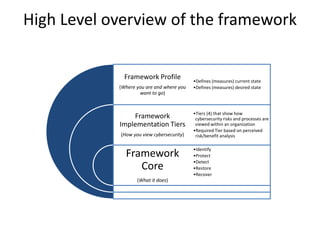
Framework Profile
(Where you are and where you
want to go)
Framework
Implementation Tiers
(How you view cybersecurity)
Framework
Core
(What it does)
•Defines (measures) current state
•Defines (measures) desired state
•Tiers (4) that show how
cybersecurity risks and processes are
viewed within an organization
•Required Tier based on perceived
risk/benefit analysis
•Identify
•Protect
•Detect
•Restore
•Recover
High Level overview of the framework
Framework
Core
Identify
Detect
RespondRecover
Protect
The Framework Core
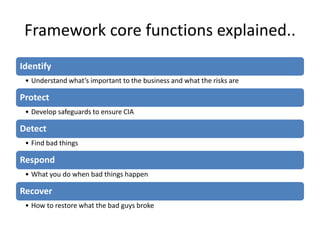
Framework core functions explained..
Identify
• Understand what’s important to the business and what the risks are
Protect
• Develop safeguards to ensure CIA
Detect
• Find bad things
Respond
• What you do when bad things happen
Recover
• How to restore what the bad guys broke
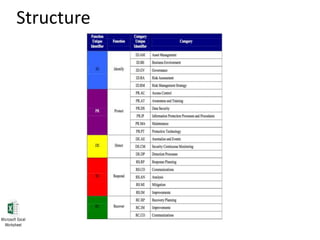
Structure
Microsoft Excel
Worksheet
Function
Unique
Identifier
Function
Category
Unique
Identifier
Category
Subcategor
y
Informative
References
ID Identify
ID.AM-1
Asset
Manageme
nt
Physical
devices
within the
organization
are
inventoried
• CCS-
CSC1
• COBIT 5
• ISA-
62443-2-
1:2009
ID.AM-2
Asset
Manageme
nt
Software
Platforms
and
Applications
within the
organization
are
inventoried
• CCS-
CSC1
• COBIT 5
• ISA-
62443-2-
1:2009
Structured example
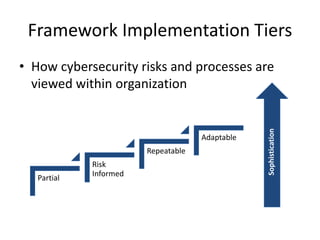
Framework Implementation Tiers
• How cybersecurity risks and processes are
viewed within organization
Partial
Risk
Informed
Repeatable
Adaptable
Sophistication
Framework profile
• Presents overview of present
and future cybersecurity
posture
– Business Requirements
– Risk Tolerance
– Resources
• Used to define current state
and desired state
– Can help measure progress...
A Common Language for All Levels
Priorities
Risk Appetite
Budget
Framework
Profile
Implementation Progress
Vulnerabilities, Threats,
Assets
Status,
Changes in
Risk
Executive Level
Focus: Organizational risk
Actions: Risk Decision/Priority
Operations Level
Focus: Risk Management Implementation
Actions: Secure Infrastructure, Implement Profile
Process Level
Focus: Risk Management
Actions: Select Profile, Allocate Budget
Process
Prioritize
and Scope
Business
Objectives
Priorities Strategy
Orient
Related
Systems
Assets Regulations
Risk
Assessment
Exposure Tolerance
Create
Current
Profile
Where you
are now
Create
Target
Profile
Where you
need to be
Gap
Analysis
Delta between
Current/Target
Action Plan MEASURE
How is NIST CSF Different?
• Expresses cybersecurity activities in a common
language
• Leverages existing standards – does not reinvent
the wheel – can map existing
processes/guidelines into CSF
• Provides crucial guidance for reinforcing security
controls while maintaining a focus on business
objectives
• Provides a vehicle to effectively measure
cybersecurity effectiveness independent of
existing framework
Thank you

NIST CSF Overview

  • 1.
  • 2.
    Objectives of CSFin a Nutshell Describe Current Security Posture Describe Target Security Posture Continuous Improvement Assess Progress towards Target Posture Communicate Risk
  • 3.
    A framework ofFrameworks ISA62443 ISO/IEC 27001 CCS CSC1 NIST SP 800 - 53 COBIT 5 NIST cyber security Framework
  • 4.
    Framework Profile (Where youare and where you want to go) Framework Implementation Tiers (How you view cybersecurity) Framework Core (What it does) •Defines (measures) current state •Defines (measures) desired state •Tiers (4) that show how cybersecurity risks and processes are viewed within an organization •Required Tier based on perceived risk/benefit analysis •Identify •Protect •Detect •Restore •Recover High Level overview of the framework
  • 5.
  • 6.
    Framework core functionsexplained.. Identify • Understand what’s important to the business and what the risks are Protect • Develop safeguards to ensure CIA Detect • Find bad things Respond • What you do when bad things happen Recover • How to restore what the bad guys broke
  • 7.
  • 8.
    Function Unique Identifier Function Category Unique Identifier Category Subcategor y Informative References ID Identify ID.AM-1 Asset Manageme nt Physical devices within the organization are inventoried •CCS- CSC1 • COBIT 5 • ISA- 62443-2- 1:2009 ID.AM-2 Asset Manageme nt Software Platforms and Applications within the organization are inventoried • CCS- CSC1 • COBIT 5 • ISA- 62443-2- 1:2009 Structured example
  • 9.
    Framework Implementation Tiers •How cybersecurity risks and processes are viewed within organization Partial Risk Informed Repeatable Adaptable Sophistication
  • 10.
    Framework profile • Presentsoverview of present and future cybersecurity posture – Business Requirements – Risk Tolerance – Resources • Used to define current state and desired state – Can help measure progress...
  • 11.
    A Common Languagefor All Levels Priorities Risk Appetite Budget Framework Profile Implementation Progress Vulnerabilities, Threats, Assets Status, Changes in Risk Executive Level Focus: Organizational risk Actions: Risk Decision/Priority Operations Level Focus: Risk Management Implementation Actions: Secure Infrastructure, Implement Profile Process Level Focus: Risk Management Actions: Select Profile, Allocate Budget
  • 12.
    Process Prioritize and Scope Business Objectives Priorities Strategy Orient Related Systems AssetsRegulations Risk Assessment Exposure Tolerance Create Current Profile Where you are now Create Target Profile Where you need to be Gap Analysis Delta between Current/Target Action Plan MEASURE
  • 13.
    How is NISTCSF Different? • Expresses cybersecurity activities in a common language • Leverages existing standards – does not reinvent the wheel – can map existing processes/guidelines into CSF • Provides crucial guidance for reinforcing security controls while maintaining a focus on business objectives • Provides a vehicle to effectively measure cybersecurity effectiveness independent of existing framework
  • 14.