New Tools for Regional Development:
         Open Source Economic Development &
                              Strategic Doing

                                   PCRD Conference:
              Regional Innovation During Boom & Bust
                                  South Bend, Indiana
                                        June 26, 2009


                                        Scott Hutcheson
                  Purdue Center for Regional Development
                                        Purdue Extension
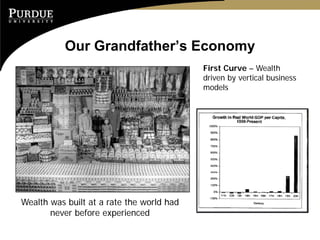
Our Grandfather’s Economy
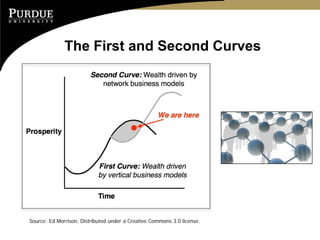
                                           First Curve – Wealth
                                           driven by vertical business
                                           models


Wealth was built at a rate the world had
       never before experienced
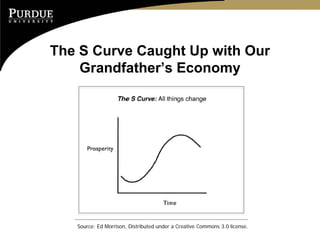
The S Curve Caught Up with Our
    Grandfather’s Economy


   Source: Ed Morrison, Distributed under a Creative Commons 3.0 license.
The First and Second Curves


Source: Ed Morrison, Distributed under a Creative Commons 3.0 license.
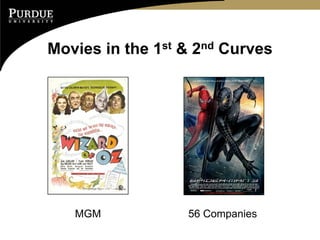
Movies in the 1st & 2nd Curves


   MGM            56 Companies
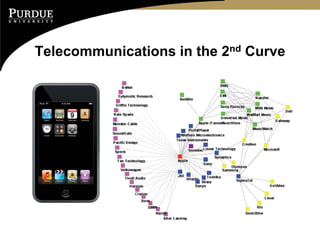
Telecommunications in the 2nd Curve
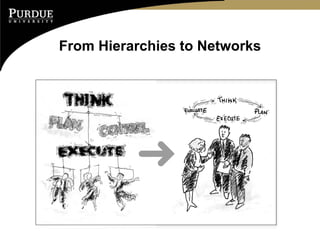
From Hierarchies to Networks
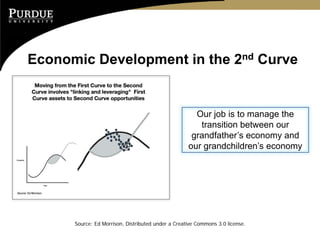
Economic Development in the 2nd Curve


                                                      Our job is to manage the
                                                       transition between our
                                                     grandfather’s economy and
                                                    our grandchildren’s economy


      Source: Ed Morrison, Distributed under a Creative Commons 3.0 license.
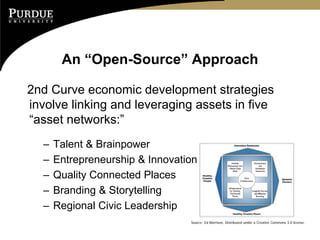
An “Open-Source” Approach

2nd Curve economic development strategies
involve linking and leveraging assets in five
“asset networks:”
  –   Talent & Brainpower
  –   Entrepreneurship & Innovation
  –   Quality Connected Places
  –   Branding & Storytelling
  –   Regional Civic Leadership
                                 Source: Ed Morrison, Distributed under a Creative Commons 3.0 license.
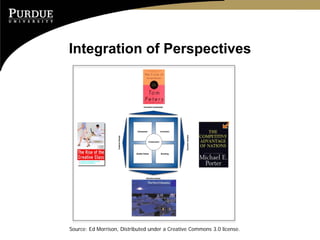
Integration of Perspectives


Source: Ed Morrison, Distributed under a Creative Commons 3.0 license.
Success in the 2nd Curve

In the 2nd Curve, prosperous communities will
 be the ones with strategies that…
• Build world-class brainpower
• Translate brainpower into wealth through innovation
  and entrepreneurship networks
• Create quality, connected places where “hot spots”
  can develop
• Create a buzz with a new set of stories
• Continuously strengthen habits of civic collaboration
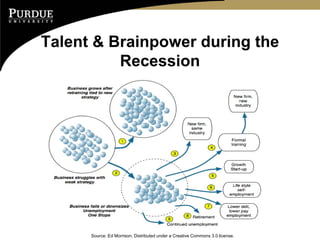
Talent & Brainpower during the
          Recession


      Source: Ed Morrison, Distributed under a Creative Commons 3.0 license.
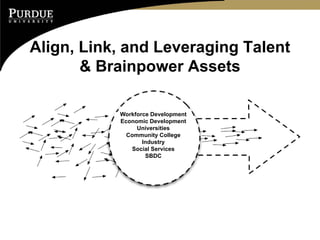
Align, Link, and Leveraging Talent
       & Brainpower Assets

           Workforce Development
           Economic Development
                Universities
             Community College
                  Industry
              Social Services
                   SBDC
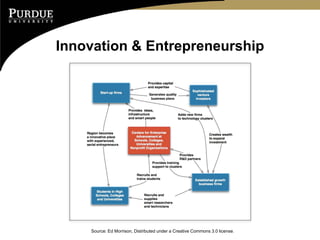
Innovation & Entrepreneurship


    Source: Ed Morrison, Distributed under a Creative Commons 3.0 license.
A Culture of Innovation

• An innovative business is one that launches
  new products or services each year (15% of
  businesses are typically innovators)
• Innovative businesses usually have high
  growth trajectory
• When 50% of business are innovators you
  have an innovation culture
Innovation Isn’t Always High Tech

• A BBQ restaurant starts bottling and selling
  sauce
• A dry cleaners develops a new “green”
  process and licenses the new process
• A beauty shop develops a new way to train
  stylists and goes nationwide


 http://www.acenetworks.org/upload_files/file/Regional%20Flavor%20June.pdf
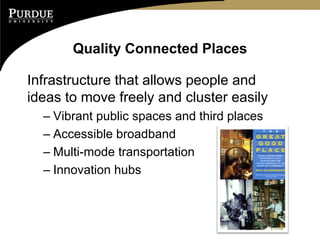
Quality Connected Places

Infrastructure that allows people and
ideas to move freely and cluster easily
  – Vibrant public spaces and third places
  – Accessible broadband
  – Multi-mode transportation
  – Innovation hubs
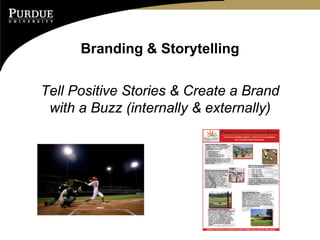
Branding & Storytelling

Tell Positive Stories & Create a Brand
 with a Buzz (internally & externally)
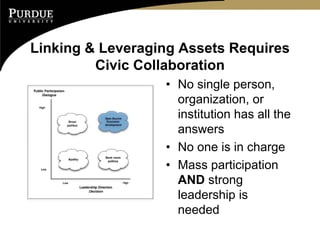
Linking & Leveraging Assets Requires
         Civic Collaboration
                  • No single person,
                    organization, or
                    institution has all the
                    answers
                  • No one is in charge
                  • Mass participation
                    AND strong
                    leadership is
                    needed
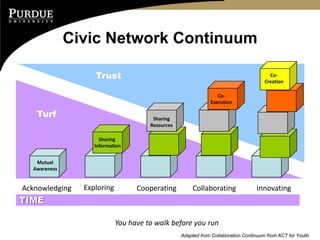
Civic Network Continuum

                   Trust                                                                Co‐
                                                                                      Creation

                                                                 Co‐
                                                              Execution

   Turf                                Sharing
                                      Resources

                     Sharing 
                   Information


   Mutual
  Awareness


Acknowledging   Exploring         Cooperating          Collaborating              Innovating
TIME

                            You have to walk before you run
                                                  Adapted from Collaboration Continuum from ACT for Youth
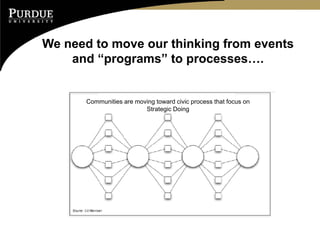
We need to move our thinking from events
    and “programs” to processes….


       Communities are moving toward civic process that focus on
                          Strategic Doing
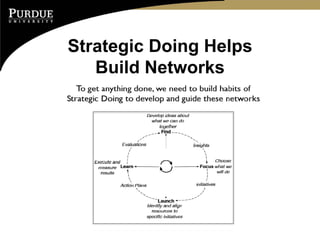
Strategic Doing Helps
   Build Networks
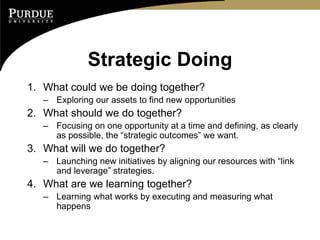
Strategic Doing
1. What could we be doing together?
   – Exploring our assets to find new opportunities
2. What should we do together?
   – Focusing on one opportunity at a time and defining, as clearly
     as possible, the “strategic outcomes” we want.
3. What will we do together?
   – Launching new initiatives by aligning our resources with “link
     and leverage” strategies.
4. What are we learning together?
   – Learning what works by executing and measuring what
     happens
Civic Networks…

• Spot opportunities
  quickly
• Mobilize assets
  strategically
• Use resources
  effectively
• Learn efficiently
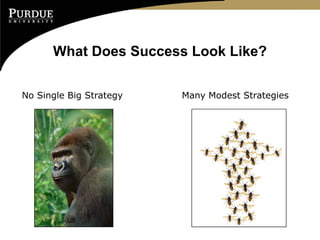
What Does Success Look Like?

No Single Big Strategy   Many Modest Strategies
Contact
                      Scott Hutcheson
Assistant Program Leader, Economic & Community Development
                      Purdue University
 Purdue Extension & Purdue Center for Regional Development

        Burton D. Morgan Center for Entrepreneurship
               1207 W. State Street, Room 227
                      765-494-7273 (office)
                       765-494-3200 (fax)
                      765-479-7704 (mobile)
                     hutcheson@purdue.edu
              http://pcrd.typepad.com/ecd (blog)
          http://www.twitter.com/jshutch64 (Twitter)

New Tools for Regional Development: Open Source Economic Development & Strategic Doing

  • 1.
    New Tools forRegional Development: Open Source Economic Development & Strategic Doing PCRD Conference: Regional Innovation During Boom & Bust South Bend, Indiana June 26, 2009 Scott Hutcheson Purdue Center for Regional Development Purdue Extension
  • 2.
    Our Grandfather’s Economy First Curve – Wealth driven by vertical business models Wealth was built at a rate the world had never before experienced
  • 3.
    The S CurveCaught Up with Our Grandfather’s Economy Source: Ed Morrison, Distributed under a Creative Commons 3.0 license.
  • 4.
    The First andSecond Curves Source: Ed Morrison, Distributed under a Creative Commons 3.0 license.
  • 5.
    Movies in the1st & 2nd Curves MGM 56 Companies
  • 6.
  • 7.
  • 8.
    Economic Development inthe 2nd Curve Our job is to manage the transition between our grandfather’s economy and our grandchildren’s economy Source: Ed Morrison, Distributed under a Creative Commons 3.0 license.
  • 9.
    An “Open-Source” Approach 2ndCurve economic development strategies involve linking and leveraging assets in five “asset networks:” – Talent & Brainpower – Entrepreneurship & Innovation – Quality Connected Places – Branding & Storytelling – Regional Civic Leadership Source: Ed Morrison, Distributed under a Creative Commons 3.0 license.
  • 10.
    Integration of Perspectives Source:Ed Morrison, Distributed under a Creative Commons 3.0 license.
  • 11.
    Success in the2nd Curve In the 2nd Curve, prosperous communities will be the ones with strategies that… • Build world-class brainpower • Translate brainpower into wealth through innovation and entrepreneurship networks • Create quality, connected places where “hot spots” can develop • Create a buzz with a new set of stories • Continuously strengthen habits of civic collaboration
  • 12.
    Talent & Brainpowerduring the Recession Source: Ed Morrison, Distributed under a Creative Commons 3.0 license.
  • 13.
    Align, Link, andLeveraging Talent & Brainpower Assets Workforce Development Economic Development Universities Community College Industry Social Services SBDC
  • 14.
    Innovation & Entrepreneurship Source: Ed Morrison, Distributed under a Creative Commons 3.0 license.
  • 15.
    A Culture ofInnovation • An innovative business is one that launches new products or services each year (15% of businesses are typically innovators) • Innovative businesses usually have high growth trajectory • When 50% of business are innovators you have an innovation culture
  • 16.
    Innovation Isn’t AlwaysHigh Tech • A BBQ restaurant starts bottling and selling sauce • A dry cleaners develops a new “green” process and licenses the new process • A beauty shop develops a new way to train stylists and goes nationwide http://www.acenetworks.org/upload_files/file/Regional%20Flavor%20June.pdf
  • 17.
    Quality Connected Places Infrastructurethat allows people and ideas to move freely and cluster easily – Vibrant public spaces and third places – Accessible broadband – Multi-mode transportation – Innovation hubs
  • 18.
    Branding & Storytelling TellPositive Stories & Create a Brand with a Buzz (internally & externally)
  • 19.
    Linking & LeveragingAssets Requires Civic Collaboration • No single person, organization, or institution has all the answers • No one is in charge • Mass participation AND strong leadership is needed
  • 20.
    Civic Network Continuum Trust Co‐ Creation Co‐ Execution Turf Sharing Resources Sharing  Information Mutual Awareness Acknowledging Exploring Cooperating Collaborating Innovating TIME You have to walk before you run Adapted from Collaboration Continuum from ACT for Youth
  • 21.
    We need tomove our thinking from events and “programs” to processes…. Communities are moving toward civic process that focus on Strategic Doing
  • 22.
    Strategic Doing Helps Build Networks
  • 23.
    Strategic Doing 1. Whatcould we be doing together? – Exploring our assets to find new opportunities 2. What should we do together? – Focusing on one opportunity at a time and defining, as clearly as possible, the “strategic outcomes” we want. 3. What will we do together? – Launching new initiatives by aligning our resources with “link and leverage” strategies. 4. What are we learning together? – Learning what works by executing and measuring what happens
  • 24.
    Civic Networks… • Spotopportunities quickly • Mobilize assets strategically • Use resources effectively • Learn efficiently
  • 25.
    What Does SuccessLook Like? No Single Big Strategy Many Modest Strategies
  • 26.
    Contact Scott Hutcheson Assistant Program Leader, Economic & Community Development Purdue University Purdue Extension & Purdue Center for Regional Development Burton D. Morgan Center for Entrepreneurship 1207 W. State Street, Room 227 765-494-7273 (office) 765-494-3200 (fax) 765-479-7704 (mobile) hutcheson@purdue.edu http://pcrd.typepad.com/ecd (blog) http://www.twitter.com/jshutch64 (Twitter)