

Copyright 2014 – Scott Hutcheson
This work is licensed under a Creative Commons Attribution-NonCommercial 2.5 License.
Effective Strategy Making in
Economic & Community Development
Scott Hutcheson, Ph.D.
Mid-Continent Regional Science Association
46th Annual Conference
St. Louis, M) – May 27-29, 2015
Strategy3
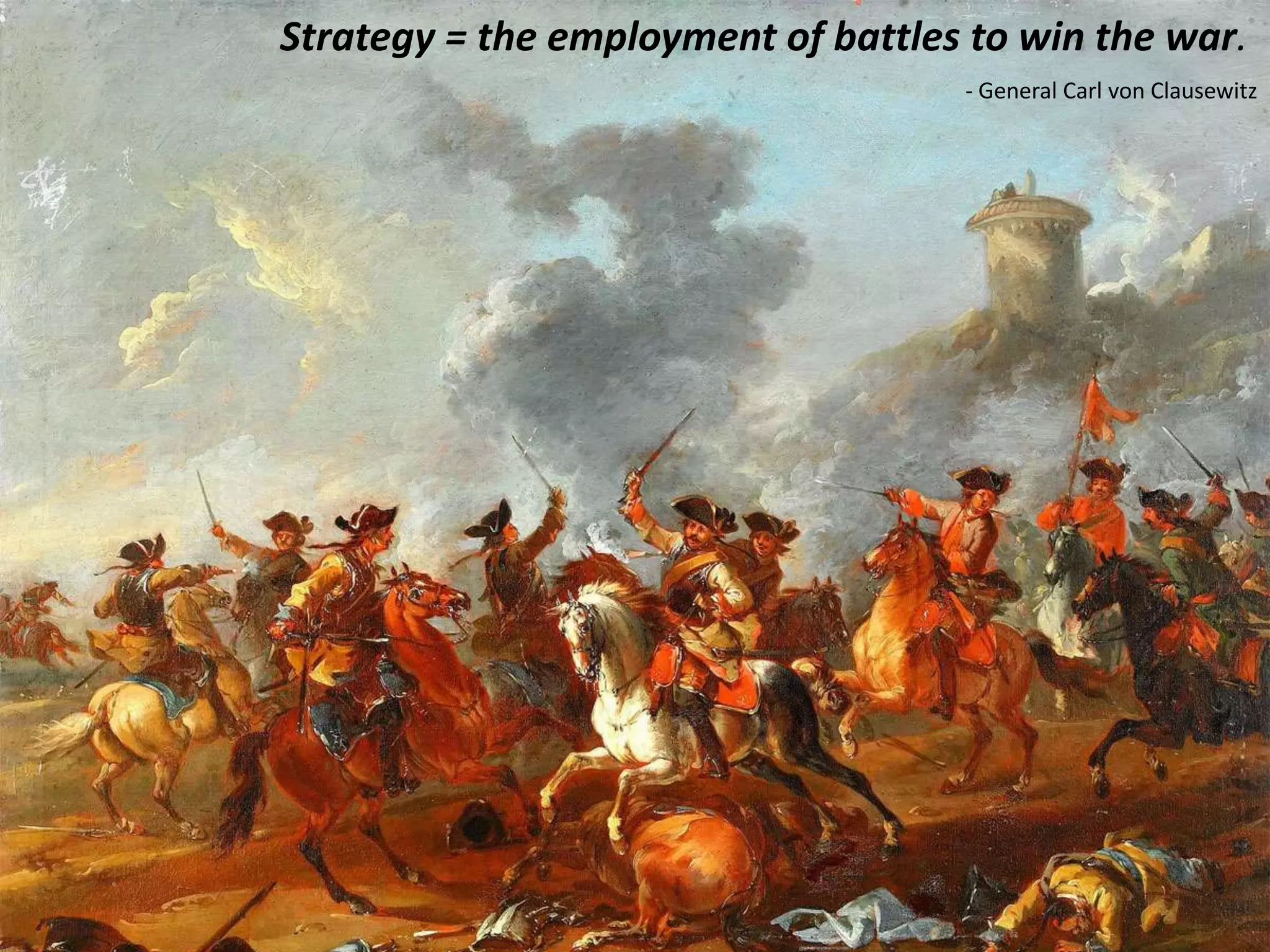
Strategy = the employment of battles to win the war.
- General Carl von Clausewitz
6
Better understand he nature of collaboration
Identify what stage your collaborations are in
Consider ways to move a collaborations to the next level
Research
Question
Why are some economic &
community development
strategies effectiveand
others…not so much?
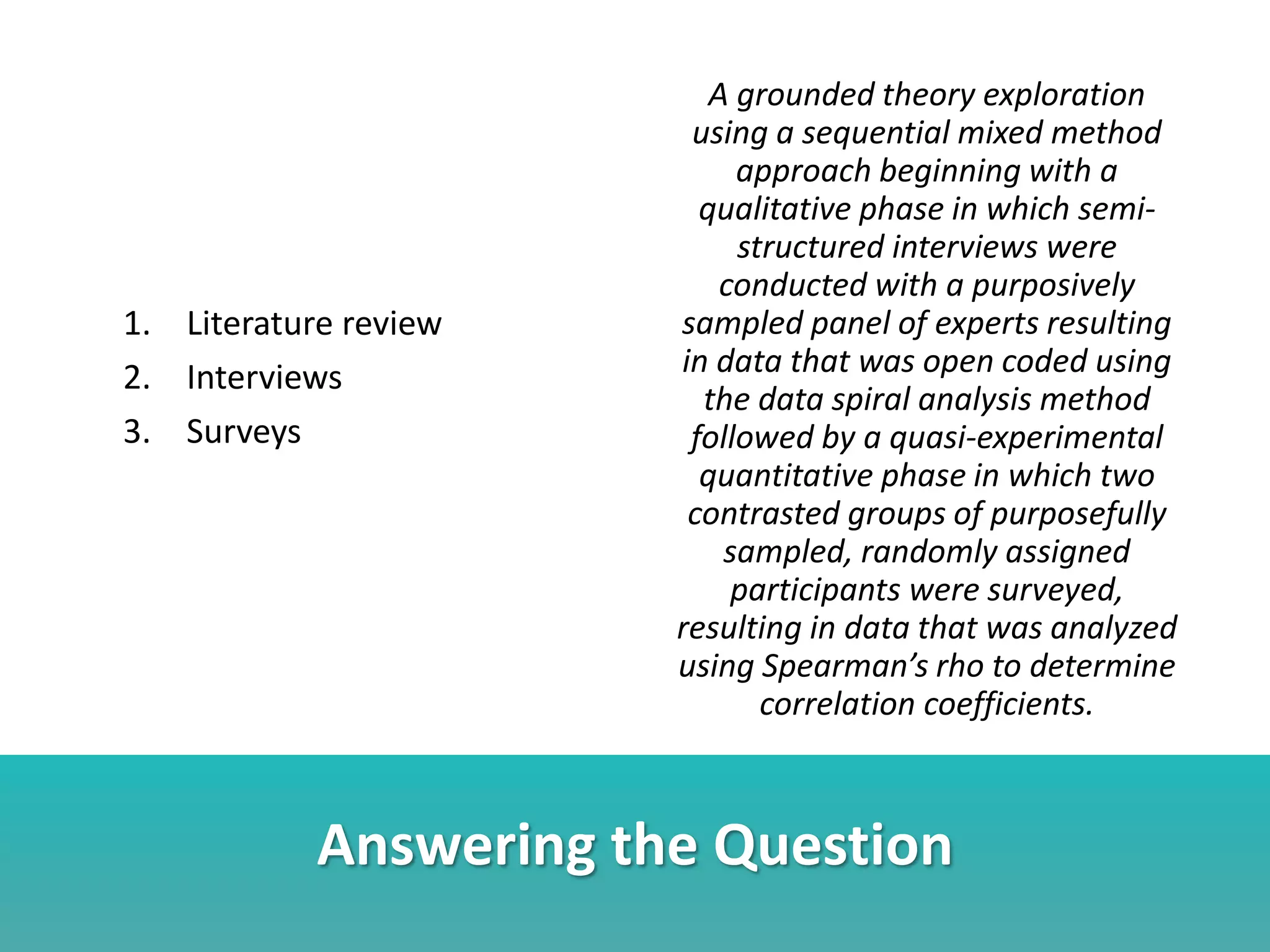
Answering the Question
A grounded theory exploration
using a sequential mixed method
approach beginning with a
qualitative phase in which semi-
structured interviews were
conducted with a purposively
sampled panel of experts resulting
in data that was open coded using
the data spiral analysis method
followed by a quasi-experimental
quantitative phase in which two
contrasted groups of purposefully
sampled, randomly assigned
participants were surveyed,
resulting in data that was analyzed
using Spearman’s rho to determine
correlation coefficients.
1. Literature review
2. Interviews
3. Surveys
Better understand he nature of collaboration
Identify what stage your collaborations are in
Consider ways to move a collaborations to the next level
Problem
Statement
• Literature gap regarding factors
contributing to effective strategy in the
context of economic & community
development (Kwon, Berry, & Feiock,
2009).
• Civic leaders face daunting tasks of
developing and implementing
economic & community development
strategies (Markey, 2010).
• Very little research-based information
to guide decisions about effective
strategy-development processes in the
context of economic & community
development.
• Evolution of dealing with economic
& community development
• Institutionalization
• Locus of control
• Increasing complexity
• Tools for managing economic &
community development
• Early tools
• Evolving tools
• Emerging tools
• Contributing theories
• Strategy formation
• Collaborative governance
• Social innovation
Insights from the Literature
Conducted as part of the grounded theory
data collection process (McGhee,
Marland, and Atkinson, 2007).
Conducted to provide contextualization
(Dunne, 2011) and orientation to the
phenomenon (Pozzebon, Petrini, de
Mellow, and Garreau, 2011).
Better understand he nature of collaboration
Identify what stage your collaborations are in
Consider ways to move a collaborations to the next level
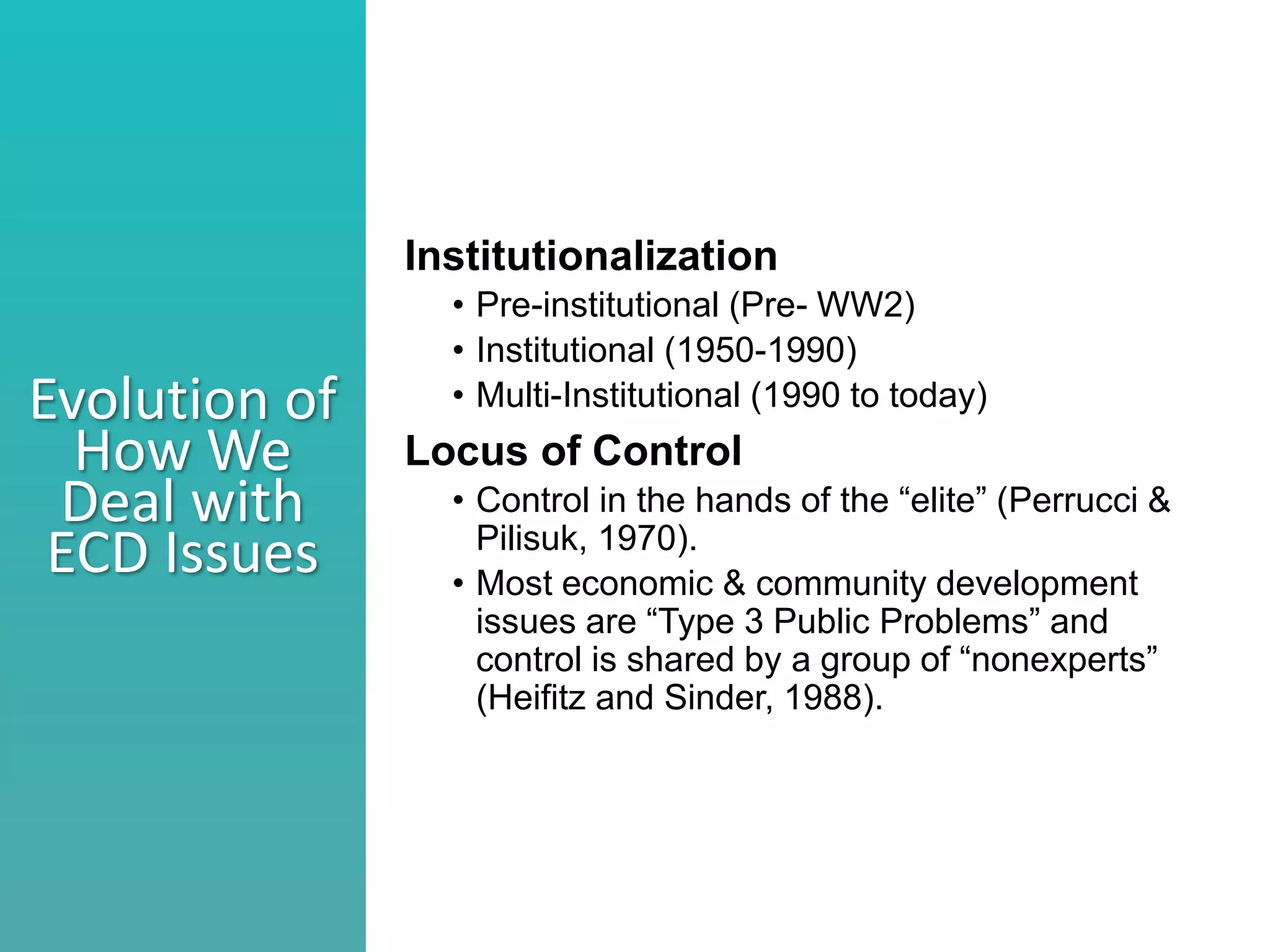
Evolution of
How We
Deal with
ECD Issues
Institutionalization
• Pre-institutional (Pre- WW2)
• Institutional (1950-1990)
• Multi-Institutional (1990 to today)
Locus of Control
• Control in the hands of the “elite” (Perrucci &
Pilisuk, 1970).
• Most economic & community development
issues are “Type 3 Public Problems” and
control is shared by a group of “nonexperts”
(Heifitz and Sinder, 1988).
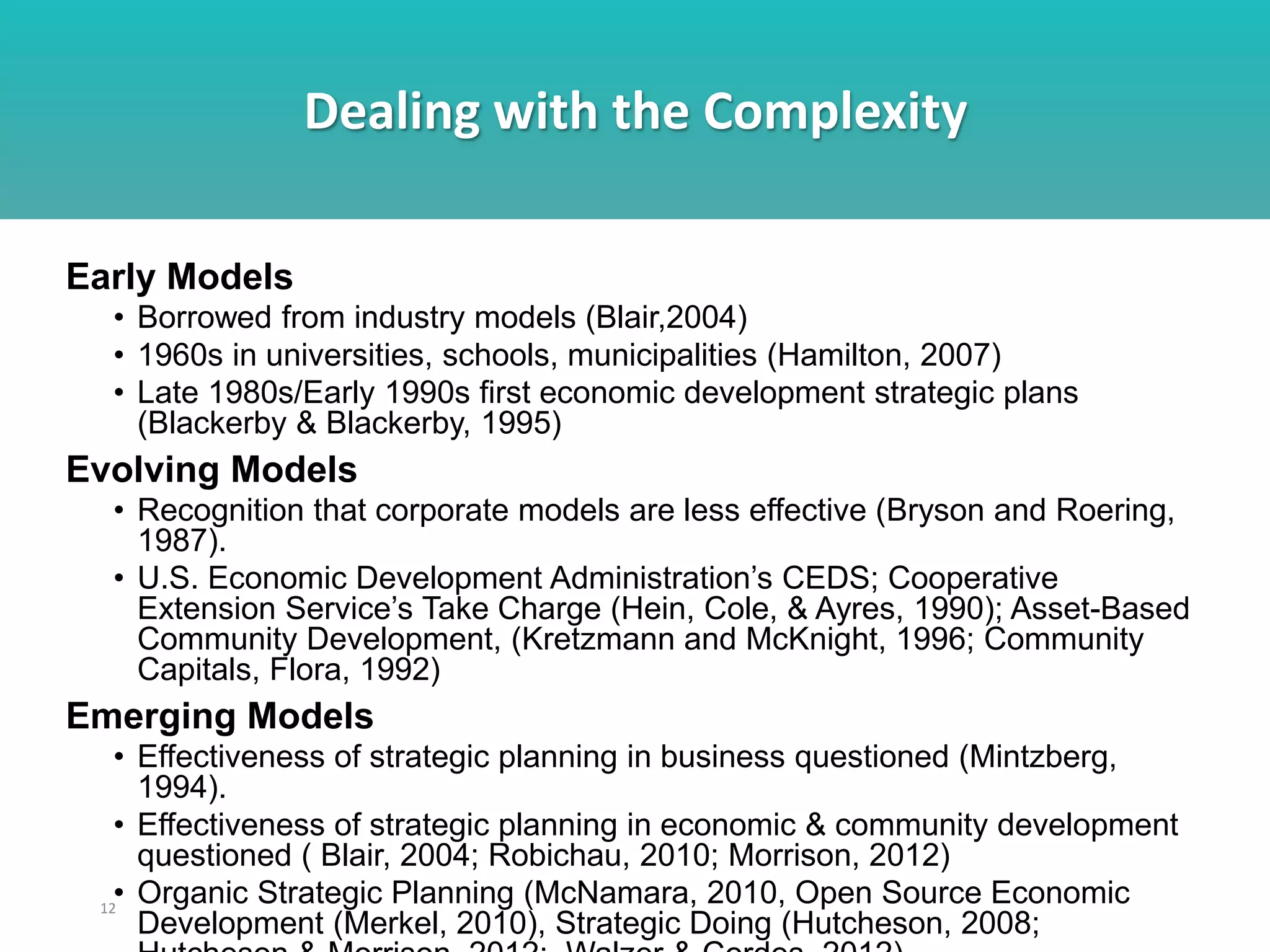
Dealing with the Complexity
12
Early Models
• Borrowed from industry models (Blair,2004)
• 1960s in universities, schools, municipalities (Hamilton, 2007)
• Late 1980s/Early 1990s first economic development strategic plans
(Blackerby & Blackerby, 1995)
Evolving Models
• Recognition that corporate models are less effective (Bryson and Roering,
1987).
• U.S. Economic Development Administration’s CEDS; Cooperative
Extension Service’s Take Charge (Hein, Cole, & Ayres, 1990); Asset-Based
Community Development, (Kretzmann and McKnight, 1996; Community
Capitals, Flora, 1992)
Emerging Models
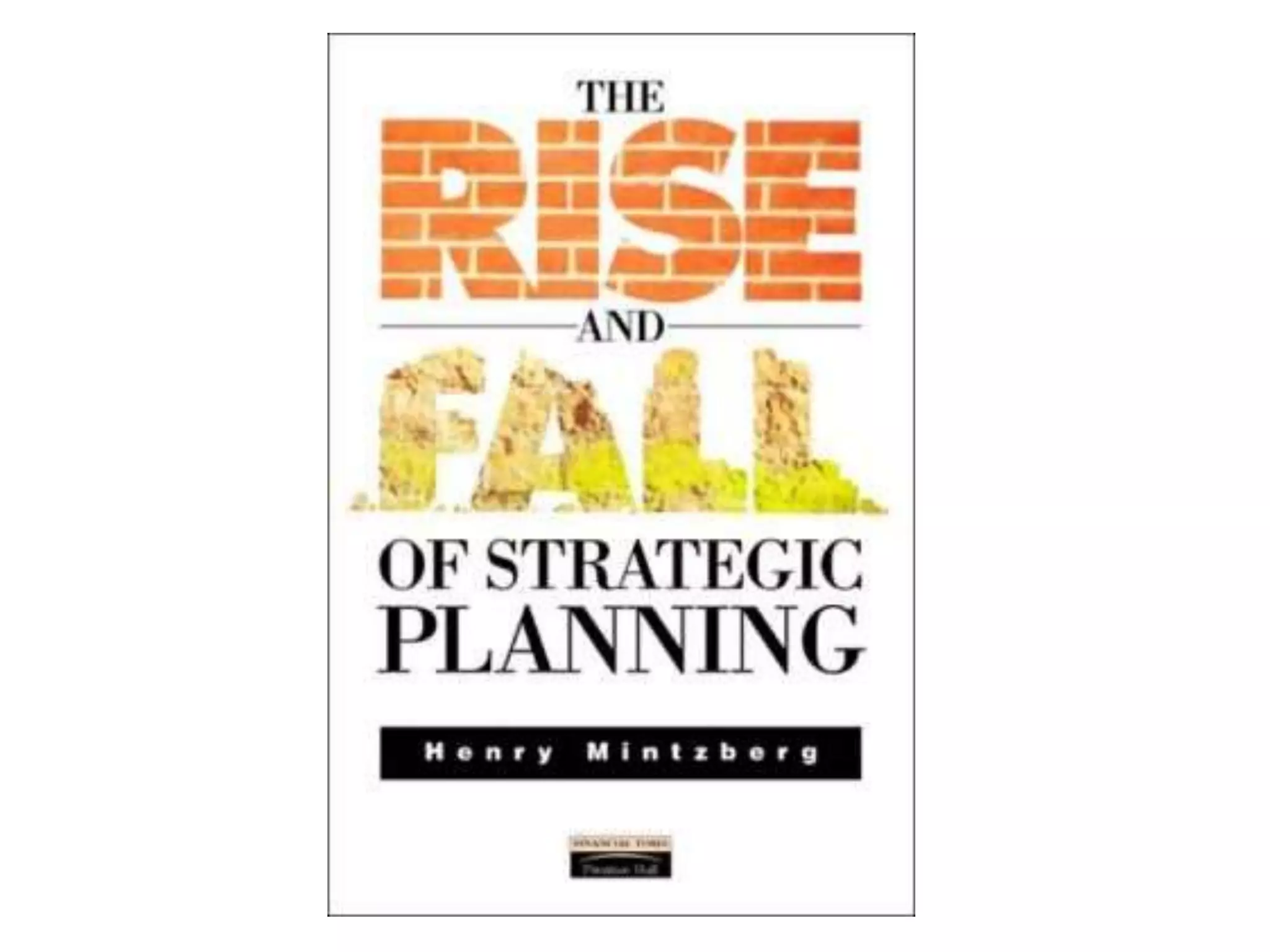
• Effectiveness of strategic planning in business questioned (Mintzberg,
1994).
• Effectiveness of strategic planning in economic & community development
questioned ( Blair, 2004; Robichau, 2010; Morrison, 2012)
• Organic Strategic Planning (McNamara, 2010, Open Source Economic
Development (Merkel, 2010), Strategic Doing (Hutcheson, 2008;
Contributing Theories
•Social Innovation
•Strategy Formation
•Collaborative Governance
13
Social Innovation
Social innovations…
• are best designed and implemented in networks
• emerge from heterogeneousness (diversity)
• are framed using existing assets
• are products of co-creation
• are the result of collective action
• should have decentralized implementation
• when implemented should focus on tangible results
Bland, Bruk, Kim, and Lee (2010); Bouchard (2012); Mulgan, Ali, Tucker and Sanders (2007);
Neumeier (2012); Oliveira and Breda-Vazquez (2012)
Strategy Formation
Strategies…
• are formed intuitively
• are iterative
• must be designed to account for unanticipated variables
• must take into account contextual values, assumptions,
beliefs, and expectations
• must be flexible
• should be designed collaboratively
• and best developed as an intra-organizational activity
Feser, 2012; Johanson, 2009; Lindblom, 1959; Mintzberg, 1978; Parnell, 2008; Rindova, Dalpiaz, and
Ravasi, 2011; Sminia, 2012; Tapinos, Dyson, and Meadows, 2011
Collaborative Governance
Collaborative governance…
• takes advantage of network structures
• connects existing assets
• focuses first on small wins
• Requires decision making to be made by consensus
• works when there is trust among participants
• is efficient
• involves successful management of both internal and external
stakeholders
Ansell and Gash, 2008; Chiclana et al., 2013; Clarke, Huxley, Mountford, 2010; Emerson, Nabatchi, and Balogh, 2012;
Gibson, 2011; Johnston, Hicks, Nan, and Auer, 2011; Kwon, Berry, and Feiock, 2009; Merkle , 2010; Olberding, 2009;
Ospina and Saz-Carranza, 2010; Pammer, 1998; Poister, 2010
Better understand he nature of collaboration
Identify what stage your collaborations are in
Consider ways to move a collaborations to the next level
These Things
Matter
• Organizational Structure (i.e.,
hierarchy, network)
• Framework & Orientation (i.e., asset-
based, deficit-based, efficiency-based)
• Processes (i.e., relationship between
planning and implementation)
• Timeframe (i.e., timeline for goals)
• Implementation (i.e., centralized,
decentralized)
• Metrics (i.e., accountability, feedback
Insights from the Panel of Experts
The Qualitative Data
• Population of scholars and practitioners who design
curricula, teach, and/or practice strategy development for
addressing economic development, community
development issues
• Sample: N=12
• Semi-structured interviews (IRB-approved, anonymity)
• Verbatim transcripts, data spiral analysis with three levels
of coding: open, axial, selective using qualitative analysis
software
• 56 single-spaced pages/over 31,000 words of data
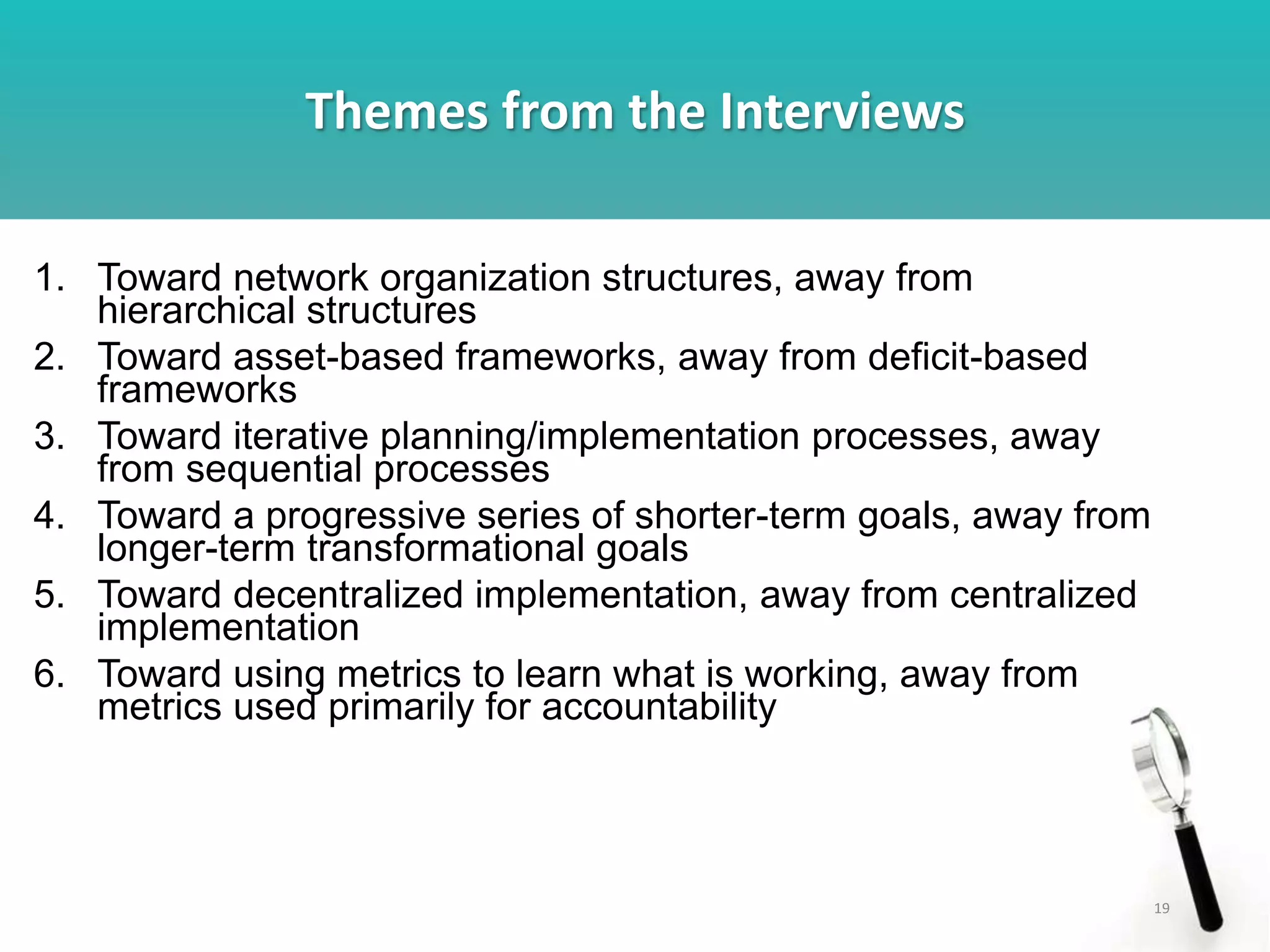
Themes from the Interviews
19
1. Toward network organization structures, away from
hierarchical structures
2. Toward asset-based frameworks, away from deficit-based
frameworks
3. Toward iterative planning/implementation processes, away
from sequential processes
4. Toward a progressive series of shorter-term goals, away from
longer-term transformational goals
5. Toward decentralized implementation, away from centralized
implementation
6. Toward using metrics to learn what is working, away from
metrics used primarily for accountability
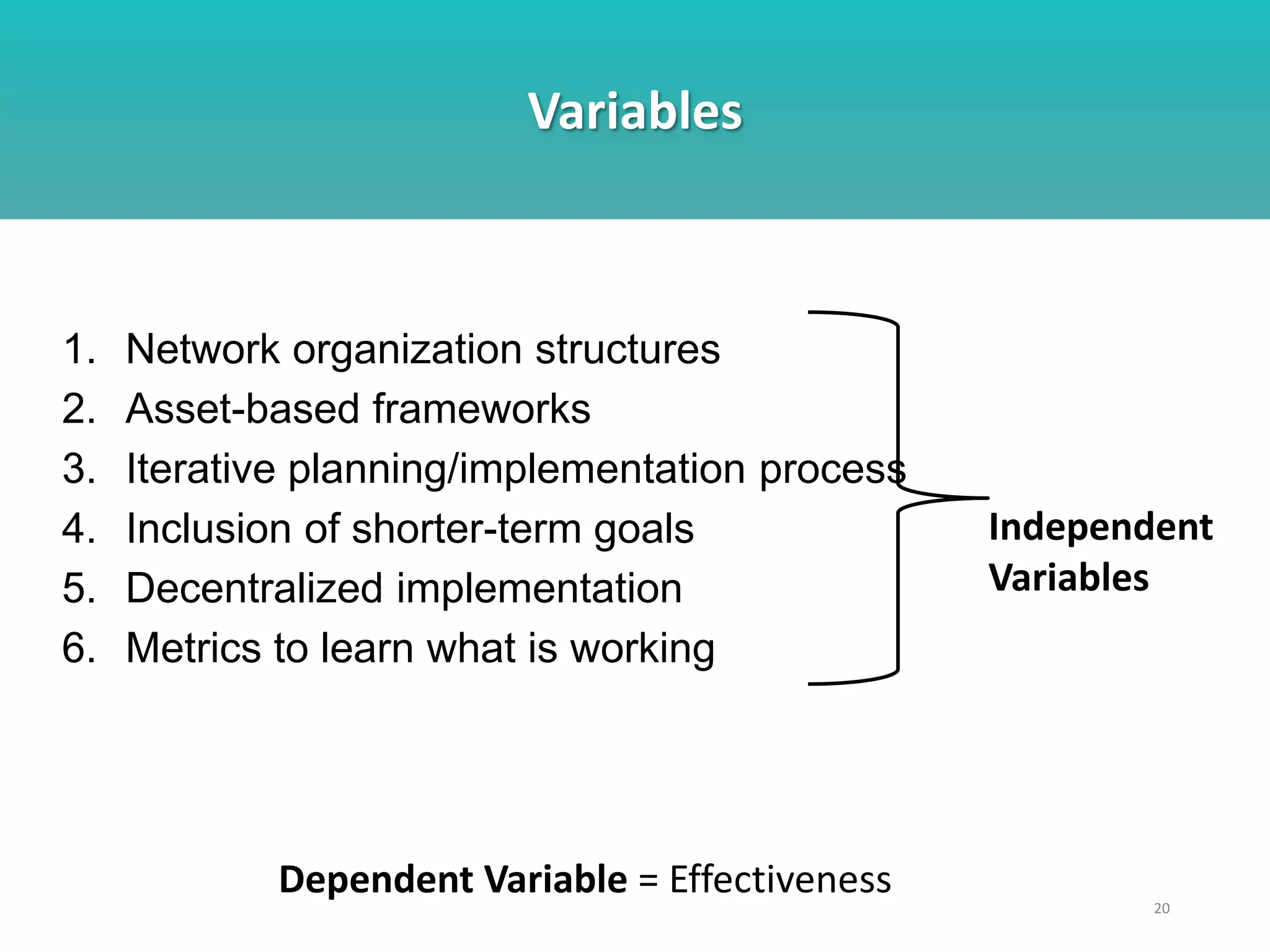
Variables
20
1. Network organization structures
2. Asset-based frameworks
3. Iterative planning/implementation process
4. Inclusion of shorter-term goals
5. Decentralized implementation
6. Metrics to learn what is working
Independent
Variables
Dependent Variable = Effectiveness
Effectiveness
For the effective strategy initiative you have in mind, how
would you describe its level of effectiveness:
• Completely effective
• Significantly effective
• Somewhat effective
Ineffectiveness
For the ineffective strategy initiative you have in mind, how
would you describe its level of ineffectiveness:
• Somewhat ineffective
• Significantly ineffective
• Completely ineffective
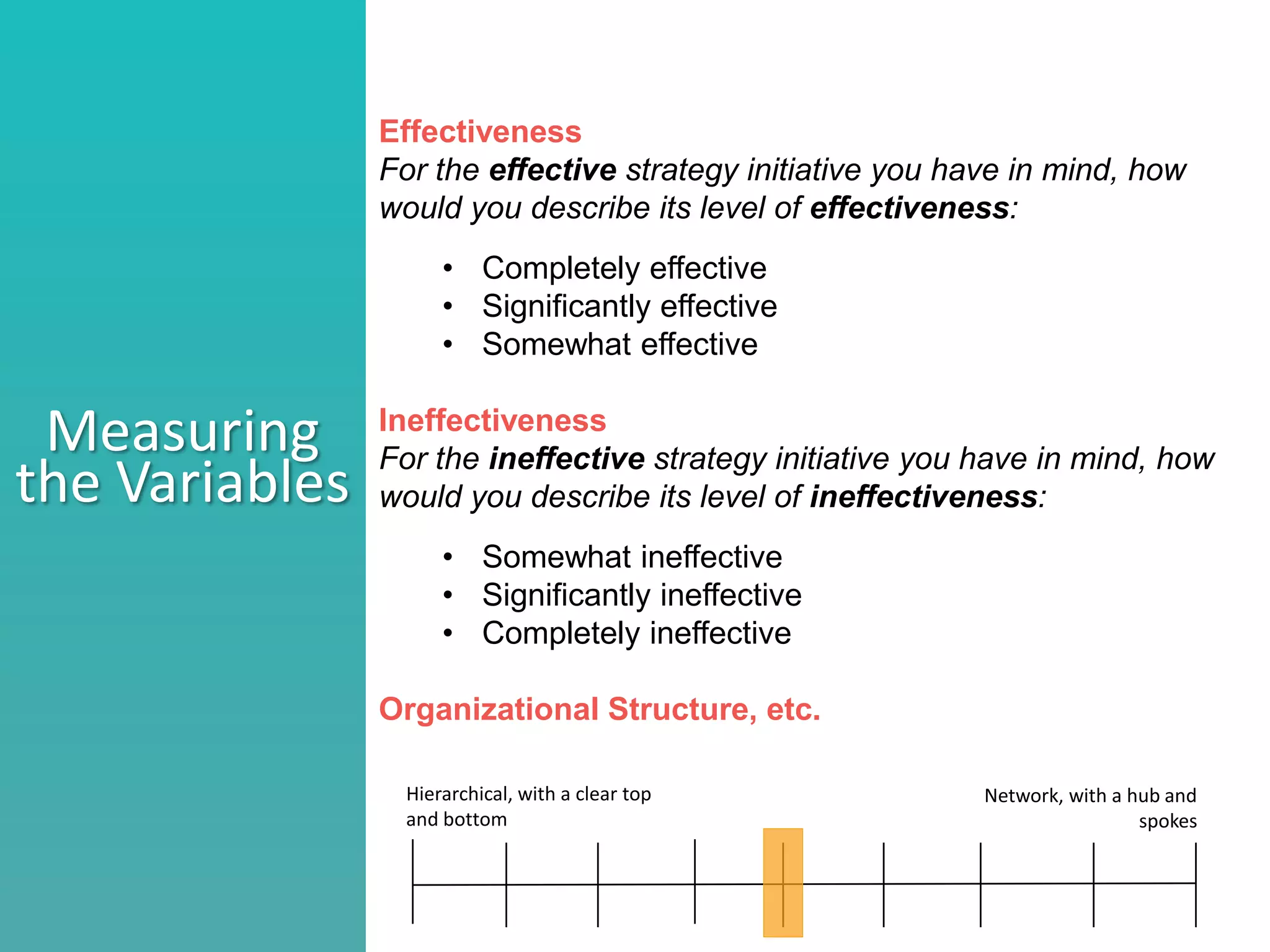
Organizational Structure, etc.
Measuring
the Variables
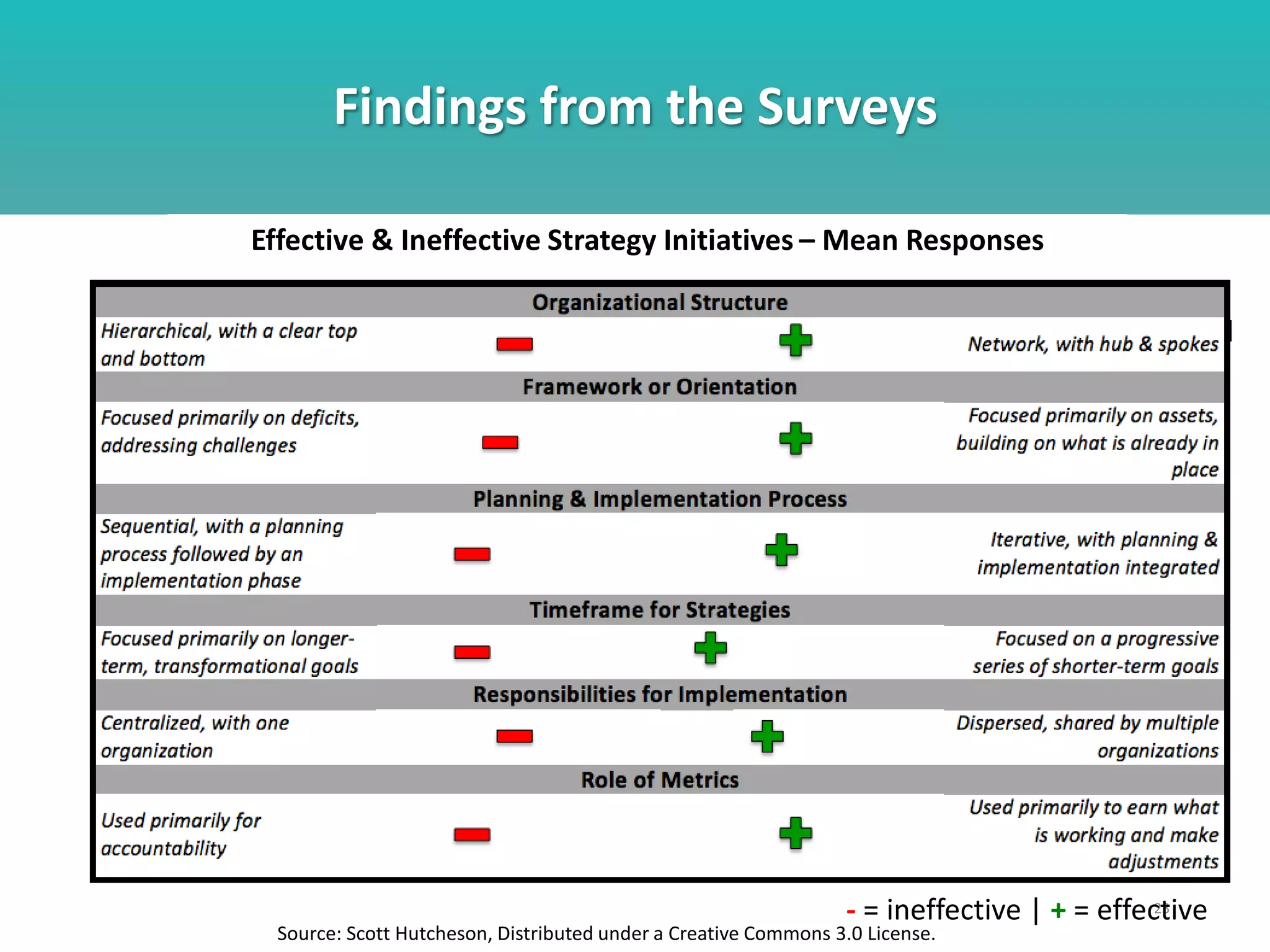
Hierarchical, with a clear top
and bottom
Network, with a hub and
spokes
Insights from Participants
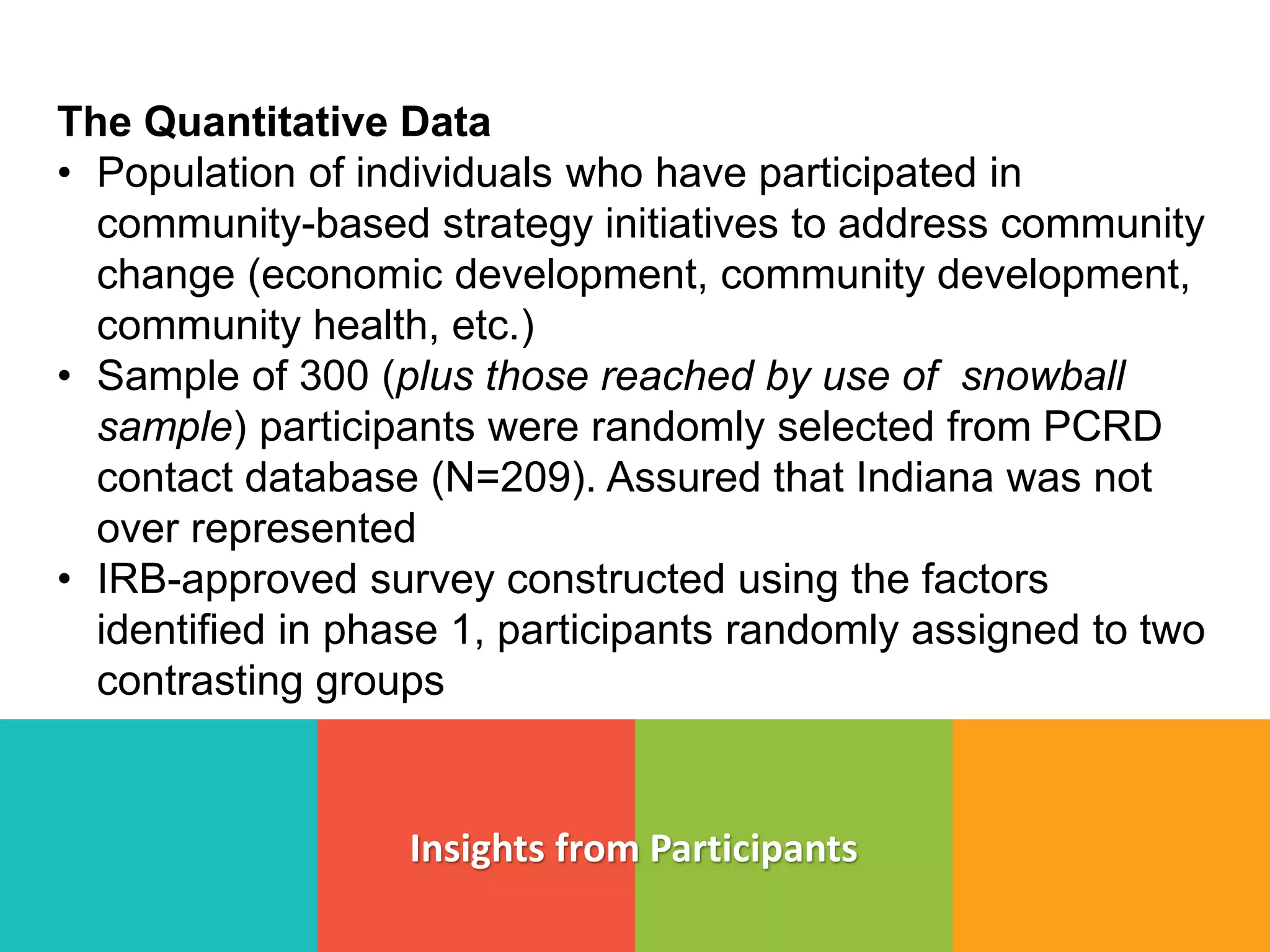
The Quantitative Data
• Population of individuals who have participated in
community-based strategy initiatives to address community
change (economic development, community development,
community health, etc.)
• Sample of 300 (plus those reached by use of snowball
sample) participants were randomly selected from PCRD
contact database (N=209). Assured that Indiana was not
over represented
• IRB-approved survey constructed using the factors
identified in phase 1, participants randomly assigned to two
contrasting groups
Findings from the Surveys
23
Source: Scott Hutcheson, Distributed under a Creative Commons 3.0 License.
Effective & Ineffective Strategy Initiatives – Mean Responses
- = ineffective | + = effective
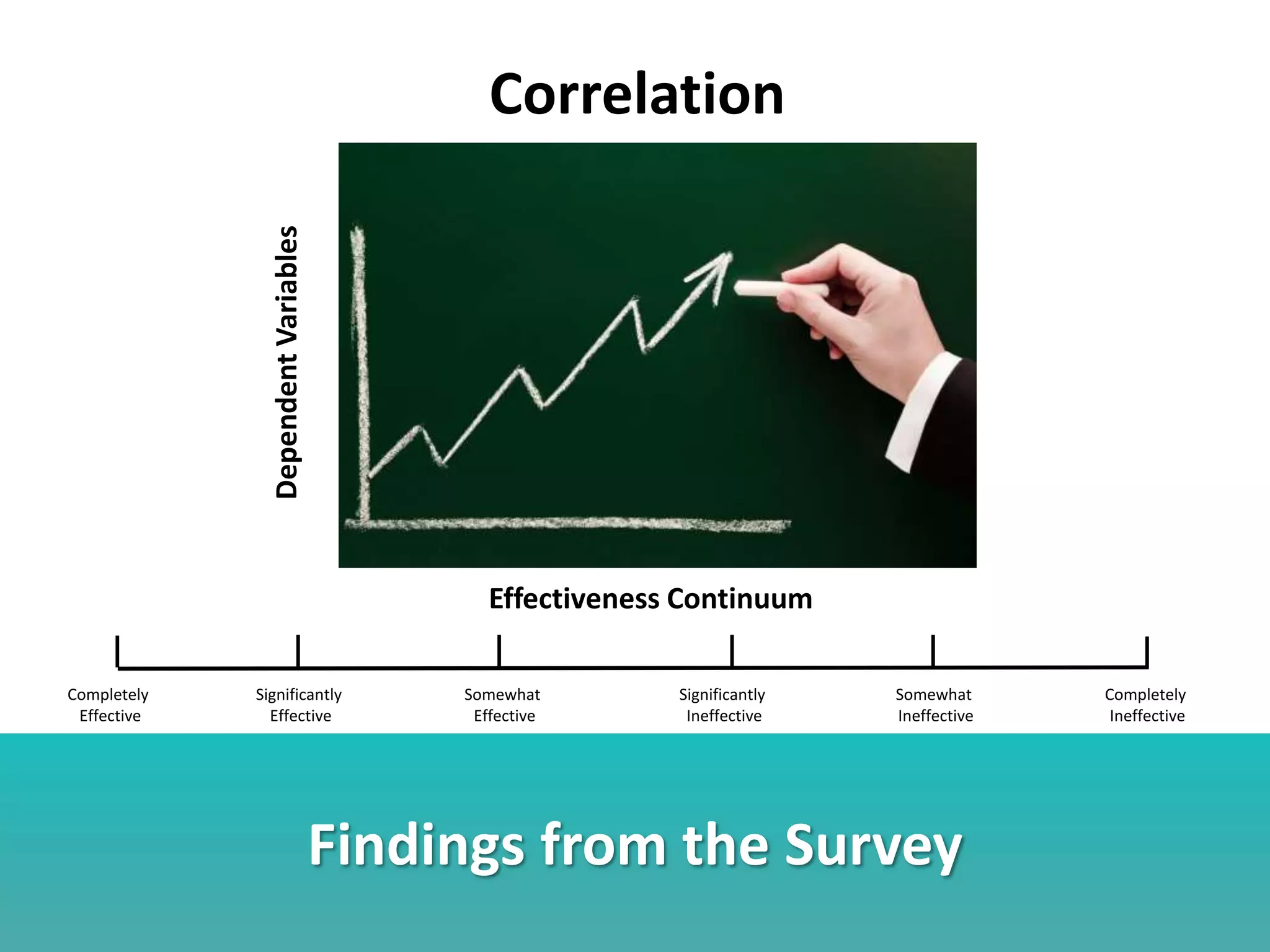
Completely
Effective
Completely
Ineffective
Significantly
Effective
Somewhat
Effective
Somewhat
Ineffective
Significantly
Ineffective
Findings from the Survey
Effectiveness Continuum
DependentVariables
Correlation
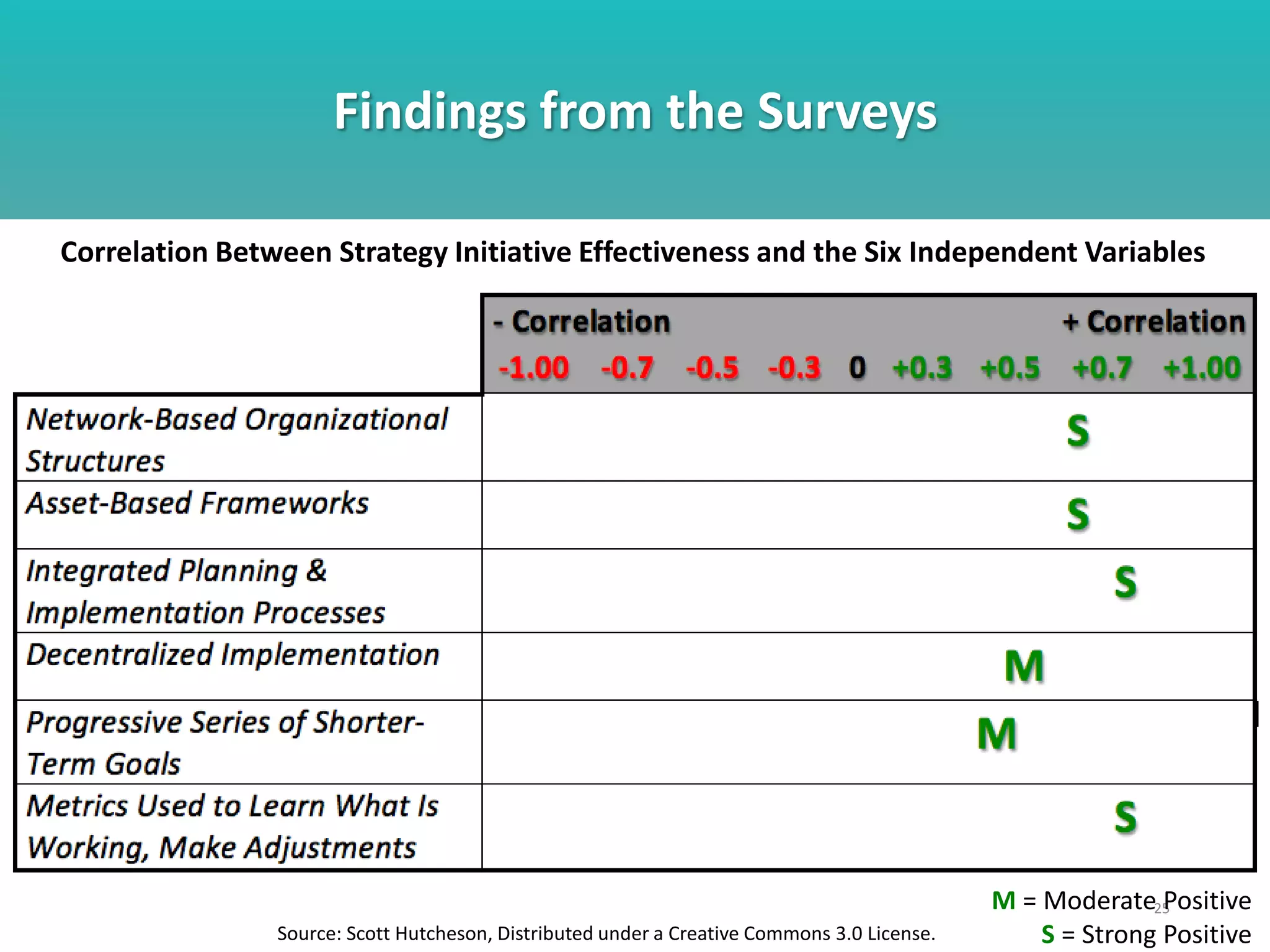
Findings from the Surveys
25
Source: Scott Hutcheson, Distributed under a Creative Commons 3.0 License.
Correlation Between Strategy Initiative Effectiveness and the Six Independent Variables
M = Moderate Positive
S = Strong Positive
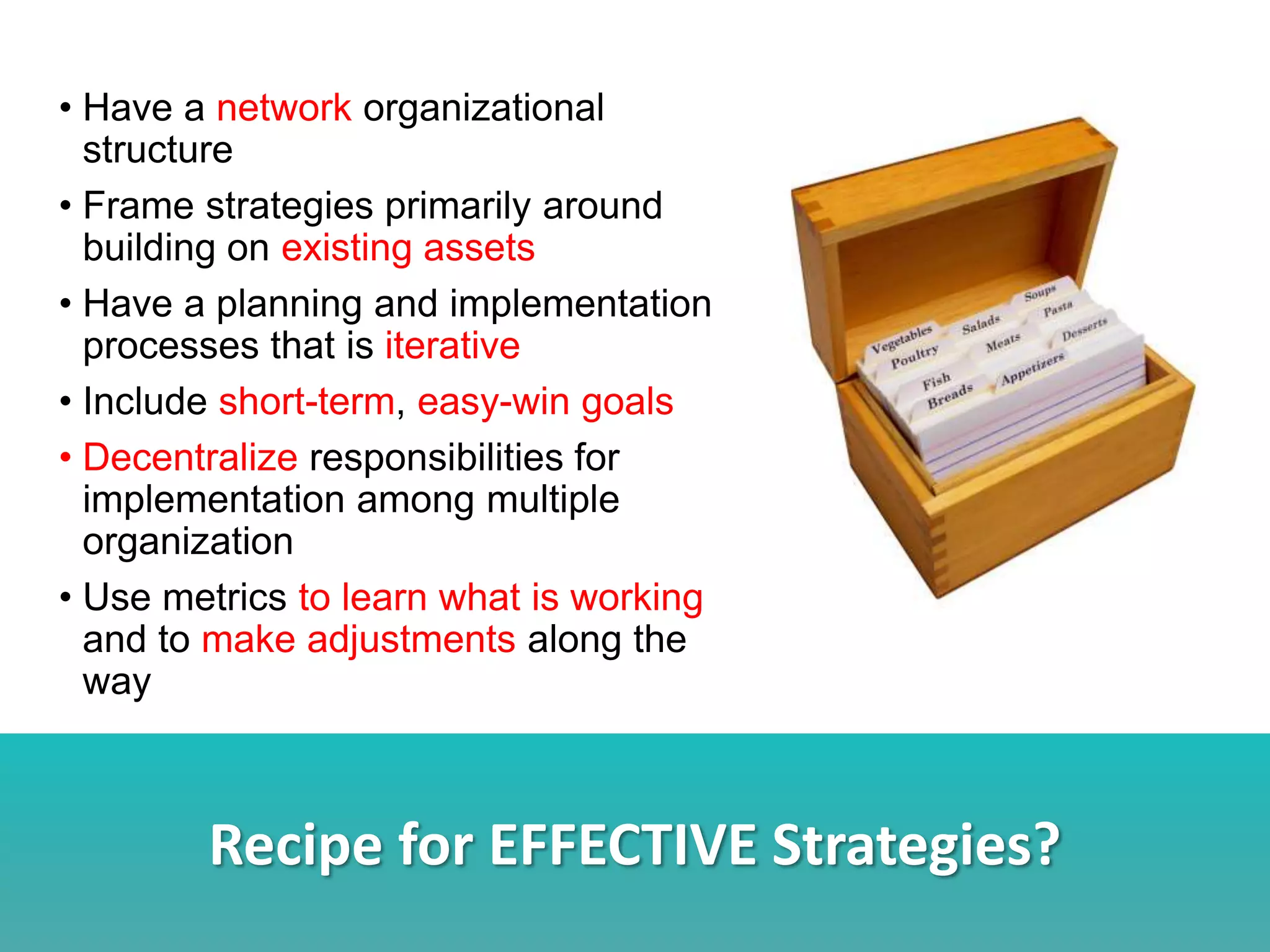
Recipe for EFFECTIVE Strategies?
• Have a network organizational
structure
• Frame strategies primarily around
building on existing assets
• Have a planning and implementation
processes that is iterative
• Include short-term, easy-win goals
• Decentralize responsibilities for
implementation among multiple
organization
• Use metrics to learn what is working
and to make adjustments along the
way
Strategic Doing enables people to form action-
oriented collaborations quickly, move them
toward measurable outcomes, and make
adjustments along the way.
Scott Hutcheson, Ph.D.
765-479-7704
hutcheson@purdue.edu
www.linkedin.com/in/scotthutcheson/
http://www.slideshare.net/jshutch/
For More Information & to Connect
Copyright 2014 – Scott Hutcheson
This work is licensed under a Creative Commons Attribution-NonCommercial 2.5 License.
Slides available

Effective Strategy Making in Economic & Community Development

  • 1.
    Copyright 2014 –Scott Hutcheson This work is licensed under a Creative Commons Attribution-NonCommercial 2.5 License. Effective Strategy Making in Economic & Community Development Scott Hutcheson, Ph.D. Mid-Continent Regional Science Association 46th Annual Conference St. Louis, M) – May 27-29, 2015
  • 3.
    Strategy3 Strategy = theemployment of battles to win the war. - General Carl von Clausewitz
  • 6.
  • 7.
    Better understand henature of collaboration Identify what stage your collaborations are in Consider ways to move a collaborations to the next level Research Question Why are some economic & community development strategies effectiveand others…not so much?
  • 8.
    Answering the Question Agrounded theory exploration using a sequential mixed method approach beginning with a qualitative phase in which semi- structured interviews were conducted with a purposively sampled panel of experts resulting in data that was open coded using the data spiral analysis method followed by a quasi-experimental quantitative phase in which two contrasted groups of purposefully sampled, randomly assigned participants were surveyed, resulting in data that was analyzed using Spearman’s rho to determine correlation coefficients. 1. Literature review 2. Interviews 3. Surveys
  • 9.
    Better understand henature of collaboration Identify what stage your collaborations are in Consider ways to move a collaborations to the next level Problem Statement • Literature gap regarding factors contributing to effective strategy in the context of economic & community development (Kwon, Berry, & Feiock, 2009). • Civic leaders face daunting tasks of developing and implementing economic & community development strategies (Markey, 2010). • Very little research-based information to guide decisions about effective strategy-development processes in the context of economic & community development.
  • 10.
    • Evolution ofdealing with economic & community development • Institutionalization • Locus of control • Increasing complexity • Tools for managing economic & community development • Early tools • Evolving tools • Emerging tools • Contributing theories • Strategy formation • Collaborative governance • Social innovation Insights from the Literature Conducted as part of the grounded theory data collection process (McGhee, Marland, and Atkinson, 2007). Conducted to provide contextualization (Dunne, 2011) and orientation to the phenomenon (Pozzebon, Petrini, de Mellow, and Garreau, 2011).
  • 11.
    Better understand henature of collaboration Identify what stage your collaborations are in Consider ways to move a collaborations to the next level Evolution of How We Deal with ECD Issues Institutionalization • Pre-institutional (Pre- WW2) • Institutional (1950-1990) • Multi-Institutional (1990 to today) Locus of Control • Control in the hands of the “elite” (Perrucci & Pilisuk, 1970). • Most economic & community development issues are “Type 3 Public Problems” and control is shared by a group of “nonexperts” (Heifitz and Sinder, 1988).
  • 12.
    Dealing with theComplexity 12 Early Models • Borrowed from industry models (Blair,2004) • 1960s in universities, schools, municipalities (Hamilton, 2007) • Late 1980s/Early 1990s first economic development strategic plans (Blackerby & Blackerby, 1995) Evolving Models • Recognition that corporate models are less effective (Bryson and Roering, 1987). • U.S. Economic Development Administration’s CEDS; Cooperative Extension Service’s Take Charge (Hein, Cole, & Ayres, 1990); Asset-Based Community Development, (Kretzmann and McKnight, 1996; Community Capitals, Flora, 1992) Emerging Models • Effectiveness of strategic planning in business questioned (Mintzberg, 1994). • Effectiveness of strategic planning in economic & community development questioned ( Blair, 2004; Robichau, 2010; Morrison, 2012) • Organic Strategic Planning (McNamara, 2010, Open Source Economic Development (Merkel, 2010), Strategic Doing (Hutcheson, 2008;
  • 13.
    Contributing Theories •Social Innovation •StrategyFormation •Collaborative Governance 13
  • 14.
    Social Innovation Social innovations… •are best designed and implemented in networks • emerge from heterogeneousness (diversity) • are framed using existing assets • are products of co-creation • are the result of collective action • should have decentralized implementation • when implemented should focus on tangible results Bland, Bruk, Kim, and Lee (2010); Bouchard (2012); Mulgan, Ali, Tucker and Sanders (2007); Neumeier (2012); Oliveira and Breda-Vazquez (2012)
  • 15.
    Strategy Formation Strategies… • areformed intuitively • are iterative • must be designed to account for unanticipated variables • must take into account contextual values, assumptions, beliefs, and expectations • must be flexible • should be designed collaboratively • and best developed as an intra-organizational activity Feser, 2012; Johanson, 2009; Lindblom, 1959; Mintzberg, 1978; Parnell, 2008; Rindova, Dalpiaz, and Ravasi, 2011; Sminia, 2012; Tapinos, Dyson, and Meadows, 2011
  • 16.
    Collaborative Governance Collaborative governance… •takes advantage of network structures • connects existing assets • focuses first on small wins • Requires decision making to be made by consensus • works when there is trust among participants • is efficient • involves successful management of both internal and external stakeholders Ansell and Gash, 2008; Chiclana et al., 2013; Clarke, Huxley, Mountford, 2010; Emerson, Nabatchi, and Balogh, 2012; Gibson, 2011; Johnston, Hicks, Nan, and Auer, 2011; Kwon, Berry, and Feiock, 2009; Merkle , 2010; Olberding, 2009; Ospina and Saz-Carranza, 2010; Pammer, 1998; Poister, 2010
  • 17.
    Better understand henature of collaboration Identify what stage your collaborations are in Consider ways to move a collaborations to the next level These Things Matter • Organizational Structure (i.e., hierarchy, network) • Framework & Orientation (i.e., asset- based, deficit-based, efficiency-based) • Processes (i.e., relationship between planning and implementation) • Timeframe (i.e., timeline for goals) • Implementation (i.e., centralized, decentralized) • Metrics (i.e., accountability, feedback
  • 18.
    Insights from thePanel of Experts The Qualitative Data • Population of scholars and practitioners who design curricula, teach, and/or practice strategy development for addressing economic development, community development issues • Sample: N=12 • Semi-structured interviews (IRB-approved, anonymity) • Verbatim transcripts, data spiral analysis with three levels of coding: open, axial, selective using qualitative analysis software • 56 single-spaced pages/over 31,000 words of data
  • 19.
    Themes from theInterviews 19 1. Toward network organization structures, away from hierarchical structures 2. Toward asset-based frameworks, away from deficit-based frameworks 3. Toward iterative planning/implementation processes, away from sequential processes 4. Toward a progressive series of shorter-term goals, away from longer-term transformational goals 5. Toward decentralized implementation, away from centralized implementation 6. Toward using metrics to learn what is working, away from metrics used primarily for accountability
  • 20.
    Variables 20 1. Network organizationstructures 2. Asset-based frameworks 3. Iterative planning/implementation process 4. Inclusion of shorter-term goals 5. Decentralized implementation 6. Metrics to learn what is working Independent Variables Dependent Variable = Effectiveness
  • 21.
    Effectiveness For the effectivestrategy initiative you have in mind, how would you describe its level of effectiveness: • Completely effective • Significantly effective • Somewhat effective Ineffectiveness For the ineffective strategy initiative you have in mind, how would you describe its level of ineffectiveness: • Somewhat ineffective • Significantly ineffective • Completely ineffective Organizational Structure, etc. Measuring the Variables Hierarchical, with a clear top and bottom Network, with a hub and spokes
  • 22.
    Insights from Participants TheQuantitative Data • Population of individuals who have participated in community-based strategy initiatives to address community change (economic development, community development, community health, etc.) • Sample of 300 (plus those reached by use of snowball sample) participants were randomly selected from PCRD contact database (N=209). Assured that Indiana was not over represented • IRB-approved survey constructed using the factors identified in phase 1, participants randomly assigned to two contrasting groups
  • 23.
    Findings from theSurveys 23 Source: Scott Hutcheson, Distributed under a Creative Commons 3.0 License. Effective & Ineffective Strategy Initiatives – Mean Responses - = ineffective | + = effective
  • 24.
  • 25.
    Findings from theSurveys 25 Source: Scott Hutcheson, Distributed under a Creative Commons 3.0 License. Correlation Between Strategy Initiative Effectiveness and the Six Independent Variables M = Moderate Positive S = Strong Positive
  • 26.
    Recipe for EFFECTIVEStrategies? • Have a network organizational structure • Frame strategies primarily around building on existing assets • Have a planning and implementation processes that is iterative • Include short-term, easy-win goals • Decentralize responsibilities for implementation among multiple organization • Use metrics to learn what is working and to make adjustments along the way
  • 27.
    Strategic Doing enablespeople to form action- oriented collaborations quickly, move them toward measurable outcomes, and make adjustments along the way.
  • 28.
    Scott Hutcheson, Ph.D. 765-479-7704 hutcheson@purdue.edu www.linkedin.com/in/scotthutcheson/ http://www.slideshare.net/jshutch/ ForMore Information & to Connect Copyright 2014 – Scott Hutcheson This work is licensed under a Creative Commons Attribution-NonCommercial 2.5 License. Slides available