New Media, New Research: Using the internet
in research for the A level Extended Project

Terese Bird
Learning Technologist and SCORE Research Fellow
For Queen Elizabeth I College EPQ seminar 29 Oct 2013
www.le.ac.uk

Photo by slimlibrary on Flickr
What will we talk about?
• Google’s tricks

• What is a good source?
• Excellent online ‘libraries’
• Wikipedia
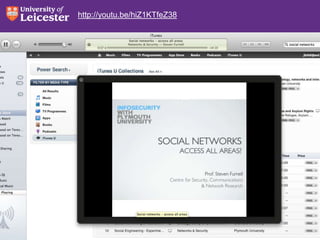
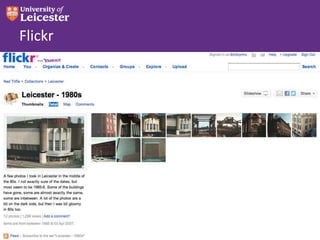
• How to reference YouTube,
iTunes U, Flickr
• Online surveys and
interviews

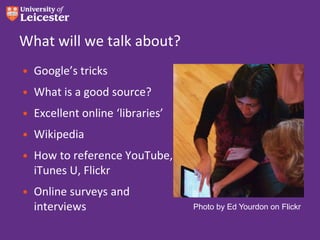
Photo by Ed Yourdon on Flickr
The truth about Google
• Google is a business, not a
service

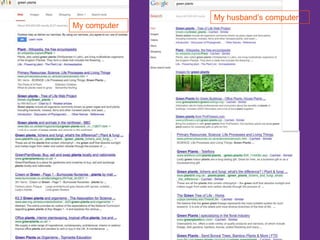
• When you Google something, the
results are different from when
your friend Googles it
• Companies pay other companies
to improve search returns on
Google – sneaky cheats

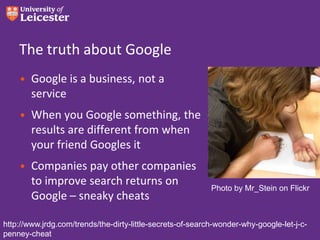
Photo by Mr_Stein on Flickr

http://www.jrdg.com/trends/the-dirty-little-secrets-of-search-wonder-why-google-let-j-cpenney-cheat
My husband’s computer

My computer
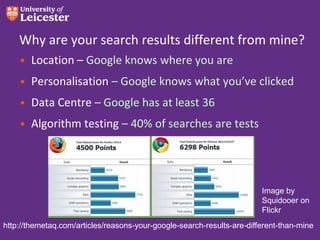
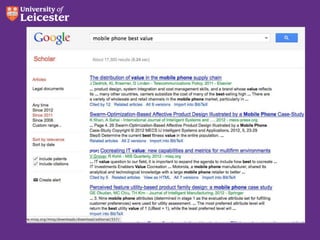
Why are your search results different from mine?
• Location – Google knows where you are
• Personalisation – Google knows what you’ve clicked
• Data Centre – Google has at least 36
• Algorithm testing – 40% of searches are tests

Image by
Squidooer on
Flickr
http://themetaq.com/articles/reasons-your-google-search-results-are-different-than-mine
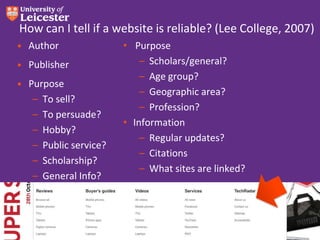
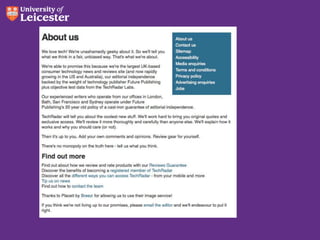
How can I tell if a website is reliable? (Lee College, 2007)
• Author
• Publisher

• Purpose
– To sell?
– To persuade?
– Hobby?
– Public service?
– Scholarship?
– General Info?

• Purpose
– Scholars/general?
– Age group?
– Geographic area?
– Profession?
• Information
– Regular updates?
– Citations
– What sites are linked?
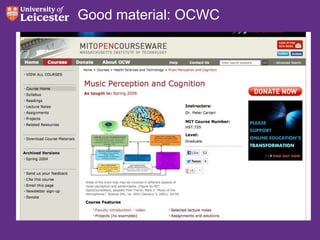
Good material: OCWC
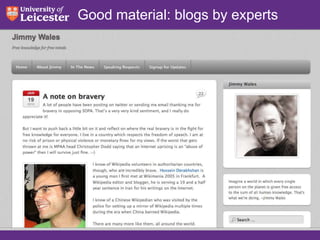
Good material: blogs by experts

Blog post by an expert
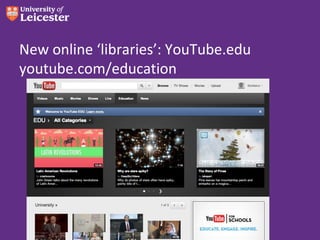
New online ‘libraries’: YouTube.edu
youtube.com/education
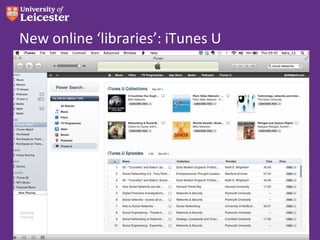
New online ‘libraries’: iTunes U
http://youtu.be/hiZ1KTfeZ38

New online ‘libraries’: iTunes U
Flickr
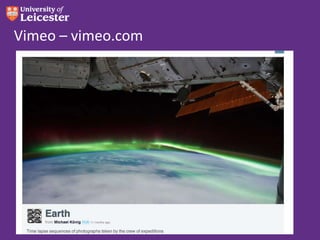
Vimeo – vimeo.com
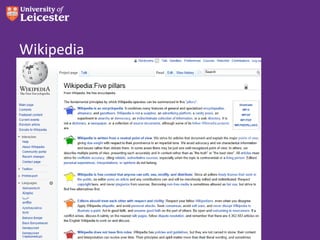
Wikipedia
Wikipedia
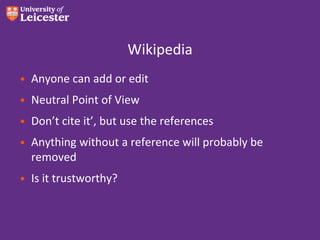
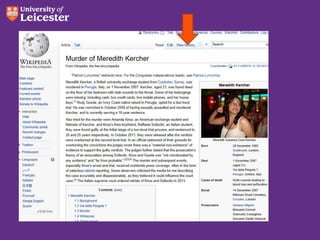
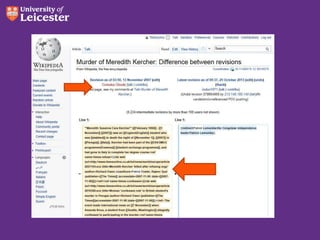
• Anyone can add or edit
• Neutral Point of View
• Don’t cite it’, but use the references
• Anything without a reference will probably be
removed
• Is it trustworthy?
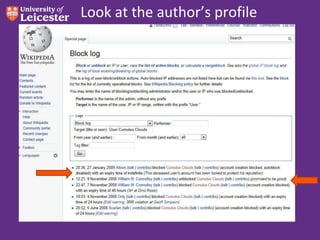
Look at the author’s profile
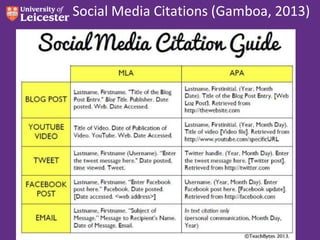
Social Media Citations (Gamboa, 2013)
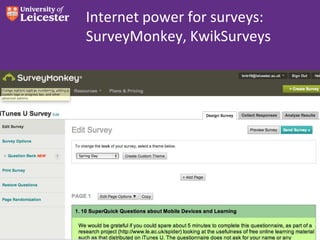
Internet power for surveys:
SurveyMonkey, KwikSurveys
• SurveyMonkey
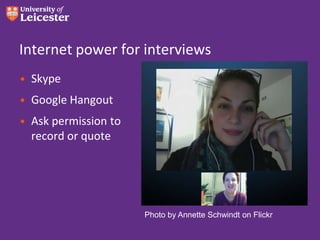
Internet power for interviews
• Skype
• Google Hangout
• Ask permission to
record or quote

Photo by Annette Schwindt on Flickr
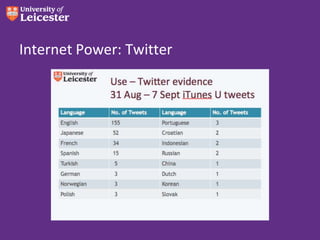
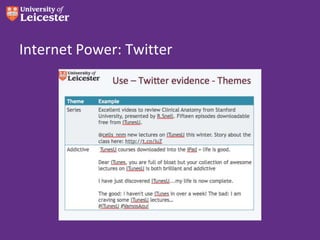
Internet Power: Twitter
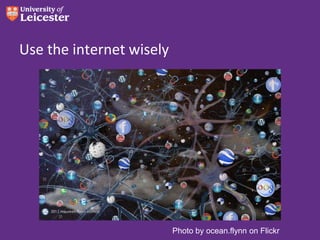
Use the internet wisely

Photo by ocean.flynn on Flickr
References
• Gamboa, C. (2013). How to Cite Social Media in Scholarly Writing | SAGE
Connection – Insight. Sage Connection. Retrieved from
http://connection.sagepub.com/blog/2013/09/17/how-to-cite-socialmedia-in-scholarly-writing/
• LeeCollege. (2007). How Can I Tell if a Website is Reliable? University of
Texas website. Retrieved from
http://www.edb.utexas.edu/petrosino/Legacy_Cycle/mf_jm/Challenge
1/website reliable.pdf
• Segal, D. (2013). Search Optimization and Its Dirty Little Secrets NYTimes.com. New York Times Business Day. Retrieved from
http://www.nytimes.com/2011/02/13/business/13search.html?_r=0
• Snipes, S. (2012). Reasons Your Google Search Results Are Different Than
Mine | Articles | Meta Q. Q Digital website. Retrieved from
http://themetaq.com/articles/reasons-your-google-search-results-aredifferent-than-mine
New Media, New Research: Information for College Students doing the Extended Project

New Media, New Research: Information for College Students doing the Extended Project

  • 1.
    New Media, NewResearch: Using the internet in research for the A level Extended Project Terese Bird Learning Technologist and SCORE Research Fellow For Queen Elizabeth I College EPQ seminar 29 Oct 2013 www.le.ac.uk Photo by slimlibrary on Flickr
  • 2.
    What will wetalk about? • Google’s tricks • What is a good source? • Excellent online ‘libraries’ • Wikipedia • How to reference YouTube, iTunes U, Flickr • Online surveys and interviews Photo by Ed Yourdon on Flickr
  • 3.
    The truth aboutGoogle • Google is a business, not a service • When you Google something, the results are different from when your friend Googles it • Companies pay other companies to improve search returns on Google – sneaky cheats Photo by Mr_Stein on Flickr http://www.jrdg.com/trends/the-dirty-little-secrets-of-search-wonder-why-google-let-j-cpenney-cheat
  • 4.
  • 5.
    Why are yoursearch results different from mine? • Location – Google knows where you are • Personalisation – Google knows what you’ve clicked • Data Centre – Google has at least 36 • Algorithm testing – 40% of searches are tests Image by Squidooer on Flickr http://themetaq.com/articles/reasons-your-google-search-results-are-different-than-mine
  • 6.
    How can Itell if a website is reliable? (Lee College, 2007) • Author • Publisher • Purpose – To sell? – To persuade? – Hobby? – Public service? – Scholarship? – General Info? • Purpose – Scholars/general? – Age group? – Geographic area? – Profession? • Information – Regular updates? – Citations – What sites are linked?
  • 12.
  • 13.
    Good material: blogsby experts Blog post by an expert
  • 14.
    New online ‘libraries’:YouTube.edu youtube.com/education
  • 15.
  • 16.
  • 17.
  • 18.
  • 19.
  • 20.
    Wikipedia • Anyone canadd or edit • Neutral Point of View • Don’t cite it’, but use the references • Anything without a reference will probably be removed • Is it trustworthy?
  • 23.
    Look at theauthor’s profile
  • 24.
    Social Media Citations(Gamboa, 2013)
  • 25.
    Internet power forsurveys: SurveyMonkey, KwikSurveys • SurveyMonkey
  • 26.
    Internet power forinterviews • Skype • Google Hangout • Ask permission to record or quote Photo by Annette Schwindt on Flickr
  • 27.
  • 28.
  • 29.
    Use the internetwisely Photo by ocean.flynn on Flickr
  • 30.
    References • Gamboa, C.(2013). How to Cite Social Media in Scholarly Writing | SAGE Connection – Insight. Sage Connection. Retrieved from http://connection.sagepub.com/blog/2013/09/17/how-to-cite-socialmedia-in-scholarly-writing/ • LeeCollege. (2007). How Can I Tell if a Website is Reliable? University of Texas website. Retrieved from http://www.edb.utexas.edu/petrosino/Legacy_Cycle/mf_jm/Challenge 1/website reliable.pdf • Segal, D. (2013). Search Optimization and Its Dirty Little Secrets NYTimes.com. New York Times Business Day. Retrieved from http://www.nytimes.com/2011/02/13/business/13search.html?_r=0 • Snipes, S. (2012). Reasons Your Google Search Results Are Different Than Mine | Articles | Meta Q. Q Digital website. Retrieved from http://themetaq.com/articles/reasons-your-google-search-results-aredifferent-than-mine