Prepared by:
Orlando A. Pistan, MAEd
Psychology Instructor
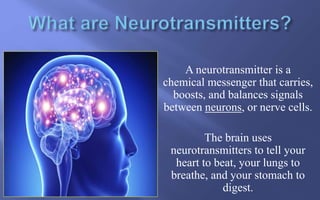
A neurotransmitter is a
chemical messenger that carries,
boosts, and balances signals
between neurons, or nerve cells.
The brain uses
neurotransmitters to tell your
heart to beat, your lungs to
breathe, and your stomach to
digest.
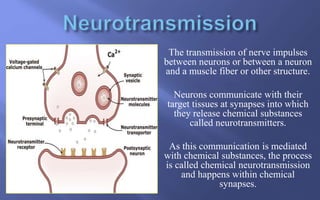
The transmission of nerve impulses
between neurons or between a neuron
and a muscle fiber or other structure.
Neurons communicate with their
target tissues at synapses into which
they release chemical substances
called neurotransmitters.
As this communication is mediated
with chemical substances, the process
is called chemical neurotransmission
and happens within chemical
synapses.
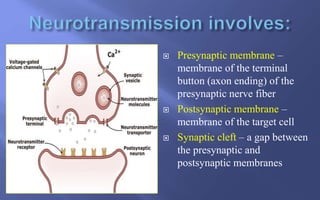
 Presynaptic membrane –
membrane of the terminal
button (axon ending) of the
presynaptic nerve fiber
 Postsynaptic membrane –
membrane of the target cell
 Synaptic cleft – a gap between
the presynaptic and
postsynaptic membranes
Excitatory
Inhibitory
(not to fire)
neurotransmitter which
blocks the signal from
continuing, preventing the
message from being carried
on.
(to fire) neurotransmitters
which bind to receptors and
cause an electrical signal to
be transmitted to the other
cell.
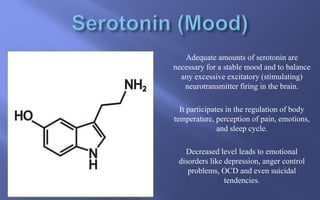
Serotonin
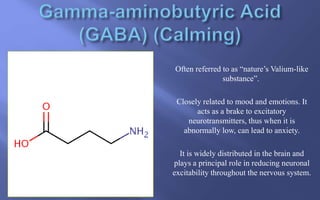
GABA
Adequate amounts of serotonin are
necessary for a stable mood and to balance
any excessive excitatory (stimulating)
neurotransmitter firing in the brain.
It participates in the regulation of body
temperature, perception of pain, emotions,
and sleep cycle.
Decreased level leads to emotional
disorders like depression, anger control
problems, OCD and even suicidal
tendencies.
Often referred to as “nature’s Valium-like
substance”.
Closely related to mood and emotions. It
acts as a brake to excitatory
neurotransmitters, thus when it is
abnormally low, can lead to anxiety.
It is widely distributed in the brain and
plays a principal role in reducing neuronal
excitability throughout the nervous system.
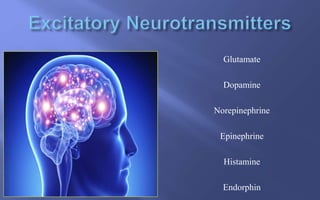
Glutamate
Dopamine
Norepinephrine
Epinephrine
Histamine
Endorphin
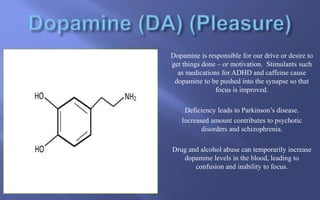
Dopamine is responsible for our drive or desire to
get things done – or motivation. Stimulants such
as medications for ADHD and caffeine cause
dopamine to be pushed into the synapse so that
focus is improved.
Deficiency leads to Parkinson’s disease.
Increased amount contributes to psychotic
disorders and schizophrenia.
Drug and alcohol abuse can temporarily increase
dopamine levels in the blood, leading to
confusion and inability to focus.
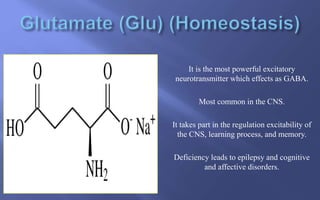
It is the most powerful excitatory
neurotransmitter which effects as GABA.
Most common in the CNS.
It takes part in the regulation excitability of
the CNS, learning process, and memory.
Deficiency leads to epilepsy and cognitive
and affective disorders.
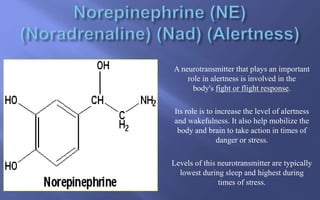
A neurotransmitter that plays an important
role in alertness is involved in the
body's fight or flight response.
Its role is to increase the level of alertness
and wakefulness. It also help mobilize the
body and brain to take action in times of
danger or stress.
Levels of this neurotransmitter are typically
lowest during sleep and highest during
times of stress.
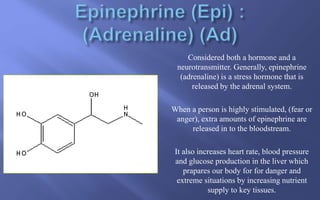
Considered both a hormone and a
neurotransmitter. Generally, epinephrine
(adrenaline) is a stress hormone that is
released by the adrenal system.
When a person is highly stimulated, (fear or
anger), extra amounts of epinephrine are
released in to the bloodstream.
It also increases heart rate, blood pressure
and glucose production in the liver which
prapares our body for for danger and
extreme situations by increasing nutrient
supply to key tissues.
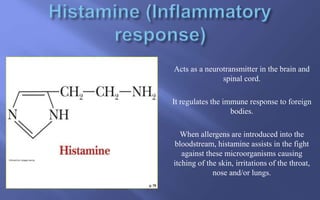
Acts as a neurotransmitter in the brain and
spinal cord.
It regulates the immune response to foreign
bodies.
When allergens are introduced into the
bloodstream, histamine assists in the fight
against these microorganisms causing
itching of the skin, irritations of the throat,
nose and/or lungs.
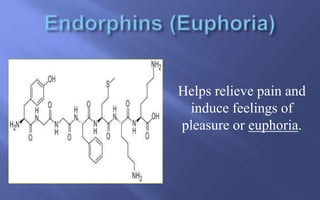
Helps relieve pain and
induce feelings of
pleasure or euphoria.
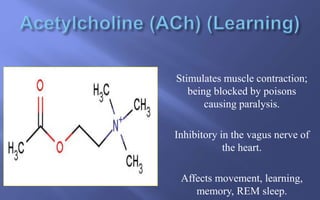
Stimulates muscle contraction;
being blocked by poisons
causing paralysis.
Inhibitory in the vagus nerve of
the heart.
Affects movement, learning,
memory, REM sleep.
Thank you for paying
attention.

Neurotransmitters

  • 1.
    Prepared by: Orlando A.Pistan, MAEd Psychology Instructor
  • 2.
    A neurotransmitter isa chemical messenger that carries, boosts, and balances signals between neurons, or nerve cells. The brain uses neurotransmitters to tell your heart to beat, your lungs to breathe, and your stomach to digest.
  • 3.
    The transmission ofnerve impulses between neurons or between a neuron and a muscle fiber or other structure. Neurons communicate with their target tissues at synapses into which they release chemical substances called neurotransmitters. As this communication is mediated with chemical substances, the process is called chemical neurotransmission and happens within chemical synapses.
  • 4.
     Presynaptic membrane– membrane of the terminal button (axon ending) of the presynaptic nerve fiber  Postsynaptic membrane – membrane of the target cell  Synaptic cleft – a gap between the presynaptic and postsynaptic membranes
  • 5.
  • 6.
    (not to fire) neurotransmitterwhich blocks the signal from continuing, preventing the message from being carried on.
  • 7.
    (to fire) neurotransmitters whichbind to receptors and cause an electrical signal to be transmitted to the other cell.
  • 8.
  • 9.
    Adequate amounts ofserotonin are necessary for a stable mood and to balance any excessive excitatory (stimulating) neurotransmitter firing in the brain. It participates in the regulation of body temperature, perception of pain, emotions, and sleep cycle. Decreased level leads to emotional disorders like depression, anger control problems, OCD and even suicidal tendencies.
  • 10.
    Often referred toas “nature’s Valium-like substance”. Closely related to mood and emotions. It acts as a brake to excitatory neurotransmitters, thus when it is abnormally low, can lead to anxiety. It is widely distributed in the brain and plays a principal role in reducing neuronal excitability throughout the nervous system.
  • 11.
  • 12.
    Dopamine is responsiblefor our drive or desire to get things done – or motivation. Stimulants such as medications for ADHD and caffeine cause dopamine to be pushed into the synapse so that focus is improved. Deficiency leads to Parkinson’s disease. Increased amount contributes to psychotic disorders and schizophrenia. Drug and alcohol abuse can temporarily increase dopamine levels in the blood, leading to confusion and inability to focus.
  • 13.
    It is themost powerful excitatory neurotransmitter which effects as GABA. Most common in the CNS. It takes part in the regulation excitability of the CNS, learning process, and memory. Deficiency leads to epilepsy and cognitive and affective disorders.
  • 14.
    A neurotransmitter thatplays an important role in alertness is involved in the body's fight or flight response. Its role is to increase the level of alertness and wakefulness. It also help mobilize the body and brain to take action in times of danger or stress. Levels of this neurotransmitter are typically lowest during sleep and highest during times of stress.
  • 15.
    Considered both ahormone and a neurotransmitter. Generally, epinephrine (adrenaline) is a stress hormone that is released by the adrenal system. When a person is highly stimulated, (fear or anger), extra amounts of epinephrine are released in to the bloodstream. It also increases heart rate, blood pressure and glucose production in the liver which prapares our body for for danger and extreme situations by increasing nutrient supply to key tissues.
  • 16.
    Acts as aneurotransmitter in the brain and spinal cord. It regulates the immune response to foreign bodies. When allergens are introduced into the bloodstream, histamine assists in the fight against these microorganisms causing itching of the skin, irritations of the throat, nose and/or lungs.
  • 17.
    Helps relieve painand induce feelings of pleasure or euphoria.
  • 18.
    Stimulates muscle contraction; beingblocked by poisons causing paralysis. Inhibitory in the vagus nerve of the heart. Affects movement, learning, memory, REM sleep.
  • 19.
    Thank you forpaying attention.