Neurolinguistic
Programming
•It refers to a training
philosophy and a set of
techniques developed by
two important therapists in
the mid-1970s.
Neurolinguistic Programming
• Is a collection of techniques, patterns,
and strategies for assisting :
Personal Growth and Change.
Effective Communication.
Learning.
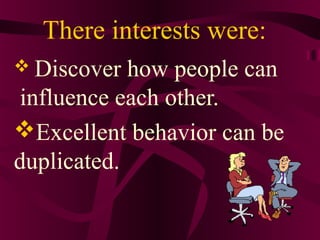
There interests were:
 Discover how people can
influence each other.
Excellent behavior can be
duplicated.
NLP can be applied to:
Management
Training.
Sports Training.
Communications
Sales.
Marketing.
Language Teaching
Explanation of the Name:
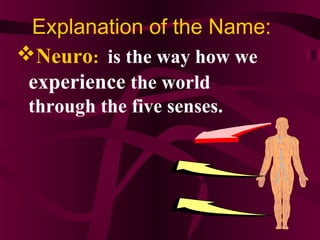
Neuro: is the way how we
experience the world
through the five senses.
Linguistic: is concerned
with the way the language
we use shapes, as well as
reflects, our experience of
the world.
Programming: its training
ourselves to think, speak, and act
in new and positive ways achieving
only what we dreamt of.
The heart of NLP are four:
 Outcomes: Knowing precisely
what you want helps you
achieve it.
Rapport : Establish
rapport with yourself and
then with others; maximize
similarities and minimize
differences.
Sensory Acuity: Noticing what
another person is
communicating, consciously and
nonverbally.
Flexibility: Doing things
differently if what you are doing
is not working, having a range
of skills to do something else or
something different.
Guidelines Application
for NLP
1. Mind and body are
interconnected.
2. There is no failure,
only feedback.
3. Knowing what you
want helps you get
it.
4. The resources we
need are within us.
5. Communication is
nonverbal as well
as verbal.
6. Communication
is nonconscious
as well as
conscious.
7. All behavior has
a positive
intention
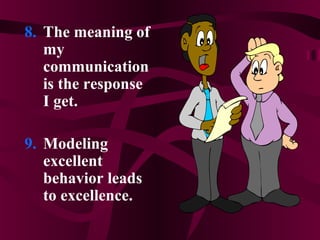
8. The meaning of
my
communication
is the response
I get.
9. Modeling
excellent
behavior leads
to excellence.
What do NLP Language Teachers do that
make them different from other Language
Teachers?
They seek to apply the principles in
their teaching and this leads to
different responses to many
classroom events and processes.
A Central Principle of NLP
is:
Rapport which is meeting others in their world,
trying to understand their needs, their values
and their culture and communicating in ways
that are congruents with those values.
Think on this:
• Neurolinguistic
Programming is not a
language teaching method,
rather, it is designed to
convience people that they
have the power to control
their own and other
people’s lives for the better,
with practical prescriptions
on how to do so.

Neurolinguistic Programming Exposition

  • 1.
    Neurolinguistic Programming •It refers toa training philosophy and a set of techniques developed by two important therapists in the mid-1970s.
  • 2.
    Neurolinguistic Programming • Isa collection of techniques, patterns, and strategies for assisting : Personal Growth and Change. Effective Communication. Learning.
  • 3.
    There interests were: Discover how people can influence each other. Excellent behavior can be duplicated.
  • 4.
    NLP can beapplied to: Management Training. Sports Training. Communications Sales. Marketing. Language Teaching
  • 5.
    Explanation of theName: Neuro: is the way how we experience the world through the five senses.
  • 6.
    Linguistic: is concerned withthe way the language we use shapes, as well as reflects, our experience of the world.
  • 7.
    Programming: its training ourselvesto think, speak, and act in new and positive ways achieving only what we dreamt of.
  • 8.
    The heart ofNLP are four:  Outcomes: Knowing precisely what you want helps you achieve it.
  • 9.
    Rapport : Establish rapportwith yourself and then with others; maximize similarities and minimize differences.
  • 10.
    Sensory Acuity: Noticingwhat another person is communicating, consciously and nonverbally. Flexibility: Doing things differently if what you are doing is not working, having a range of skills to do something else or something different.
  • 11.
    Guidelines Application for NLP 1.Mind and body are interconnected. 2. There is no failure, only feedback. 3. Knowing what you want helps you get it. 4. The resources we need are within us. 5. Communication is nonverbal as well as verbal. 6. Communication is nonconscious as well as conscious. 7. All behavior has a positive intention
  • 12.
    8. The meaningof my communication is the response I get. 9. Modeling excellent behavior leads to excellence.
  • 13.
    What do NLPLanguage Teachers do that make them different from other Language Teachers? They seek to apply the principles in their teaching and this leads to different responses to many classroom events and processes.
  • 14.
    A Central Principleof NLP is: Rapport which is meeting others in their world, trying to understand their needs, their values and their culture and communicating in ways that are congruents with those values.
  • 15.
    Think on this: •Neurolinguistic Programming is not a language teaching method, rather, it is designed to convience people that they have the power to control their own and other people’s lives for the better, with practical prescriptions on how to do so.