
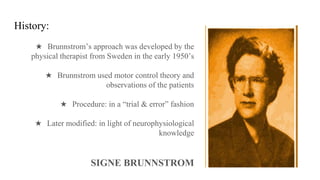
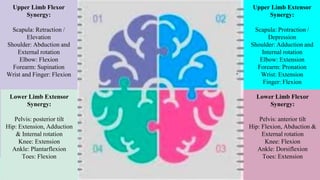
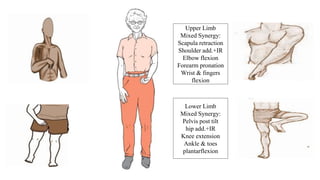
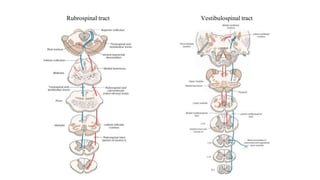
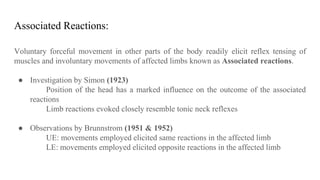
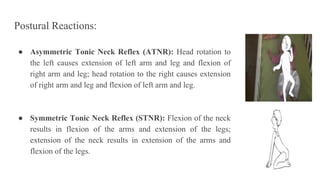
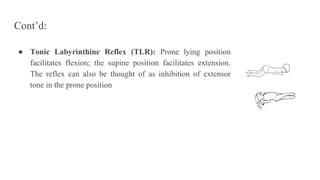
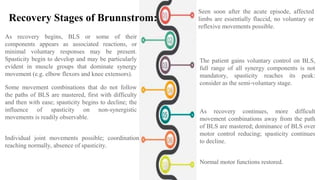
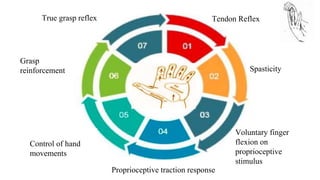
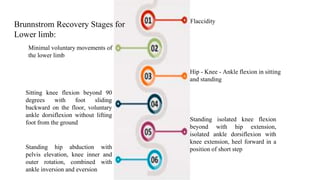
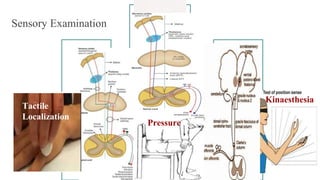
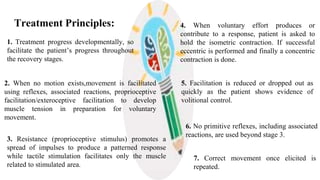
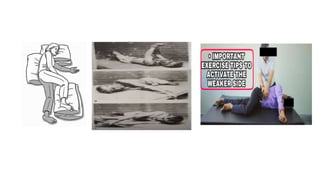
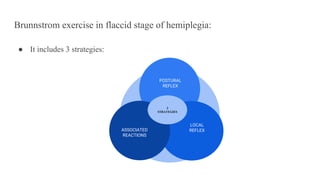
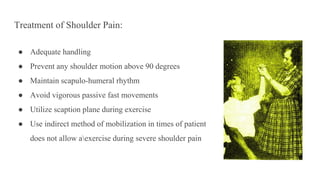
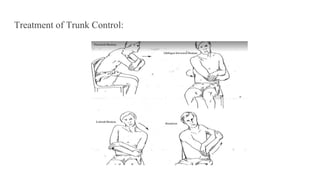
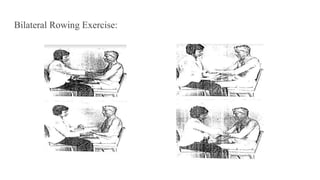
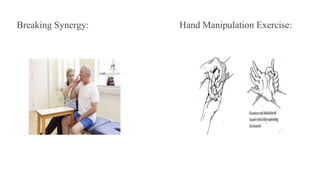
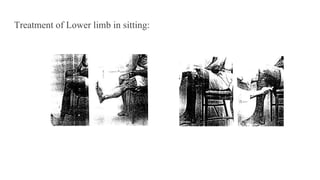
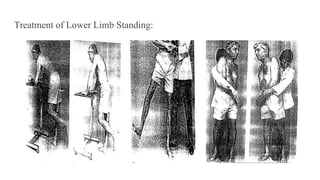


Brunnstrom's approach, developed by Swedish physical therapist Signe Brunnstrom in the 1950s, focuses on recovery following CNS injuries, particularly from stroke, and outlines a sequence of stages highlighting the evolution of motor control. Key treatment principles emphasize the use of associated reactions, synergies, and sensory techniques to promote voluntary movement and recovery through structured stages. Evidence from studies indicates effectiveness in rehabilitation strategies, notably in improving hand function post-stroke through methods like Brunnstrom hand manipulation.


