A NETWORK CONSISTS OF TWO OR MORE COMPUTERS THAT ARE LINKED
IN ORDER TO SHARE RESOURCES (SUCH AS PRINTERS AND CDS), EXCHANGE
FILES, OR ALLOW ELECTRONIC COMMUNICATIONS. THE COMPUTERS ON
A NETWORK MAY BE LINKED THROUGH CABLES, TELEPHONE LINES, RADIO
WAVES, SATELLITES, OR INFRARED LIGHT BEAMS.
TYPES OF NETWORK
 LAN(Local Area Network)
 MAN(Local Area Network)
 WAN(Local Area Network)
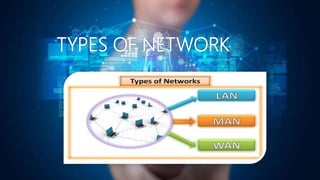
TYPES OF NETWORK
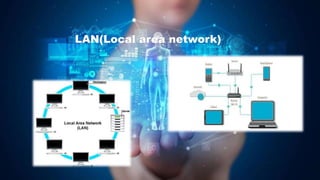
LAN(Local area network)
A LOCAL-AREA NETWORK (LAN) IS A COMPUTER NETWORK THAT SPANS
A RELATIVELY SMALL AREA. MOST OFTEN, A LAN IS CONFINED TO A
SINGLE ROOM, BUILDING OR GROUP OF BUILDINGS, HOWEVER,
ONE LAN CAN BE CONNECTED TO OTHER LANS OVER ANY DISTANCE VIA
TELEPHONE LINES AND RADIO WAVES.
LAN(Local area network)
ADVANTAGES
• Resource Sharing
• Software Applications Sharing
• Easy and Cheap
• Communication
• Centralized Data
• Data Security
• Internet Sharing
DISADVANTAGES
• High Setup Cost
• Privacy Violations
• Data Security Threat
• LAN Maintenance Job
• Covers Limited Area
MAN(metropolitan area network)
A metropolitan area network (MAN) is a network that
interconnects users with computer resources in a geographic
area or region larger than that covered by even a large local
area network (LAN) but smaller than the area covered by a
wide area network (WAN).
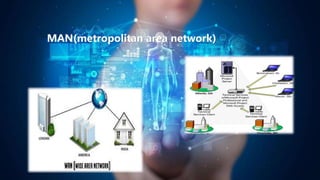
MAN(metropolitan area network)
ADVANTAGES:
DISADVANTAGES:
 It utilizes drawbacks of both LAN and WAN to provide larger and controllable computer networ
 MAN requires fewer resources compare to WAN. This saves the implementation cost.
 It helps people interface fast LANS together. This is due to easy implementation of links.
 It provides higher security compare to WAN.
 It helps in cost effective sharing of common resources such as printers etc.
 Like LAN and WAN, it also offers centralized management of data and files.
 It is difficult to manage the network once it becomes large.
 It is difficult to make the system secure from hackers and industrial espionage.
 Network installation requires skilled technicians and network administrators.
 This increases overall installation and management costs.
 It requires more cables for connection from one place to the other compare to LAN.
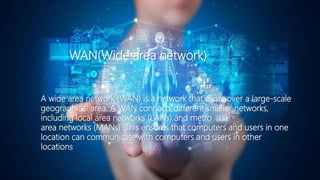
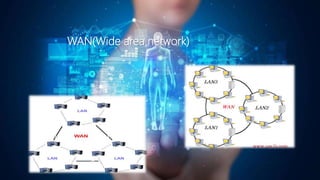
WAN(Wide area network)
A wide area network (WAN) is a network that exists over a large-scale
geographical area. A WAN connects different smaller networks,
including local area networks (LANs) and metro
area networks (MANs). This ensures that computers and users in one
location can communicate with computers and users in other
locations
WAN(Wide area network)
ADVANTAGES
DISADVANTAGES:
 WAN offers privacy and security. As a WAN provides a dedicated, direct and encrypted
connection for data transmission, it increases the security of the system.
 Update files and data are available on the servers of various software companies. So, all the
users and administrators get updated version of data or files within a few seconds.
 Sharing of software and resources can happen over long distances just like in a LAN.
 We need secure connections over a WAN. Thus our computers/networks need firewalls and
anti-virus software. Such requirements need to upgrade regularly as the threats become more
pernicious.
 Disconnection and server connection issues are also frequent, especially in remote areas.
 The setup cost for WANs is high as it requires the purchase of routers, switches and extra
security software. Such setups also have high maintenance costs.

Network

  • 1.
    A NETWORK CONSISTSOF TWO OR MORE COMPUTERS THAT ARE LINKED IN ORDER TO SHARE RESOURCES (SUCH AS PRINTERS AND CDS), EXCHANGE FILES, OR ALLOW ELECTRONIC COMMUNICATIONS. THE COMPUTERS ON A NETWORK MAY BE LINKED THROUGH CABLES, TELEPHONE LINES, RADIO WAVES, SATELLITES, OR INFRARED LIGHT BEAMS.
  • 2.
    TYPES OF NETWORK LAN(Local Area Network)  MAN(Local Area Network)  WAN(Local Area Network)
  • 3.
  • 4.
    LAN(Local area network) ALOCAL-AREA NETWORK (LAN) IS A COMPUTER NETWORK THAT SPANS A RELATIVELY SMALL AREA. MOST OFTEN, A LAN IS CONFINED TO A SINGLE ROOM, BUILDING OR GROUP OF BUILDINGS, HOWEVER, ONE LAN CAN BE CONNECTED TO OTHER LANS OVER ANY DISTANCE VIA TELEPHONE LINES AND RADIO WAVES.
  • 5.
  • 6.
    ADVANTAGES • Resource Sharing •Software Applications Sharing • Easy and Cheap • Communication • Centralized Data • Data Security • Internet Sharing DISADVANTAGES • High Setup Cost • Privacy Violations • Data Security Threat • LAN Maintenance Job • Covers Limited Area
  • 7.
    MAN(metropolitan area network) Ametropolitan area network (MAN) is a network that interconnects users with computer resources in a geographic area or region larger than that covered by even a large local area network (LAN) but smaller than the area covered by a wide area network (WAN).
  • 8.
  • 9.
    ADVANTAGES: DISADVANTAGES:  It utilizesdrawbacks of both LAN and WAN to provide larger and controllable computer networ  MAN requires fewer resources compare to WAN. This saves the implementation cost.  It helps people interface fast LANS together. This is due to easy implementation of links.  It provides higher security compare to WAN.  It helps in cost effective sharing of common resources such as printers etc.  Like LAN and WAN, it also offers centralized management of data and files.  It is difficult to manage the network once it becomes large.  It is difficult to make the system secure from hackers and industrial espionage.  Network installation requires skilled technicians and network administrators.  This increases overall installation and management costs.  It requires more cables for connection from one place to the other compare to LAN.
  • 10.
    WAN(Wide area network) Awide area network (WAN) is a network that exists over a large-scale geographical area. A WAN connects different smaller networks, including local area networks (LANs) and metro area networks (MANs). This ensures that computers and users in one location can communicate with computers and users in other locations
  • 11.
  • 12.
    ADVANTAGES DISADVANTAGES:  WAN offersprivacy and security. As a WAN provides a dedicated, direct and encrypted connection for data transmission, it increases the security of the system.  Update files and data are available on the servers of various software companies. So, all the users and administrators get updated version of data or files within a few seconds.  Sharing of software and resources can happen over long distances just like in a LAN.  We need secure connections over a WAN. Thus our computers/networks need firewalls and anti-virus software. Such requirements need to upgrade regularly as the threats become more pernicious.  Disconnection and server connection issues are also frequent, especially in remote areas.  The setup cost for WANs is high as it requires the purchase of routers, switches and extra security software. Such setups also have high maintenance costs.