@robinhaw
	

19th July 2013 
	

Network Biology SIG Meeting www.reactome.org 	


Reactome Knowledgebase and Functional Interaction (FI)
Network Cytoscape Plugin	

Ministry of Economic
Development and Innovation
What is Reactome?	

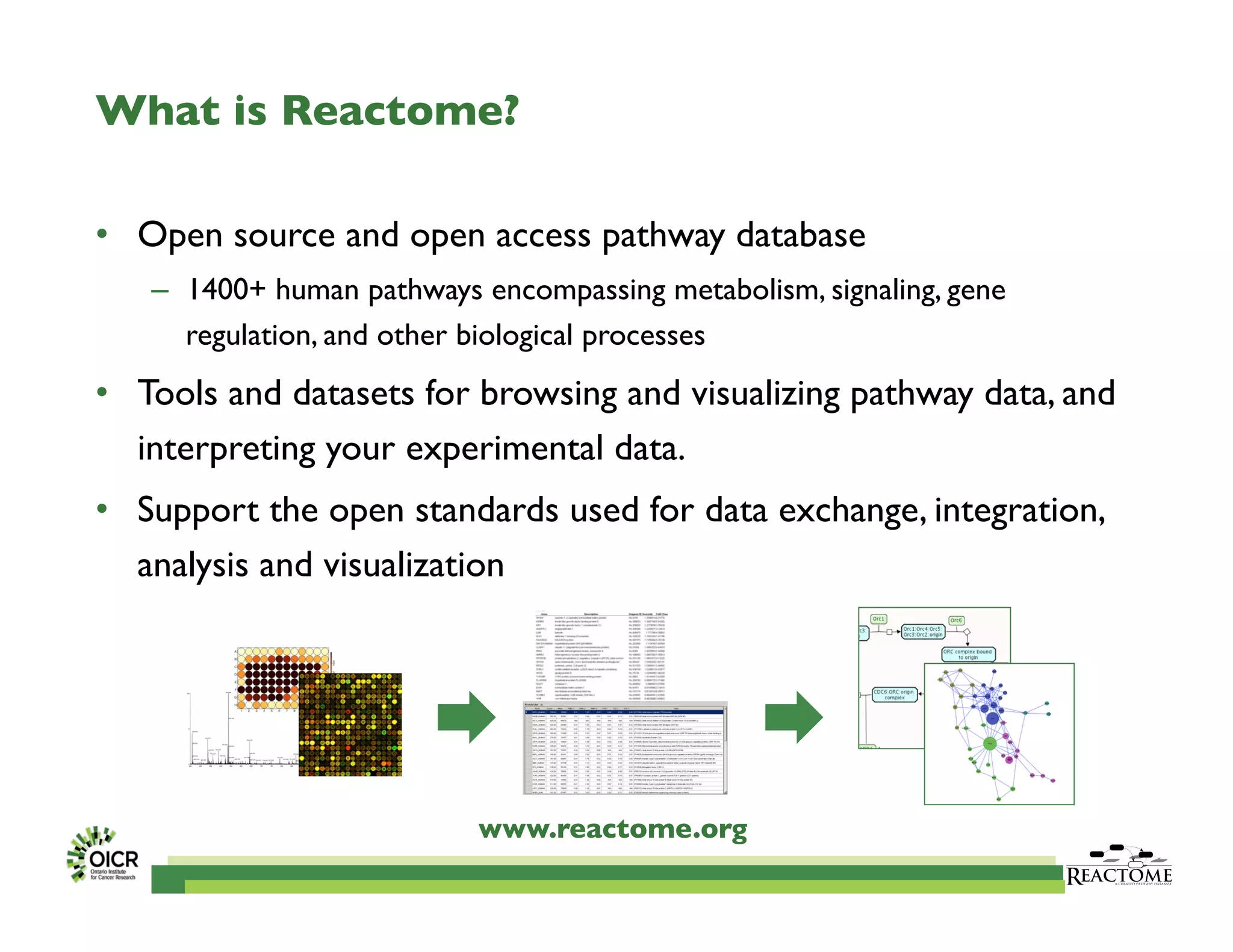
•  Open source and open access pathway database	

–  1400+ human pathways encompassing metabolism, signaling, gene
regulation, and other biological processes 	

•  Tools and datasets for browsing and visualizing pathway data, and
interpreting your experimental data.	

•  Support the open standards used for data exchange, integration,
analysis and visualization	

www.reactome.org 	
  
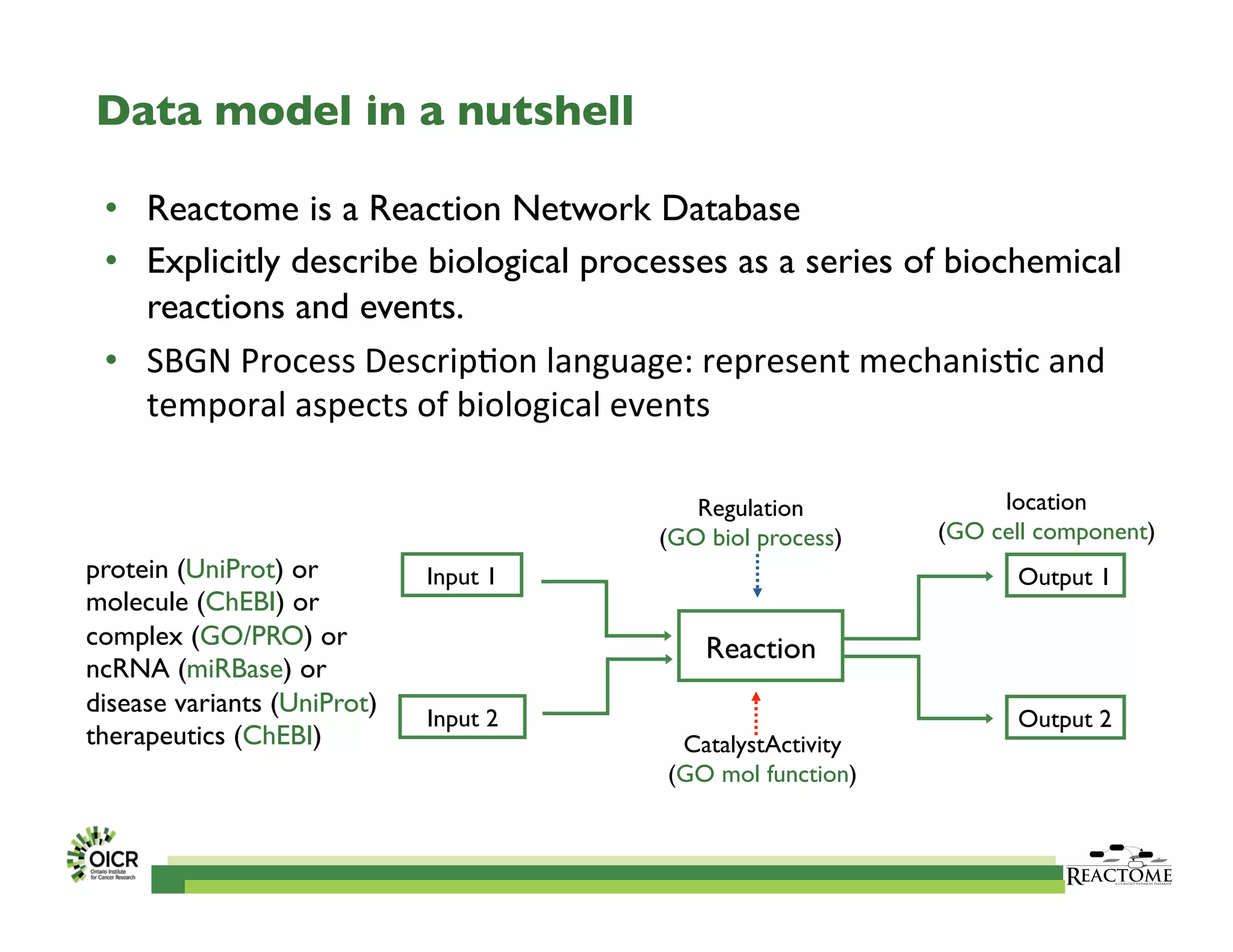
location	

(GO cell component)	

protein (UniProt) or 	

molecule (ChEBI) or 	

complex (GO/PRO) or	

ncRNA (miRBase) or	

disease variants (UniProt)	

therapeutics (ChEBI) CatalystActivity	

(GO mol function)	

Output 1	

Reaction	

Input 1	

Input 2	

 Output 2	

Regulation	

(GO biol process)	

Data model in a nutshell	

•  Reactome is a Reaction Network Database	

•  Explicitly describe biological processes as a series of biochemical
reactions and events.	

•  SBGN	
  Process	
  Descrip/on	
  language:	
  represent	
  mechanis/c	
  and	
  
temporal	
  aspects	
  of	
  biological	
  events
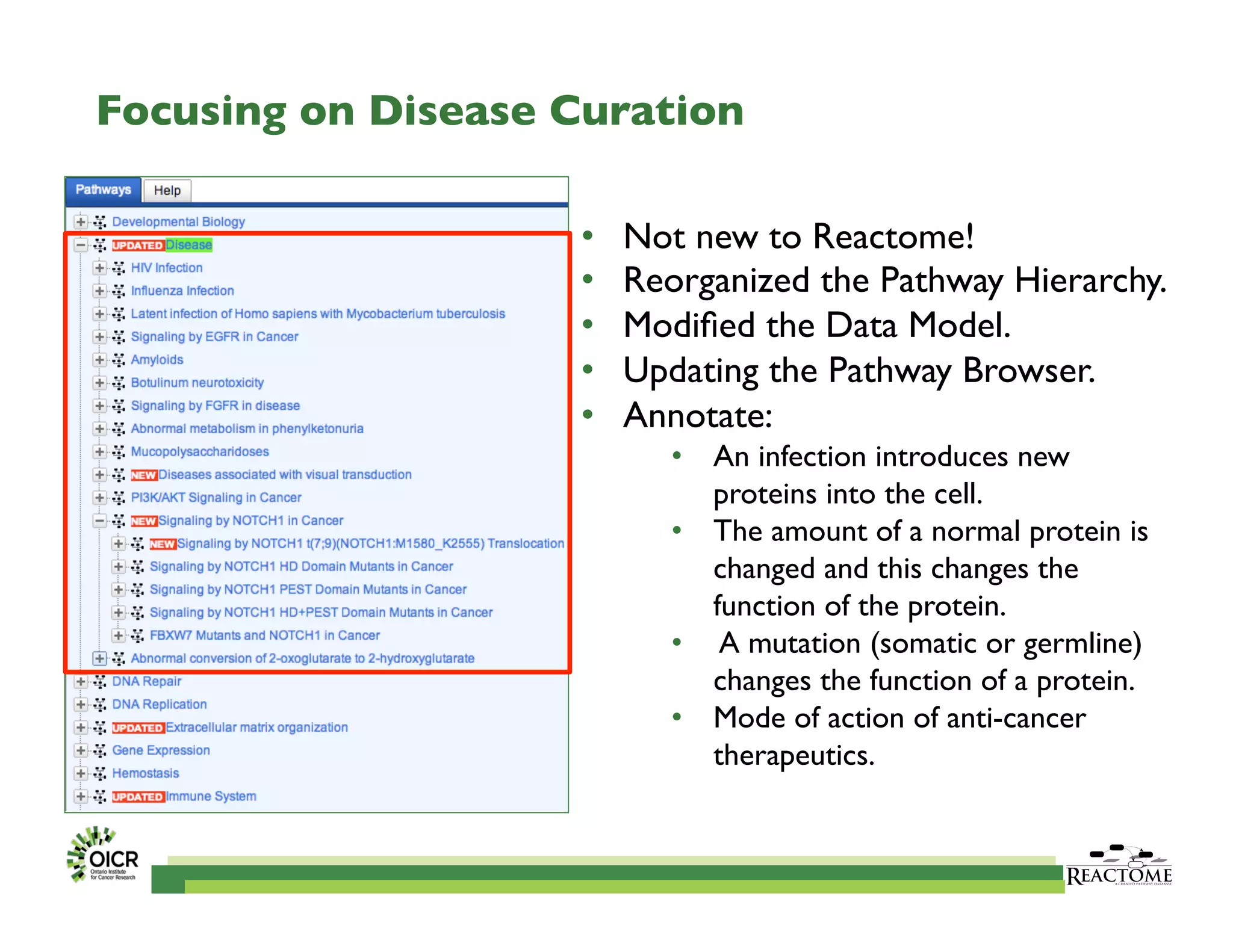
•  Not new to Reactome!	

•  Reorganized the Pathway Hierarchy.	

•  Modified the Data Model.	

•  Updating the Pathway Browser.	

•  Annotate:	

•  An infection introduces new
proteins into the cell.	

•  The amount of a normal protein is
changed and this changes the
function of the protein.	

•  A mutation (somatic or germline)
changes the function of a protein.	

•  Mode of action of anti-cancer
therapeutics.	

Focusing on Disease Curation
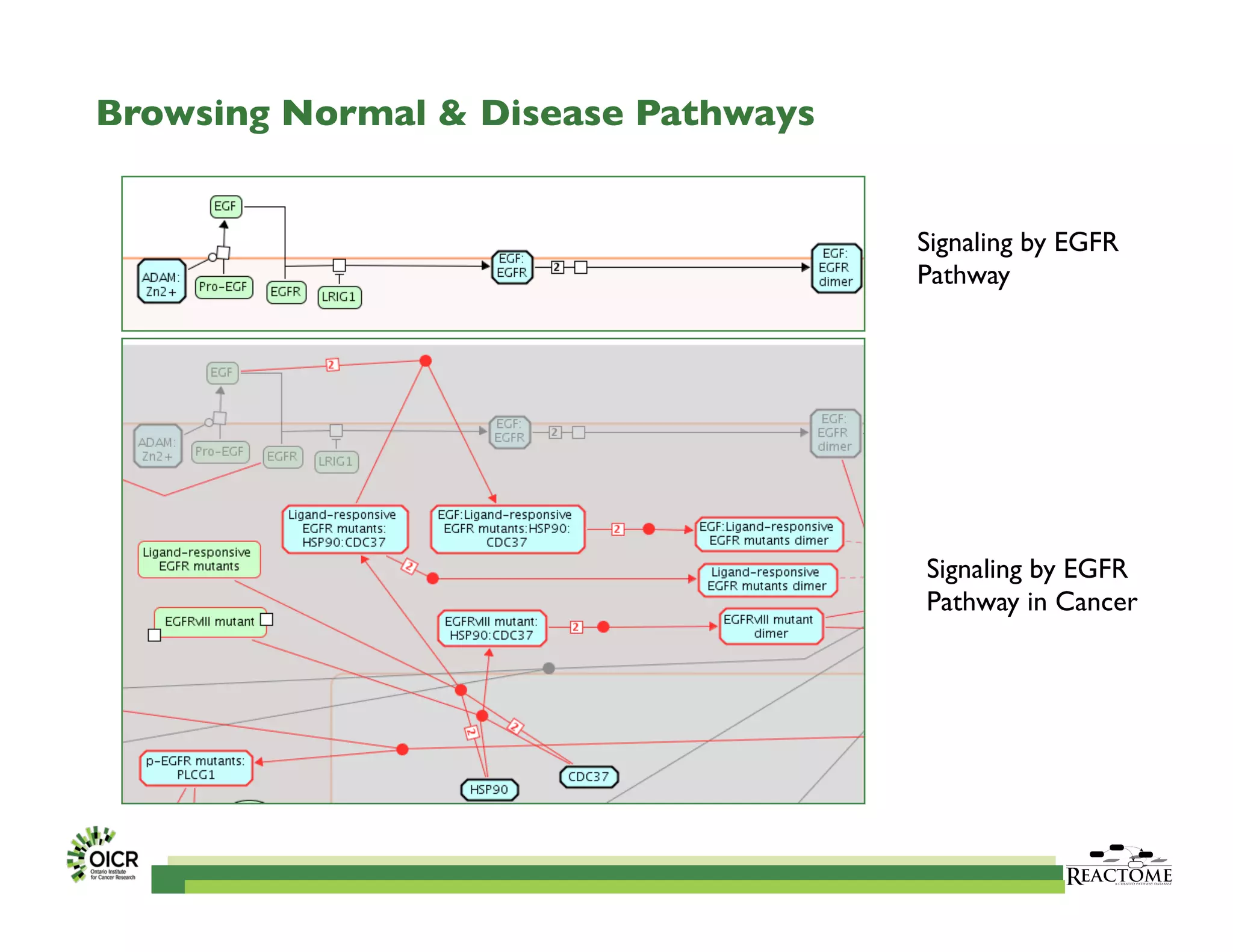
Browsing Normal  Disease Pathways
	

Signaling by EGFR
Pathway in Cancer	

Signaling by EGFR
Pathway
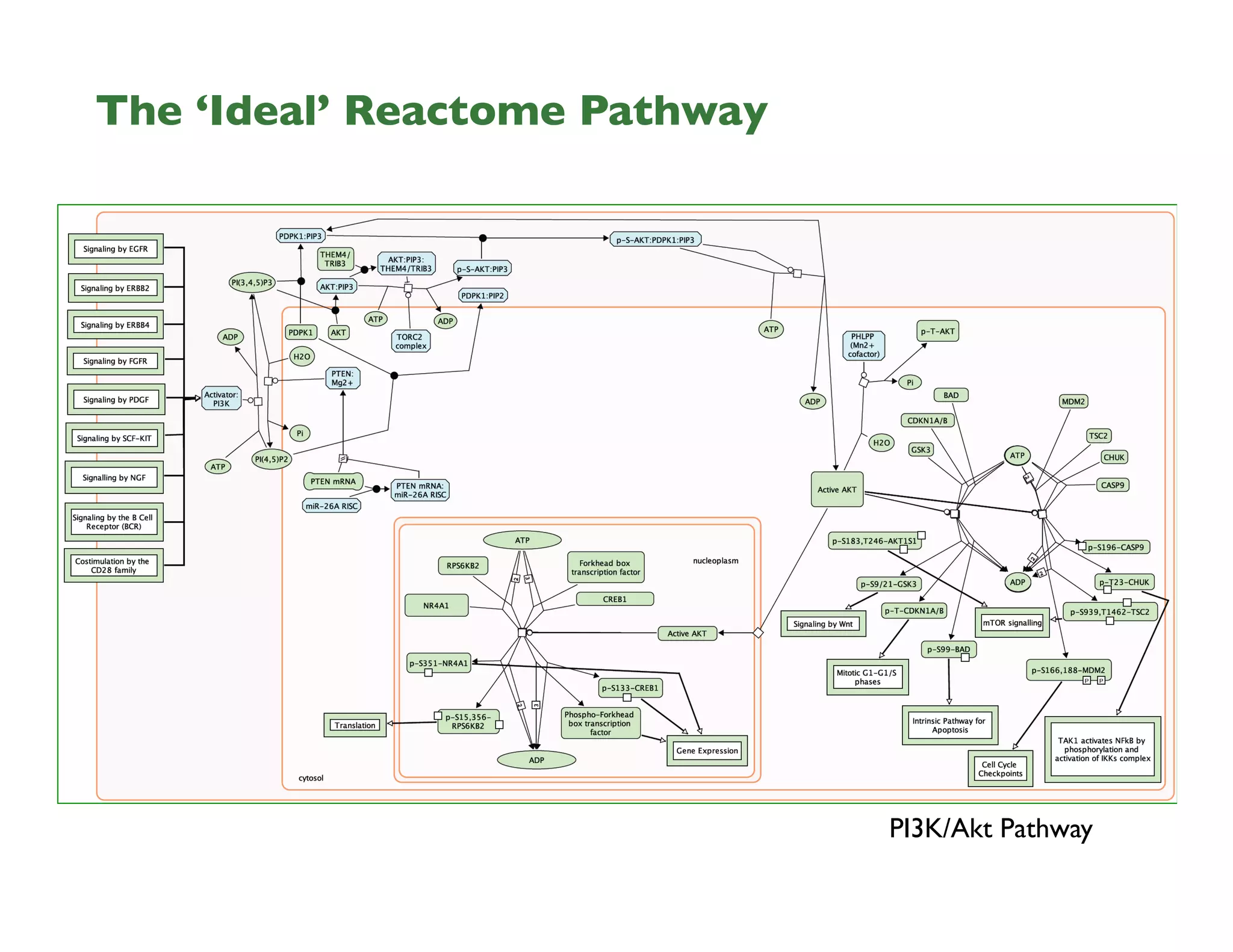
The ‘Ideal’ Reactome Pathway	

PI3K/Akt Pathway
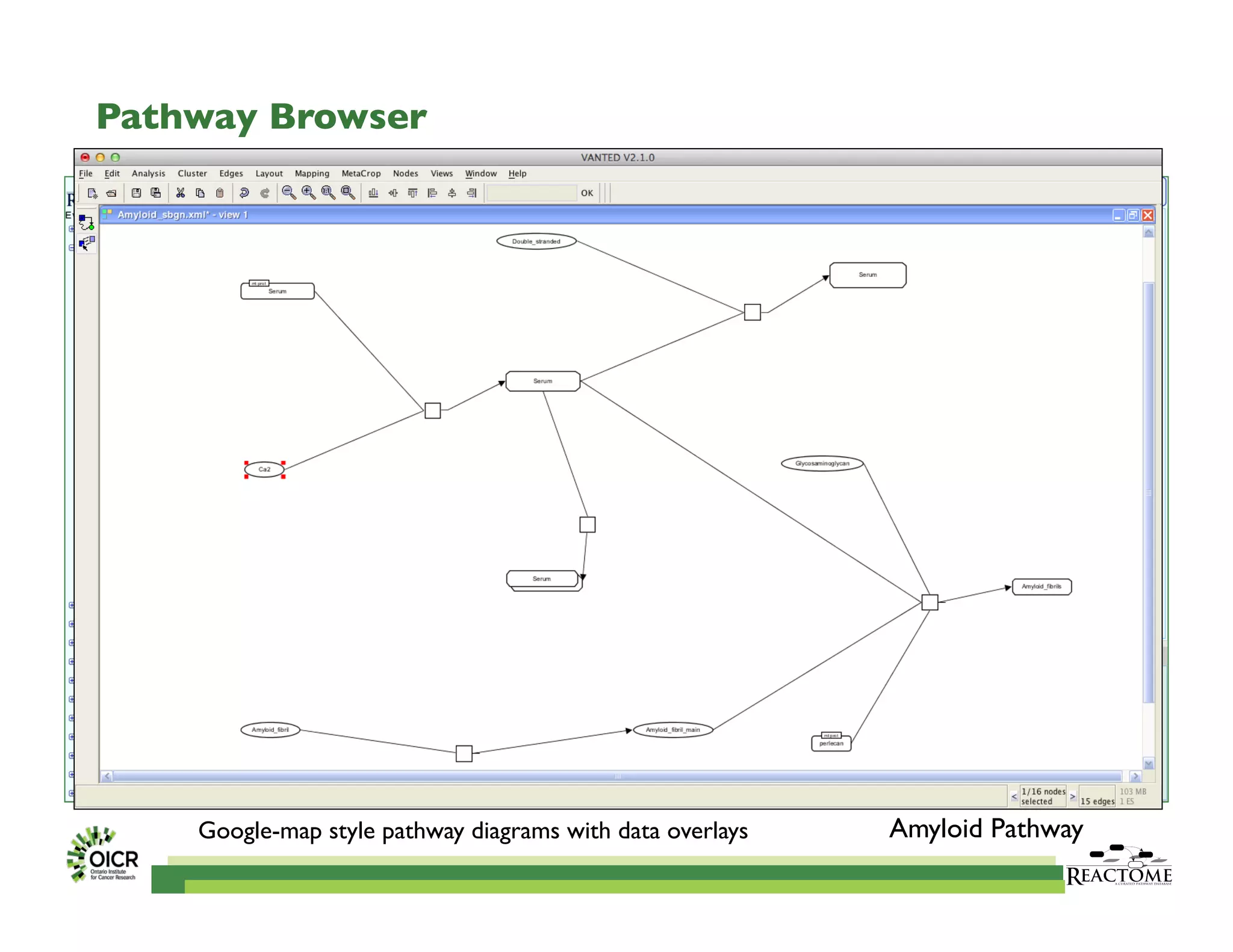
Amyloid Pathway	

Google-map style pathway diagrams with data overlays 	

Pathway Browser
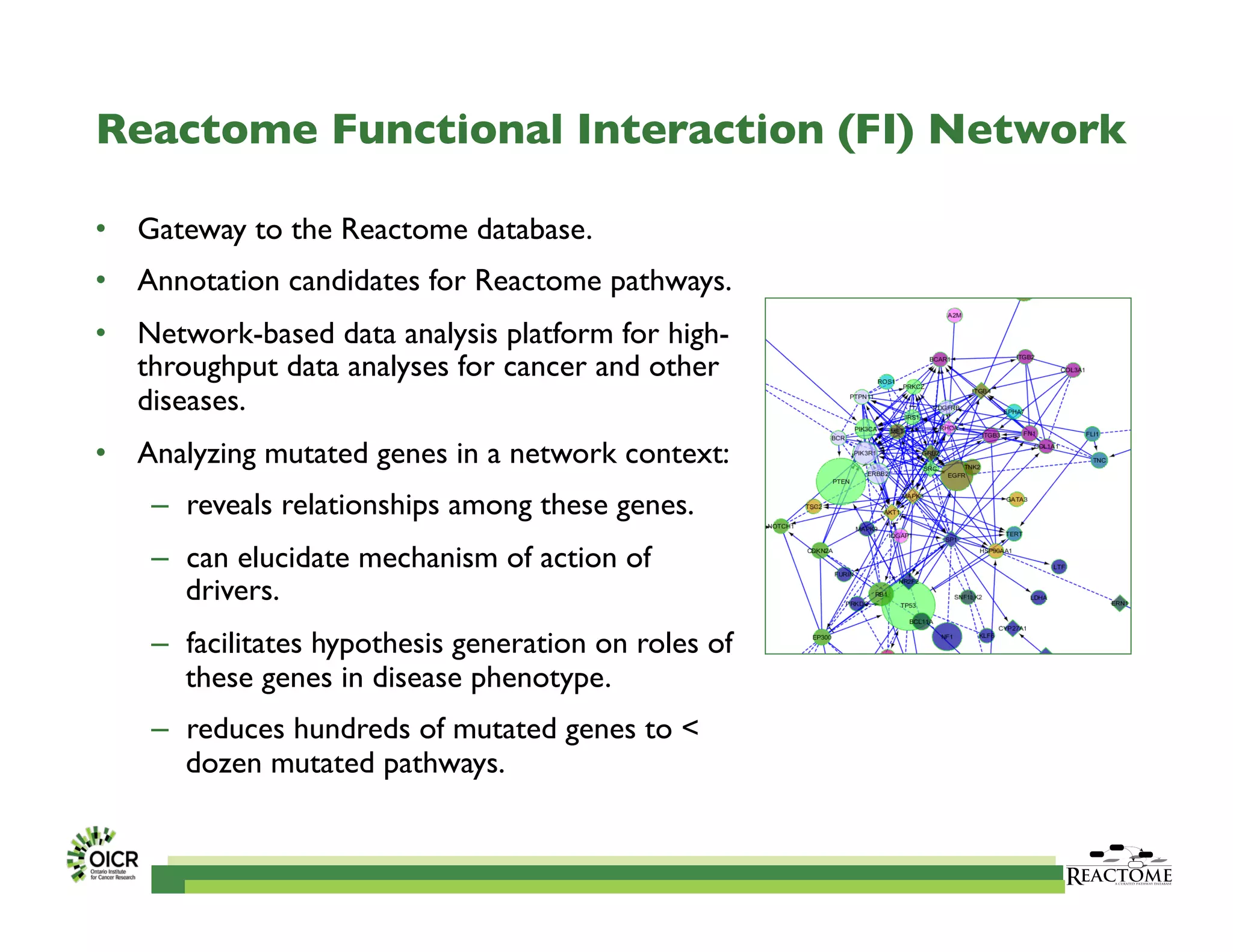
Reactome Functional Interaction (FI) Network	

•  Gateway to the Reactome database.	

•  Annotation candidates for Reactome pathways.	

•  Network-based data analysis platform for high-
throughput data analyses for cancer and other
diseases.	

•  Analyzing mutated genes in a network context:	

–  reveals relationships among these genes.	

–  can elucidate mechanism of action of
drivers.	

–  facilitates hypothesis generation on roles of
these genes in disease phenotype.	

–  reduces hundreds of mutated genes to 
dozen mutated pathways.
Creation of the Reactome FI Network	

Human PPI [45-47] Fly PPI [45]
Domain Interaction [52]
Prieto’s Gene Expression [50]Lee’s Gene Expression [49]
GO BP Sharing [51]Yeast PPI [45]
Worm PPI [45]
PPIs from GeneWays [53]
Data sources for Predicted FIs
Reactome [23]
Panther [60]
KEGG [63]
TRED [64]
NCI-BioCarta [62]
NCI-Nature [62]
CellMap [61]
Data sources for 
Annotated FIs
Naïve Bayes
Classifier
trained by
validated by
Predicted FIs Annotated FIs
Reactome FI
Network
Mouse	
  PPI	
  
2,3	
  
2	
   2	
  
2,3	
  
2	
  
2,3	
  
ENCODE	
  TF/Target	
  
273K interactions
and 11K proteins	
  
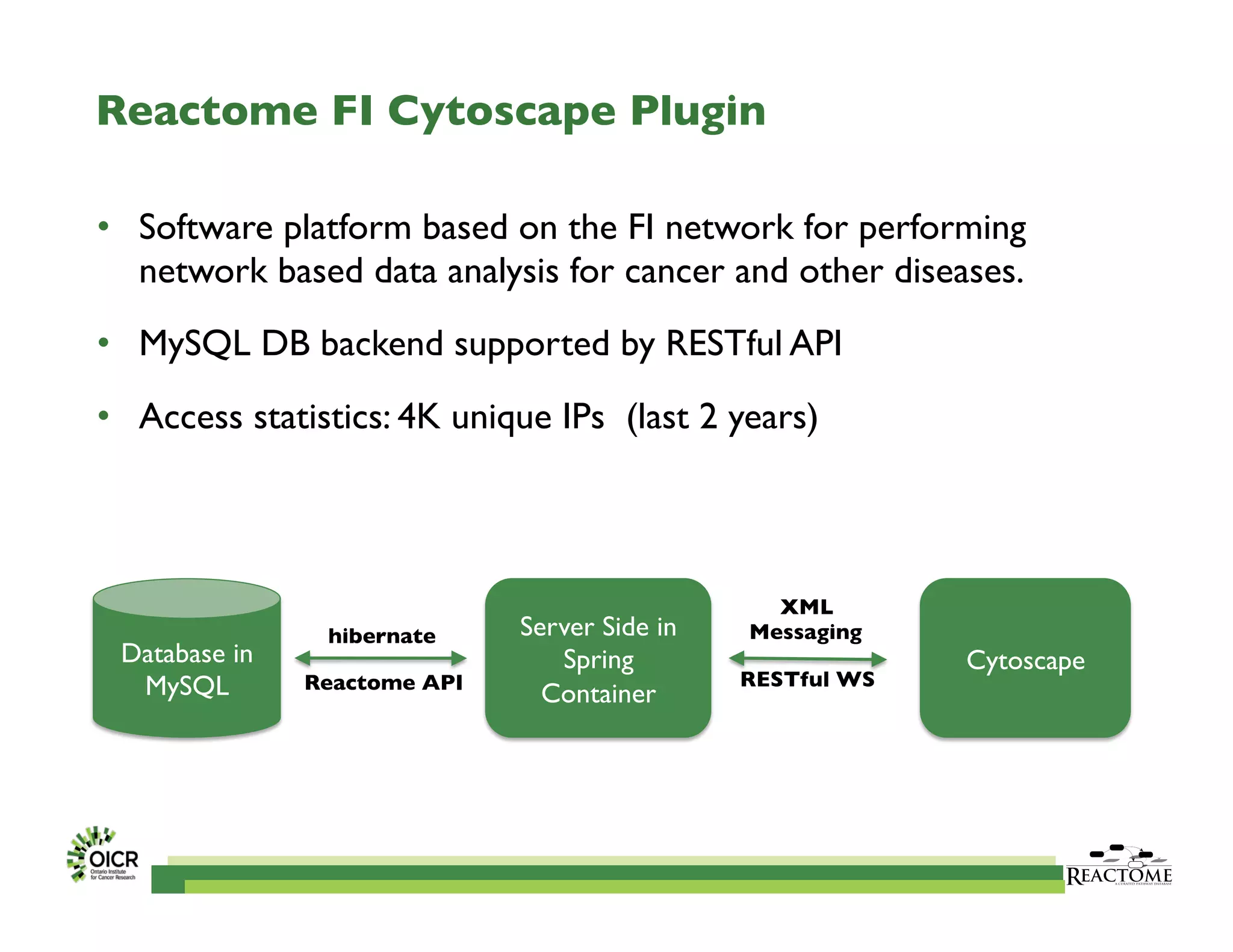
Reactome FI Cytoscape Plugin	

•  Software platform based on the FI network for performing
network based data analysis for cancer and other diseases.	

•  MySQL DB backend supported by RESTful API	

•  Access statistics: 4K unique IPs (last 2 years)	

Server Side in
Spring
Container	

Cytoscape	

Database in
MySQL	

hibernate	

XML 	

Messaging	

Reactome API	

 RESTful WS
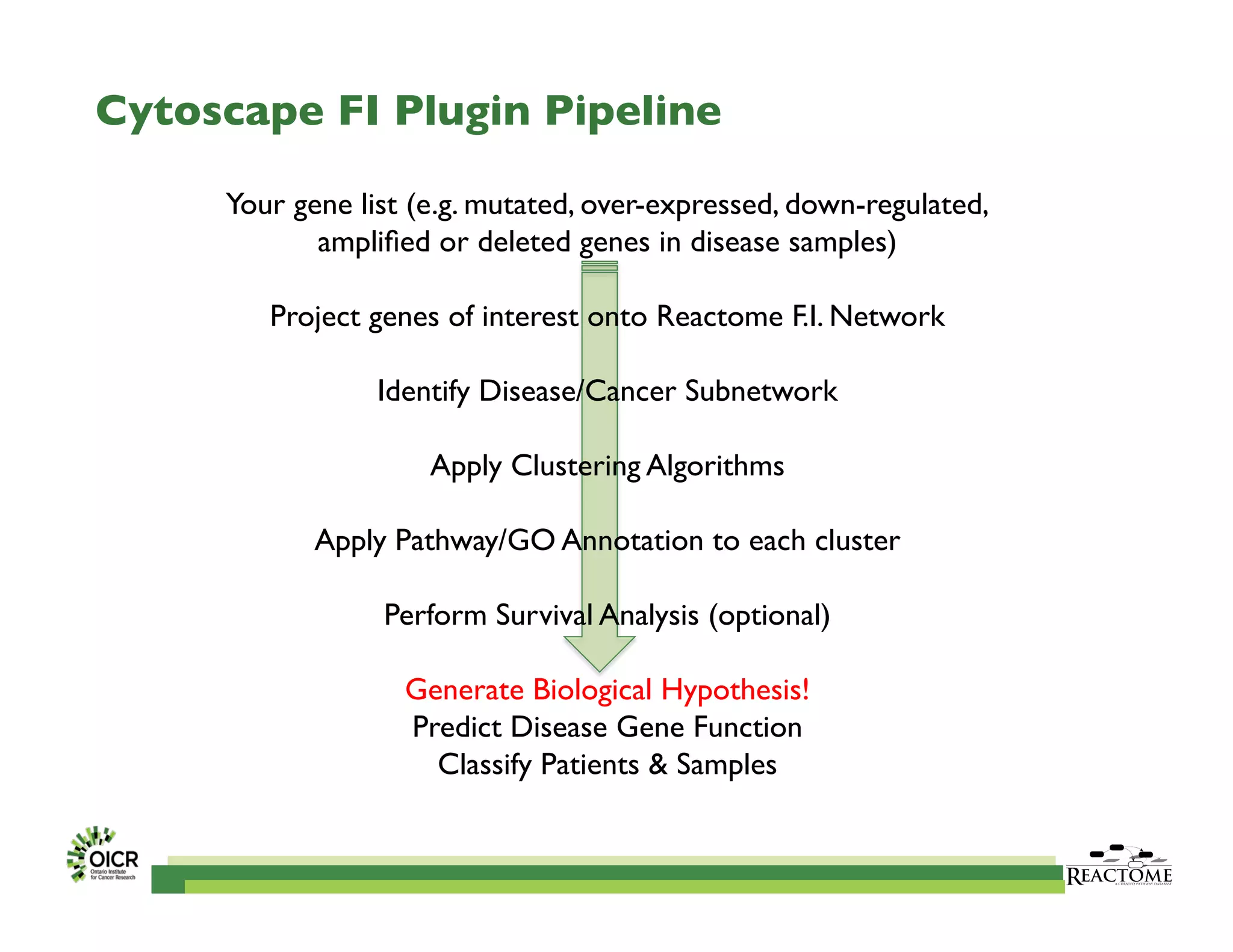
Cytoscape FI Plugin Pipeline	


Your gene list (e.g. mutated, over-expressed, down-regulated,
amplified or deleted genes in disease samples)	


Project genes of interest onto Reactome F.I. Network	


Identify Disease/Cancer Subnetwork	


Apply Clustering Algorithms	


Apply Pathway/GO Annotation to each cluster	


Perform Survival Analysis (optional) 	


Generate Biological Hypothesis!	

Predict Disease Gene Function	

Classify Patients  Samples
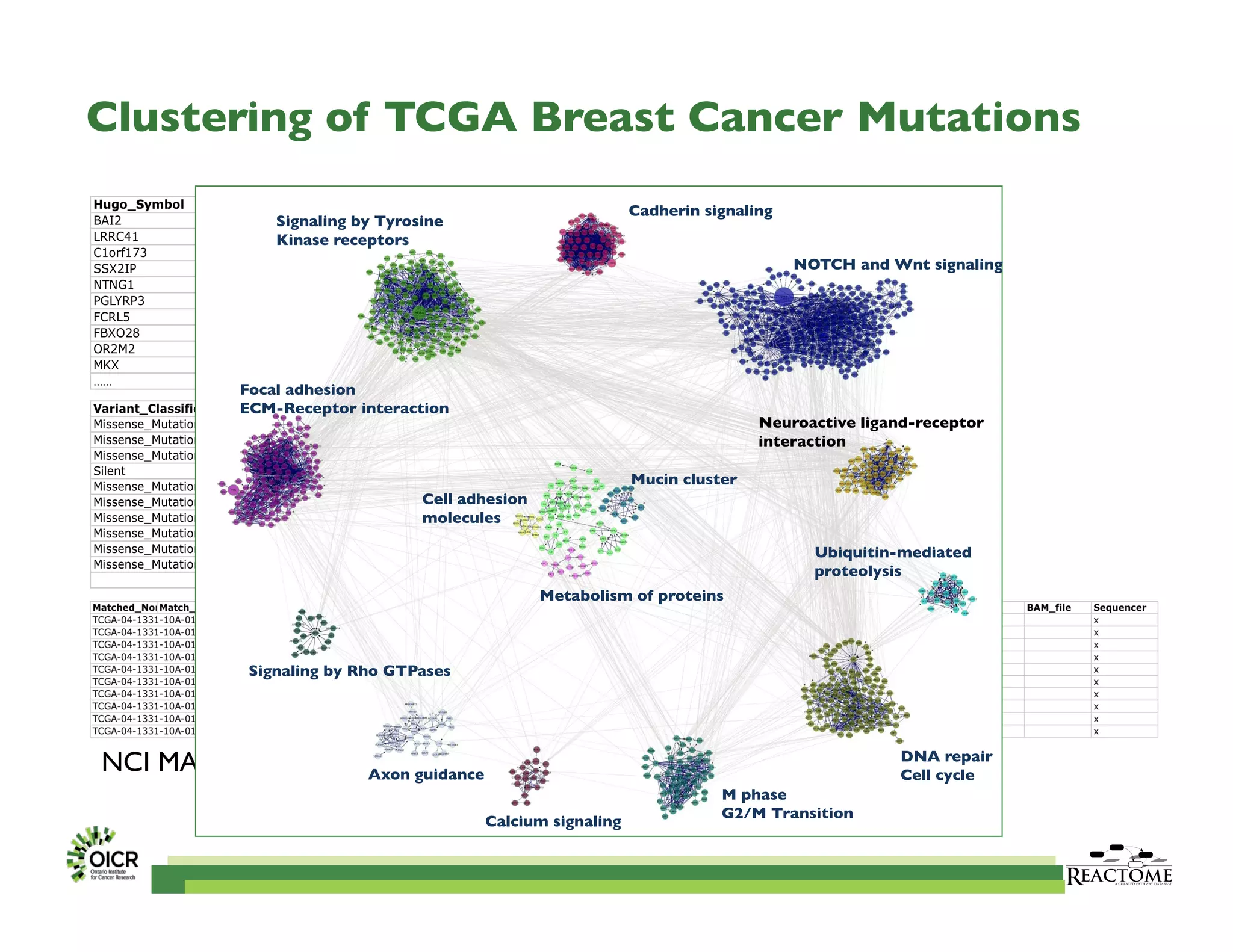
Clustering of TCGA Breast Cancer Mutations	

NCI MAF (mutation annotation file)	

Signaling by Tyrosine 	

Kinase receptors	

NOTCH and Wnt signaling	

Cadherin signaling	

Focal adhesion	

ECM-Receptor interaction 	

Signaling by Rho GTPases	

Axon guidance	

Mucin cluster	

Neuroactive ligand-receptor 	

interaction	

Calcium signaling	

Ubiquitin-mediated 	

proteolysis	

M phase	

G2/M Transition	

Metabolism of proteins	

DNA repair	

Cell cycle	

Cell adhesion 	

molecules
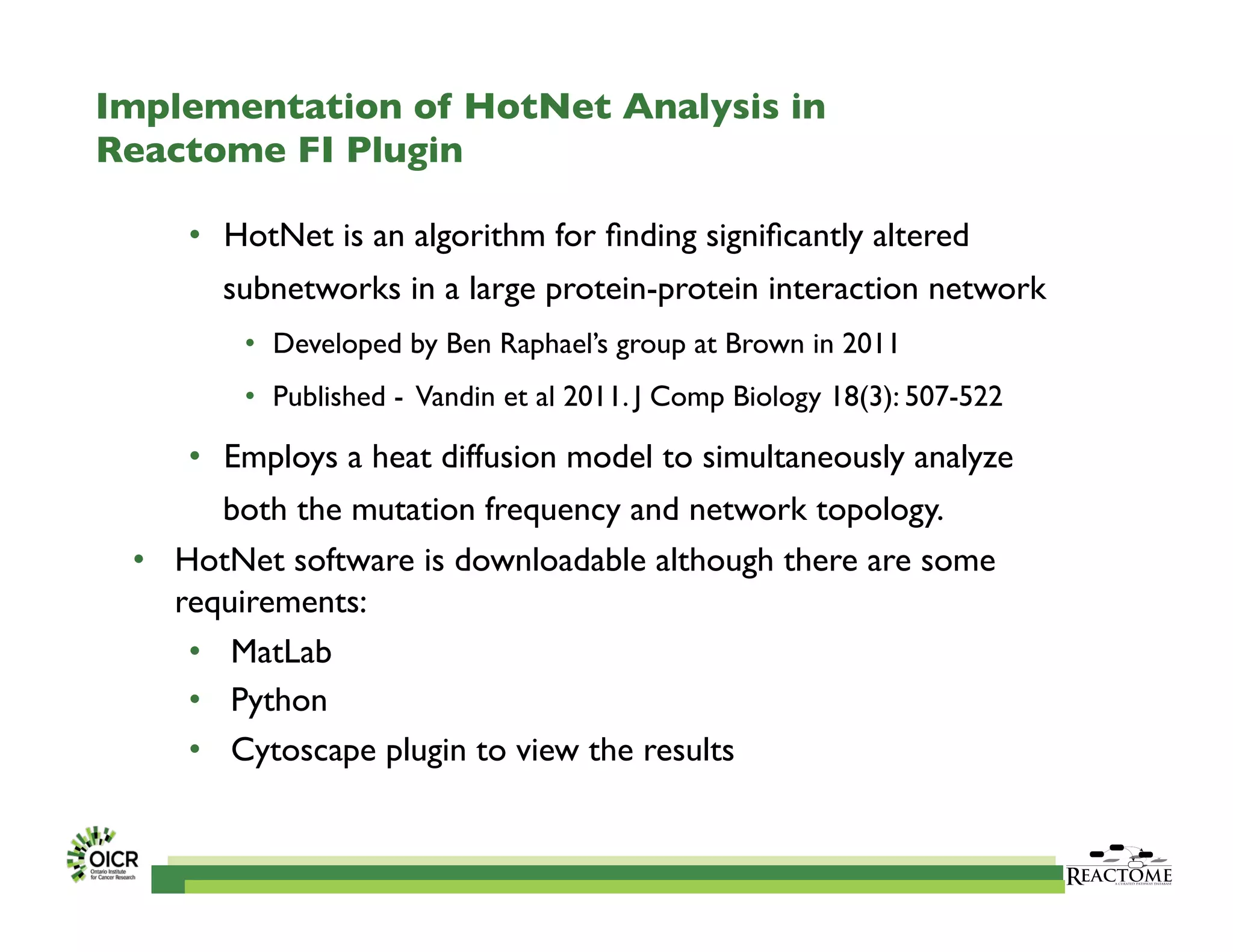
Implementation of HotNet Analysis in
Reactome FI Plugin	

•  HotNet is an algorithm for finding significantly altered
subnetworks in a large protein-protein interaction network	

•  Developed by Ben Raphael’s group at Brown in 2011 	

•  Published - Vandin et al 2011. J Comp Biology 18(3): 507-522	

•  Employs a heat diffusion model to simultaneously analyze
both the mutation frequency and network topology. 	

•  HotNet software is downloadable although there are some
requirements: 	

•  MatLab 	

•  Python	

•  Cytoscape plugin to view the results
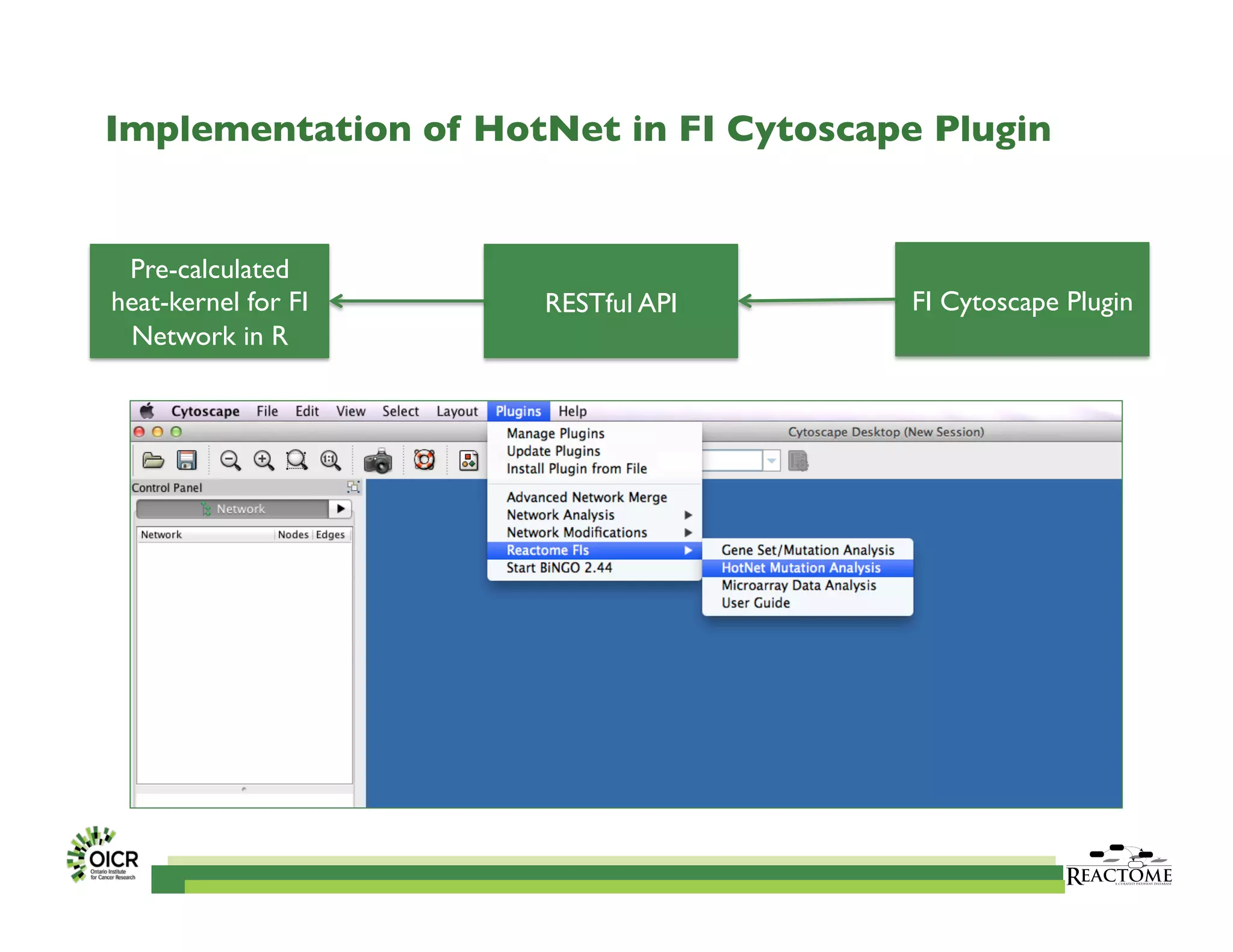
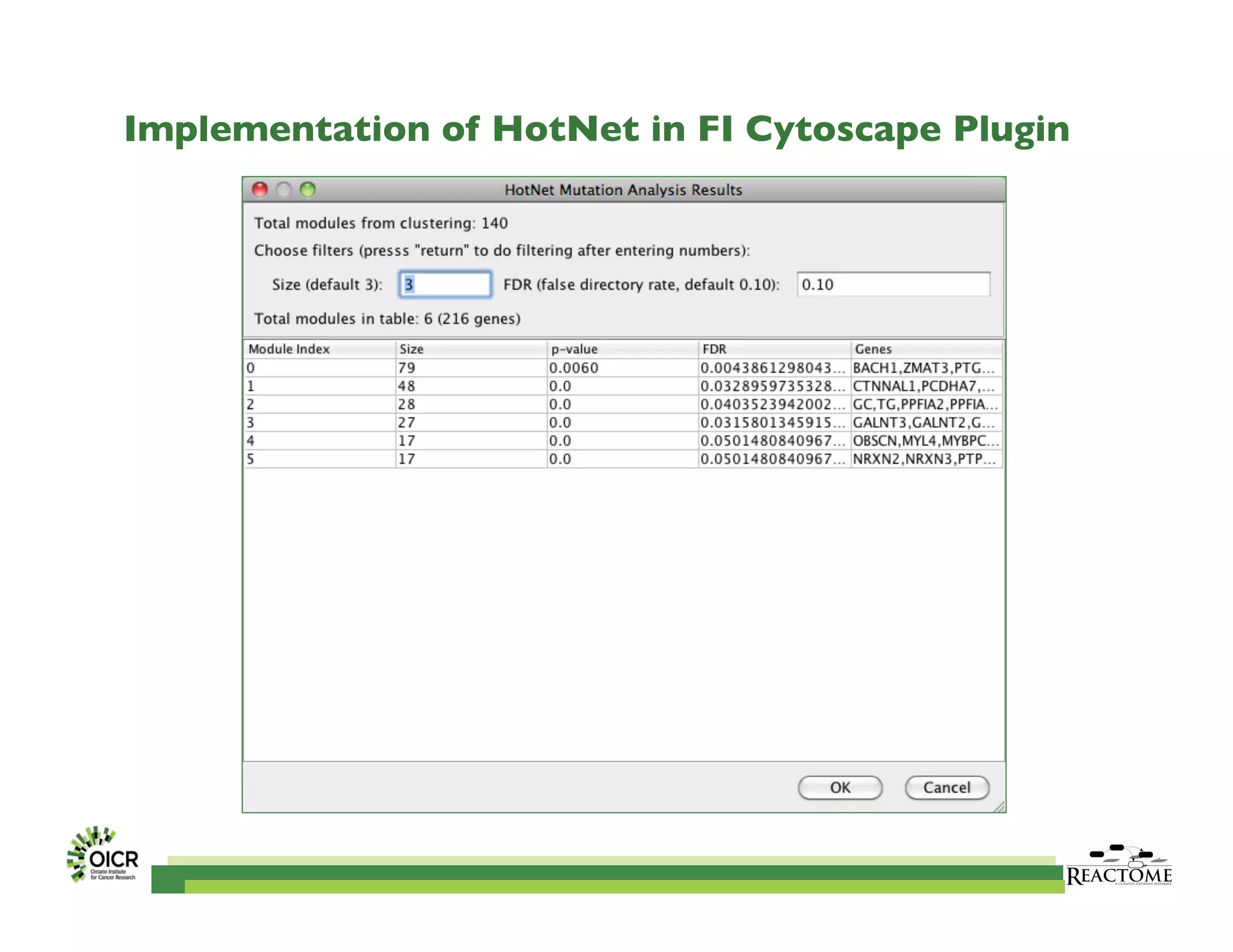
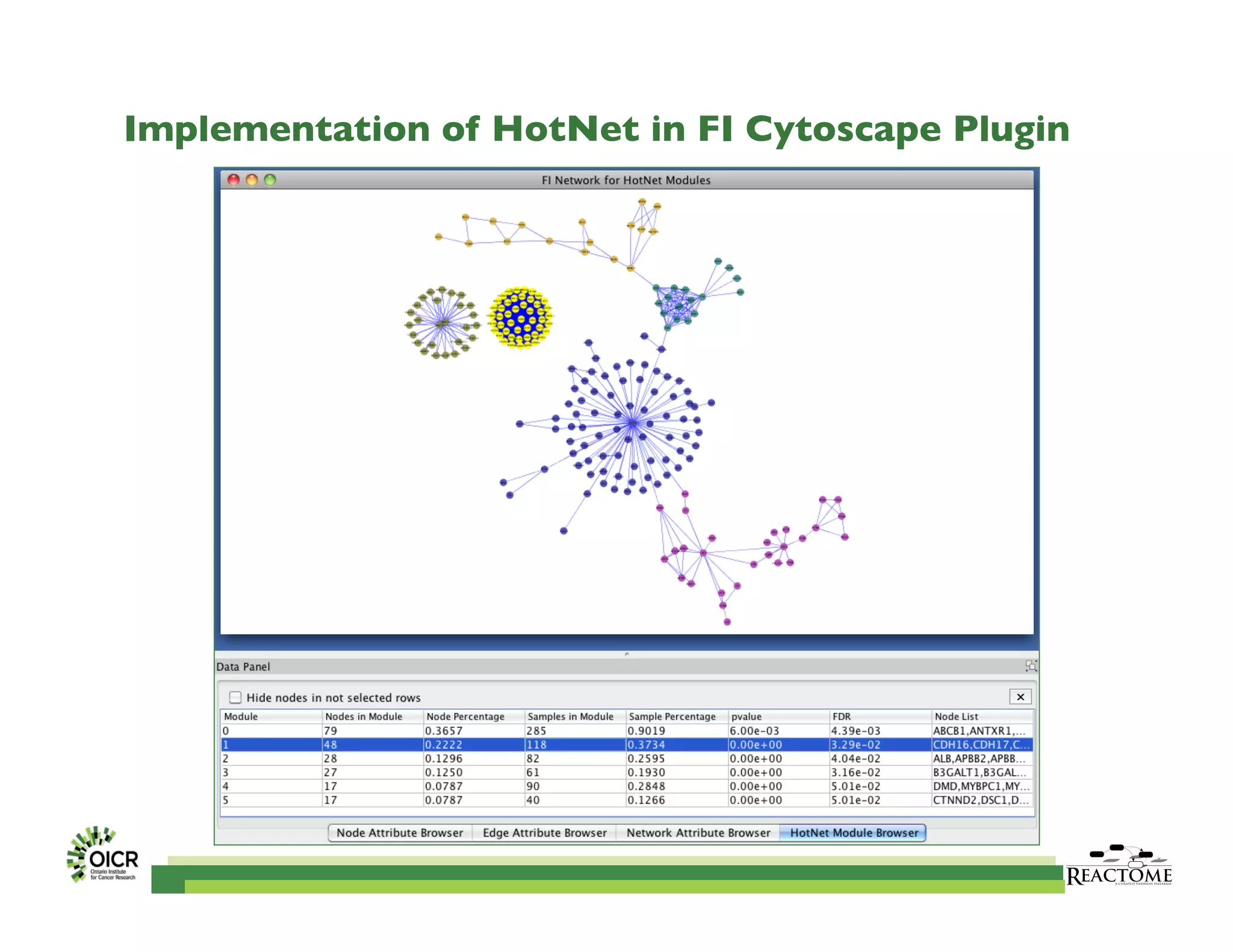
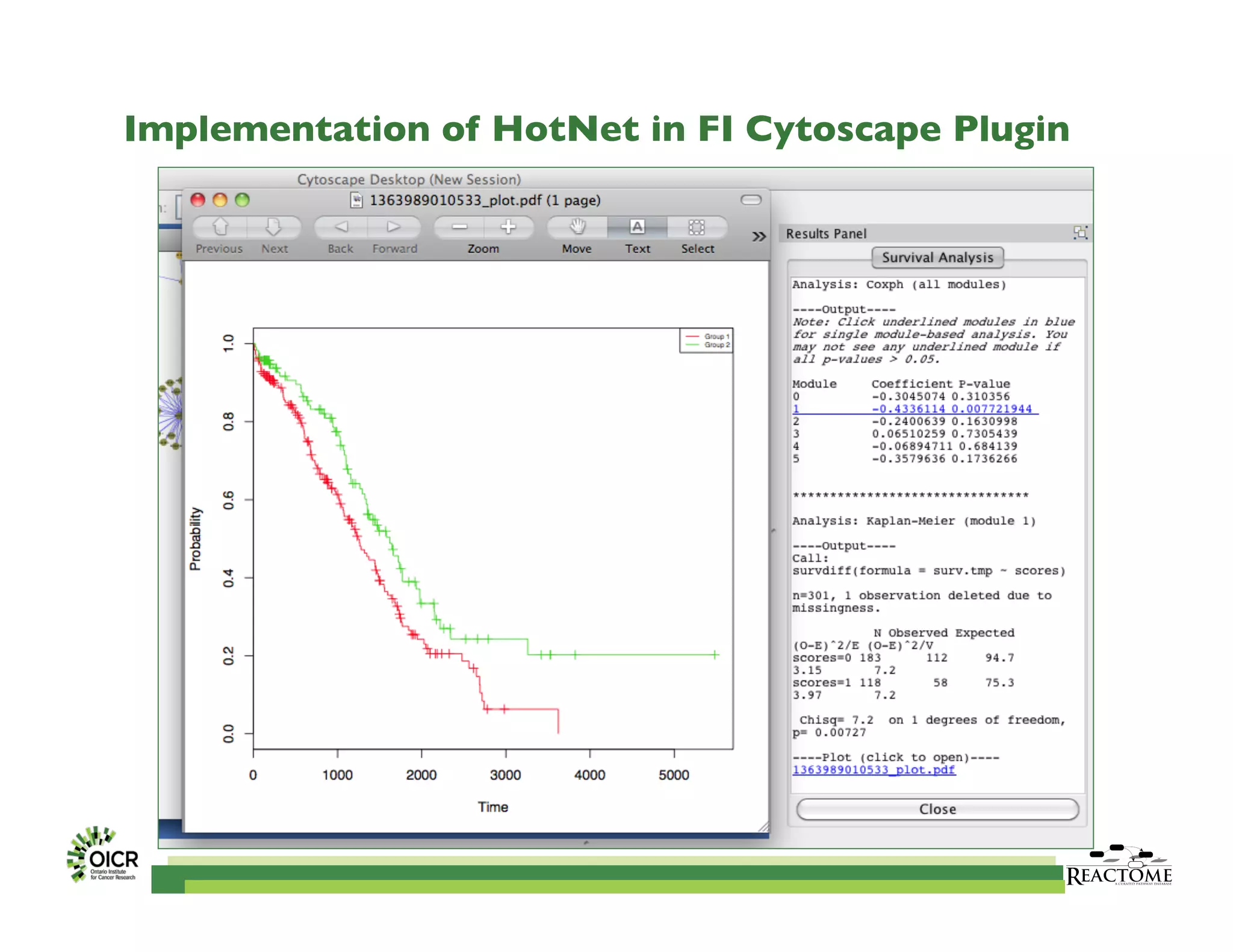
Implementation of HotNet in FI Cytoscape Plugin	

Pre-calculated
heat-kernel for FI
Network in R	

RESTful API	

 FI Cytoscape Plugin
Implementation of HotNet in FI Cytoscape Plugin
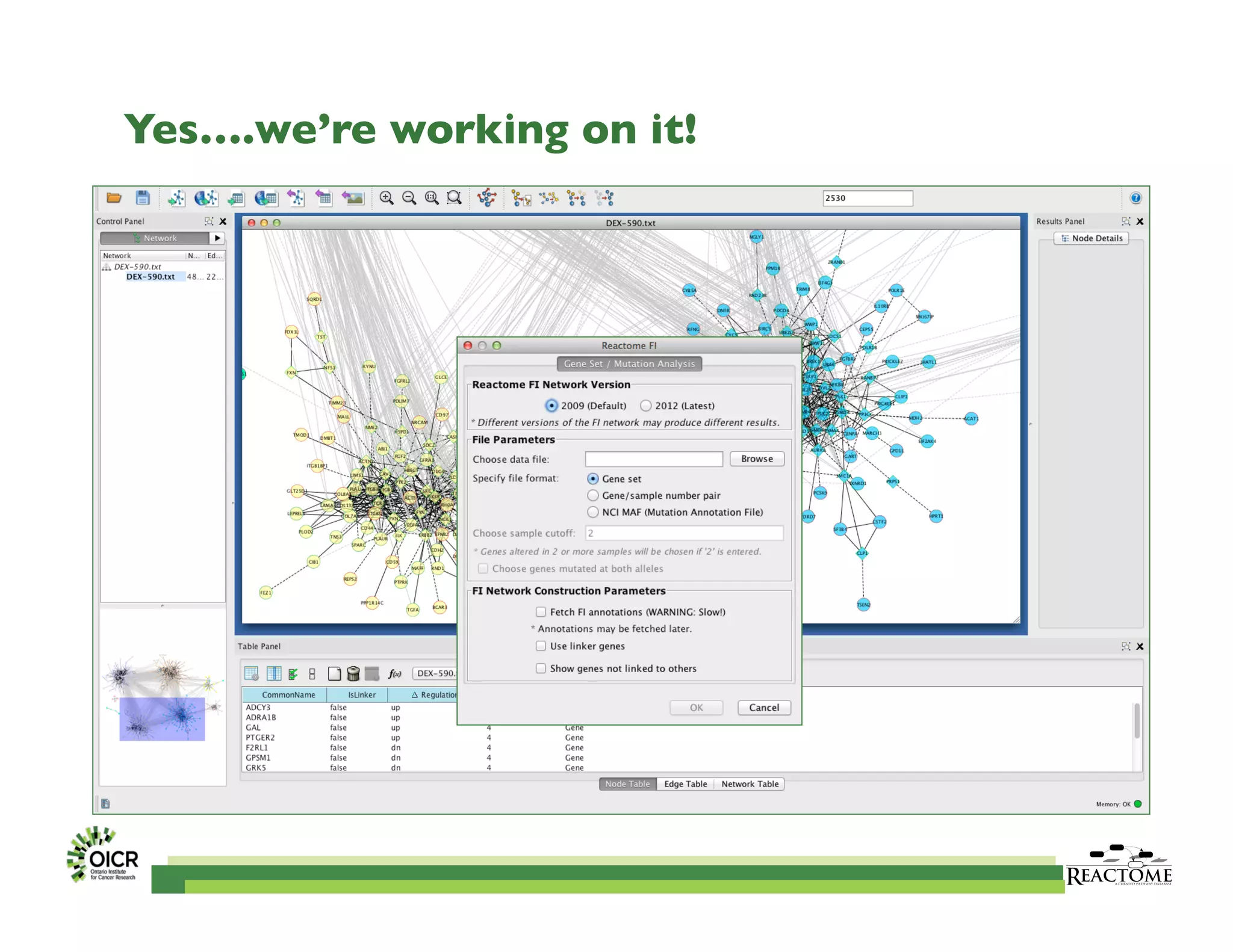
Yes….we’re working on it!
Continuing Priorities	

Reactome Database and Website	

•  Increase the number of curated proteins and other functional entities.	

•  Supplement normal pathways with variant reactions representing disease
states.	

•  Improve annotation consistency and enrich the data model.	

•  Continued support for SBML, SBGN, BioPAX and PSI-MITAB.	

•  Enhance the web site and other resources to meet the needs of a growing and
diverse user community.	

Reactome FI Network and Cytoscape plug-in	

•  Yearly FI Network Update.	

•  Adding miRNA/target interaction data to FI network.	

•  Native Reactome pathway diagrams in Cytoscape.	

•  Porting plugin from v2.8 to 3.	

•  Multiple data type integration.
Conclusions	

•  Reactome is a highly reliable, curated database of biological
pathways.	

•  Web site provides tools and datasets for visualizing pathway data
and interpreting your experimental data.	

•  All data and software are open to public; no licensing required.	

•  Cytoscape FI network plugin provides a powerful way to visualize
and analyze cancer and disease data sets.
Acknowledgements	

Ministry of Economic
Development and Innovation	

•  Marija Orlic-Milacic	

•  Karen Rothfels	

•  Lisa Matthews	

•  Marc Gillespie	

•  Guanming Wu	

•  Irina Kalatskaya	

•  ChristinaYung	

•  Michael Caudy	


•  David Croft	

•  Eric Dawson	

•  Adrian Duong	

•  Phani Garapati	

•  Bijay Jassal 	


•  Steve Jupe	

•  Maulik Kamdar	

•  Bruce May 	


•  Antonio Fabregat Mundo	

•  Veronica Shamovsky	

•  Heeyeon Song	

•  Joel Weiser 	


•  Mark Williams	

•  Henning Hermjakob	

•  Peter D’Eustachio	

•  Lincoln Stein

NetBioSIG2013-Talk Robin Haw

  • 1.
    @robinhaw 19th July 2013 Network Biology SIG Meeting www.reactome.org Reactome Knowledgebase and Functional Interaction (FI) Network Cytoscape Plugin Ministry of Economic Development and Innovation
  • 2.
    What is Reactome? • Open source and open access pathway database –  1400+ human pathways encompassing metabolism, signaling, gene regulation, and other biological processes •  Tools and datasets for browsing and visualizing pathway data, and interpreting your experimental data. •  Support the open standards used for data exchange, integration, analysis and visualization www.reactome.org  
  • 3.
    location (GO cell component) protein(UniProt) or molecule (ChEBI) or complex (GO/PRO) or ncRNA (miRBase) or disease variants (UniProt) therapeutics (ChEBI) CatalystActivity (GO mol function) Output 1 Reaction Input 1 Input 2 Output 2 Regulation (GO biol process) Data model in a nutshell •  Reactome is a Reaction Network Database •  Explicitly describe biological processes as a series of biochemical reactions and events. •  SBGN  Process  Descrip/on  language:  represent  mechanis/c  and   temporal  aspects  of  biological  events
  • 4.
    •  Not newto Reactome! •  Reorganized the Pathway Hierarchy. •  Modified the Data Model. •  Updating the Pathway Browser. •  Annotate: •  An infection introduces new proteins into the cell. •  The amount of a normal protein is changed and this changes the function of the protein. •  A mutation (somatic or germline) changes the function of a protein. •  Mode of action of anti-cancer therapeutics. Focusing on Disease Curation
  • 5.
    Browsing Normal Disease Pathways Signaling by EGFR Pathway in Cancer Signaling by EGFR Pathway
  • 6.
    The ‘Ideal’ ReactomePathway PI3K/Akt Pathway
  • 7.
    Amyloid Pathway Google-map stylepathway diagrams with data overlays Pathway Browser
  • 8.
    Reactome Functional Interaction(FI) Network •  Gateway to the Reactome database. •  Annotation candidates for Reactome pathways. •  Network-based data analysis platform for high- throughput data analyses for cancer and other diseases. •  Analyzing mutated genes in a network context: –  reveals relationships among these genes. –  can elucidate mechanism of action of drivers. –  facilitates hypothesis generation on roles of these genes in disease phenotype. –  reduces hundreds of mutated genes to dozen mutated pathways.
  • 9.
    Creation of theReactome FI Network Human PPI [45-47] Fly PPI [45] Domain Interaction [52] Prieto’s Gene Expression [50]Lee’s Gene Expression [49] GO BP Sharing [51]Yeast PPI [45] Worm PPI [45] PPIs from GeneWays [53] Data sources for Predicted FIs Reactome [23] Panther [60] KEGG [63] TRED [64] NCI-BioCarta [62] NCI-Nature [62] CellMap [61] Data sources for Annotated FIs Naïve Bayes Classifier trained by validated by Predicted FIs Annotated FIs Reactome FI Network Mouse  PPI   2,3   2   2   2,3   2   2,3   ENCODE  TF/Target   273K interactions and 11K proteins  
  • 10.
    Reactome FI CytoscapePlugin •  Software platform based on the FI network for performing network based data analysis for cancer and other diseases. •  MySQL DB backend supported by RESTful API •  Access statistics: 4K unique IPs (last 2 years) Server Side in Spring Container Cytoscape Database in MySQL hibernate XML Messaging Reactome API RESTful WS
  • 11.
    Cytoscape FI PluginPipeline Your gene list (e.g. mutated, over-expressed, down-regulated, amplified or deleted genes in disease samples) Project genes of interest onto Reactome F.I. Network Identify Disease/Cancer Subnetwork Apply Clustering Algorithms Apply Pathway/GO Annotation to each cluster Perform Survival Analysis (optional) Generate Biological Hypothesis! Predict Disease Gene Function Classify Patients Samples
  • 12.
    Clustering of TCGABreast Cancer Mutations NCI MAF (mutation annotation file) Signaling by Tyrosine Kinase receptors NOTCH and Wnt signaling Cadherin signaling Focal adhesion ECM-Receptor interaction Signaling by Rho GTPases Axon guidance Mucin cluster Neuroactive ligand-receptor interaction Calcium signaling Ubiquitin-mediated proteolysis M phase G2/M Transition Metabolism of proteins DNA repair Cell cycle Cell adhesion molecules
  • 13.
    Implementation of HotNetAnalysis in Reactome FI Plugin •  HotNet is an algorithm for finding significantly altered subnetworks in a large protein-protein interaction network •  Developed by Ben Raphael’s group at Brown in 2011 •  Published - Vandin et al 2011. J Comp Biology 18(3): 507-522 •  Employs a heat diffusion model to simultaneously analyze both the mutation frequency and network topology. •  HotNet software is downloadable although there are some requirements: •  MatLab •  Python •  Cytoscape plugin to view the results
  • 14.
    Implementation of HotNetin FI Cytoscape Plugin Pre-calculated heat-kernel for FI Network in R RESTful API FI Cytoscape Plugin
  • 15.
    Implementation of HotNetin FI Cytoscape Plugin
  • 16.
    Implementation of HotNetin FI Cytoscape Plugin
  • 17.
    Implementation of HotNetin FI Cytoscape Plugin
  • 18.
  • 19.
    Continuing Priorities Reactome Databaseand Website •  Increase the number of curated proteins and other functional entities. •  Supplement normal pathways with variant reactions representing disease states. •  Improve annotation consistency and enrich the data model. •  Continued support for SBML, SBGN, BioPAX and PSI-MITAB. •  Enhance the web site and other resources to meet the needs of a growing and diverse user community. Reactome FI Network and Cytoscape plug-in •  Yearly FI Network Update. •  Adding miRNA/target interaction data to FI network. •  Native Reactome pathway diagrams in Cytoscape. •  Porting plugin from v2.8 to 3. •  Multiple data type integration.
  • 20.
    Conclusions •  Reactome isa highly reliable, curated database of biological pathways. •  Web site provides tools and datasets for visualizing pathway data and interpreting your experimental data. •  All data and software are open to public; no licensing required. •  Cytoscape FI network plugin provides a powerful way to visualize and analyze cancer and disease data sets.
  • 21.
    Acknowledgements Ministry of Economic Developmentand Innovation •  Marija Orlic-Milacic •  Karen Rothfels •  Lisa Matthews •  Marc Gillespie •  Guanming Wu •  Irina Kalatskaya •  ChristinaYung •  Michael Caudy •  David Croft •  Eric Dawson •  Adrian Duong •  Phani Garapati •  Bijay Jassal •  Steve Jupe •  Maulik Kamdar •  Bruce May •  Antonio Fabregat Mundo •  Veronica Shamovsky •  Heeyeon Song •  Joel Weiser •  Mark Williams •  Henning Hermjakob •  Peter D’Eustachio •  Lincoln Stein