Bioinformatics Applications
in Biotechnology
Why Bioinformatics?
 Since the sequencing of the first complete microbial genome of
Haemophilus influenzae in 1995, hundreds of microbial genomes have been
sequenced and archived for public research in GenBank.
 The vast amount of data generated by genome sequencing projects is
becoming unmanageable
 Bioinformatics has silently filled in the role of cost effective data analysis.
bioinformatics analysis has enhanced our understandings about the
genome structure and the microorganism restructuring process.
Where Bioinformatics tools is applicable?
Microbial genome applications
Molecular medicine
Personalized medicine
Preventative medicine
Gene therapy
Drug development
Antibiotic resistance
Evolutionary studies
Waste cleanup
Climate change Studies
 Alternative energy sources
Crop improvement
Forensic analysis
Insect resistance
Improve nutritional quality
Development of Drought resistant
varieties
Vetinary Science
How bioinformatics tools
will help you?
Two major fields
1. Development of computational tools and databases
•Software for sequence analysis
• Software for structural analysis
•Software for functional analysis
•Construction and curation of biological databases
2. Generate biological knowledge to better understand living systems
•Often identify new problems that require new software to analyze
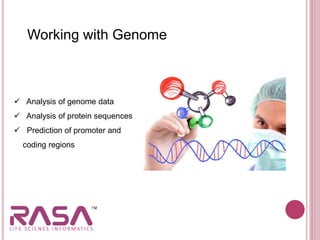
Working with Genome
 Analysis of genome data
 Analysis of protein sequences
 Prediction of promoter and
coding regions
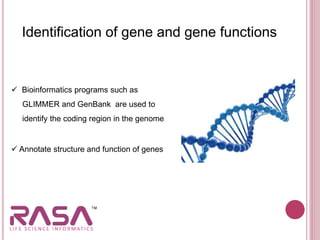
Identification of gene and gene functions
 Bioinformatics programs such as
GLIMMER and GenBank are used to
identify the coding region in the genome
 Annotate structure and function of genes
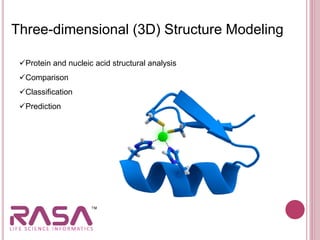
Three-dimensional (3D) Structure Modeling
Protein and nucleic acid structural analysis
Comparison
Classification
Prediction
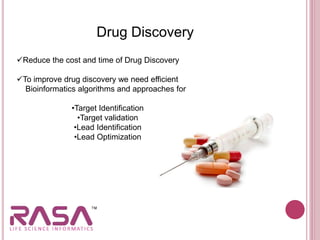
Drug Discovery
Reduce the cost and time of Drug Discovery
To improve drug discovery we need efficient
Bioinformatics algorithms and approaches for
•Target Identification
•Target validation
•Lead Identification
•Lead Optimization
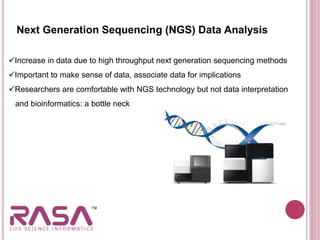
Next Generation Sequencing (NGS) Data Analysis
Increase in data due to high throughput next generation sequencing methods
Important to make sense of data, associate data for implications
Researchers are comfortable with NGS technology but not data interpretation
and bioinformatics: a bottle neck
Where NGS Data analysis can be applied?
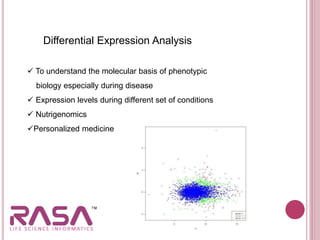
Differential Expression Analysis
 To understand the molecular basis of phenotypic
biology especially during disease
 Expression levels during different set of conditions
 Nutrigenomics
Personalized medicine
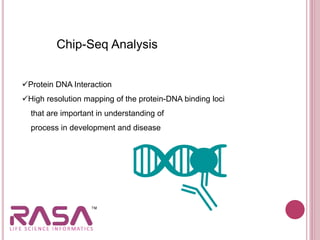
Chip-Seq Analysis
Protein DNA Interaction
High resolution mapping of the protein-DNA binding loci
that are important in understanding of
process in development and disease
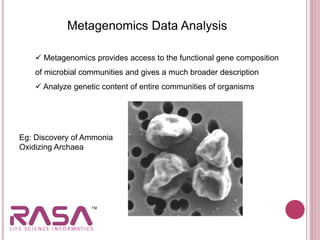
Metagenomics Data Analysis
 Metagenomics provides access to the functional gene composition
of microbial communities and gives a much broader description
 Analyze genetic content of entire communities of organisms
Eg: Discovery of Ammonia
Oxidizing Archaea
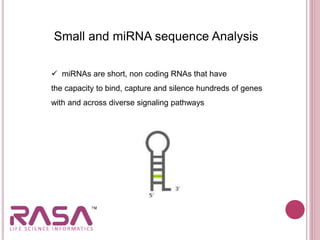
Small and miRNA sequence Analysis
 miRNAs are short, non coding RNAs that have
the capacity to bind, capture and silence hundreds of genes
with and across diverse signaling pathways
The Bioinformatics Market
The global bioinformatics market is estimated to reach $13.3 billion by 2020.
Factors for growth :
1] Increasing government initiatives and funding,
2] Growing use of bioinformatics in drug discovery and
biomarkers development
 The Hindrance :
1] Factors such as dearth of skilled personnel to ensure proper use of
bioinformatics tools, and
2] lack of integration of a wide variety of data generated through
various bioinformatics platforms
We at RASA work towards closing this bridge between Bio and IT
THANK YOU
Bioinformatics Applications in Biotechnology

Bioinformatics Applications in Biotechnology

  • 1.
  • 2.
    Why Bioinformatics?  Sincethe sequencing of the first complete microbial genome of Haemophilus influenzae in 1995, hundreds of microbial genomes have been sequenced and archived for public research in GenBank.  The vast amount of data generated by genome sequencing projects is becoming unmanageable  Bioinformatics has silently filled in the role of cost effective data analysis. bioinformatics analysis has enhanced our understandings about the genome structure and the microorganism restructuring process.
  • 3.
    Where Bioinformatics toolsis applicable? Microbial genome applications Molecular medicine Personalized medicine Preventative medicine Gene therapy Drug development Antibiotic resistance Evolutionary studies Waste cleanup Climate change Studies  Alternative energy sources Crop improvement Forensic analysis Insect resistance Improve nutritional quality Development of Drought resistant varieties Vetinary Science
  • 4.
  • 5.
    Two major fields 1.Development of computational tools and databases •Software for sequence analysis • Software for structural analysis •Software for functional analysis •Construction and curation of biological databases 2. Generate biological knowledge to better understand living systems •Often identify new problems that require new software to analyze
  • 6.
    Working with Genome Analysis of genome data  Analysis of protein sequences  Prediction of promoter and coding regions
  • 7.
    Identification of geneand gene functions  Bioinformatics programs such as GLIMMER and GenBank are used to identify the coding region in the genome  Annotate structure and function of genes
  • 8.
    Three-dimensional (3D) StructureModeling Protein and nucleic acid structural analysis Comparison Classification Prediction
  • 9.
    Drug Discovery Reduce thecost and time of Drug Discovery To improve drug discovery we need efficient Bioinformatics algorithms and approaches for •Target Identification •Target validation •Lead Identification •Lead Optimization
  • 10.
    Next Generation Sequencing(NGS) Data Analysis Increase in data due to high throughput next generation sequencing methods Important to make sense of data, associate data for implications Researchers are comfortable with NGS technology but not data interpretation and bioinformatics: a bottle neck
  • 11.
    Where NGS Dataanalysis can be applied?
  • 12.
    Differential Expression Analysis To understand the molecular basis of phenotypic biology especially during disease  Expression levels during different set of conditions  Nutrigenomics Personalized medicine
  • 13.
    Chip-Seq Analysis Protein DNAInteraction High resolution mapping of the protein-DNA binding loci that are important in understanding of process in development and disease
  • 14.
    Metagenomics Data Analysis Metagenomics provides access to the functional gene composition of microbial communities and gives a much broader description  Analyze genetic content of entire communities of organisms Eg: Discovery of Ammonia Oxidizing Archaea
  • 15.
    Small and miRNAsequence Analysis  miRNAs are short, non coding RNAs that have the capacity to bind, capture and silence hundreds of genes with and across diverse signaling pathways
  • 16.
    The Bioinformatics Market Theglobal bioinformatics market is estimated to reach $13.3 billion by 2020. Factors for growth : 1] Increasing government initiatives and funding, 2] Growing use of bioinformatics in drug discovery and biomarkers development  The Hindrance : 1] Factors such as dearth of skilled personnel to ensure proper use of bioinformatics tools, and 2] lack of integration of a wide variety of data generated through various bioinformatics platforms
  • 17.
    We at RASAwork towards closing this bridge between Bio and IT THANK YOU