Downloaded 337 times
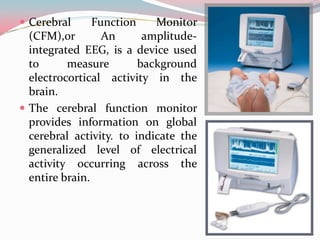

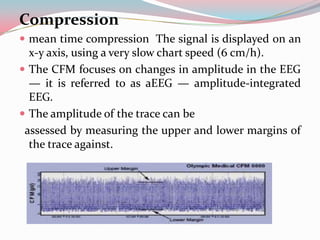

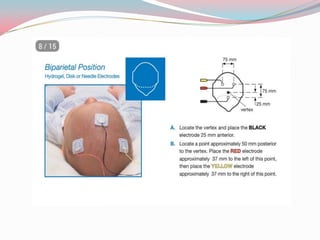
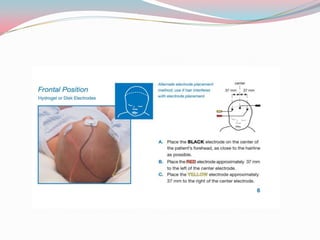
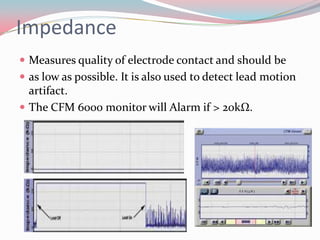

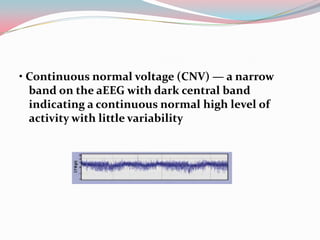
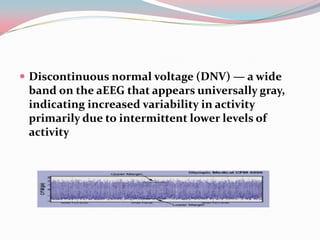
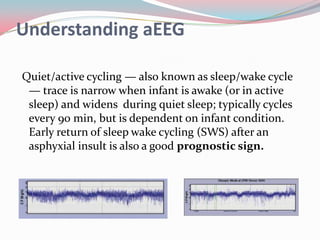
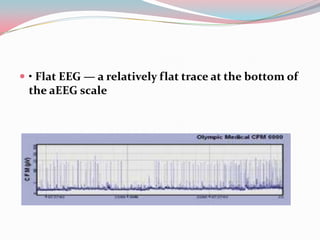
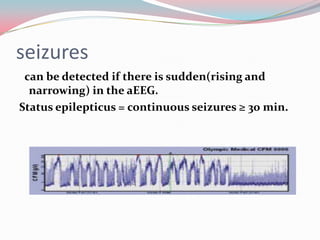
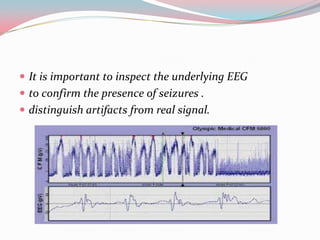

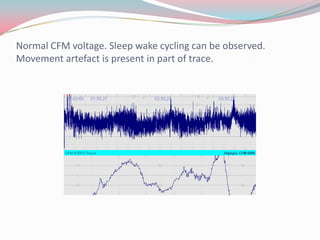

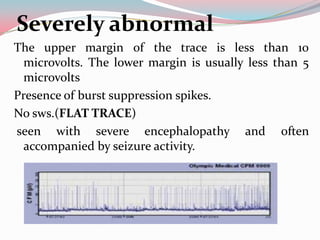
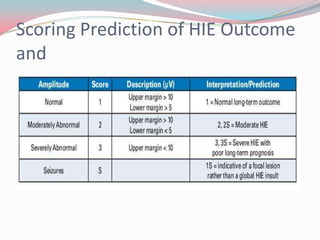



The document discusses the cerebral function monitor (CFM), also known as amplitude-integrated EEG. The CFM is a device that measures brain activity through a single lead placed on the head. It was initially developed in the 1960s for adults but was later introduced for neonates in the 1980s. The CFM can help detect seizures, monitor the effects of drugs/therapy, and aid in predicting outcomes for conditions like hypoxic-ischemic encephalopathy. It provides a simplified view of brain activity through amplitude and variability measurements. General patterns seen include normal/abnormal voltage levels and the presence/absence of sleep-wake cycling.


