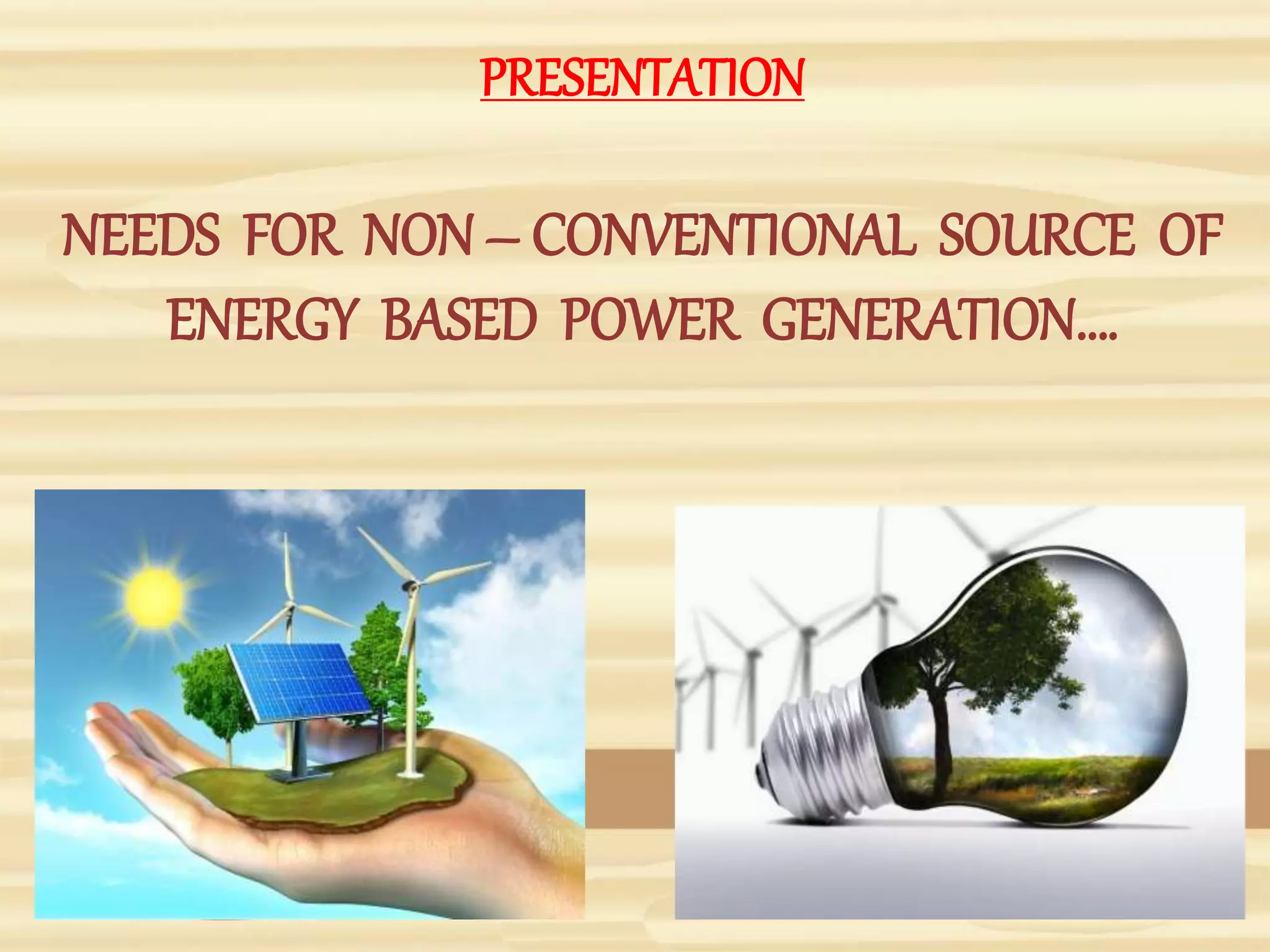
India relies heavily on conventional energy sources and needs to develop non-conventional energy sources to meet growing demand. Non-conventional energy sources include solar, wind, tidal, geothermal, and biomass energy. These sources have advantages like being renewable, pollution-free and able to power remote areas, but also have disadvantages like high initial costs and intermittent availability. Developing non-conventional energy is necessary to secure India's long-term energy supply as fossil fuel prices rise and reserves are depleted. The potential for non-conventional energy in India is estimated to be around 95,000 MW.