Members of the group
Bhavyam Gupta
Pranav Gupta
Harshit Arya
Riddhi Sahana
Mayank Pahal
Various Sources of Energy
1.Solar Energy
2. Wind Energy
3. Geothermal Energy
4. Hydrogen Energy
5. Tidal Energy
6. Wave Energy
8. Biomass Energy
9. Nuclear Power
10. Fossil Fuels (Coal, Oil and Natural Gas)
7. Hydroelectric Energy
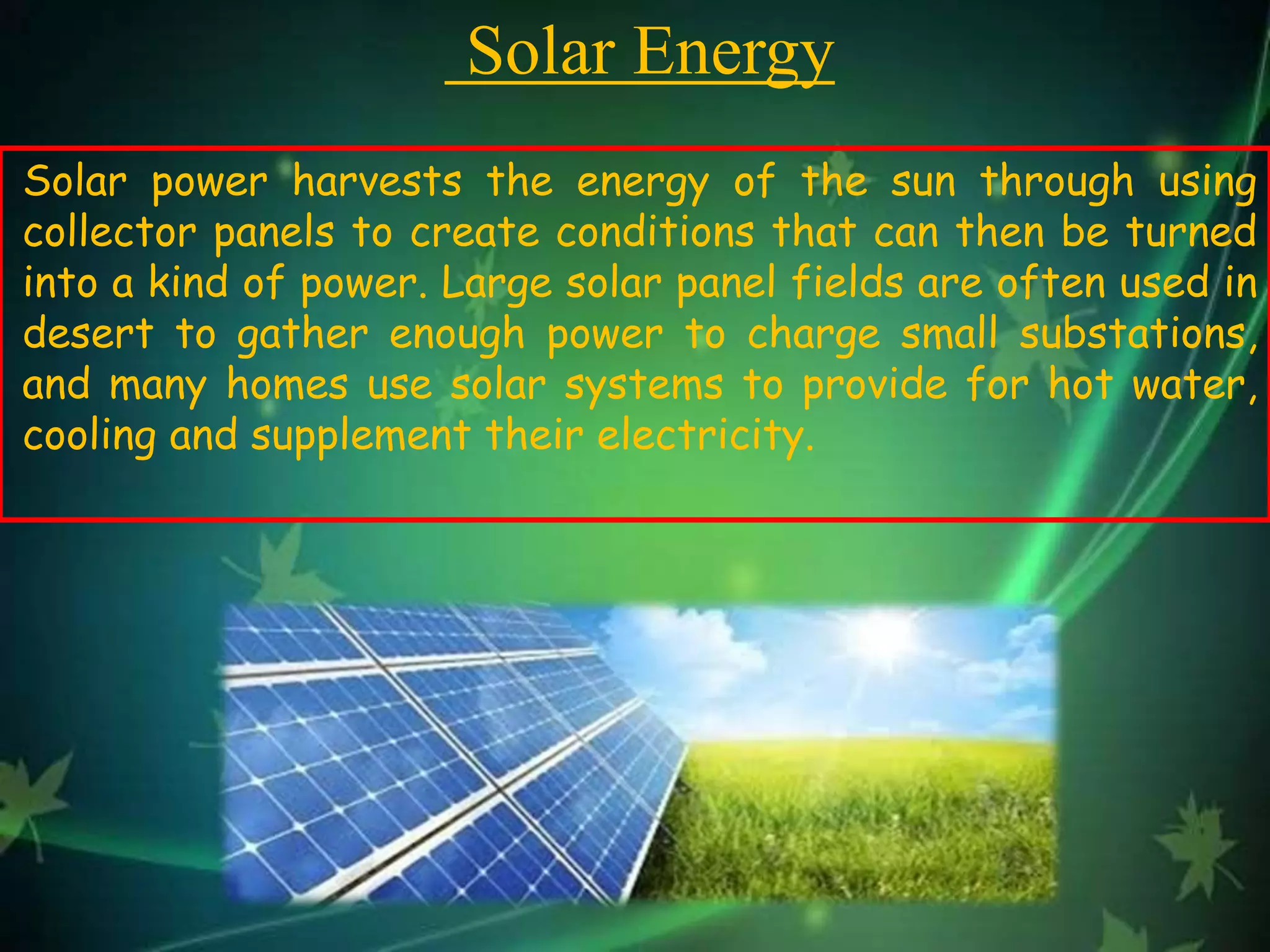
Solar Energy
Solar power harvests the energy of the sun through using
collector panels to create conditions that can then be turned
into a kind of power. Large solar panel fields are often used in
desert to gather enough power to charge small substations,
and many homes use solar systems to provide for hot water,
cooling and supplement their electricity.
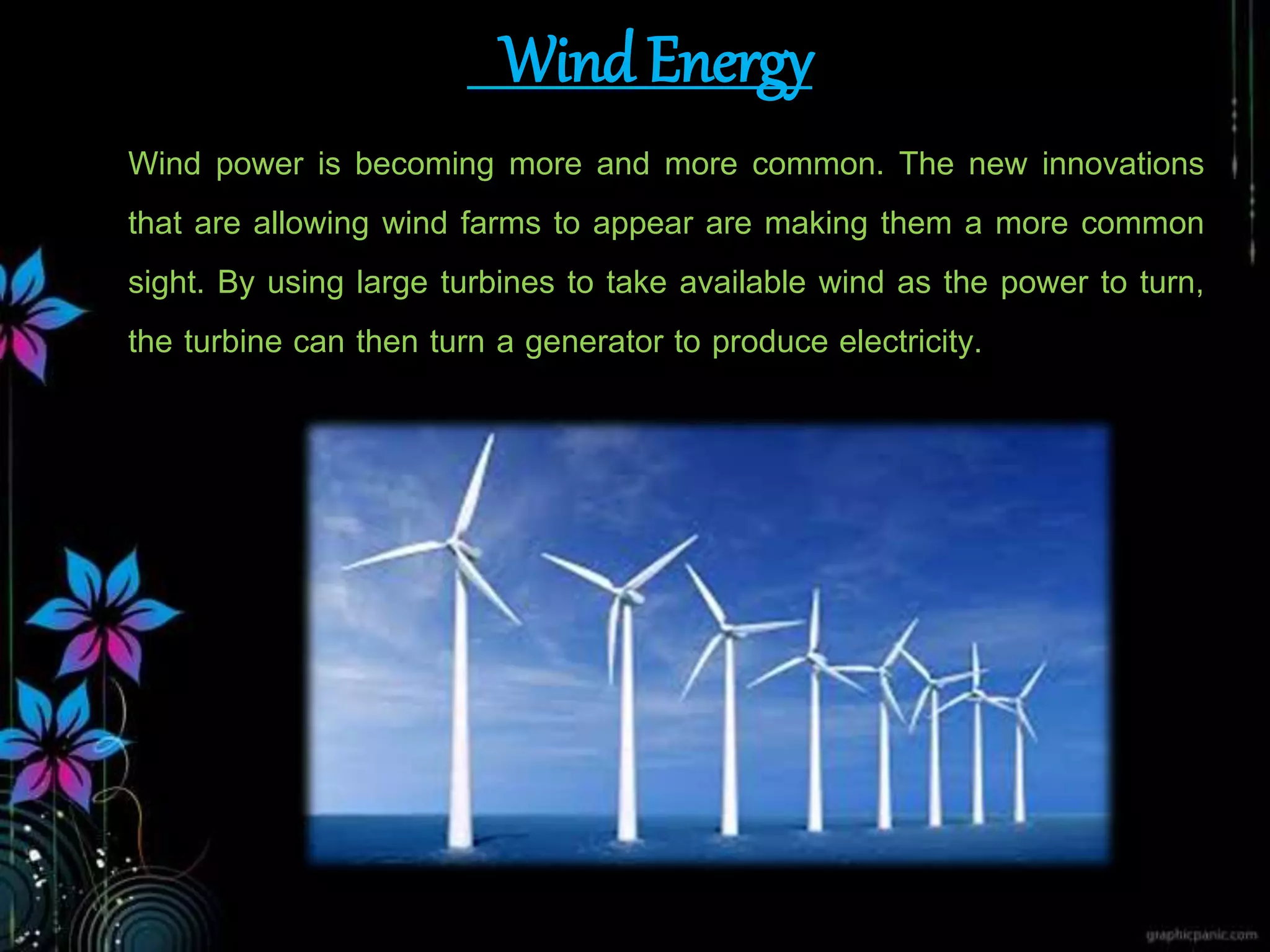
Wind Energy
Wind power is becoming more and more common. The new innovations
that are allowing wind farms to appear are making them a more common
sight. By using large turbines to take available wind as the power to turn,
the turbine can then turn a generator to produce electricity.
Geothermal Energy
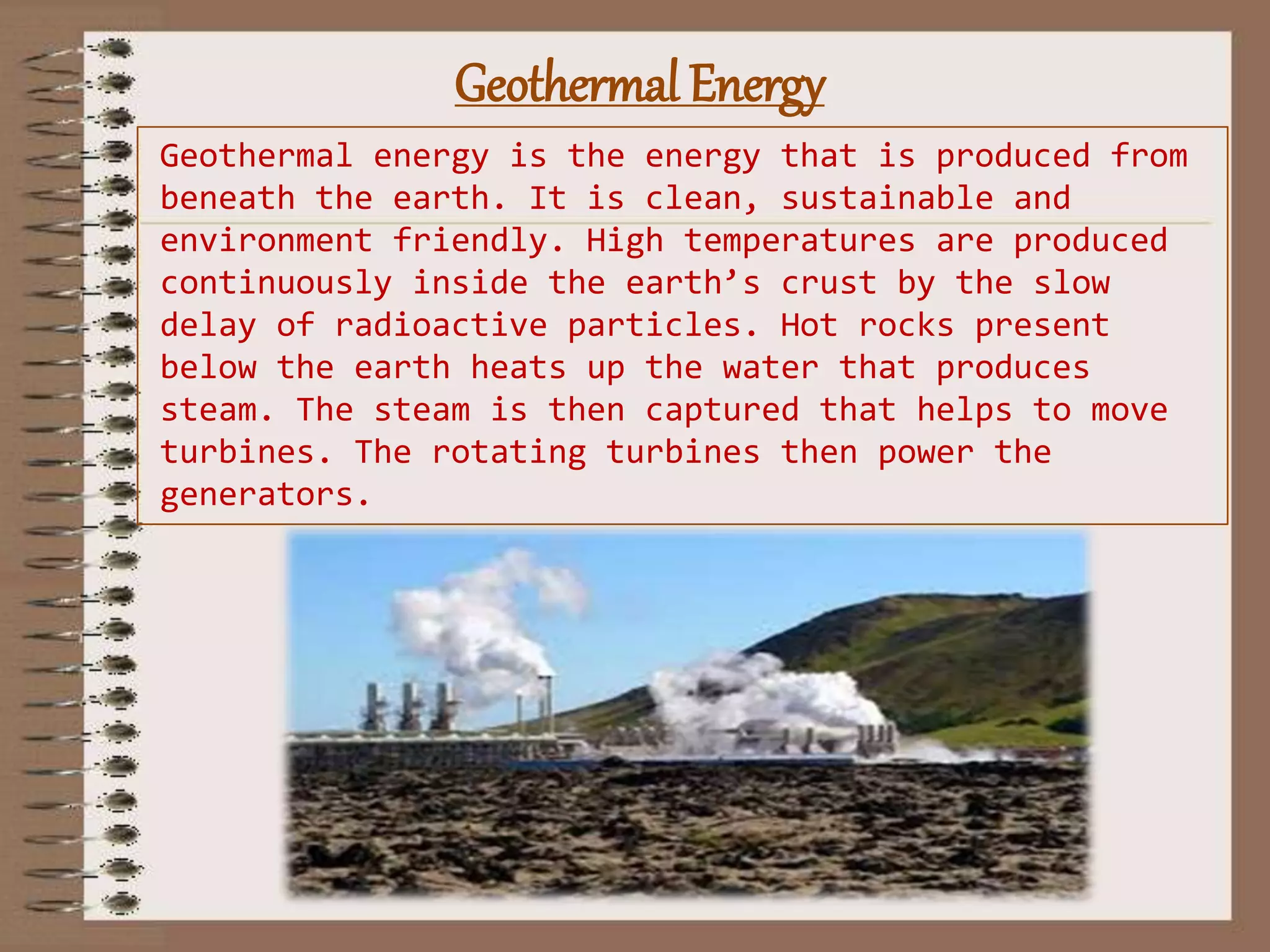
Geothermal energy is the energy that is produced from
beneath the earth. It is clean, sustainable and
environment friendly. High temperatures are produced
continuously inside the earth’s crust by the slow
delay of radioactive particles. Hot rocks present
below the earth heats up the water that produces
steam. The steam is then captured that helps to move
turbines. The rotating turbines then power the
generators.
Tidal Energy
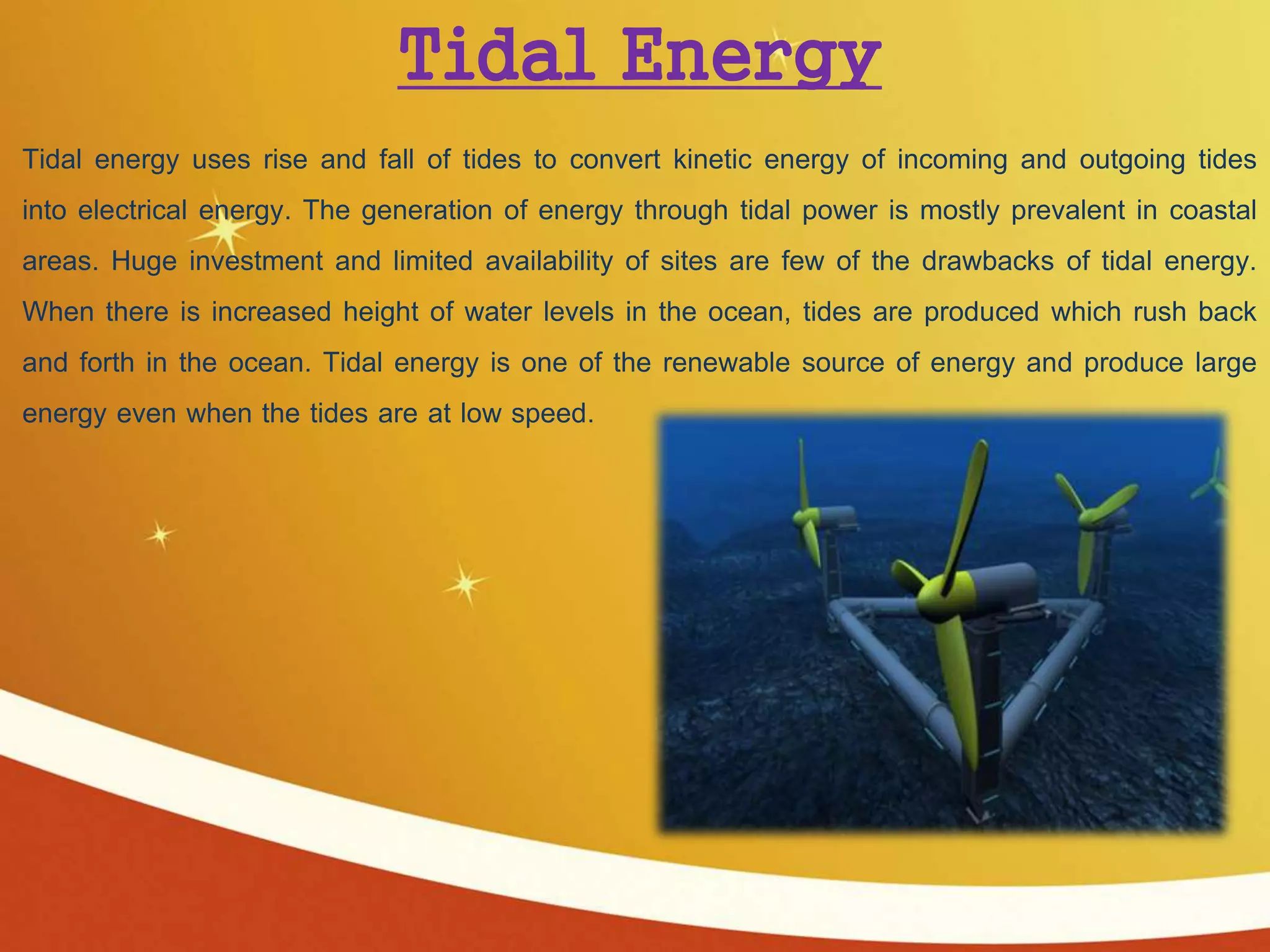
Tidal energy uses rise and fall of tides to convert kinetic energy of incoming and outgoing tides
into electrical energy. The generation of energy through tidal power is mostly prevalent in coastal
areas. Huge investment and limited availability of sites are few of the drawbacks of tidal energy.
When there is increased height of water levels in the ocean, tides are produced which rush back
and forth in the ocean. Tidal energy is one of the renewable source of energy and produce large
energy even when the tides are at low speed.
Wave Energy
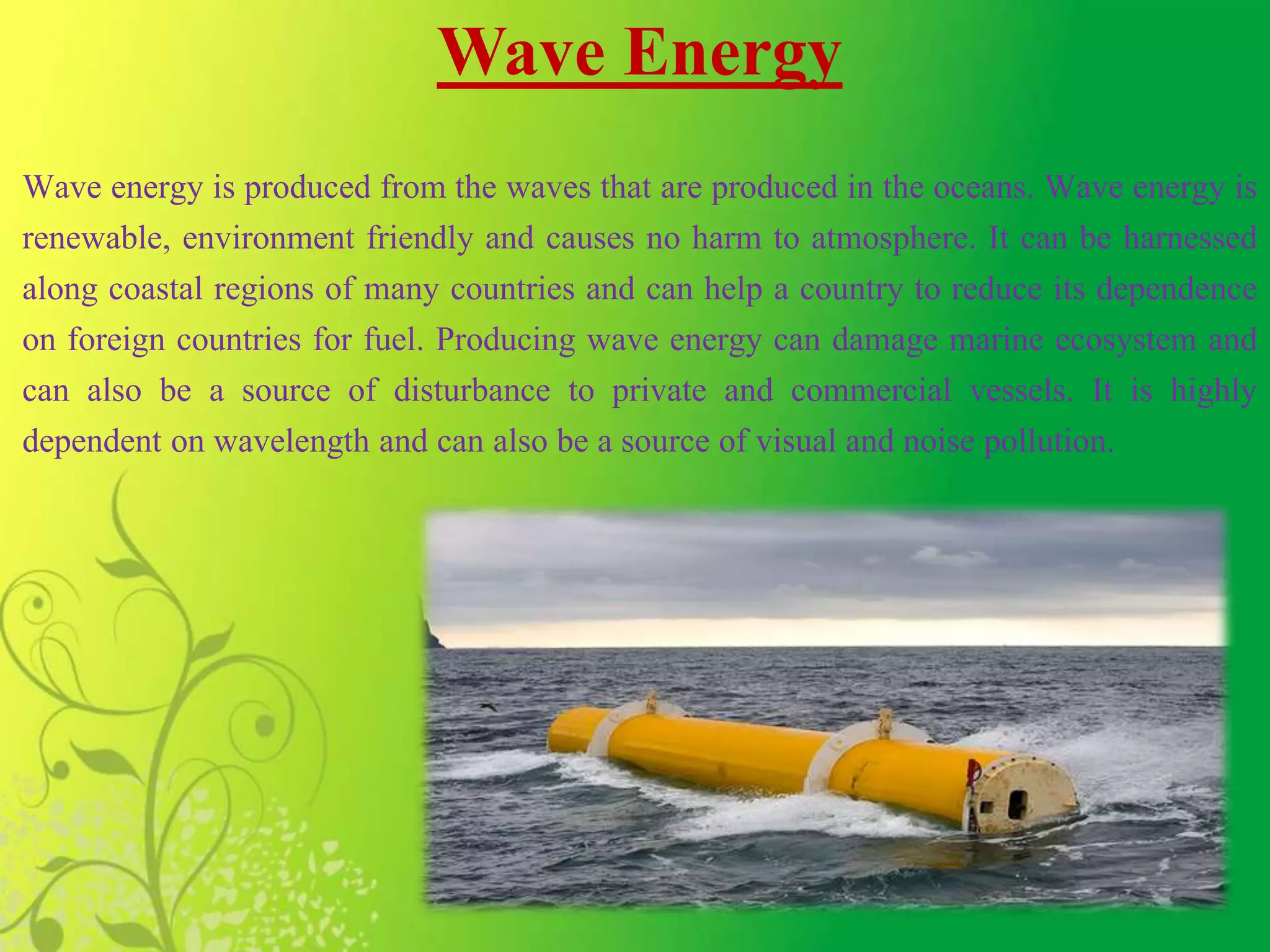
Wave energy is produced from the waves that are produced in the oceans. Wave energy is
renewable, environment friendly and causes no harm to atmosphere. It can be harnessed
along coastal regions of many countries and can help a country to reduce its dependence
on foreign countries for fuel. Producing wave energy can damage marine ecosystem and
can also be a source of disturbance to private and commercial vessels. It is highly
dependent on wavelength and can also be a source of visual and noise pollution.
Hydroelectric Energy
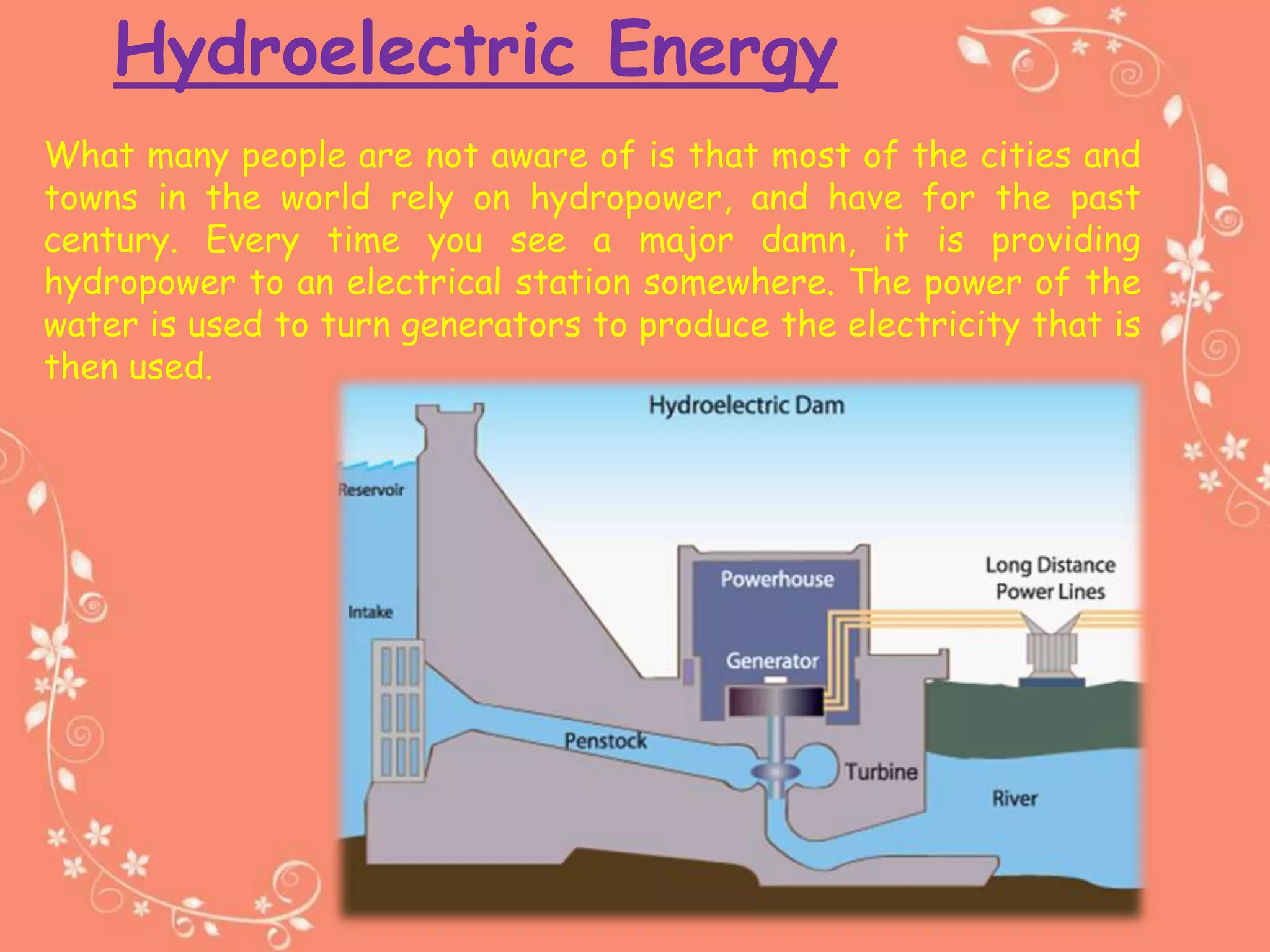
What many people are not aware of is that most of the cities and
towns in the world rely on hydropower, and have for the past
century. Every time you see a major damn, it is providing
hydropower to an electrical station somewhere. The power of the
water is used to turn generators to produce the electricity that is
then used.
Biomass Energy
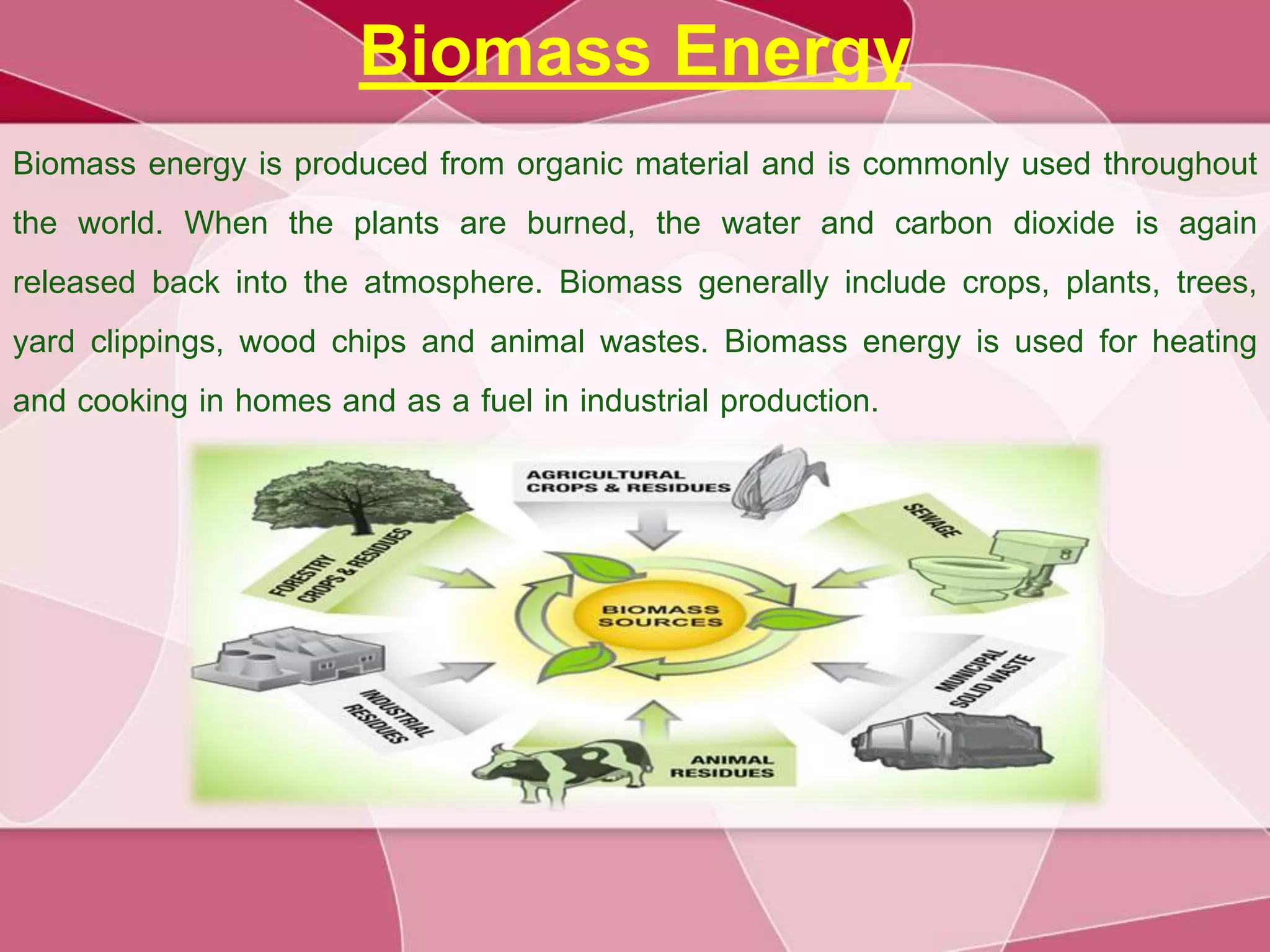
Biomass energy is produced from organic material and is commonly used throughout
the world. When the plants are burned, the water and carbon dioxide is again
released back into the atmosphere. Biomass generally include crops, plants, trees,
yard clippings, wood chips and animal wastes. Biomass energy is used for heating
and cooking in homes and as a fuel in industrial production.
Nuclear Power
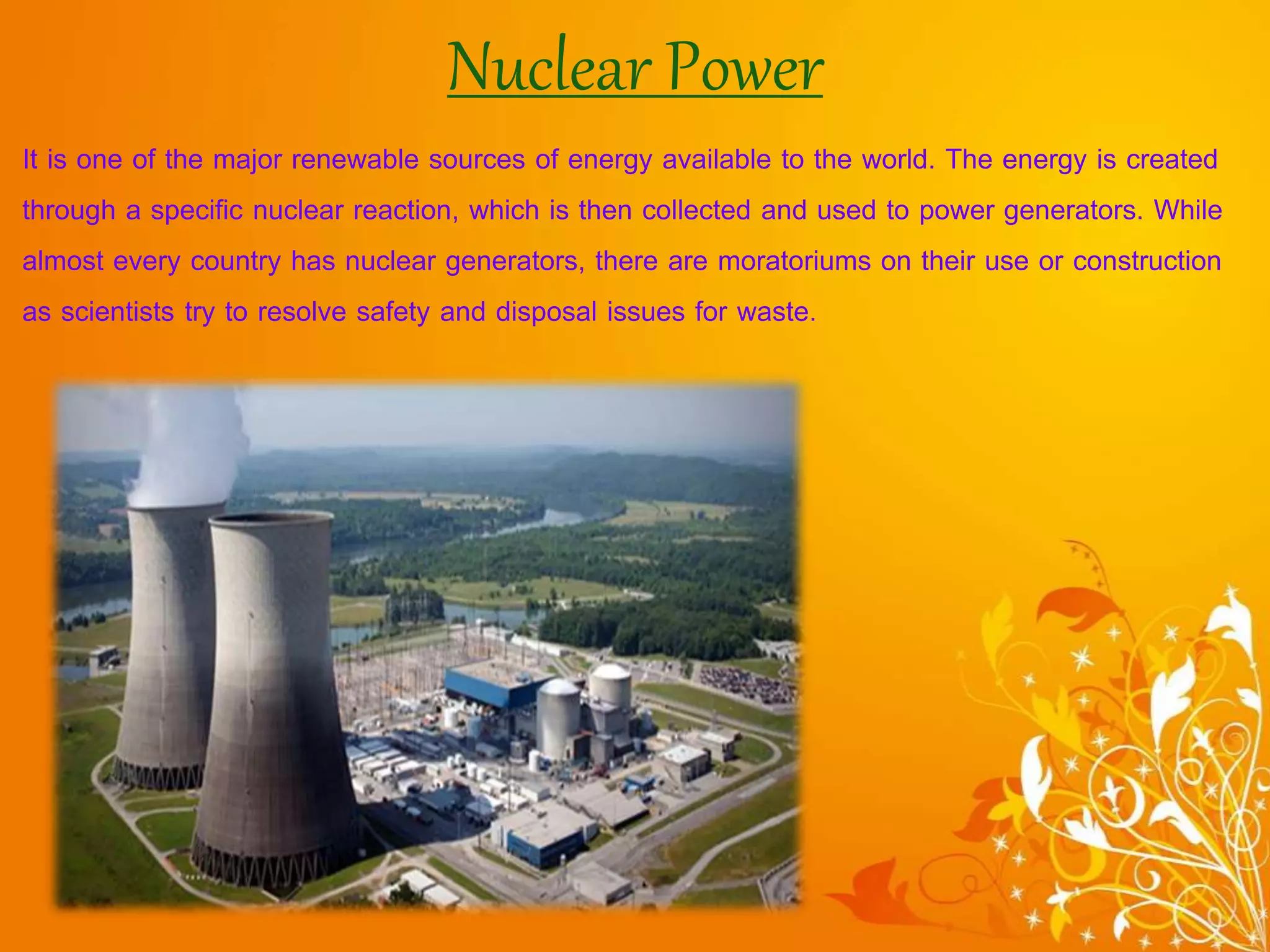
It is one of the major renewable sources of energy available to the world. The energy is created
through a specific nuclear reaction, which is then collected and used to power generators. While
almost every country has nuclear generators, there are moratoriums on their use or construction
as scientists try to resolve safety and disposal issues for waste.
Fossil Fuels (Coal, Oil and
Natural Gas)
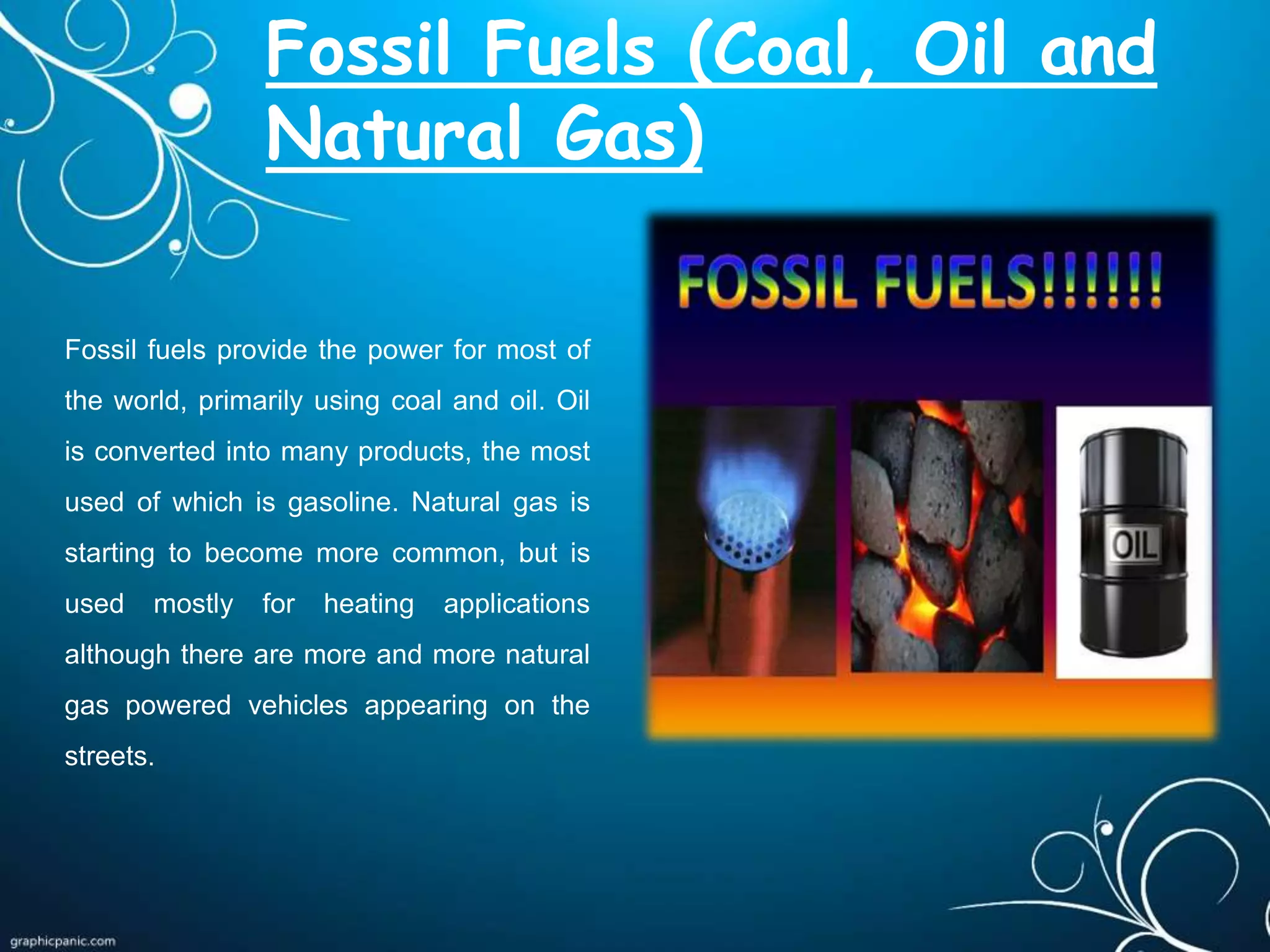
Fossil fuels provide the power for most of
the world, primarily using coal and oil. Oil
is converted into many products, the most
used of which is gasoline. Natural gas is
starting to become more common, but is
used mostly for heating applications
although there are more and more natural
gas powered vehicles appearing on the
streets.
Characteristics of a good source of energy
1. It should be sustainable and renewable source ofenergy
2. It should providegreat amount of energy per unit mass or
volume.
3. Itshould be easily accessible andprovide energy forthe
maximum period of time.
4. It should not cause no pollution orbeing burnt.
5. Itshould be safe for the surrounding individual i.e.should
not harm other people.
6. It should be cheap andeasily accessible .
CONVENTIONAL
SOURCES OF
ENERGY
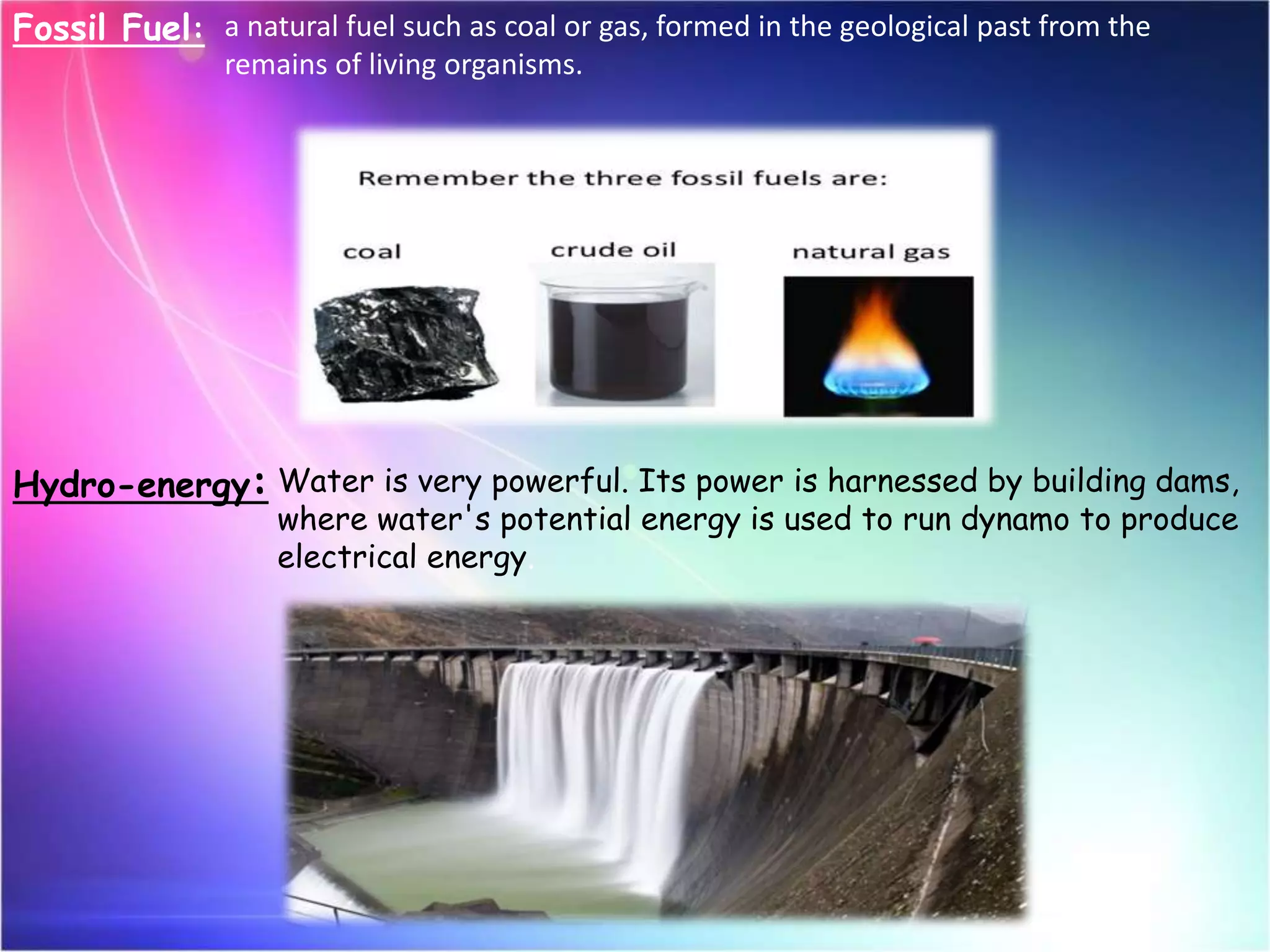
Fossil Fuel: a natural fuel such as coal or gas, formed in the geological past from the
remains of living organisms.
Hydro-energy: Water is very powerful. Its power is harnessed by building dams,
where water's potential energy is used to run dynamo to produce
electrical energy.
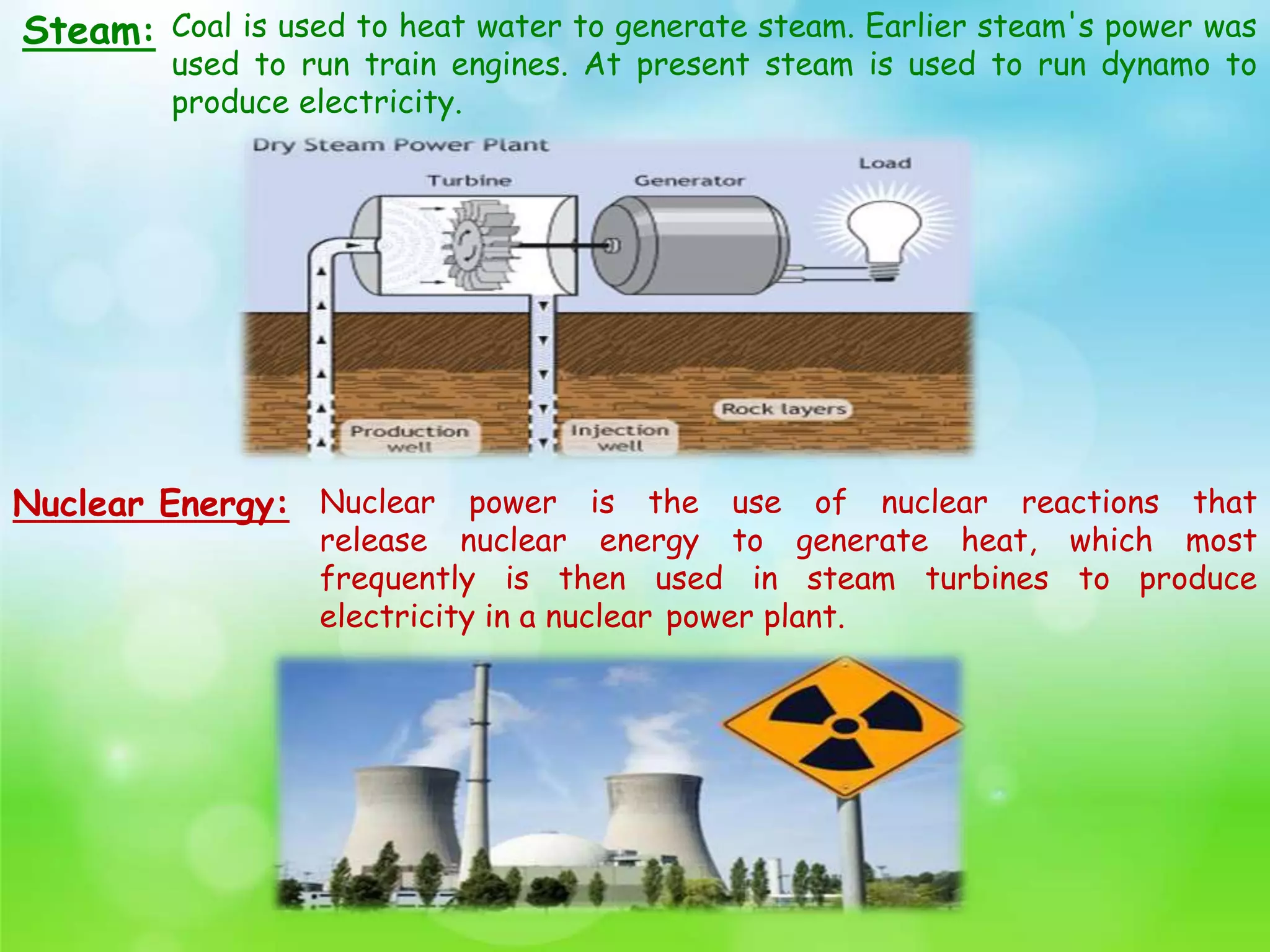
Steam: Coal is used to heat water to generate steam. Earlier steam's power was
used to run train engines. At present steam is used to run dynamo to
produce electricity.
Nuclear Energy: Nuclear power is the use of nuclear reactions that
release nuclear energy to generate heat, which most
frequently is then used in steam turbines to produce
electricity in a nuclear power plant.
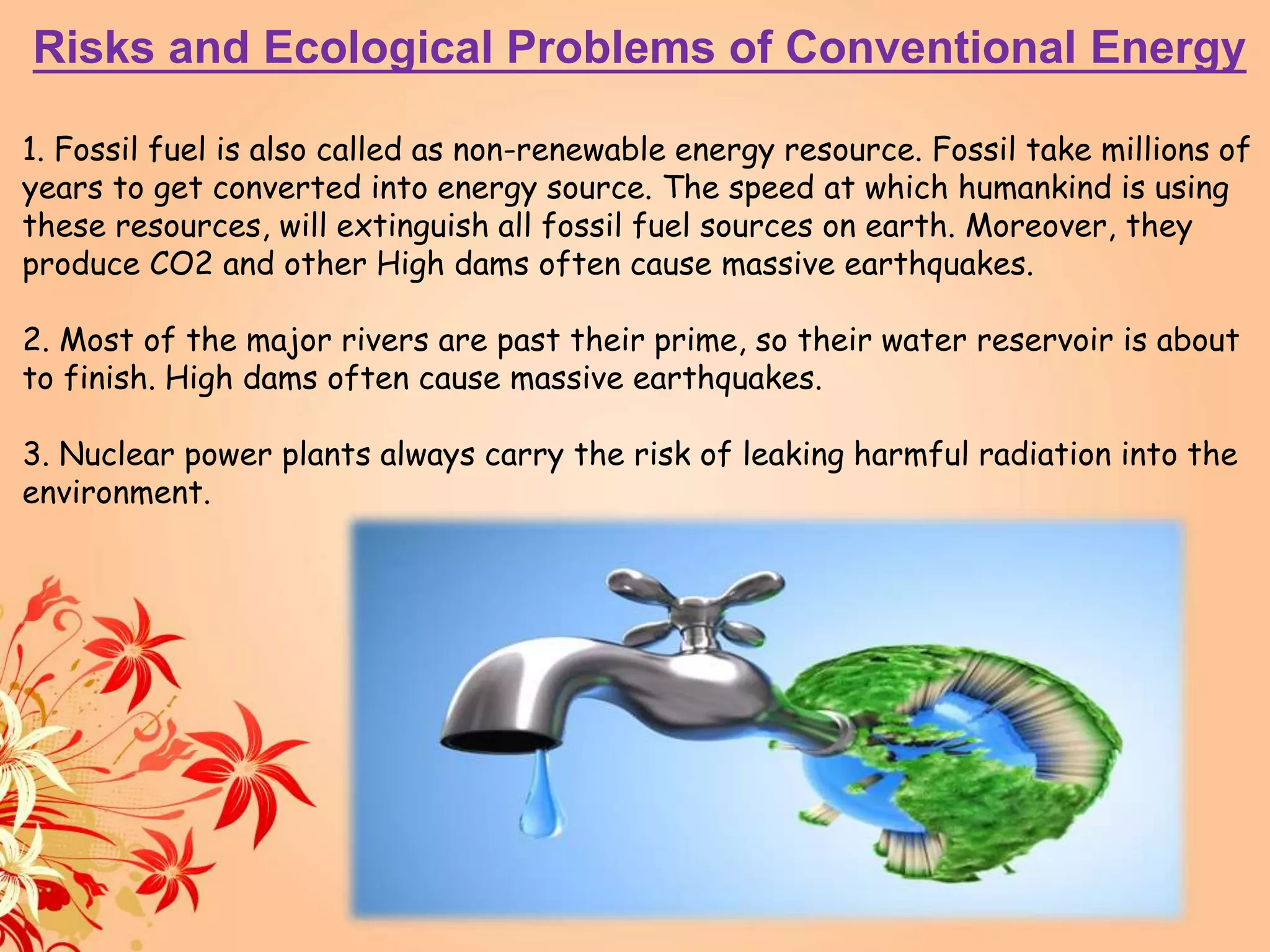
Risks and Ecological Problems of Conventional Energy
1. Fossil fuel is also called as non-renewable energy resource. Fossil take millions of
years to get converted into energy source. The speed at which humankind is using
these resources, will extinguish all fossil fuel sources on earth. Moreover, they
produce CO2 and other High dams often cause massive earthquakes.
2. Most of the major rivers are past their prime, so their water reservoir is about
to finish. High dams often cause massive earthquakes.
3. Nuclear power plants always carry the risk of leaking harmful radiation into the
environment.
NON – CONVENTIONAL SOURCES OF ENERGY
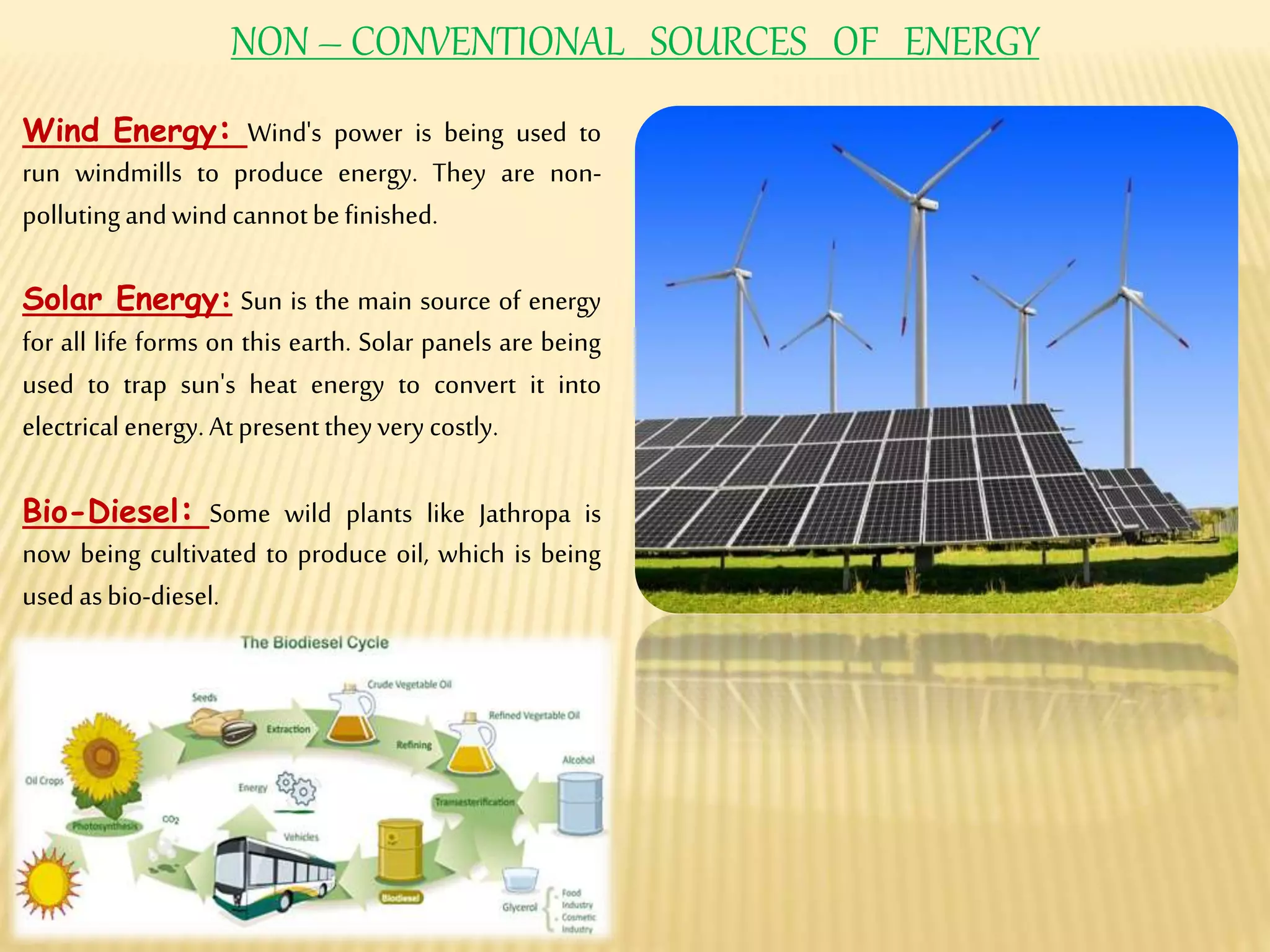
Wind Energy: Wind's power is being used to
run windmills to produce energy. They are non-
pollutingandwind cannotbefinished.
Solar Energy: Sun is the main source of energy
for all life forms on this earth. Solar panels are being
used to trap sun's heat energy to convert it into
electricalenergy.At presenttheyvery costly.
Bio-Diesel: Some wild plants like Jathropa is
now being cultivated to produce oil, which is being
usedasbio-diesel.
Role of technology in making conventional
sources better
Technology has a very important role in making the use of conventional
sources better like :
Solar Power: Sun is the source of all energy on the earth. exploitation of solar energy is an extremely important
component of renewable energy sector through a variety of application like cooking, water heating,
drying of farm produce, water pumping, home and street lighting power generation for meeting
decentralized requirements in villages, schools, hospitals, etc. India receives solar energy equivalent to
over 5,000trillion kwhper year
Wind energy: Wind is another important resource f energy the cost inputs are only at the initial stage. Once the
generation starts , cost free power for about 20 years because there is no recurring cost on fuel. .
Estimates by the ministry of non conventional energy sources place the ultimate wind energy
potential in India at45,000 mw.
THE END
THANK YOU!

PPT on Sources Of Energy

  • 2.
    Members of thegroup Bhavyam Gupta Pranav Gupta Harshit Arya Riddhi Sahana Mayank Pahal
  • 3.
    Various Sources ofEnergy 1.Solar Energy 2. Wind Energy 3. Geothermal Energy 4. Hydrogen Energy 5. Tidal Energy 6. Wave Energy 8. Biomass Energy 9. Nuclear Power 10. Fossil Fuels (Coal, Oil and Natural Gas) 7. Hydroelectric Energy
  • 4.
    Solar Energy Solar powerharvests the energy of the sun through using collector panels to create conditions that can then be turned into a kind of power. Large solar panel fields are often used in desert to gather enough power to charge small substations, and many homes use solar systems to provide for hot water, cooling and supplement their electricity.
  • 5.
    Wind Energy Wind poweris becoming more and more common. The new innovations that are allowing wind farms to appear are making them a more common sight. By using large turbines to take available wind as the power to turn, the turbine can then turn a generator to produce electricity.
  • 6.
    Geothermal Energy Geothermal energyis the energy that is produced from beneath the earth. It is clean, sustainable and environment friendly. High temperatures are produced continuously inside the earth’s crust by the slow delay of radioactive particles. Hot rocks present below the earth heats up the water that produces steam. The steam is then captured that helps to move turbines. The rotating turbines then power the generators.
  • 7.
    Tidal Energy Tidal energyuses rise and fall of tides to convert kinetic energy of incoming and outgoing tides into electrical energy. The generation of energy through tidal power is mostly prevalent in coastal areas. Huge investment and limited availability of sites are few of the drawbacks of tidal energy. When there is increased height of water levels in the ocean, tides are produced which rush back and forth in the ocean. Tidal energy is one of the renewable source of energy and produce large energy even when the tides are at low speed.
  • 8.
    Wave Energy Wave energyis produced from the waves that are produced in the oceans. Wave energy is renewable, environment friendly and causes no harm to atmosphere. It can be harnessed along coastal regions of many countries and can help a country to reduce its dependence on foreign countries for fuel. Producing wave energy can damage marine ecosystem and can also be a source of disturbance to private and commercial vessels. It is highly dependent on wavelength and can also be a source of visual and noise pollution.
  • 9.
    Hydroelectric Energy What manypeople are not aware of is that most of the cities and towns in the world rely on hydropower, and have for the past century. Every time you see a major damn, it is providing hydropower to an electrical station somewhere. The power of the water is used to turn generators to produce the electricity that is then used.
  • 10.
    Biomass Energy Biomass energyis produced from organic material and is commonly used throughout the world. When the plants are burned, the water and carbon dioxide is again released back into the atmosphere. Biomass generally include crops, plants, trees, yard clippings, wood chips and animal wastes. Biomass energy is used for heating and cooking in homes and as a fuel in industrial production.
  • 11.
    Nuclear Power It isone of the major renewable sources of energy available to the world. The energy is created through a specific nuclear reaction, which is then collected and used to power generators. While almost every country has nuclear generators, there are moratoriums on their use or construction as scientists try to resolve safety and disposal issues for waste.
  • 12.
    Fossil Fuels (Coal,Oil and Natural Gas) Fossil fuels provide the power for most of the world, primarily using coal and oil. Oil is converted into many products, the most used of which is gasoline. Natural gas is starting to become more common, but is used mostly for heating applications although there are more and more natural gas powered vehicles appearing on the streets.
  • 13.
    Characteristics of agood source of energy 1. It should be sustainable and renewable source ofenergy 2. It should providegreat amount of energy per unit mass or volume. 3. Itshould be easily accessible andprovide energy forthe maximum period of time. 4. It should not cause no pollution orbeing burnt. 5. Itshould be safe for the surrounding individual i.e.should not harm other people. 6. It should be cheap andeasily accessible .
  • 14.
  • 15.
    Fossil Fuel: anatural fuel such as coal or gas, formed in the geological past from the remains of living organisms. Hydro-energy: Water is very powerful. Its power is harnessed by building dams, where water's potential energy is used to run dynamo to produce electrical energy.
  • 16.
    Steam: Coal isused to heat water to generate steam. Earlier steam's power was used to run train engines. At present steam is used to run dynamo to produce electricity. Nuclear Energy: Nuclear power is the use of nuclear reactions that release nuclear energy to generate heat, which most frequently is then used in steam turbines to produce electricity in a nuclear power plant.
  • 17.
    Risks and EcologicalProblems of Conventional Energy 1. Fossil fuel is also called as non-renewable energy resource. Fossil take millions of years to get converted into energy source. The speed at which humankind is using these resources, will extinguish all fossil fuel sources on earth. Moreover, they produce CO2 and other High dams often cause massive earthquakes. 2. Most of the major rivers are past their prime, so their water reservoir is about to finish. High dams often cause massive earthquakes. 3. Nuclear power plants always carry the risk of leaking harmful radiation into the environment.
  • 18.
    NON – CONVENTIONALSOURCES OF ENERGY Wind Energy: Wind's power is being used to run windmills to produce energy. They are non- pollutingandwind cannotbefinished. Solar Energy: Sun is the main source of energy for all life forms on this earth. Solar panels are being used to trap sun's heat energy to convert it into electricalenergy.At presenttheyvery costly. Bio-Diesel: Some wild plants like Jathropa is now being cultivated to produce oil, which is being usedasbio-diesel.
  • 19.
    Role of technologyin making conventional sources better Technology has a very important role in making the use of conventional sources better like : Solar Power: Sun is the source of all energy on the earth. exploitation of solar energy is an extremely important component of renewable energy sector through a variety of application like cooking, water heating, drying of farm produce, water pumping, home and street lighting power generation for meeting decentralized requirements in villages, schools, hospitals, etc. India receives solar energy equivalent to over 5,000trillion kwhper year Wind energy: Wind is another important resource f energy the cost inputs are only at the initial stage. Once the generation starts , cost free power for about 20 years because there is no recurring cost on fuel. . Estimates by the ministry of non conventional energy sources place the ultimate wind energy potential in India at45,000 mw.
  • 20.