State Regulated Boards
meet Social Media.
Are you listening?
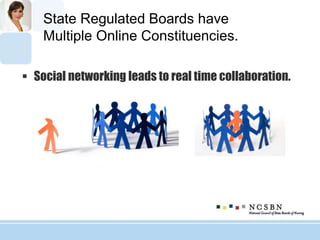
State Regulated Boards have
Multiple Online Constituencies.
 Social networking leads to real time collaboration.
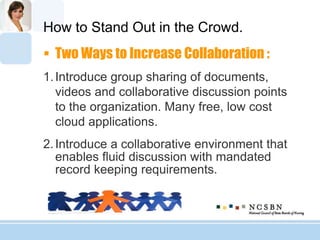
How to Stand Out in the Crowd.
 Two Ways to Increase Collaboration :
1.Introduce group sharing of documents,
videos and collaborative discussion points
to the organization. Many free, low cost
cloud applications.
2.Introduce a collaborative environment that
enables fluid discussion with mandated
record keeping requirements.
Social Networks and State
Regulated Organizations.
 There are two frameworks to be thinking
about when discussing Social Media
in State Government:
1.The Internal Social Network.
2. The External Social Network.
Social Networks and State
Regulated Organizations Internal
 Social media can be used internally for HR
implementation, training, news updates and
community organizing. Other uses for
internal social networks include: consensus
building, productivity and work flow tracking,
project management and budget
management, emergency services
broadcast, tracking and support.
Social Networks and State
Regulated Organizations External
 External social media (Facebook or Twitter)
include consensus building, sharing
important developments; input from
constituents; generating support for
regulatory activities, emergency event
broadcast, violations tracking. More
traditional media overtures in 2 way dialog.
Tools for Branding your State
Board online.
 Engage your people in real time…
• Request for feedback, problems with Nurses
or Hospitals, Violations
• Discussions in Forums, blogs, feedback
from Twitter, Facebook that you monitor and
control through active listening and
engagement of your various constituencies.
If you are not in the conversation you cannot
guide it.
Tools for Listening and
Collaborating Online.
• Use “Social Network Listening” like: Bing,
Grader, Google, Klout and implement
changes on a rolling basis. Set up email
alerts so you are always on top of the news
relative to your “Brand” ie the State Board
and constituents.
• Create a “wiki” like Pbworks and allow free
thinking amongst your own immediate group
of CIO’s and Technical staff.
Why Social Media Matters to You.
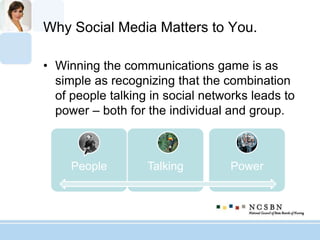
• Winning the communications game is as
simple as recognizing that the combination
of people talking in social networks leads to
power – both for the individual and group.
People Talking Power
Findings from Your Own Study.
• Many of your boards have received complaints about nurses
who violated patient privacy by posting photos on social
network sites.
• Many of your boards have NO Social Networking Guidelines
to protect patient privacy. (This translates closely to mobile as
well as many external studies now correlate social media
behaviors with those represented by mobile users as well.)
Action: Smart phones are combinations of phones, GPS, social
media and internet portals allowing for almost instantaneous
violations crossing geographical lines. Creation of Social
Media and Mobile use policy critical.
State Regulated Boards Social
Media Links and Studies.
• http://www.gmtc.org/reg_auth/2010_GMTC_Social_Media_Gu
idebook_%28Final%29_%282%29.pdf
• http://www.legalbytes.com/2010/03/articles/social-and-digital-
media-law/social-media-in-action-in-fdaregulated-industry/
• http://www.natlawreview.com/article/social-media-policy-
drafting-what-are-ethical-risks-pitfalls
• http://www.ulct.org/ulct/docs/103AnnualConf_workshop_16-
crowley.pdf
Silberberg Innovations Contact Info
 Alan W. Silberberg
 Founder
 www.silberberginnovations.com
 alan@silberberginnovations.com
 1-424-442-9658
 @ideagov on Twitter

NCSBN Keynote Presentation Alan W Silberberg

  • 1.
    State Regulated Boards meetSocial Media. Are you listening?
  • 2.
    State Regulated Boardshave Multiple Online Constituencies.  Social networking leads to real time collaboration.
  • 3.
    How to StandOut in the Crowd.  Two Ways to Increase Collaboration : 1.Introduce group sharing of documents, videos and collaborative discussion points to the organization. Many free, low cost cloud applications. 2.Introduce a collaborative environment that enables fluid discussion with mandated record keeping requirements.
  • 4.
    Social Networks andState Regulated Organizations.  There are two frameworks to be thinking about when discussing Social Media in State Government: 1.The Internal Social Network. 2. The External Social Network.
  • 5.
    Social Networks andState Regulated Organizations Internal  Social media can be used internally for HR implementation, training, news updates and community organizing. Other uses for internal social networks include: consensus building, productivity and work flow tracking, project management and budget management, emergency services broadcast, tracking and support.
  • 6.
    Social Networks andState Regulated Organizations External  External social media (Facebook or Twitter) include consensus building, sharing important developments; input from constituents; generating support for regulatory activities, emergency event broadcast, violations tracking. More traditional media overtures in 2 way dialog.
  • 7.
    Tools for Brandingyour State Board online.  Engage your people in real time… • Request for feedback, problems with Nurses or Hospitals, Violations • Discussions in Forums, blogs, feedback from Twitter, Facebook that you monitor and control through active listening and engagement of your various constituencies. If you are not in the conversation you cannot guide it.
  • 8.
    Tools for Listeningand Collaborating Online. • Use “Social Network Listening” like: Bing, Grader, Google, Klout and implement changes on a rolling basis. Set up email alerts so you are always on top of the news relative to your “Brand” ie the State Board and constituents. • Create a “wiki” like Pbworks and allow free thinking amongst your own immediate group of CIO’s and Technical staff.
  • 9.
    Why Social MediaMatters to You. • Winning the communications game is as simple as recognizing that the combination of people talking in social networks leads to power – both for the individual and group. People Talking Power
  • 10.
    Findings from YourOwn Study. • Many of your boards have received complaints about nurses who violated patient privacy by posting photos on social network sites. • Many of your boards have NO Social Networking Guidelines to protect patient privacy. (This translates closely to mobile as well as many external studies now correlate social media behaviors with those represented by mobile users as well.) Action: Smart phones are combinations of phones, GPS, social media and internet portals allowing for almost instantaneous violations crossing geographical lines. Creation of Social Media and Mobile use policy critical.
  • 11.
    State Regulated BoardsSocial Media Links and Studies. • http://www.gmtc.org/reg_auth/2010_GMTC_Social_Media_Gu idebook_%28Final%29_%282%29.pdf • http://www.legalbytes.com/2010/03/articles/social-and-digital- media-law/social-media-in-action-in-fdaregulated-industry/ • http://www.natlawreview.com/article/social-media-policy- drafting-what-are-ethical-risks-pitfalls • http://www.ulct.org/ulct/docs/103AnnualConf_workshop_16- crowley.pdf
  • 12.
    Silberberg Innovations ContactInfo  Alan W. Silberberg  Founder  www.silberberginnovations.com  alan@silberberginnovations.com  1-424-442-9658  @ideagov on Twitter