The Confluence of Public Health
& Social Media


Presented to the Illinois Public Health Association
                                  January 11, 2012
Overview
I. Introduction
II. What Is Social Media?
III. Why Does Social Media Matter?
IV. What to Know Before Getting Started
V. Suggested Social Media Platforms
VI. Suggested Implementation
VII. ―Shark Tank‖


                                          2
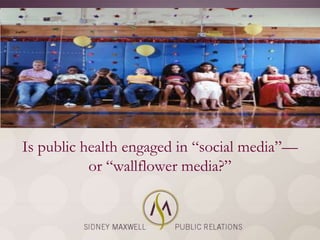
Is public health engaged in ―social media‖—
           or ―wallflower media?‖
Many Public Health & Non-Profit
Initiatives Are Wallflowers
•   They join networks, but wait for people to find them
•   They don‘t engage with followers or constituents
•   They don‘t seek out partnerships or alliances
•   They go back to their marketing comfort zone, but they don‘t reap
    the results
    –   Typically, they focus on awareness or sales messages
    –   They don‘t emphasize the right kind of education messages


                                                                    4
Was this ad an early form of social media?
Your Goal
Don‘t just come to the dance;
find others to dance with.
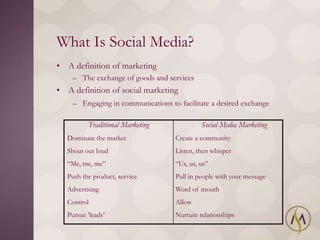
What Is Social Media?
• A definition of marketing
    – The exchange of goods and services
• A definition of social marketing
    – Engaging in communications to facilitate a desired exchange

         Traditional Marketing              Social Media Marketing
  Dominate the market              Create a community
  Shout out loud                   Listen, then whisper
  ―Me, me, me‖                     ―Us, us, us‖
  Push the product, service        Pull in people with your message
  Advertising                      Word of mouth
  Control                          Allow
  Pursue ‗leads‘                   Nurture relationships
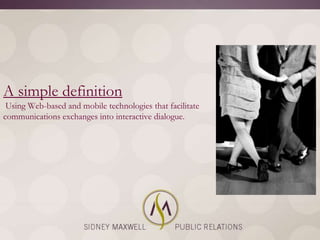
A simple definition
 Using Web-based and mobile technologies that facilitate
communications exchanges into interactive dialogue.
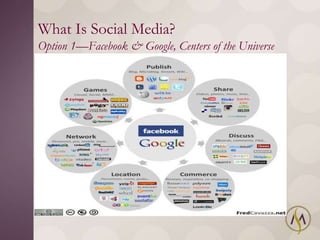
What Is Social Media?
Option 1—Facebook & Google, Centers of the Universe
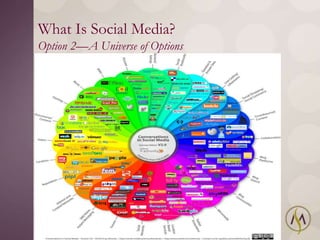
What Is Social Media?
Option 2—A Universe of Options
Why Does Social Media Matter?

• Your competition is there
    – Direct and indirect
    – They are using it more than ―once a week‖
    – They are integrating it into daily operations


• Organizations are using it to leverage donations, commitment
  and participation

• You don‘t need to buy space to use it

• You‘re using it and you don‘t even know it
    – e.g., Amazon.com reviews
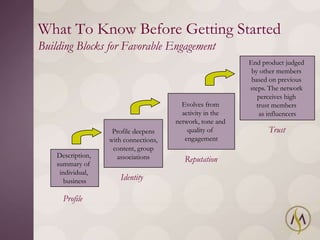
What To Know Before Getting Started
Building Blocks for Favorable Engagement
                                                           End product judged
                                                            by other members
                                                            based on previous
                                                           steps. The network
                                                              perceives high
                                         Evolves from         trust members
                                         activity in the       as influencers
                                       network, tone and
                    Profile deepens        quality of            Trust
                   with connections,      engagement
                    content, group
    Description,      associations
    summary of
                                          Reputation
     individual,
       business       Identity

      Profile
What to Know Before Getting Started
Ask Smart Questions
• Who is on the receiving end of my messages? Patients?
  Doctors? Government officials? Do they need me now or do
  they need me later?
• Where are these people online?
• What are my organization‘s goals? How can I influence
  conversations to meet these goals?
• Who will lead your social media marketing efforts?
• Is the organization prepared for the time and commitment to
  building our community?
What to Know Before Getting Started
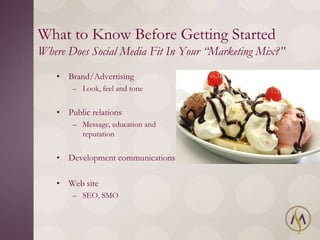
Where Does Social Media Fit In Your “Marketing Mix?”
   • Brand/Advertising
       – Look, feel and tone


   • Public relations
       – Message, education and
         reputation


   • Development communications

   • Web site
       – SEO, SMO
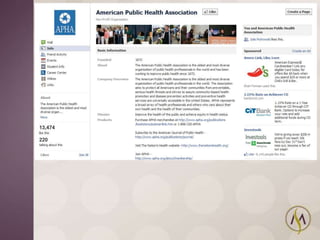
Facebook

 • The most popular social networking service out there
     – ―Giving people the power to share and make the world more open
       and connected.‖
     – Facebook has nearly 800 MILLION active users
 • Users may create a personal profile, add other users as friends
   and exchange messages, including automatic notifications when
   they update their profile
 • Users may join common interest user groups
     – Applications available for donations, e.g., ―Donate‖
 • Great for warehousing a lot of content in one simple ―package‖
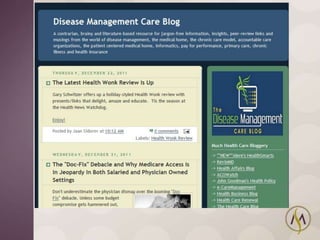
Blogging
 • An online journal or diary
     – Make your ideas and opinions ―human sounding‖


 • Archived by time

 • An easy way to get introduced to social media
     – The ―my mother rule‖ of social media


 • Ideal for generating discussions
LinkedIn
 • The world‘s largest professional network
     – Over 130 million members, growing rapidly


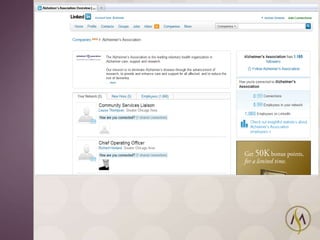
 • LinkedIn can be a means to connect to public health
   executives and decision makers
     – LinkedIn is not for ―crowds‖
     – http://learn.linkedin.com/non-profits/
     – Posting questions, providing answers


 • LinkedIn‘s power
     – Allows for sharing ideas, resources
     – Business affiliations
     – Groups
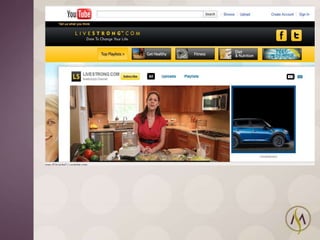
YouTube

• YouTube is a video sharing Web site where users can upload
  and share videos

• Ideal for showcasing events, speeches, and professional
  presentations
    – Great recruitment tool
    – Multiple videos can be shared through the creation of a channel
    – Ideal for segmentation


• YouTube is among the top four search engines
    – Why shouldn‘t you be there?
Twitter

• A real-time information network that connects users to the
  latest information about what they find interesting
    – Find public streams, follow conversations
• Tweets
    – 140 characters in length
    – Think in headlines, not stories
    – Embed information through links, videos, pictures
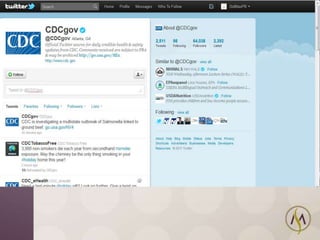
• Some people never tweet, they simply use Twitter as a way to
  get the latest information on their interests
    – Public health alerts
Suggested Implementation
Create A Social Media Policy…
…and have people sign off that they will adhere to it

• Clarify what constitutes as social media content
    •   Tone, frequency, grammar, etc.


• Determine and communicate your organization‘s attitude
  toward social media to as many people as possible
    – Will everyone be welcomed to be a part of ―the dance?‖
    – What are the goals you seek to accomplish?


• Determine who owns the strategy and execution
    – Suggestion—a three-pronged social media committee led by
      Executive Director, Marketing and ―on the street‖ leadership
Suggested Implementation
Create A Social Media Policy…
• Establish rules of engagement
    – Off-limit topics and professionalism


• Make training available

• Have a crisis plan
    – Public health emergencies (H1N1)
    – Adverse conversations about your organization
    – Government advocacy and intervention
Suggested Implementation
Develop A Content Schedule
• Mapping out information will help you determine several
  components of social media
    – ―Do we have a lot to say? Are we relevant?‖
    – Level of frequency
• Content can come in the form of other people thinking or
  saying what your organization believes in
    – Social media = Engage conversations
    – ―Retweets‖
• Schedule can coincide with other parts of your operations
    –   Health fairs
    –   Events/health screenings
    –   Speeches
    –   Volunteer/staff recruitment
Suggested Implementation
Start Joining Conversations
• Start with one or two platforms and/or channels

• Listen to conversations for a short time

• Create, optimize profiles

• Identify, join and engage groups

• Contribute regularly with value-added content
    – Avoid sales pitches as much as possible


• Be helpful, professional, proactive and responsive
Suggested Implementation
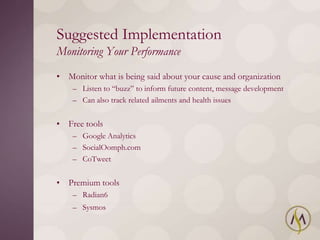
Monitoring Your Performance
• Monitor what is being said about your cause and organization
    – Listen to ―buzz‖ to inform future content, message development
    – Can also track related ailments and health issues


• Free tools
    – Google Analytics
    – SocialOomph.com
    – CoTweet


• Premium tools
    – Radian6
    – Sysmos
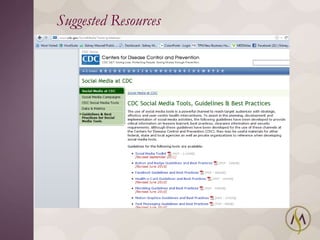
Suggested Resources
―Shark Tank‖

   Take any public health initiative
and discuss how you would showcase it
          using social media.


                                        32
Thank you.

      Michael Shmarak
         Sidney Maxwell
      www.sidneymaxwell.com
michael.shmarak@sidneymaxwell.com
            312.661.9999
@SidMaxPR, @shmaraksmpr Twitter


                                    33

IPHA PRESENTATION 1.12

  • 1.
    The Confluence ofPublic Health & Social Media Presented to the Illinois Public Health Association January 11, 2012
  • 2.
    Overview I. Introduction II. WhatIs Social Media? III. Why Does Social Media Matter? IV. What to Know Before Getting Started V. Suggested Social Media Platforms VI. Suggested Implementation VII. ―Shark Tank‖ 2
  • 3.
    Is public healthengaged in ―social media‖— or ―wallflower media?‖
  • 4.
    Many Public Health& Non-Profit Initiatives Are Wallflowers • They join networks, but wait for people to find them • They don‘t engage with followers or constituents • They don‘t seek out partnerships or alliances • They go back to their marketing comfort zone, but they don‘t reap the results – Typically, they focus on awareness or sales messages – They don‘t emphasize the right kind of education messages 4
  • 5.
    Was this adan early form of social media?
  • 6.
    Your Goal Don‘t justcome to the dance; find others to dance with.
  • 7.
    What Is SocialMedia? • A definition of marketing – The exchange of goods and services • A definition of social marketing – Engaging in communications to facilitate a desired exchange Traditional Marketing Social Media Marketing Dominate the market Create a community Shout out loud Listen, then whisper ―Me, me, me‖ ―Us, us, us‖ Push the product, service Pull in people with your message Advertising Word of mouth Control Allow Pursue ‗leads‘ Nurture relationships
  • 8.
    A simple definition Using Web-based and mobile technologies that facilitate communications exchanges into interactive dialogue.
  • 9.
    What Is SocialMedia? Option 1—Facebook & Google, Centers of the Universe
  • 10.
    What Is SocialMedia? Option 2—A Universe of Options
  • 11.
    Why Does SocialMedia Matter? • Your competition is there – Direct and indirect – They are using it more than ―once a week‖ – They are integrating it into daily operations • Organizations are using it to leverage donations, commitment and participation • You don‘t need to buy space to use it • You‘re using it and you don‘t even know it – e.g., Amazon.com reviews
  • 12.
    What To KnowBefore Getting Started Building Blocks for Favorable Engagement End product judged by other members based on previous steps. The network perceives high Evolves from trust members activity in the as influencers network, tone and Profile deepens quality of Trust with connections, engagement content, group Description, associations summary of Reputation individual, business Identity Profile
  • 13.
    What to KnowBefore Getting Started Ask Smart Questions • Who is on the receiving end of my messages? Patients? Doctors? Government officials? Do they need me now or do they need me later? • Where are these people online? • What are my organization‘s goals? How can I influence conversations to meet these goals? • Who will lead your social media marketing efforts? • Is the organization prepared for the time and commitment to building our community?
  • 14.
    What to KnowBefore Getting Started Where Does Social Media Fit In Your “Marketing Mix?” • Brand/Advertising – Look, feel and tone • Public relations – Message, education and reputation • Development communications • Web site – SEO, SMO
  • 15.
    Facebook • Themost popular social networking service out there – ―Giving people the power to share and make the world more open and connected.‖ – Facebook has nearly 800 MILLION active users • Users may create a personal profile, add other users as friends and exchange messages, including automatic notifications when they update their profile • Users may join common interest user groups – Applications available for donations, e.g., ―Donate‖ • Great for warehousing a lot of content in one simple ―package‖
  • 17.
    Blogging • Anonline journal or diary – Make your ideas and opinions ―human sounding‖ • Archived by time • An easy way to get introduced to social media – The ―my mother rule‖ of social media • Ideal for generating discussions
  • 19.
    LinkedIn • Theworld‘s largest professional network – Over 130 million members, growing rapidly • LinkedIn can be a means to connect to public health executives and decision makers – LinkedIn is not for ―crowds‖ – http://learn.linkedin.com/non-profits/ – Posting questions, providing answers • LinkedIn‘s power – Allows for sharing ideas, resources – Business affiliations – Groups
  • 21.
    YouTube • YouTube isa video sharing Web site where users can upload and share videos • Ideal for showcasing events, speeches, and professional presentations – Great recruitment tool – Multiple videos can be shared through the creation of a channel – Ideal for segmentation • YouTube is among the top four search engines – Why shouldn‘t you be there?
  • 23.
    Twitter • A real-timeinformation network that connects users to the latest information about what they find interesting – Find public streams, follow conversations • Tweets – 140 characters in length – Think in headlines, not stories – Embed information through links, videos, pictures • Some people never tweet, they simply use Twitter as a way to get the latest information on their interests – Public health alerts
  • 25.
  • 26.
    Suggested Implementation Create ASocial Media Policy… …and have people sign off that they will adhere to it • Clarify what constitutes as social media content • Tone, frequency, grammar, etc. • Determine and communicate your organization‘s attitude toward social media to as many people as possible – Will everyone be welcomed to be a part of ―the dance?‖ – What are the goals you seek to accomplish? • Determine who owns the strategy and execution – Suggestion—a three-pronged social media committee led by Executive Director, Marketing and ―on the street‖ leadership
  • 27.
    Suggested Implementation Create ASocial Media Policy… • Establish rules of engagement – Off-limit topics and professionalism • Make training available • Have a crisis plan – Public health emergencies (H1N1) – Adverse conversations about your organization – Government advocacy and intervention
  • 28.
    Suggested Implementation Develop AContent Schedule • Mapping out information will help you determine several components of social media – ―Do we have a lot to say? Are we relevant?‖ – Level of frequency • Content can come in the form of other people thinking or saying what your organization believes in – Social media = Engage conversations – ―Retweets‖ • Schedule can coincide with other parts of your operations – Health fairs – Events/health screenings – Speeches – Volunteer/staff recruitment
  • 29.
    Suggested Implementation Start JoiningConversations • Start with one or two platforms and/or channels • Listen to conversations for a short time • Create, optimize profiles • Identify, join and engage groups • Contribute regularly with value-added content – Avoid sales pitches as much as possible • Be helpful, professional, proactive and responsive
  • 30.
    Suggested Implementation Monitoring YourPerformance • Monitor what is being said about your cause and organization – Listen to ―buzz‖ to inform future content, message development – Can also track related ailments and health issues • Free tools – Google Analytics – SocialOomph.com – CoTweet • Premium tools – Radian6 – Sysmos
  • 31.
  • 32.
    ―Shark Tank‖ Take any public health initiative and discuss how you would showcase it using social media. 32
  • 33.
    Thank you. Michael Shmarak Sidney Maxwell www.sidneymaxwell.com michael.shmarak@sidneymaxwell.com 312.661.9999 @SidMaxPR, @shmaraksmpr Twitter 33